JOINTS
(4th year integrated)
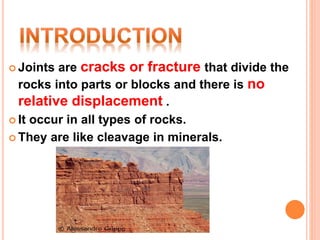
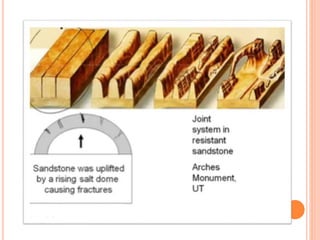
 Joints are cracks or fracture that divide the
rocks into parts or blocks and there is no
relative displacement .
 It occur in all types of rocks.
 They are like cleavage in minerals.
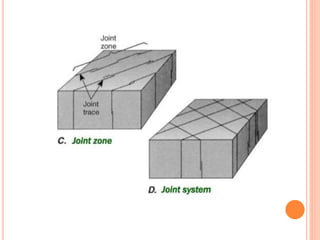
Joint set - joint that share a similar orientation
in the same area. Or it is a family of parallel evenly
spaced joints.
Joint system - two or more intersecting joint
sets in the same area.
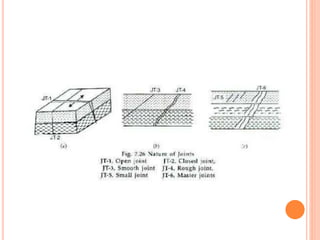
Open joints - which the block have
separated for the small distance to right angle to
the fracture surface.
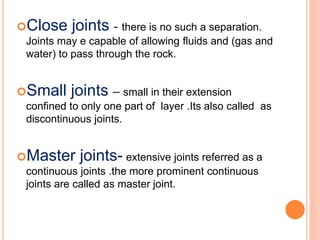
Close joints - there is no such a separation.
Joints may e capable of allowing fluids and (gas and
water) to pass through the rock.
Small joints – small in their extension
confined to only one part of layer .Its also called as
discontinuous joints.
Master joints- extensive joints referred as a
continuous joints .the more prominent continuous
joints are called as master joint.
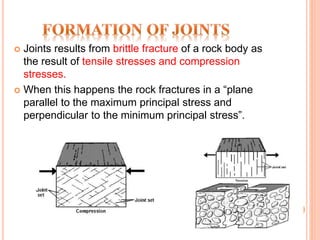
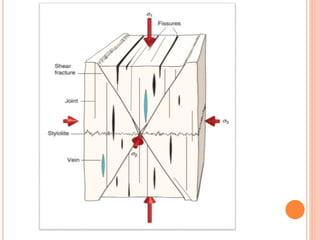
 Joints results from brittle fracture of a rock body as
the result of tensile stresses and compression
stresses.
 When this happens the rock fractures in a “plane
parallel to the maximum principal stress and
perpendicular to the minimum principal stress”.
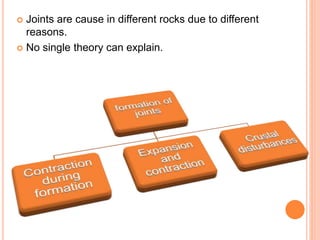
 Joints are cause in different rocks due to different
reasons.
 No single theory can explain.
 Sedimentary rocks - especially those plastic
nature and rich in moisture in initial stages
undergo some contraction on drying up
which might have resulted into irregular
jointing.
 Similarly in igneous rocks –cooling and
crystallization .by this contraction or
shrinkage cause the vertical type of joints.
 Rocks and some other solids expands with rise in
temperature and contract on cooling.
 Such repeated expansion and contraction is one o
the reason for the joint formation
 Removal of overburden due to weathering or other
process of rock wasting also cause expansion of
the underlying rocks
 The previously load rocks are get relaxed with the
release of the force.
 The sheet joints are formed by by the process of
erosional unloading through geological age .
 Many joint types especially those associated with
folded and faulted rocks are clearly related to the
process of crustal disturbances that are responsible
for building of mountains and continents.
 Easily capable of exerting sustained and strong
forces on rocks that virtually cut them in to slice.
 Sudden seismic shocks have also been suggested
by some as a possible cause for the development
of joints in many rocks.
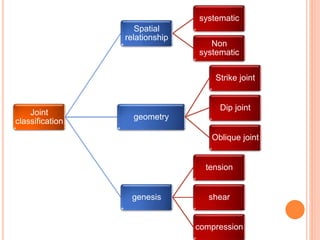
Joint
classification
Spatial
relationship
systematic
Non
systematic
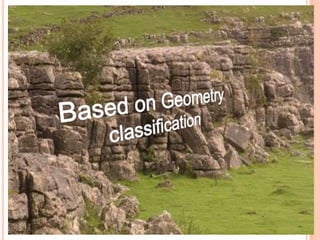
geometry
Strike joint
Dip joint
Oblique joint
genesis
tension
shear
compression
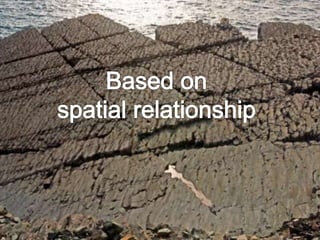
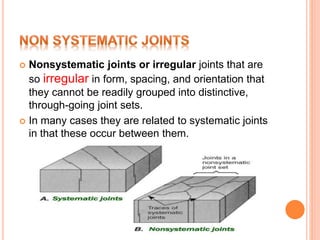
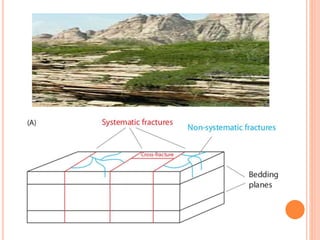
 Nonsystematic joints or irregular joints that are
so irregular in form, spacing, and orientation that
they cannot be readily grouped into distinctive,
through-going joint sets.
 In many cases they are related to systematic joints
in that these occur between them.
 These shows a distinct regularity in their
occurrence.
 They occur in parallel or sub parallel joint sets that
are repeated in the rocks at regular intervals.
 Based upon the angle at which joint sets of
systematic joints intersect to form a joint system, it
can be subdivided into conjugate and orthogonal
joint sets.
 The angles at which joint sets within a joint system
commonly intersect is called by structural geologists
as the dihedral angles.
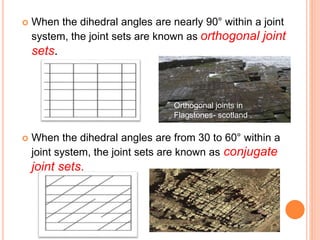
 When the dihedral angles are nearly 90° within a joint
system, the joint sets are known as orthogonal joint
sets.
 When the dihedral angles are from 30 to 60° within a
joint system, the joint sets are known as conjugate
joint sets.
Orthogonal joints in
Flagstones- scotland .
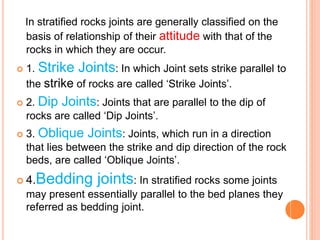
In stratified rocks joints are generally classified on the
basis of relationship of their attitude with that of the
rocks in which they are occur.
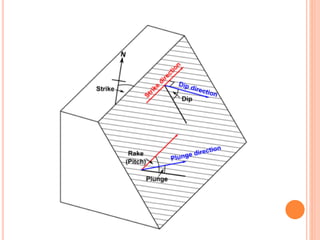
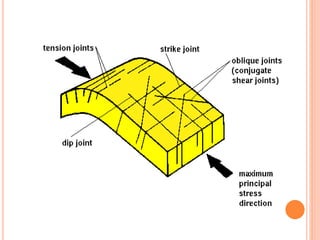
 1. Strike Joints: In which Joint sets strike parallel to
the strike of rocks are called ‘Strike Joints’.
 2. Dip Joints: Joints that are parallel to the dip of
rocks are called ‘Dip Joints’.
 3. Oblique Joints: Joints, which run in a direction
that lies between the strike and dip direction of the rock
beds, are called ‘Oblique Joints’.
 4.Bedding joints: In stratified rocks some joints
may present essentially parallel to the bed planes they
referred as bedding joint.
 On the basis of their origin, joints have been divided
into a number of different types.
 Its very difficult to attribute a particular type or group
or system or joints to an exact cause of origin.
 “it should be kept in mind that different joints in the
same outcrop may have formed at different times
and for different reasons.”
 Some predominant forces like compression or
tension or shear has been responsible for the
development of joints.
 By the way joints are classified into the following
genetic types.
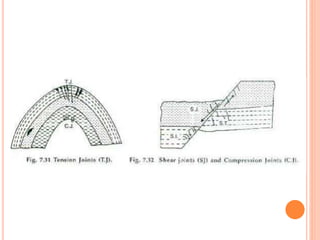
 Which have developed due to tensile forces .
 Common location-folded sequence is on the outer
margin of crests and troughs.
 Also produced in igneous rocks during their cooling.
 Joints produced in many rocks during weathering of
overlying strata and subsequent release of stresses
by expansion are also thought due to the tensile
forces.
 These are formed mainly due to shearing stress.
 They originating in folding and faulting of rock
bodies.
 In folded region they are located in axial region.
 Rocks may be compressed to crushing and
numerous joints may result due to compressive
forces in this case.
 In the core region of folds where compressive force
are dominant.
 So it may be related to the compressive force.
 Example – cross joints.
 Joints are most common structural features of all
type of rocks.
 It’s rare to find any big rock mass on the surface
free from joints.
 Rocks of all three main classes igneous
metamorphic and sedimentary shows various type
of joints.
Igneous rocks are formed by cooling and
crystallization of molten material called magma or
lava . In most cases they show joint systems
related to the tensile stresses developing during the
process of cooling and crystallization.
Three regular systematic types
 Sheet joints
 Columnar joints
 Mural joints
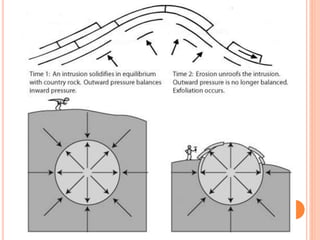
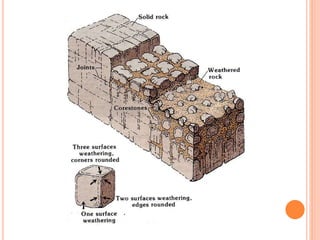
SHEET JOINTS & EXFOLIATION
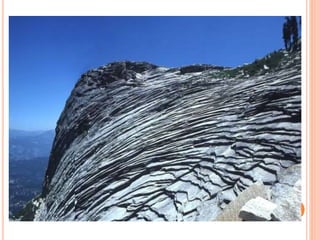
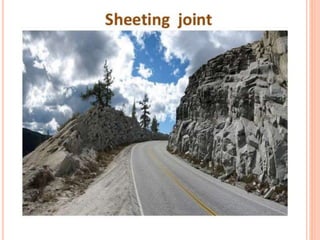
 In granites and other related igneous rocks a
horizontal set of joints often divides the rock mass
in such a way as to give it an appearance of a
layered sedimentary structure called as a sheeting
joint.
 It caused due to weathering and removal of
overlaying rock masses which cause expansion of
the underlying igneous rocks as a consequence of
unloading.
 That lie sub-parallel to the topography.
MURAL JOINTS:-
 In granitic rock masses.
 Three sets of joints may occur.
 In such a way one set is horizontal and the
other sets are vertical .
 All three sets being mutually right angles to
each other.
 this type of joints dividing the rock mass into
cubical blocks or murals is called mural
joints.
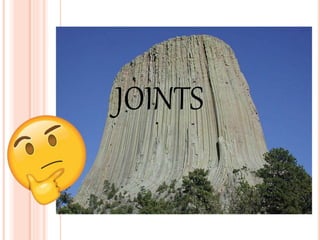
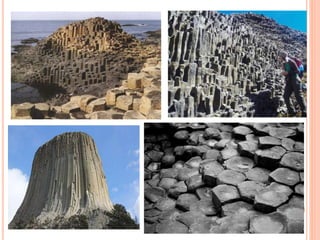
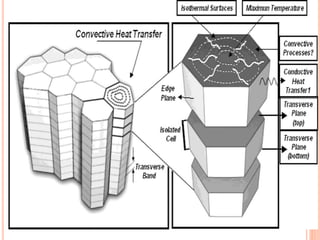
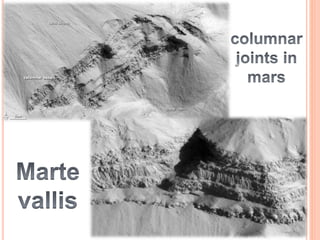
COLUMNAR JOINTS
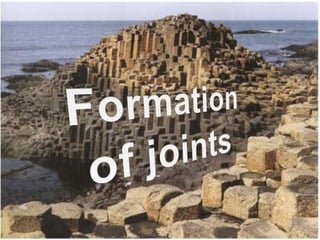
 Typical volcanic igneous rocks.
 Also called prismatic joints
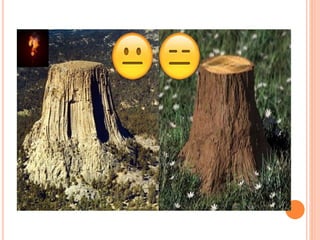
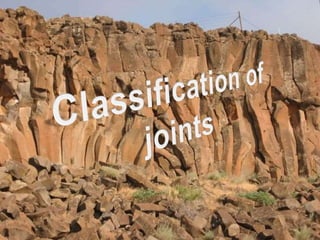
 These joints split a rock body into long,
prisms or columns.
 The diameter of these prismatic columns
range from a few centimeters to several
meters.
 Directly related to the tensile forces during
cooling (contraction).
 Most sedimentary rocks are profusely.
 Systematic or non systematic classes.
 Joints may be closely or regularly spaced.
 Since sedimentary rocks are Often folded and
faulted these are genetically related to those forces.
 Causes major deformations.
 In deeply stratified rocks removal of overlying strata
due to weathering gives rise to compression and
tension forces that may cause regular or irregular
joints.
 In some case joints may develop parallel to the
bedding planes that called as bedding plane.
UNLOADING JOINTS
 Otherwise called as release joints.
 formed near the surface during uplift and erosion.
 As bedded sedimentary rocks are brought closer to
the surface during uplift and erosion, they cool,
contract and become relaxed elastically.
 This causes stress buildup that eventually exceeds
the tensile strength of the bedrock and results in the
formation of jointing.
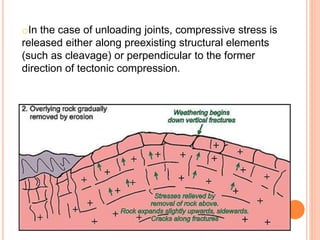
oIn the case of unloading joints, compressive stress is
released either along preexisting structural elements
(such as cleavage) or perpendicular to the former
direction of tectonic compression.
 Heavily jointed in many cases.
 They are irregular or non systematic types.
 Result of local and regional stresses acting on
rocks as a source of metamorphism.
 In many cases the metamorphic rocks may how
those joints which were preexisting at the time of
metamorphism of the rock with little or no
modification.
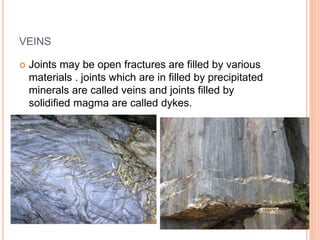
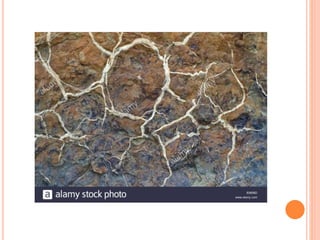
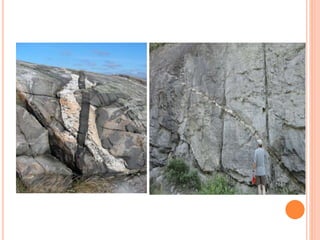
VEINS
 Joints may be open fractures are filled by various
materials . joints which are in filled by precipitated
minerals are called veins and joints filled by
solidified magma are called dykes.
 minerialisation
 good permeable layer for aquifer
 act as oil and gas reservoir ,it helps in secondary
migration of hydrocarbons
 e.g. groundwater and pollutants within aquifers, petroleu
m in reservoirs, and hydrothermal circulation at depth,
within bedrock.
 joints are important to the economic and safe
development of petroleum, hydrothermal, and
groundwater resources and the subject of intensive
research relative to the development of these resources.
 control weathering and erosion
 joints are important to the economic and safe
development of petroleum, hydrothermal, and
groundwater resources and the subject of intensive
research relative to the development of these
resources.
 understand the geology and geomorphology of
local area
 in hilly regions joints get easily lubricated due to the
moisture and starts sliding causes landslides
ENGINEERING IMPORTANCE
 source of weakness and as pathways of
leakage of water through rocks
 presence of joints leads to leakage of water in
dams and reservoir sometimes it even leads to
collapse
 in open cast mining benches should be free from
joints otherwise it leads to collapse and leakage
 In ground water investigation, particularly in hard
rock terrains, jointed strata regions are generally
considered as probable sites for ground water
exploration.
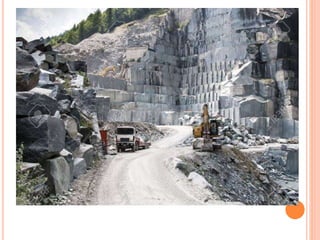
 it is very important in quarrying operations of
building and dimension stones.
 Sandstone and limestone joint are widely spaced
and consequently yield large blocks of rocks
required for buildings and masonry construction.
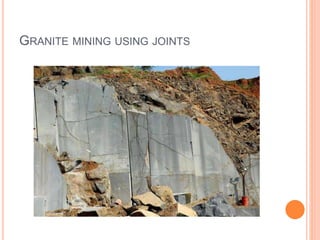
 presence of orthogonal joints in granite will helps in
economically profitable quarrying
 Igneous and metamorphic rocks generally yield
close joint.
 Huge block of rocks are quarried along the joint
pattern.
 A well-jointed rock mass is considered a weak rock.
 jointed strata in tunnel excavation create
problems for the roof and floor besides added
ground water seepage problems
 As a result, joints are an important part
of geotechnical engineering in practice and
research
GRANITE MINING USING JOINTS
 To avoid the joints in civil engineering
 A joint pattern study of the area has to be made .
 Strike frequency diagrams of the investigated area
give the general trend of the joint pattern of the
region.
 These diagrams are useful for various civil
engineering application.
JOINTS - GEOLOGY

JOINTS - GEOLOGY

  • 1.
  • 4.
  • 5.
     Joints arecracks or fracture that divide the rocks into parts or blocks and there is no relative displacement .  It occur in all types of rocks.  They are like cleavage in minerals.
  • 6.
    Joint set -joint that share a similar orientation in the same area. Or it is a family of parallel evenly spaced joints. Joint system - two or more intersecting joint sets in the same area. Open joints - which the block have separated for the small distance to right angle to the fracture surface.
  • 8.
    Close joints -there is no such a separation. Joints may e capable of allowing fluids and (gas and water) to pass through the rock. Small joints – small in their extension confined to only one part of layer .Its also called as discontinuous joints. Master joints- extensive joints referred as a continuous joints .the more prominent continuous joints are called as master joint.
  • 11.
     Joints resultsfrom brittle fracture of a rock body as the result of tensile stresses and compression stresses.  When this happens the rock fractures in a “plane parallel to the maximum principal stress and perpendicular to the minimum principal stress”.
  • 12.
     Joints arecause in different rocks due to different reasons.  No single theory can explain.
  • 13.
     Sedimentary rocks- especially those plastic nature and rich in moisture in initial stages undergo some contraction on drying up which might have resulted into irregular jointing.  Similarly in igneous rocks –cooling and crystallization .by this contraction or shrinkage cause the vertical type of joints.
  • 14.
     Rocks andsome other solids expands with rise in temperature and contract on cooling.  Such repeated expansion and contraction is one o the reason for the joint formation  Removal of overburden due to weathering or other process of rock wasting also cause expansion of the underlying rocks  The previously load rocks are get relaxed with the release of the force.  The sheet joints are formed by by the process of erosional unloading through geological age .
  • 15.
     Many jointtypes especially those associated with folded and faulted rocks are clearly related to the process of crustal disturbances that are responsible for building of mountains and continents.  Easily capable of exerting sustained and strong forces on rocks that virtually cut them in to slice.  Sudden seismic shocks have also been suggested by some as a possible cause for the development of joints in many rocks.
  • 17.
  • 19.
     Nonsystematic jointsor irregular joints that are so irregular in form, spacing, and orientation that they cannot be readily grouped into distinctive, through-going joint sets.  In many cases they are related to systematic joints in that these occur between them.
  • 20.
     These showsa distinct regularity in their occurrence.  They occur in parallel or sub parallel joint sets that are repeated in the rocks at regular intervals.  Based upon the angle at which joint sets of systematic joints intersect to form a joint system, it can be subdivided into conjugate and orthogonal joint sets.  The angles at which joint sets within a joint system commonly intersect is called by structural geologists as the dihedral angles.
  • 21.
     When thedihedral angles are nearly 90° within a joint system, the joint sets are known as orthogonal joint sets.  When the dihedral angles are from 30 to 60° within a joint system, the joint sets are known as conjugate joint sets. Orthogonal joints in Flagstones- scotland .
  • 24.
    In stratified rocksjoints are generally classified on the basis of relationship of their attitude with that of the rocks in which they are occur.  1. Strike Joints: In which Joint sets strike parallel to the strike of rocks are called ‘Strike Joints’.  2. Dip Joints: Joints that are parallel to the dip of rocks are called ‘Dip Joints’.  3. Oblique Joints: Joints, which run in a direction that lies between the strike and dip direction of the rock beds, are called ‘Oblique Joints’.  4.Bedding joints: In stratified rocks some joints may present essentially parallel to the bed planes they referred as bedding joint.
  • 26.
     On thebasis of their origin, joints have been divided into a number of different types.  Its very difficult to attribute a particular type or group or system or joints to an exact cause of origin.  “it should be kept in mind that different joints in the same outcrop may have formed at different times and for different reasons.”  Some predominant forces like compression or tension or shear has been responsible for the development of joints.  By the way joints are classified into the following genetic types.
  • 27.
     Which havedeveloped due to tensile forces .  Common location-folded sequence is on the outer margin of crests and troughs.  Also produced in igneous rocks during their cooling.  Joints produced in many rocks during weathering of overlying strata and subsequent release of stresses by expansion are also thought due to the tensile forces.
  • 28.
     These areformed mainly due to shearing stress.  They originating in folding and faulting of rock bodies.  In folded region they are located in axial region.  Rocks may be compressed to crushing and numerous joints may result due to compressive forces in this case.  In the core region of folds where compressive force are dominant.  So it may be related to the compressive force.  Example – cross joints.
  • 31.
     Joints aremost common structural features of all type of rocks.  It’s rare to find any big rock mass on the surface free from joints.  Rocks of all three main classes igneous metamorphic and sedimentary shows various type of joints.
  • 32.
    Igneous rocks areformed by cooling and crystallization of molten material called magma or lava . In most cases they show joint systems related to the tensile stresses developing during the process of cooling and crystallization. Three regular systematic types  Sheet joints  Columnar joints  Mural joints
  • 33.
    SHEET JOINTS &EXFOLIATION  In granites and other related igneous rocks a horizontal set of joints often divides the rock mass in such a way as to give it an appearance of a layered sedimentary structure called as a sheeting joint.  It caused due to weathering and removal of overlaying rock masses which cause expansion of the underlying igneous rocks as a consequence of unloading.  That lie sub-parallel to the topography.
  • 37.
    MURAL JOINTS:-  Ingranitic rock masses.  Three sets of joints may occur.  In such a way one set is horizontal and the other sets are vertical .  All three sets being mutually right angles to each other.  this type of joints dividing the rock mass into cubical blocks or murals is called mural joints.
  • 39.
    COLUMNAR JOINTS  Typicalvolcanic igneous rocks.  Also called prismatic joints  These joints split a rock body into long, prisms or columns.  The diameter of these prismatic columns range from a few centimeters to several meters.  Directly related to the tensile forces during cooling (contraction).
  • 43.
     Most sedimentaryrocks are profusely.  Systematic or non systematic classes.  Joints may be closely or regularly spaced.  Since sedimentary rocks are Often folded and faulted these are genetically related to those forces.  Causes major deformations.  In deeply stratified rocks removal of overlying strata due to weathering gives rise to compression and tension forces that may cause regular or irregular joints.  In some case joints may develop parallel to the bedding planes that called as bedding plane.
  • 47.
    UNLOADING JOINTS  Otherwisecalled as release joints.  formed near the surface during uplift and erosion.  As bedded sedimentary rocks are brought closer to the surface during uplift and erosion, they cool, contract and become relaxed elastically.  This causes stress buildup that eventually exceeds the tensile strength of the bedrock and results in the formation of jointing.
  • 48.
    oIn the caseof unloading joints, compressive stress is released either along preexisting structural elements (such as cleavage) or perpendicular to the former direction of tectonic compression.
  • 49.
     Heavily jointedin many cases.  They are irregular or non systematic types.  Result of local and regional stresses acting on rocks as a source of metamorphism.  In many cases the metamorphic rocks may how those joints which were preexisting at the time of metamorphism of the rock with little or no modification.
  • 50.
    VEINS  Joints maybe open fractures are filled by various materials . joints which are in filled by precipitated minerals are called veins and joints filled by solidified magma are called dykes.
  • 53.
     minerialisation  goodpermeable layer for aquifer  act as oil and gas reservoir ,it helps in secondary migration of hydrocarbons  e.g. groundwater and pollutants within aquifers, petroleu m in reservoirs, and hydrothermal circulation at depth, within bedrock.  joints are important to the economic and safe development of petroleum, hydrothermal, and groundwater resources and the subject of intensive research relative to the development of these resources.  control weathering and erosion
  • 54.
     joints areimportant to the economic and safe development of petroleum, hydrothermal, and groundwater resources and the subject of intensive research relative to the development of these resources.  understand the geology and geomorphology of local area  in hilly regions joints get easily lubricated due to the moisture and starts sliding causes landslides
  • 55.
    ENGINEERING IMPORTANCE  sourceof weakness and as pathways of leakage of water through rocks  presence of joints leads to leakage of water in dams and reservoir sometimes it even leads to collapse  in open cast mining benches should be free from joints otherwise it leads to collapse and leakage  In ground water investigation, particularly in hard rock terrains, jointed strata regions are generally considered as probable sites for ground water exploration.
  • 56.
     it isvery important in quarrying operations of building and dimension stones.  Sandstone and limestone joint are widely spaced and consequently yield large blocks of rocks required for buildings and masonry construction.  presence of orthogonal joints in granite will helps in economically profitable quarrying  Igneous and metamorphic rocks generally yield close joint.  Huge block of rocks are quarried along the joint pattern.  A well-jointed rock mass is considered a weak rock.
  • 57.
     jointed stratain tunnel excavation create problems for the roof and floor besides added ground water seepage problems  As a result, joints are an important part of geotechnical engineering in practice and research
  • 58.
  • 60.
     To avoidthe joints in civil engineering  A joint pattern study of the area has to be made .  Strike frequency diagrams of the investigated area give the general trend of the joint pattern of the region.  These diagrams are useful for various civil engineering application.