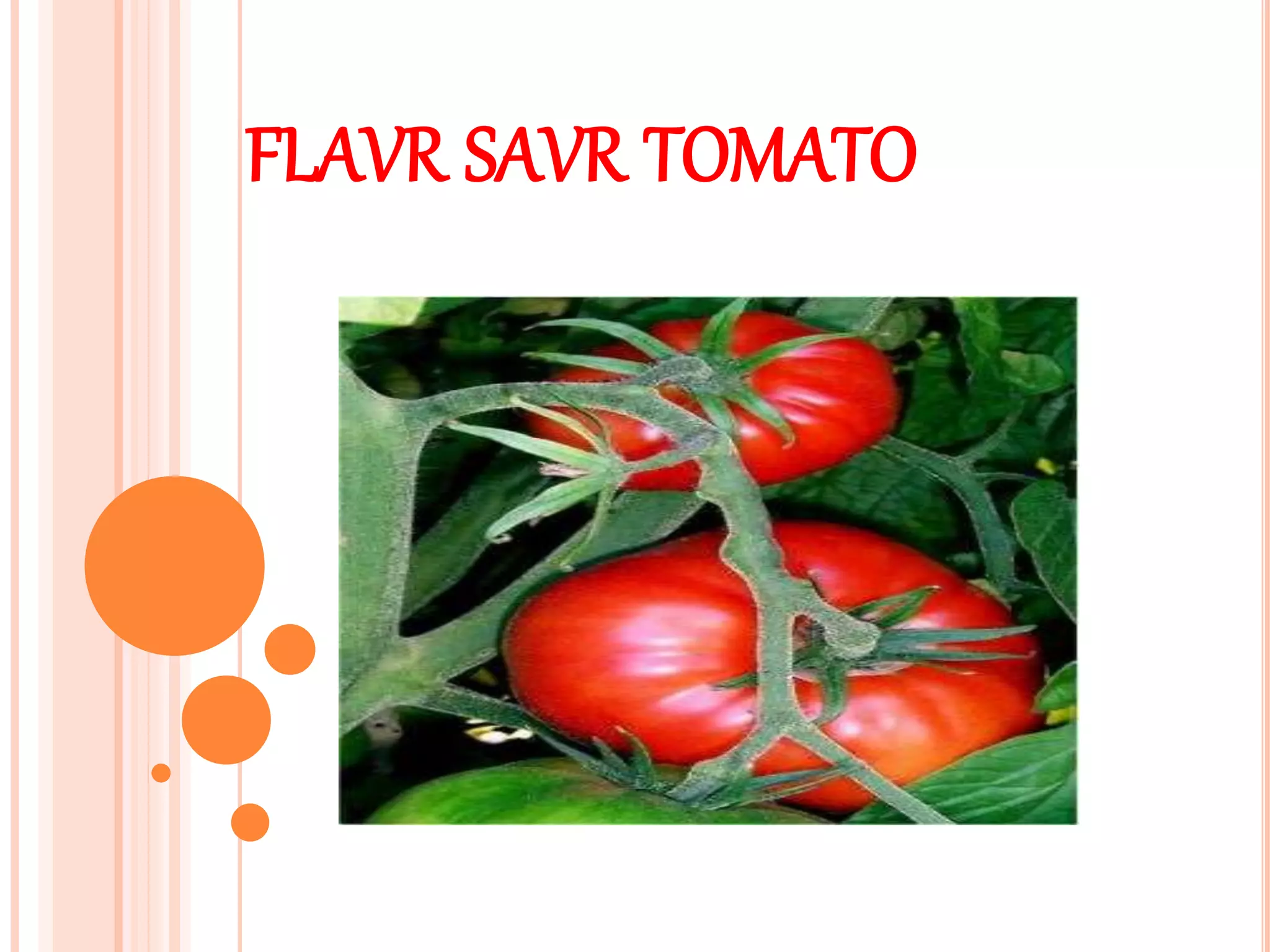
FLAVR SAVR TOMATO
IN TRADITIONAL CROPS
 A major problem in agriculture is perish ability of its
products.
 Various methods have been initiated and developed to
increase the shelf life of crops especially for fruits and
vegetables.
 One such successful technique is delaying the ripening of
fruits and vegetables by manipulating the genes through
genetic engineering.
FRUIT RIPENING PROCESS
 Fruit ripening is an active process characterized by increased
respiration accompanied by a rapid increase in ethylene synthesis.
 As the chlorophyll gets degraded, the green color of fruit disappears
and a red pigment, lycopene is synthesized.
 The fruit gets softened as a result of the activity of cell wall
degrading enzymes namely polygalacturonase (PG) and methyl
esterase.
 The phyto hormone ethylene production is linked to fruit ripening as
the same is known to trigger the ripening effect.
 The breakdown of starch to sugars and accumulation of large
number of secondary products improves the flavor, taste and smell of
the fruits.
GENES INVOLVED
IN CASE OF TOMATOES:
 i) pTOM5 encodes for phytoene synthase which promote
lycopene synthesis that gives red coloration
 ii) pTOM6 gene encodes for polygalacturonase. This enzyme
degrades the cell wall, resulting in fruit softening.
 iii) pTOM gene encodes for ACC oxidase. This enzyme
catalyzes the ethylene formation that triggers the fruit ripening.
GENETICALLY MODIFIED TOMATO
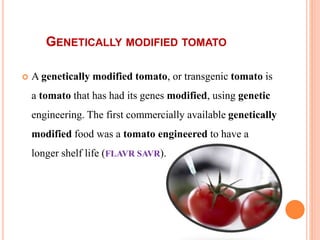
 A genetically modified tomato, or transgenic tomato is
a tomato that has had its genes modified, using genetic
engineering. The first commercially available genetically
modified food was a tomato engineered to have a
longer shelf life (FLAVR SAVR).
FLAVR SAVR TOMATO
 First genetically engineered crop granted license for
human consumption.
 Produced by Californian company Calgene 1992.
 Calgene introduced a gene in plant which synthesize a
complementary mRNA to PG gene and inhibiting the
synthesis of PG enzyme.
 On May 21, 1994, the genetically engineered Flavr Savr
tomato was introduced.
DEVELOPMENT OF FLAVR SAVR TOMATO
 Softening of fruits is largely due to degradation of cell wall (pectin)
by enzyme polygalacturonase (PG). The gene encoding PG has been
isolated and cloned (pTOM6).
Procedure involves: -
1) Isolation of DNA from tomato plant that encodes the enzyme
polygalacturonase (PG).
2) Transfer of PG gene to a vector bacteria and production of
complementary DNA (cDNA) molecules.
3) Introduction of cDNA into a fresh tomato plant to produce
transgenic plant.
MECHANISM OF PG ANTISENSE RNA
APPROACH
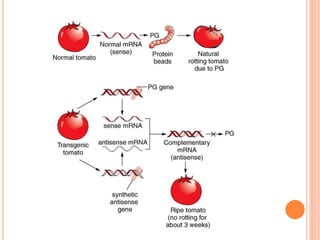
In normal plants, PG gene encodes a normal or sense mRNA that
produce the enzyme PG and it is actively involved in fruit ripening.
 The cDNA of PG encodes for antisense mRNA, which is
complementary to sense mRNA.
 The hybridization between sense and antisense mRNA render the
sense mRNA ineffective.
 Consequently, no polygalacturonase is produced hence fruit ripening
is delayed.
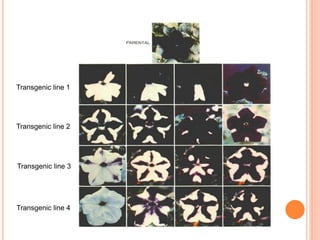
Transgenic line 1
Transgenic line 2
Transgenic line 3
Transgenic line 4
ADVANTAGES:
ď‚— Slower ripen rate
ď‚— Ripen longer on vine
ď‚— Fully developed flavors
ď‚— Increase the shelf life.
THANK YOU

Flavr savr tomato.ppt

  • 1.
  • 2.
    IN TRADITIONAL CROPS A major problem in agriculture is perish ability of its products.  Various methods have been initiated and developed to increase the shelf life of crops especially for fruits and vegetables.  One such successful technique is delaying the ripening of fruits and vegetables by manipulating the genes through genetic engineering.
  • 3.
    FRUIT RIPENING PROCESS Fruit ripening is an active process characterized by increased respiration accompanied by a rapid increase in ethylene synthesis.  As the chlorophyll gets degraded, the green color of fruit disappears and a red pigment, lycopene is synthesized.  The fruit gets softened as a result of the activity of cell wall degrading enzymes namely polygalacturonase (PG) and methyl esterase.  The phyto hormone ethylene production is linked to fruit ripening as the same is known to trigger the ripening effect.  The breakdown of starch to sugars and accumulation of large number of secondary products improves the flavor, taste and smell of the fruits.
  • 4.
    GENES INVOLVED IN CASEOF TOMATOES:  i) pTOM5 encodes for phytoene synthase which promote lycopene synthesis that gives red coloration  ii) pTOM6 gene encodes for polygalacturonase. This enzyme degrades the cell wall, resulting in fruit softening.  iii) pTOM gene encodes for ACC oxidase. This enzyme catalyzes the ethylene formation that triggers the fruit ripening.
  • 5.
    GENETICALLY MODIFIED TOMATO A genetically modified tomato, or transgenic tomato is a tomato that has had its genes modified, using genetic engineering. The first commercially available genetically modified food was a tomato engineered to have a longer shelf life (FLAVR SAVR).
  • 6.
    FLAVR SAVR TOMATO First genetically engineered crop granted license for human consumption.  Produced by Californian company Calgene 1992.  Calgene introduced a gene in plant which synthesize a complementary mRNA to PG gene and inhibiting the synthesis of PG enzyme.  On May 21, 1994, the genetically engineered Flavr Savr tomato was introduced.
  • 7.
    DEVELOPMENT OF FLAVRSAVR TOMATO  Softening of fruits is largely due to degradation of cell wall (pectin) by enzyme polygalacturonase (PG). The gene encoding PG has been isolated and cloned (pTOM6). Procedure involves: - 1) Isolation of DNA from tomato plant that encodes the enzyme polygalacturonase (PG). 2) Transfer of PG gene to a vector bacteria and production of complementary DNA (cDNA) molecules. 3) Introduction of cDNA into a fresh tomato plant to produce transgenic plant.
  • 8.
    MECHANISM OF PGANTISENSE RNA APPROACH In normal plants, PG gene encodes a normal or sense mRNA that produce the enzyme PG and it is actively involved in fruit ripening.  The cDNA of PG encodes for antisense mRNA, which is complementary to sense mRNA.  The hybridization between sense and antisense mRNA render the sense mRNA ineffective.  Consequently, no polygalacturonase is produced hence fruit ripening is delayed.
  • 9.
    Transgenic line 1 Transgenicline 2 Transgenic line 3 Transgenic line 4
  • 11.
    ADVANTAGES: ď‚— Slower ripenrate ď‚— Ripen longer on vine ď‚— Fully developed flavors ď‚— Increase the shelf life.
  • 12.