CLIMATE CHANGE AND
AGRICULTURE
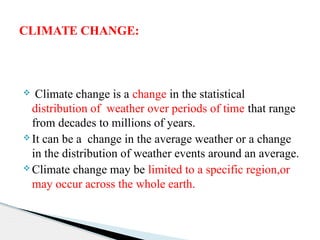
 Climate change is a change in the statistical
distribution of weather over periods of time that range
from decades to millions of years.
 It can be a change in the average weather or a change
in the distribution of weather events around an average.
 Climate change may be limited to a specific region,or
may occur across the whole earth.
CLIMATE CHANGE:
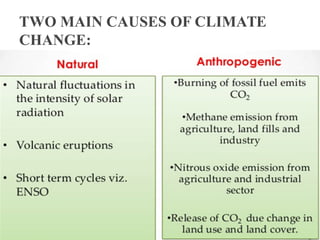
TWO MAIN CAUSES OF CLIMATE
CHANGE:
 Crops
 Soil fertility and erosion
 Pests,diseases and weeds.
 Impacts on livestock.
 Impact on available water.
EFFECTS OF CLIMATE CHANGE ON
AGRICULTURE:
 Climate change and agriculture are interrelated
processes,both of which take place on a global scale.
 The climate change could affect agriculture in several
ways: Climate change affects the productivity in terms
of quantity and quality of crops ,agricultural practices
,through changes of water use and agricultural inputs
such as herbicides,insecticidesand fertilizers
,environmental effects etc.
HOW CLIMATE CHANGE AFFECTS THE
AGRICULTURE:
 Carbon dioxide is essential to plant growth
 .Rising carbondioxide concentration in the atmosphere
can have both positive and negative consequences.
 Increased carbondioxide is expected to have positive
physiological effects by increasing the rate of
photosynthesis.
 Currently ,the amount of carbondioxide in the
atmosphere is 380 ppm.In comparison ,the amount of
oxygen is 210,000ppm.
EFFECT OF ELEVATED CARBON DIOXIDE ON CROPS:
 This means that often plants may be starved of carbon
dioxide,due to the enzyme that fixes
carbondioxide,rubisco also fixes oxygen in the process
of photorespiration.
 The effects of an increase in carbondioxide would be
higher on C3 crops than on C4 crops, because the
former is more susceptible to carbon dioxide shortage.
Contd…
 To overcome the impact of climate change we should
adopt land/water conservation agriculture methods
suited to varied agro-climates.
 Increase crop diversity by inter-cropping and
appropriate cropping systems/landuse.
 Balanced use of biocides/chemicals.
 Increase forest area upto 33% of the total geographical
area.
 Use less fossil fuel by using more solar/
Wind sources of energy.
EFFORTS TO OVERCOME THE IMPACT OF
CLIMATE CHANGE:
 Educate farmers on the dangers of climate change.
 Encourage farmer groups to establish small weather
observatories in their villages.
Contd..
There are several adaptation measures that the
agricultural sector can undertake to cope with future
climate change.
These includes:
 Changing planting dates.
 Planting different varieties or crop species.
 Development and promotion of alternative crops.
 Developing new drought and heat –resistant varieties.
AGRICULTURAL’S ROLE IN MITIGATING
CLIMATE CHANGE:
 Improved crop residue and weed management.
 More use of water harvesting techniques.
 Better pest and disease control for crops.
 Implementing new or improving existing irrigation
systems.
THANK YOU!!!!!

Climate change in agriculture

  • 1.
  • 2.
     Climate changeis a change in the statistical distribution of weather over periods of time that range from decades to millions of years.  It can be a change in the average weather or a change in the distribution of weather events around an average.  Climate change may be limited to a specific region,or may occur across the whole earth. CLIMATE CHANGE:
  • 3.
    TWO MAIN CAUSESOF CLIMATE CHANGE:
  • 5.
     Crops  Soilfertility and erosion  Pests,diseases and weeds.  Impacts on livestock.  Impact on available water. EFFECTS OF CLIMATE CHANGE ON AGRICULTURE:
  • 6.
     Climate changeand agriculture are interrelated processes,both of which take place on a global scale.  The climate change could affect agriculture in several ways: Climate change affects the productivity in terms of quantity and quality of crops ,agricultural practices ,through changes of water use and agricultural inputs such as herbicides,insecticidesand fertilizers ,environmental effects etc. HOW CLIMATE CHANGE AFFECTS THE AGRICULTURE:
  • 7.
     Carbon dioxideis essential to plant growth  .Rising carbondioxide concentration in the atmosphere can have both positive and negative consequences.  Increased carbondioxide is expected to have positive physiological effects by increasing the rate of photosynthesis.  Currently ,the amount of carbondioxide in the atmosphere is 380 ppm.In comparison ,the amount of oxygen is 210,000ppm. EFFECT OF ELEVATED CARBON DIOXIDE ON CROPS:
  • 8.
     This meansthat often plants may be starved of carbon dioxide,due to the enzyme that fixes carbondioxide,rubisco also fixes oxygen in the process of photorespiration.  The effects of an increase in carbondioxide would be higher on C3 crops than on C4 crops, because the former is more susceptible to carbon dioxide shortage. Contd…
  • 9.
     To overcomethe impact of climate change we should adopt land/water conservation agriculture methods suited to varied agro-climates.  Increase crop diversity by inter-cropping and appropriate cropping systems/landuse.  Balanced use of biocides/chemicals.  Increase forest area upto 33% of the total geographical area.  Use less fossil fuel by using more solar/ Wind sources of energy. EFFORTS TO OVERCOME THE IMPACT OF CLIMATE CHANGE:
  • 10.
     Educate farmerson the dangers of climate change.  Encourage farmer groups to establish small weather observatories in their villages. Contd..
  • 11.
    There are severaladaptation measures that the agricultural sector can undertake to cope with future climate change. These includes:  Changing planting dates.  Planting different varieties or crop species.  Development and promotion of alternative crops.  Developing new drought and heat –resistant varieties. AGRICULTURAL’S ROLE IN MITIGATING CLIMATE CHANGE:
  • 12.
     Improved cropresidue and weed management.  More use of water harvesting techniques.  Better pest and disease control for crops.  Implementing new or improving existing irrigation systems.
  • 13.