Downloaded 12 times



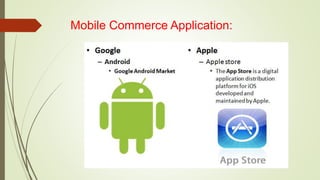


Mobile commerce originated in 1997 when the first Coca Cola vending machines accepting SMS payments were installed in Finland. It is defined as the buying and selling of goods and services via mobile devices using wireless technologies. Popular mobile commerce applications include mobile ticketing, content purchases, banking, browsing, auctions, marketing and purchases. While it offers advantages like various payment options and push advertising, disadvantages include expensive costs, slow speeds, small device screens, and security issues.


