TRANSGENIC CROPS
SEMINAR PRESENTATION
BY
MIKA GHOSH
B.SC BIOTECHNOLOGY
UG SEM II
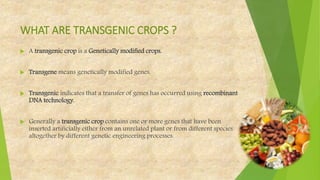
WHAT ARE TRANSGENIC CROPS ?
 A transgenic crop is a Genetically modified crops.
 Transgene means genetically modified genes.
 Transgenic indicates that a transfer of genes has occurred using recombinant
DNA technology.
 Generally a transgenic crop contains one or more genes that have been
inserted artificially either from an unrelated plant or from different species
altogether by different genetic engineering processes.
HISTORY
 Was under trial and error for almost 9900 years.
 The first genetically modified crop was produced in 1982, using an
antibiotic resistant tobacco plant.
 In 1992 the president of China introduced a virus resistant tobacco
plant.
 The first genetically modified plants approved for sale in U.S in
1994 was the Flavr Savr tomato which has longer self life, as it
took longer to soften after ripening.
 Around 1996 35 approvals had been granted commercially to
grow 8 transgenic crops and one flower crop with 8 different trait
 In 2000 vitamin A rich Golden rice was produced.
AN OVERVIEW OF THE PROCESS
How to make
Transgenic Crops ?
In plants cells insertion of foreign DNA is called Transformation.
The transformation is of two types :
 Hereditary
 Non hereditary
For the incorporation of foreign gene following methods used
 Indirect
 Direct
TRANSFORMATION
INDIRECT
 Agrobacterium mediated gene
transfer
A. Tumefaciens
A. rhizogenes
 Virus mediated
DIRECT
 Micro injection
 Biolistics
 Electroporation
Etc...
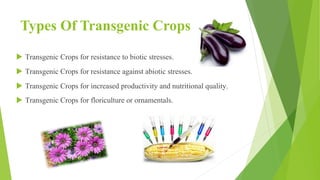
Types Of Transgenic Crops
 Transgenic Crops for resistance to biotic stresses.
 Transgenic Crops for resistance against abiotic stresses.
 Transgenic Crops for increased productivity and nutritional quality.
 Transgenic Crops for floriculture or ornamentals.
Resistance to biotic stresses
Trans gene is incorporated so to develop resistance against herbicides, insect,
viruses, bacteria and fungal pathogens..
 Herbicides normally affect processes like photosynthesis and biosynthesis of
essential amino acids.
 In case either the target protein is made insensitive to herbicides or a
pathway is introduce that will detoxify them.
 Example – Soybean, Corn, Canola etc.
 Insect resistance plants are also developed by genetic engineering either using
Bt gene or secondary metabolites.
 Similarly viral,bacterial and fungal pathogens resistance plants are also
developed using respective trans genes.
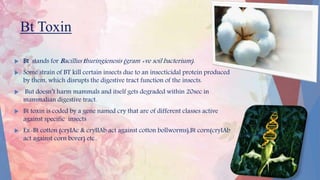
Bt Toxin
 Bt stands for Bacillus thuringienesis (gram +ve soil bacterium).
 Some strain of BT kill certain insects due to an insecticidal protein produced
by them, which disrupts the digestive tract function of the insects.
 But doesn’t harm mammals and itself gets degraded within 20sec in
mammalian digestive tract.
 Bt toxin is coded by a gene named cry that are of different classes active
against specific insects
 Ex-Bt cotton (cryIAc & cryIIAb act against cotton bollworms),Bt corn(cryIAb
act against corn borer) etc..
Resistance to abiotic sources
 Trans gene is incorporated so to develop resistance against draught, high and
low temperature, salinity, osmotic stress etc in plants.
 For this purpose transgenes are isolated from wild plants, algae,ferns,
bryophytes and some angiosperms that withstands these abiotic stresses.
 Proline-5- Carboxylate synthase gene is used for draught resistance.
 Trehalose 6 phosphate synthase is used to develop resistance to heat,cold
and osmotic stresses as the product of this gene Trehalose is a non
reducing disaccharide which accumulates at such conditions.
 High levels of thermo tolerance have been achieved by using heat shock
proteins or by alternating levels of osmolytes that maintain membrane
fluidity.
Productivity and nutritional quality
 Transgene is incorporated for the development of enhancement to
productivity and nutritional quality of crop yield.
Approaches for increased crop productivity by Trangenes
 Improved harvest index
 Higher Biomass production
 Hybrid seed production
Approaches for improved nutritional quality by transgenes
 By improvement of functional food and neutraceuticals
 Manipulation of grain quality in cereals
 Super food bio fortified for micronutrients
 Improved oil composition in oil crops
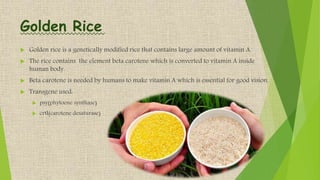
Golden Rice
 Golden rice is a genetically modified rice that contains large amount of vitamin A.
 The rice contains the element beta carotene which is converted to vitamin A inside
human body.
 Beta carotene is needed by humans to make vitamin A which is essential for good vision.
 Transgene used:
 psy(phytoene synthase)
 crtI(carotene desaturase)
Floriculture or ornamentals
Transgene is incorporated to development of production of
transgenics with novel aesthetic properties of ornamental
crops.
For Transgenic ornamentals approaches follows:
 Plants size and flower yield
 Flower colours
 Flower and inflorescence architecture
using mutant gene
 Flowers with longer self life
 Improved flower fragnance
Advantages of GM crops
 improved nutritional quality
 increased crop yield
 insect resistance
 disease resistance
 herbicide resistance
 salt tolerance
 biopharmaceuticals
 saving valuable top soil
 ability to grow in harsh environment
Disadvantages of GM crops
 Allergic reactions
 Production of toxins
 Reduced nutritional value
 Release of toxins to soil
 Resistance of pests to toxins
 Disruption of biodiversity
 Unacceptable intervention in “God’s Creation”
violating barriers in natural world
 Objections in consuming animal genes in plants and
vice versa.
 Business controversies
 Patenting GM seeds creates trouble for farmers as
they have to buy it every year with greater cost.
Etc....
Conclusion
 Transgenic crops have potential to solve world’s hunger and malnutrition
problems
 It has potential to help protect and preserve the environment by increasing
yielded and reducing reliance upon chemical pesticides and insecticides.
 Safety testing and regulation can ensure it’s superiority.
 The society can be enlightened with the scientific Technology.
Transgenic crops

Transgenic crops

  • 1.
    TRANSGENIC CROPS SEMINAR PRESENTATION BY MIKAGHOSH B.SC BIOTECHNOLOGY UG SEM II
  • 2.
    WHAT ARE TRANSGENICCROPS ?  A transgenic crop is a Genetically modified crops.  Transgene means genetically modified genes.  Transgenic indicates that a transfer of genes has occurred using recombinant DNA technology.  Generally a transgenic crop contains one or more genes that have been inserted artificially either from an unrelated plant or from different species altogether by different genetic engineering processes.
  • 3.
    HISTORY  Was undertrial and error for almost 9900 years.  The first genetically modified crop was produced in 1982, using an antibiotic resistant tobacco plant.  In 1992 the president of China introduced a virus resistant tobacco plant.  The first genetically modified plants approved for sale in U.S in 1994 was the Flavr Savr tomato which has longer self life, as it took longer to soften after ripening.  Around 1996 35 approvals had been granted commercially to grow 8 transgenic crops and one flower crop with 8 different trait  In 2000 vitamin A rich Golden rice was produced.
  • 4.
    AN OVERVIEW OFTHE PROCESS
  • 5.
    How to make TransgenicCrops ? In plants cells insertion of foreign DNA is called Transformation. The transformation is of two types :  Hereditary  Non hereditary For the incorporation of foreign gene following methods used  Indirect  Direct
  • 6.
    TRANSFORMATION INDIRECT  Agrobacterium mediatedgene transfer A. Tumefaciens A. rhizogenes  Virus mediated DIRECT  Micro injection  Biolistics  Electroporation Etc...
  • 7.
    Types Of TransgenicCrops  Transgenic Crops for resistance to biotic stresses.  Transgenic Crops for resistance against abiotic stresses.  Transgenic Crops for increased productivity and nutritional quality.  Transgenic Crops for floriculture or ornamentals.
  • 8.
    Resistance to bioticstresses Trans gene is incorporated so to develop resistance against herbicides, insect, viruses, bacteria and fungal pathogens..  Herbicides normally affect processes like photosynthesis and biosynthesis of essential amino acids.  In case either the target protein is made insensitive to herbicides or a pathway is introduce that will detoxify them.  Example – Soybean, Corn, Canola etc.  Insect resistance plants are also developed by genetic engineering either using Bt gene or secondary metabolites.  Similarly viral,bacterial and fungal pathogens resistance plants are also developed using respective trans genes.
  • 9.
    Bt Toxin  Btstands for Bacillus thuringienesis (gram +ve soil bacterium).  Some strain of BT kill certain insects due to an insecticidal protein produced by them, which disrupts the digestive tract function of the insects.  But doesn’t harm mammals and itself gets degraded within 20sec in mammalian digestive tract.  Bt toxin is coded by a gene named cry that are of different classes active against specific insects  Ex-Bt cotton (cryIAc & cryIIAb act against cotton bollworms),Bt corn(cryIAb act against corn borer) etc..
  • 10.
    Resistance to abioticsources  Trans gene is incorporated so to develop resistance against draught, high and low temperature, salinity, osmotic stress etc in plants.  For this purpose transgenes are isolated from wild plants, algae,ferns, bryophytes and some angiosperms that withstands these abiotic stresses.  Proline-5- Carboxylate synthase gene is used for draught resistance.  Trehalose 6 phosphate synthase is used to develop resistance to heat,cold and osmotic stresses as the product of this gene Trehalose is a non reducing disaccharide which accumulates at such conditions.  High levels of thermo tolerance have been achieved by using heat shock proteins or by alternating levels of osmolytes that maintain membrane fluidity.
  • 11.
    Productivity and nutritionalquality  Transgene is incorporated for the development of enhancement to productivity and nutritional quality of crop yield. Approaches for increased crop productivity by Trangenes  Improved harvest index  Higher Biomass production  Hybrid seed production Approaches for improved nutritional quality by transgenes  By improvement of functional food and neutraceuticals  Manipulation of grain quality in cereals  Super food bio fortified for micronutrients  Improved oil composition in oil crops
  • 12.
    Golden Rice  Goldenrice is a genetically modified rice that contains large amount of vitamin A.  The rice contains the element beta carotene which is converted to vitamin A inside human body.  Beta carotene is needed by humans to make vitamin A which is essential for good vision.  Transgene used:  psy(phytoene synthase)  crtI(carotene desaturase)
  • 13.
    Floriculture or ornamentals Transgeneis incorporated to development of production of transgenics with novel aesthetic properties of ornamental crops. For Transgenic ornamentals approaches follows:  Plants size and flower yield  Flower colours  Flower and inflorescence architecture using mutant gene  Flowers with longer self life  Improved flower fragnance
  • 14.
    Advantages of GMcrops  improved nutritional quality  increased crop yield  insect resistance  disease resistance  herbicide resistance  salt tolerance  biopharmaceuticals  saving valuable top soil  ability to grow in harsh environment
  • 15.
    Disadvantages of GMcrops  Allergic reactions  Production of toxins  Reduced nutritional value  Release of toxins to soil  Resistance of pests to toxins  Disruption of biodiversity
  • 16.
     Unacceptable interventionin “God’s Creation” violating barriers in natural world  Objections in consuming animal genes in plants and vice versa.  Business controversies  Patenting GM seeds creates trouble for farmers as they have to buy it every year with greater cost. Etc....
  • 17.
    Conclusion  Transgenic cropshave potential to solve world’s hunger and malnutrition problems  It has potential to help protect and preserve the environment by increasing yielded and reducing reliance upon chemical pesticides and insecticides.  Safety testing and regulation can ensure it’s superiority.  The society can be enlightened with the scientific Technology.