
Download to read offline
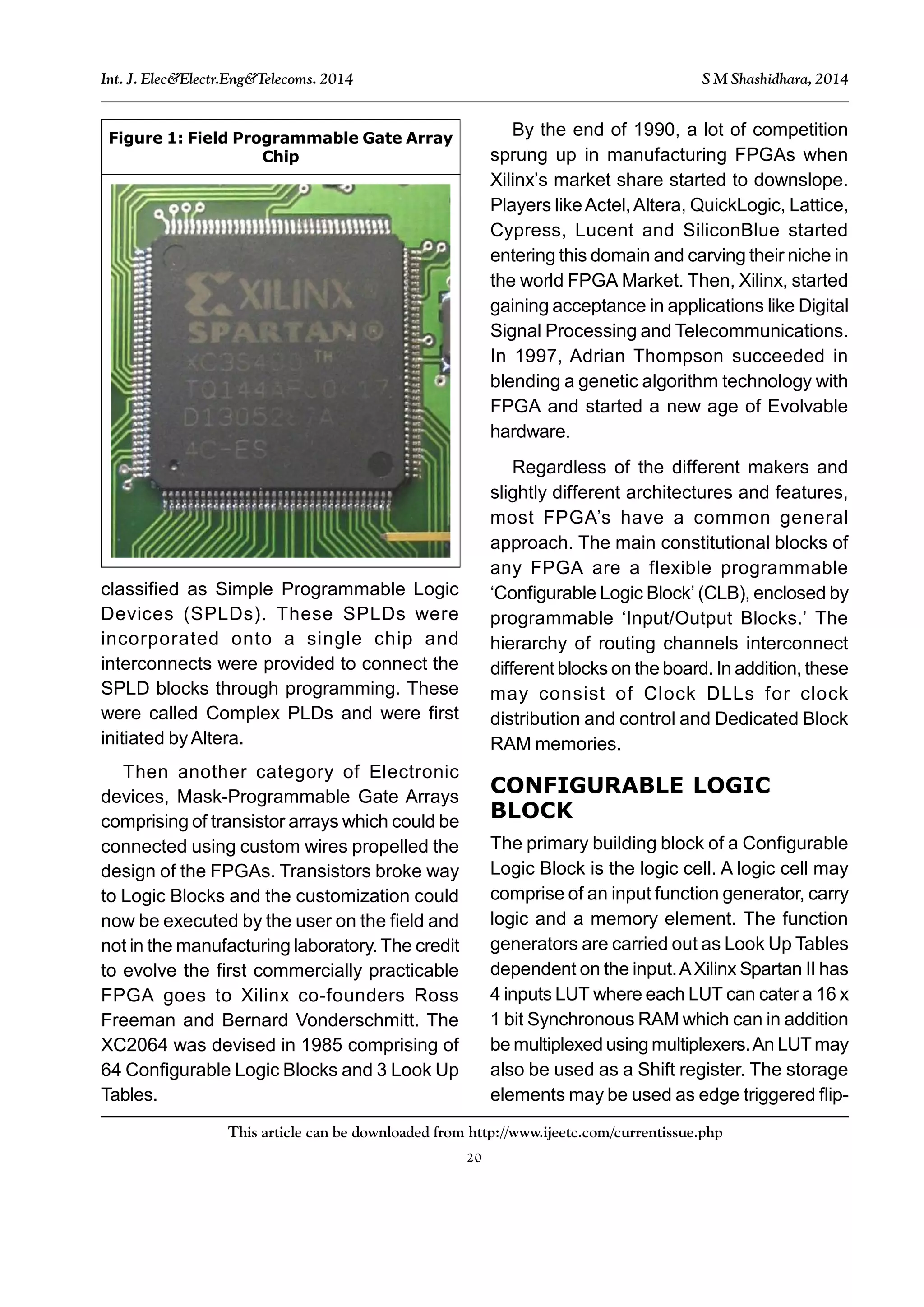
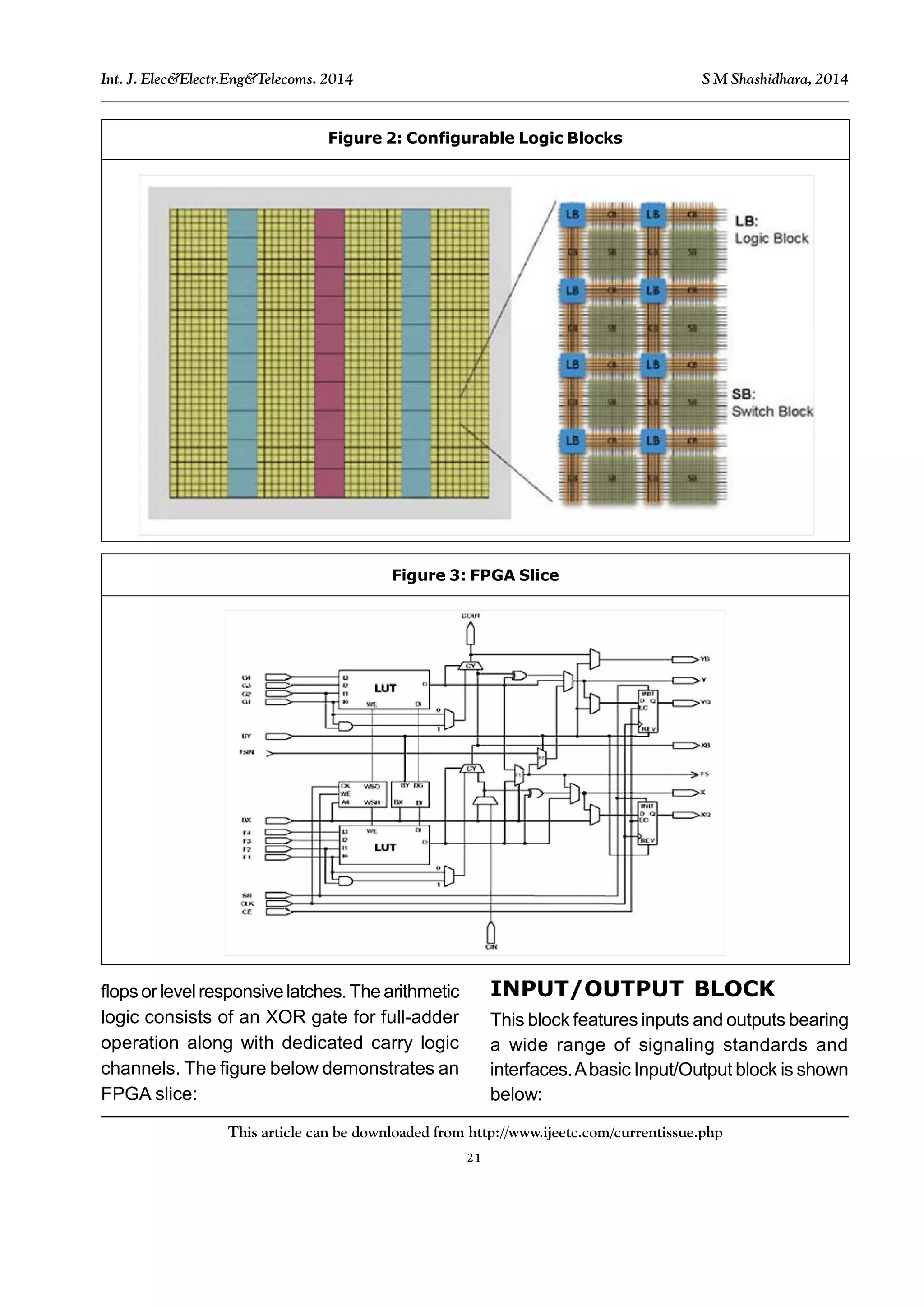
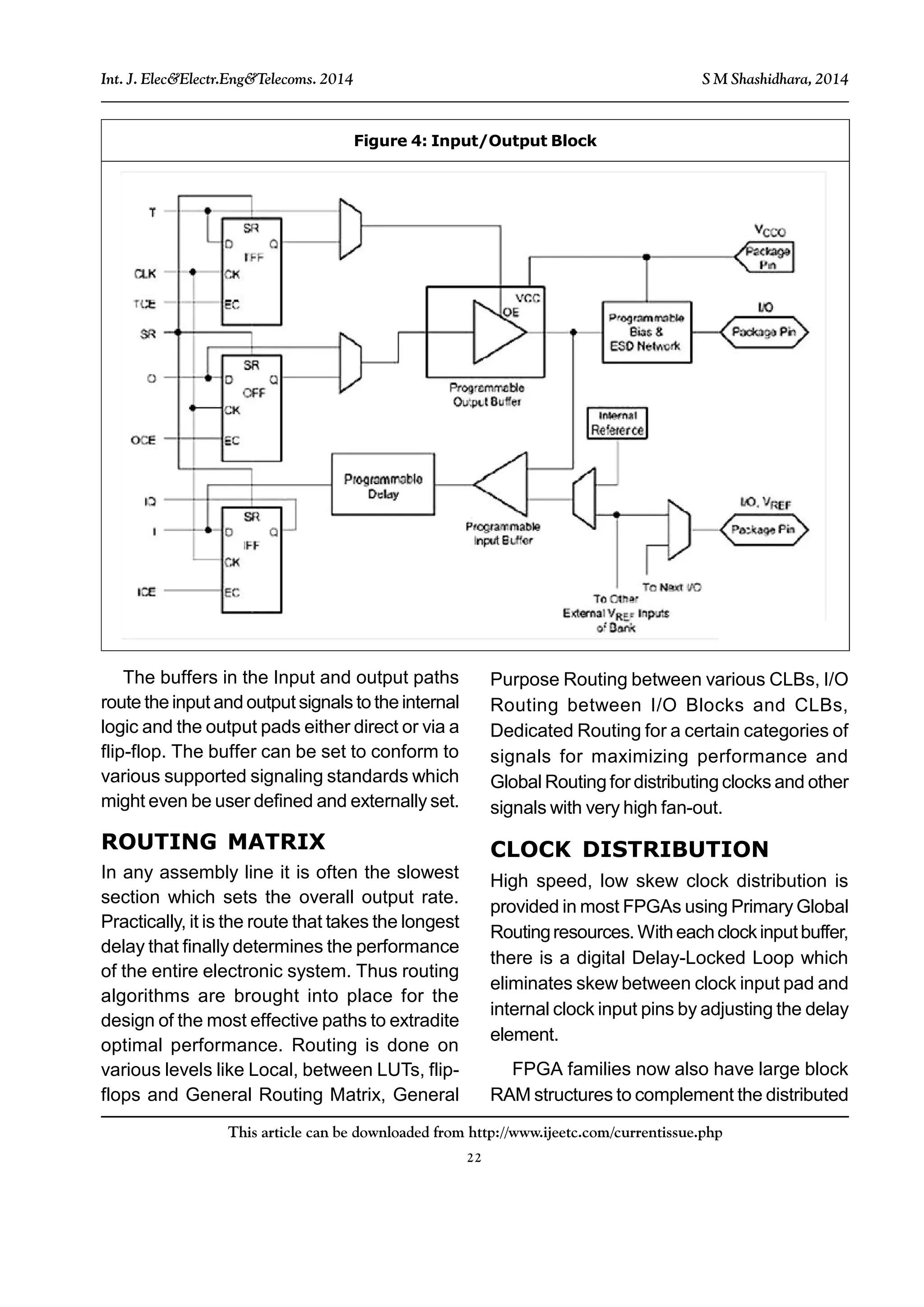
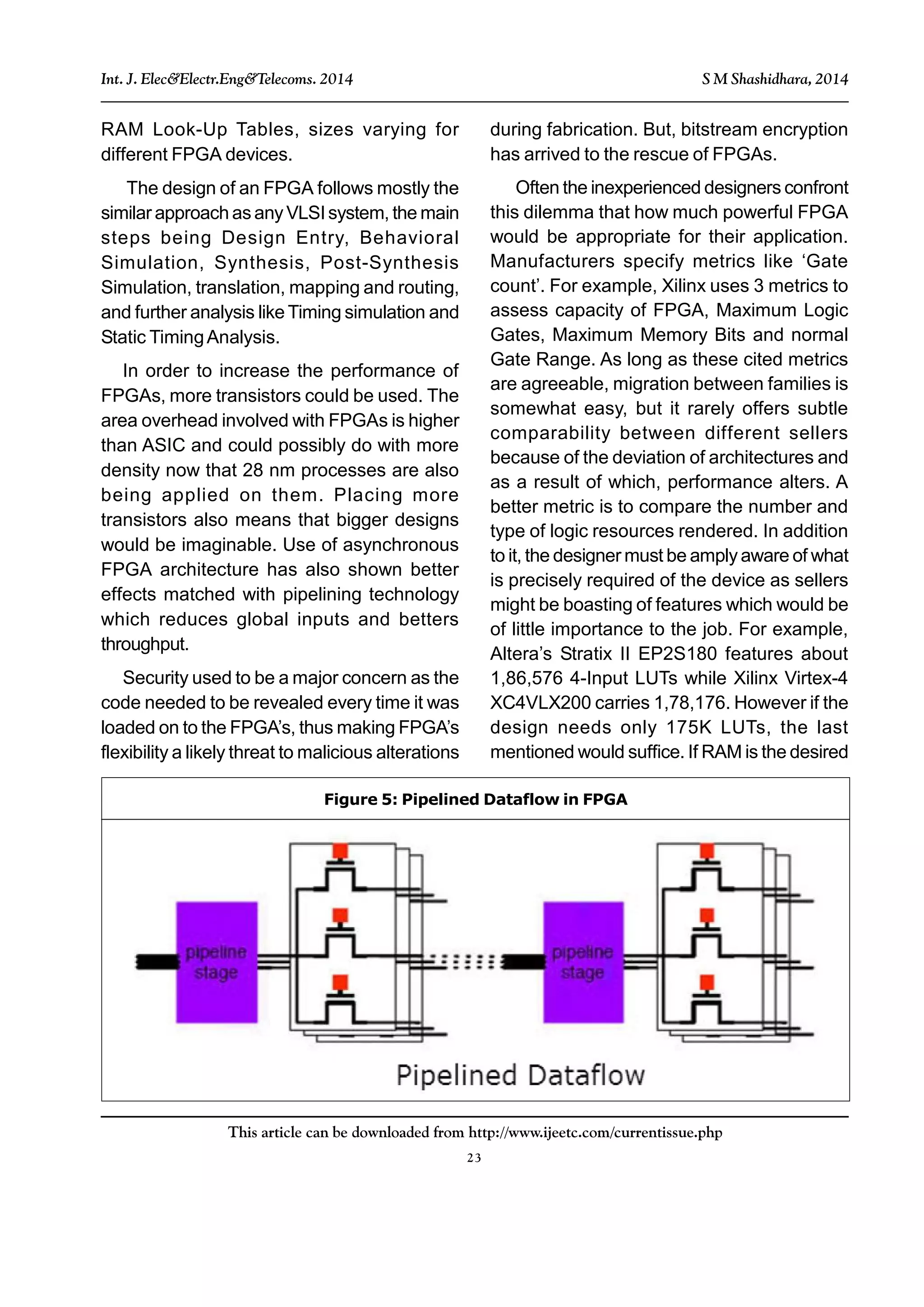
This document discusses Field Programmable Gate Arrays (FPGAs), including their history, components, applications, and advantages. FPGAs allow logic functions to be programmed in the field after manufacturing and consist of configurable logic blocks, input/output blocks, and a routing matrix. They are used widely in embedded systems, consumer electronics, communications, and more due to their flexibility, short development times, and ability to be updated in the field. FPGAs provide advantages over traditional ICs like long-term availability, field updates/upgrades, extremely short time to market, and massively parallel processing capabilities.


