Downloaded 290 times

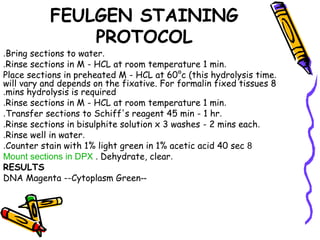
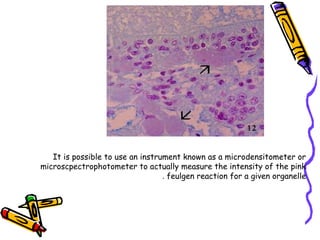
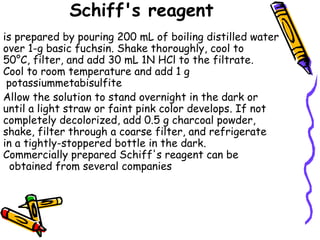


The Feulgen stain is a histological technique discovered in 1924 that uses acid hydrolysis and Schiff's reagent to specifically identify chromosomal material and DNA. It involves hydrolyzing tissue samples in hydrochloric acid to cleave nitrogen bases from DNA and form aldehyde groups, then staining the samples with Schiff's reagent to form a purple compound where aldehydes are present, selectively identifying DNA. The staining intensity is proportional to the DNA concentration and it allows DNA to be visualized microscopically.


