Downloaded 169 times



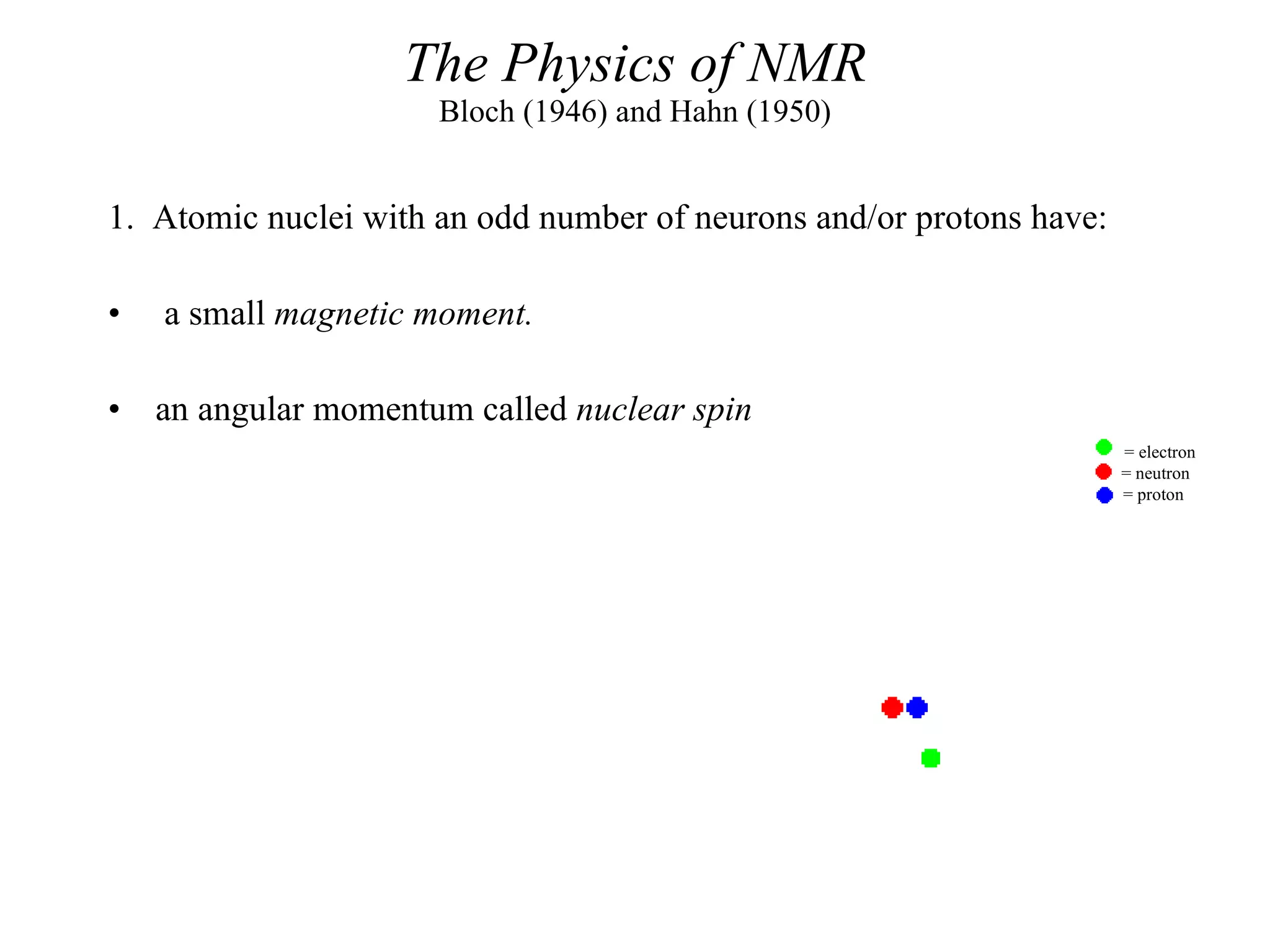
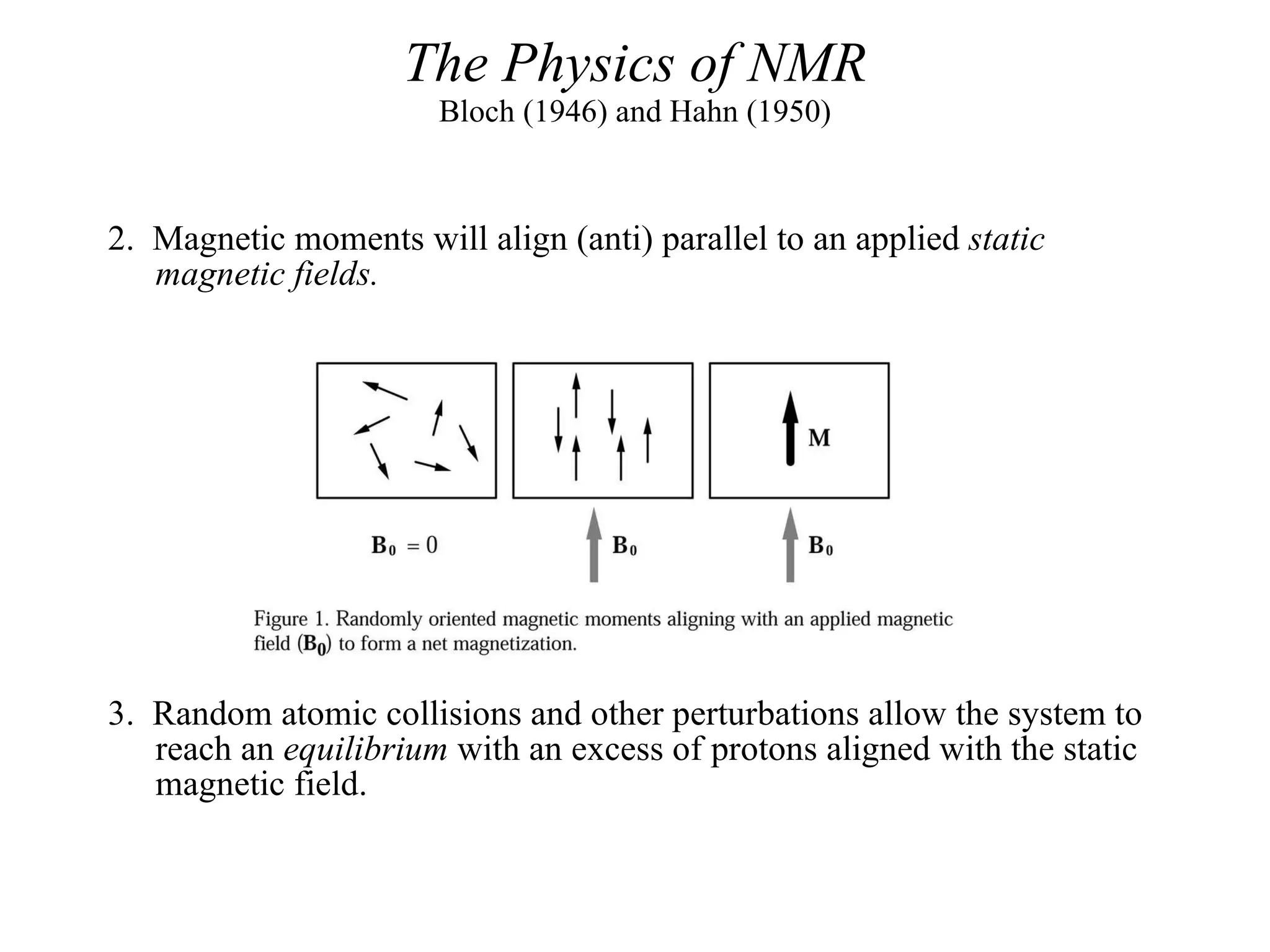

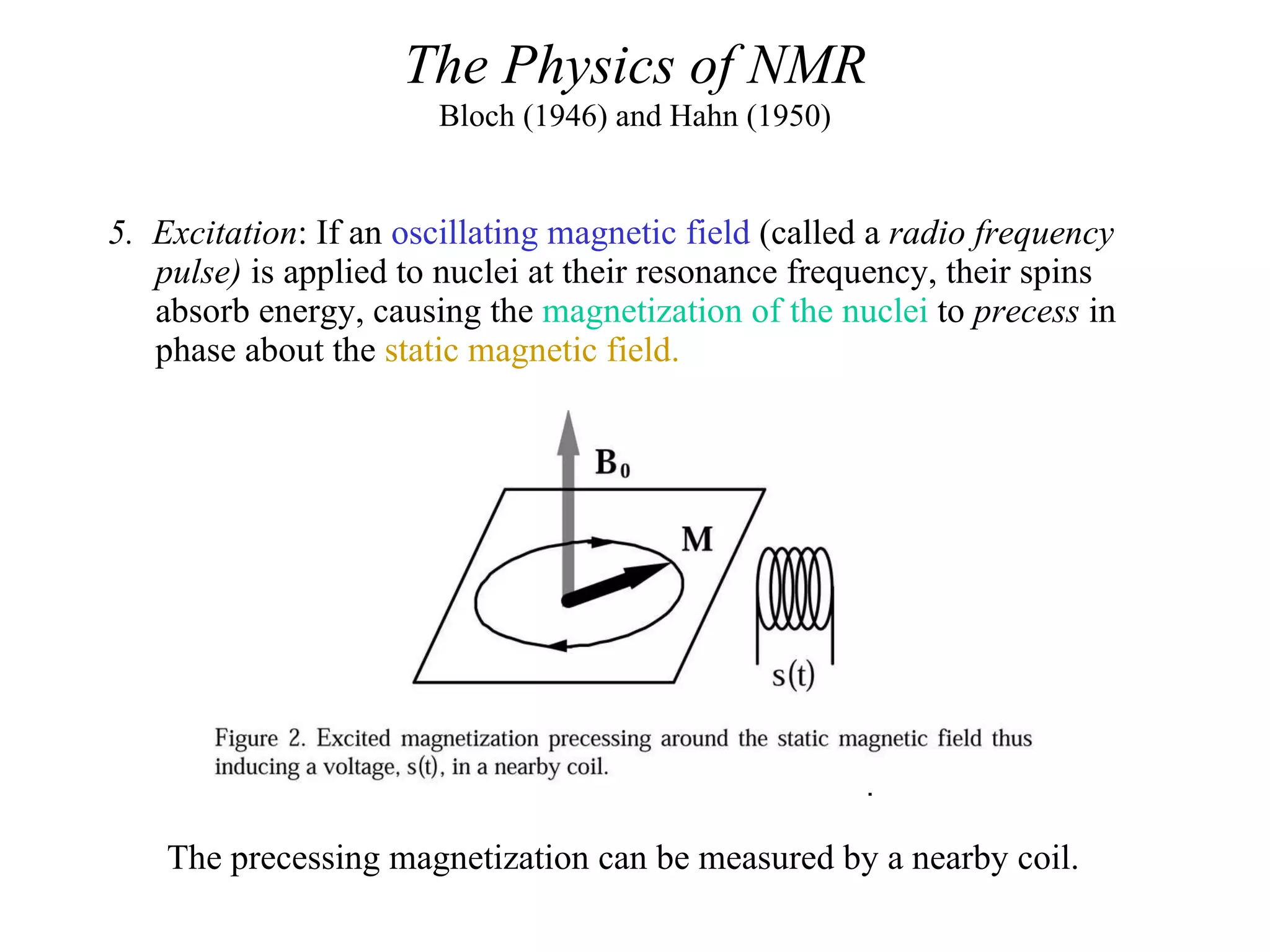


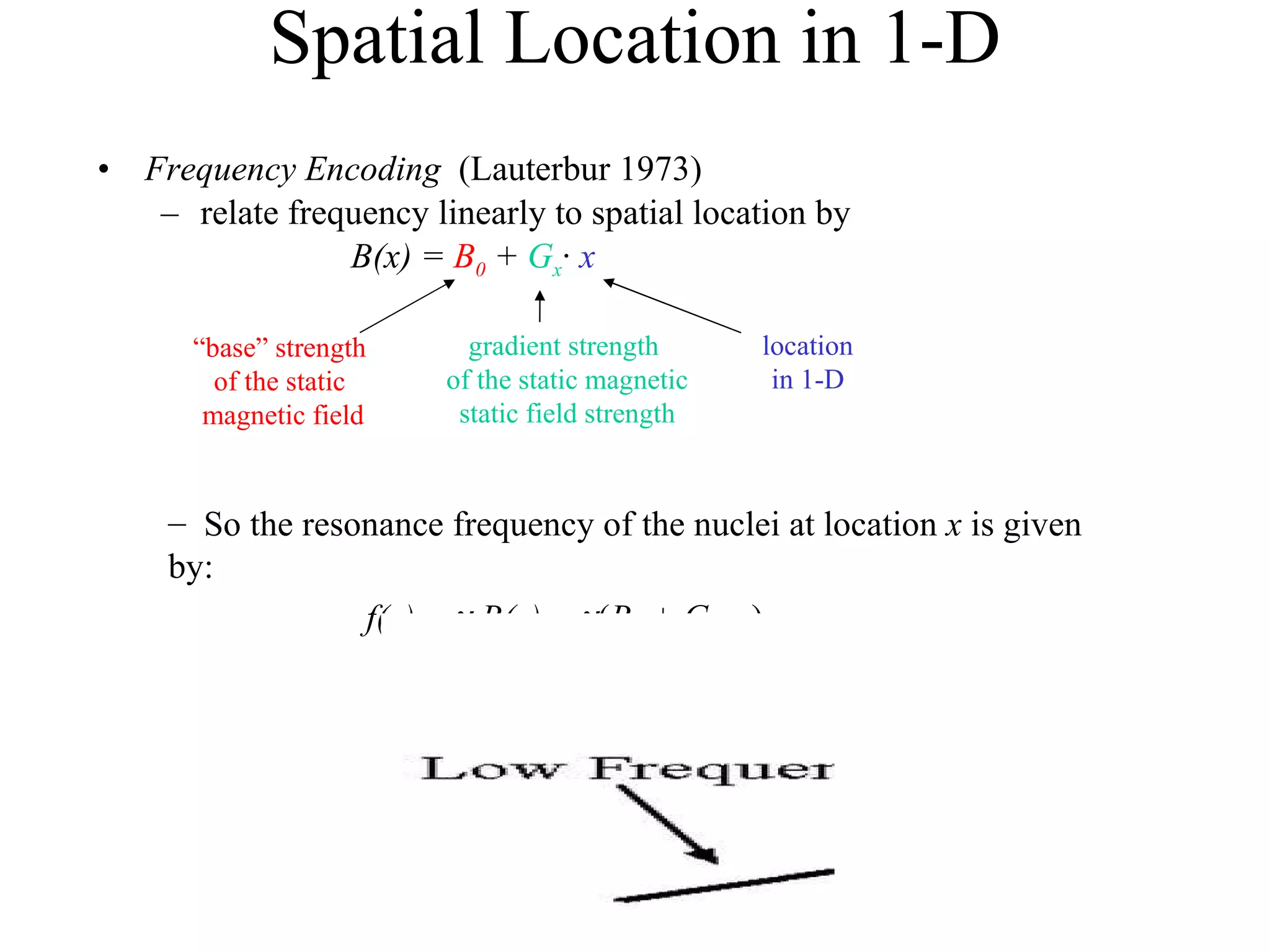
![Take the Fourier transform of the MR signal s(t), F [ s(t) ], to decompose s(t) into its power spectrum (a signal’s frequencies and associated amplitudes) . In the case of an object composed of a particular medium, we get an image of that object at a particular instant in time: a 1-D distribution of the magnetization intensity at location x: Spatial Location in 1-D F [ s(t) ] measure s(t) frequency amplitude intensity](https://image.slidesharecdn.com/fmri-100510211435-phpapp02/75/F-mri-12-2048.jpg)

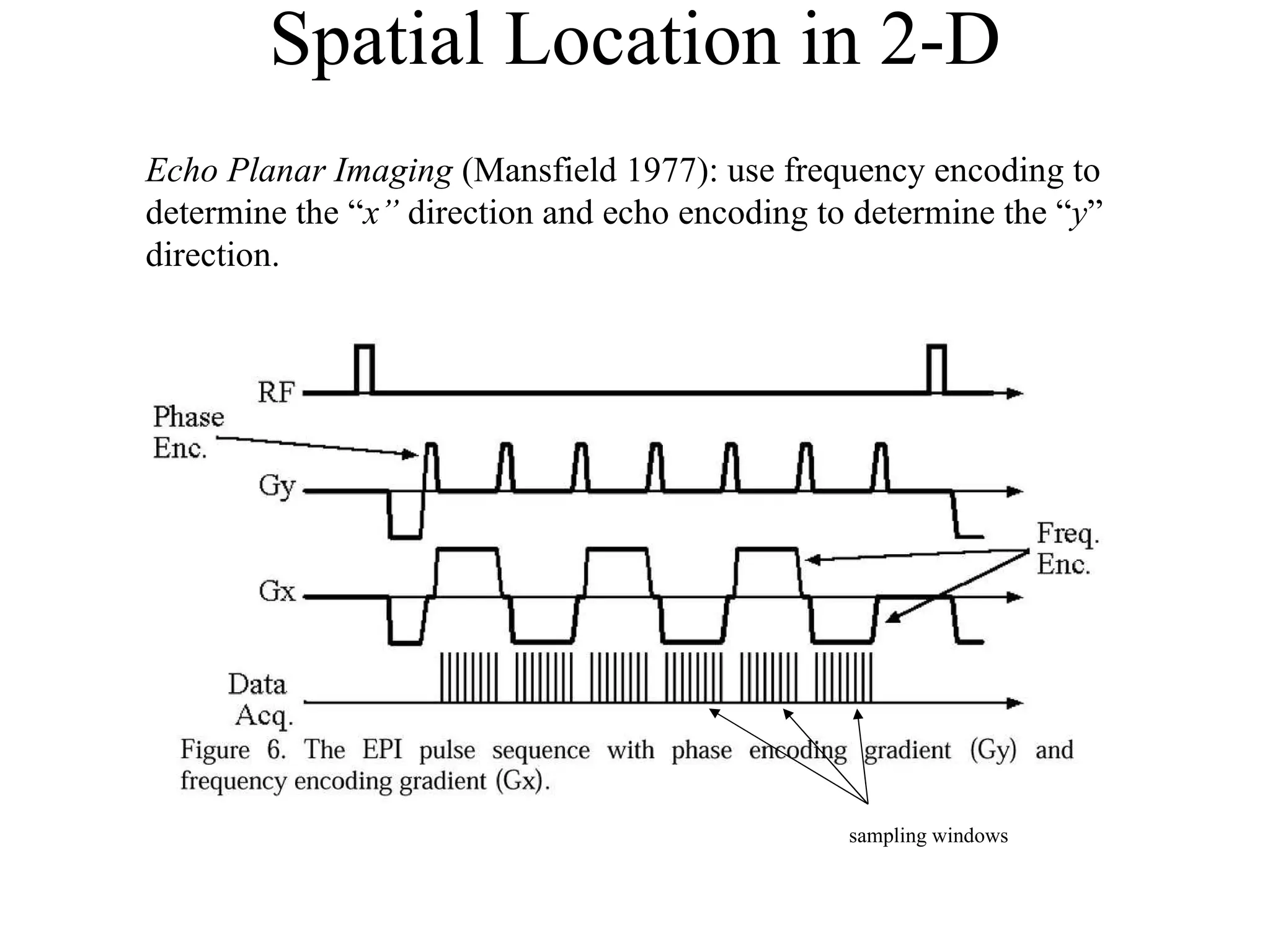


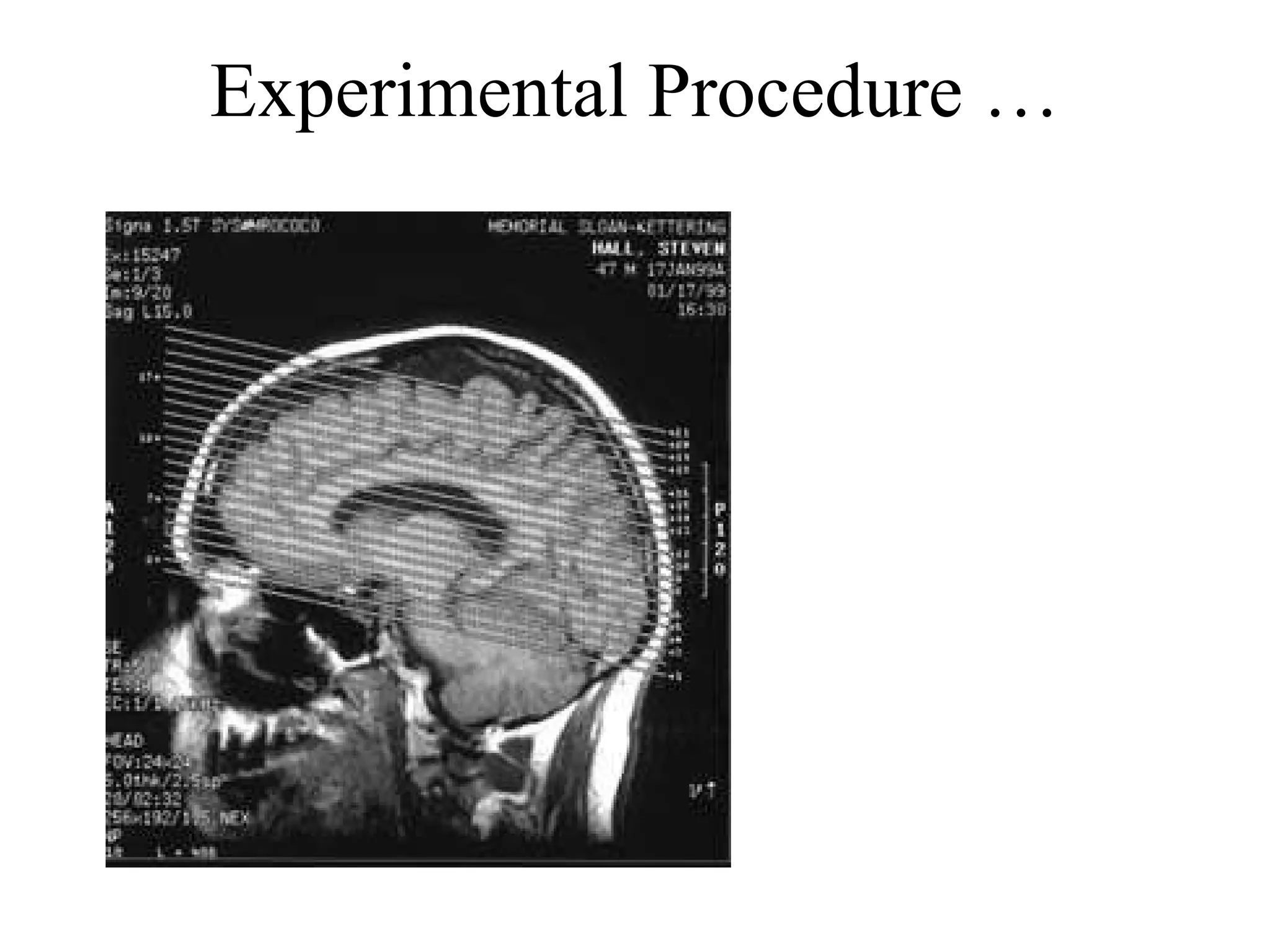


![Use EPI and slice selective excitation Apply a static magnetic field with intensity B 0 . Use an RF pulse with frequency matching resonance frequency of the desired medium (e.g. hydrogen nuclei) for the given static magnetic field intensity B 0 . Apply magnetic field gradients in x and y directions. Use coils to measure the MR signal s(t). Calculate F [ s(t) ] over each sampling window to determine MR signal location in the 2-D slice we have selected. Take into account how fast the signal has decayed since the RF pulse (T2 decay) when interpreting MR signal “strength” at each location. Give image intensity so fMRI works like this …](https://image.slidesharecdn.com/fmri-100510211435-phpapp02/75/F-mri-21-2048.jpg)


fMRI technology uses the nuclear magnetic resonance (NMR) phenomenon to form images of neural activity in the brain. It relies on the different magnetic properties of oxygenated and deoxygenated hemoglobin. When neurons are active in a region of the brain, blood flow to that region increases, altering the ratio of oxygenated to deoxygenated hemoglobin and causing a change in the MRI signal. Spatial encoding techniques allow fMRI to locate these signal changes within the brain and form a 3D image showing patterns of neural activity.


