Principles of Radiation Oncology
Introduction Increasing use for head and neck cancer Combined or as single modality Outline basic principles, radiobiology General treatment approach Common complications
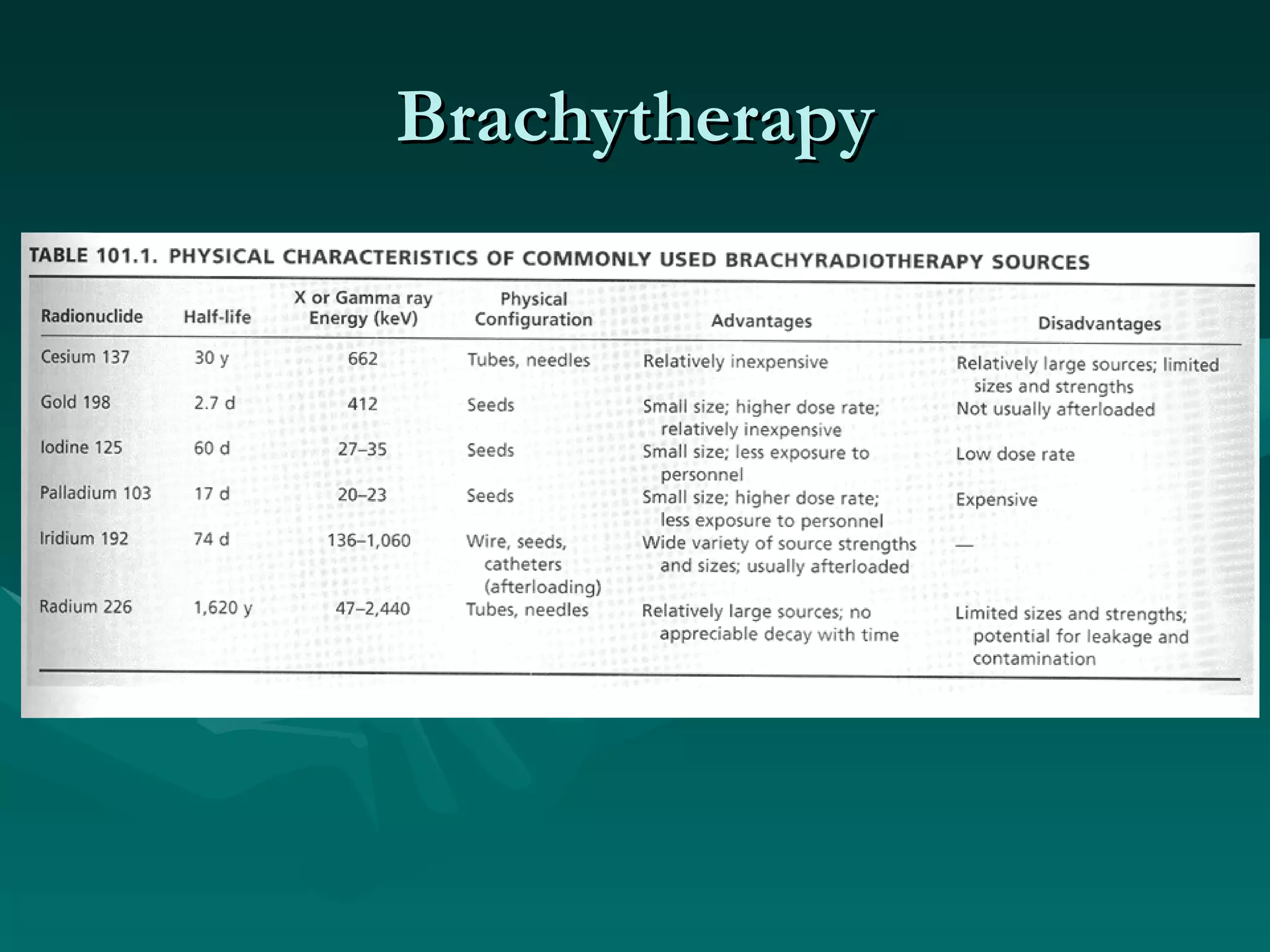
Radiation Physics Basis – ionizing particles interact with cellular molecules Relies on transfer of energy created by secondary charged particles (usually electrons) Break chemical bonds External beam vs. Brachytherapy Radiant energy is discrete yet random
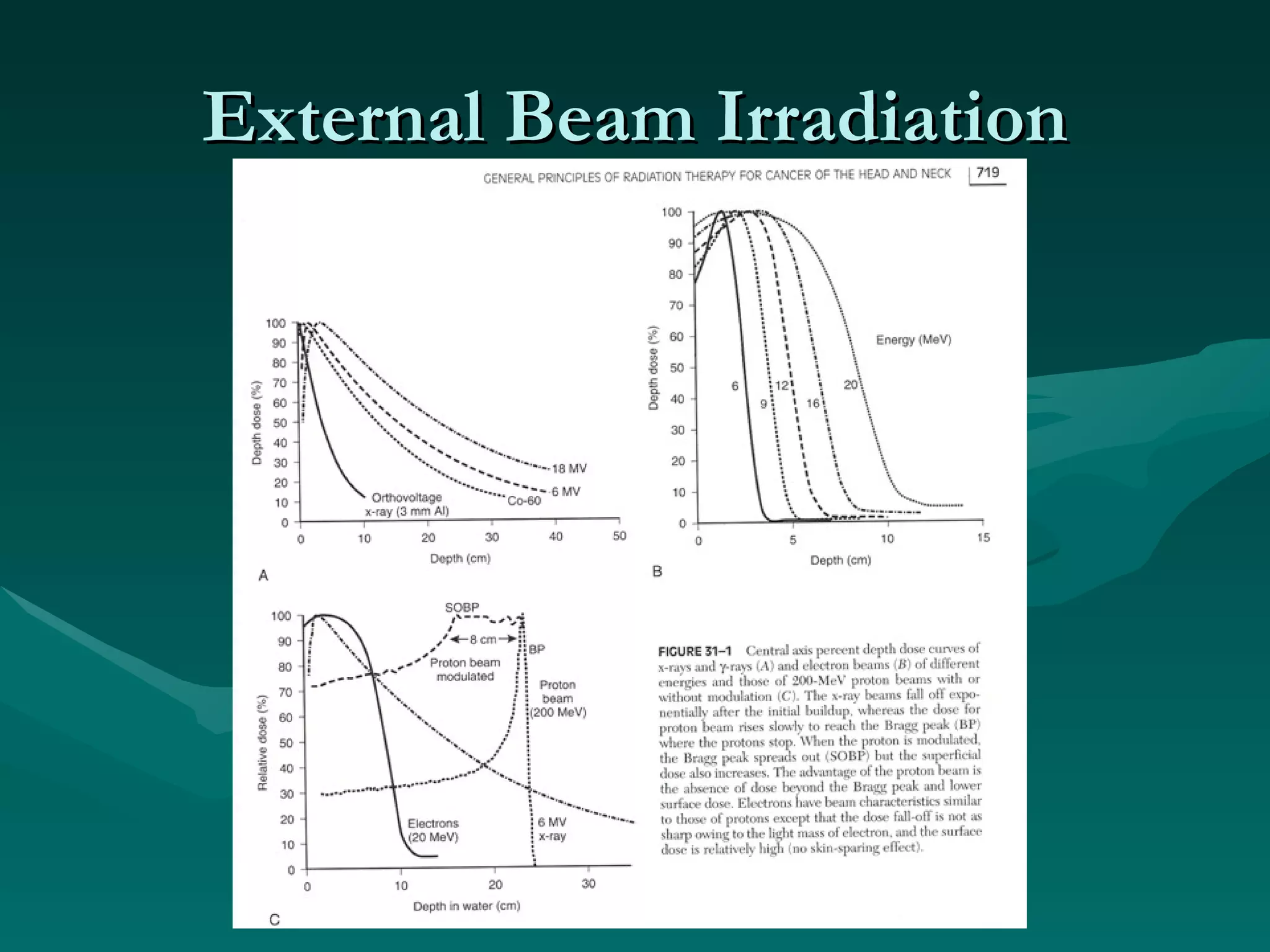
External Beam Irradiation Dual-energy linear accelerators generate: Low energy megavoltage x-rays (4-6 MeV) High energy x-rays (15-20 MeV) Photon energy Particle Radiation (electrons, protons, neutrons) Photon therapy advantages Skin sparing, penetration, beam uniformity Head and Neck sites – 4-6 MeV x-ray or Co60 gamma ray radiation
External Beam Irradiation
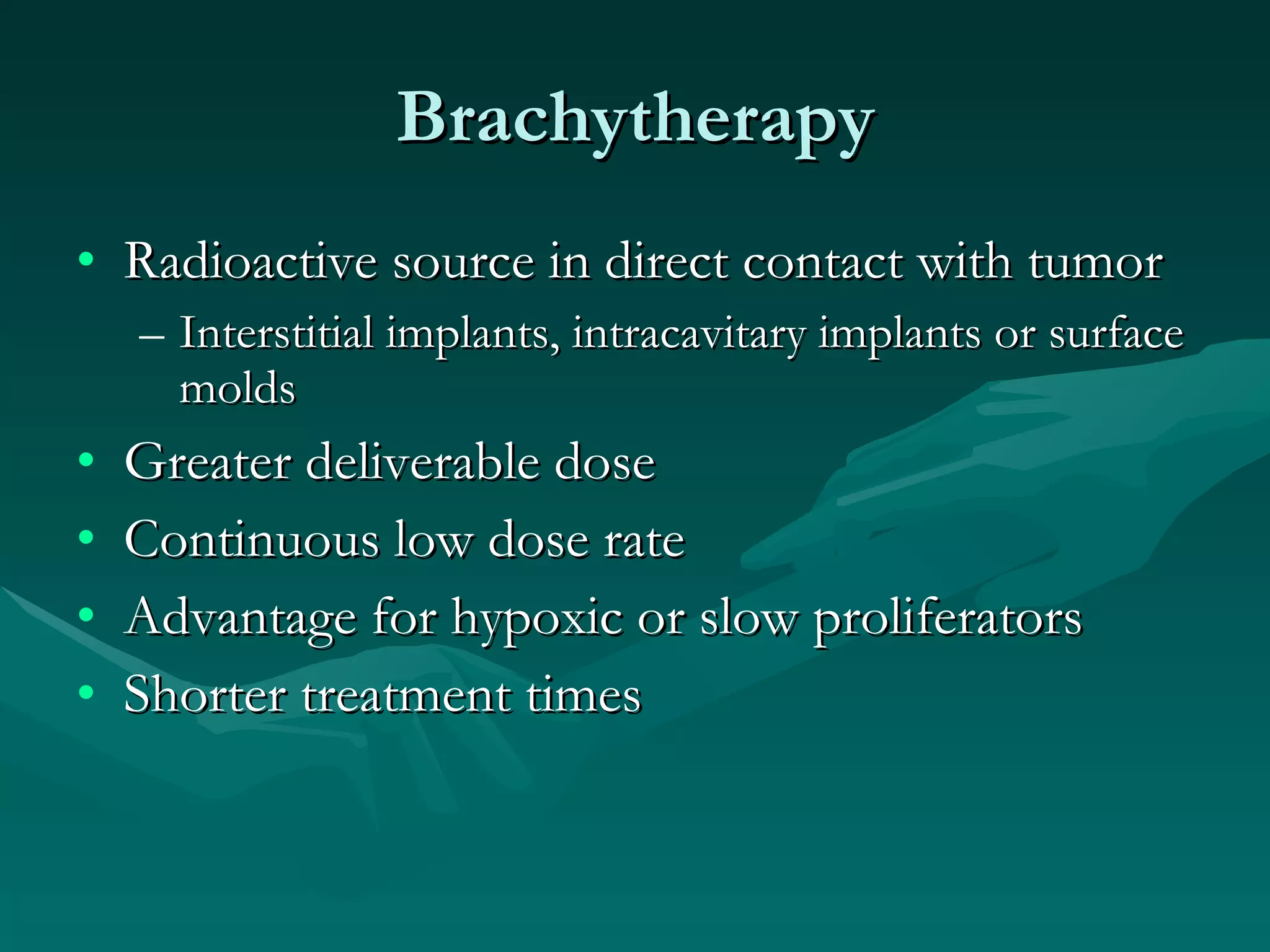
Brachytherapy Radioactive source in direct contact with tumor Interstitial implants, intracavitary implants or surface molds Greater deliverable dose Continuous low dose rate Advantage for hypoxic or slow proliferators Shorter treatment times
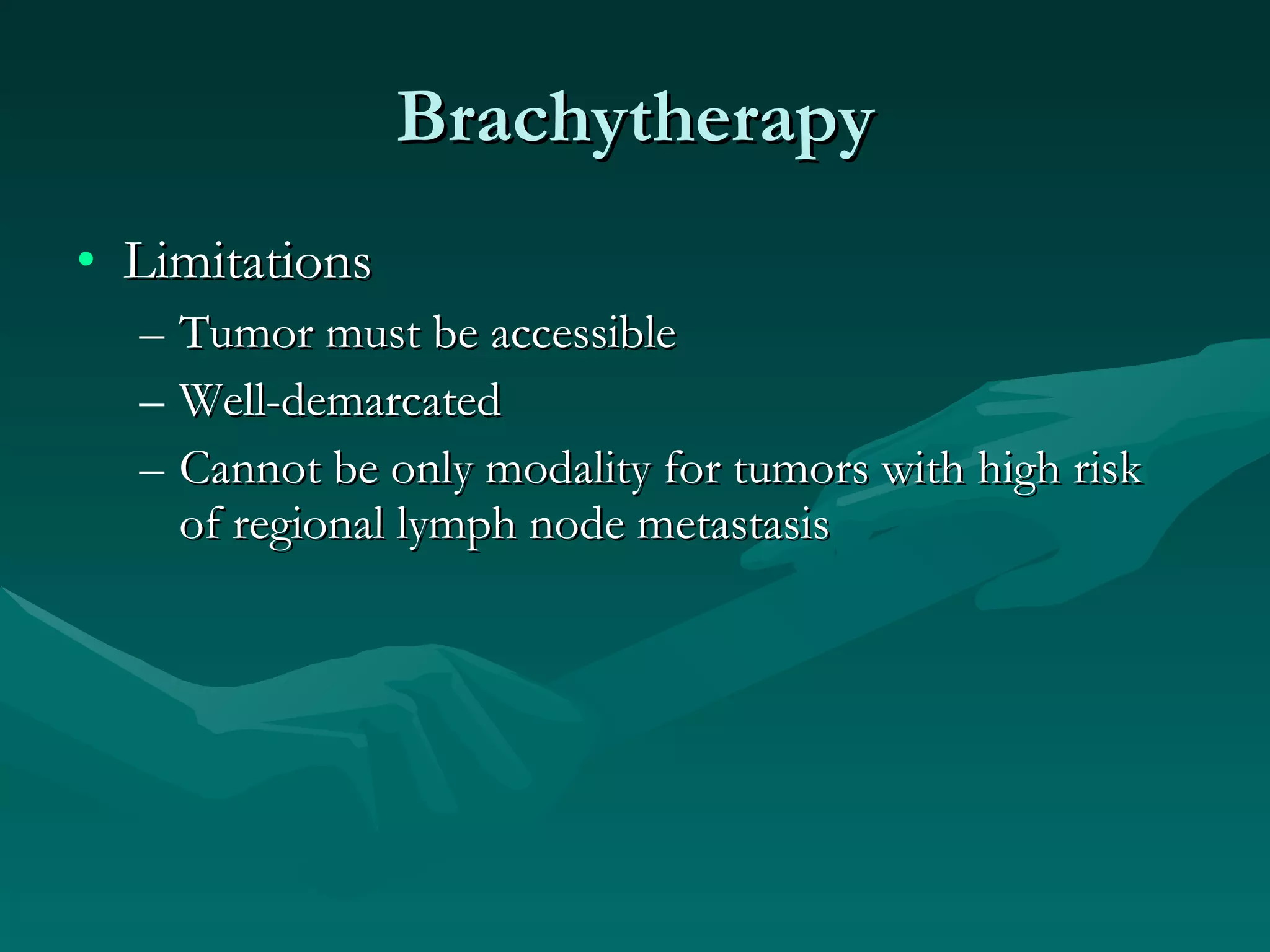
Brachytherapy Limitations Tumor must be accessible Well-demarcated Cannot be only modality for tumors with high risk of regional lymph node metastasis
Brachytherapy
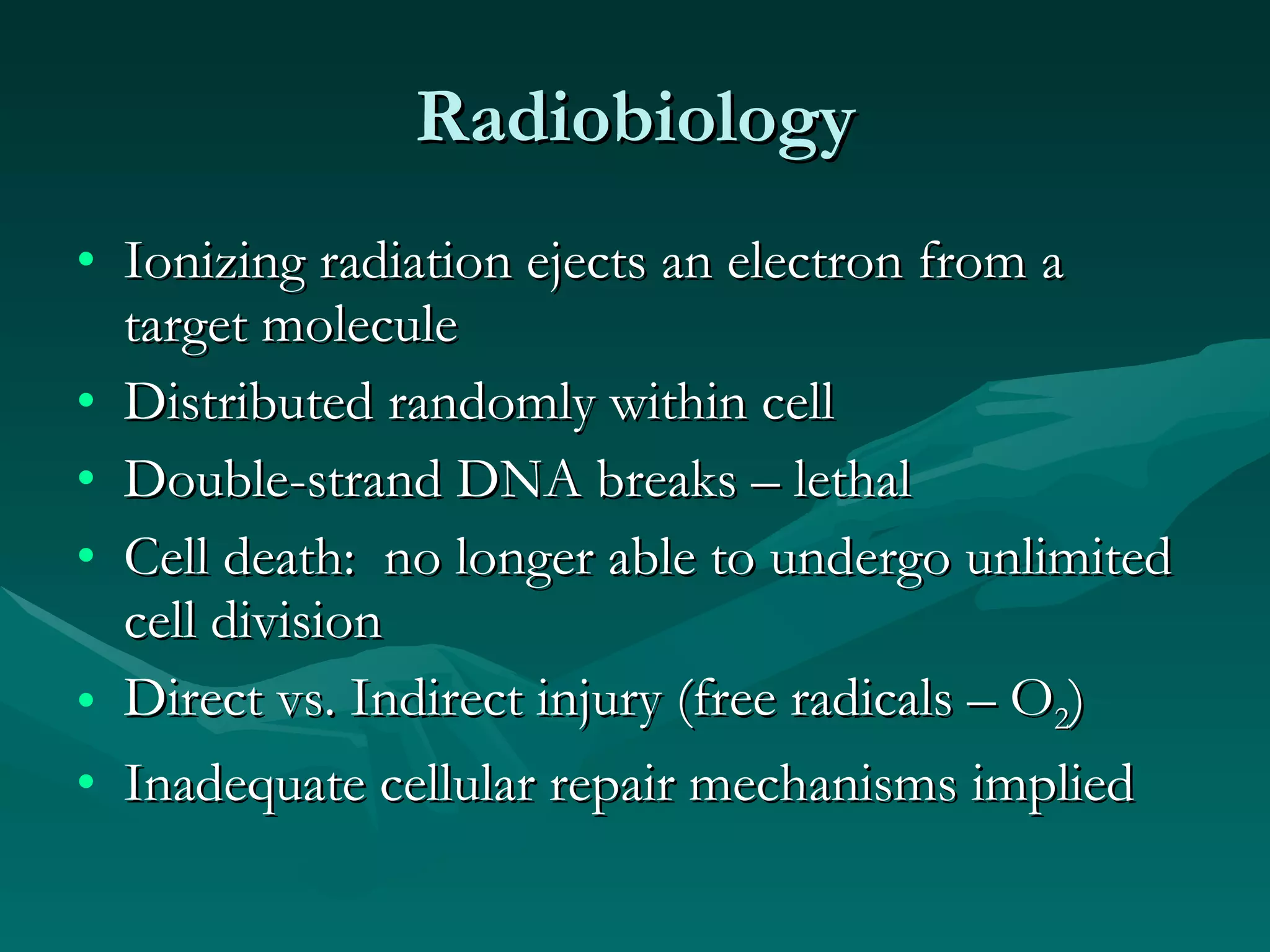
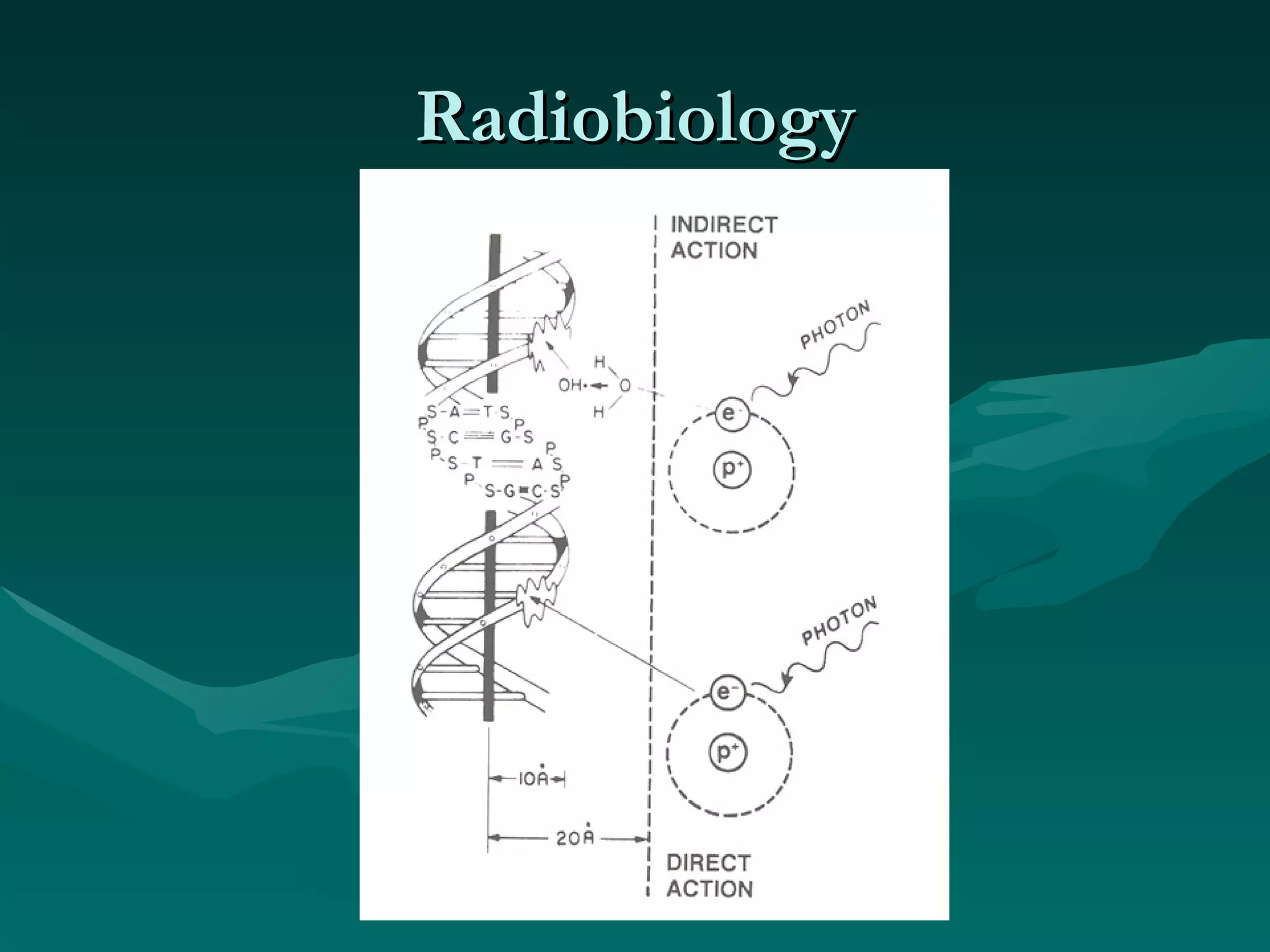
Radiobiology Ionizing radiation ejects an electron from a target molecule Distributed randomly within cell Double-strand DNA breaks – lethal Cell death:  no longer able to undergo unlimited cell division Direct vs. Indirect injury (free radicals – O 2 ) Inadequate cellular repair mechanisms implied
Radiobiology
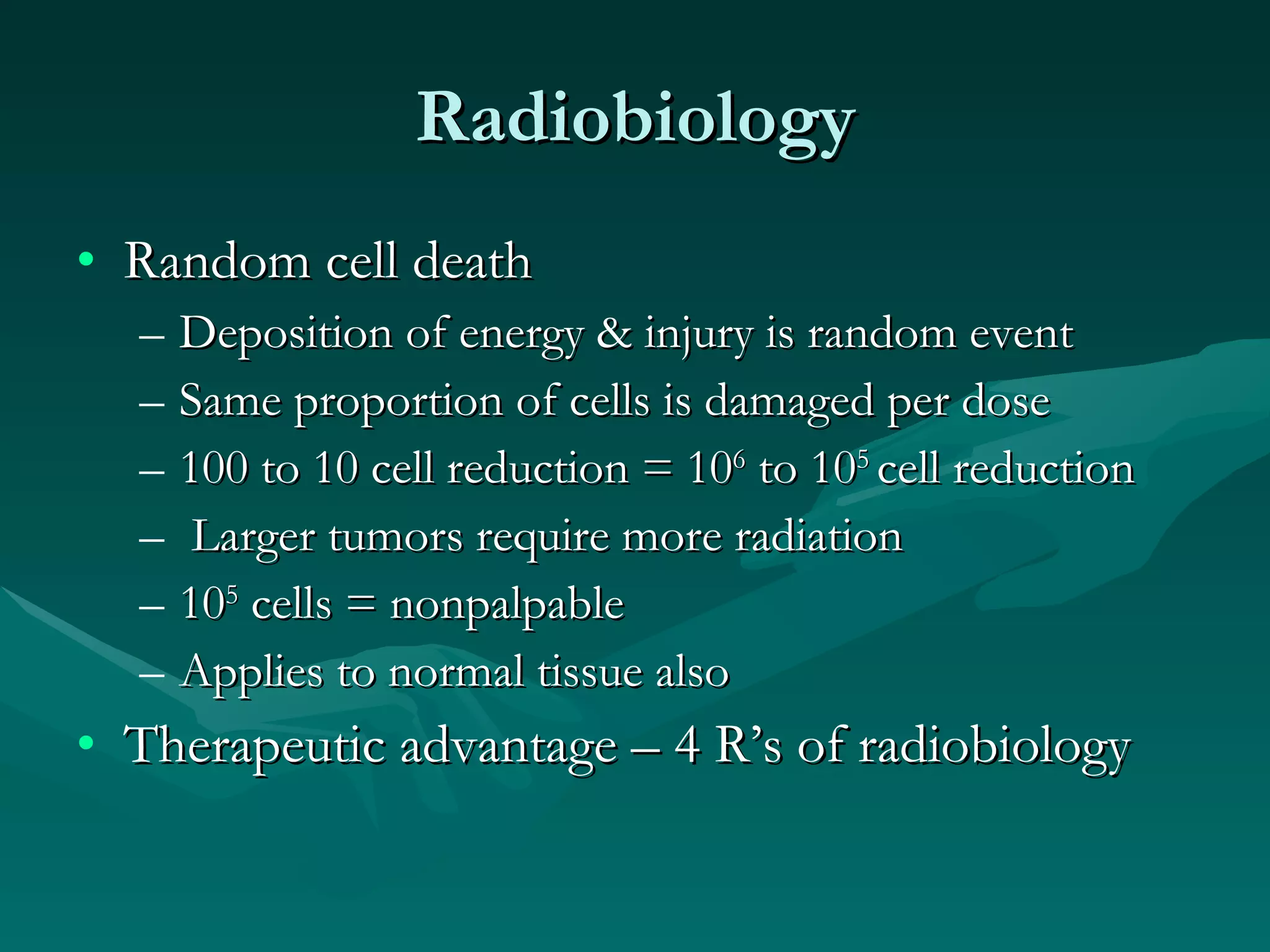
Radiobiology Random cell death Deposition of energy & injury is random event Same proportion of cells is damaged per dose 100 to 10 cell reduction = 10 6  to 10 5  cell reduction Larger tumors require more radiation 10 5  cells = nonpalpable Applies to normal tissue also Therapeutic advantage – 4 R’s of radiobiology
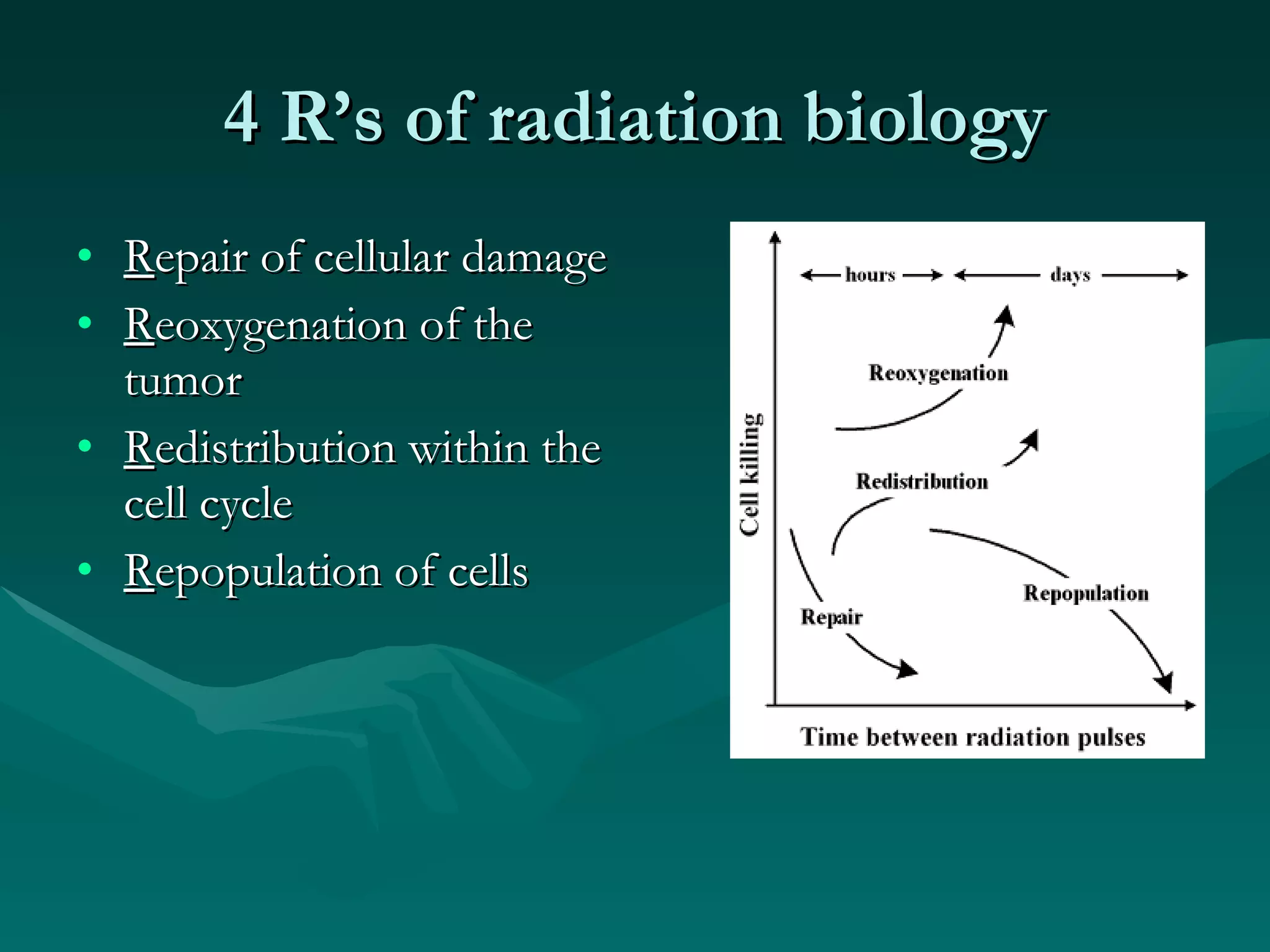
4 R’s of radiation biology R epair of cellular damage R eoxygenation of the tumor R edistribution within the cell cycle R epopulation of cells
Repair of sublethal injury Sublethal injury – cells exposed to sparse ionization fields, can be repaired Killing requires greater total dose when given in several fractions Most tissue repair in 3 hours, up to 24 hours Allows repair of injured normal tissue, potential therapeutic advantage over tumor cells Radioresistance – melanoma?
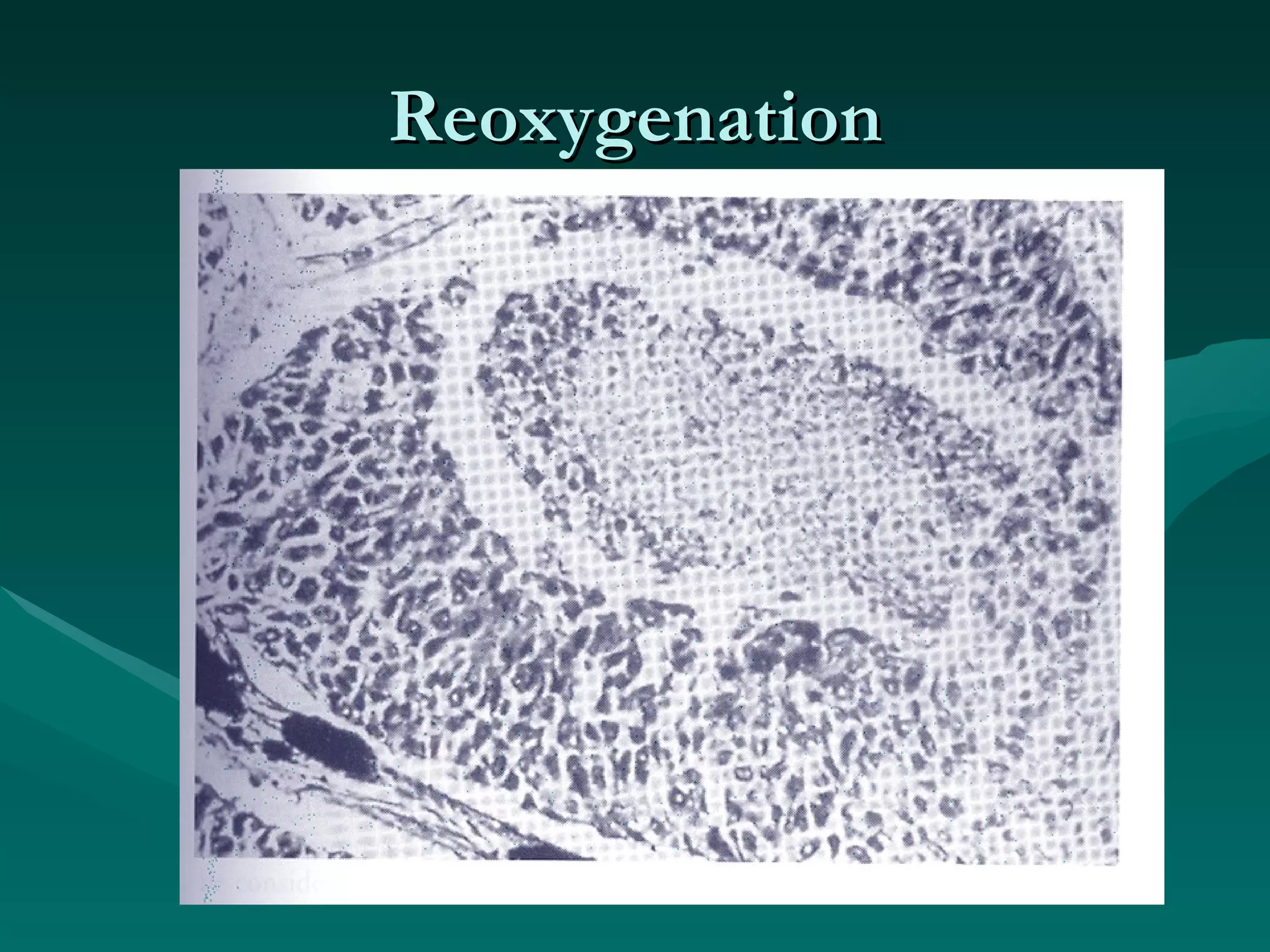
Reoxygenation Oxygen stabilizes free radicals Hypoxic cells require more radiation to kill Hypoxic tumor areas Temporary vessel constriction from mass Outgrow blood supply, capillary collapse Tumor shrinkage decreases hypoxic areas Reinforces fractionated dosing Hypoxic cell radiosensitizers, selective chemo
Reoxygenation
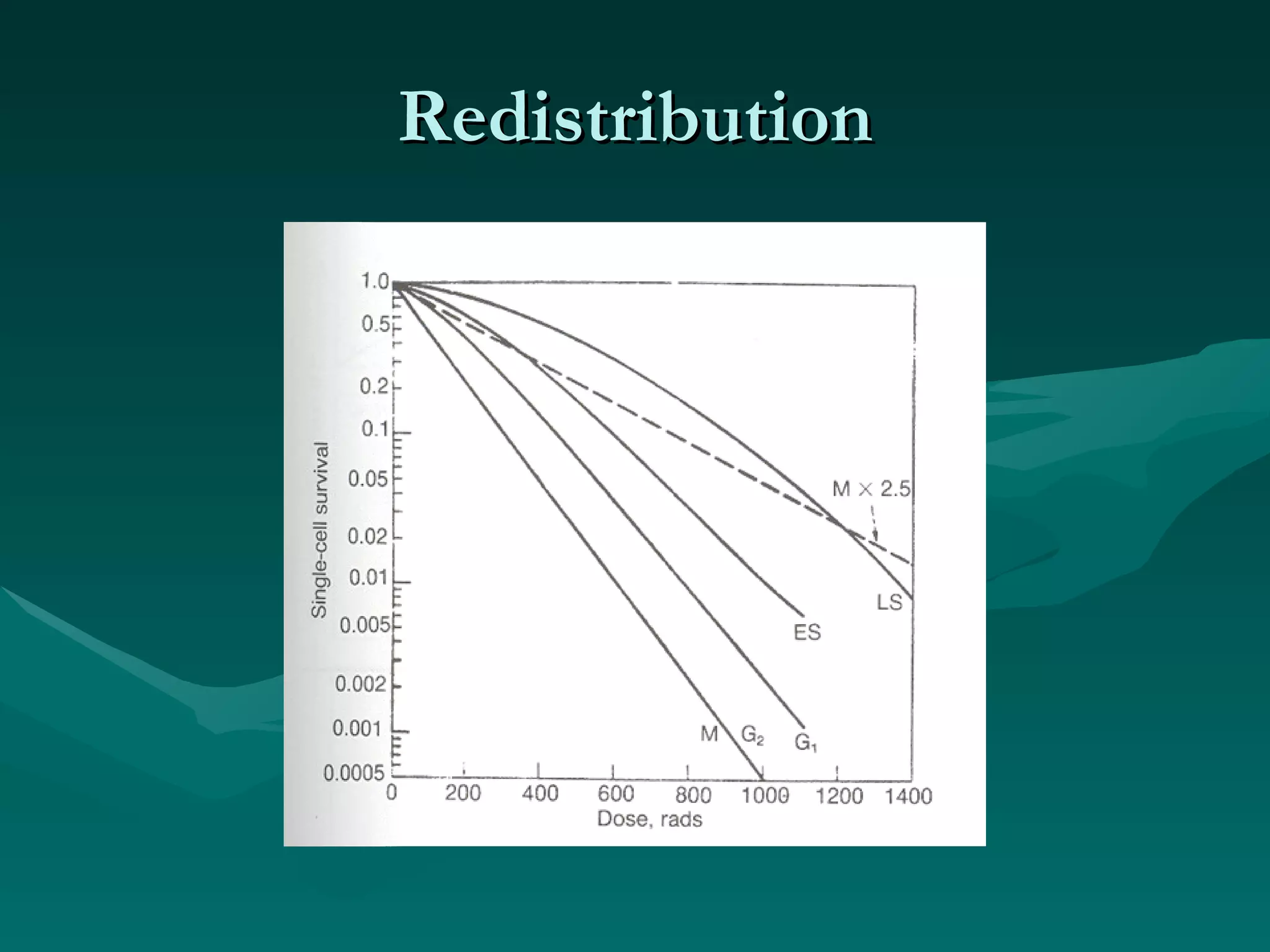
Redistribution Cell cycle position sensitive cells S phase – radioresistant G 2  phase delay = increased radioresistance RAD9 gene mutation – radiosensitive yeast H-ras and c-myc oncogenes - G 2  delay Fractionated XRT redistributes cells Rapid cycling cells more sensitive (mucosa, skin) Slow cyclers (connective tissue, brain) spared
Redistribution
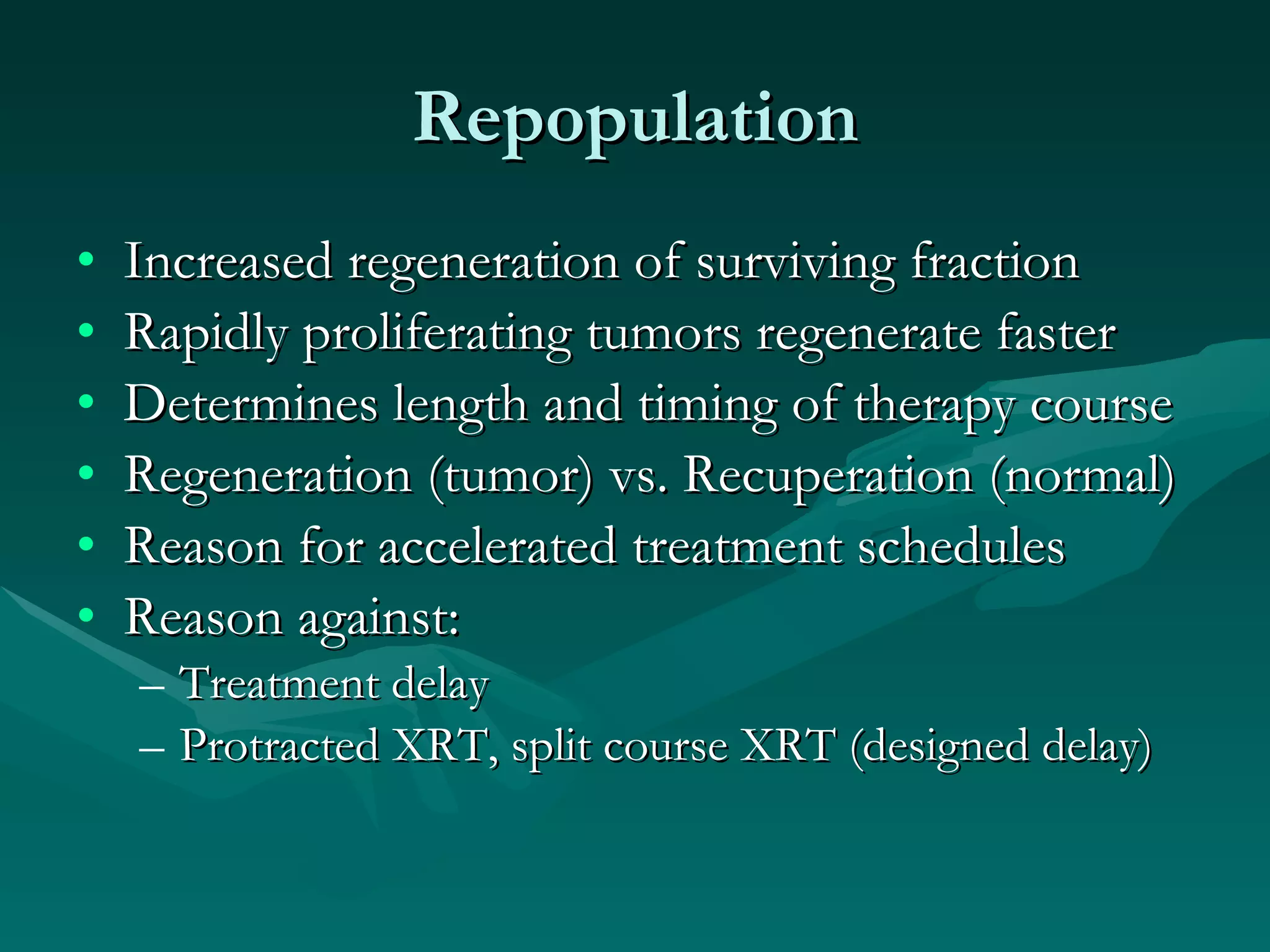
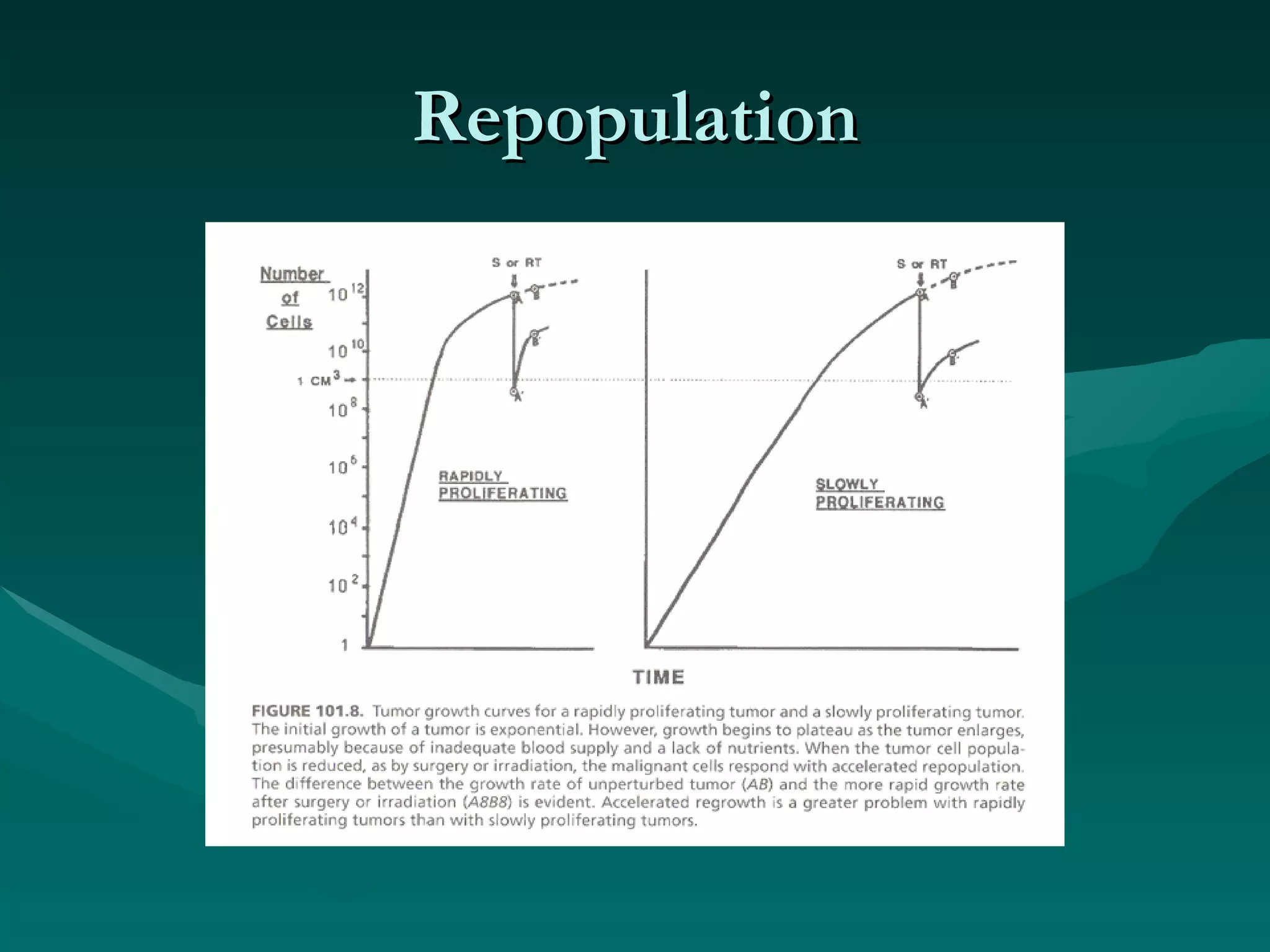
Repopulation Increased regeneration of surviving fraction Rapidly proliferating tumors regenerate faster Determines length and timing of therapy course Regeneration (tumor) vs. Recuperation (normal) Reason for accelerated treatment schedules Reason against: Treatment delay Protracted XRT, split course XRT (designed delay)
Repopulation
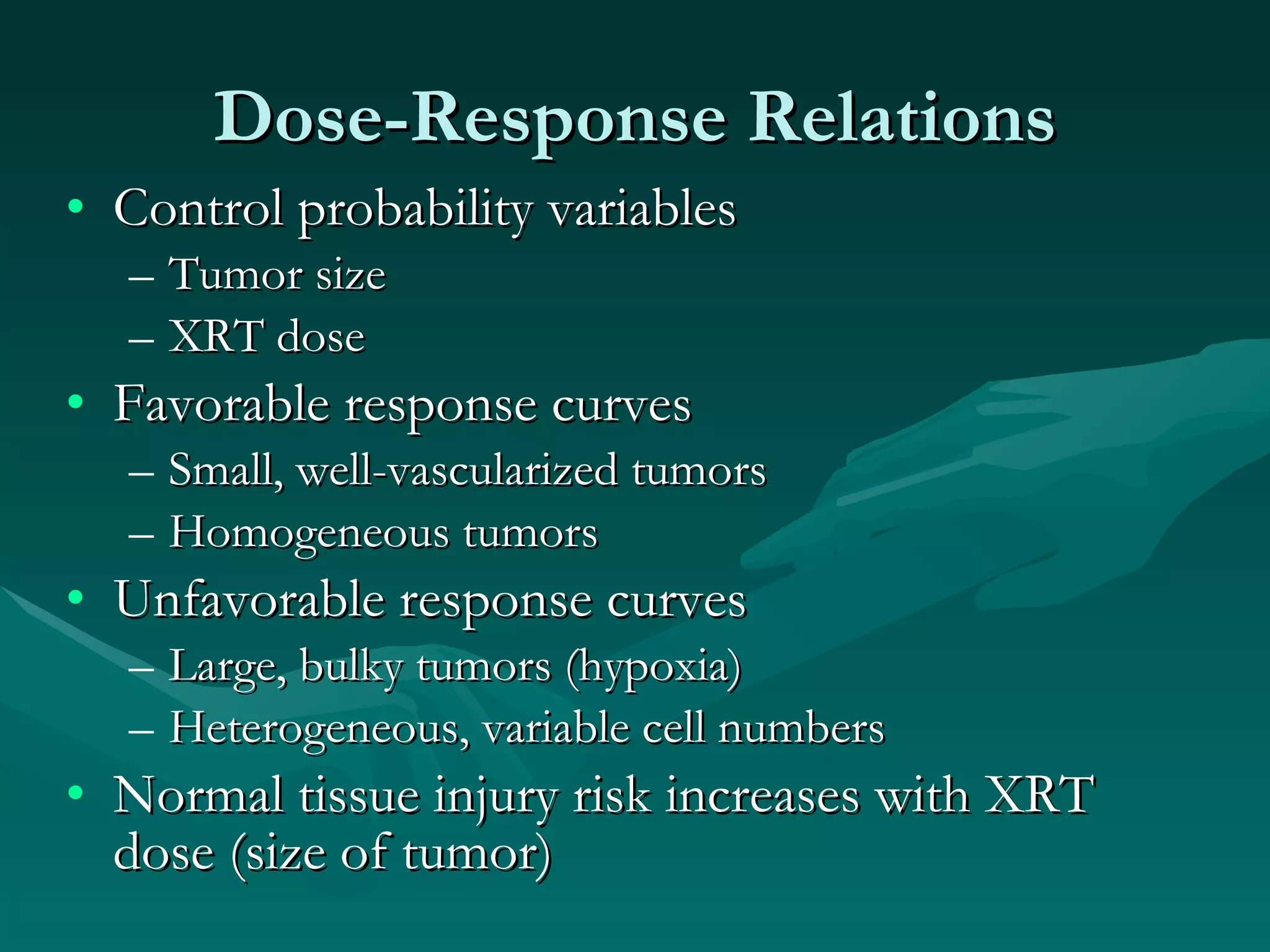
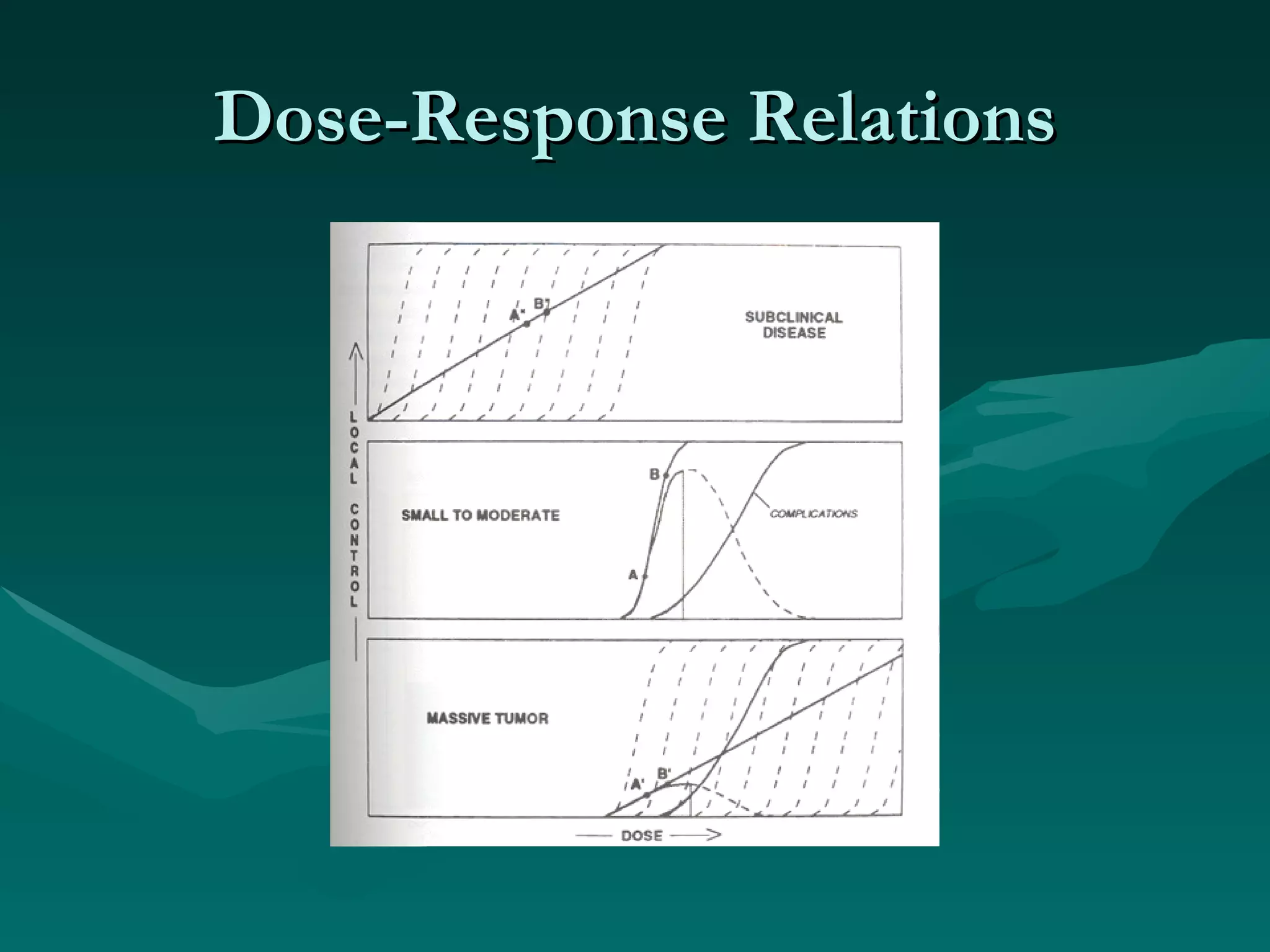
Dose-Response Relations Control probability variables Tumor size XRT dose Favorable response curves Small, well-vascularized tumors Homogeneous tumors Unfavorable response curves Large, bulky tumors (hypoxia) Heterogeneous, variable cell numbers Normal tissue injury risk increases with XRT dose (size of tumor)
Dose-Response Relations
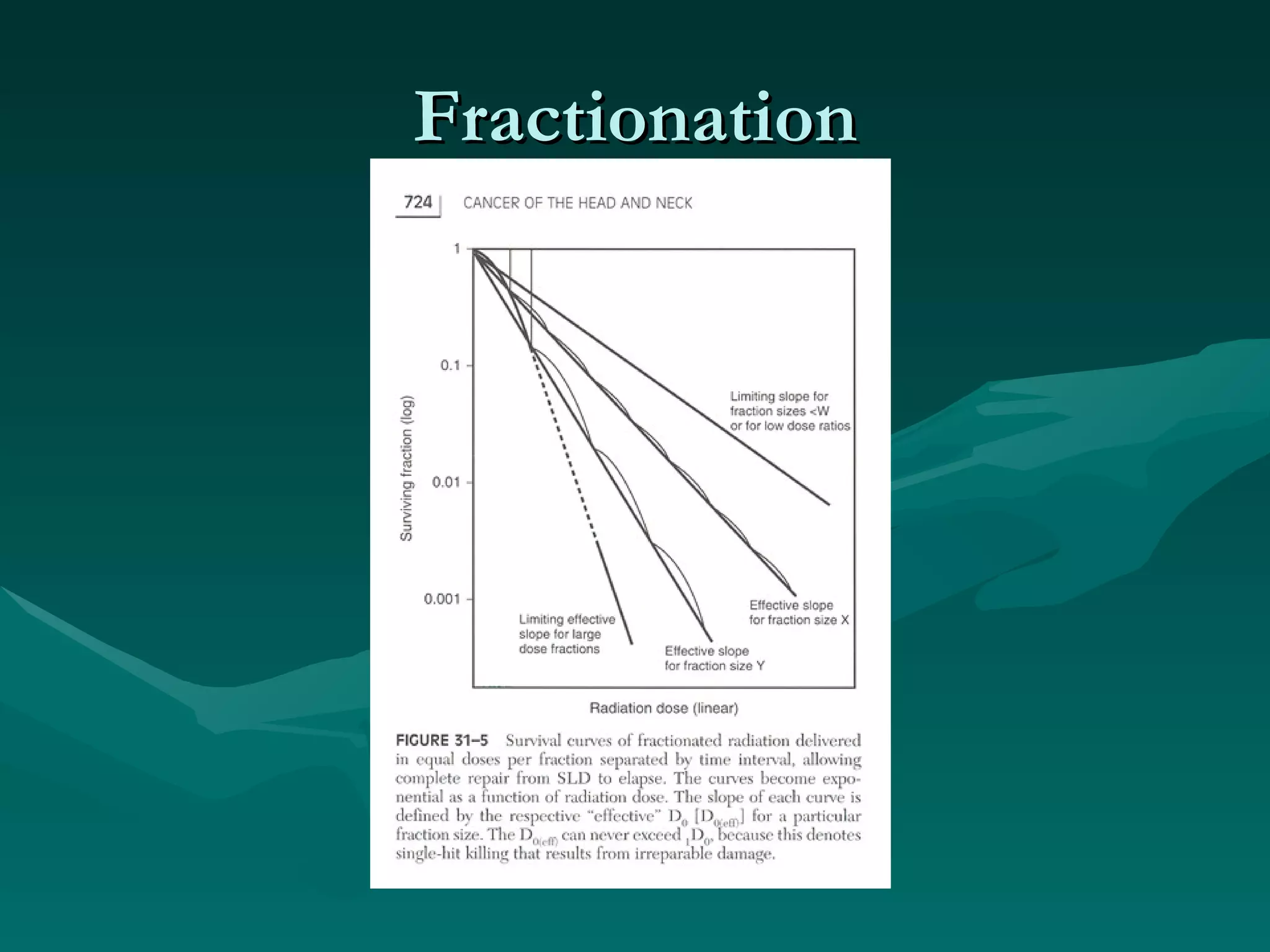
Fractionation
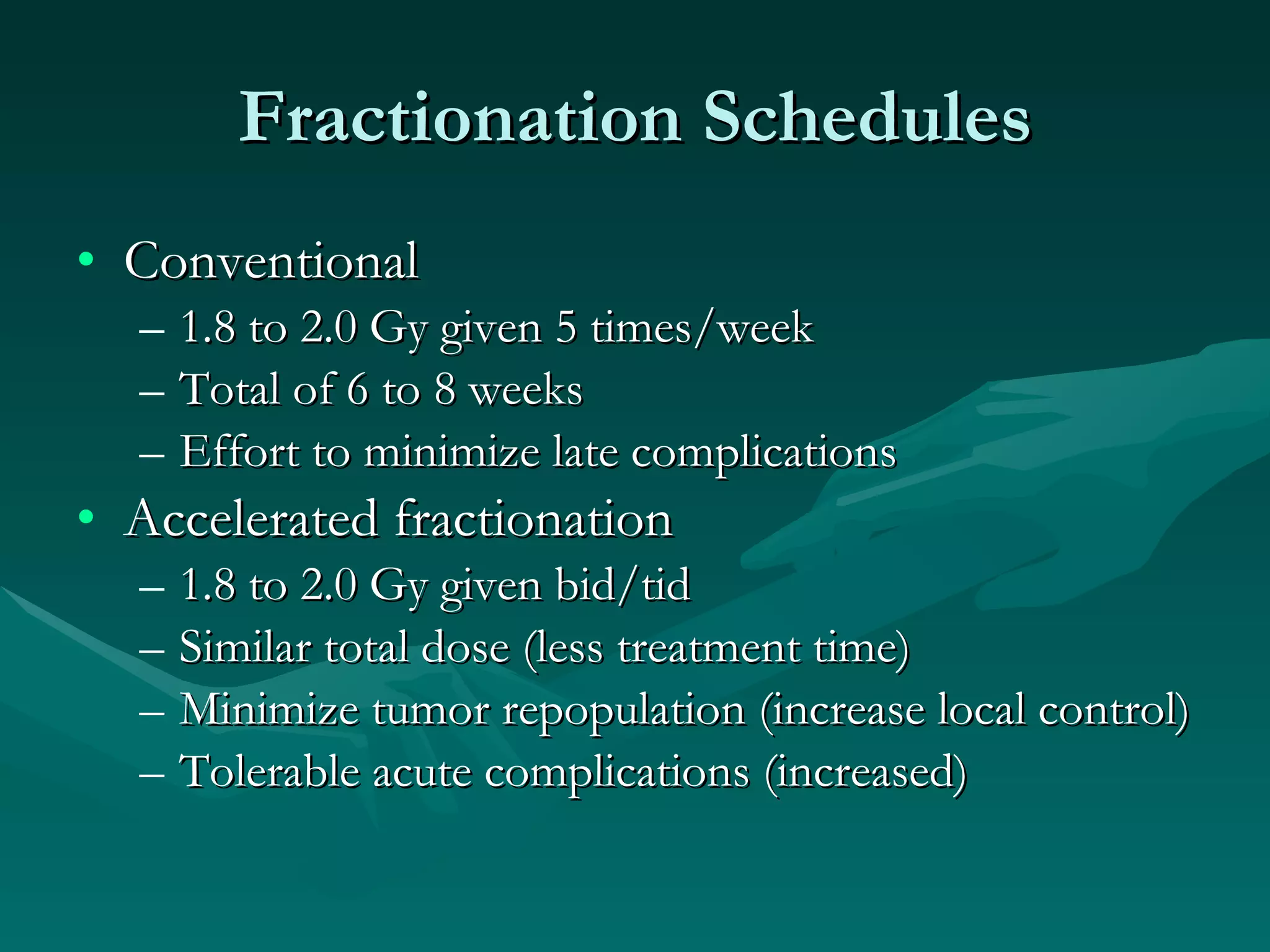
Fractionation Schedules Conventional 1.8 to 2.0 Gy given 5 times/week Total of 6 to 8 weeks Effort to minimize late complications  Accelerated fractionation 1.8 to 2.0 Gy given bid/tid Similar total dose (less treatment time) Minimize tumor repopulation (increase local control) Tolerable acute complications (increased)
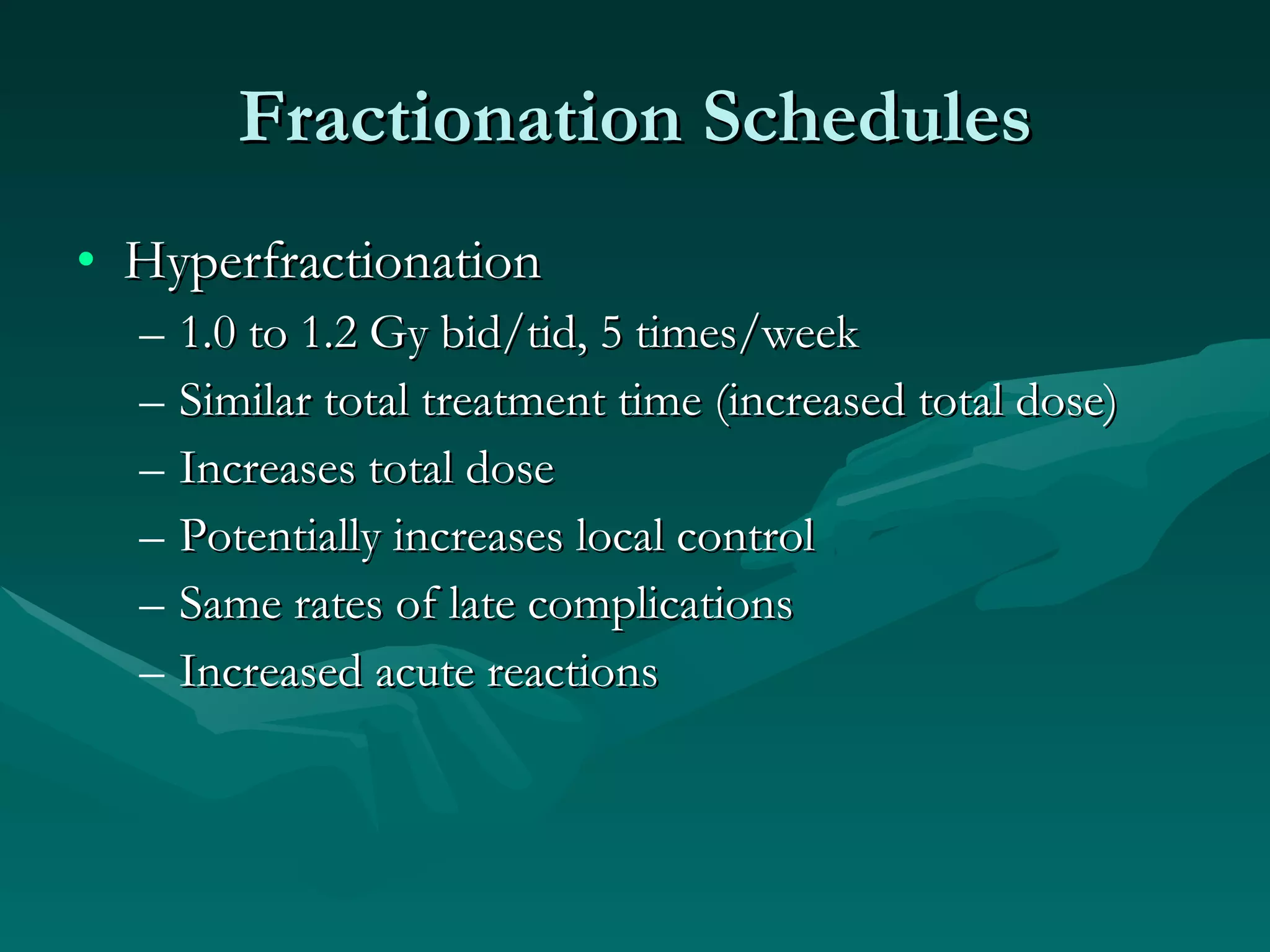
Fractionation Schedules Hyperfractionation 1.0 to 1.2 Gy bid/tid, 5 times/week Similar total treatment time (increased total dose) Increases total dose  Potentially increases local control Same rates of late complications Increased acute reactions
Treatment Principles Size and location of primary Presence/absence and extent/incidence of regional or distant metastasis General condition of patient Early stage cancers Surgery alone = XRT alone Treatment choice depends on functional deficits Late stage – usually combination of treatments
Treatment Principles Surgical salvage of primary radiation failures is better than radiation salvage of surgical failure Explains rationale behind organ preservation strategies XRT tumor cell killing is exponential function Dose required for tumor control is proportional to the logarithm of the number of viable cells in the tumor
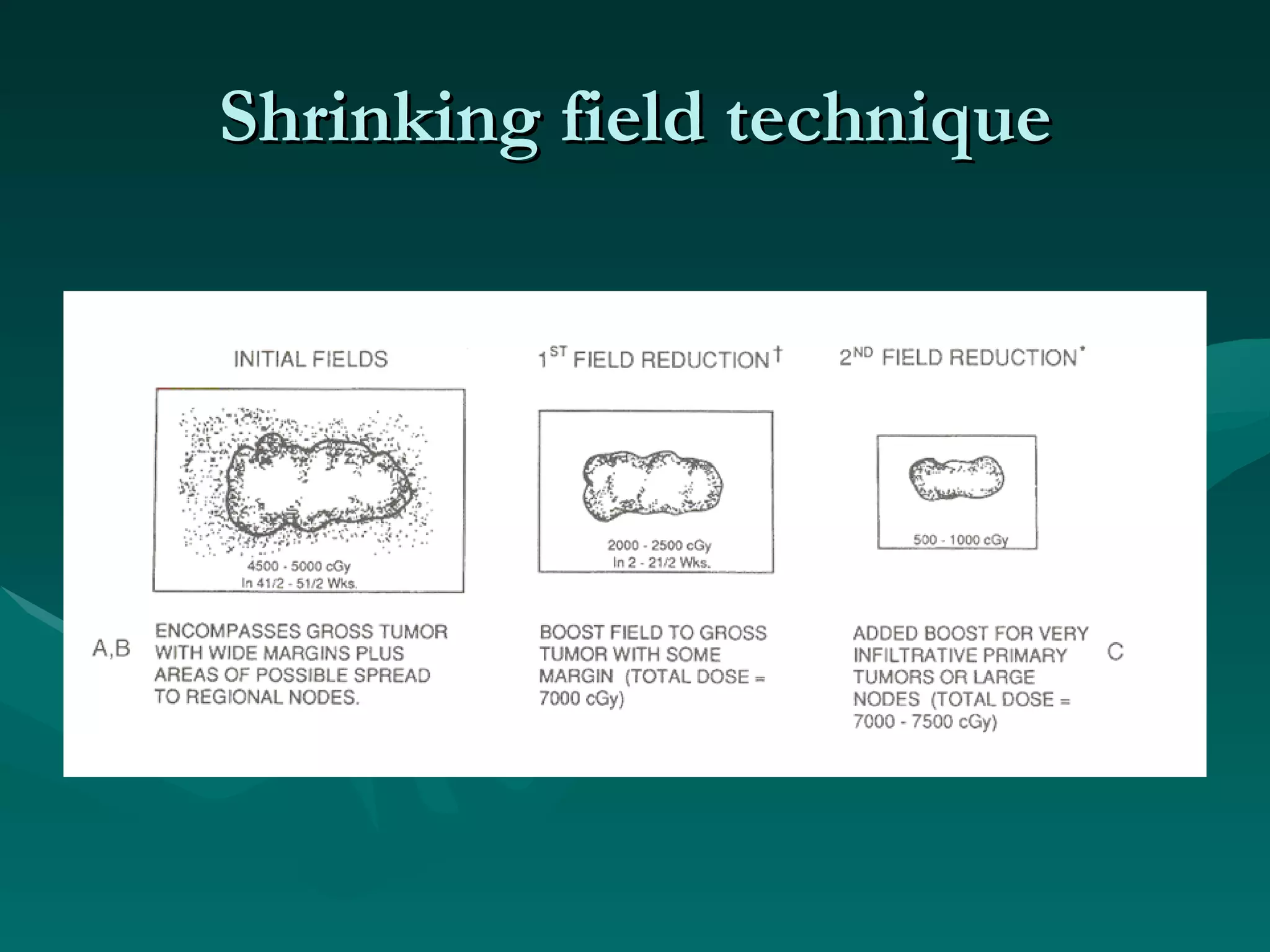
Shrinking field technique Initial dose = 45 to 50 Gy (4.5 to 5.0 weeks) Given through large portals Covers areas of possible regional metastasis and primary Second dose = 15 to 25 Gy (1.5 to 2.5 weeks) Boost field (gross tumor and small margin) Total dose of 60 to 75 Gy in 6 to 7.5 weeks Boost dose = 10 to 15 Gy  Massive tumors Second field reduction at 60 to 65 Gy Total of 7 to 8 weeks
Shrinking field technique
Combined Modalities Surgery and XRT complement each other Surgery – removes gross tumor (bulky tumors are more difficult to control with XRT) XRT – effective for microscopic disease, better with exophytic tumors than ulcerative ones (Surgical failures may leave subclinical disease) Combining treatments counteracts limitations Pre or Post-operative XRT
Preoperative XRT Advantages Unresectable lesions may become resectable Extent of surgical resection diminished Smaller treatment portals Microscopic disease more radiosensitive (blood supply) Decreased risk of distant metastasis from surgical manipulation? Disadvantages Decreased wound healing Decreased safe dose (45 Gy in 4.5 weeks eradicates subclinical disease in 85% to 90% of patients)
Postoperative XRT Advantages Better surgical staging Greater dose can be given safely (60 to 65 Gy in 6 to 7 weeks) Total dose can be based on residual tumor burden Surgical resection is easier Tissue heals better Disadvantages Distant metastasis by manipulation? Delay in postoperative treatment if healing problems (poorer results if delayed more than 6 weeks)
Complications Acute Tissue Reactions Late Tissue Reactions
Acute Toxicity Time onset depends on cell cycling time Mucosal reactions – 2 nd  week of XRT Skin reactions – 5 th  week Generally subside several weeks after completion of treatment RTOG – acute toxicity <90 days from start of treatment (epithelial surfaces generally heal within 20 to 40 days from stoppage of treatment)
Acute Toxicity Mucositis – intensity-limiting side effect  for aggressive schedules Accelerated fractionation – increase acute toxicities Conventional fractionation conservatively emphasized maximum tolerated dose is limited by late not acute tissue injury
Acute Toxicity
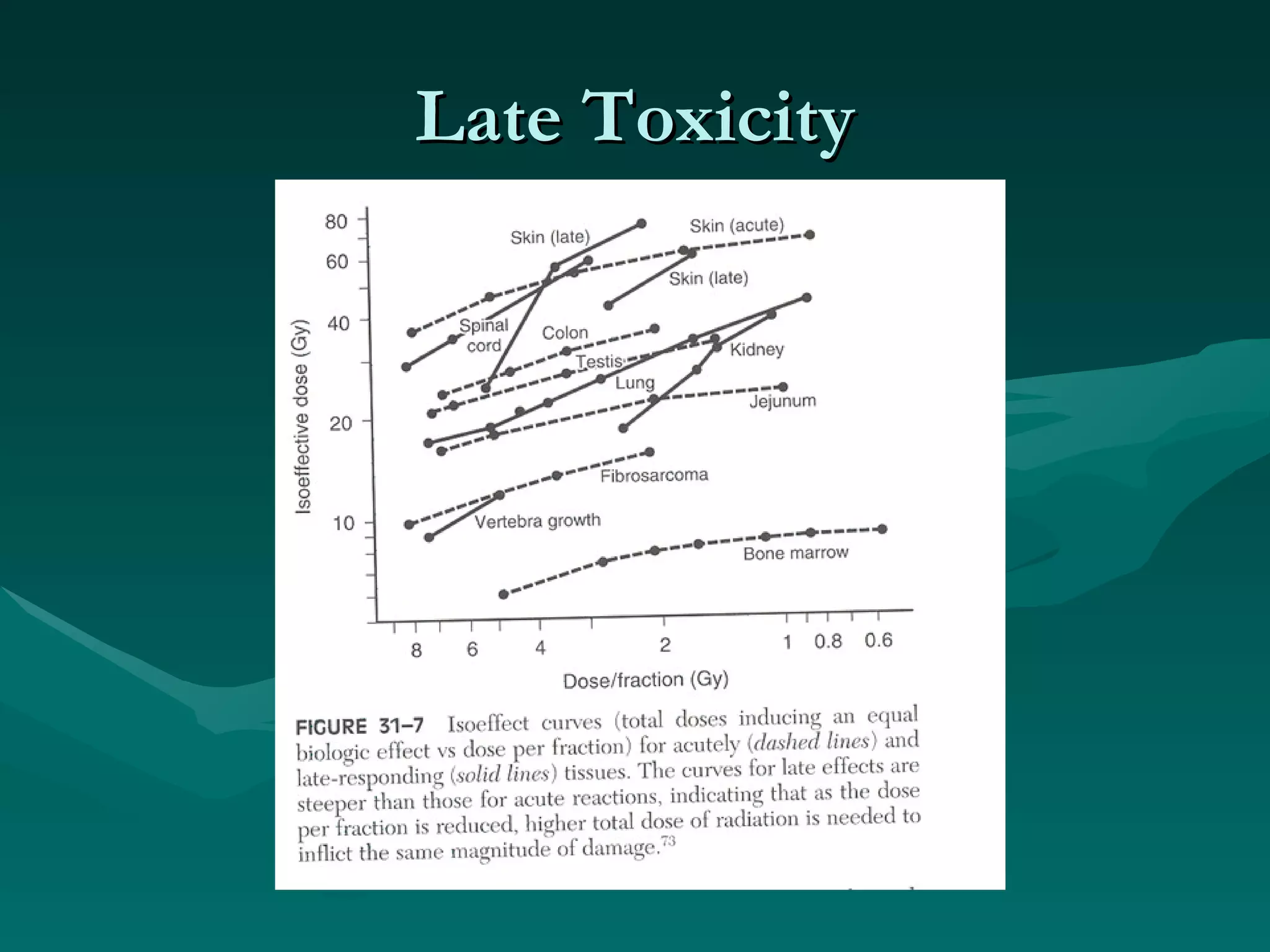
Late Toxicity Injury tends to be permanent Cells with low turnover (fibroblasts, neurons) Develop within months to years Xerostomia, dental caries, fibrosis, soft-tissue necrosis, nerve tissue damage Most common - xerostomia
Late Toxicity
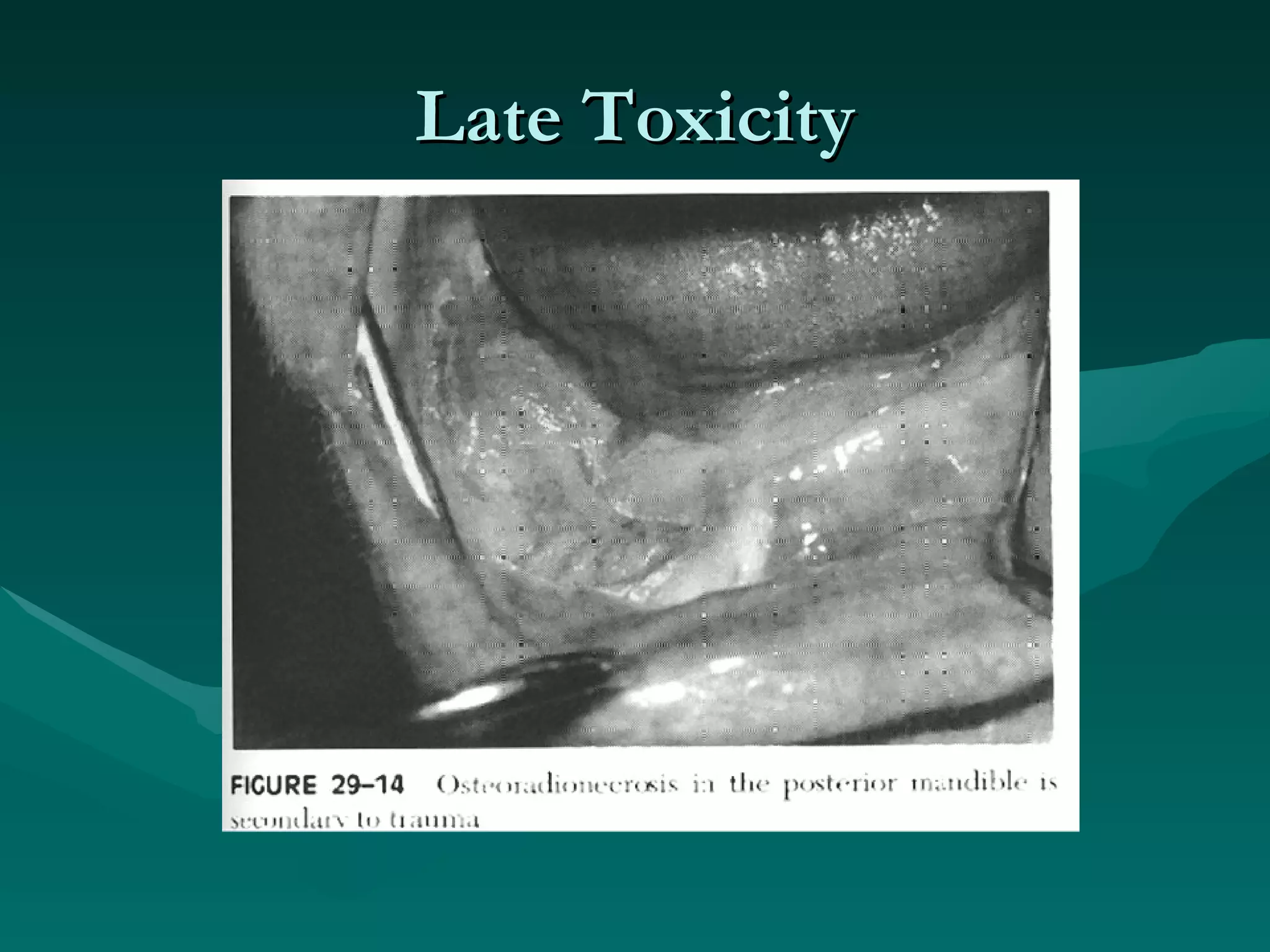
Late Toxicity Xerostomia Injury to serous acinar cells May have partial recovery Results in dental caries (in or outside of fields) Soft tissue necrosis Mucosal ulceration, damage to vascular connective tissue Can result in osteo-/chondroradionecrosis
Late Toxicity
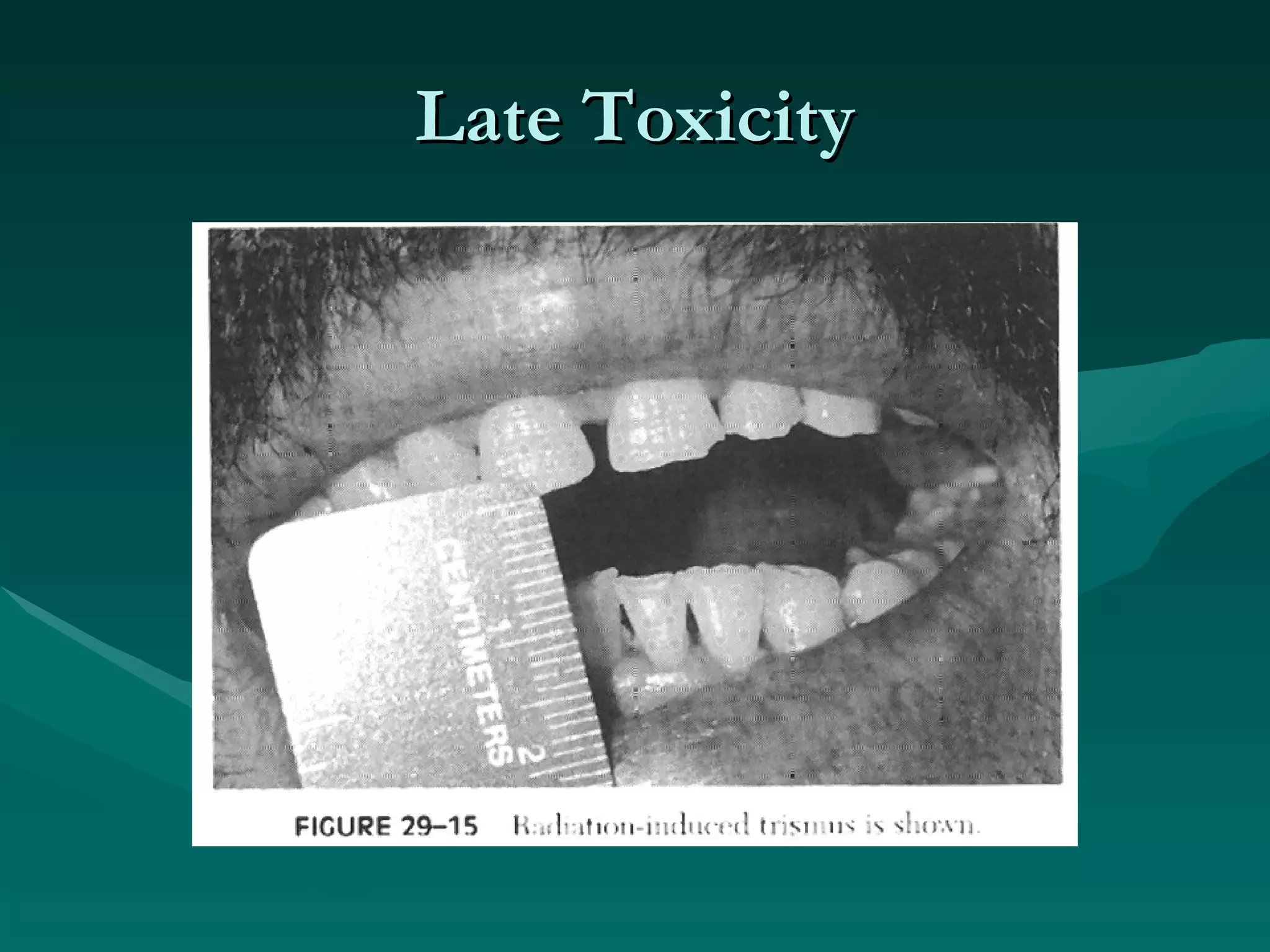
Late Toxicity Fibrosis Serious problem, total dose limiting factor Woody skin texture – most severe Large daily fractions increase risk Ocular – cataracts, optic neuropathy, retinopathy Otologic – serous otitis media (nasopharynx, SNHL (ear treatments)
Late Toxicity
Late Toxicity Central Nervous System Devastating to patients Myelopathy (30 Gy in 25 fractions) Electric shock from cervical spine flexion (Lhermitte sign) Transverse myelitis (50 to 60 Gy) Somnolence syndrome (months after therapy) Lethargy, nausea, headache, CN palsies, ataxia Self-limiting, transient Brain necrosis (65 to 70 Gy) – permanent
Conclusions XRT key role in treatment of H&N cancer Fundamentals of radiation physics and radiobiology explain rationale behind treatment schedules and complications Basic knowledge important with regard to patient counseling

Principles of radiation oncology

  • 1.
  • 2.
    Introduction Increasing usefor head and neck cancer Combined or as single modality Outline basic principles, radiobiology General treatment approach Common complications
  • 3.
    Radiation Physics Basis– ionizing particles interact with cellular molecules Relies on transfer of energy created by secondary charged particles (usually electrons) Break chemical bonds External beam vs. Brachytherapy Radiant energy is discrete yet random
  • 4.
    External Beam IrradiationDual-energy linear accelerators generate: Low energy megavoltage x-rays (4-6 MeV) High energy x-rays (15-20 MeV) Photon energy Particle Radiation (electrons, protons, neutrons) Photon therapy advantages Skin sparing, penetration, beam uniformity Head and Neck sites – 4-6 MeV x-ray or Co60 gamma ray radiation
  • 5.
  • 6.
    Brachytherapy Radioactive sourcein direct contact with tumor Interstitial implants, intracavitary implants or surface molds Greater deliverable dose Continuous low dose rate Advantage for hypoxic or slow proliferators Shorter treatment times
  • 7.
    Brachytherapy Limitations Tumormust be accessible Well-demarcated Cannot be only modality for tumors with high risk of regional lymph node metastasis
  • 8.
  • 9.
    Radiobiology Ionizing radiationejects an electron from a target molecule Distributed randomly within cell Double-strand DNA breaks – lethal Cell death: no longer able to undergo unlimited cell division Direct vs. Indirect injury (free radicals – O 2 ) Inadequate cellular repair mechanisms implied
  • 10.
  • 11.
    Radiobiology Random celldeath Deposition of energy & injury is random event Same proportion of cells is damaged per dose 100 to 10 cell reduction = 10 6 to 10 5 cell reduction Larger tumors require more radiation 10 5 cells = nonpalpable Applies to normal tissue also Therapeutic advantage – 4 R’s of radiobiology
  • 12.
    4 R’s ofradiation biology R epair of cellular damage R eoxygenation of the tumor R edistribution within the cell cycle R epopulation of cells
  • 13.
    Repair of sublethalinjury Sublethal injury – cells exposed to sparse ionization fields, can be repaired Killing requires greater total dose when given in several fractions Most tissue repair in 3 hours, up to 24 hours Allows repair of injured normal tissue, potential therapeutic advantage over tumor cells Radioresistance – melanoma?
  • 14.
    Reoxygenation Oxygen stabilizesfree radicals Hypoxic cells require more radiation to kill Hypoxic tumor areas Temporary vessel constriction from mass Outgrow blood supply, capillary collapse Tumor shrinkage decreases hypoxic areas Reinforces fractionated dosing Hypoxic cell radiosensitizers, selective chemo
  • 15.
  • 16.
    Redistribution Cell cycleposition sensitive cells S phase – radioresistant G 2 phase delay = increased radioresistance RAD9 gene mutation – radiosensitive yeast H-ras and c-myc oncogenes - G 2 delay Fractionated XRT redistributes cells Rapid cycling cells more sensitive (mucosa, skin) Slow cyclers (connective tissue, brain) spared
  • 17.
  • 18.
    Repopulation Increased regenerationof surviving fraction Rapidly proliferating tumors regenerate faster Determines length and timing of therapy course Regeneration (tumor) vs. Recuperation (normal) Reason for accelerated treatment schedules Reason against: Treatment delay Protracted XRT, split course XRT (designed delay)
  • 19.
  • 20.
    Dose-Response Relations Controlprobability variables Tumor size XRT dose Favorable response curves Small, well-vascularized tumors Homogeneous tumors Unfavorable response curves Large, bulky tumors (hypoxia) Heterogeneous, variable cell numbers Normal tissue injury risk increases with XRT dose (size of tumor)
  • 21.
  • 22.
  • 23.
    Fractionation Schedules Conventional1.8 to 2.0 Gy given 5 times/week Total of 6 to 8 weeks Effort to minimize late complications Accelerated fractionation 1.8 to 2.0 Gy given bid/tid Similar total dose (less treatment time) Minimize tumor repopulation (increase local control) Tolerable acute complications (increased)
  • 24.
    Fractionation Schedules Hyperfractionation1.0 to 1.2 Gy bid/tid, 5 times/week Similar total treatment time (increased total dose) Increases total dose Potentially increases local control Same rates of late complications Increased acute reactions
  • 25.
    Treatment Principles Sizeand location of primary Presence/absence and extent/incidence of regional or distant metastasis General condition of patient Early stage cancers Surgery alone = XRT alone Treatment choice depends on functional deficits Late stage – usually combination of treatments
  • 26.
    Treatment Principles Surgicalsalvage of primary radiation failures is better than radiation salvage of surgical failure Explains rationale behind organ preservation strategies XRT tumor cell killing is exponential function Dose required for tumor control is proportional to the logarithm of the number of viable cells in the tumor
  • 27.
    Shrinking field techniqueInitial dose = 45 to 50 Gy (4.5 to 5.0 weeks) Given through large portals Covers areas of possible regional metastasis and primary Second dose = 15 to 25 Gy (1.5 to 2.5 weeks) Boost field (gross tumor and small margin) Total dose of 60 to 75 Gy in 6 to 7.5 weeks Boost dose = 10 to 15 Gy Massive tumors Second field reduction at 60 to 65 Gy Total of 7 to 8 weeks
  • 28.
  • 29.
    Combined Modalities Surgeryand XRT complement each other Surgery – removes gross tumor (bulky tumors are more difficult to control with XRT) XRT – effective for microscopic disease, better with exophytic tumors than ulcerative ones (Surgical failures may leave subclinical disease) Combining treatments counteracts limitations Pre or Post-operative XRT
  • 30.
    Preoperative XRT AdvantagesUnresectable lesions may become resectable Extent of surgical resection diminished Smaller treatment portals Microscopic disease more radiosensitive (blood supply) Decreased risk of distant metastasis from surgical manipulation? Disadvantages Decreased wound healing Decreased safe dose (45 Gy in 4.5 weeks eradicates subclinical disease in 85% to 90% of patients)
  • 31.
    Postoperative XRT AdvantagesBetter surgical staging Greater dose can be given safely (60 to 65 Gy in 6 to 7 weeks) Total dose can be based on residual tumor burden Surgical resection is easier Tissue heals better Disadvantages Distant metastasis by manipulation? Delay in postoperative treatment if healing problems (poorer results if delayed more than 6 weeks)
  • 32.
    Complications Acute TissueReactions Late Tissue Reactions
  • 33.
    Acute Toxicity Timeonset depends on cell cycling time Mucosal reactions – 2 nd week of XRT Skin reactions – 5 th week Generally subside several weeks after completion of treatment RTOG – acute toxicity <90 days from start of treatment (epithelial surfaces generally heal within 20 to 40 days from stoppage of treatment)
  • 34.
    Acute Toxicity Mucositis– intensity-limiting side effect for aggressive schedules Accelerated fractionation – increase acute toxicities Conventional fractionation conservatively emphasized maximum tolerated dose is limited by late not acute tissue injury
  • 35.
  • 36.
    Late Toxicity Injurytends to be permanent Cells with low turnover (fibroblasts, neurons) Develop within months to years Xerostomia, dental caries, fibrosis, soft-tissue necrosis, nerve tissue damage Most common - xerostomia
  • 37.
  • 38.
    Late Toxicity XerostomiaInjury to serous acinar cells May have partial recovery Results in dental caries (in or outside of fields) Soft tissue necrosis Mucosal ulceration, damage to vascular connective tissue Can result in osteo-/chondroradionecrosis
  • 39.
  • 40.
    Late Toxicity FibrosisSerious problem, total dose limiting factor Woody skin texture – most severe Large daily fractions increase risk Ocular – cataracts, optic neuropathy, retinopathy Otologic – serous otitis media (nasopharynx, SNHL (ear treatments)
  • 41.
  • 42.
    Late Toxicity CentralNervous System Devastating to patients Myelopathy (30 Gy in 25 fractions) Electric shock from cervical spine flexion (Lhermitte sign) Transverse myelitis (50 to 60 Gy) Somnolence syndrome (months after therapy) Lethargy, nausea, headache, CN palsies, ataxia Self-limiting, transient Brain necrosis (65 to 70 Gy) – permanent
  • 43.
    Conclusions XRT keyrole in treatment of H&N cancer Fundamentals of radiation physics and radiobiology explain rationale behind treatment schedules and complications Basic knowledge important with regard to patient counseling