Extern conference
Ext.เกียรติศักดิ์ รักวศ์
Case
ผู้ป่วยชายไทย อายุ 14 ปี
Chief complaint : ปวดข้อมือซ้าย 30 นาที
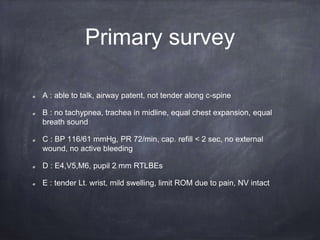
Primary survey
A : able to talk, airway patent, not tender along c-spine
B : no tachypnea, trachea in midline, equal chest expansion, equal
breath sound
C : BP 116/61 mmHg, PR 72/min, cap. refill < 2 sec, no external
wound, no active bleeding
D : E4,V5,M6, pupil 2 mm RTLBEs
E : tender Lt. wrist, mild swelling, limit ROM due to pain, NV intact
Secondary survey
A : no allergy
M : no current medication
P : no U/D
L : 20.00
E : เสียหลักตกจากรถไส หงายหลัง ใช้ข้อมือซ้ายยันพื้น (17.00 น.) ไม่มีศรีษะกระแทกพื้น
ไม่สลบ จาเหตุการณ์ได้ ปวดข้อมือซ้าย ขยับไม่ได้ ไม่ชา
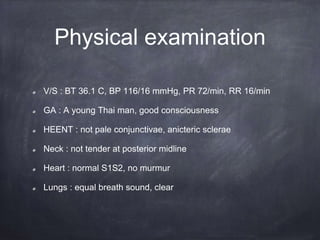
Physical examination
V/S : BT 36.1 C, BP 116/16 mmHg, PR 72/min, RR 16/min
GA : A young Thai man, good consciousness
HEENT : not pale conjunctivae, anicteric sclerae
Neck : not tender at posterior midline
Heart : normal S1S2, no murmur
Lungs : equal breath sound, clear
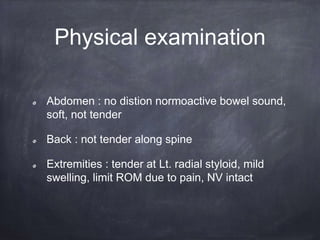
Physical examination
Abdomen : no distion normoactive bowel sound,
soft, not tender
Back : not tender along spine
Extremities : tender at Lt. radial styloid, mild
swelling, limit ROM due to pain, NV intact
Impression
Tender at Lt. radial styloid R/O fracture
Investigation
Diagnosis
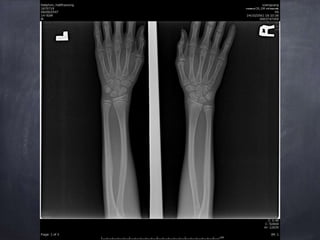
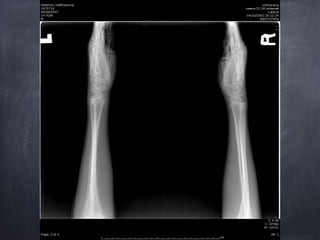
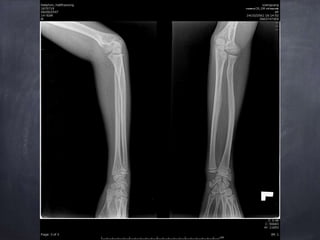
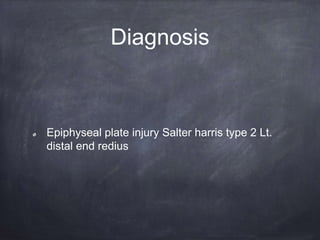
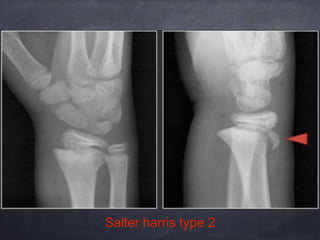
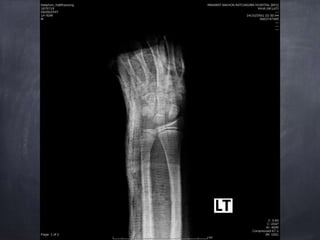
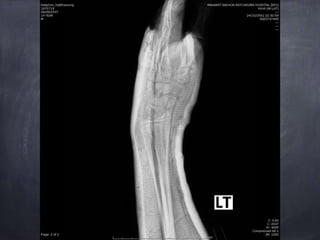
Epiphyseal plate injury Salter harris type 2 Lt.
distal end redius
Distal radius fracture
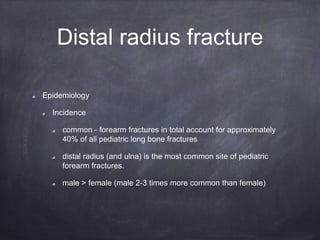
Epidemiology
Incidence
common - forearm fractures in total account for approximately
40% of all pediatric long bone fractures
distal radius (and ulna) is the most common site of pediatric
forearm fractures.
male > female (male 2-3 times more common than female)
Distal radius fracture
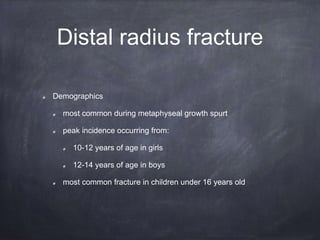
Demographics
most common during metaphyseal growth spurt
peak incidence occurring from:
10-12 years of age in girls
12-14 years of age in boys
most common fracture in children under 16 years old
Distal radius fracture
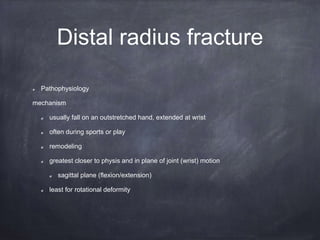
Pathophysiology
mechanism
usually fall on an outstretched hand, extended at wrist
often during sports or play
remodeling
greatest closer to physis and in plane of joint (wrist) motion
sagittal plane (flexion/extension)
least for rotational deformity
Distal radius fracture
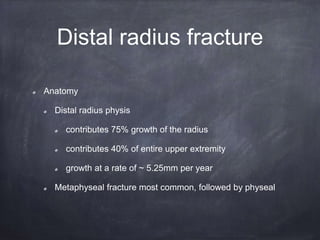
Anatomy
Distal radius physis
contributes 75% growth of the radius
contributes 40% of entire upper extremity
growth at a rate of ~ 5.25mm per year
Metaphyseal fracture most common, followed by physeal

Classification
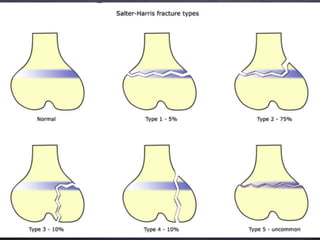
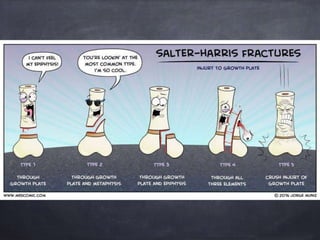
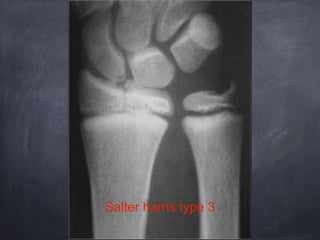
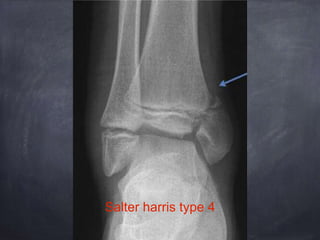
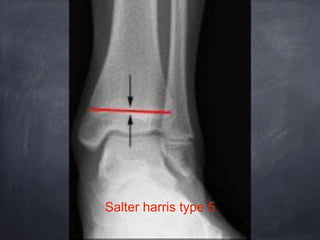
Salter harris classification
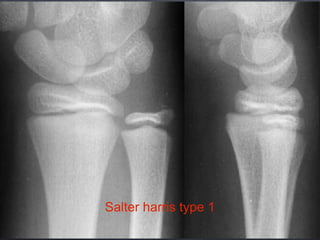
Salter harris type 1
Salter harris type 2
Salter harris type 3
Salter harris type 4
Salter harris type 5
Treatment
ชนิดที่ไม่มีการแตกผ่านข้อ ได้แก่ Salter harris type 1 และ 2 ส่วนใหญ่สามารถรักษาได้โดยการทา close
reduction และใส่เฝือก ประมาณ 3-4 สัปดาห์
ชนิดที่มีรอยแตกผ่านเข้าข้อ มีหลักการคือ
ถ้ามีการเคลื่อนไม่เกิน 2 mm สามารถรักษาโดยการใส่เฝือกได้
ถ้ามีการเคลื่อนมากกว่า 2 mm ต้องทา reduction ซึ่งส่วนใหญ่ต้องทา open reduction ให้ได้
anatomical reduction เนื่องจากถ้าปล่อยให้มีดารเคลื่อนที่ของกระดูกจะมีการเชื่อมติดกันของส่วน growth
plate กับเนื่อกระดูกข้างเคียงบริเวณ metaphysis ทาให้มีการหยุดการเจริญเติบโตของ growth plate
บริเวณนั้น และทาให้ผิวข้อไม่เรียบเกิดปัญหาข้อเสื่อมตามมา
Treatment
สาหรับผู้ป่วยที่มี growth injury มากกว่า 7 วัน
ถ้าเป็น type 1 หรือ type 2 ตาม Salter harris classification แม้จะมี
การเคลื่อนมากก็ไม่ควรทาการ reduction เพราะจะทาให้เกิดการบาดเจ็บต่อ
growth plate มากขึ้นและเกิดปัญหารบกวนการเจริญเติบโตตามมา
ถ้าเป็น type 3 หรือ 4 และมีการเคลื่อนมาก ควรทา open reduction เพื่อให้
ผิวข้อเรียบ
Complication
Casting thermal injury
Cast saw injury
Lost of reduction
Malunion
Physeal arrest
Ulnocarpal impaction
TFCC injury
Neuropathy

Extern conference

  • 1.
  • 2.
    Case ผู้ป่วยชายไทย อายุ 14ปี Chief complaint : ปวดข้อมือซ้าย 30 นาที
  • 3.
    Primary survey A :able to talk, airway patent, not tender along c-spine B : no tachypnea, trachea in midline, equal chest expansion, equal breath sound C : BP 116/61 mmHg, PR 72/min, cap. refill < 2 sec, no external wound, no active bleeding D : E4,V5,M6, pupil 2 mm RTLBEs E : tender Lt. wrist, mild swelling, limit ROM due to pain, NV intact
  • 4.
    Secondary survey A :no allergy M : no current medication P : no U/D L : 20.00 E : เสียหลักตกจากรถไส หงายหลัง ใช้ข้อมือซ้ายยันพื้น (17.00 น.) ไม่มีศรีษะกระแทกพื้น ไม่สลบ จาเหตุการณ์ได้ ปวดข้อมือซ้าย ขยับไม่ได้ ไม่ชา
  • 5.
    Physical examination V/S :BT 36.1 C, BP 116/16 mmHg, PR 72/min, RR 16/min GA : A young Thai man, good consciousness HEENT : not pale conjunctivae, anicteric sclerae Neck : not tender at posterior midline Heart : normal S1S2, no murmur Lungs : equal breath sound, clear
  • 6.
    Physical examination Abdomen :no distion normoactive bowel sound, soft, not tender Back : not tender along spine Extremities : tender at Lt. radial styloid, mild swelling, limit ROM due to pain, NV intact
  • 7.
    Impression Tender at Lt.radial styloid R/O fracture
  • 8.
  • 12.
    Diagnosis Epiphyseal plate injurySalter harris type 2 Lt. distal end redius
  • 13.
    Distal radius fracture Epidemiology Incidence common- forearm fractures in total account for approximately 40% of all pediatric long bone fractures distal radius (and ulna) is the most common site of pediatric forearm fractures. male > female (male 2-3 times more common than female)
  • 14.
    Distal radius fracture Demographics mostcommon during metaphyseal growth spurt peak incidence occurring from: 10-12 years of age in girls 12-14 years of age in boys most common fracture in children under 16 years old
  • 15.
    Distal radius fracture Pathophysiology mechanism usuallyfall on an outstretched hand, extended at wrist often during sports or play remodeling greatest closer to physis and in plane of joint (wrist) motion sagittal plane (flexion/extension) least for rotational deformity
  • 16.
    Distal radius fracture Anatomy Distalradius physis contributes 75% growth of the radius contributes 40% of entire upper extremity growth at a rate of ~ 5.25mm per year Metaphyseal fracture most common, followed by physeal
  • 17.
  • 20.
  • 21.
  • 22.
  • 23.
  • 24.
  • 25.
    Treatment ชนิดที่ไม่มีการแตกผ่านข้อ ได้แก่ Salterharris type 1 และ 2 ส่วนใหญ่สามารถรักษาได้โดยการทา close reduction และใส่เฝือก ประมาณ 3-4 สัปดาห์ ชนิดที่มีรอยแตกผ่านเข้าข้อ มีหลักการคือ ถ้ามีการเคลื่อนไม่เกิน 2 mm สามารถรักษาโดยการใส่เฝือกได้ ถ้ามีการเคลื่อนมากกว่า 2 mm ต้องทา reduction ซึ่งส่วนใหญ่ต้องทา open reduction ให้ได้ anatomical reduction เนื่องจากถ้าปล่อยให้มีดารเคลื่อนที่ของกระดูกจะมีการเชื่อมติดกันของส่วน growth plate กับเนื่อกระดูกข้างเคียงบริเวณ metaphysis ทาให้มีการหยุดการเจริญเติบโตของ growth plate บริเวณนั้น และทาให้ผิวข้อไม่เรียบเกิดปัญหาข้อเสื่อมตามมา
  • 26.
    Treatment สาหรับผู้ป่วยที่มี growth injuryมากกว่า 7 วัน ถ้าเป็น type 1 หรือ type 2 ตาม Salter harris classification แม้จะมี การเคลื่อนมากก็ไม่ควรทาการ reduction เพราะจะทาให้เกิดการบาดเจ็บต่อ growth plate มากขึ้นและเกิดปัญหารบกวนการเจริญเติบโตตามมา ถ้าเป็น type 3 หรือ 4 และมีการเคลื่อนมาก ควรทา open reduction เพื่อให้ ผิวข้อเรียบ
  • 29.
    Complication Casting thermal injury Castsaw injury Lost of reduction Malunion Physeal arrest Ulnocarpal impaction TFCC injury Neuropathy