The evolutionary perspective Bowlby’s attachment theory
The evolutionary explanation. According to evolutionary theory behaviour and physical characteristics change and evolve with each generation. Natural selection is the way this happens. Many young are produced, not all can survive. The young with the best chance of survival will be those with characteristics that help them to cope with the demands of the environment that they live in.
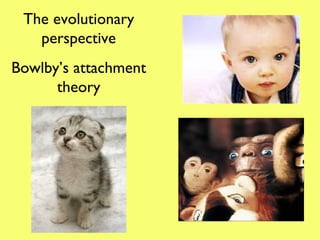
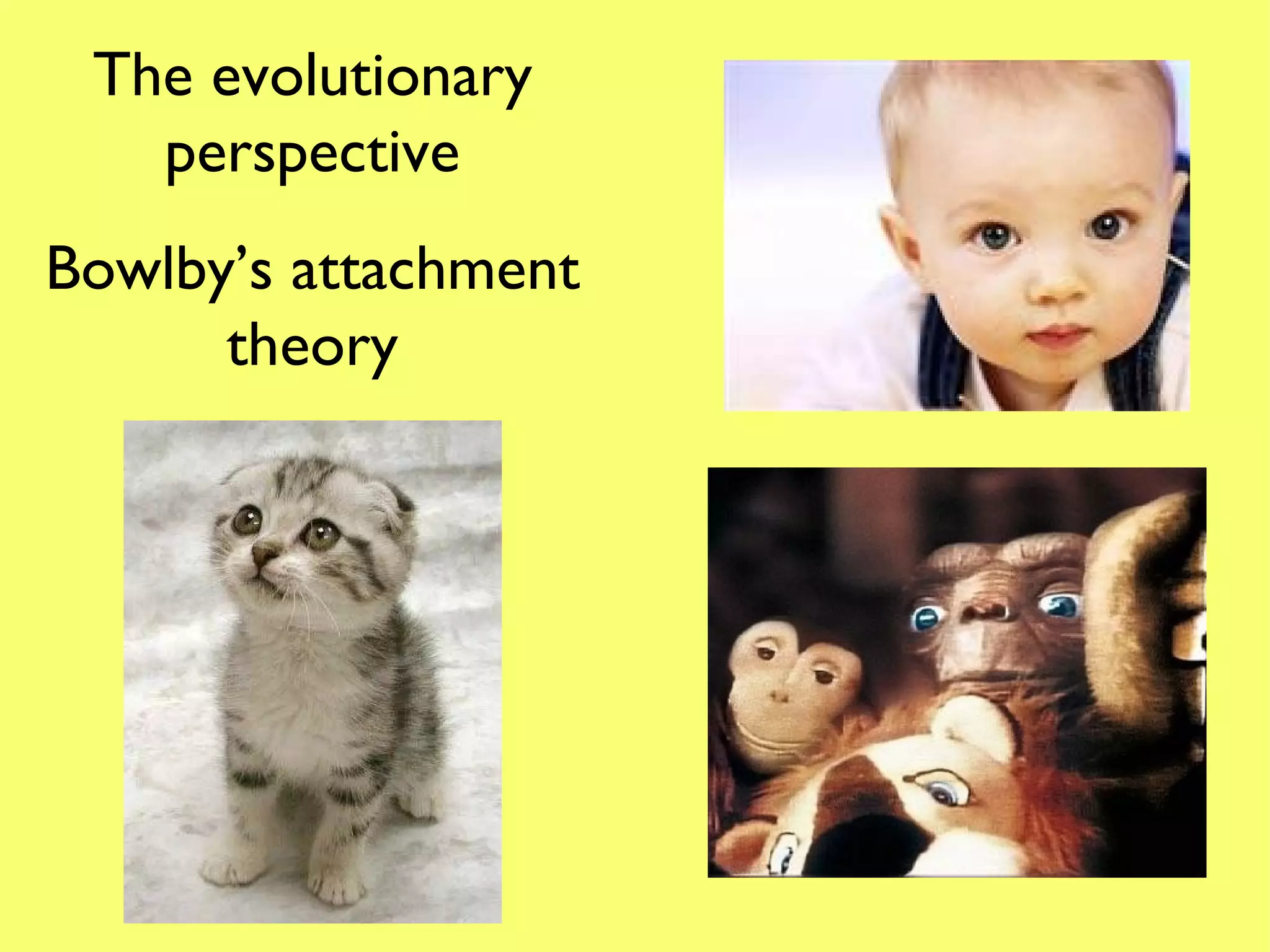
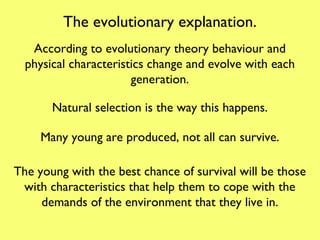
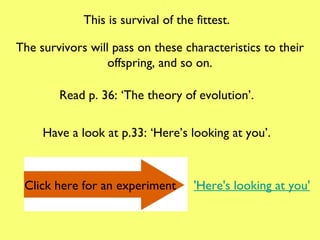
This is survival of the fittest. The survivors will pass on these characteristics to their offspring, and so on. Read p. 36: ‘The theory of evolution’. Have a look at p.33: ‘Here’s looking at you’. Click here for an experiment 'Here's looking at you'
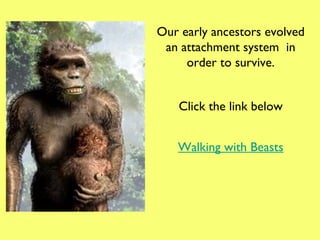
Our early ancestors evolved an attachment system  in order to survive. Walking with Beasts Click the link below
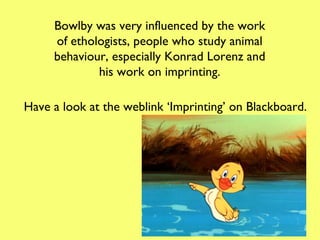
Bowlby was very influenced by the work of ethologists, people who study animal behaviour, especially Konrad Lorenz and his work on imprinting. Have a look at the weblink ‘Imprinting’ on Blackboard.
According to Lorenz imprinting is the evolved, innate ability of animals to recognise their caregiver. This provides protection and allows them to learn important behaviours.  Bowlby uses the word attachment instead of imprinting. Read p.36-37 Bowlby’s Attachment Theory. Summarise Bowlby’s attachment theory. Make sure you include the key technical terms. Turn this summary into a short description of Bowlby’s attachment theory.
Answer the following questions: Mary has noticed that her young baby does things to attract her attention, such as babbling, smiling and crying. How does the evolutionary perspective on attachmet explain these behaviours? (4 marks) You have been invited to give a talk to the local mother-and-baby group. Using ideas from Bowlby’s theory of attachment what advice might you give the mothers about how they could form a strong mother-child-bond? (4 marks)

Evolutionary perspective

  • 1.
    The evolutionary perspectiveBowlby’s attachment theory
  • 2.
    The evolutionary explanation.According to evolutionary theory behaviour and physical characteristics change and evolve with each generation. Natural selection is the way this happens. Many young are produced, not all can survive. The young with the best chance of survival will be those with characteristics that help them to cope with the demands of the environment that they live in.
  • 3.
    This is survivalof the fittest. The survivors will pass on these characteristics to their offspring, and so on. Read p. 36: ‘The theory of evolution’. Have a look at p.33: ‘Here’s looking at you’. Click here for an experiment 'Here's looking at you'
  • 4.
    Our early ancestorsevolved an attachment system in order to survive. Walking with Beasts Click the link below
  • 5.
    Bowlby was veryinfluenced by the work of ethologists, people who study animal behaviour, especially Konrad Lorenz and his work on imprinting. Have a look at the weblink ‘Imprinting’ on Blackboard.
  • 6.
    According to Lorenzimprinting is the evolved, innate ability of animals to recognise their caregiver. This provides protection and allows them to learn important behaviours. Bowlby uses the word attachment instead of imprinting. Read p.36-37 Bowlby’s Attachment Theory. Summarise Bowlby’s attachment theory. Make sure you include the key technical terms. Turn this summary into a short description of Bowlby’s attachment theory.
  • 7.
    Answer the followingquestions: Mary has noticed that her young baby does things to attract her attention, such as babbling, smiling and crying. How does the evolutionary perspective on attachmet explain these behaviours? (4 marks) You have been invited to give a talk to the local mother-and-baby group. Using ideas from Bowlby’s theory of attachment what advice might you give the mothers about how they could form a strong mother-child-bond? (4 marks)