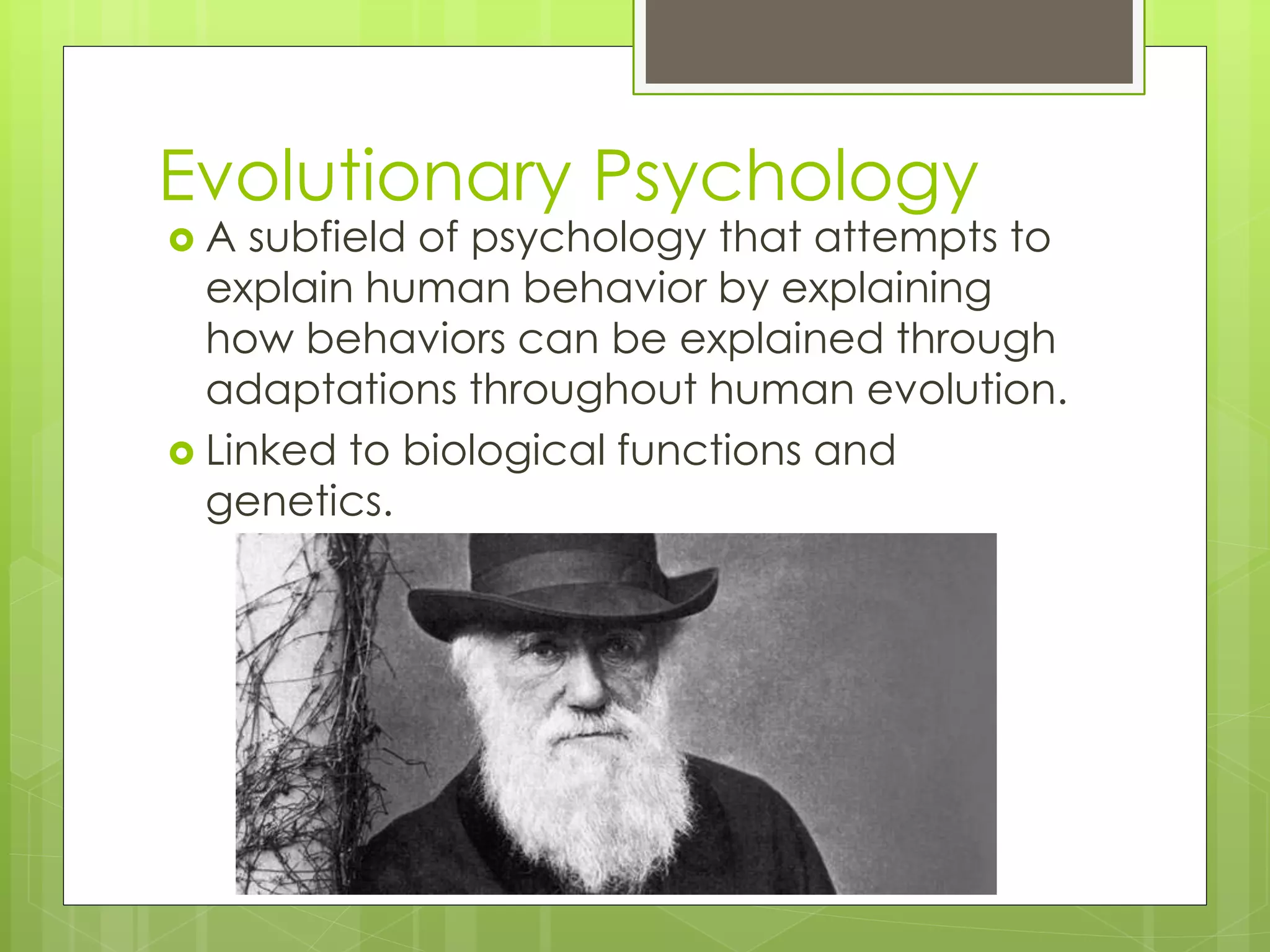
Evolutionary psychology attempts to explain human behavior through evolutionary adaptations that developed over generations. Key ideas include natural selection, where traits suited to the environment are passed on, and adaptations, where organisms develop traits suited to their specific environment. One example is how early humans developed stress responses that helped them survive threats. The pair bonding hypothesis suggests humans formed long-term romantic bonds to rear young together successfully and pass on their genes more effectively. However, critiques note that evolutionary theories may underestimate culture's role in behavior and rely on hypothetical assumptions about early humans that cannot be fully tested.