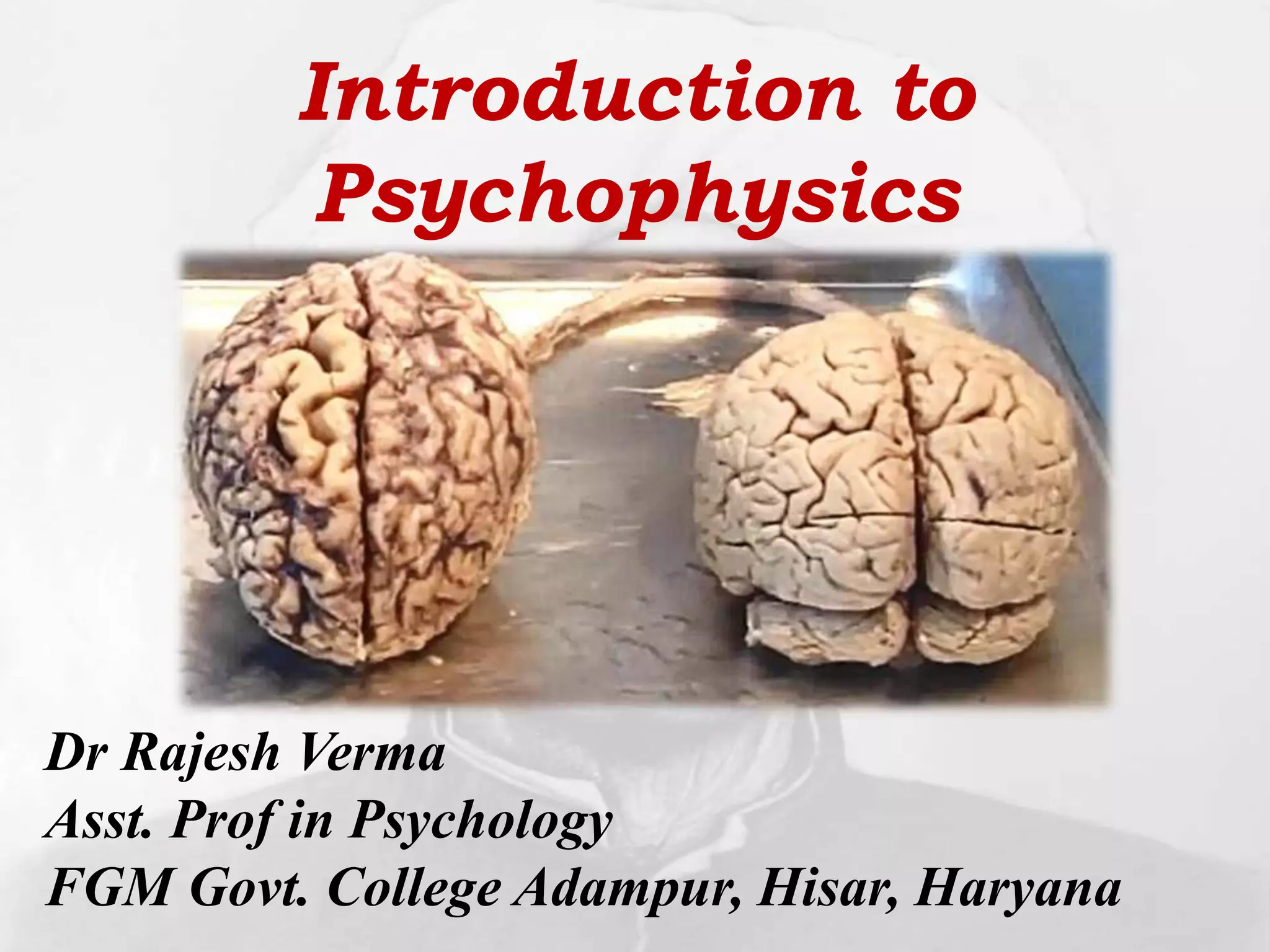
Introduction to
Psychophysics
Dr Rajesh Verma
Asst. Prof in Psychology
FGM Govt. College Adampur, Hisar, Haryana
Meaning
The word Psychophysics is made up of Psychology
and Physics.
Psychology = Psychological variables (Specially
Sensation and Perception) of an individual.
Physics = Physical Properties of Stimulus
Means studying the
relationship between
psychological phenomenon
and physical properties
of stimulus.
Definition
The branch of psychological science that study
relationship between psychological phenomenon and
physical properties of a stimulus.
The relationship between stimuli and the sensations
they evoke has been studied in a discipline, called
psychophysics (NCERT, XI).
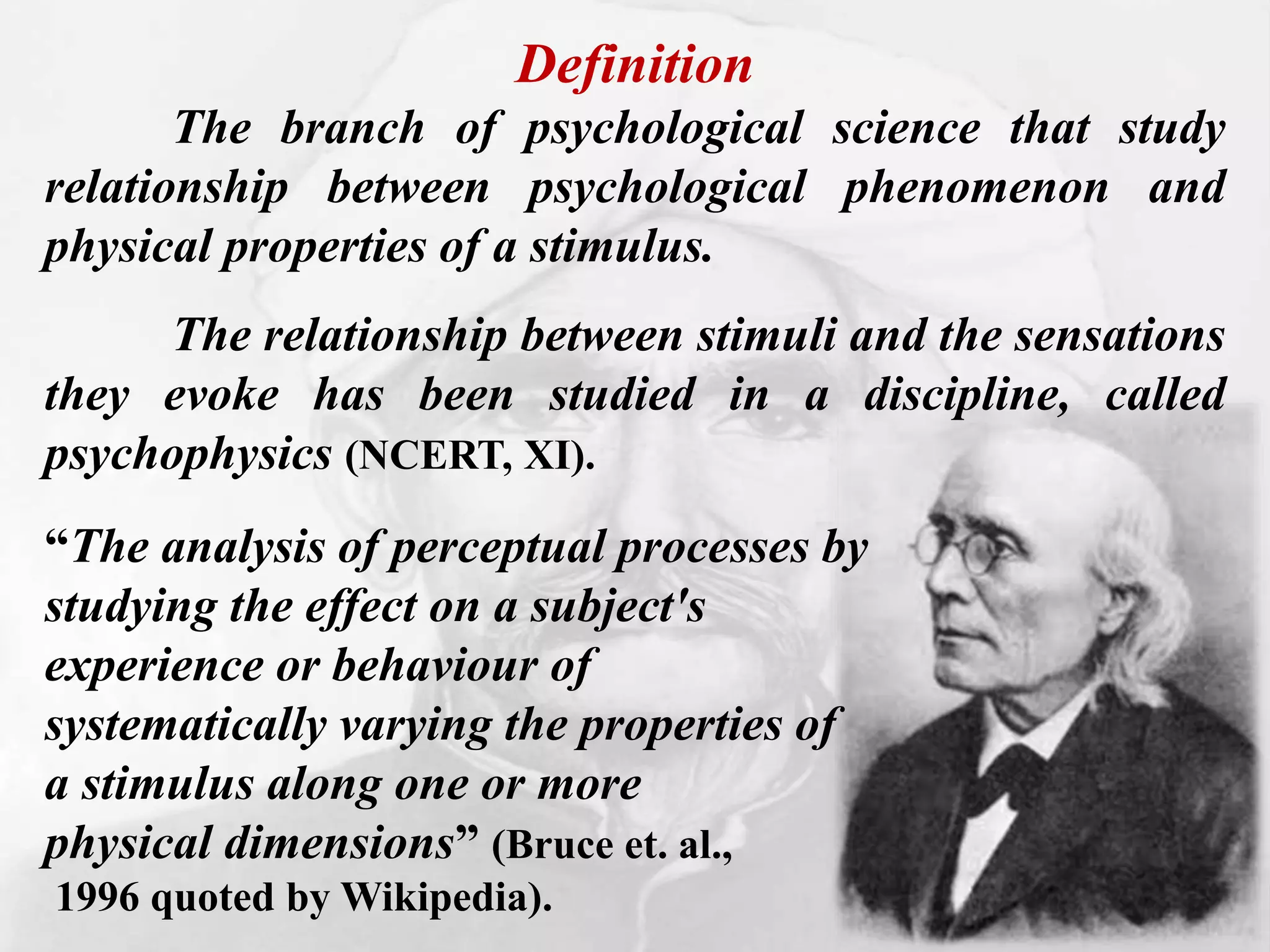
“The analysis of perceptual processes by
studying the effect on a subject's
experience or behaviour of
systematically varying the properties of
a stimulus along one or more
physical dimensions” (Bruce et. al.,
1996 quoted by Wikipedia).
Introduction
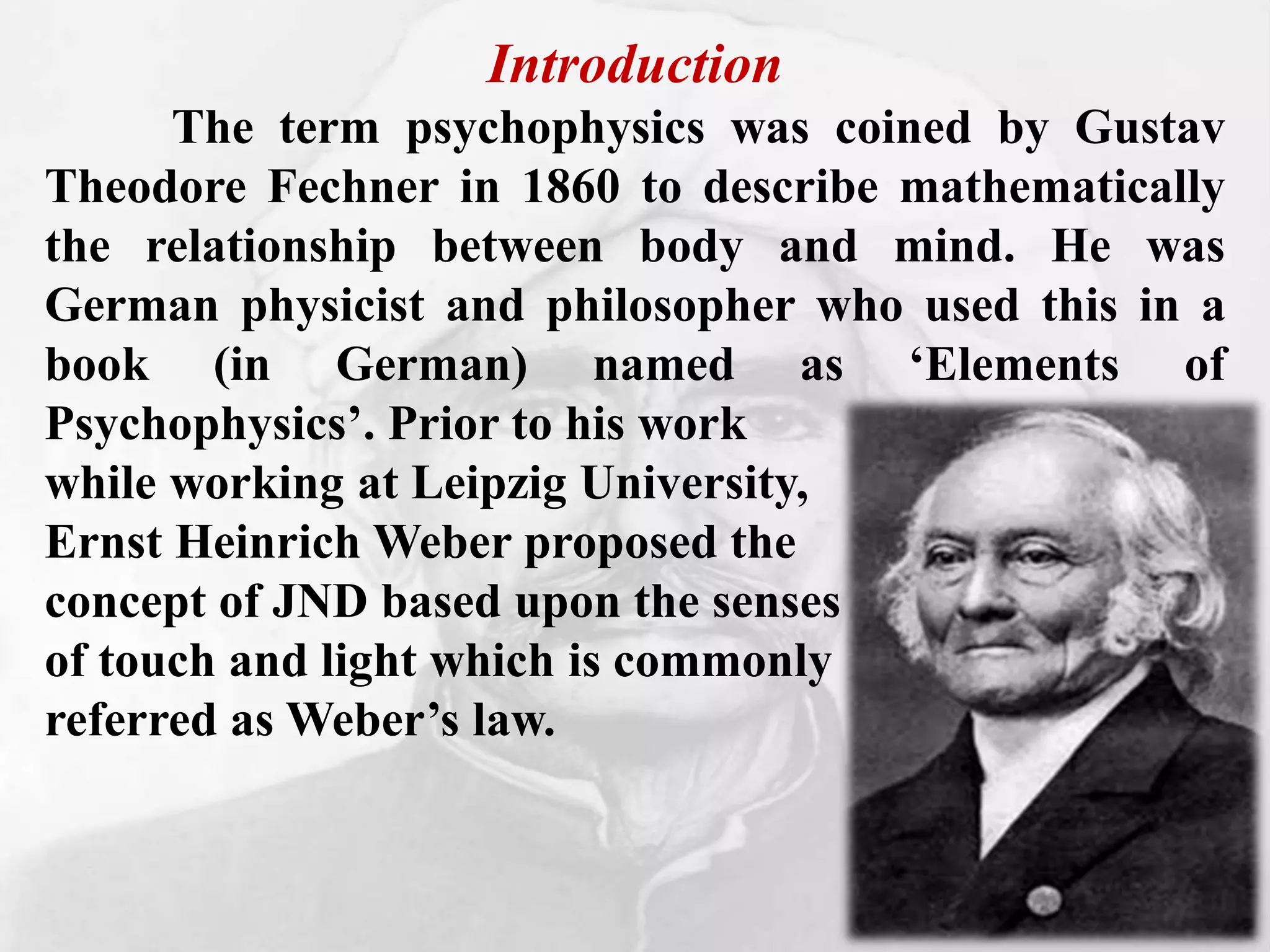
The term psychophysics was coined by Gustav
Theodore Fechner in 1860 to describe mathematically
the relationship between body and mind. He was
German physicist and philosopher who used this in a
book (in German) named as ‘Elements of
Psychophysics’. Prior to his work
while working at Leipzig University,
Ernst Heinrich Weber proposed the
concept of JND based upon the senses
of touch and light which is commonly
referred as Weber’s law.
It states that the amount required to
produce JND is a constant proportion of the
value of the original stimulus or reference
intensity. The concept of modern Psychophysics
is based on the work Weber and Fechner.
In psychophysics the intensity of stimuli
that activate the five
senses are objectively
quantified.
The two important concepts of psychophysics: -
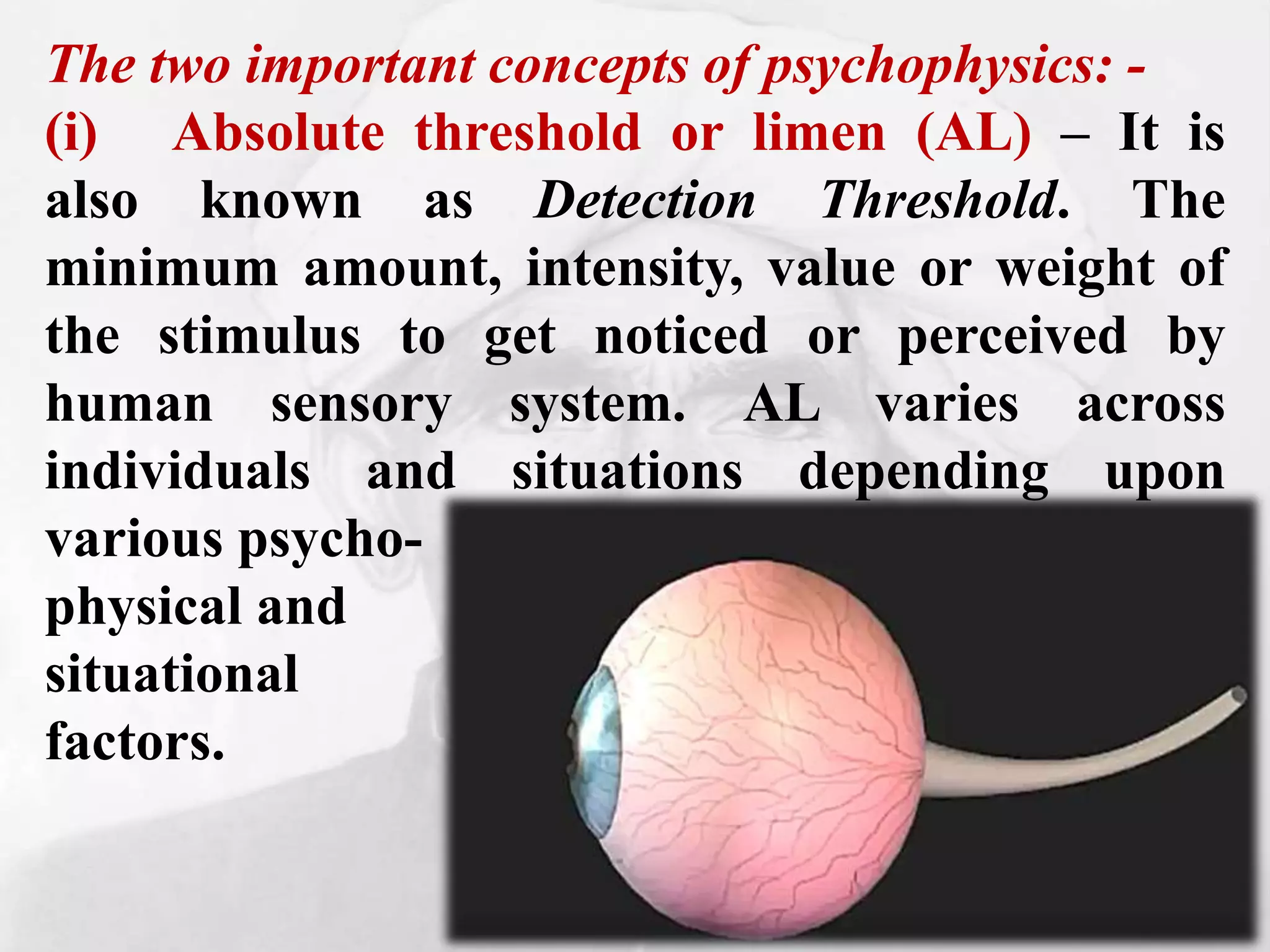
(i) Absolute threshold or limen (AL) – It is
also known as Detection Threshold. The
minimum amount, intensity, value or weight of
the stimulus to get noticed or perceived by
human sensory system. AL varies across
individuals and situations depending upon
various psycho-
physical and
situational
factors.
So to measure AL the number of trials
forms the base. When the stimulus is perceived
correctly in 50% of total trials than the
particular intensity or value of the stimulus is
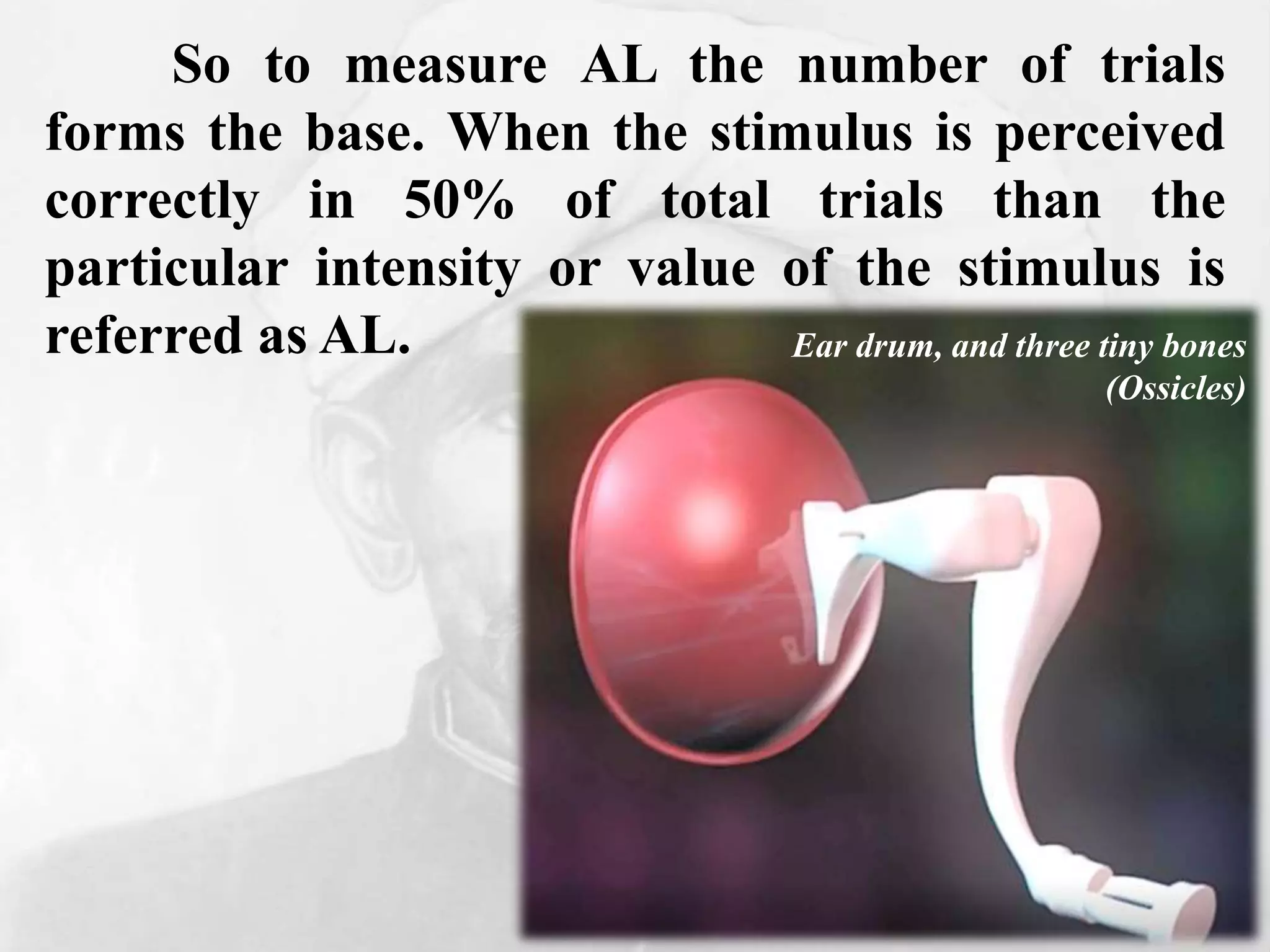
referred as AL. Ear drum, and three tiny bones
(Ossicles)
(ii) Differential threshold of limen (DL) – It is also
known as Just Noticeable Difference (JND) or
Discrimination Threshold. The smallest difference in the
values of the two stimuli that helps in detecting the
difference between them. As AL, DL also measured
using number of trials i.e. the minimum amount of
change in the value of a stimulus which is capable
enough to be detected
correctly in 50% of
the trials.
Methods of Psychophysics
To measure the relationship between
intensity of stimulus and perception Fechner
developed following three methods. : -
(i) Methods of Limits
(ii) Method of
Constant Stimuli
(iii) Method of Adjustment
These methods are used to measure the
threshold of the intensity of the stimulus
required to perceive it which is known as
Absolute threshold or Absolute Limen (AL).
References:
1. NCERT, XI Psychology Text book.
2. Bruce. V., Green, P. R. & Georgeson, M. A. (1996). Visual
perception (3rd ed.). Psychology Press.
3. https://www.britannica.com/science/Webers-law.
4. https://en.wikipedia.org/wiki/Psychophysics.
5. https://www.britannica.com/science/psychophysics.
Next Discussion
Problems of
Psychophysics
Meet You Soon
With Next Video
vermasujit@yahoo.com
Thanks

Introduction to psychophysics (English)

  • 1.
    Introduction to Psychophysics Dr RajeshVerma Asst. Prof in Psychology FGM Govt. College Adampur, Hisar, Haryana
  • 2.
    Meaning The word Psychophysicsis made up of Psychology and Physics. Psychology = Psychological variables (Specially Sensation and Perception) of an individual. Physics = Physical Properties of Stimulus Means studying the relationship between psychological phenomenon and physical properties of stimulus.
  • 3.
    Definition The branch ofpsychological science that study relationship between psychological phenomenon and physical properties of a stimulus. The relationship between stimuli and the sensations they evoke has been studied in a discipline, called psychophysics (NCERT, XI). “The analysis of perceptual processes by studying the effect on a subject's experience or behaviour of systematically varying the properties of a stimulus along one or more physical dimensions” (Bruce et. al., 1996 quoted by Wikipedia).
  • 4.
    Introduction The term psychophysicswas coined by Gustav Theodore Fechner in 1860 to describe mathematically the relationship between body and mind. He was German physicist and philosopher who used this in a book (in German) named as ‘Elements of Psychophysics’. Prior to his work while working at Leipzig University, Ernst Heinrich Weber proposed the concept of JND based upon the senses of touch and light which is commonly referred as Weber’s law.
  • 5.
    It states thatthe amount required to produce JND is a constant proportion of the value of the original stimulus or reference intensity. The concept of modern Psychophysics is based on the work Weber and Fechner. In psychophysics the intensity of stimuli that activate the five senses are objectively quantified.
  • 6.
    The two importantconcepts of psychophysics: - (i) Absolute threshold or limen (AL) – It is also known as Detection Threshold. The minimum amount, intensity, value or weight of the stimulus to get noticed or perceived by human sensory system. AL varies across individuals and situations depending upon various psycho- physical and situational factors.
  • 7.
    So to measureAL the number of trials forms the base. When the stimulus is perceived correctly in 50% of total trials than the particular intensity or value of the stimulus is referred as AL. Ear drum, and three tiny bones (Ossicles)
  • 8.
    (ii) Differential thresholdof limen (DL) – It is also known as Just Noticeable Difference (JND) or Discrimination Threshold. The smallest difference in the values of the two stimuli that helps in detecting the difference between them. As AL, DL also measured using number of trials i.e. the minimum amount of change in the value of a stimulus which is capable enough to be detected correctly in 50% of the trials.
  • 9.
    Methods of Psychophysics Tomeasure the relationship between intensity of stimulus and perception Fechner developed following three methods. : - (i) Methods of Limits (ii) Method of Constant Stimuli
  • 10.
    (iii) Method ofAdjustment These methods are used to measure the threshold of the intensity of the stimulus required to perceive it which is known as Absolute threshold or Absolute Limen (AL).
  • 11.
    References: 1. NCERT, XIPsychology Text book. 2. Bruce. V., Green, P. R. & Georgeson, M. A. (1996). Visual perception (3rd ed.). Psychology Press. 3. https://www.britannica.com/science/Webers-law. 4. https://en.wikipedia.org/wiki/Psychophysics. 5. https://www.britannica.com/science/psychophysics.
  • 12.
  • 13.
    Meet You Soon WithNext Video vermasujit@yahoo.com Thanks