Case Studies in Psychology
Designing, Conducting and Reporting Cases
Chinchu C
Psychologist, Trainer & Research Consultant
Association for Social Change, Evolution and
Transformation(ASCENT)
Courtesy: Zucker, Donna M., "How to Do Case Study Research" (2009). College of Nursing
Faculty Publication Series. 2.
http://scholarworks.umass.edu/nursing_faculty_pubs/2
Why Case Study?
This is Matthew Ricard, known as
the “Happiest person on earth”
How would you ‘study’ him ?
Image Courtesy: Wikimedia Commons
…systematic inquiry into an event or a set of related
events which aims to describe and explain the
phenomenon of interest (Bromley, 1990. p.302)
 The unit of analysis can vary from an individual to a
corporation, or an event
 Single or multiple cases can be included in a study
 documentation, archival records, interviews, direct
observations, participant observation and physical
artefacts (Yin, 1994)
Case Study
 Intrinsic case studies :The cases in intrinsic case studies
are chosen because they are interesting in their own right
 Instrumental case studies: Exemplars of a more general
phenomenon. They are selected to provide the
researcher with an opportunity to study the
phenomenon of interest (Eg: Misogyny, Fame, Stress,
Moral Policing…)
 Single V/s Multiple
 Descriptive V/s Explanatory
 Naturalist V/s Pragmatic
Typologies of case studies*
* - Willig, Carla (2001) Introducing qualitative research in psychology.
Buckingham: Open University Press, page 73 ff.
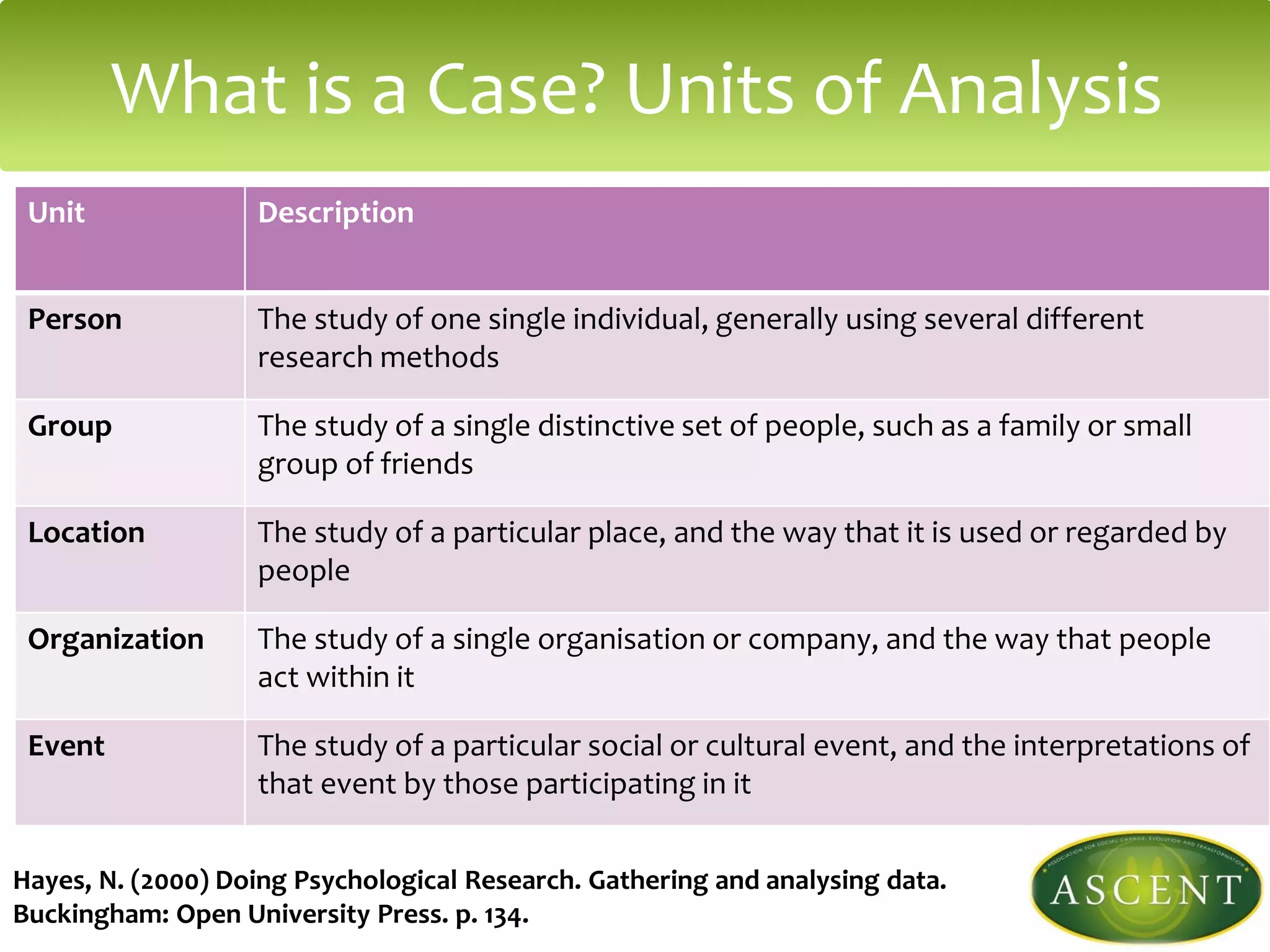
Unit Description
Person The study of one single individual, generally using several different
research methods
Group The study of a single distinctive set of people, such as a family or small
group of friends
Location The study of a particular place, and the way that it is used or regarded by
people
Organization The study of a single organisation or company, and the way that people
act within it
Event The study of a particular social or cultural event, and the interpretations of
that event by those participating in it
What is a Case? Units of Analysis
Hayes, N. (2000) Doing Psychological Research. Gathering and analysing data.
Buckingham: Open University Press. p. 134.
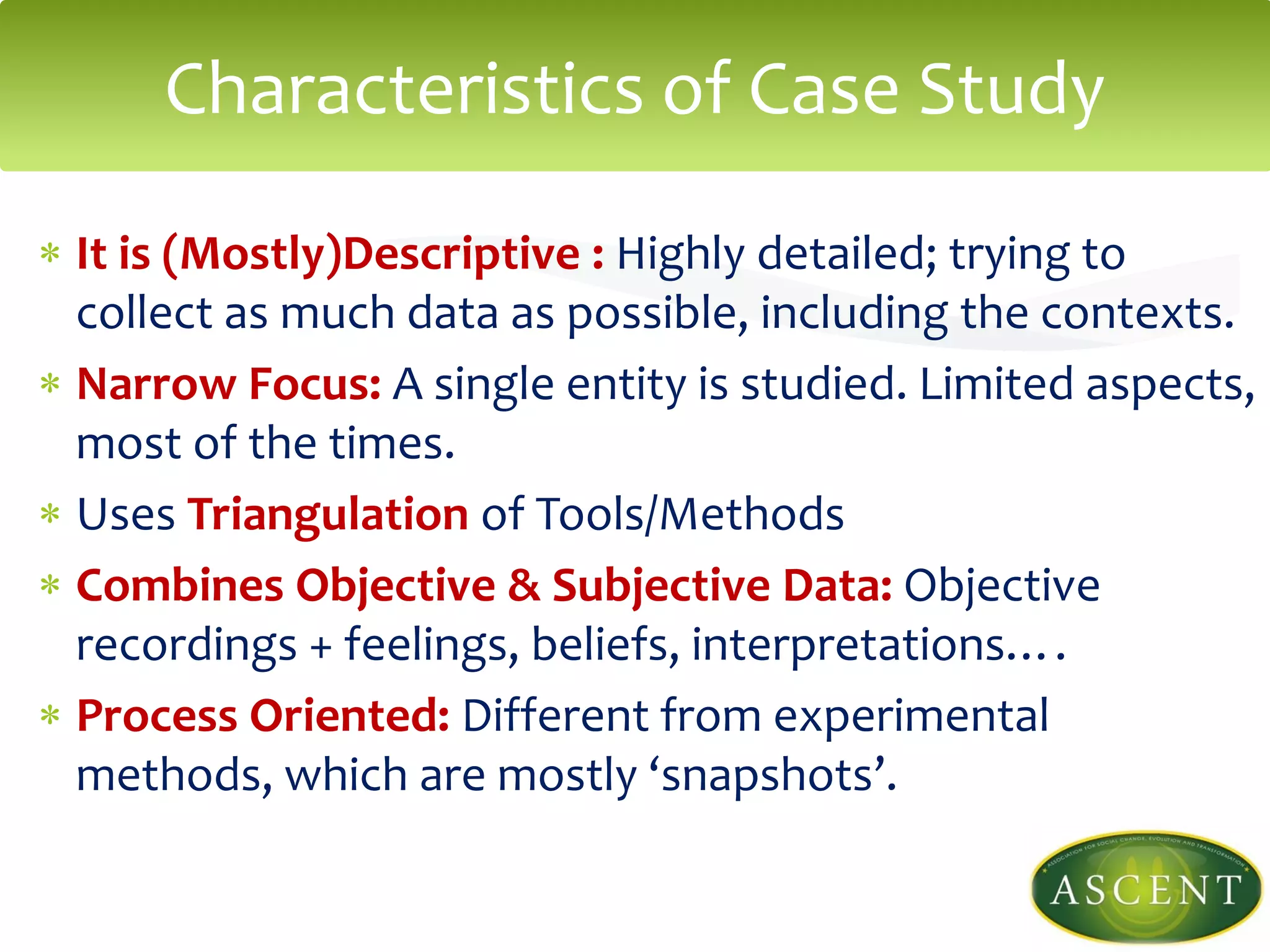
 It is (Mostly)Descriptive : Highly detailed; trying to
collect as much data as possible, including the contexts.
 Narrow Focus: A single entity is studied. Limited aspects,
most of the times.
 Uses Triangulation of Tools/Methods
 Combines Objective & Subjective Data: Objective
recordings + feelings, beliefs, interpretations….
 Process Oriented: Different from experimental
methods, which are mostly ‘snapshots’.
Characteristics of Case Study
Pros and Cons
• Stimulating New Research: Freud and Anna O
• Question Established Theory: Kim Peek
• Giving New Insight into Phenomena or experience
• Investigating Otherwise Inaccessible Areas: Wild
boy of Aveyron
o Not Replicable
o Researcher Bias
o Memory Distortions
o No Generalization
A Sample Protocol:
 Purpose and Rationale
 Design (Based on Unit of Analysis and purpose)
 Data Collection and Management
 Describing Full Case
 Thematic Analysis (Based on purpose, rationale
and questions)
 Establish Rigour
Protocol
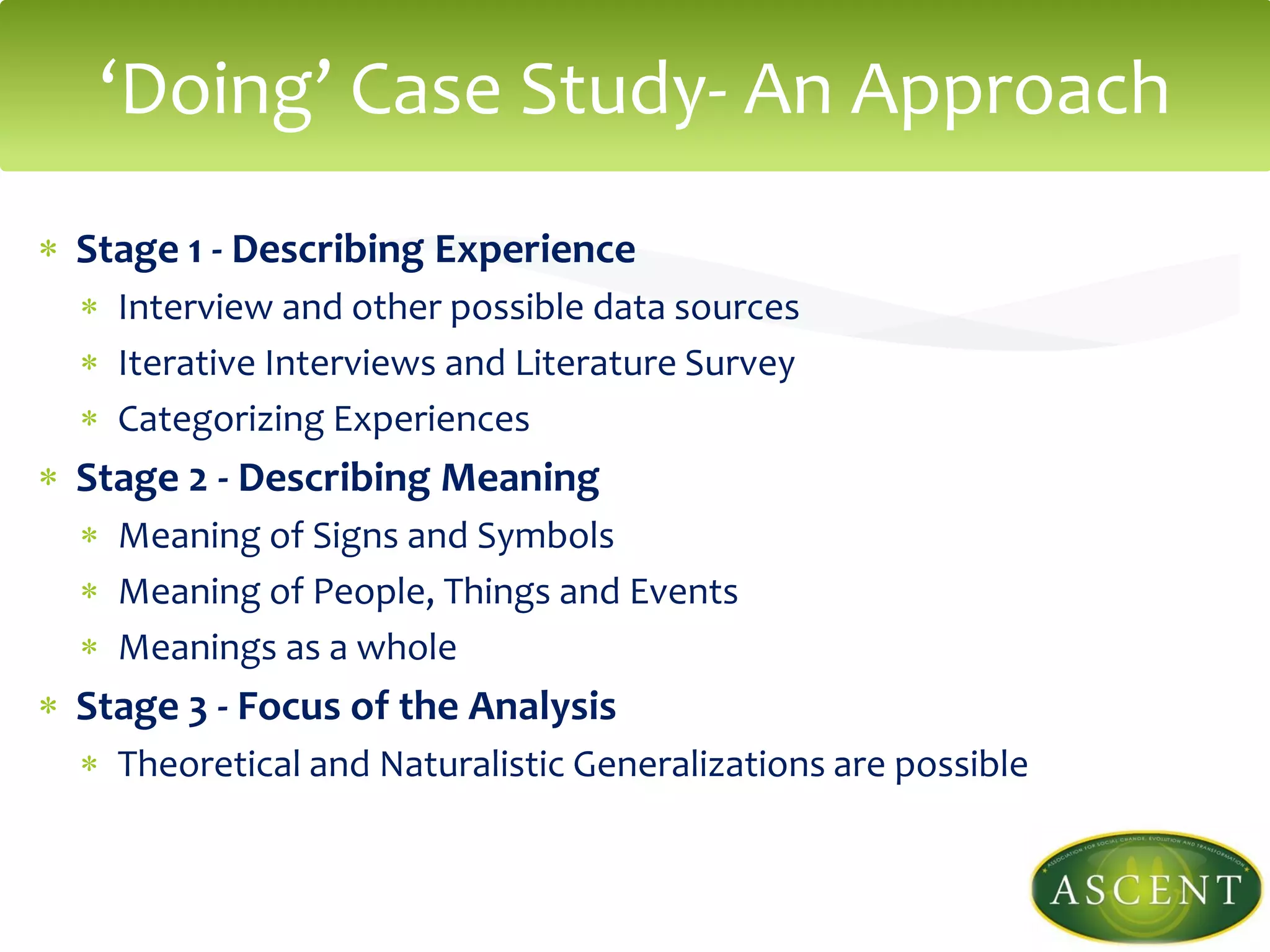
 Stage 1 - Describing Experience
 Interview and other possible data sources
 Iterative Interviews and Literature Survey
 Categorizing Experiences
 Stage 2 - Describing Meaning
 Meaning of Signs and Symbols
 Meaning of People, Things and Events
 Meanings as a whole
 Stage 3 - Focus of the Analysis
 Theoretical and Naturalistic Generalizations are possible
‘Doing’ Case Study- An Approach
What Goes with What? Integration Among Pieces of Data
Noting Patterns
Clustering Making Metaphors
Seeing Plausibility
What's There? Sharpen our Understanding
Counting Making Comparisons
Partitioning Variables
See Things and Their Relationships More
Abstractly
Assemble a Coherent Understanding of
the Data
Subsuming Particulars Into the General Building a Logical Chain of Evidence
Factoring Making Conceptual/Theoretical
Noting Relations Between Variables Coherence
Finding Intervening Variables
Strategies for Establishing Rigour
Miles, M. B., & Huberman, A. M. (1994). Qualitative data analysis (2nd ed.).
Thousand Oaks, CA: Sage Publications
 Separate the story and the findings from the
conclusions and interpretations
 Not a good practice to just list out cases
 Emphasize the common themes across cases
 Ensure proper referencing
 Be open to Ethical concerns
Writing Up
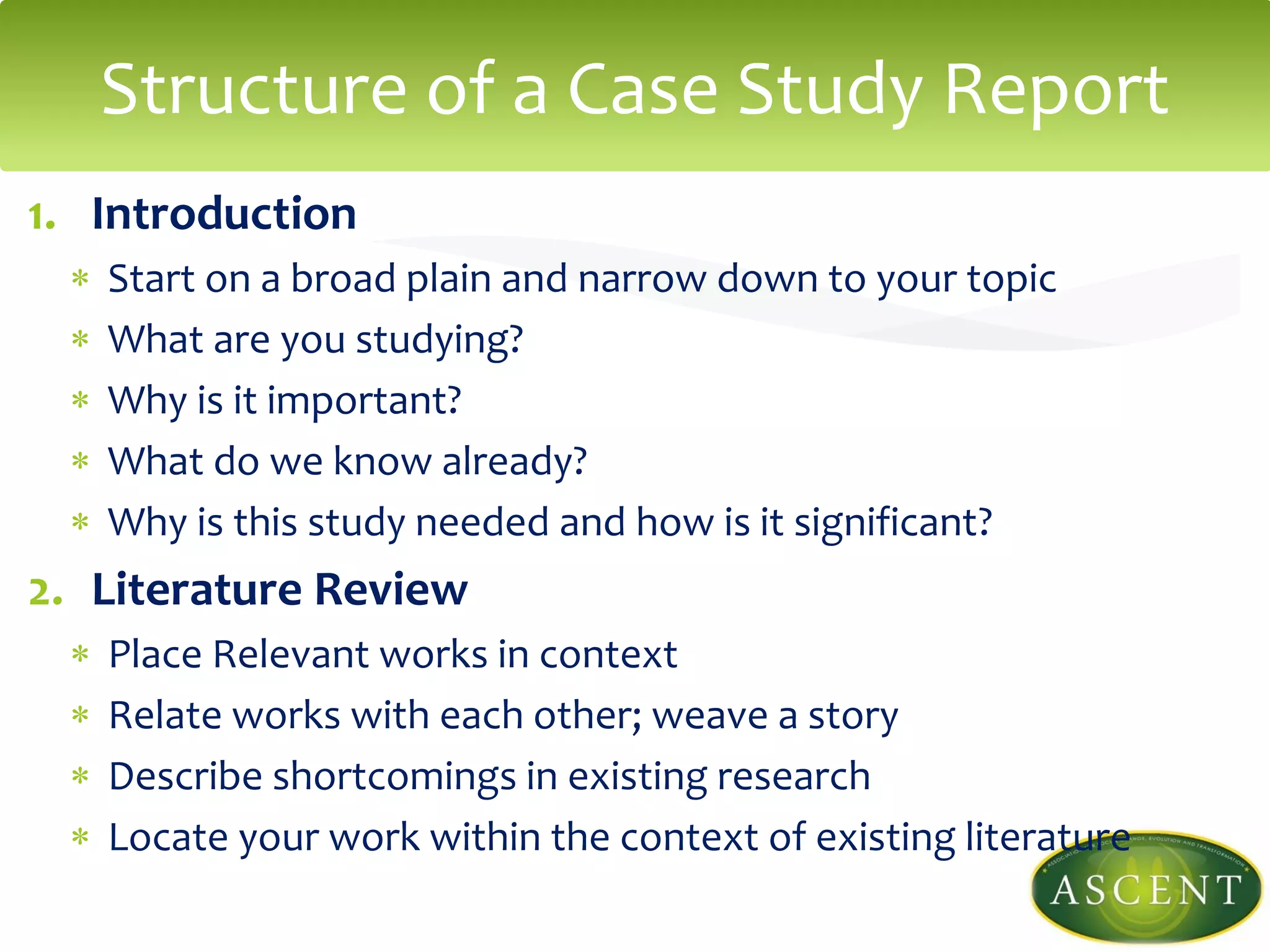
1. Introduction
 Start on a broad plain and narrow down to your topic
 What are you studying?
 Why is it important?
 What do we know already?
 Why is this study needed and how is it significant?
2. Literature Review
 Place Relevant works in context
 Relate works with each other; weave a story
 Describe shortcomings in existing research
 Locate your work within the context of existing literature
Structure of a Case Study Report
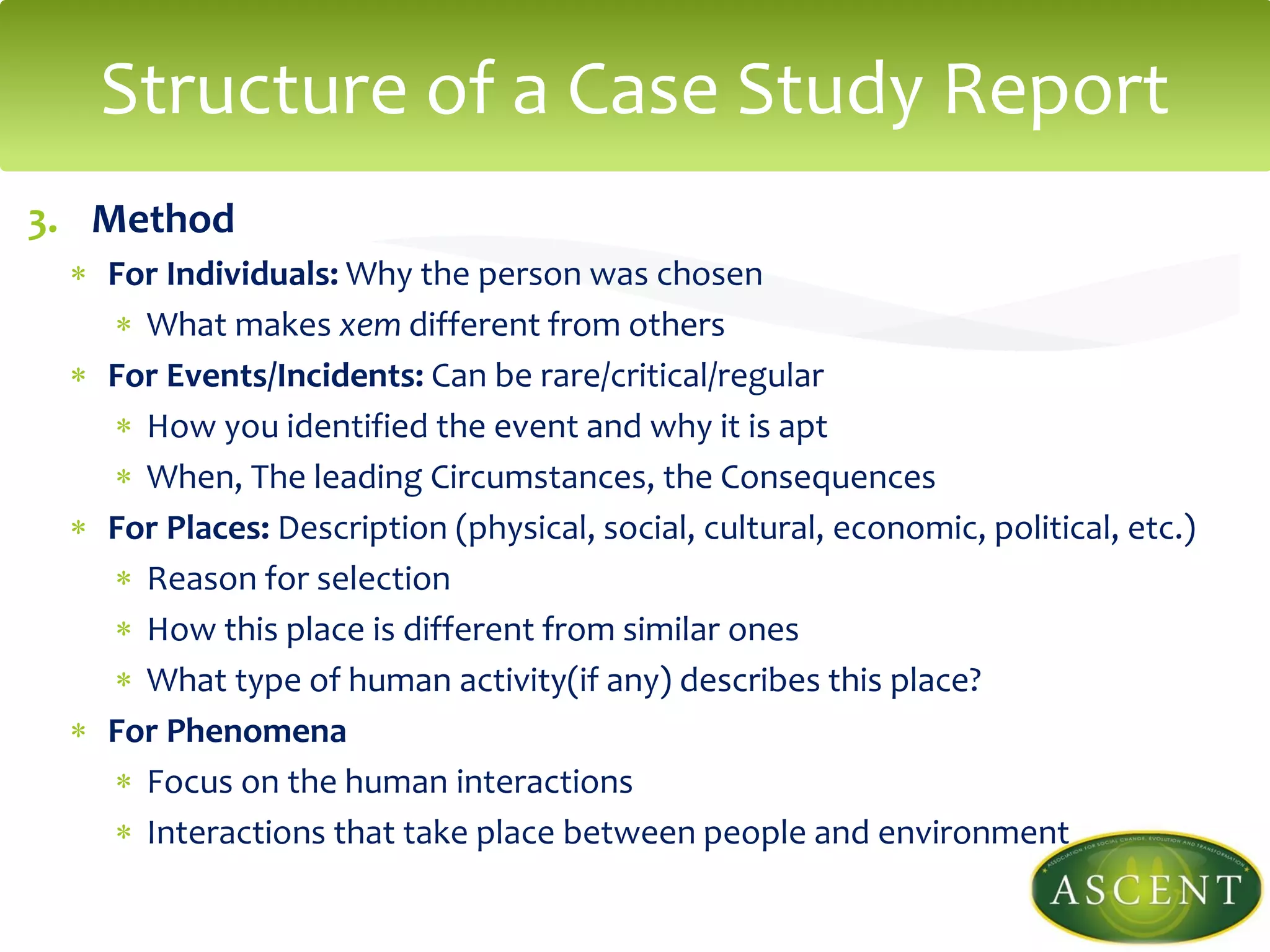
3. Method
 For Individuals: Why the person was chosen
 What makes xem different from others
 For Events/Incidents: Can be rare/critical/regular
 How you identified the event and why it is apt
 When, The leading Circumstances, the Consequences
 For Places: Description (physical, social, cultural, economic, political, etc.)
 Reason for selection
 How this place is different from similar ones
 What type of human activity(if any) describes this place?
 For Phenomena
 Focus on the human interactions
 Interactions that take place between people and environment
Structure of a Case Study Report
4. Discussion
 Relate the Findings with Research Question(s)
 Meaning of findings and their importance; Don’t exaggerate
 Relate to similar findings
 Consider alternative explanations
 Acknowledge Limitations
 Suggest areas for further research
5. Conclusion
 Provide a general overview
 List out implications
 Do not overgeneralize
 Provide space for the ‘Black Swan’
Structure of a Case Study Report
 Hayes, N. (2000) Doing Psychological Research. Gathering and
analysing data. Buckingham: Open University Press. p. 134.
 http://libguides.usc.edu/writingguide/casestudy
 Zucker, Donna M., "How to Do Case Study Research" (2009).
College of Nursing Faculty Publication Series.2.
http://scholarworks.umass.edu/nursing_faculty_pubs/2
 Willig, Carla (2001) Introducing qualitative research in psychology.
Buckingham: Open University Press.
References

Case study in psychology

  • 1.
    Case Studies inPsychology Designing, Conducting and Reporting Cases Chinchu C Psychologist, Trainer & Research Consultant Association for Social Change, Evolution and Transformation(ASCENT) Courtesy: Zucker, Donna M., "How to Do Case Study Research" (2009). College of Nursing Faculty Publication Series. 2. http://scholarworks.umass.edu/nursing_faculty_pubs/2
  • 2.
    Why Case Study? Thisis Matthew Ricard, known as the “Happiest person on earth” How would you ‘study’ him ? Image Courtesy: Wikimedia Commons
  • 3.
    …systematic inquiry intoan event or a set of related events which aims to describe and explain the phenomenon of interest (Bromley, 1990. p.302)  The unit of analysis can vary from an individual to a corporation, or an event  Single or multiple cases can be included in a study  documentation, archival records, interviews, direct observations, participant observation and physical artefacts (Yin, 1994) Case Study
  • 4.
     Intrinsic casestudies :The cases in intrinsic case studies are chosen because they are interesting in their own right  Instrumental case studies: Exemplars of a more general phenomenon. They are selected to provide the researcher with an opportunity to study the phenomenon of interest (Eg: Misogyny, Fame, Stress, Moral Policing…)  Single V/s Multiple  Descriptive V/s Explanatory  Naturalist V/s Pragmatic Typologies of case studies* * - Willig, Carla (2001) Introducing qualitative research in psychology. Buckingham: Open University Press, page 73 ff.
  • 5.
    Unit Description Person Thestudy of one single individual, generally using several different research methods Group The study of a single distinctive set of people, such as a family or small group of friends Location The study of a particular place, and the way that it is used or regarded by people Organization The study of a single organisation or company, and the way that people act within it Event The study of a particular social or cultural event, and the interpretations of that event by those participating in it What is a Case? Units of Analysis Hayes, N. (2000) Doing Psychological Research. Gathering and analysing data. Buckingham: Open University Press. p. 134.
  • 6.
     It is(Mostly)Descriptive : Highly detailed; trying to collect as much data as possible, including the contexts.  Narrow Focus: A single entity is studied. Limited aspects, most of the times.  Uses Triangulation of Tools/Methods  Combines Objective & Subjective Data: Objective recordings + feelings, beliefs, interpretations….  Process Oriented: Different from experimental methods, which are mostly ‘snapshots’. Characteristics of Case Study
  • 7.
    Pros and Cons •Stimulating New Research: Freud and Anna O • Question Established Theory: Kim Peek • Giving New Insight into Phenomena or experience • Investigating Otherwise Inaccessible Areas: Wild boy of Aveyron o Not Replicable o Researcher Bias o Memory Distortions o No Generalization
  • 8.
    A Sample Protocol: Purpose and Rationale  Design (Based on Unit of Analysis and purpose)  Data Collection and Management  Describing Full Case  Thematic Analysis (Based on purpose, rationale and questions)  Establish Rigour Protocol
  • 9.
     Stage 1- Describing Experience  Interview and other possible data sources  Iterative Interviews and Literature Survey  Categorizing Experiences  Stage 2 - Describing Meaning  Meaning of Signs and Symbols  Meaning of People, Things and Events  Meanings as a whole  Stage 3 - Focus of the Analysis  Theoretical and Naturalistic Generalizations are possible ‘Doing’ Case Study- An Approach
  • 10.
    What Goes withWhat? Integration Among Pieces of Data Noting Patterns Clustering Making Metaphors Seeing Plausibility What's There? Sharpen our Understanding Counting Making Comparisons Partitioning Variables See Things and Their Relationships More Abstractly Assemble a Coherent Understanding of the Data Subsuming Particulars Into the General Building a Logical Chain of Evidence Factoring Making Conceptual/Theoretical Noting Relations Between Variables Coherence Finding Intervening Variables Strategies for Establishing Rigour Miles, M. B., & Huberman, A. M. (1994). Qualitative data analysis (2nd ed.). Thousand Oaks, CA: Sage Publications
  • 11.
     Separate thestory and the findings from the conclusions and interpretations  Not a good practice to just list out cases  Emphasize the common themes across cases  Ensure proper referencing  Be open to Ethical concerns Writing Up
  • 12.
    1. Introduction  Starton a broad plain and narrow down to your topic  What are you studying?  Why is it important?  What do we know already?  Why is this study needed and how is it significant? 2. Literature Review  Place Relevant works in context  Relate works with each other; weave a story  Describe shortcomings in existing research  Locate your work within the context of existing literature Structure of a Case Study Report
  • 13.
    3. Method  ForIndividuals: Why the person was chosen  What makes xem different from others  For Events/Incidents: Can be rare/critical/regular  How you identified the event and why it is apt  When, The leading Circumstances, the Consequences  For Places: Description (physical, social, cultural, economic, political, etc.)  Reason for selection  How this place is different from similar ones  What type of human activity(if any) describes this place?  For Phenomena  Focus on the human interactions  Interactions that take place between people and environment Structure of a Case Study Report
  • 14.
    4. Discussion  Relatethe Findings with Research Question(s)  Meaning of findings and their importance; Don’t exaggerate  Relate to similar findings  Consider alternative explanations  Acknowledge Limitations  Suggest areas for further research 5. Conclusion  Provide a general overview  List out implications  Do not overgeneralize  Provide space for the ‘Black Swan’ Structure of a Case Study Report
  • 15.
     Hayes, N.(2000) Doing Psychological Research. Gathering and analysing data. Buckingham: Open University Press. p. 134.  http://libguides.usc.edu/writingguide/casestudy  Zucker, Donna M., "How to Do Case Study Research" (2009). College of Nursing Faculty Publication Series.2. http://scholarworks.umass.edu/nursing_faculty_pubs/2  Willig, Carla (2001) Introducing qualitative research in psychology. Buckingham: Open University Press. References