Evolutionary 
Psychology
Learning Outcome 
 B12- Examine one evolutionary 
explanation of behavior. 
 Explain whether one evolutionary behavior 
is valid. 
 Use research studies to defend this.
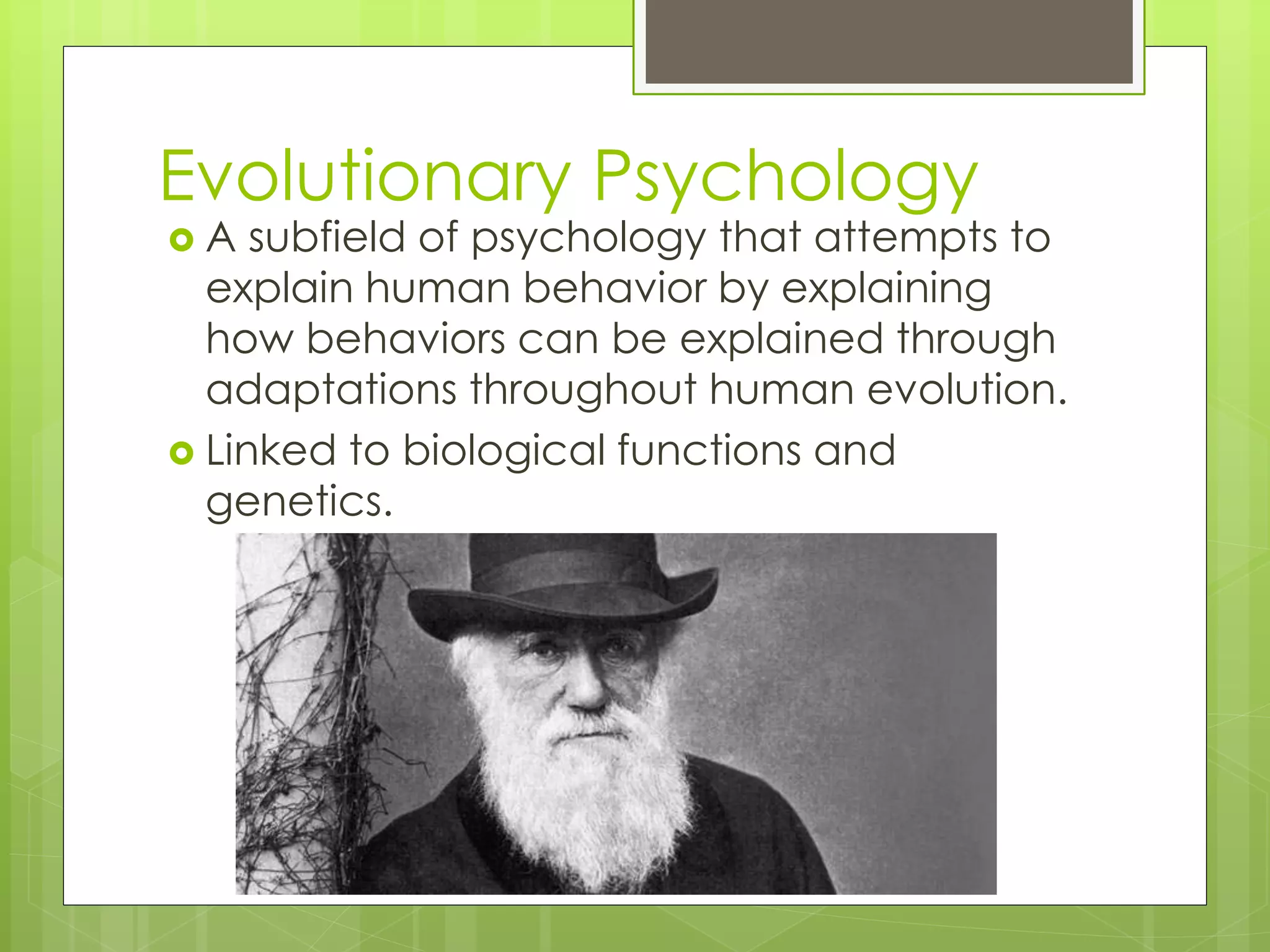
Evolutionary Psychology 
 A subfield of psychology that attempts to 
explain human behavior by explaining 
how behaviors can be explained through 
adaptations throughout human evolution. 
 Linked to biological functions and 
genetics.
Key Ideas of Evolution 
 Natural Selection: Those individuals who 
have characteristics which are better 
suited to the environment will be more 
likely to breed, and thus pass on their 
genes and traits. 
 Genes help predict behavior. 
 Adaptations: the process where 
organisms develop traits that make them 
suitable to their environment over 
generations.
Example #1: Stress 
When faced with a tiger in the woods, a 
caveman becomes stressed. This 
response tells his body to shut down all 
other brain and biological functions and 
focus all attention on surviving. Those that 
were able to display stress were more 
likely to pass on their genes and thus 
passing stress onto us all. 
We react negatively to chronic stress 
because it is our body telling us to be in 
survival mode all the time.
The Pair Bonding Hypothesis 
 Helen Fisher: Explaining the Pair-Bonding 
Hypothesis 
 Humans who formed romantic bonds and 
reared their young together were more 
likely to survive, protect their 
babies/genes, and thus pass their genes 
along. 
 Humans developed biological functions 
that told them to focus their attention, 
feel attached, and to feel rewarded by 
their one mate. 
 Essential for females, suitable for males.
Critiques of Evolutionary 
Theory
Critiques of Evolutionary 
Theory 
 Evolutionary theories often underestimate 
the role of culture in shaping behavior. 
 Little is known about the behavior of early 
Homo sapiens, so theories are largely 
hypothetical. 
 Not all theories can be empirically tested 
and thus face confirmation bias – seeing 
what you want to see and avoiding what 
you don’t.
Applying our Knowledge 
1. Explain how studies that we have 
learned about either defend of oppose 
the Pair-Bonding Hypothesis. 
2. Describe problems/critiques of the P-B 
Hypothesis? 
3. As a group, decide if we have enough 
evidence to accept the P-B Hypothesis. 
Explain your thinking.

Evolutionary psychology

  • 1.
  • 2.
    Learning Outcome B12- Examine one evolutionary explanation of behavior.  Explain whether one evolutionary behavior is valid.  Use research studies to defend this.
  • 3.
    Evolutionary Psychology A subfield of psychology that attempts to explain human behavior by explaining how behaviors can be explained through adaptations throughout human evolution.  Linked to biological functions and genetics.
  • 4.
    Key Ideas ofEvolution  Natural Selection: Those individuals who have characteristics which are better suited to the environment will be more likely to breed, and thus pass on their genes and traits.  Genes help predict behavior.  Adaptations: the process where organisms develop traits that make them suitable to their environment over generations.
  • 5.
    Example #1: Stress When faced with a tiger in the woods, a caveman becomes stressed. This response tells his body to shut down all other brain and biological functions and focus all attention on surviving. Those that were able to display stress were more likely to pass on their genes and thus passing stress onto us all. We react negatively to chronic stress because it is our body telling us to be in survival mode all the time.
  • 6.
    The Pair BondingHypothesis  Helen Fisher: Explaining the Pair-Bonding Hypothesis  Humans who formed romantic bonds and reared their young together were more likely to survive, protect their babies/genes, and thus pass their genes along.  Humans developed biological functions that told them to focus their attention, feel attached, and to feel rewarded by their one mate.  Essential for females, suitable for males.
  • 7.
  • 8.
    Critiques of Evolutionary Theory  Evolutionary theories often underestimate the role of culture in shaping behavior.  Little is known about the behavior of early Homo sapiens, so theories are largely hypothetical.  Not all theories can be empirically tested and thus face confirmation bias – seeing what you want to see and avoiding what you don’t.
  • 9.
    Applying our Knowledge 1. Explain how studies that we have learned about either defend of oppose the Pair-Bonding Hypothesis. 2. Describe problems/critiques of the P-B Hypothesis? 3. As a group, decide if we have enough evidence to accept the P-B Hypothesis. Explain your thinking.