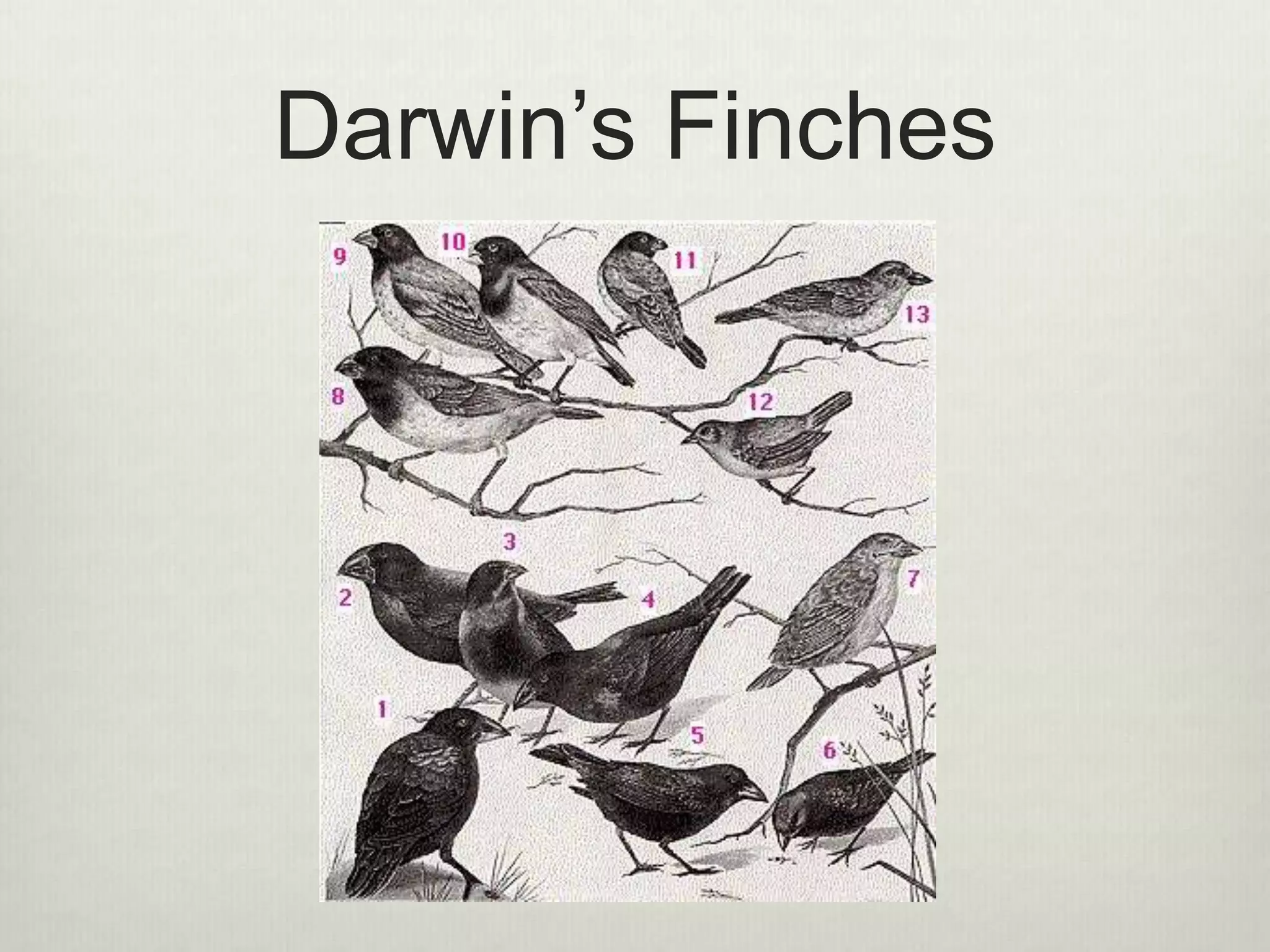
This document discusses microevolution and the processes that cause evolution at the population level, including mutation, gene flow, genetic drift, non-random mating, and natural selection. It provides examples of each, such as Darwin's finches to illustrate natural selection and cheetahs to demonstrate the bottleneck effect of genetic drift. The document seeks to explain how populations evolve over time through changes in allele frequencies from these various evolutionary forces.
In this document
Powered by AI
Introduction to microevolution; changes in allele frequencies over time; significance of examining evolutionary processes.
Review of key vocabulary: population, genotype, phenotype, allele, gene pool essential for understanding evolution.
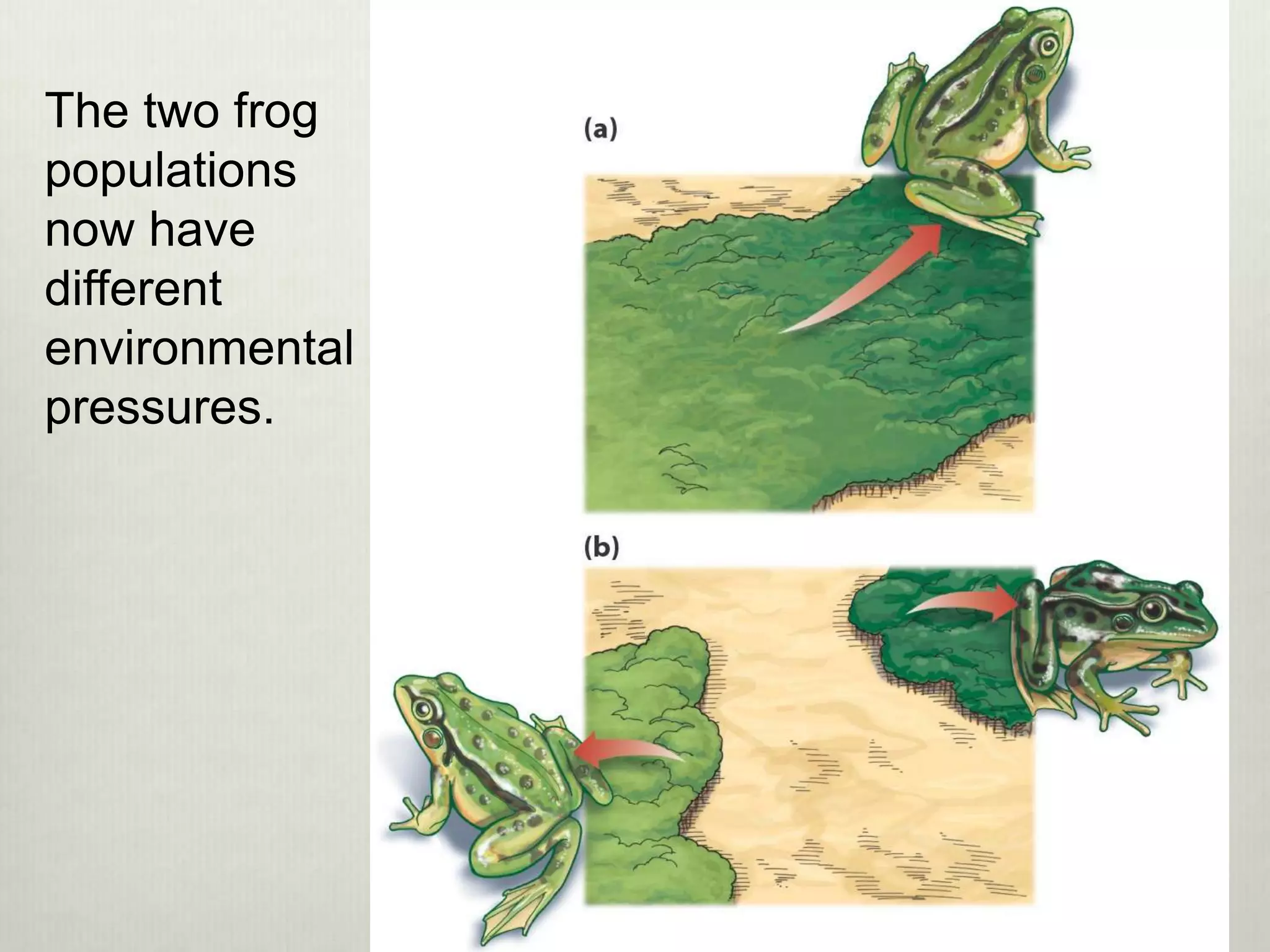
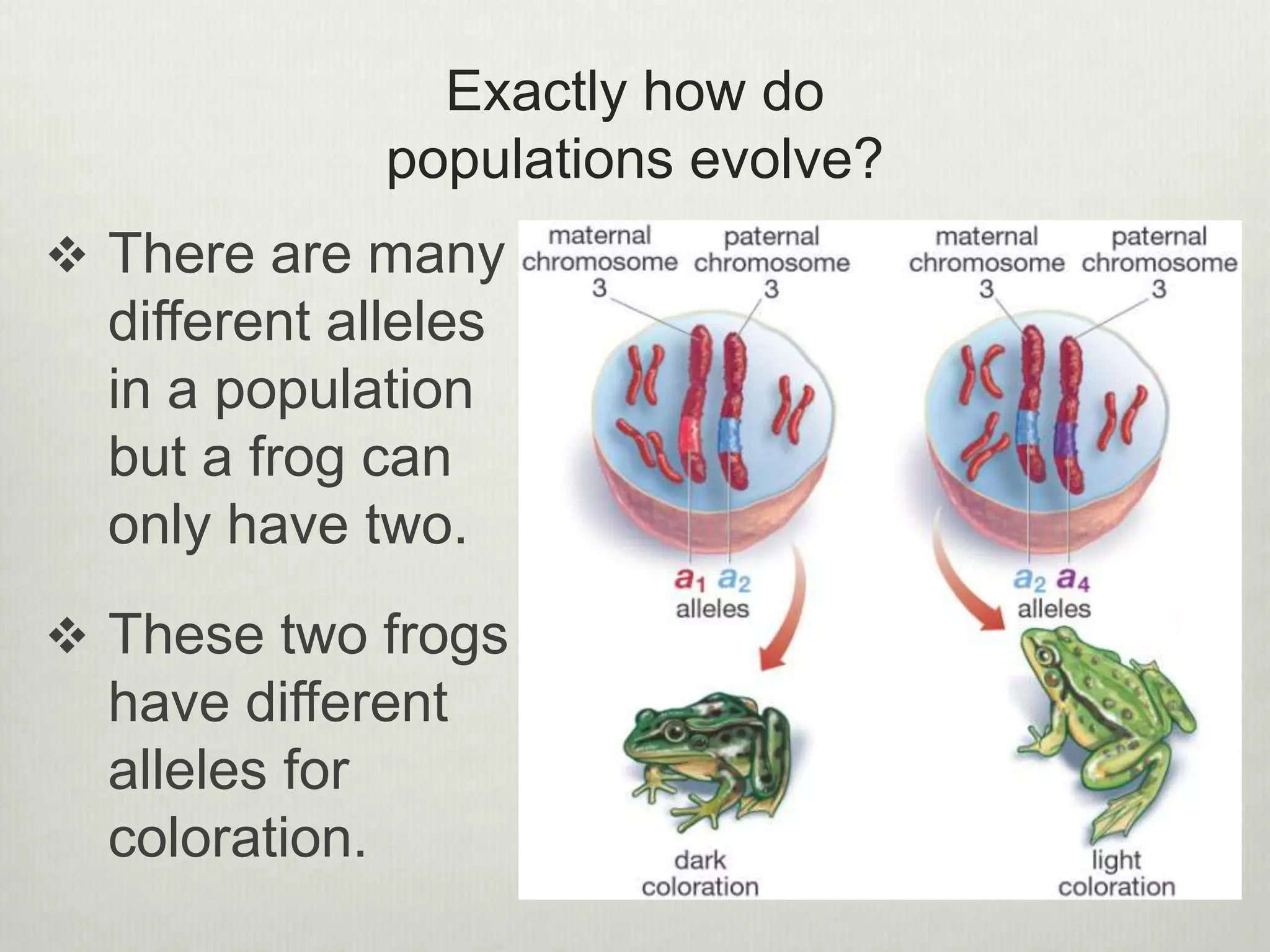
Comparison of two frog populations under different environmental pressures; gene variations in coloration.
Introduction to five key agents that influence evolution: mutation, gene flow, genetic drift, non-random mating, natural selection.
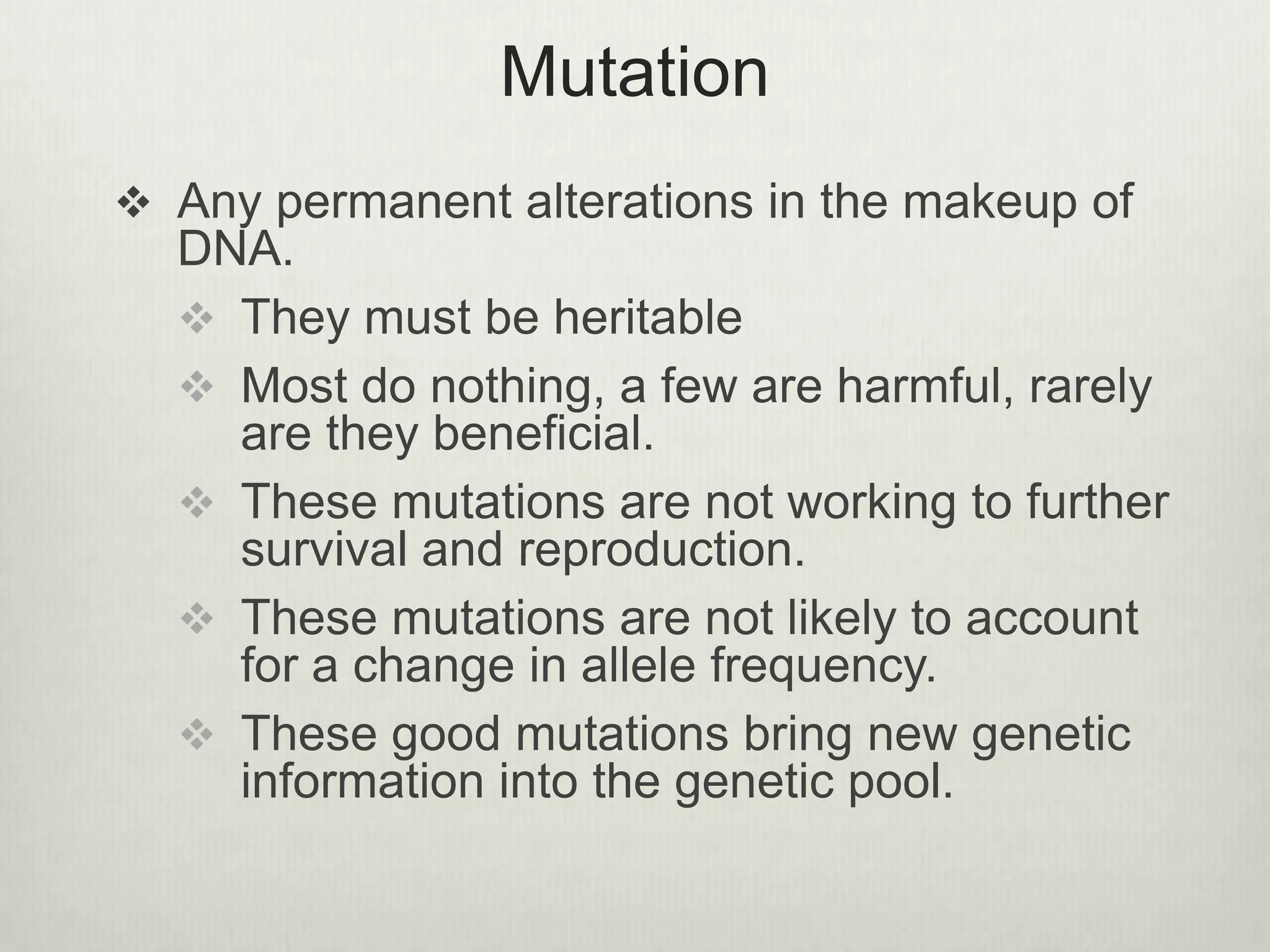
Discusses mutations as DNA alterations, their heritability, rarity of beneficial mutations; importance in genetic variation.
Explains gene flow as allele frequency change via mating between different populations; includes migration effects.
Describes the process and impact of migration on allele distributions in populations.
Definition and effects of genetic drift; impacts on small populations, bottleneck effect, and founder effect.
Explains bottleneck and founder effects with definitions and examples; emphasizes genetic diversity loss.
Explains nonrandom mating, including sexual selection based on phenotype and its effects on allele frequencies.
Three modes of natural selection: stabilizing, directional, and disruptive; examples and implications for species.
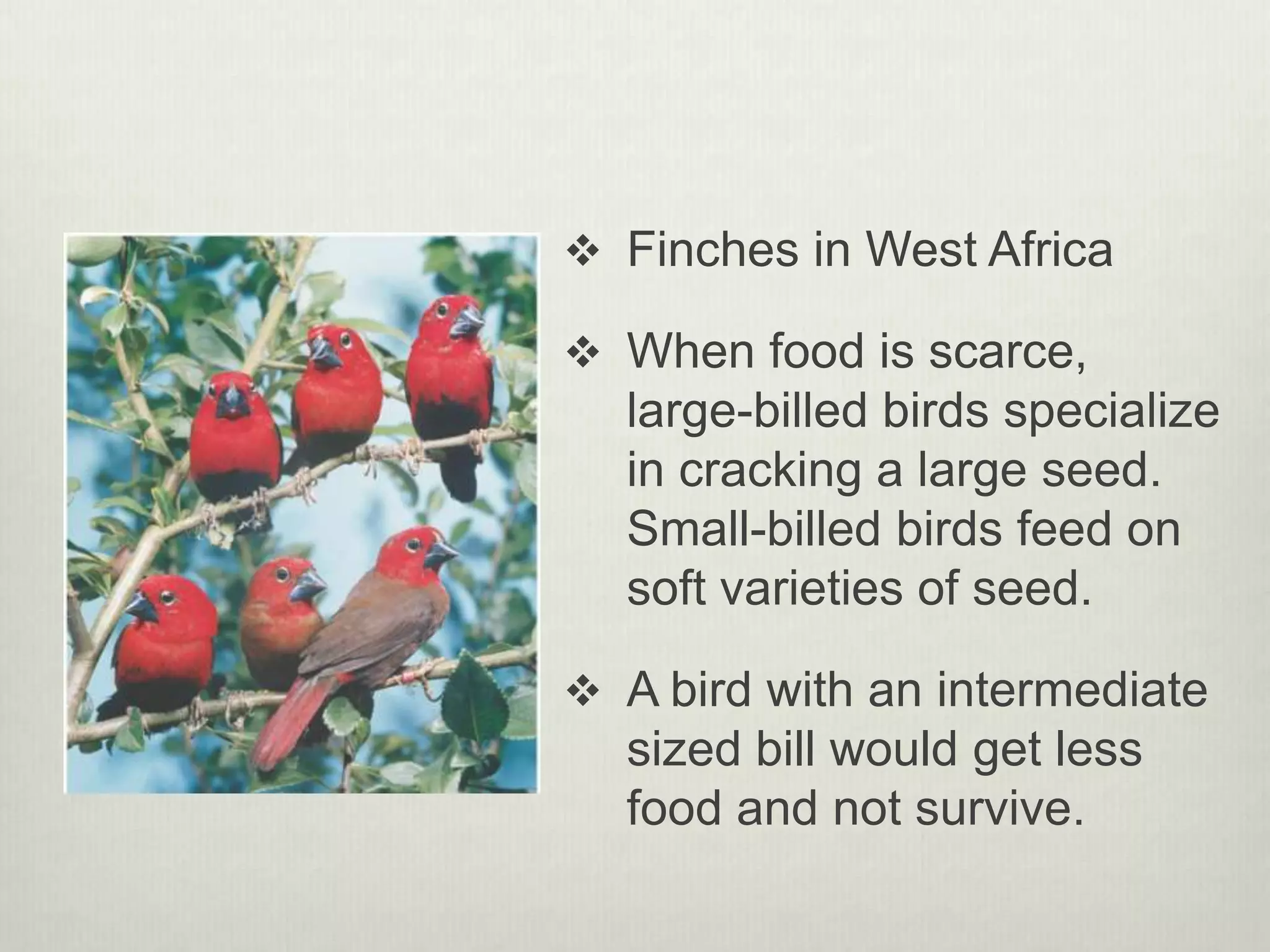
Case study of finches in West Africa showing disruptive selection based on food availability and beak sizes.
Microevolution –A change of allele frequencies in a
population over a short time. The basis for all large-
scale or macroevolution.
To fully appreciate evolution, we need to look not
just at the outcomes but also at the processes that
created those outcomes.
Exactly how do
populationsevolve?
There are many
different alleles
in a population
but a frog can
only have two.
These two frogs
have different
alleles for
coloration.
7.
What causes Evolution?
Five Agents of Change that can alter
allele frequencies
Mutation
Gene flow
Genetic drift
Non-random mating
Natural selection
8.
Mutation
Any permanentalterations in the makeup of
DNA.
They must be heritable
Most do nothing, a few are harmful, rarely
are they beneficial.
These mutations are not working to further
survival and reproduction.
These mutations are not likely to account
for a change in allele frequency.
These good mutations bring new genetic
information into the genetic pool.
9.
Gene Flow
Achange in allele frequency that can occur
when mating with members from another
population occurs.
The movement of genes from one
population to another.
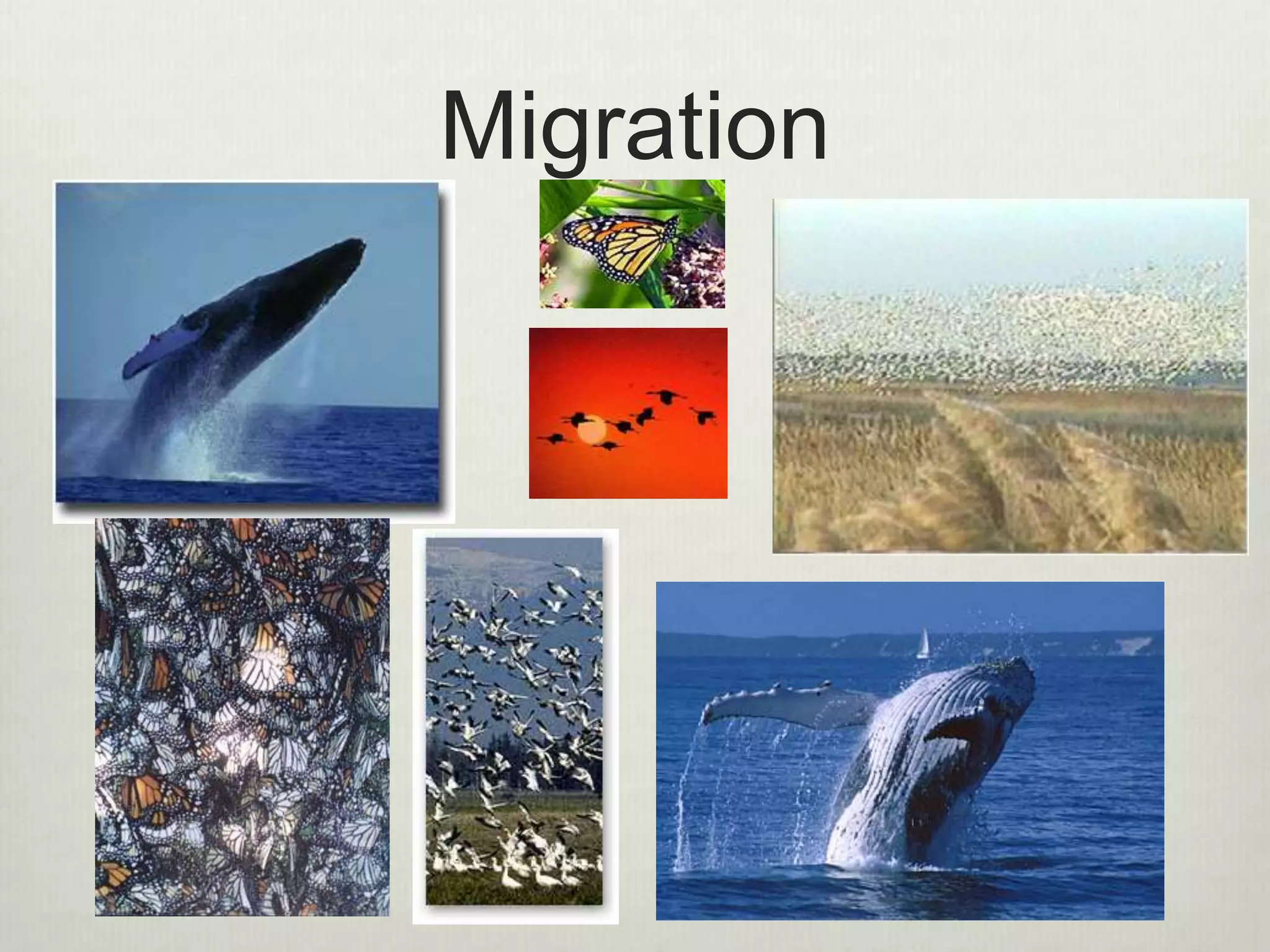
Migration – the movement of individuals
from one population into the territory of
another.
Plants migrate, too.
10.
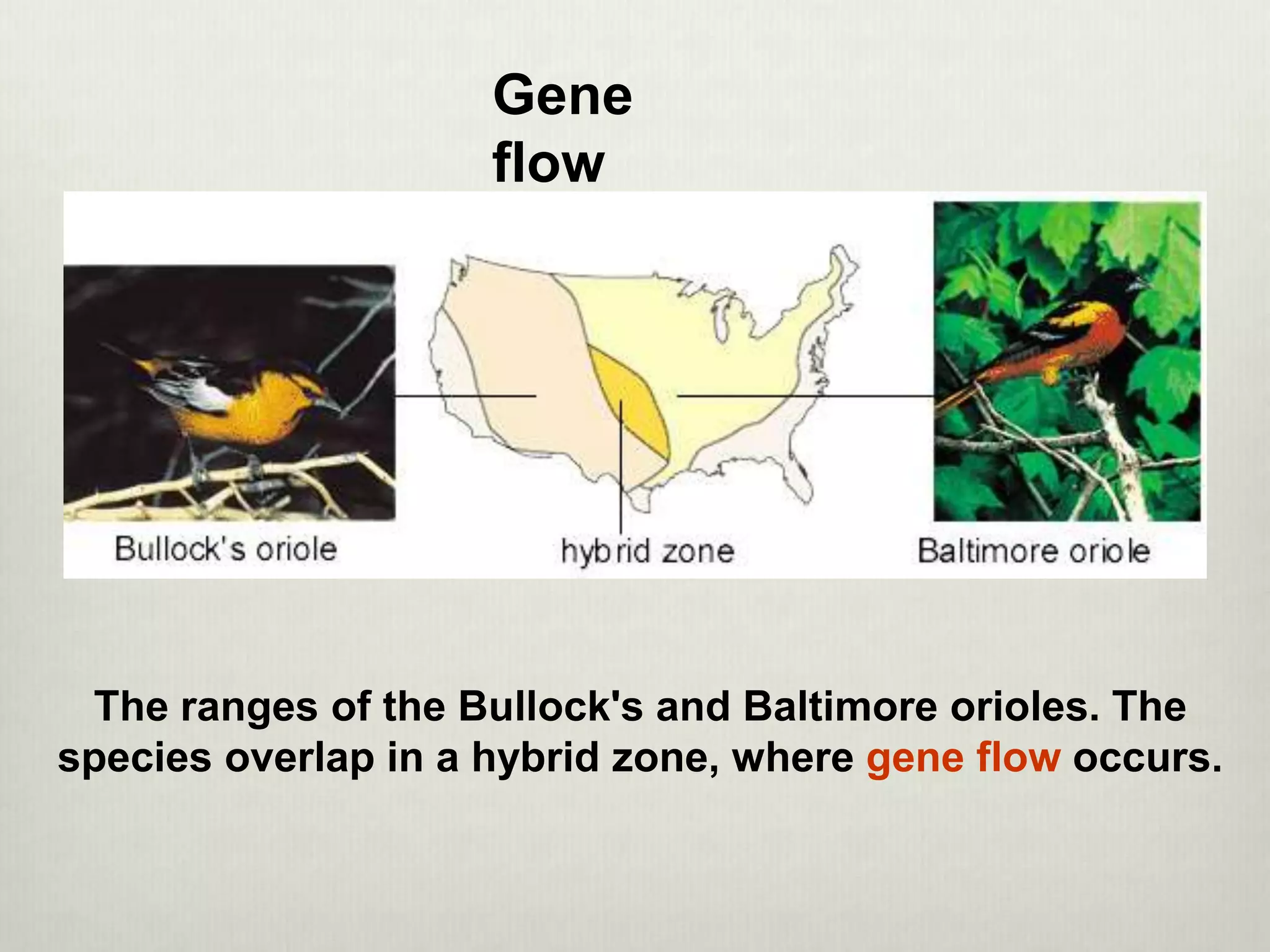
The ranges ofthe Bullock's and Baltimore orioles. The
species overlap in a hybrid zone, where gene flow occurs.
Gene
flow
Genetic Drift
Thechance alteration of allelesin a
population, with such alterations having
greatest impact on small populations.
Bottleneck effect
Founder’s effect
A small sample of alleles is likely to yield a
gene pool that is different from the
distribution found in the larger population.
13.
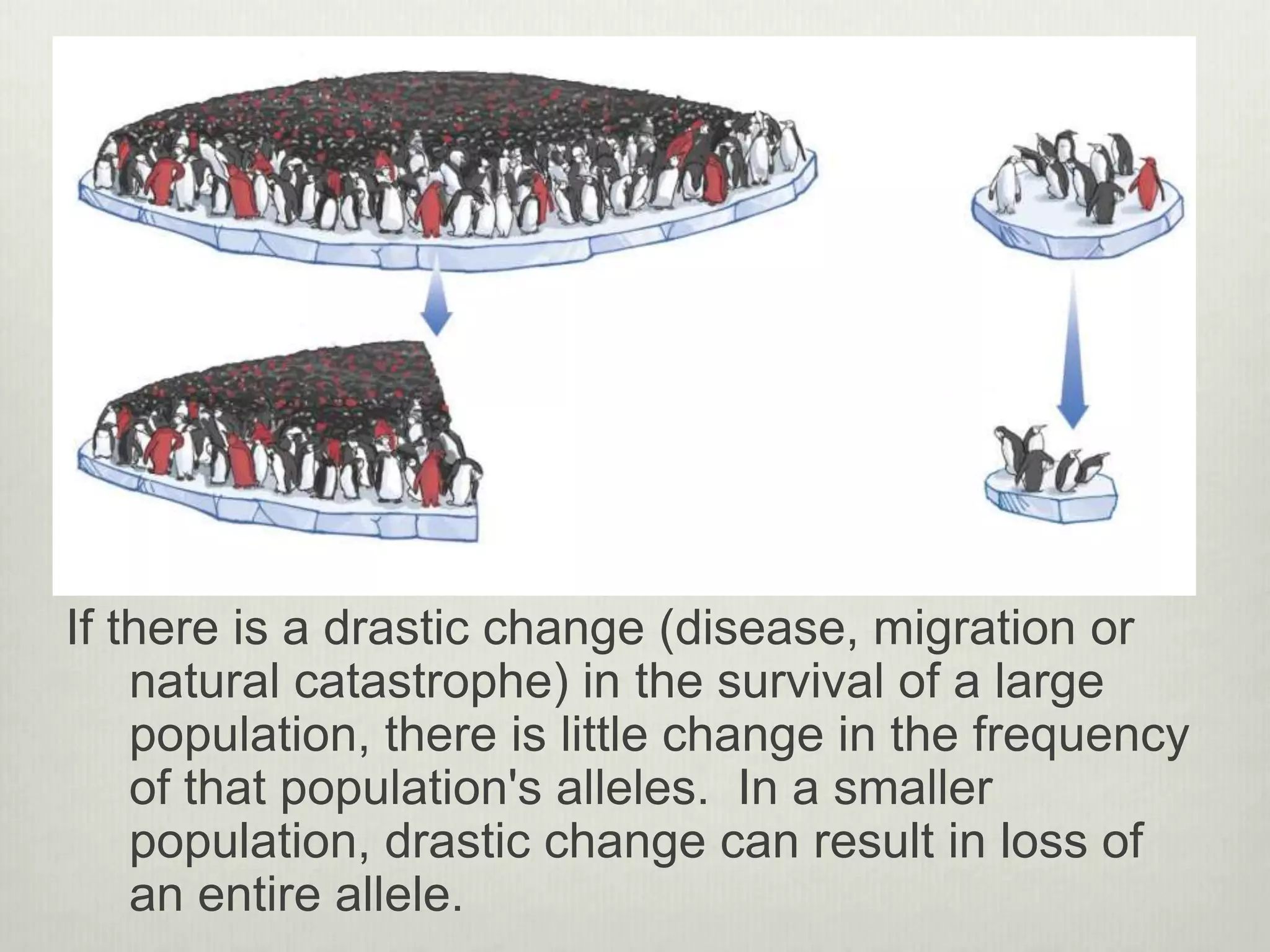
If there isa drastic change (disease, migration or
natural catastrophe) in the survival of a large
population, there is little change in the frequency
of that population's alleles. In a smaller
population, drastic change can result in loss of
an entire allele.
14.
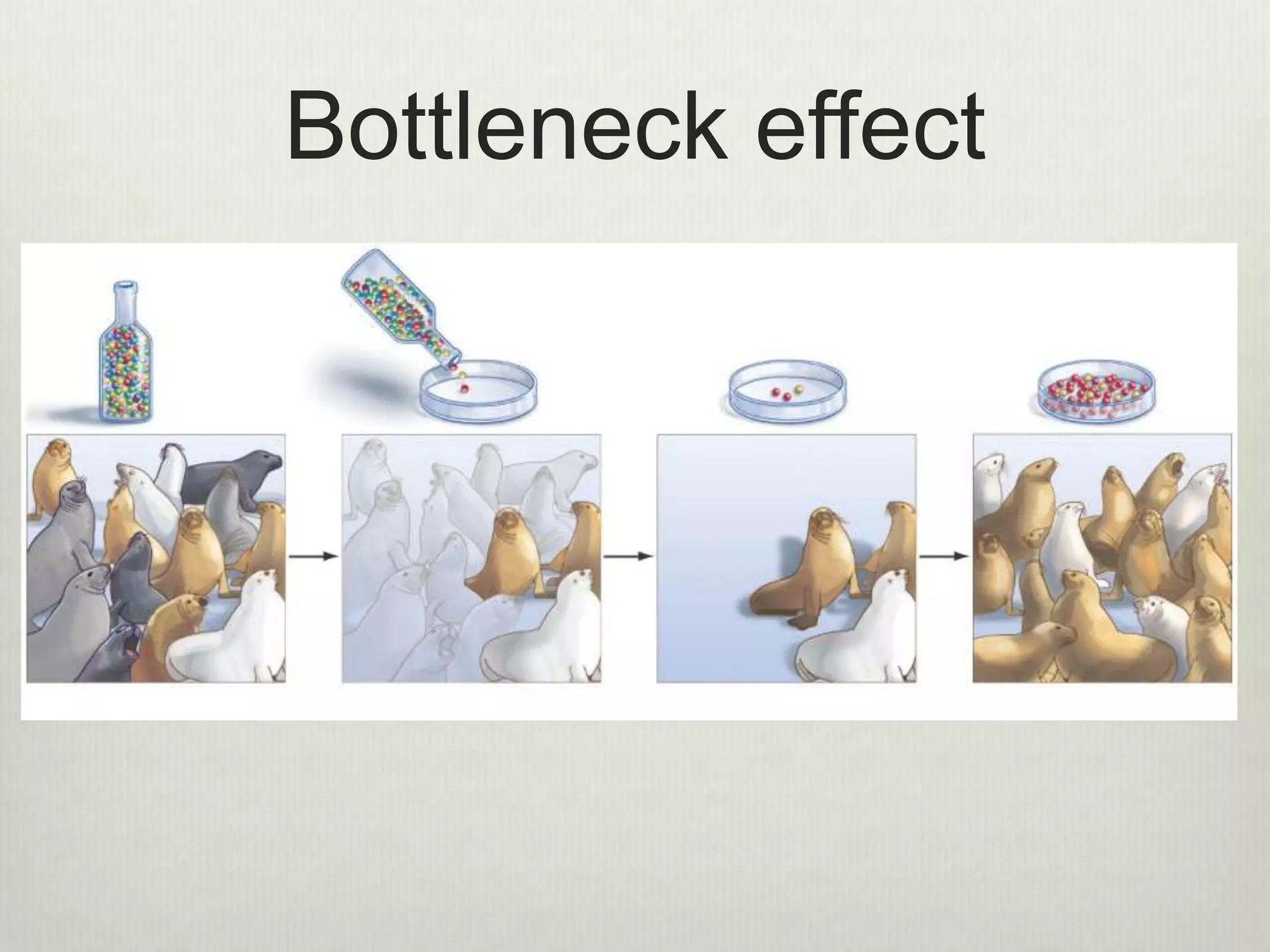
Bottleneck effect– The change in allele frequency
in a population due to chance following a sharp
reduction in the population size.
Founder effect – When a small portion of a
population migrates to another area, starting a new
population.
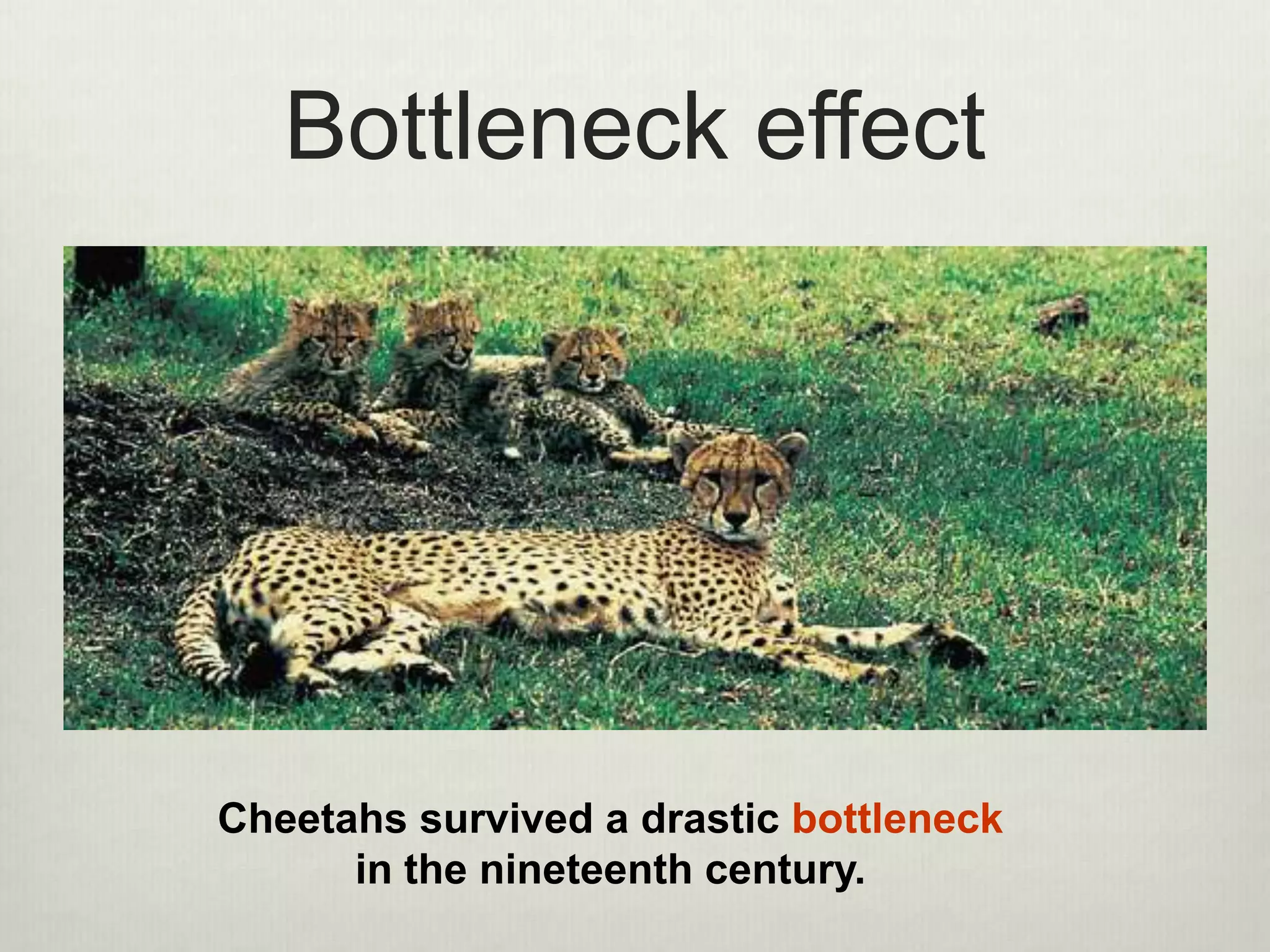
Cheetahs survived adrastic bottleneck
in the nineteenth century.
Bottleneck effect
17.
Founder effect
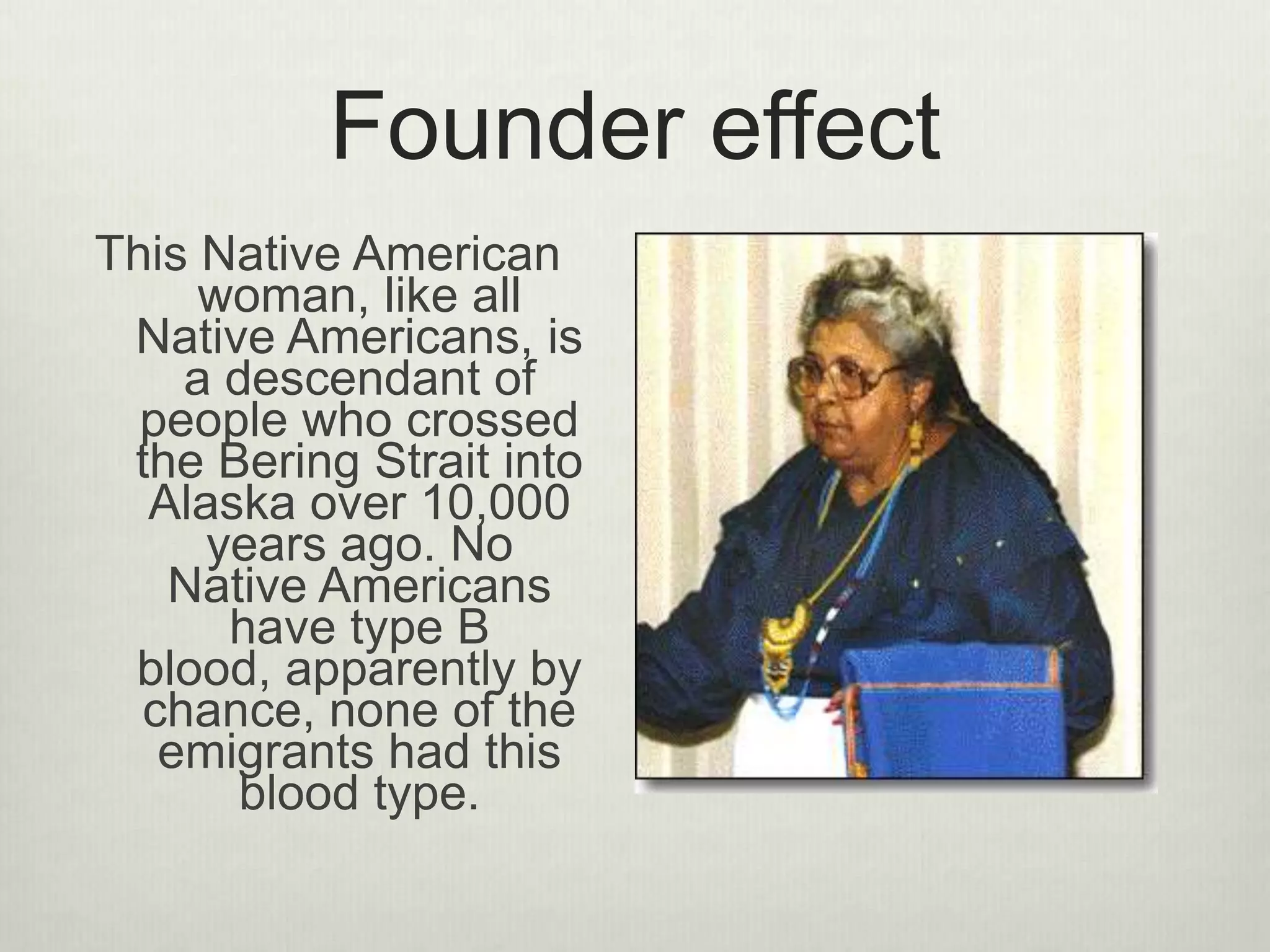
This NativeAmerican
woman, like all
Native Americans, is
a descendant of
people who crossed
the Bering Strait into
Alaska over 10,000
years ago. No
Native Americans
have type B
blood, apparently by
chance, none of the
emigrants had this
blood type.
18.
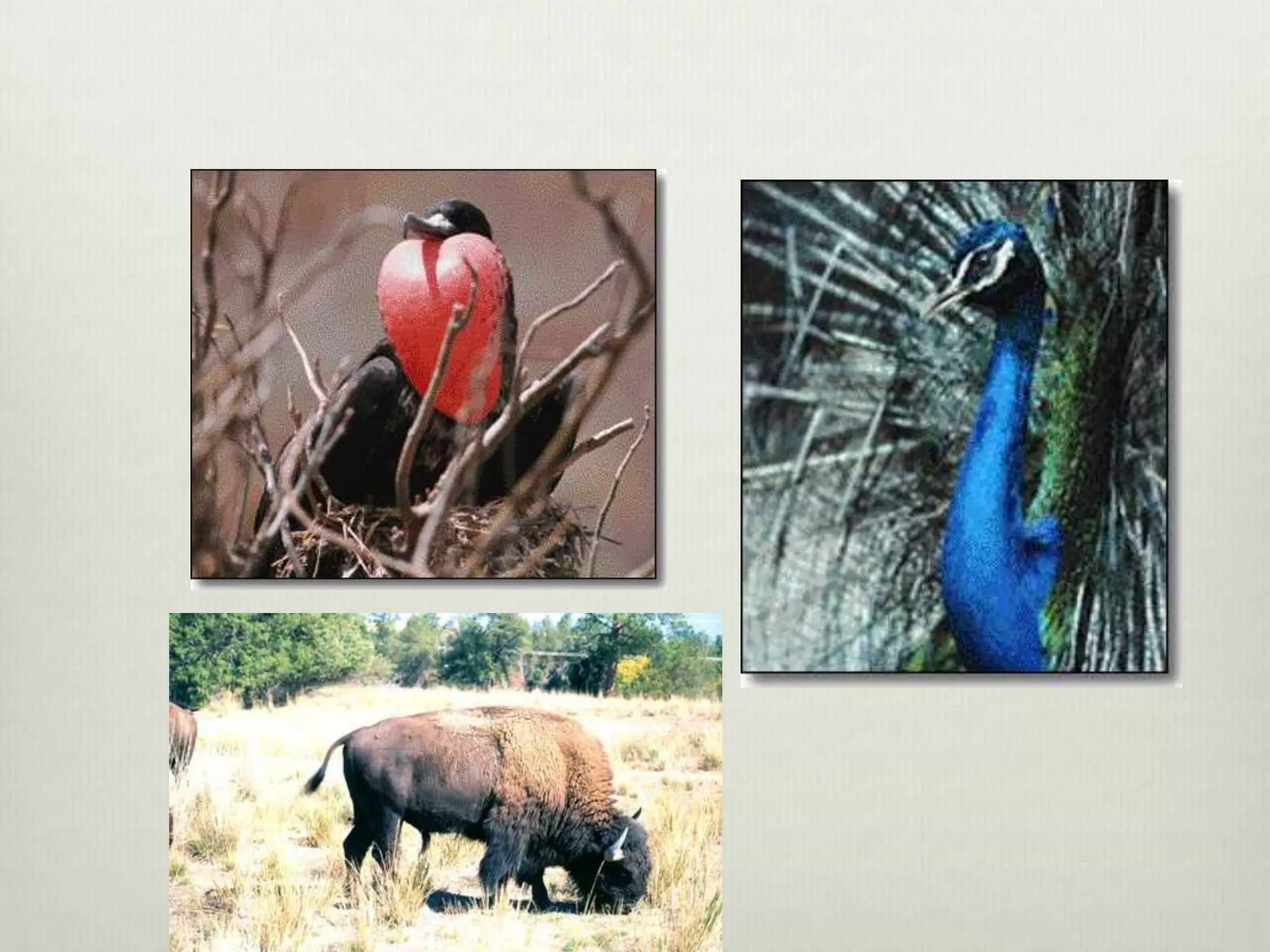
Nonrandom Mating
Matingin which a given member of a population is
not equally likely to mate with any other given
member.
Sexual selection is a form of nonrandom mating.
This is mating based on phenotype, based on the
choices made by the female of the species.
The male will increase the proportion of his alleles
in the next generation.
20.
Three modes of
NaturalSelection
When natural selection operates on
characters that are polygenic and
continuously variable, it can proceed in one
of three ways.
Does natural selection favor what is average
or what is extreme?
21.
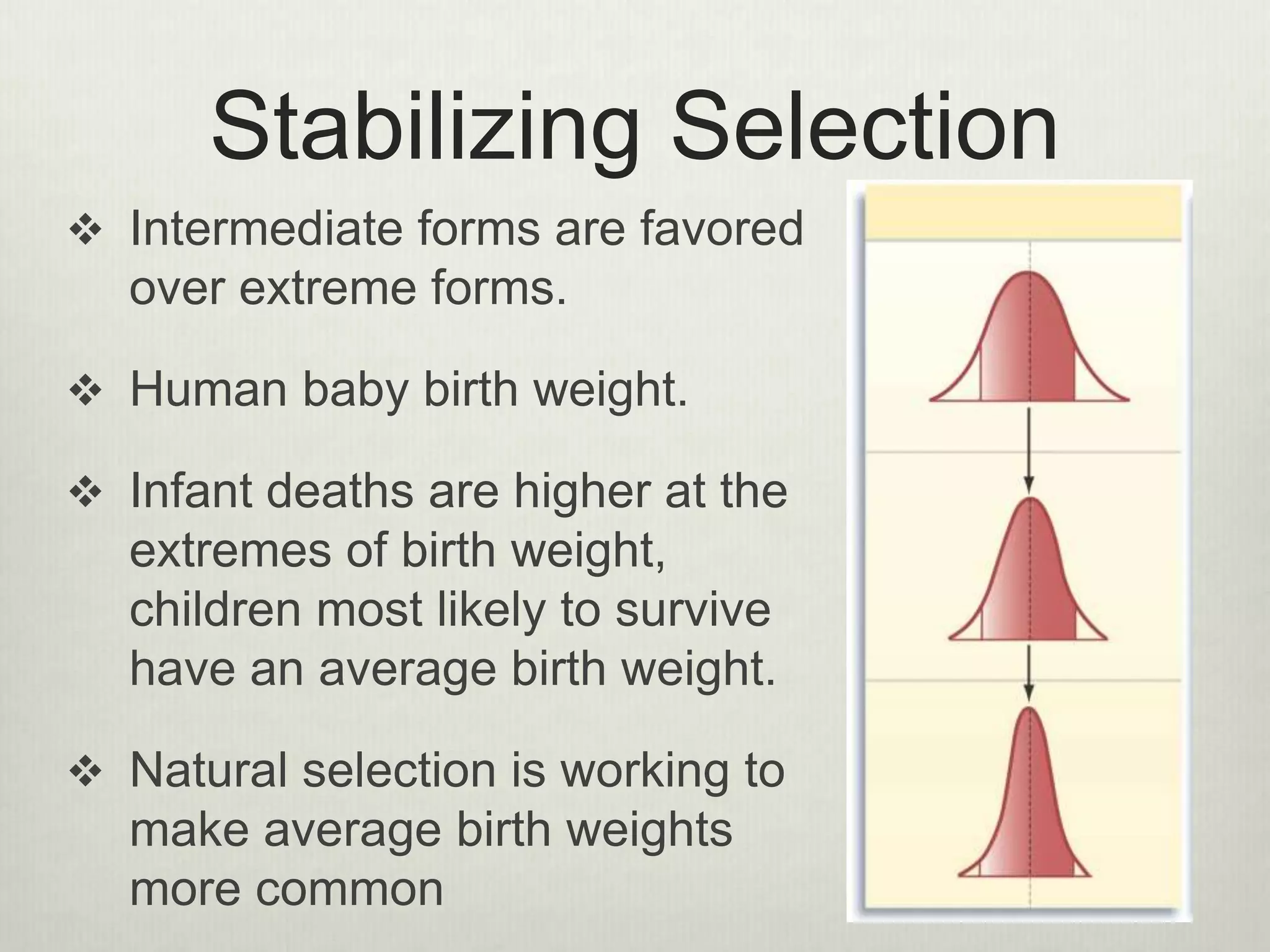
Stabilizing Selection
Intermediateforms are favored
over extreme forms.
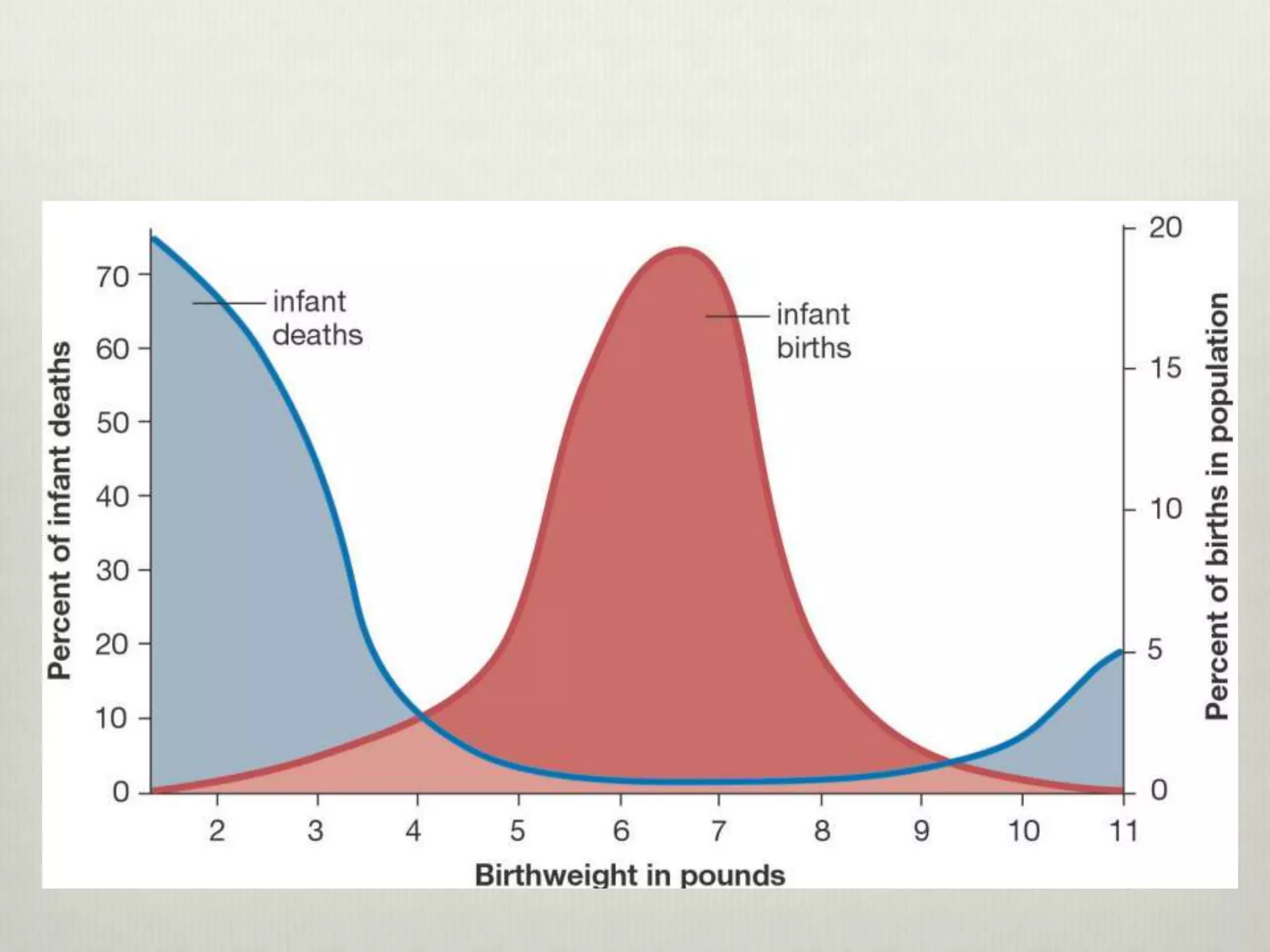
Human baby birth weight.
Infant deaths are higher at the
extremes of birth weight,
children most likely to survive
have an average birth weight.
Natural selection is working to
make average birth weights
more common
23.
Directional Selection
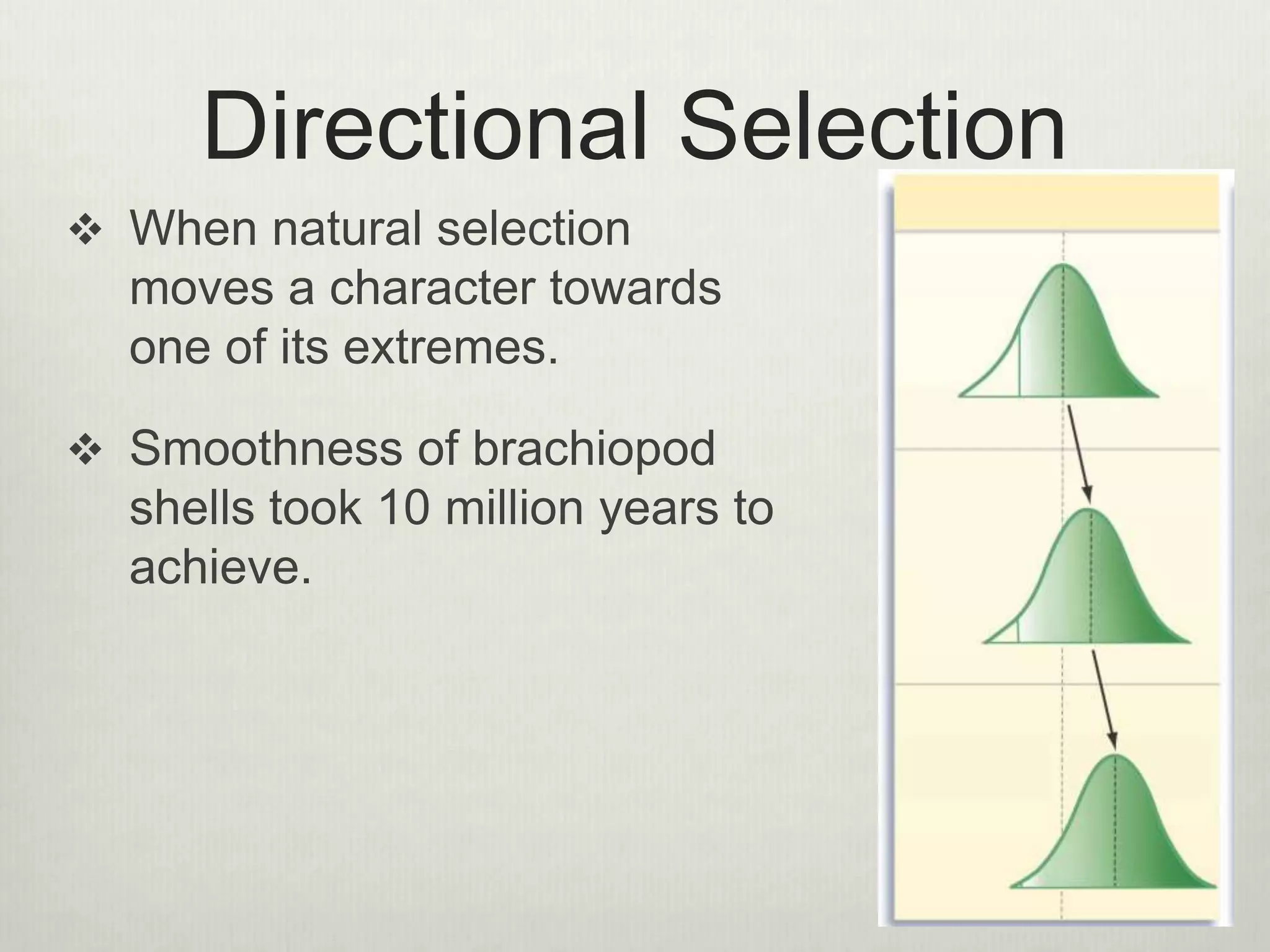
Whennatural selection
moves a character towards
one of its extremes.
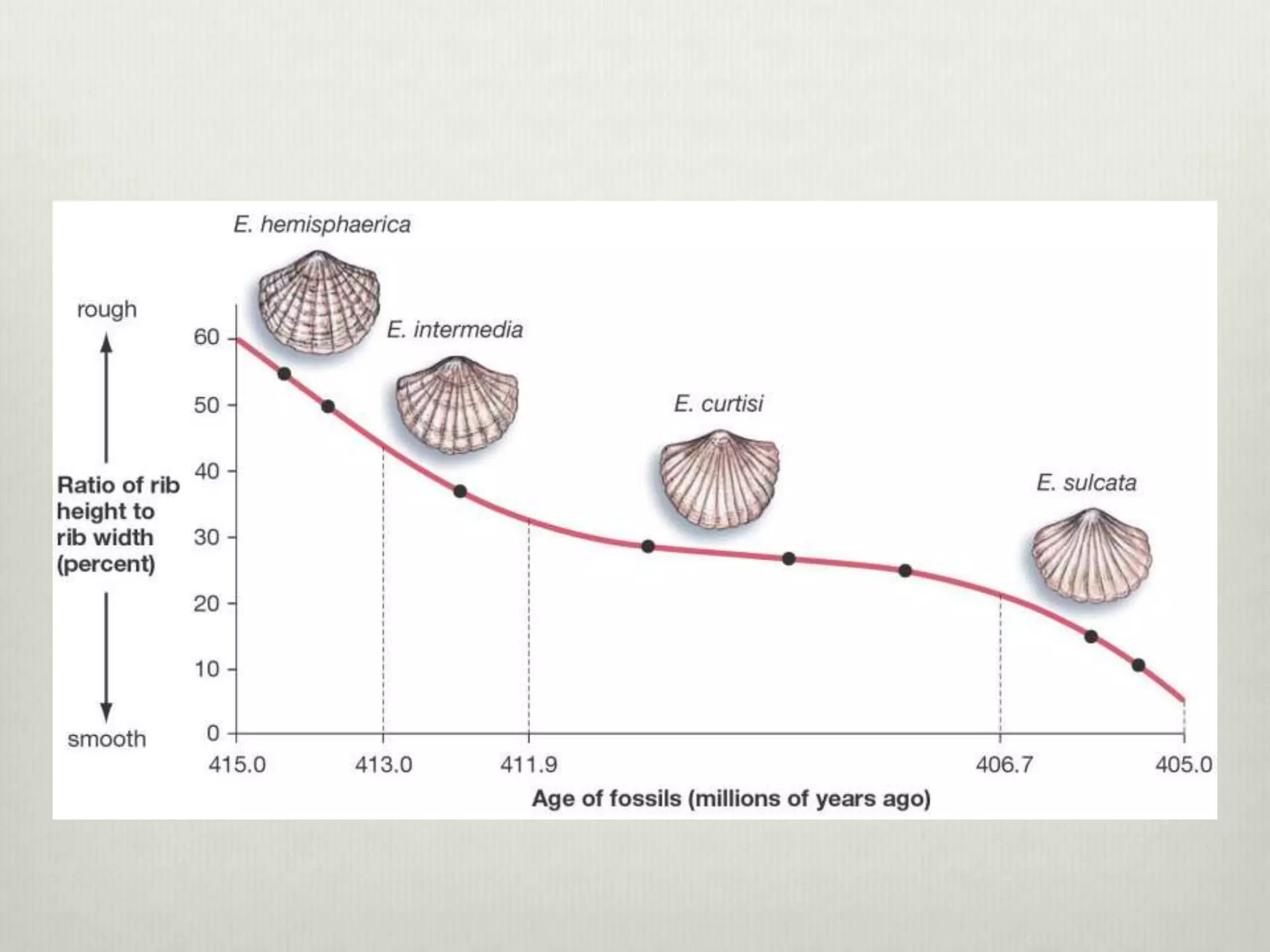
Smoothness of brachiopod
shells took 10 million years to
achieve.
25.
Disruptive Selection
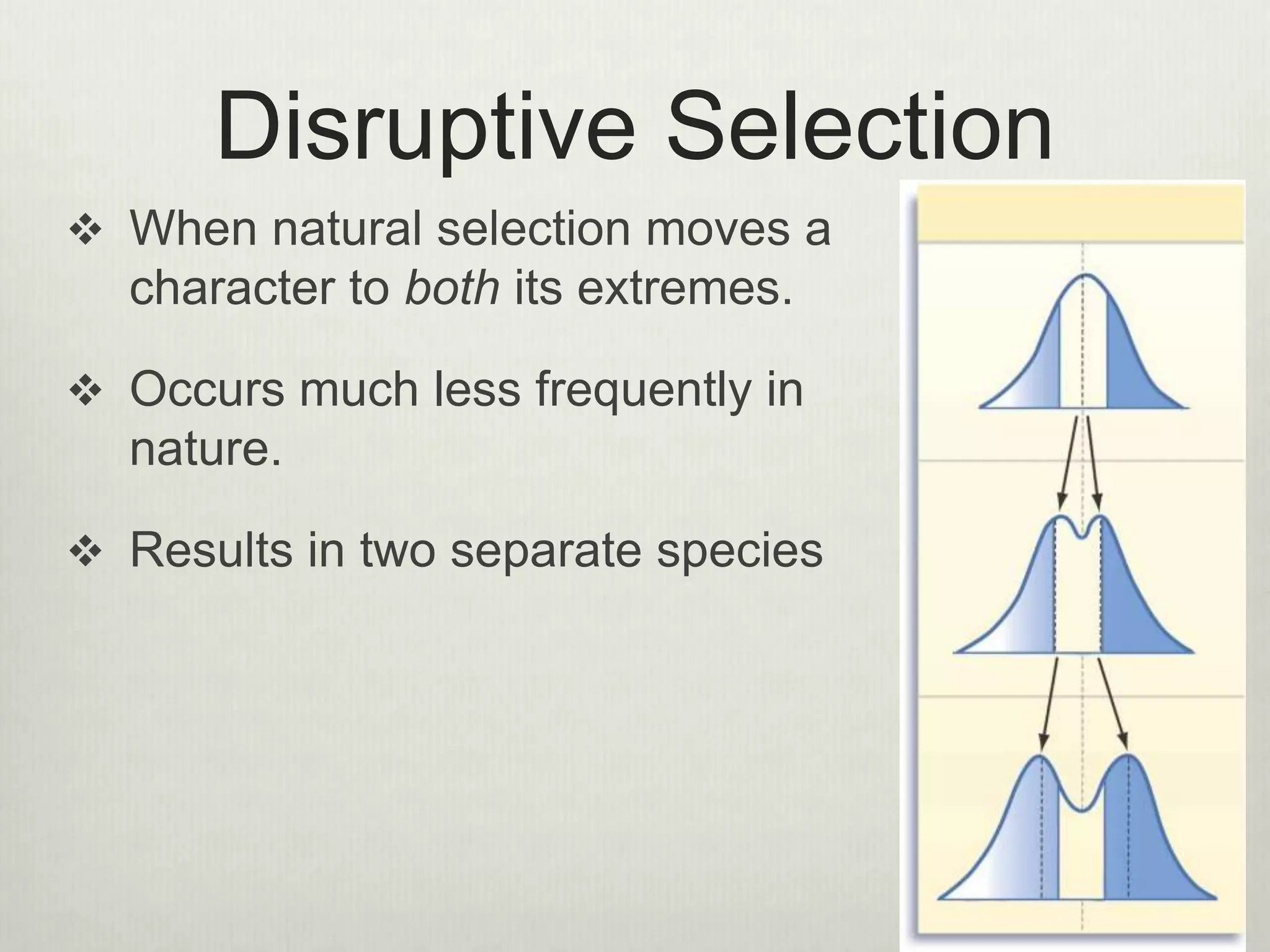
Whennatural selection moves a
character to both its extremes.
Occurs much less frequently in
nature.
Results in two separate species
26.
Finches inWest Africa
When food is scarce,
large-billed birds specialize
in cracking a large seed.
Small-billed birds feed on
soft varieties of seed.
A bird with an intermediate
sized bill would get less
food and not survive.