DESTABILISING
FORCES OF
EVOLUTIONARY
EQUILIBRIUM
BY
ANILA VARGHESE
I MSc ZOOLOGY
 What is evolutionary equilibrium???
Evolutionary equilibrium = Hardy Weinberg equilibrium
Hardy Weinberg Law states that allele and genotype
frequencies in a population will remain constant from generation
to generation in the absence of other evolutionary forces.
Evolutionary forces = Destabilising forces
What is allele frequency?
Allele is the alternative form of a gene.
Allele frequency = no. of copies of a particular allele in a
population
total no. of all alleles for that gene
in a population
No of times a particular allele is present in that
particular locus in a population.
p + q = 1 allelic perspective
(p + q) (p +q) = 12
genotype perspective
(𝑝 + 𝑞)2
= 𝑝2
+ 2pq + 𝑞2
= 1
𝑝2 = pp = homozygous dominant
2pq = heterozygous
𝑞2 = qq =homozygous recessive.
Evolutionary forces
1. GENETIC DRIFT
 Change in allele frequency due to chance.
 Acts in a small population.
 Reduces genetic variability.
 Examples : Bottleneck effect and Founder effect
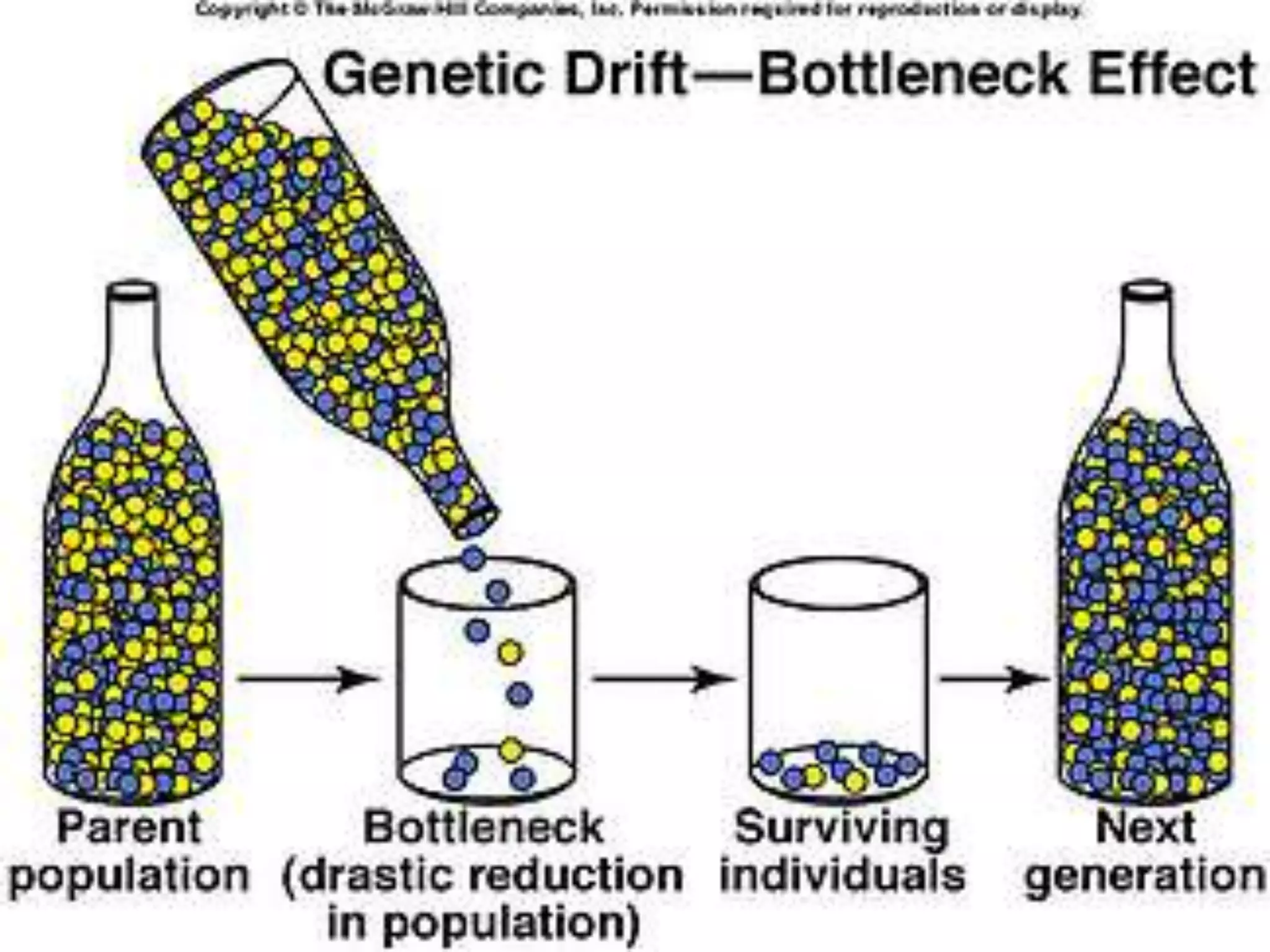
Bottle neck effect
• It occurs when there is a sudden sharp decline in a
population’s size typically due to environmental
factors (natural disasters such as earthquakes or
tsunamis, epidemics that can decrease the number
etc.).
• Some genes (there is not any distinction) are
extinguished from the population.
• Reduction of the total genetic diversity of the original
gene pool.
• Surviving population is be farther from the original
one in its genetic makeup.
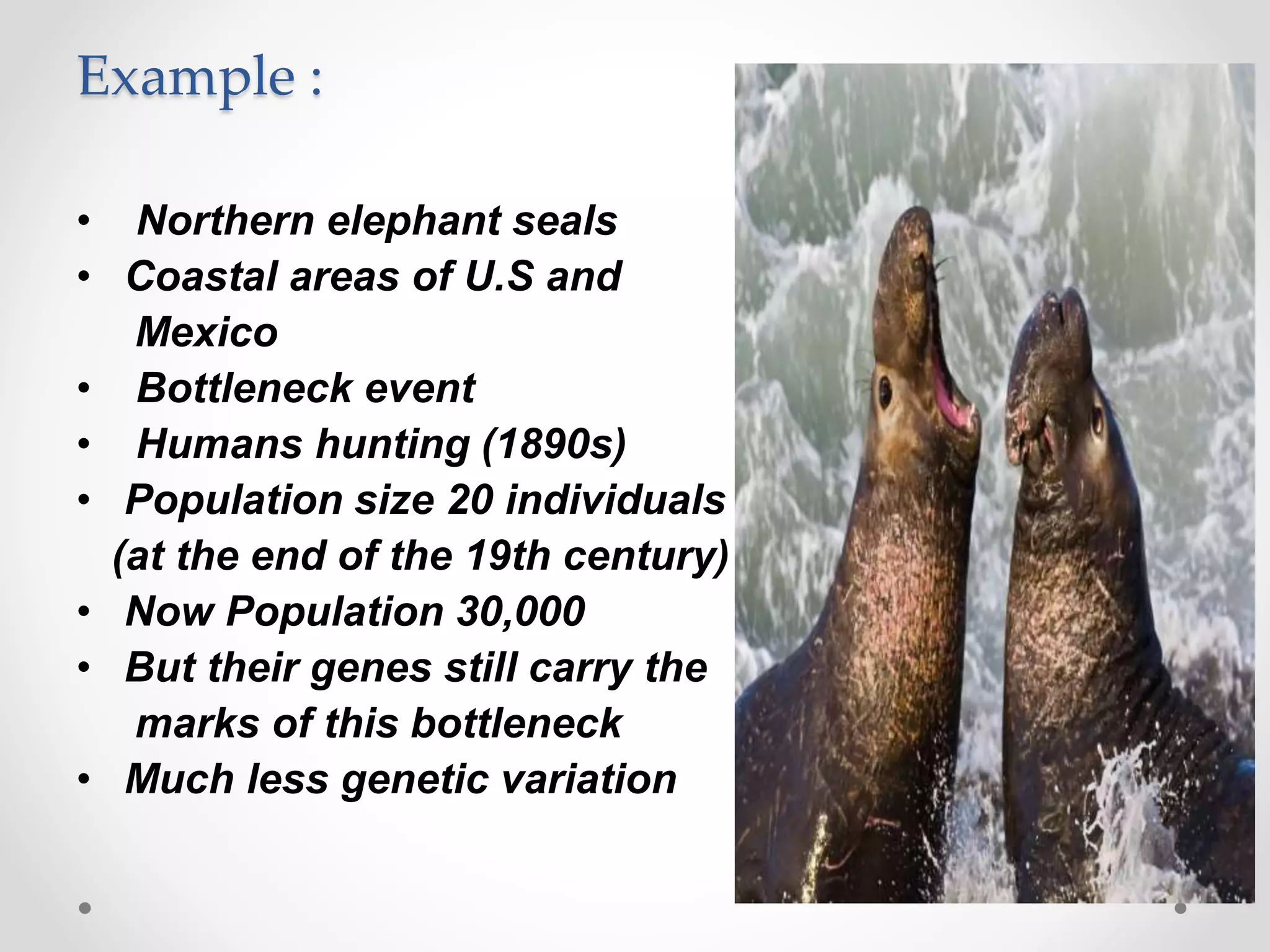
Example :
• Northern elephant seals
• Coastal areas of U.S and
Mexico
• Bottleneck event
• Humans hunting (1890s)
• Population size 20 individuals
(at the end of the 19th century)
• Now Population 30,000
• But their genes still carry the
marks of this bottleneck
• Much less genetic variation
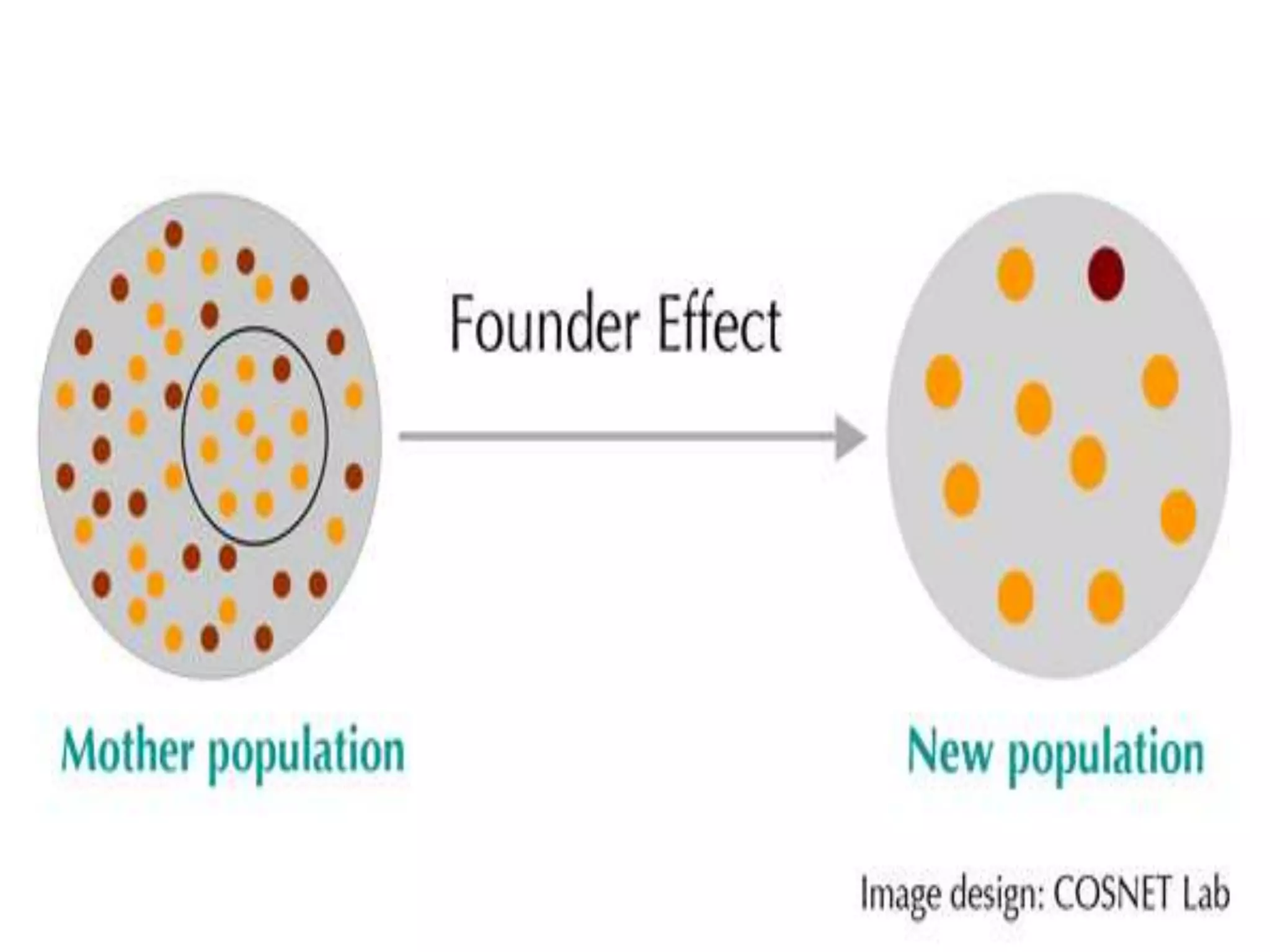
Founder effect
• Loss of genetic variation that occurs when a new
population is established by a small number of
individuals that are cleaved from a larger population.
• New population does not have the genetic diversity of the
previous one.
• Some genetic traits are becoming more prevalent in the
population.
• Leads to the presence of certain genetic diseases in the
next generations
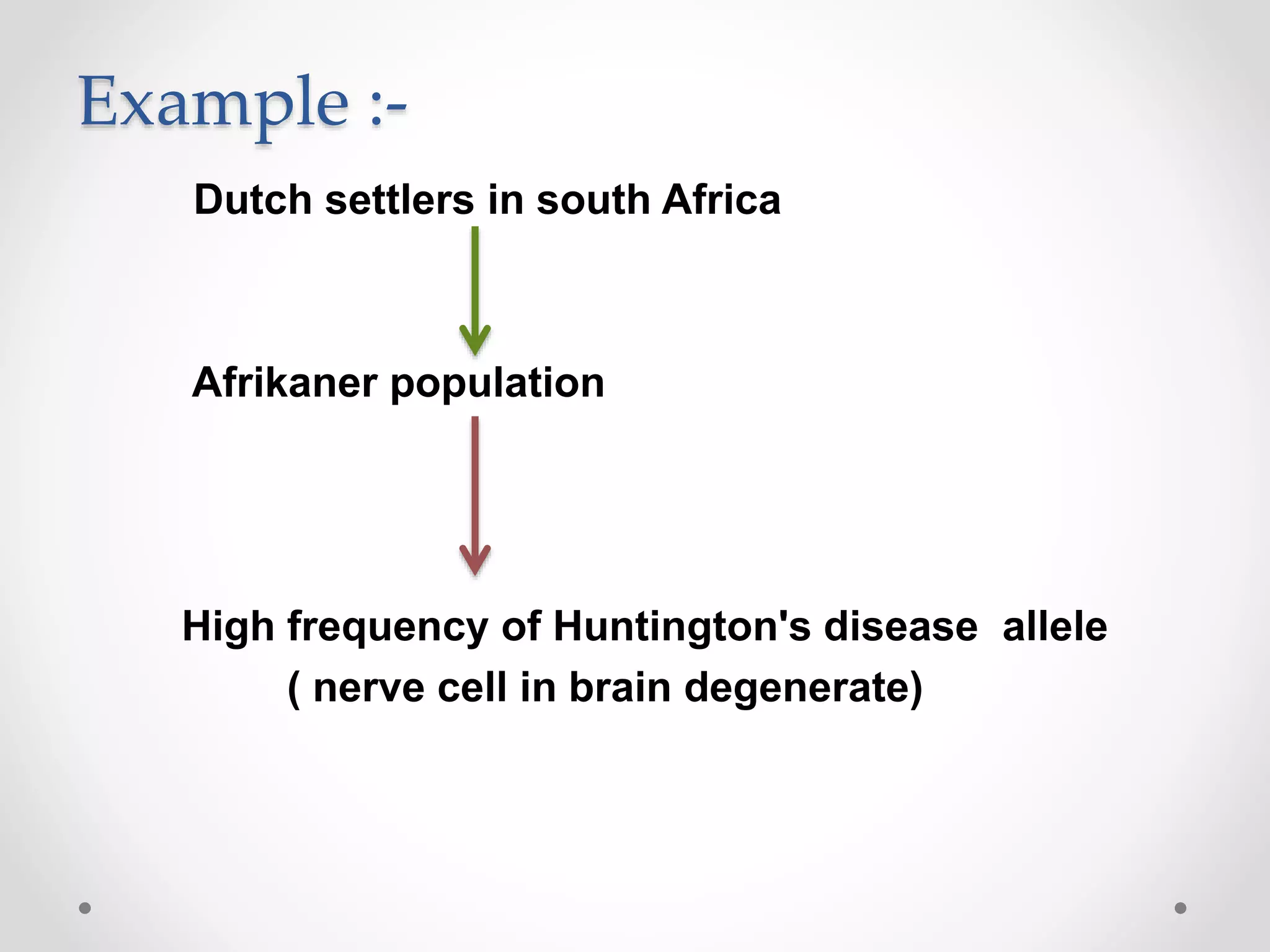
Example :-
Dutch settlers in south Africa
Afrikaner population
High frequency of Huntington's disease allele
( nerve cell in brain degenerate)
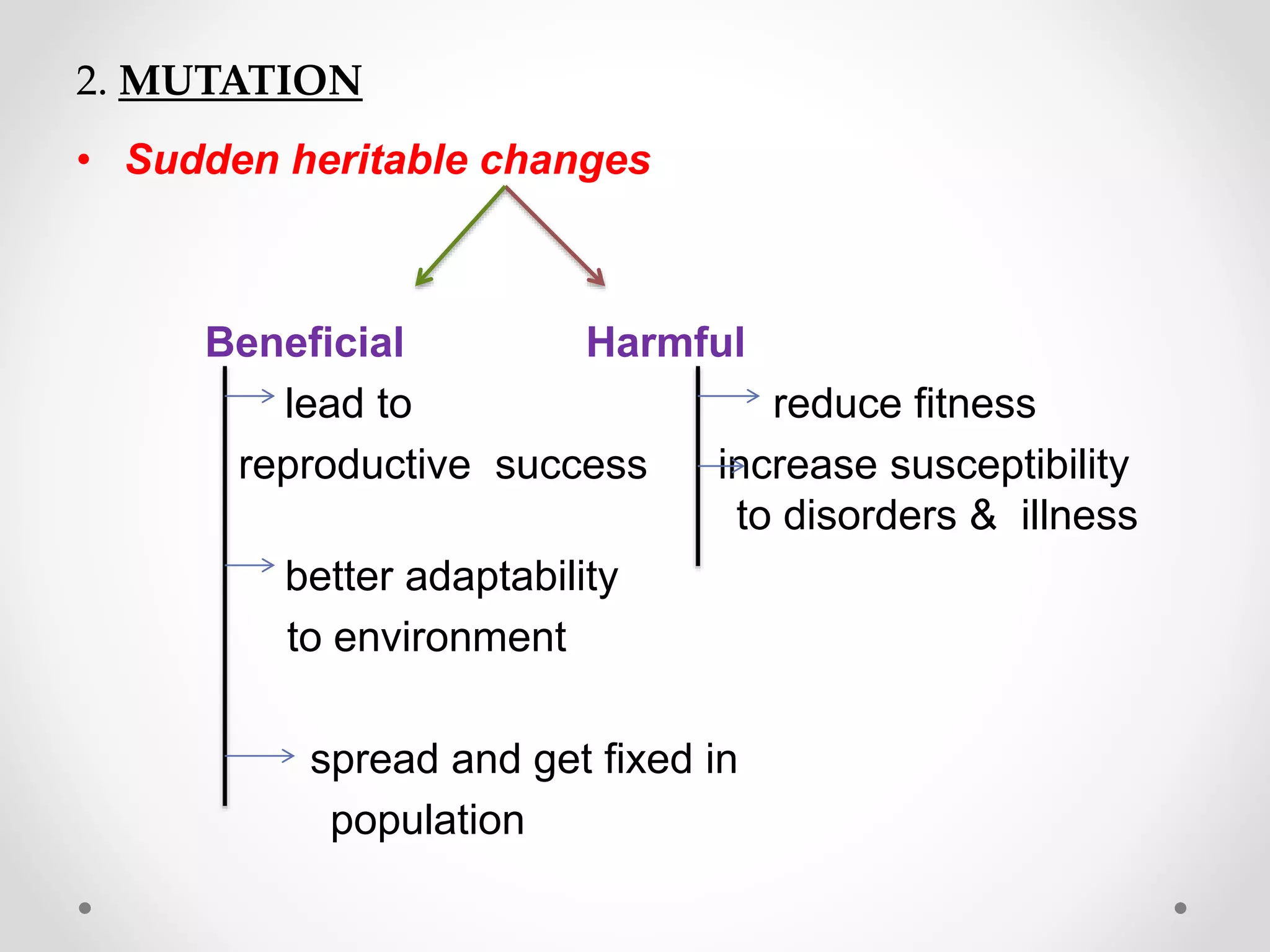
2. MUTATION
• Sudden heritable changes
Beneficial Harmful
lead to reduce fitness
reproductive success increase susceptibility
to disorders & illness
better adaptability
to environment
spread and get fixed in
population
Example :-
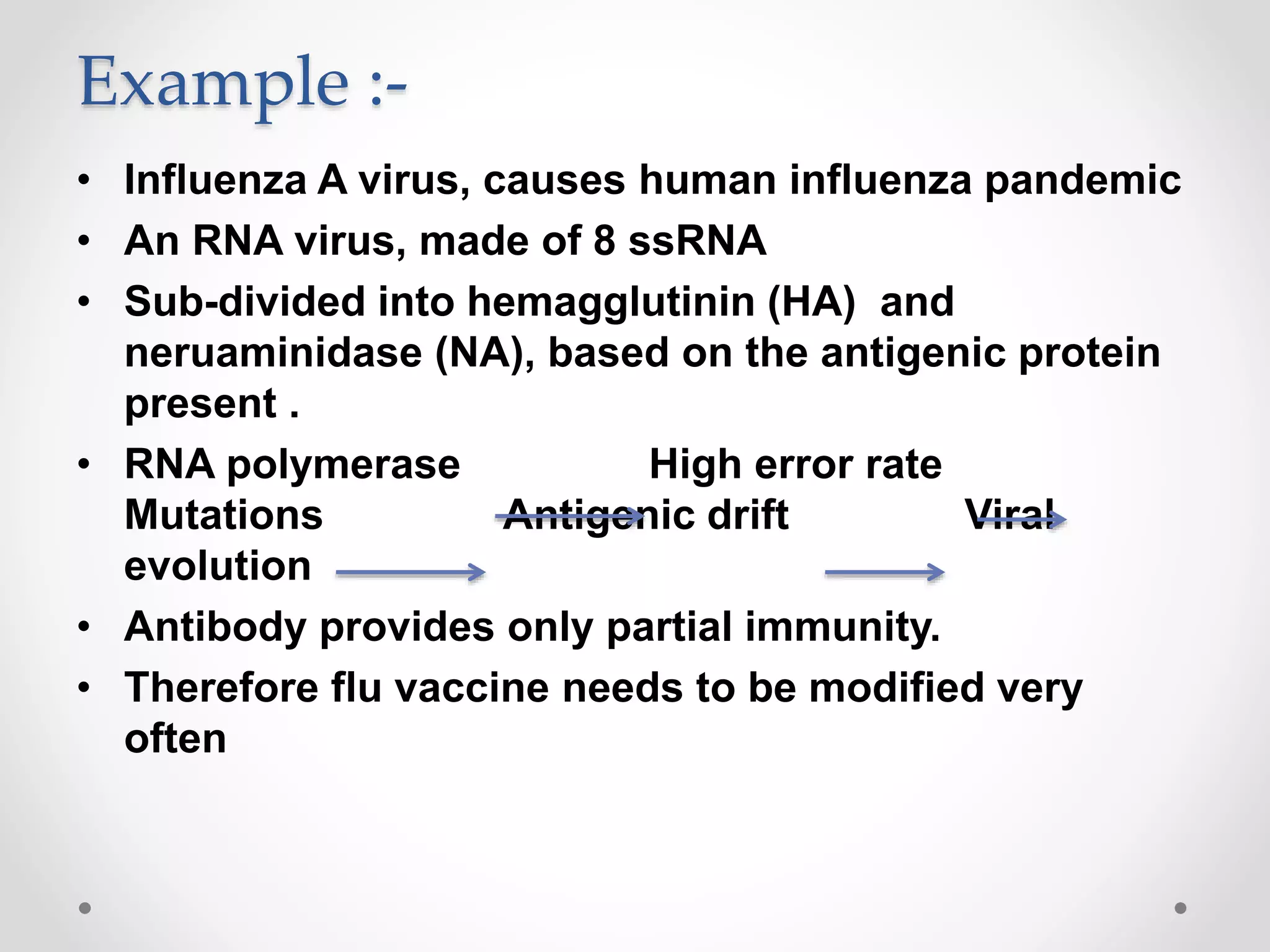
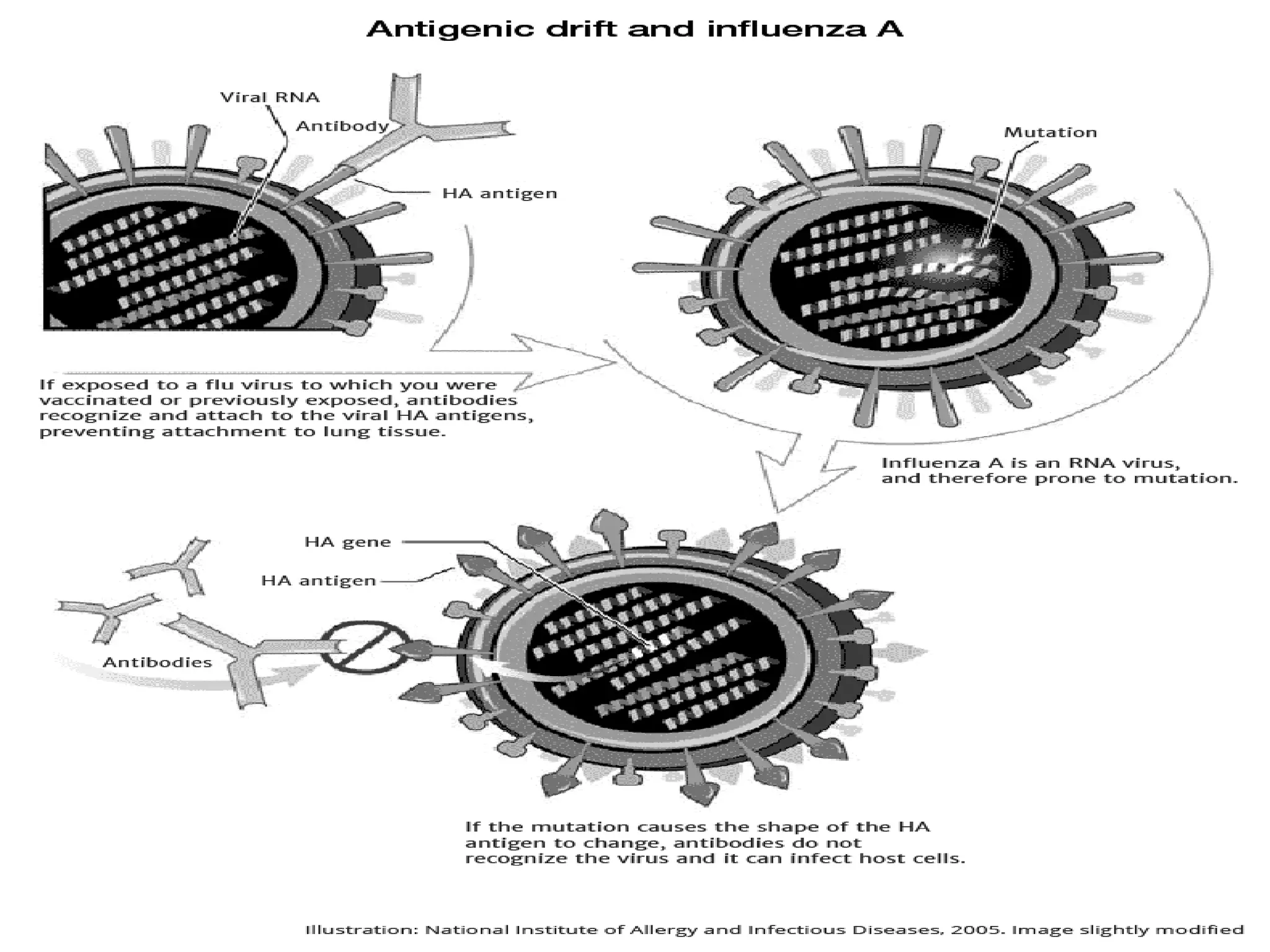
• Influenza A virus, causes human influenza pandemic
• An RNA virus, made of 8 ssRNA
• Sub-divided into hemagglutinin (HA) and
neruaminidase (NA), based on the antigenic protein
present .
• RNA polymerase High error rate
Mutations Antigenic drift Viral
evolution
• Antibody provides only partial immunity.
• Therefore flu vaccine needs to be modified very
often
3. MIGRATION OR GENE FLOW
 In an evolutionary sense, migration is the movement of
alleles among populations.
 A unifying force, prevent population from diverging
 Homogenisation
Is effect of migration on alleles same or opposite of
the effect which of genetic drift and natural selection
have on alleles???
• No selection, Only Migration Homogenisation
• Selection stronger than migration More
diversity
• Migration stronger than selection Less
diversity
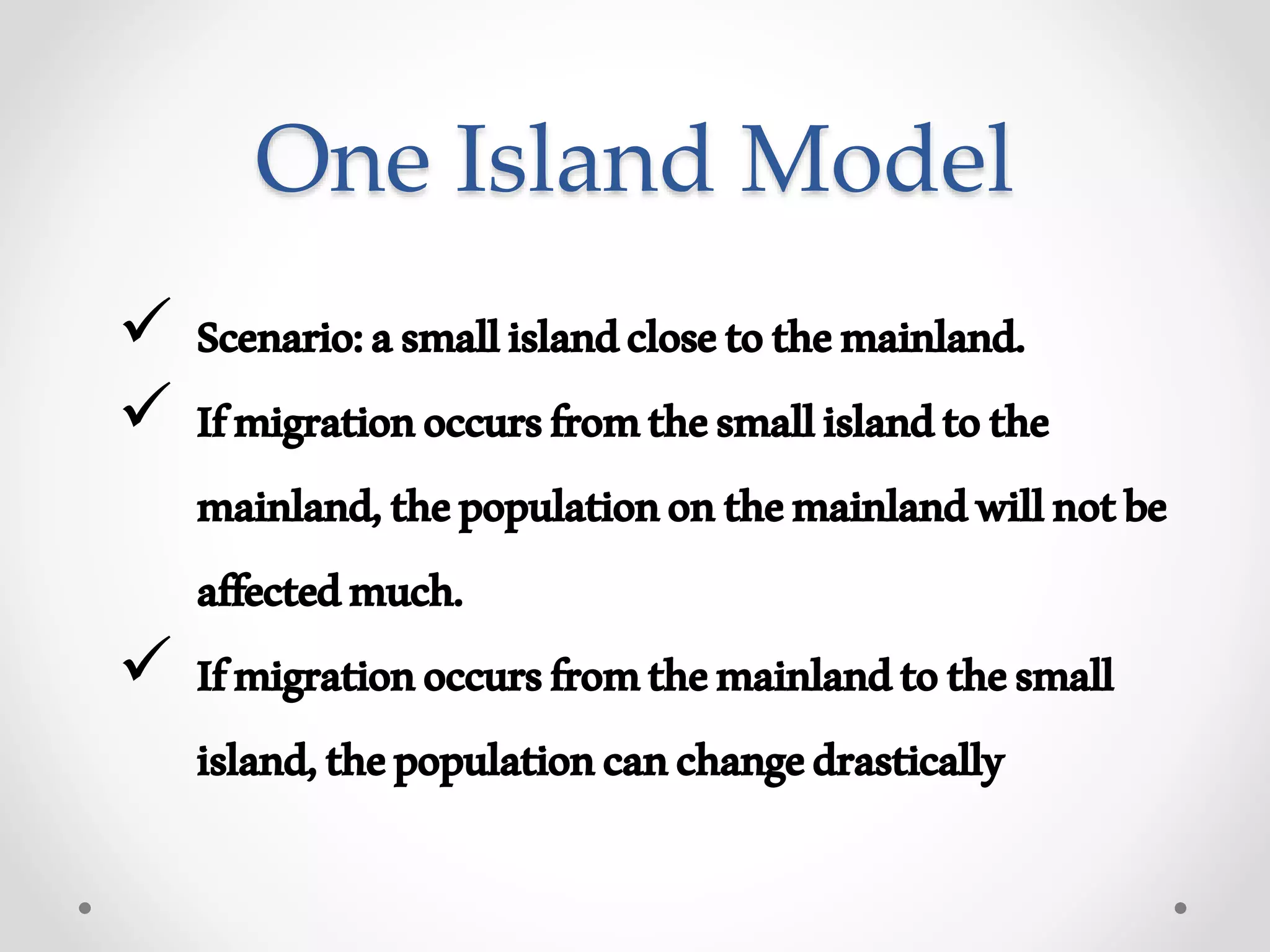
One Island Model
 Scenario:asmallislandclosetothemainland.
 Ifmigrationoccursfromthesmallislandtothe
mainland,thepopulationonthemainlandwillnotbe
affectedmuch.
 Ifmigrationoccursfromthemainlandtothesmall
island,thepopulationcanchangedrastically
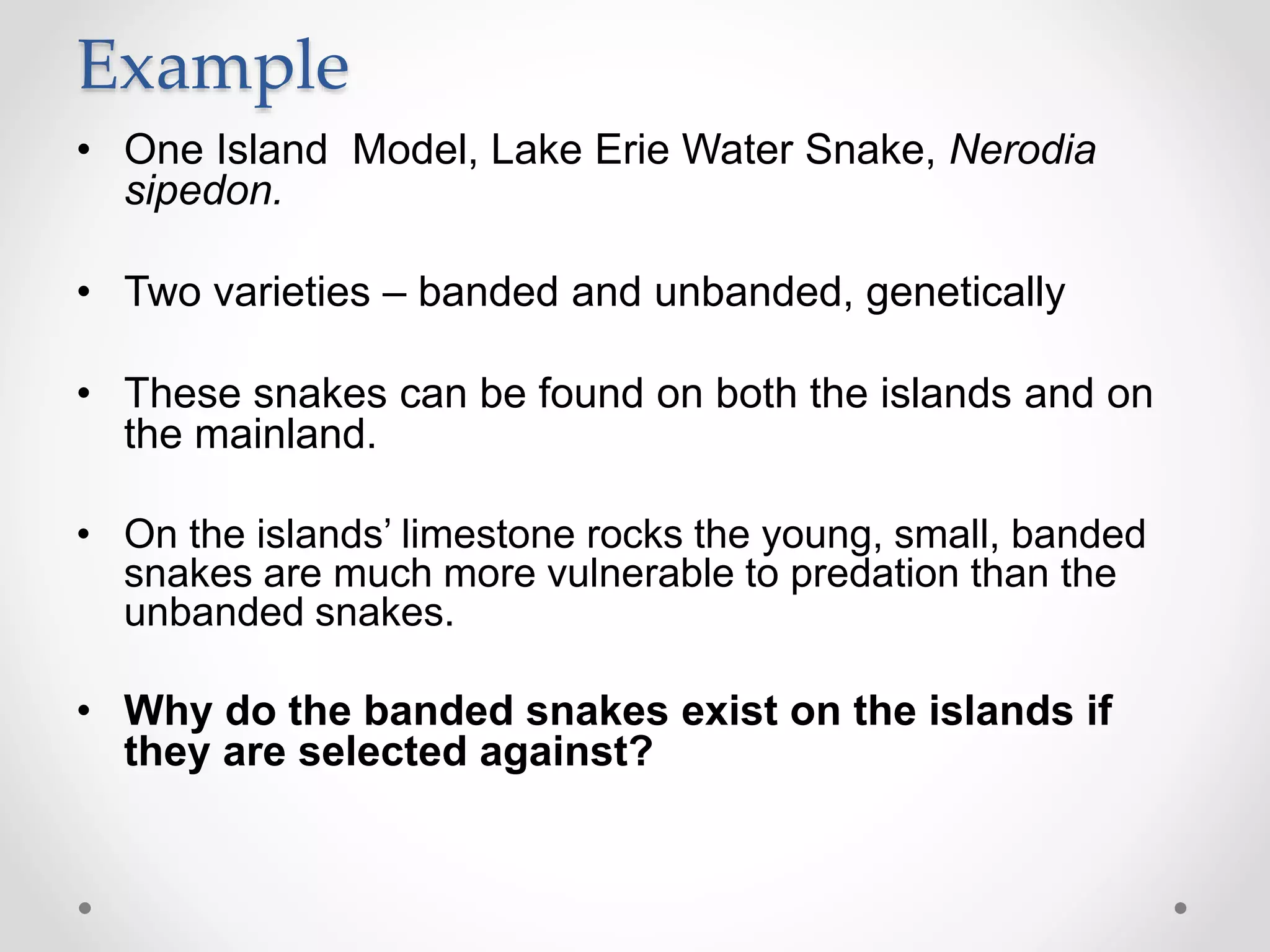
Example
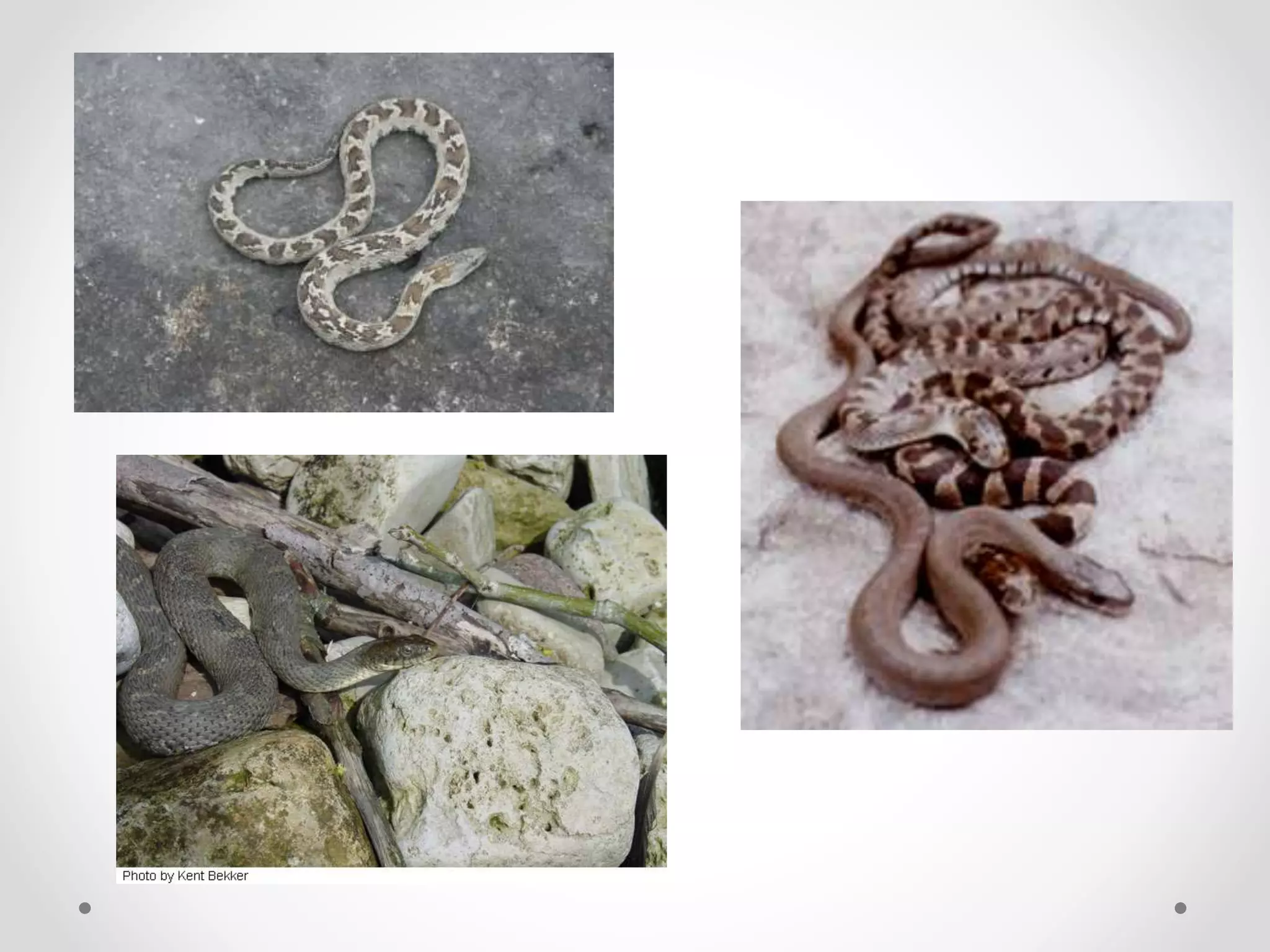
• One Island Model, Lake Erie Water Snake, Nerodia
sipedon.
• Two varieties – banded and unbanded, genetically
• These snakes can be found on both the islands and on
the mainland.
• On the islands’ limestone rocks the young, small, banded
snakes are much more vulnerable to predation than the
unbanded snakes.
• Why do the banded snakes exist on the islands if
they are selected against?
Migration works against
selection
• Every generation several banded snakes move from
the mainland to the islands.
• The migrants bring with them copies of the allele for
banded coloration.
• Interbreeding contributes these copies to the
population.
• Migration is working against selection preventing
fixation of any one allele.
Conclusion
• Migration can cause allele frequencies to change
from one generation to another which violates the
first Hardy-Weinberg conclusion.
• Migration can be a powerful mechanism for
evolution.
• Migration tends to homogenize allele frequencies
across populations.
4. MEIOTIC DRIVE
Any process which causes some alleles to be over
represented in the gametes.
Mendel’s law is disobeyed.
One of the alleles is consistently found in more than
half of the offspring.
Example: T-locus in mice.
T-locus affect the tail length and viability.
TT - Homozygotes : normal tail length
Tt - Heterozygote : Short tail and transmit ~90% of
the alleles to the gamete
tt - Homozygote: sterile
Meiotic drive increases the frequency of t allele
5. NATURAL SELECTION
• A directional process that leads to the decrease or
increase in allele frequency.
• Disrupts Hardy Weinberg’s equilibrium.
• One allele gives individual a reproductive
advantage over other individuals.
• These leave more offspring, produces adaptation;
“relative fitness”
• “Survival of the fittest” - what does “fittest” mean?
• Alleles that allow the greatest reproductive success
increase in frequency, other alleles decrease.
Is Hardy Weinberg's law
followed in nature?? NO
APPLICATIONS
 To calculate gene frequency and allele
frequency
 To develop hypothesis about populations
 To predict how a population will behave
with modifications of certain environmental
factors.
THANK YOU

Evolutionary forces

  • 1.
  • 2.
     What isevolutionary equilibrium??? Evolutionary equilibrium = Hardy Weinberg equilibrium Hardy Weinberg Law states that allele and genotype frequencies in a population will remain constant from generation to generation in the absence of other evolutionary forces. Evolutionary forces = Destabilising forces
  • 3.
    What is allelefrequency? Allele is the alternative form of a gene. Allele frequency = no. of copies of a particular allele in a population total no. of all alleles for that gene in a population No of times a particular allele is present in that particular locus in a population.
  • 4.
    p + q= 1 allelic perspective (p + q) (p +q) = 12 genotype perspective (𝑝 + 𝑞)2 = 𝑝2 + 2pq + 𝑞2 = 1 𝑝2 = pp = homozygous dominant 2pq = heterozygous 𝑞2 = qq =homozygous recessive.
  • 5.
    Evolutionary forces 1. GENETICDRIFT  Change in allele frequency due to chance.  Acts in a small population.  Reduces genetic variability.  Examples : Bottleneck effect and Founder effect
  • 6.
    Bottle neck effect •It occurs when there is a sudden sharp decline in a population’s size typically due to environmental factors (natural disasters such as earthquakes or tsunamis, epidemics that can decrease the number etc.). • Some genes (there is not any distinction) are extinguished from the population. • Reduction of the total genetic diversity of the original gene pool. • Surviving population is be farther from the original one in its genetic makeup.
  • 8.
    Example : • Northernelephant seals • Coastal areas of U.S and Mexico • Bottleneck event • Humans hunting (1890s) • Population size 20 individuals (at the end of the 19th century) • Now Population 30,000 • But their genes still carry the marks of this bottleneck • Much less genetic variation
  • 9.
    Founder effect • Lossof genetic variation that occurs when a new population is established by a small number of individuals that are cleaved from a larger population. • New population does not have the genetic diversity of the previous one. • Some genetic traits are becoming more prevalent in the population. • Leads to the presence of certain genetic diseases in the next generations
  • 11.
    Example :- Dutch settlersin south Africa Afrikaner population High frequency of Huntington's disease allele ( nerve cell in brain degenerate)
  • 12.
    2. MUTATION • Suddenheritable changes Beneficial Harmful lead to reduce fitness reproductive success increase susceptibility to disorders & illness better adaptability to environment spread and get fixed in population
  • 13.
    Example :- • InfluenzaA virus, causes human influenza pandemic • An RNA virus, made of 8 ssRNA • Sub-divided into hemagglutinin (HA) and neruaminidase (NA), based on the antigenic protein present . • RNA polymerase High error rate Mutations Antigenic drift Viral evolution • Antibody provides only partial immunity. • Therefore flu vaccine needs to be modified very often
  • 15.
    3. MIGRATION ORGENE FLOW  In an evolutionary sense, migration is the movement of alleles among populations.  A unifying force, prevent population from diverging  Homogenisation Is effect of migration on alleles same or opposite of the effect which of genetic drift and natural selection have on alleles???
  • 16.
    • No selection,Only Migration Homogenisation • Selection stronger than migration More diversity • Migration stronger than selection Less diversity
  • 17.
    One Island Model Scenario:asmallislandclosetothemainland.  Ifmigrationoccursfromthesmallislandtothe mainland,thepopulationonthemainlandwillnotbe affectedmuch.  Ifmigrationoccursfromthemainlandtothesmall island,thepopulationcanchangedrastically
  • 18.
    Example • One IslandModel, Lake Erie Water Snake, Nerodia sipedon. • Two varieties – banded and unbanded, genetically • These snakes can be found on both the islands and on the mainland. • On the islands’ limestone rocks the young, small, banded snakes are much more vulnerable to predation than the unbanded snakes. • Why do the banded snakes exist on the islands if they are selected against?
  • 20.
    Migration works against selection •Every generation several banded snakes move from the mainland to the islands. • The migrants bring with them copies of the allele for banded coloration. • Interbreeding contributes these copies to the population. • Migration is working against selection preventing fixation of any one allele.
  • 21.
    Conclusion • Migration cancause allele frequencies to change from one generation to another which violates the first Hardy-Weinberg conclusion. • Migration can be a powerful mechanism for evolution. • Migration tends to homogenize allele frequencies across populations.
  • 22.
    4. MEIOTIC DRIVE Anyprocess which causes some alleles to be over represented in the gametes. Mendel’s law is disobeyed. One of the alleles is consistently found in more than half of the offspring. Example: T-locus in mice. T-locus affect the tail length and viability. TT - Homozygotes : normal tail length Tt - Heterozygote : Short tail and transmit ~90% of the alleles to the gamete tt - Homozygote: sterile Meiotic drive increases the frequency of t allele
  • 23.
    5. NATURAL SELECTION •A directional process that leads to the decrease or increase in allele frequency. • Disrupts Hardy Weinberg’s equilibrium. • One allele gives individual a reproductive advantage over other individuals. • These leave more offspring, produces adaptation; “relative fitness” • “Survival of the fittest” - what does “fittest” mean? • Alleles that allow the greatest reproductive success increase in frequency, other alleles decrease.
  • 24.
    Is Hardy Weinberg'slaw followed in nature?? NO APPLICATIONS  To calculate gene frequency and allele frequency  To develop hypothesis about populations  To predict how a population will behave with modifications of certain environmental factors.
  • 25.