Estimation of Amylases
Assay of Amylase
Aim:
To determine the activity of amylase present in
food.
Principle
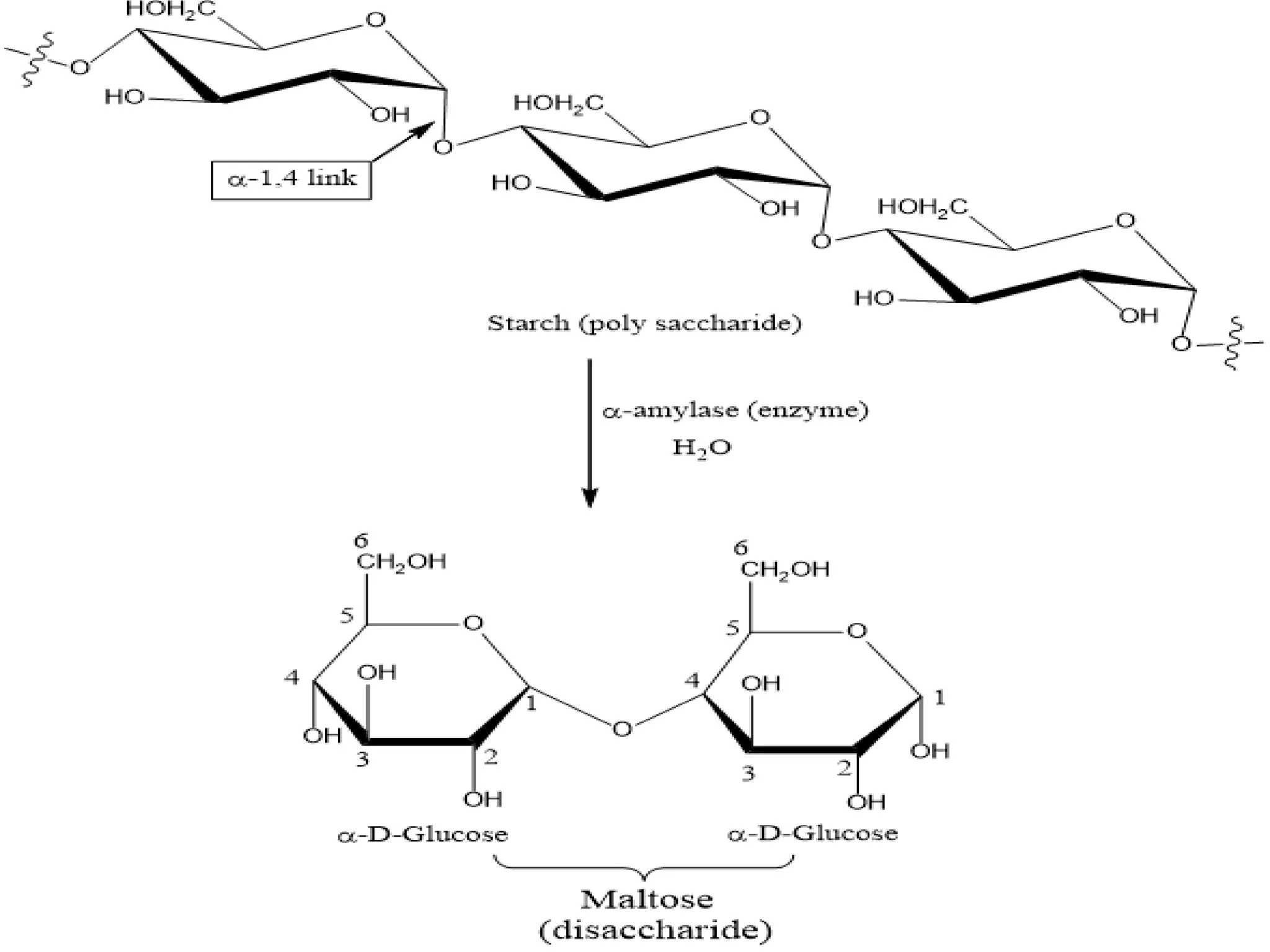
Amylase catalyses the hydrolysis of starch
and glycogen into maltose sugars.
α- Amylase is endo-hydrolase which
hydrolyses α-1,4, linkage whereas β- amylase
is exo-hydrolase hydrolyses non-reducing end
to remove β-maltose and limit dextrin at end.
Principle
 α- Amylase is present in human saliva, whereas
β- amylase is present in germinating seeds.
 The progress and extend of hydrolysis of starch is
determined by amount of reducing sugar
produced.
Materials required
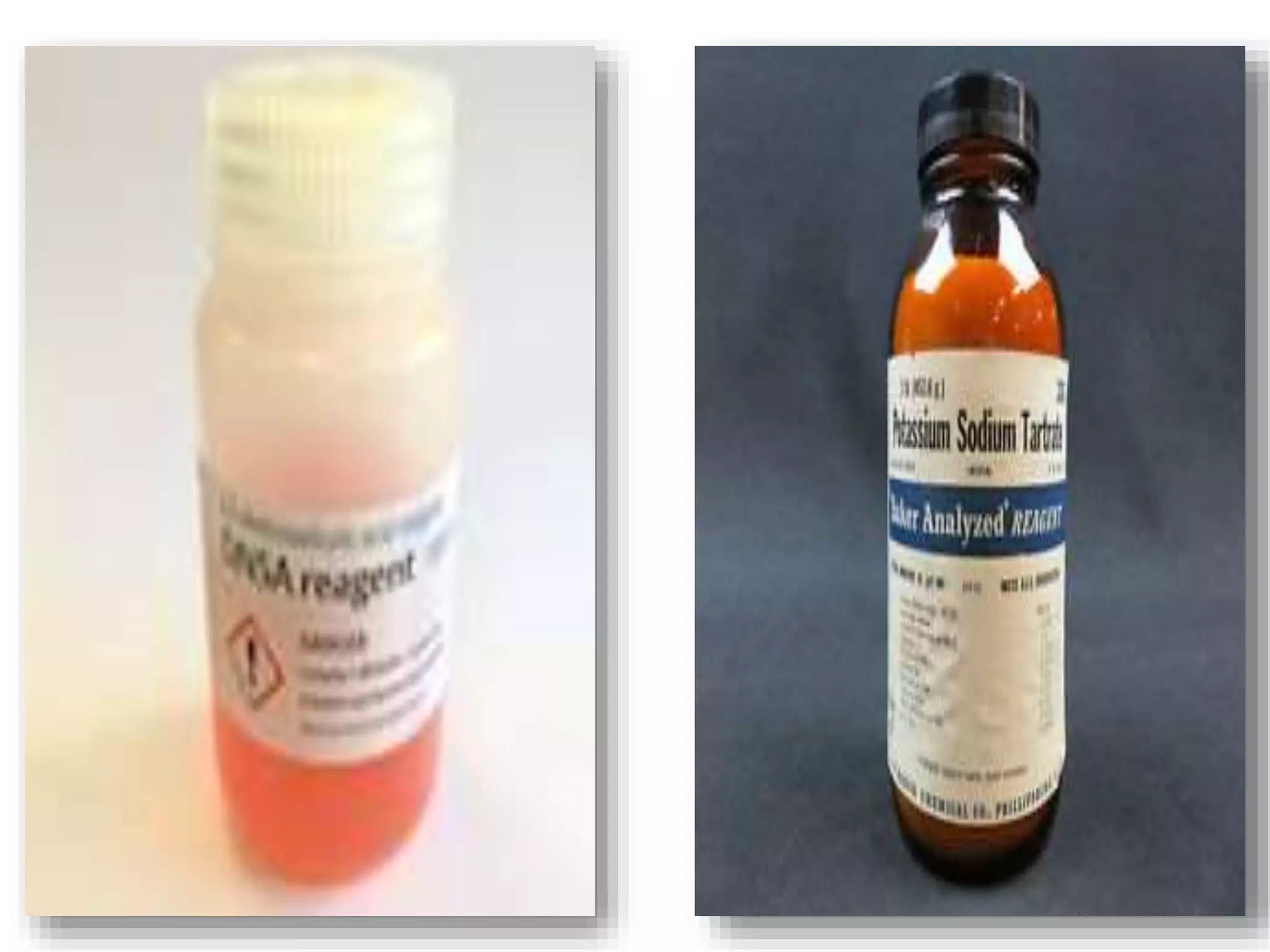
1) Dinitrosalicylic acid : Dissolve 1g of
dinitrosalicylic acid, 200mg crystalline phenol
and 50mg sodium sulphite in 100ml final
volume of 1% NaOH.
2) Sodium potassium tartarate : Dissolve 40g of
sodium potassium tartarate in 100ml final
volume of distilled water.
Materials required
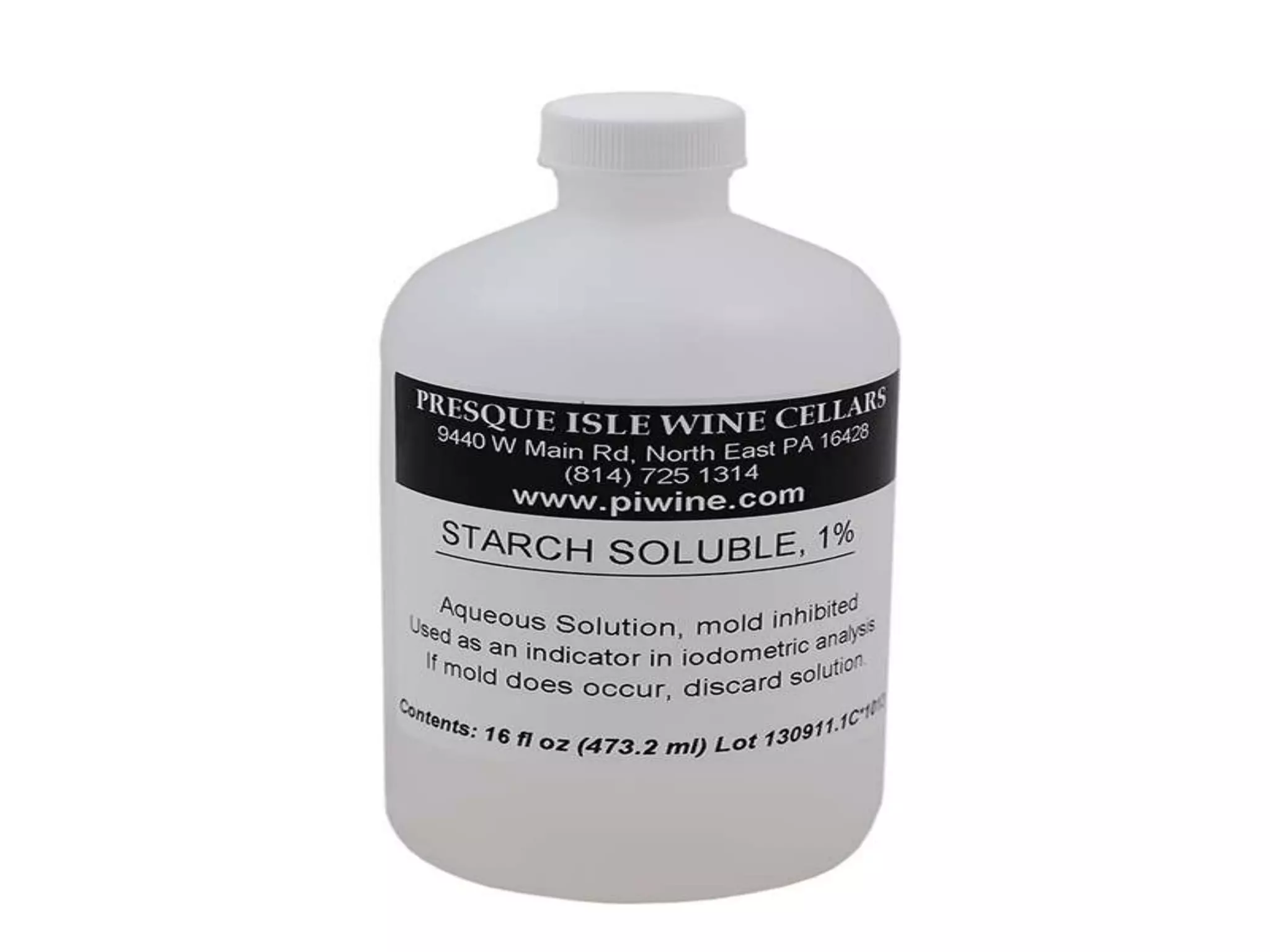
3) Starch solution: Dissolve 1.0 g of soluble
starch in 10ml of boiling water.
o Slowly add this solution with constant stirring
in 90ml of boiling water.
o Boil for 20 minutes and cool to room
temperature.
Materials required
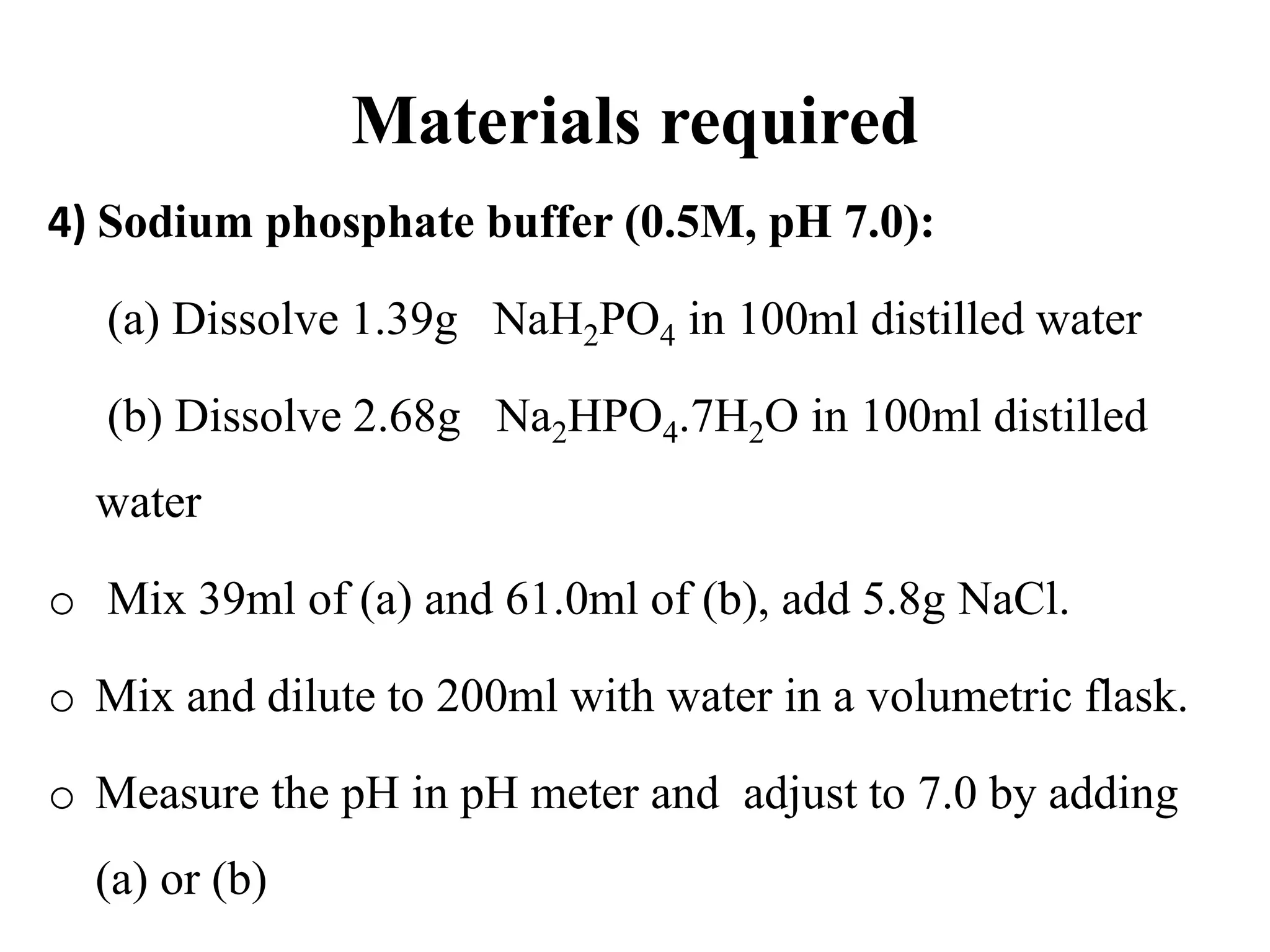
4) Sodium phosphate buffer (0.5M, pH 7.0):
(a) Dissolve 1.39g NaH2PO4 in 100ml distilled water
(b) Dissolve 2.68g Na2HPO4.7H2O in 100ml distilled
water
o Mix 39ml of (a) and 61.0ml of (b), add 5.8g NaCl.
o Mix and dilute to 200ml with water in a volumetric flask.
o Measure the pH in pH meter and adjust to 7.0 by adding
(a) or (b)
Materials required
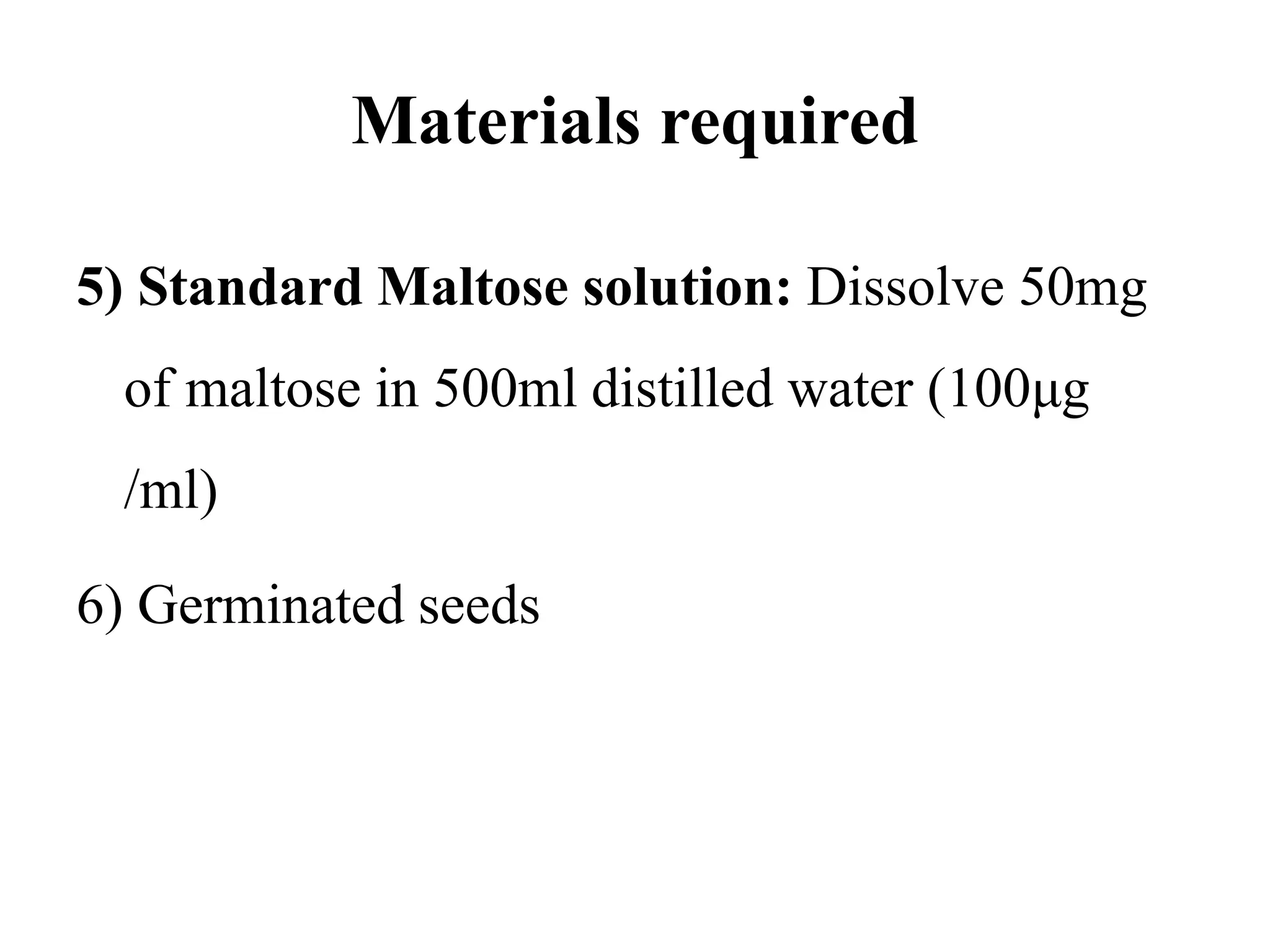
5) Standard Maltose solution: Dissolve 50mg
of maltose in 500ml distilled water (100μg
/ml)
6) Germinated seeds
Procedure - Extraction
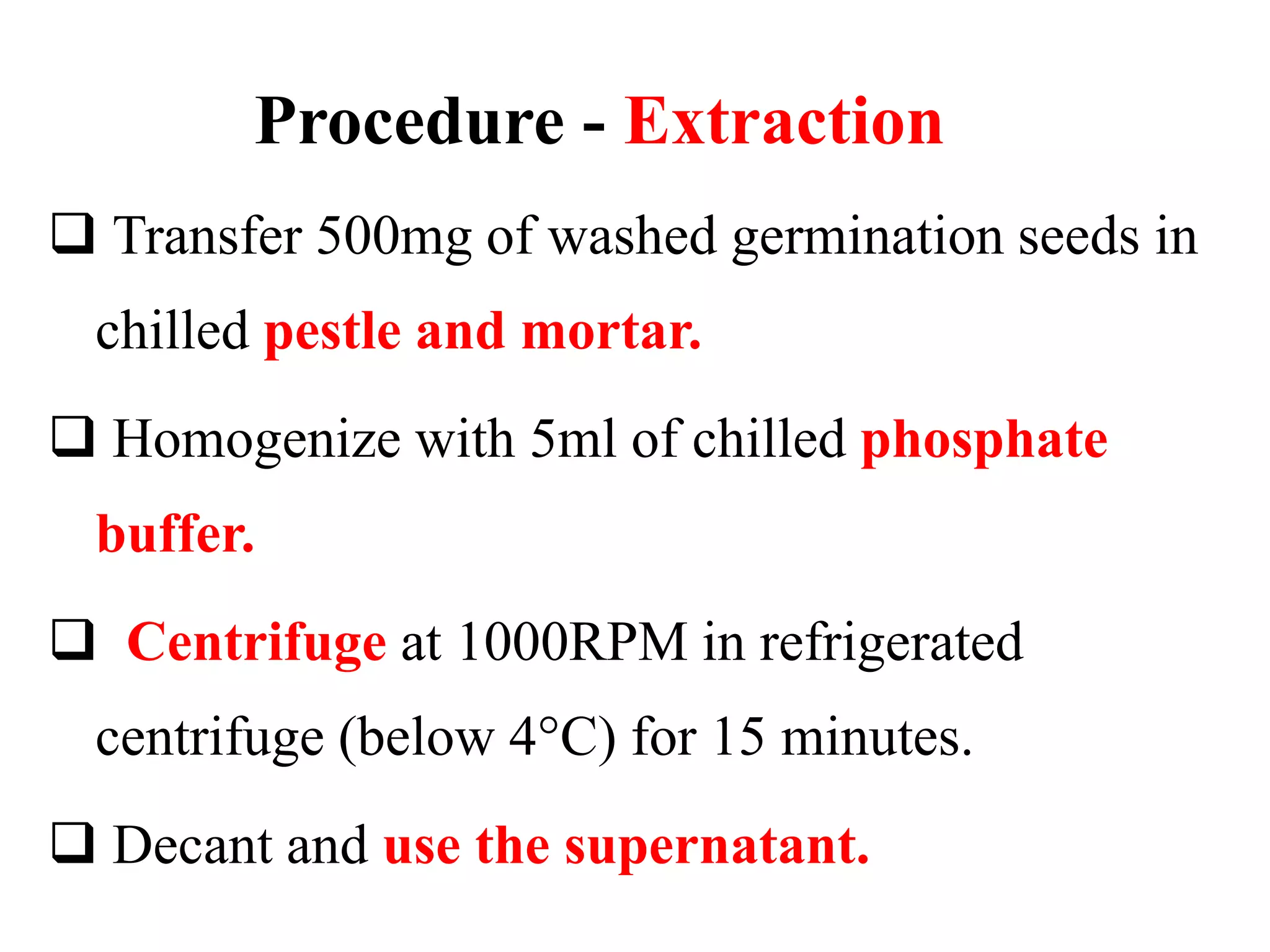
 Transfer 500mg of washed germination seeds in
chilled pestle and mortar.
 Homogenize with 5ml of chilled phosphate
buffer.
 Centrifuge at 1000RPM in refrigerated
centrifuge (below 4°C) for 15 minutes.
 Decant and use the supernatant.
Procedure - Estimation
 Pipette 1.0ml starch solution (fresh) and 1.0 ml
of enzyme extract in two test tubes.
 In one test tube add 2ml dinitrosalicylic acid
reagent (control, 0 min).
 Incubate other experimental tube at 37°C for
15minutes and stop reaction by adding 2ml
dinitrosalicylic acid reagent.
Procedure - Estimation
 Keep both the tubes in boiling water bath for
15 minutes and add 1.0 ml Sodium potassium
tartrate.
 Cool the tube in running tap water and dilute
to 10ml by adding 5ml distilled water.
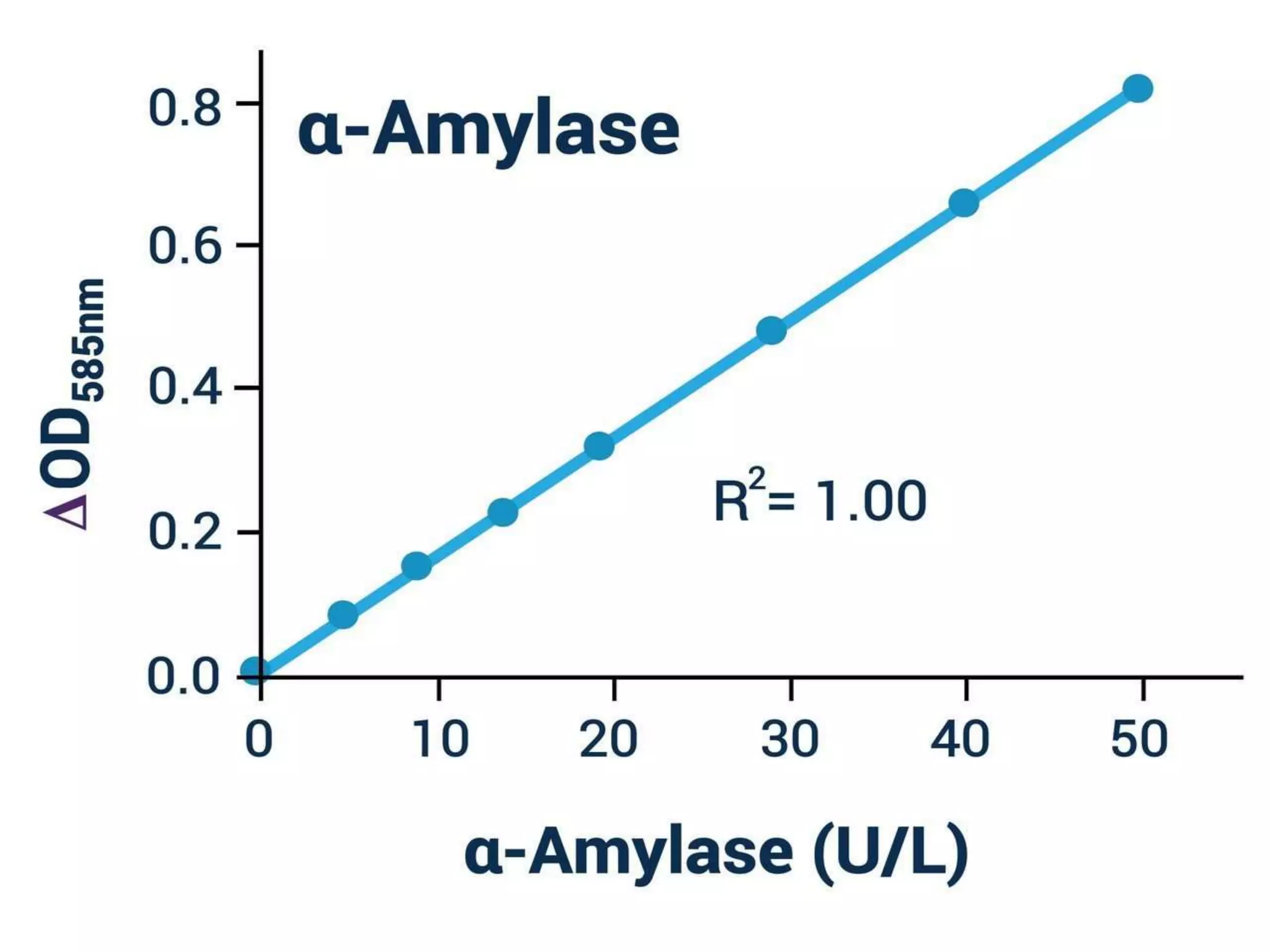
• Read the absorbance at 570nm, setting zero with zero minute control
(first tube) prepare standard curve by taking aliquots 0, 0.2, 0.4, 0.6,
0.8 and 1.0 ml Sodium potassium tartarate.
• Cool and add 6.0ml distilled water, mix and read the absorbance at
570nm.
• Compare the absorbance of experimental tube (second tube) and amount
of maltose in experimental tube.
• The activity of enzyme was calculated in terms of micromoles of
maltose produced per gm fresh weight of sample per minutes.
Answer the following questions
1) Define: Enzyme .
2) Define: Enzyme activity.
3) Write the Michaelis-Menton equation.
4) Name the factors which affect the enzyme
activity.
5) Differentiate α amylase from β amylase.

Estimation of amylases

  • 1.
  • 2.
    Assay of Amylase Aim: Todetermine the activity of amylase present in food.
  • 3.
    Principle Amylase catalyses thehydrolysis of starch and glycogen into maltose sugars. α- Amylase is endo-hydrolase which hydrolyses α-1,4, linkage whereas β- amylase is exo-hydrolase hydrolyses non-reducing end to remove β-maltose and limit dextrin at end.
  • 4.
    Principle  α- Amylaseis present in human saliva, whereas β- amylase is present in germinating seeds.  The progress and extend of hydrolysis of starch is determined by amount of reducing sugar produced.
  • 7.
    Materials required 1) Dinitrosalicylicacid : Dissolve 1g of dinitrosalicylic acid, 200mg crystalline phenol and 50mg sodium sulphite in 100ml final volume of 1% NaOH. 2) Sodium potassium tartarate : Dissolve 40g of sodium potassium tartarate in 100ml final volume of distilled water.
  • 9.
    Materials required 3) Starchsolution: Dissolve 1.0 g of soluble starch in 10ml of boiling water. o Slowly add this solution with constant stirring in 90ml of boiling water. o Boil for 20 minutes and cool to room temperature.
  • 11.
    Materials required 4) Sodiumphosphate buffer (0.5M, pH 7.0): (a) Dissolve 1.39g NaH2PO4 in 100ml distilled water (b) Dissolve 2.68g Na2HPO4.7H2O in 100ml distilled water o Mix 39ml of (a) and 61.0ml of (b), add 5.8g NaCl. o Mix and dilute to 200ml with water in a volumetric flask. o Measure the pH in pH meter and adjust to 7.0 by adding (a) or (b)
  • 13.
    Materials required 5) StandardMaltose solution: Dissolve 50mg of maltose in 500ml distilled water (100μg /ml) 6) Germinated seeds
  • 14.
    Procedure - Extraction Transfer 500mg of washed germination seeds in chilled pestle and mortar.  Homogenize with 5ml of chilled phosphate buffer.  Centrifuge at 1000RPM in refrigerated centrifuge (below 4°C) for 15 minutes.  Decant and use the supernatant.
  • 15.
    Procedure - Estimation Pipette 1.0ml starch solution (fresh) and 1.0 ml of enzyme extract in two test tubes.  In one test tube add 2ml dinitrosalicylic acid reagent (control, 0 min).  Incubate other experimental tube at 37°C for 15minutes and stop reaction by adding 2ml dinitrosalicylic acid reagent.
  • 16.
    Procedure - Estimation Keep both the tubes in boiling water bath for 15 minutes and add 1.0 ml Sodium potassium tartrate.  Cool the tube in running tap water and dilute to 10ml by adding 5ml distilled water.
  • 18.
    • Read theabsorbance at 570nm, setting zero with zero minute control (first tube) prepare standard curve by taking aliquots 0, 0.2, 0.4, 0.6, 0.8 and 1.0 ml Sodium potassium tartarate. • Cool and add 6.0ml distilled water, mix and read the absorbance at 570nm. • Compare the absorbance of experimental tube (second tube) and amount of maltose in experimental tube. • The activity of enzyme was calculated in terms of micromoles of maltose produced per gm fresh weight of sample per minutes.
  • 20.
    Answer the followingquestions 1) Define: Enzyme . 2) Define: Enzyme activity. 3) Write the Michaelis-Menton equation. 4) Name the factors which affect the enzyme activity. 5) Differentiate α amylase from β amylase.