Photorespiration (C2 Cycle)
Photorespiration - Introduction
Photorespiration is a metabolic pathway that occurs in
photosynthetic organisms and releases carbon dioxide,
consumes oxygen, and produces no chemical energy or
food.
This process limits the growth rates of plants.
Photorespiration generally occurs on hot, dry, sunny days
causing plants to close their stomata and the oxygen (O2)
concentration in the leaf to be higher than the carbon
dioxide (CO2) concentration.
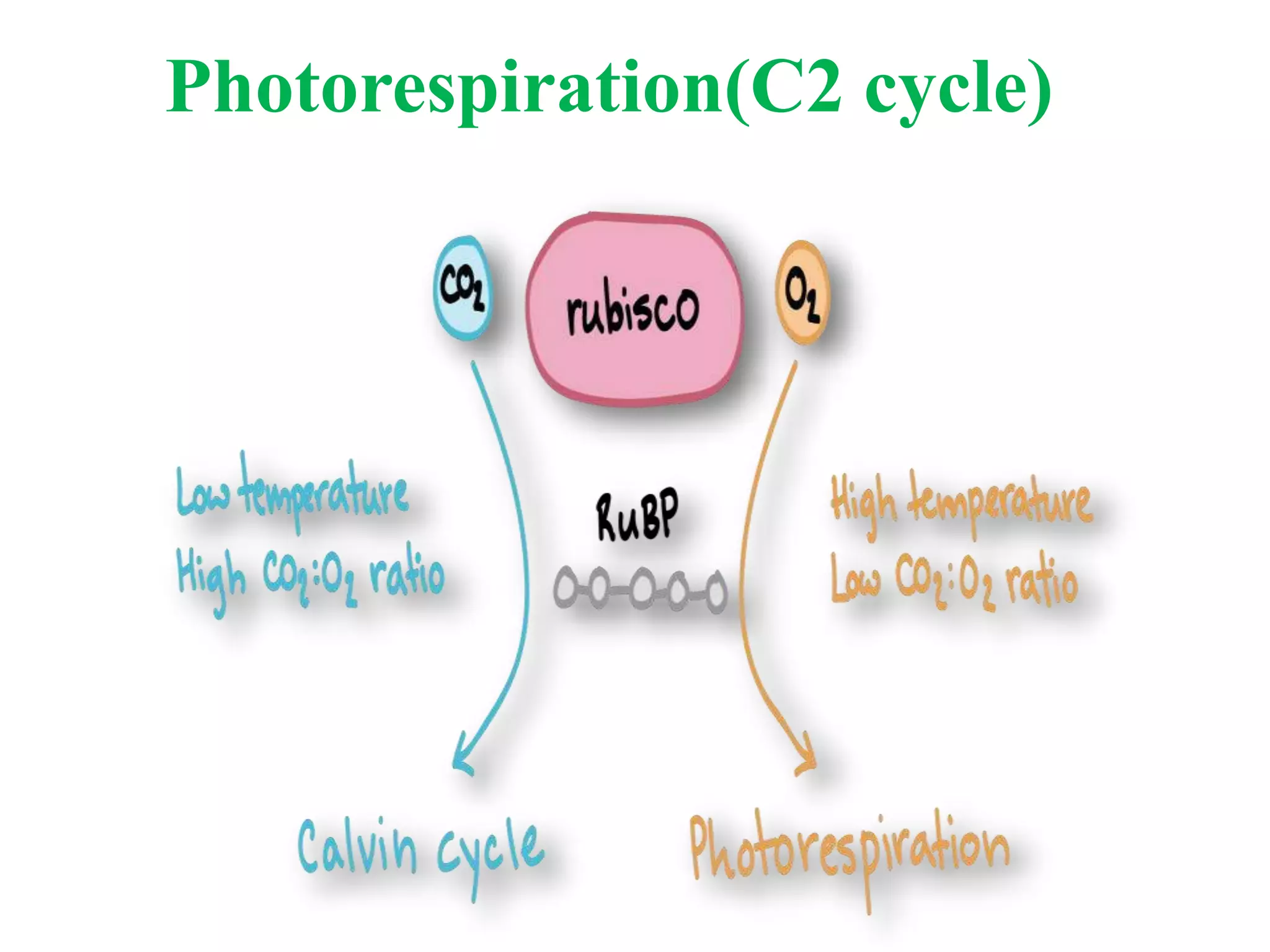
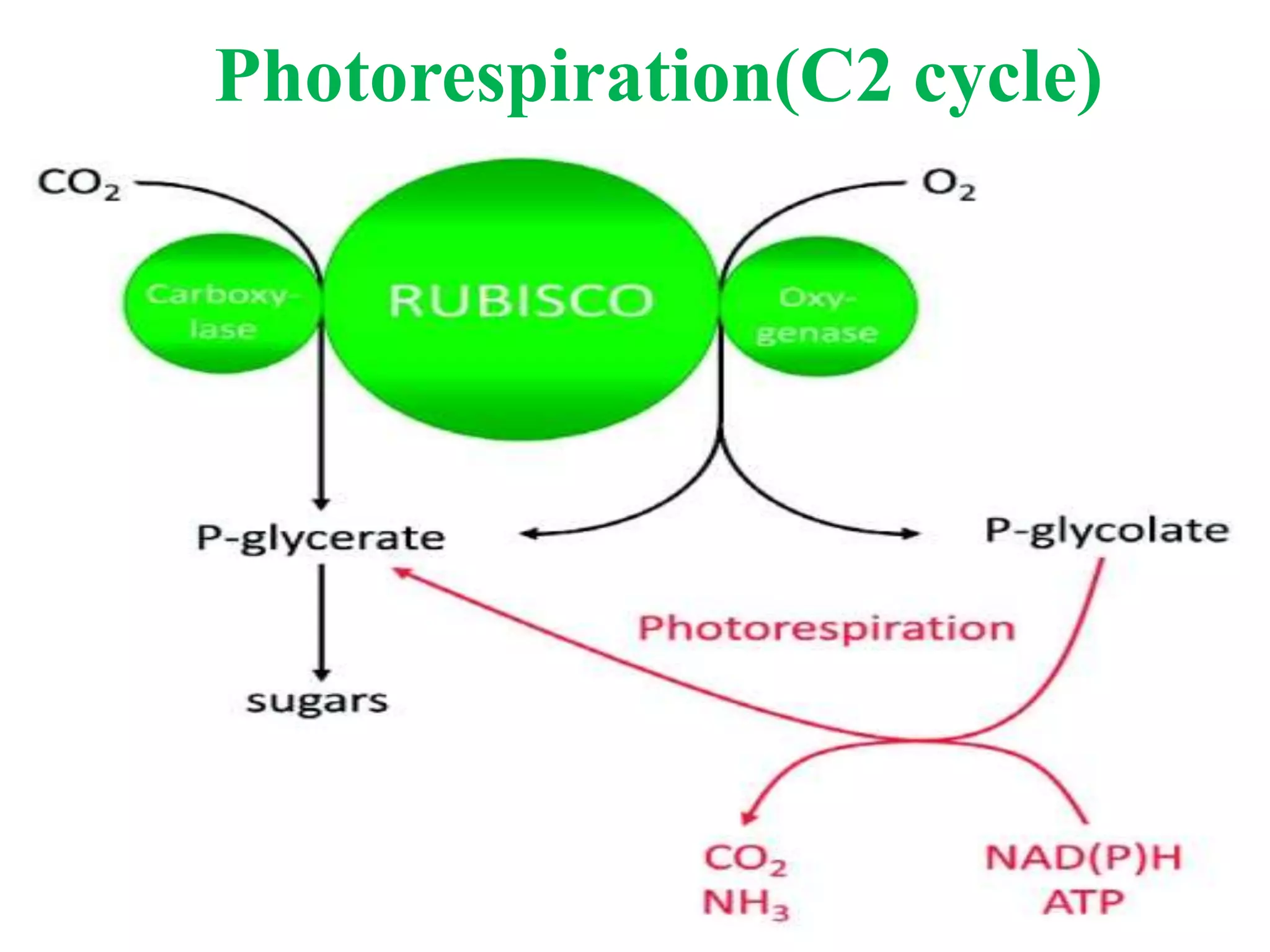
Photorespiration(C2 cycle)
Photorespiration - Introduction
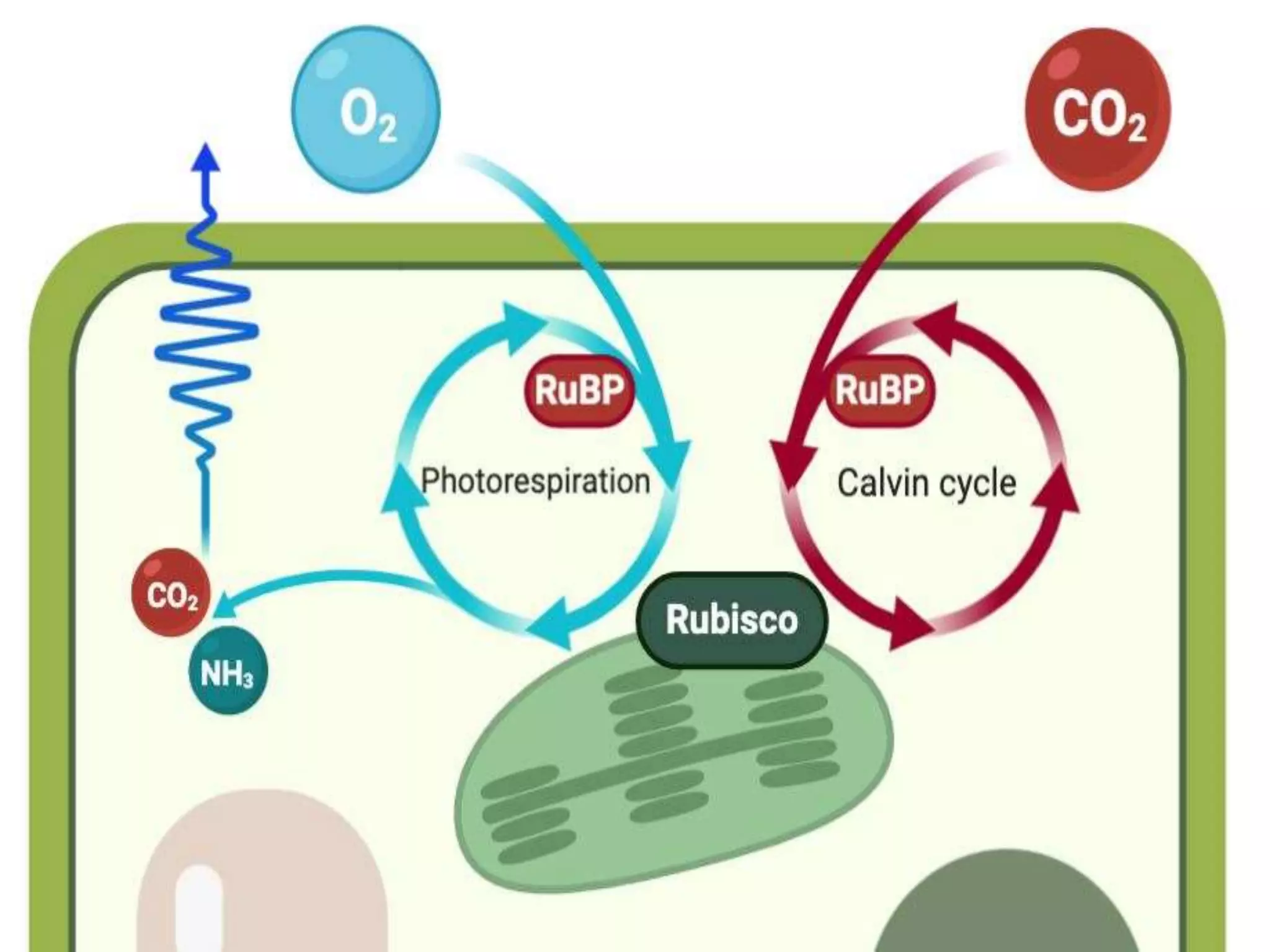
When a plant leaf contains a high concentration of
oxygen, instead of carbon dioxide, this poses a problem
for the normal photosynthetic process, including the
light reactions and the Calvin cycle.
Photorespiration - Oxygenase
Photorespiration involves the light dependent uptake of
O2 and evolution of CO2 during photosynthesis in green
plant tissues.
The first step in photorespiration is associated with the
oxygenase activity of the photosynthetic enzyme
Rubisco.
Photorespiration(C2 cycle)
Photorespiration - Pathway
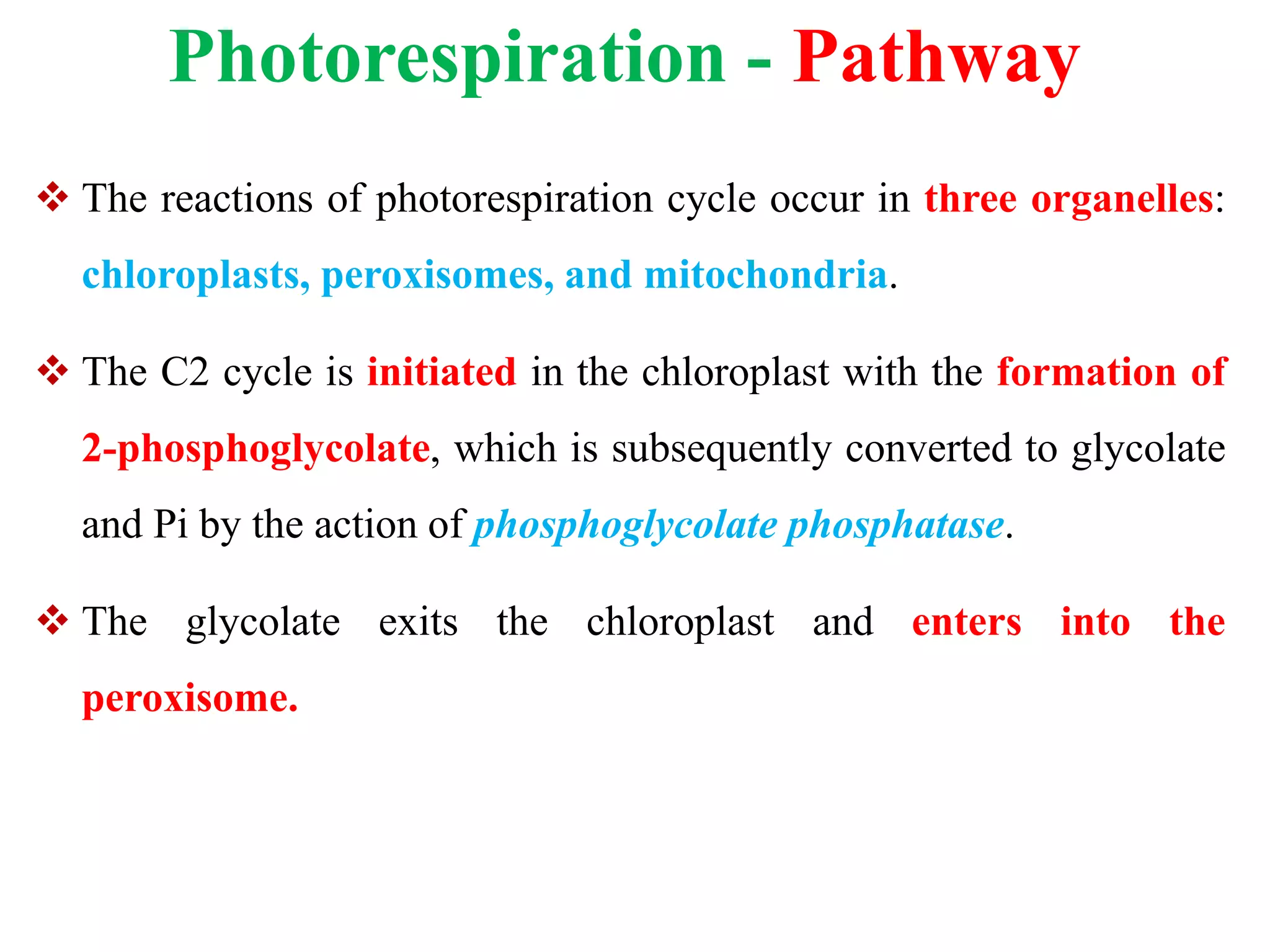
 The reactions of photorespiration cycle occur in three organelles:
chloroplasts, peroxisomes, and mitochondria.
 The C2 cycle is initiated in the chloroplast with the formation of
2-phosphoglycolate, which is subsequently converted to glycolate
and Pi by the action of phosphoglycolate phosphatase.
 The glycolate exits the chloroplast and enters into the
peroxisome.
Photorespiration - Pathway
The glycolate reacts with O2 to produce
glyoxylate and H2O2 which is catalysed by
glycolate oxidase.
Two molecules of glyoxylate are aminated to
form glycine in a reaction catalysed by
glutamate:glyoxylate aminotransferase.
H2O2 is removed by the abundant catalase present
in peroxisomes to H2O and O2.
Photorespiration - Pathway
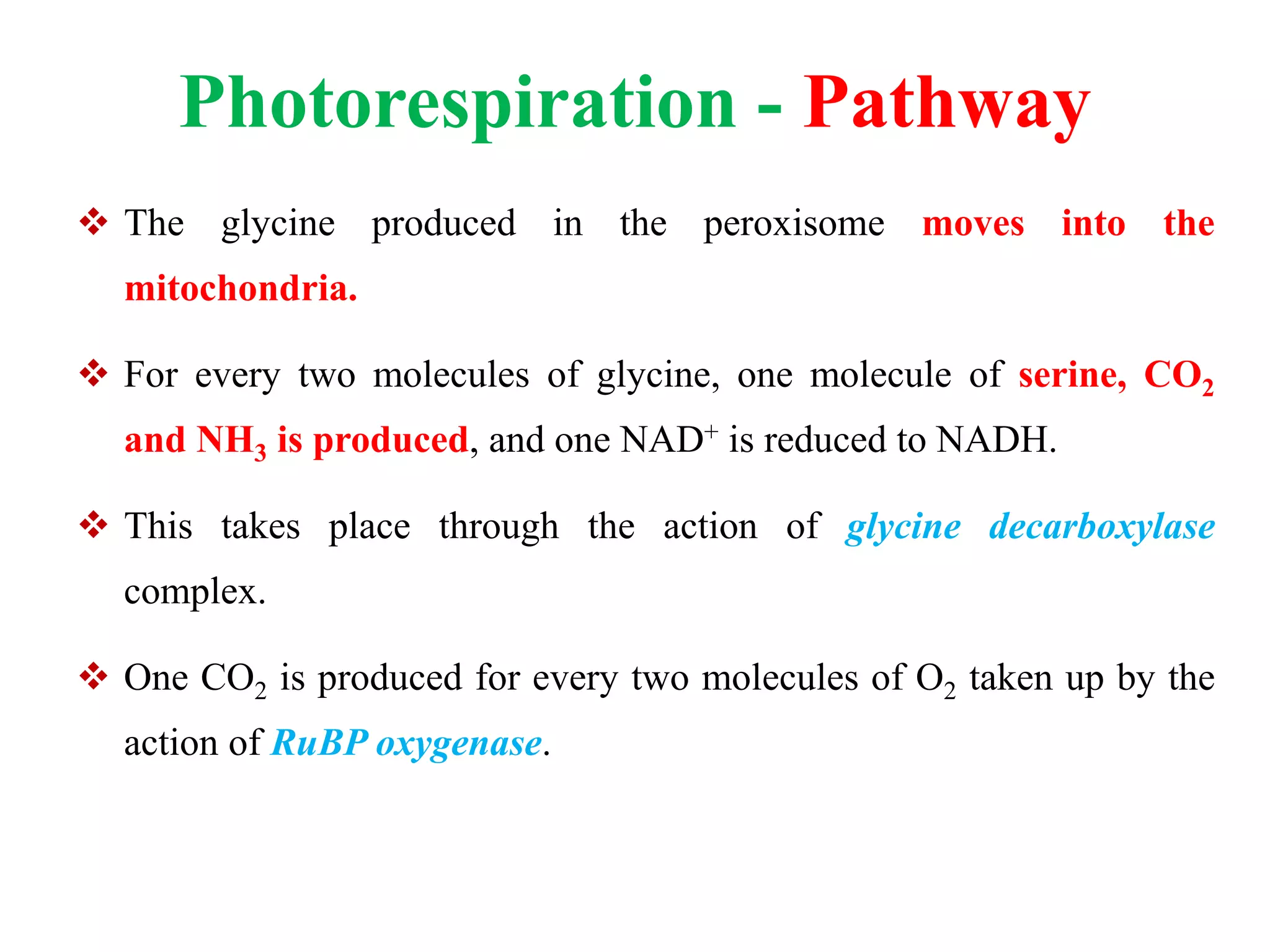
 The glycine produced in the peroxisome moves into the
mitochondria.
 For every two molecules of glycine, one molecule of serine, CO2
and NH3 is produced, and one NAD+ is reduced to NADH.
 This takes place through the action of glycine decarboxylase
complex.
 One CO2 is produced for every two molecules of O2 taken up by the
action of RuBP oxygenase.
Photorespiration - Pathway
 The serine produced in the mitochondria now moves into the peroxisome,
where it is deaminated to hydroxypyruvate by serine:glyoxylate
aminotransferase.
 Then, hydroxypyruvate is reduced to glycerate by hydroxypyruvate
reductase.
 The glycerate exits the peroxisome and enters the chloroplast and is
phosphorylated by glycerate kinase to 3-phosphoglycerate.
 This reaction completes the conversion of two molecules of
phosphoglycolate to one of 3-PGA, which can now enter the C3 cycle.
Photorespiration (C2 cycle)
Photorespiration - Benefits
Photorespiration have some benefits for plants.
There's some evidence that photorespiration can have:
 Photoprotective effects (preventing light-induced
damage to the molecules involved in
photosynthesis),
 Help maintain redox balance in cells, and
 Support plant immune defenses.
Photorespiration (C2 cycle)
Additional information:
The 2-phosphoglycolate is a very toxic
product and cell cannot metabolise it. So, to
bypass this photorespiration takes place in
some higher plans.
Videolinks
https://www.youtube.com/watch?v=fWsU4_Zau0c
https://www.youtube.com/watch?v=gtNL1U6j5ZM
https://www.youtube.com/watch?v=Xxf5aqvFlNs
https://www.youtube.com/watch?v=xW-VkFyxmhg
Photorespiration c2 cycle

Photorespiration c2 cycle

  • 1.
  • 2.
    Photorespiration - Introduction Photorespirationis a metabolic pathway that occurs in photosynthetic organisms and releases carbon dioxide, consumes oxygen, and produces no chemical energy or food. This process limits the growth rates of plants. Photorespiration generally occurs on hot, dry, sunny days causing plants to close their stomata and the oxygen (O2) concentration in the leaf to be higher than the carbon dioxide (CO2) concentration.
  • 3.
  • 4.
    Photorespiration - Introduction Whena plant leaf contains a high concentration of oxygen, instead of carbon dioxide, this poses a problem for the normal photosynthetic process, including the light reactions and the Calvin cycle.
  • 6.
    Photorespiration - Oxygenase Photorespirationinvolves the light dependent uptake of O2 and evolution of CO2 during photosynthesis in green plant tissues. The first step in photorespiration is associated with the oxygenase activity of the photosynthetic enzyme Rubisco.
  • 7.
  • 8.
    Photorespiration - Pathway The reactions of photorespiration cycle occur in three organelles: chloroplasts, peroxisomes, and mitochondria.  The C2 cycle is initiated in the chloroplast with the formation of 2-phosphoglycolate, which is subsequently converted to glycolate and Pi by the action of phosphoglycolate phosphatase.  The glycolate exits the chloroplast and enters into the peroxisome.
  • 9.
    Photorespiration - Pathway Theglycolate reacts with O2 to produce glyoxylate and H2O2 which is catalysed by glycolate oxidase. Two molecules of glyoxylate are aminated to form glycine in a reaction catalysed by glutamate:glyoxylate aminotransferase. H2O2 is removed by the abundant catalase present in peroxisomes to H2O and O2.
  • 10.
    Photorespiration - Pathway The glycine produced in the peroxisome moves into the mitochondria.  For every two molecules of glycine, one molecule of serine, CO2 and NH3 is produced, and one NAD+ is reduced to NADH.  This takes place through the action of glycine decarboxylase complex.  One CO2 is produced for every two molecules of O2 taken up by the action of RuBP oxygenase.
  • 11.
    Photorespiration - Pathway The serine produced in the mitochondria now moves into the peroxisome, where it is deaminated to hydroxypyruvate by serine:glyoxylate aminotransferase.  Then, hydroxypyruvate is reduced to glycerate by hydroxypyruvate reductase.  The glycerate exits the peroxisome and enters the chloroplast and is phosphorylated by glycerate kinase to 3-phosphoglycerate.  This reaction completes the conversion of two molecules of phosphoglycolate to one of 3-PGA, which can now enter the C3 cycle.
  • 12.
  • 13.
    Photorespiration - Benefits Photorespirationhave some benefits for plants. There's some evidence that photorespiration can have:  Photoprotective effects (preventing light-induced damage to the molecules involved in photosynthesis),  Help maintain redox balance in cells, and  Support plant immune defenses.
  • 14.
    Photorespiration (C2 cycle) Additionalinformation: The 2-phosphoglycolate is a very toxic product and cell cannot metabolise it. So, to bypass this photorespiration takes place in some higher plans.
  • 15.