Equilibrium (balance) Disorders Ahmed Elshebiny University of Menoufyia
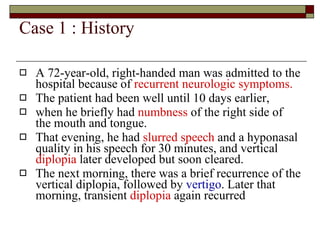
Case 1 : History  A 72-year-old, right-handed man was admitted to the hospital because of  recurrent neurologic symptoms.   The patient had been well until 10 days earlier,  when he briefly had  numbness  of the right side of the mouth and tongue.  That evening, he had  slurred   speech  and a hyponasal quality in his speech for 30 minutes, and vertical  diplopia  later developed but soon cleared.  The next morning, there was a brief recurrence of the vertical diplopia, followed by  vertigo . Later that morning, transient  diplopia  again recurred
Past History Labile HTN Dyslipedemia apical lung resection 50 years earlier because of tuberculosis.
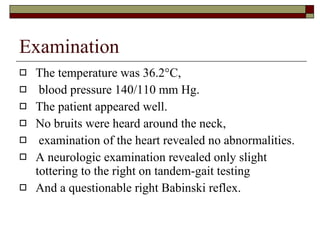
Examination The temperature was 36.2°C,  blood pressure 140/110 mm Hg.  The patient appeared well.  No bruits were heard around the neck,  examination of the heart revealed no abnormalities.  A neurologic examination revealed only slight tottering to the right on tandem-gait testing  And a questionable right Babinski reflex.
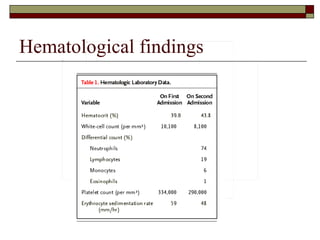
Hematological findings
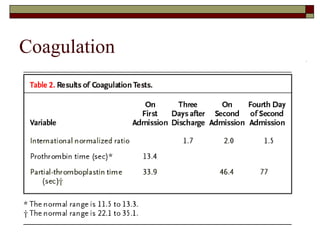
Coagulation
Immaging Non contrast C.T C.T angio MRI Transcranial doppler Ultrasound neck vessels Echocardiography ECG
Discharge…… Treatment with heparin and warfarin was begun. A few transient episodes of diplopia occurred, each lasting 30 to 60 seconds, and there was one bout of vertigo, with buzzing in the ears. The patient's condition improved, and he was discharged on the fourth hospital day with instructions to take dalteparin sodium and warfarin without aspirin.
Re-admission Three days after discharge, diffuse weakness developed, along with dizziness and transient vertical diplopia. (The international normalized ratio, obtained at another hospital, was 1.7)  The blood pressure was 180/80 mm Hg.  The temporal arteries were prominent, with strong pulses and no nodularity or tenderness  The left radial pulse was diminished, and the blood pressure could not be measured in the left arm.
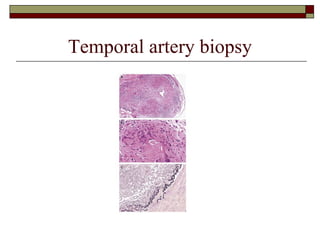
Temporal artery biopsy
what happened to the patient after the biopsy was ???performed and the diagnosis made After the diagnosis was made, a course of methylprednisolone sodium succinate was begun.  On the first day, we thought his condition was improving, but it continued to worsen, and additional posterior-circulation infarcts developed.  He was eventually admitted to the intensive care unit, where a tracheotomy was performed. After further clinical deterioration and discussion with the patient's family,  care was discontinued.
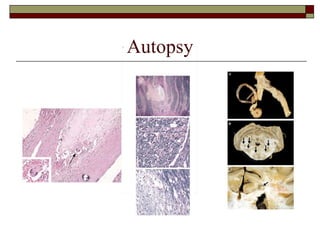
Autopsy
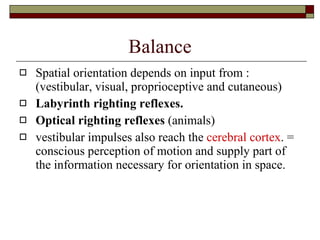
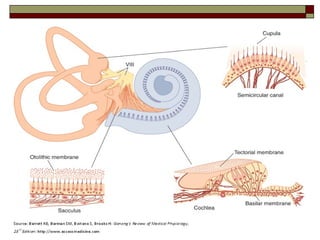
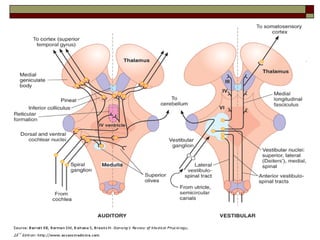
Balance Spatial orientation depends on input from : (vestibular, visual, proprioceptive and cutaneous) Labyrinth righting reflexes.   Optical righting reflexes  (animals) vestibular impulses also reach the  cerebral cortex . = conscious perception of motion and supply part of the information necessary for orientation in space.
 
 
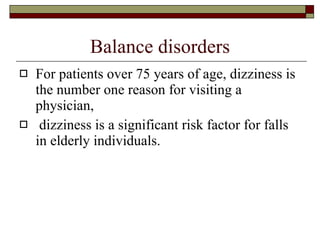
Balance disorders For patients over 75 years of age, dizziness is the number one reason for visiting a physician,  dizziness is a significant risk factor for falls in elderly individuals.
Vertigo Illusion of movement of the body or the environment May be associated with ( impulsion, oscillopsia, nausea , vomiting, gait ataxia). Differentiate vertigo from other symptoms physiological or pathological Differentiate between peripheral and central causes of vertigo
Nystagmus The characteristic jerky movement of the eye observed at the start and end of a period of  rotation .  It is actually a  reflex  that maintains visual fixation on stationary points while the body rotates, although it is not initiated by visual impulses and is present in blind individuals.  Nystagmus is frequently  horizontal  (ie, the eyes move in the horizontal plane), but it can also be  vertica l (when the head is tipped sidewise during rotation) or  rotatory  (when the head is tipped forward).  By convention, the direction of eye movement in nystagmus is identified by the direction of the quick component.
Ataxia Incoordination or clumsiness of movement that is not the result of muscle weakness. Cerebellar disorders are associated with hypotonia, however rigidity or spasticity may be present in certain diseases Vestibular, Cerebellar and Sensory
Approach to a case of Vertigo History is crucial, Is it vertigo? If unclear ,  provocative bedside tests Is it positional? Ask about tennitus, deafness or ear pressure Onset, recurrence, course, duration Cardiovascular risk factors? Ask about headaches and migraine Ask about previous viral infection Primary or reactive anxiety or depression Neurological symptoms,  Neurological Examination , examine the neck , failure of fixation suppression General Examination Follow up
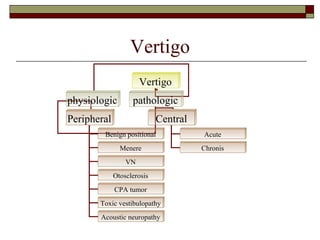
Vertigo Vertigo physiologic pathologic Peripheral Central Benign positional Menere VN Otosclerosis Acute Chronis CPA tumor Toxic vestibulopathy Acoustic neuropathy
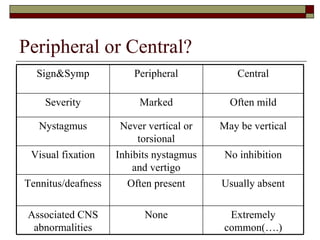
Peripheral or Central? Extremely common(….) None Associated CNS abnormalities Usually absent Often present Tennitus/deafness No inhibition Inhibits nystagmus and vertigo Visual fixation May be vertical Never vertical or torsional Nystagmus Often mild Marked Severity Central Peripheral Sign&Symp
 
 
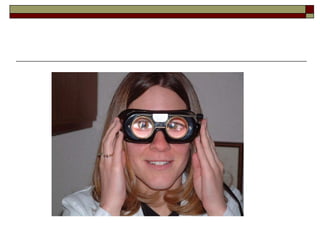
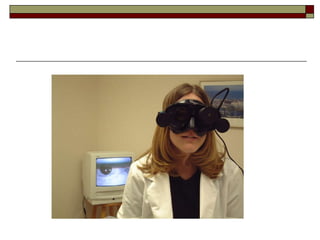
Vestibular Examination VOR VSR
Caloric test Caloric stimulation can be used to test the function of the vestibular labyrinth.  convection currents in the endolymph  COWS
Peripheral Vestibular disorders About three-fourths of vestibular disorders are peripheral (inner ear and vestibular nerve).  The most common peripheral vestibular disorder is  benign paroxysmal positional  vertigo, followed by uncompensated Ménière disease, vestibular neuritis, labyrinthitis, perilymphatic fistula, and acoustic neuroma.
Benign Paroxysmal Positional Vertigo Severe episodes, nausea, vomiting Canalolithiasis? Mostly peripheral Most common cause of peripheral Positional vertigo may also be central, differentiate by Dix-Halpike maneuver( Latency, Fatigability, habituation& reproducibility) TTT:  Vestibulosuppressants, repositioning maneuvers, vestibular rehab.
Ménière disease Repeated episodes( minutes to days)  Intervals from weeks to years Tinnitus and Progressive SNHL (stepwise) As hearing loss increases , vertigo lessens Mostly sporadic, may be familial, may be anticipation Onset between 20-50 y More in men Endolymphatic  hydrops ? Caloric test and audiometry ttt-diuretics, may be with antihistamines, benzodiazepines, anticholinergic and may be surgical
Acute Peripheral Vestibulopathy Spontaneous attack of vertigo of inapparent cause,  without deafness  or CNS dysfunction Includes Acute Labyrinthitis and vestibular neuronitis of unverified site and pathology Usually up to 2 weeks The patient lies on one side with the affected ear up Nystagmus away from affected ear is always present May be febrile  May leave residual May recur Ttt- with antivertigals and or prednisolone 10-14 days
Toxic Vestibulopathies Alcohol Aminoglycosides Quinine and quinidine Cisplatinum
Otosclerosis Mostly conductive deafness May be associated with SNHL or vertigo Commonly familial Auditory symptoms begin before age of 30 Audiometry= usually mixed, mostly bilateral Should be difrenciated from Meniere’s TTT with sodium floride+ calcium gloconate+ vit D or stapedictomy
CPA tumor Most common benign acoustic neuroma Arises from neurilemmal sheath of vestibular part of acoustic n. in the internal auditory canal May be with neurofibromatosis Symptoms and signs MRI,  brainstem auditory evoked potentials
Cerebellar and Central vestibular disorders The most common central causes of dizziness and vertigo are  cerebrovascular disorders , cerebellar disease, migraine, multiple sclerosis, tumors of the posterior fossa, neurodegenerative disorders, medications, and psychiatric disorders.
Central vertigo secondary to brainstem or cerebellar ischemia usually lasts for 20 min to 24 h and is often associated with other brainstem characteristics, including diplopia, autonomic symptoms, nausea, dysarthria, dysphagia, or focal weakness. Patients with cerebellar disease are frequently unable to ambulate during acute episodes of vertigo.  Patients with peripheral vertigo can usually ambulate during episodes and are consciously aware of their environment.
Causes of acute cerebellar ataxia Drugs Wernicke encephalopathy Vertebrobasilar ischemia or infarction Cerebellar hage Inflammatory disorders
Causes of chronic cerebellar ataxia MS Alcoholic cerebellar degeneration Phenytoin induced cerebellar degeneration Hypothyroidism Paraneoplastic cerebellar degeneration Heridetary spinocerebellar ataxias Friedreich ataxia Ataxia Telangiectasia Wilson Acquired hepatolenticular degeneration Crutzfeldt-jacob disease Posterior fossa tumors  and malformations
Vestibular Rehabilitation Therapy   a specific form of physical therapy designed to habituate symptoms, and promote adaptation to and substitution for various aspects of deficits related to a wide variety of balance disorders .
References E-medicine specialities, Neurology E-medicine specialities, otolaryngeology Aminooff, et al , Clinical Neurology, 2009 Kumar and KlarK’s, Clinical Medicine , 2009 Ganong, Physiology, 2005 Harrison online textbook , 2008
THANK  YOU

Equilibrium disorders

  • 1.
  • 2.
    Equilibrium (balance) DisordersAhmed Elshebiny University of Menoufyia
  • 3.
    Case 1 :History A 72-year-old, right-handed man was admitted to the hospital because of recurrent neurologic symptoms. The patient had been well until 10 days earlier, when he briefly had numbness of the right side of the mouth and tongue. That evening, he had slurred speech and a hyponasal quality in his speech for 30 minutes, and vertical diplopia later developed but soon cleared. The next morning, there was a brief recurrence of the vertical diplopia, followed by vertigo . Later that morning, transient diplopia again recurred
  • 4.
    Past History LabileHTN Dyslipedemia apical lung resection 50 years earlier because of tuberculosis.
  • 5.
    Examination The temperaturewas 36.2°C, blood pressure 140/110 mm Hg. The patient appeared well. No bruits were heard around the neck, examination of the heart revealed no abnormalities. A neurologic examination revealed only slight tottering to the right on tandem-gait testing And a questionable right Babinski reflex.
  • 6.
  • 7.
  • 8.
    Immaging Non contrastC.T C.T angio MRI Transcranial doppler Ultrasound neck vessels Echocardiography ECG
  • 9.
    Discharge…… Treatment withheparin and warfarin was begun. A few transient episodes of diplopia occurred, each lasting 30 to 60 seconds, and there was one bout of vertigo, with buzzing in the ears. The patient's condition improved, and he was discharged on the fourth hospital day with instructions to take dalteparin sodium and warfarin without aspirin.
  • 10.
    Re-admission Three daysafter discharge, diffuse weakness developed, along with dizziness and transient vertical diplopia. (The international normalized ratio, obtained at another hospital, was 1.7) The blood pressure was 180/80 mm Hg. The temporal arteries were prominent, with strong pulses and no nodularity or tenderness The left radial pulse was diminished, and the blood pressure could not be measured in the left arm.
  • 11.
  • 12.
    what happened tothe patient after the biopsy was ???performed and the diagnosis made After the diagnosis was made, a course of methylprednisolone sodium succinate was begun. On the first day, we thought his condition was improving, but it continued to worsen, and additional posterior-circulation infarcts developed. He was eventually admitted to the intensive care unit, where a tracheotomy was performed. After further clinical deterioration and discussion with the patient's family, care was discontinued.
  • 13.
  • 14.
    Balance Spatial orientationdepends on input from : (vestibular, visual, proprioceptive and cutaneous) Labyrinth righting reflexes. Optical righting reflexes (animals) vestibular impulses also reach the cerebral cortex . = conscious perception of motion and supply part of the information necessary for orientation in space.
  • 15.
  • 16.
  • 17.
    Balance disorders Forpatients over 75 years of age, dizziness is the number one reason for visiting a physician, dizziness is a significant risk factor for falls in elderly individuals.
  • 18.
    Vertigo Illusion ofmovement of the body or the environment May be associated with ( impulsion, oscillopsia, nausea , vomiting, gait ataxia). Differentiate vertigo from other symptoms physiological or pathological Differentiate between peripheral and central causes of vertigo
  • 19.
    Nystagmus The characteristicjerky movement of the eye observed at the start and end of a period of rotation . It is actually a reflex that maintains visual fixation on stationary points while the body rotates, although it is not initiated by visual impulses and is present in blind individuals. Nystagmus is frequently horizontal (ie, the eyes move in the horizontal plane), but it can also be vertica l (when the head is tipped sidewise during rotation) or rotatory (when the head is tipped forward). By convention, the direction of eye movement in nystagmus is identified by the direction of the quick component.
  • 20.
    Ataxia Incoordination orclumsiness of movement that is not the result of muscle weakness. Cerebellar disorders are associated with hypotonia, however rigidity or spasticity may be present in certain diseases Vestibular, Cerebellar and Sensory
  • 21.
    Approach to acase of Vertigo History is crucial, Is it vertigo? If unclear , provocative bedside tests Is it positional? Ask about tennitus, deafness or ear pressure Onset, recurrence, course, duration Cardiovascular risk factors? Ask about headaches and migraine Ask about previous viral infection Primary or reactive anxiety or depression Neurological symptoms, Neurological Examination , examine the neck , failure of fixation suppression General Examination Follow up
  • 22.
    Vertigo Vertigo physiologicpathologic Peripheral Central Benign positional Menere VN Otosclerosis Acute Chronis CPA tumor Toxic vestibulopathy Acoustic neuropathy
  • 23.
    Peripheral or Central?Extremely common(….) None Associated CNS abnormalities Usually absent Often present Tennitus/deafness No inhibition Inhibits nystagmus and vertigo Visual fixation May be vertical Never vertical or torsional Nystagmus Often mild Marked Severity Central Peripheral Sign&Symp
  • 24.
  • 25.
  • 26.
  • 27.
    Caloric test Caloricstimulation can be used to test the function of the vestibular labyrinth. convection currents in the endolymph COWS
  • 28.
    Peripheral Vestibular disordersAbout three-fourths of vestibular disorders are peripheral (inner ear and vestibular nerve). The most common peripheral vestibular disorder is benign paroxysmal positional vertigo, followed by uncompensated Ménière disease, vestibular neuritis, labyrinthitis, perilymphatic fistula, and acoustic neuroma.
  • 29.
    Benign Paroxysmal PositionalVertigo Severe episodes, nausea, vomiting Canalolithiasis? Mostly peripheral Most common cause of peripheral Positional vertigo may also be central, differentiate by Dix-Halpike maneuver( Latency, Fatigability, habituation& reproducibility) TTT: Vestibulosuppressants, repositioning maneuvers, vestibular rehab.
  • 30.
    Ménière disease Repeatedepisodes( minutes to days) Intervals from weeks to years Tinnitus and Progressive SNHL (stepwise) As hearing loss increases , vertigo lessens Mostly sporadic, may be familial, may be anticipation Onset between 20-50 y More in men Endolymphatic hydrops ? Caloric test and audiometry ttt-diuretics, may be with antihistamines, benzodiazepines, anticholinergic and may be surgical
  • 31.
    Acute Peripheral VestibulopathySpontaneous attack of vertigo of inapparent cause, without deafness or CNS dysfunction Includes Acute Labyrinthitis and vestibular neuronitis of unverified site and pathology Usually up to 2 weeks The patient lies on one side with the affected ear up Nystagmus away from affected ear is always present May be febrile May leave residual May recur Ttt- with antivertigals and or prednisolone 10-14 days
  • 32.
    Toxic Vestibulopathies AlcoholAminoglycosides Quinine and quinidine Cisplatinum
  • 33.
    Otosclerosis Mostly conductivedeafness May be associated with SNHL or vertigo Commonly familial Auditory symptoms begin before age of 30 Audiometry= usually mixed, mostly bilateral Should be difrenciated from Meniere’s TTT with sodium floride+ calcium gloconate+ vit D or stapedictomy
  • 34.
    CPA tumor Mostcommon benign acoustic neuroma Arises from neurilemmal sheath of vestibular part of acoustic n. in the internal auditory canal May be with neurofibromatosis Symptoms and signs MRI, brainstem auditory evoked potentials
  • 35.
    Cerebellar and Centralvestibular disorders The most common central causes of dizziness and vertigo are cerebrovascular disorders , cerebellar disease, migraine, multiple sclerosis, tumors of the posterior fossa, neurodegenerative disorders, medications, and psychiatric disorders.
  • 36.
    Central vertigo secondaryto brainstem or cerebellar ischemia usually lasts for 20 min to 24 h and is often associated with other brainstem characteristics, including diplopia, autonomic symptoms, nausea, dysarthria, dysphagia, or focal weakness. Patients with cerebellar disease are frequently unable to ambulate during acute episodes of vertigo. Patients with peripheral vertigo can usually ambulate during episodes and are consciously aware of their environment.
  • 37.
    Causes of acutecerebellar ataxia Drugs Wernicke encephalopathy Vertebrobasilar ischemia or infarction Cerebellar hage Inflammatory disorders
  • 38.
    Causes of chroniccerebellar ataxia MS Alcoholic cerebellar degeneration Phenytoin induced cerebellar degeneration Hypothyroidism Paraneoplastic cerebellar degeneration Heridetary spinocerebellar ataxias Friedreich ataxia Ataxia Telangiectasia Wilson Acquired hepatolenticular degeneration Crutzfeldt-jacob disease Posterior fossa tumors and malformations
  • 39.
    Vestibular Rehabilitation Therapy a specific form of physical therapy designed to habituate symptoms, and promote adaptation to and substitution for various aspects of deficits related to a wide variety of balance disorders .
  • 40.
    References E-medicine specialities,Neurology E-medicine specialities, otolaryngeology Aminooff, et al , Clinical Neurology, 2009 Kumar and KlarK’s, Clinical Medicine , 2009 Ganong, Physiology, 2005 Harrison online textbook , 2008
  • 41.