Epistemological
Influences on
Assessment Methods

       Presented by:
      Amber Garrison
       March 2, 2012
Epistemology
 ď‚§ What is knowledge?
 ď‚§ How is knowledge acquired?
 ď‚§ What is the way of knowing?
 ď‚§ The underpinnings or assumptions about
   what knowledge is or how it is acquired.
 ď‚§ There are multiple ways of knowing and
   most research focuses on just one.
Epistemological
Continuum
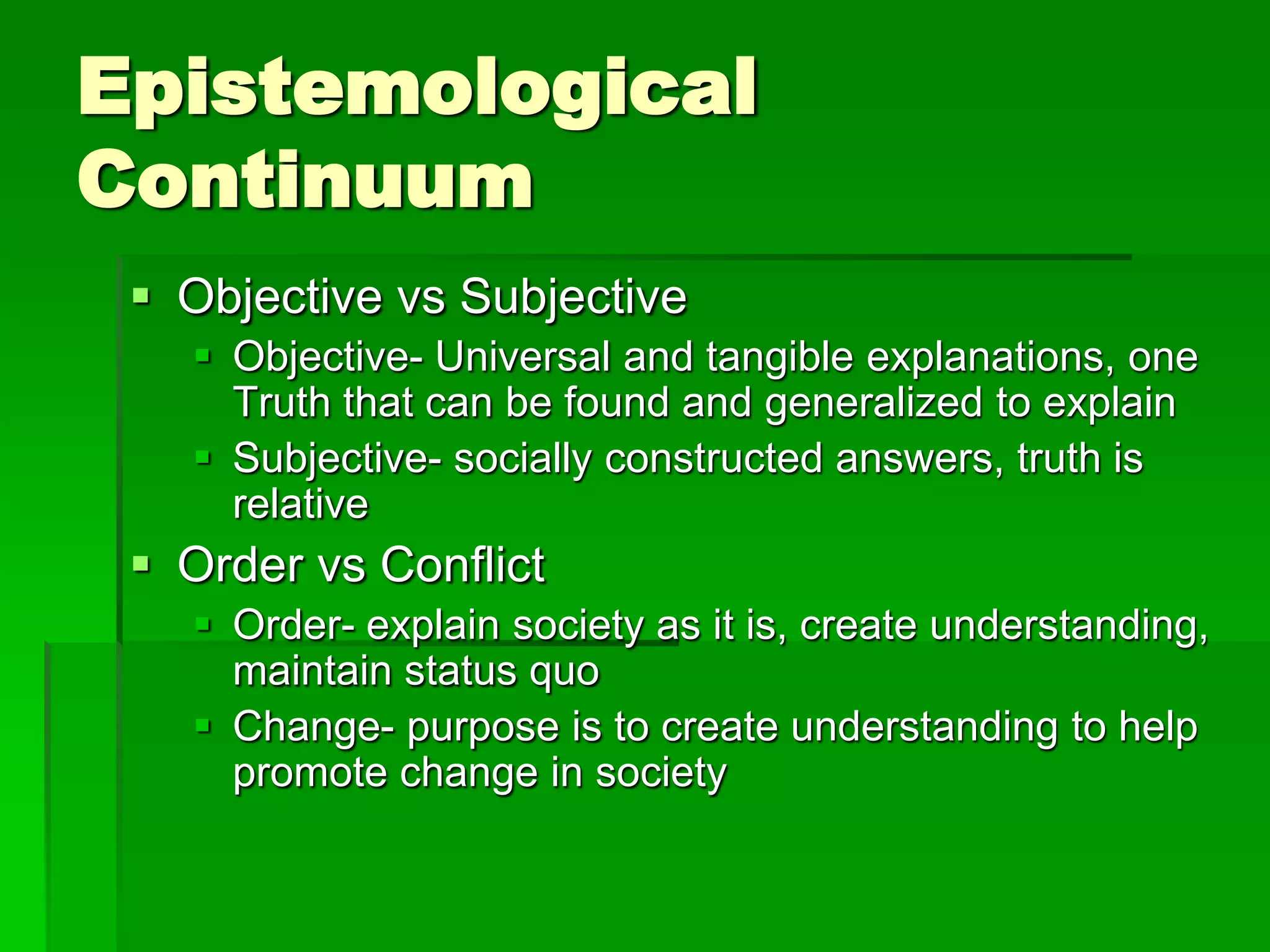
 ď‚§ Objective vs Subjective
   ď‚§ Objective- Universal and tangible explanations, one
     Truth that can be found and generalized to explain
   ď‚§ Subjective- socially constructed answers, truth is
     relative
 ď‚§ Order vs Conflict
   ď‚§ Order- explain society as it is, create understanding,
     maintain status quo
   ď‚§ Change- purpose is to create understanding to help
     promote change in society
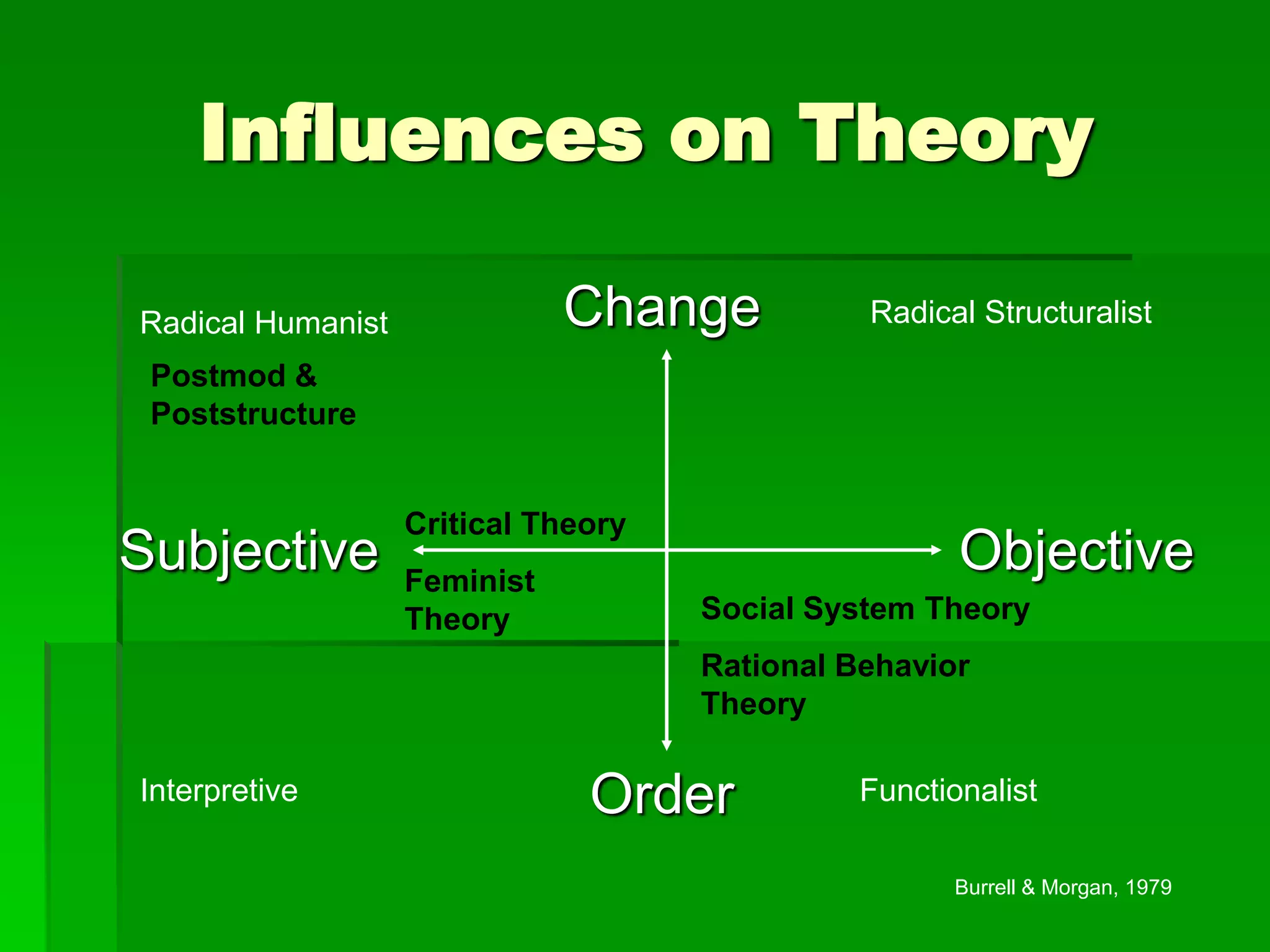
Influences on Theory

Radical Humanist              Change           Radical Structuralist
 Postmod &
 Poststructure


                   Critical Theory
Subjective         Feminist
                                                      Objective
                   Theory            Social System Theory
                                     Rational Behavior
                                     Theory

Interpretive                   Order           Functionalist

                                                     Burrell & Morgan, 1979
Exploring Alternative
Approaches
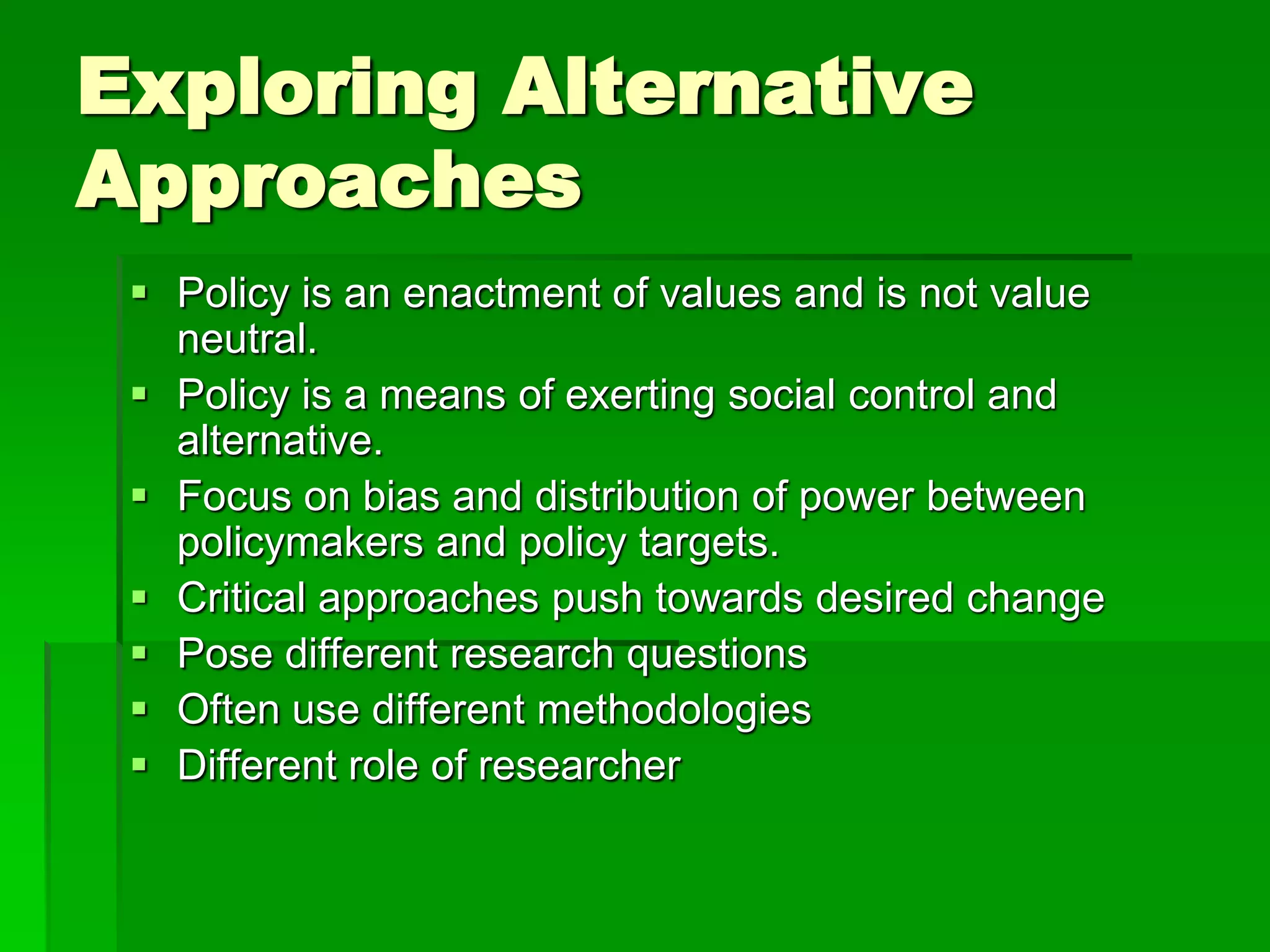
 ď‚§ Policy is an enactment of values and is not value
   neutral.
 ď‚§ Policy is a means of exerting social control and
   alternative.
 ď‚§ Focus on bias and distribution of power between
   policymakers and policy targets.
 ď‚§ Critical approaches push towards desired change
 ď‚§ Pose different research questions
 ď‚§ Often use different methodologies
 ď‚§ Different role of researcher
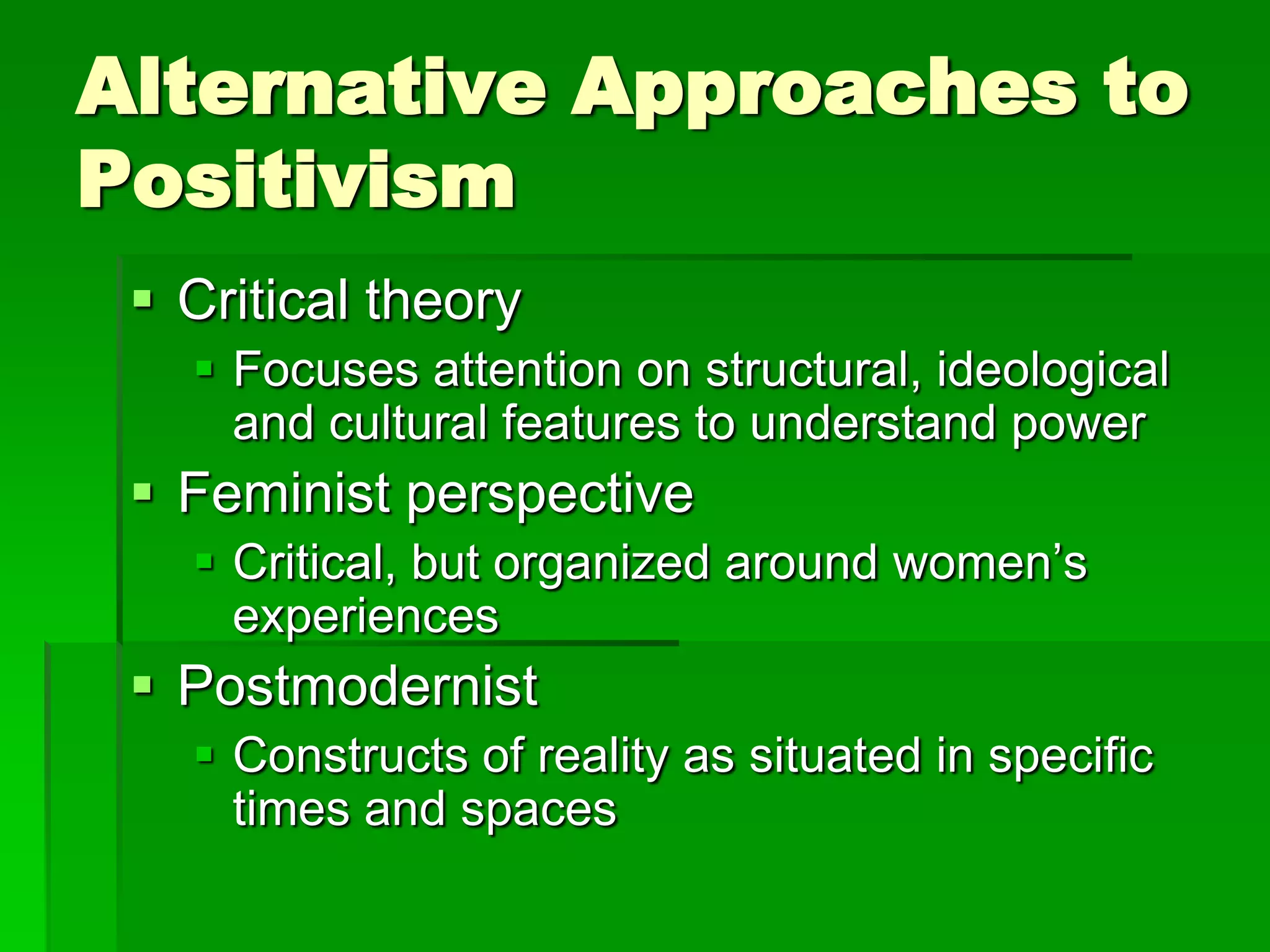
Alternative Approaches to
Positivism
 ď‚§ Critical theory
   ď‚§ Focuses attention on structural, ideological
     and cultural features to understand power
 ď‚§ Feminist perspective
    Critical, but organized around women’s
     experiences
 ď‚§ Postmodernist
   ď‚§ Constructs of reality as situated in specific
     times and spaces
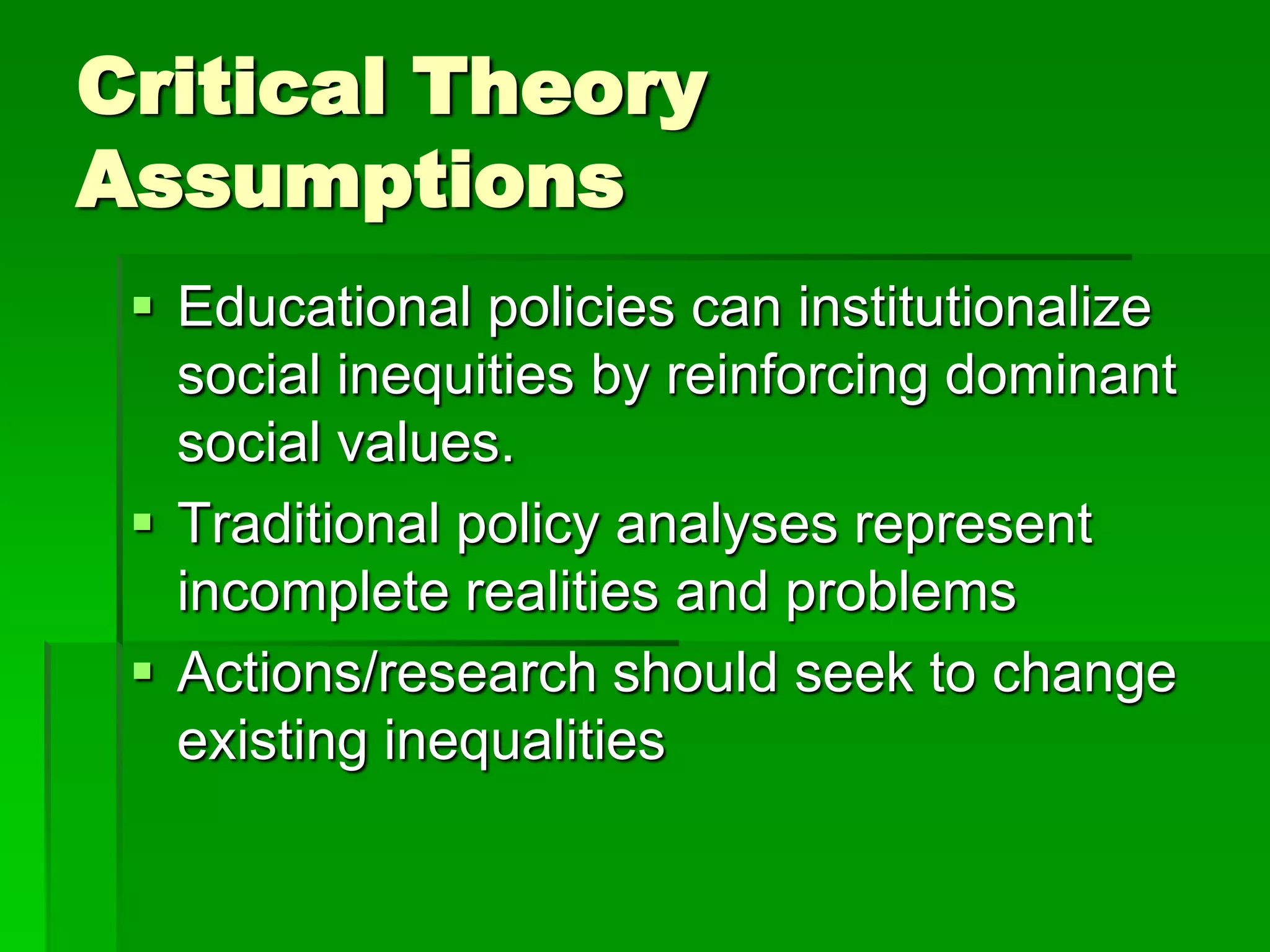
Critical Theory
Assumptions
 ď‚§ Educational policies can institutionalize
   social inequities by reinforcing dominant
   social values.
 ď‚§ Traditional policy analyses represent
   incomplete realities and problems
 ď‚§ Actions/research should seek to change
   existing inequalities
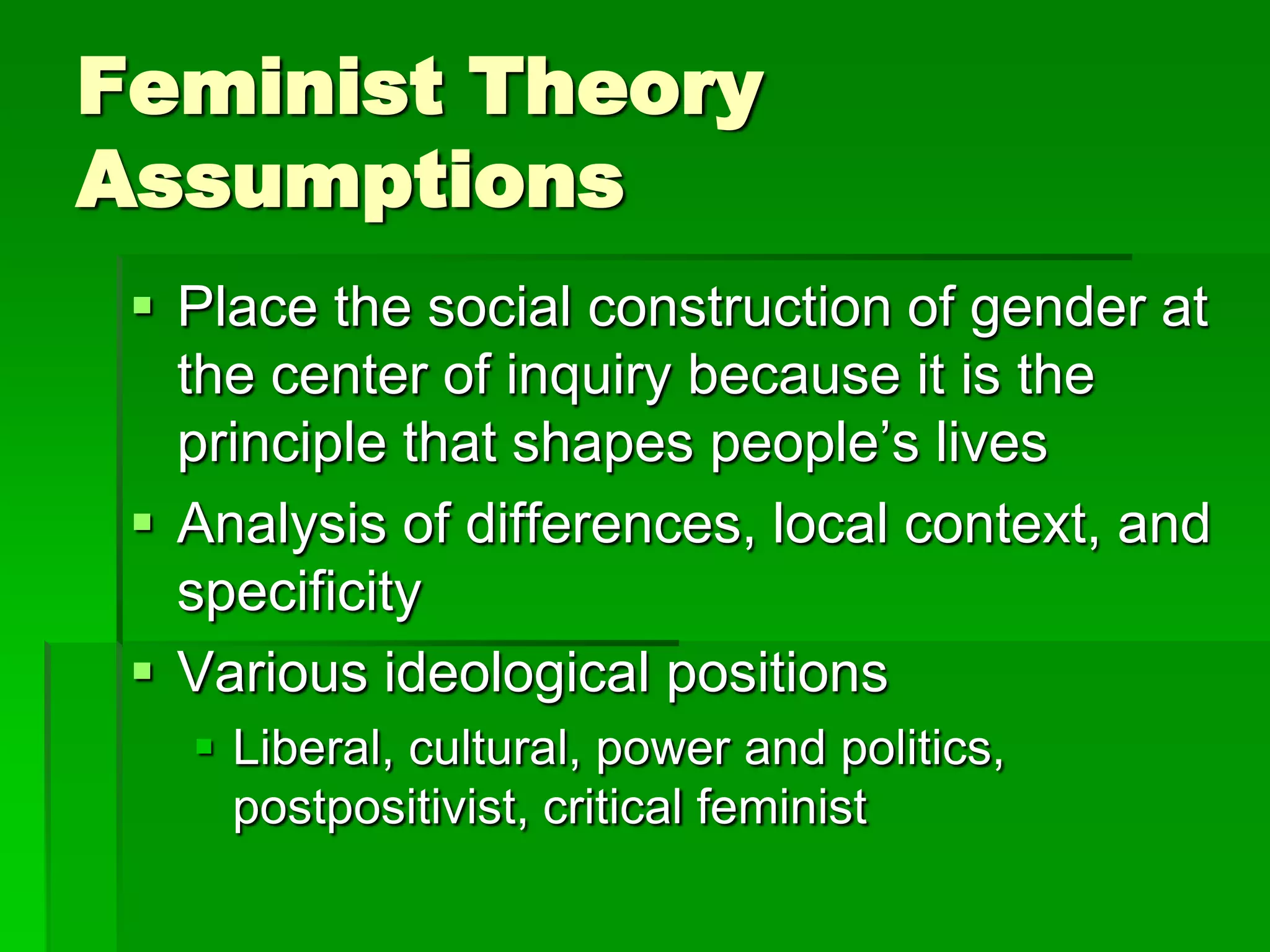
Feminist Theory
Assumptions
 ď‚§ Place the social construction of gender at
   the center of inquiry because it is the
   principle that shapes people’s lives
 ď‚§ Analysis of differences, local context, and
   specificity
 ď‚§ Various ideological positions
   ď‚§ Liberal, cultural, power and politics,
     postpositivist, critical feminist
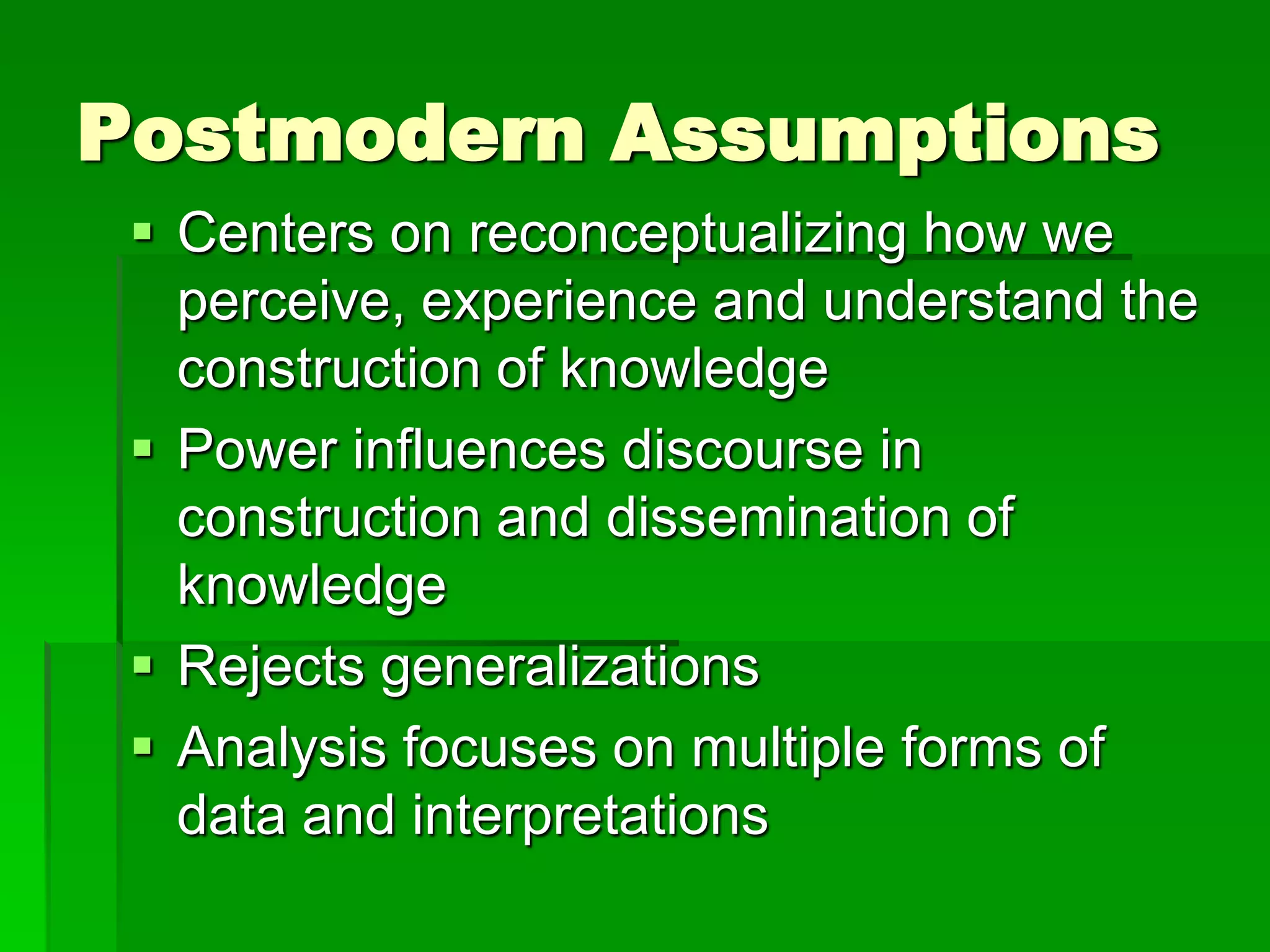
Postmodern Assumptions
 ď‚§ Centers on reconceptualizing how we
   perceive, experience and understand the
   construction of knowledge
 ď‚§ Power influences discourse in
   construction and dissemination of
   knowledge
 ď‚§ Rejects generalizations
 ď‚§ Analysis focuses on multiple forms of
   data and interpretations
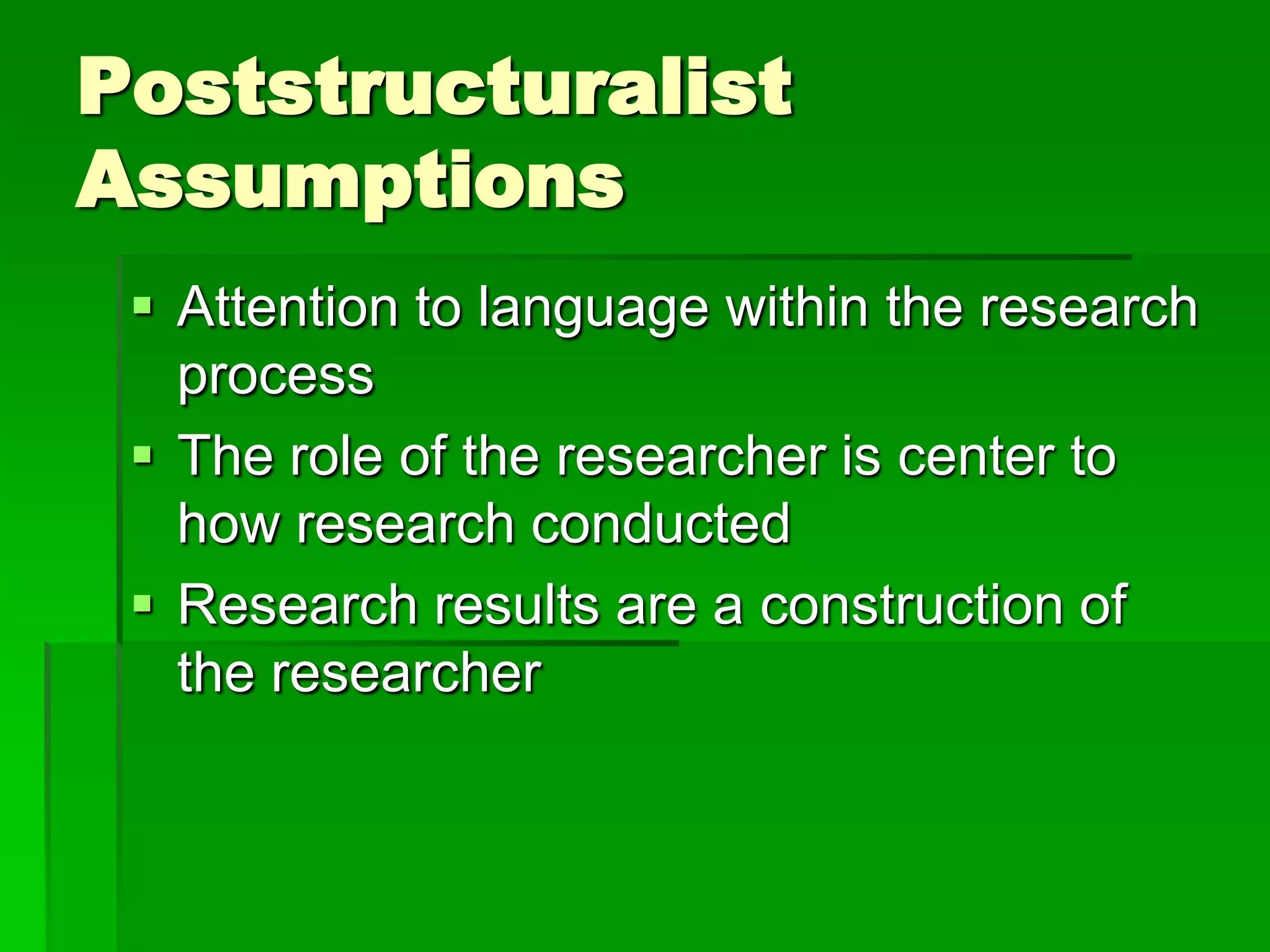
Poststructuralist
Assumptions
 ď‚§ Attention to language within the research
   process
 ď‚§ The role of the researcher is center to
   how research conducted
 ď‚§ Research results are a construction of
   the researcher
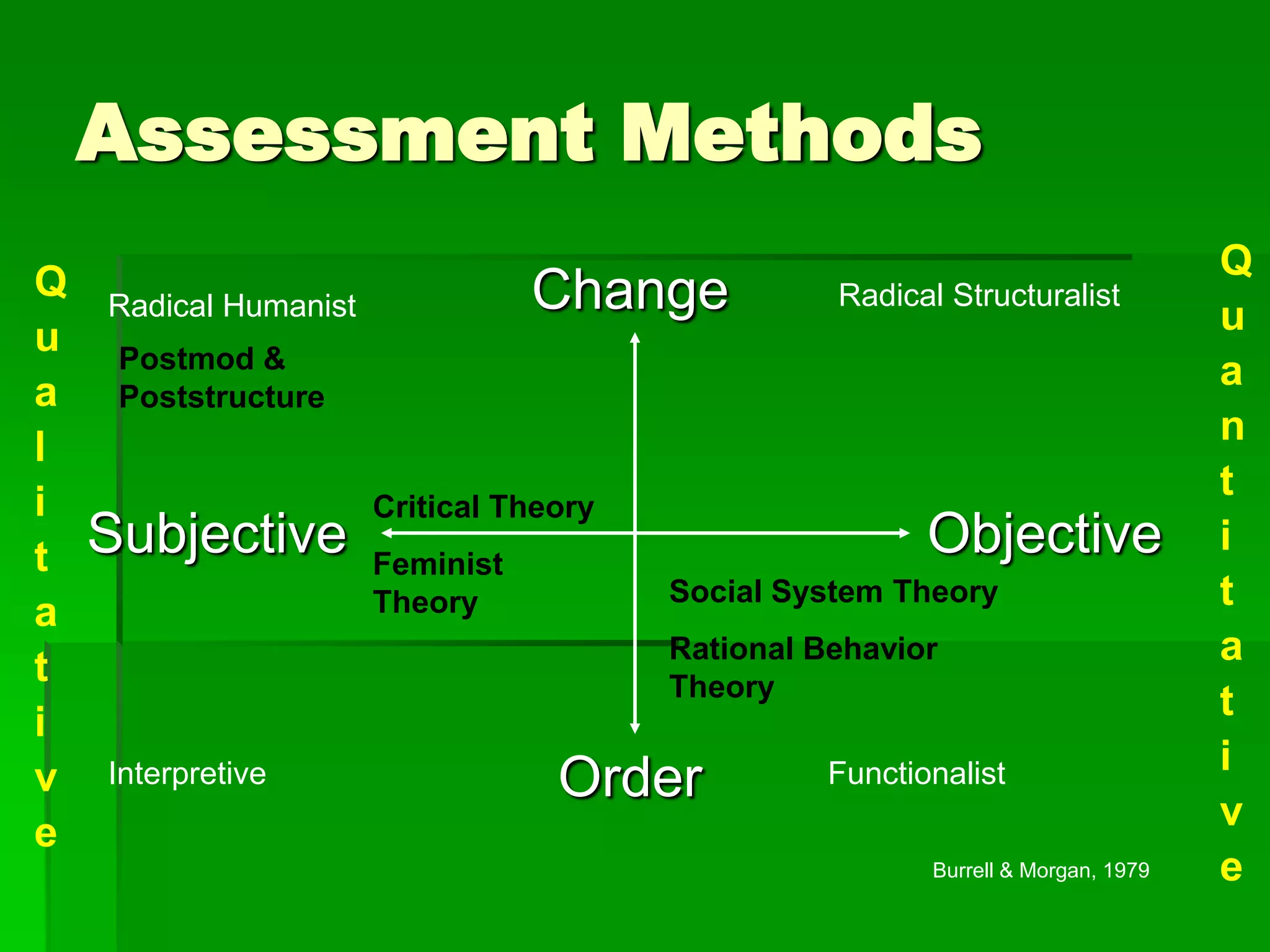
Assessment Methods
                                                                                   Q
Q   Radical Humanist              Change           Radical Structuralist
u                                                                                  u
     Postmod &                                                                     a
a    Poststructure
                                                                                   n
l
                                                                                   t
i                      Critical Theory
t   Subjective         Feminist
                                                          Objective                i
                       Theory            Social System Theory                      t
a
                                         Rational Behavior                         a
t                                        Theory
                                                                                   t
i
                                                                                   i
v   Interpretive                   Order           Functionalist
                                                                                   v
e
                                                          Burrell & Morgan, 1979   e
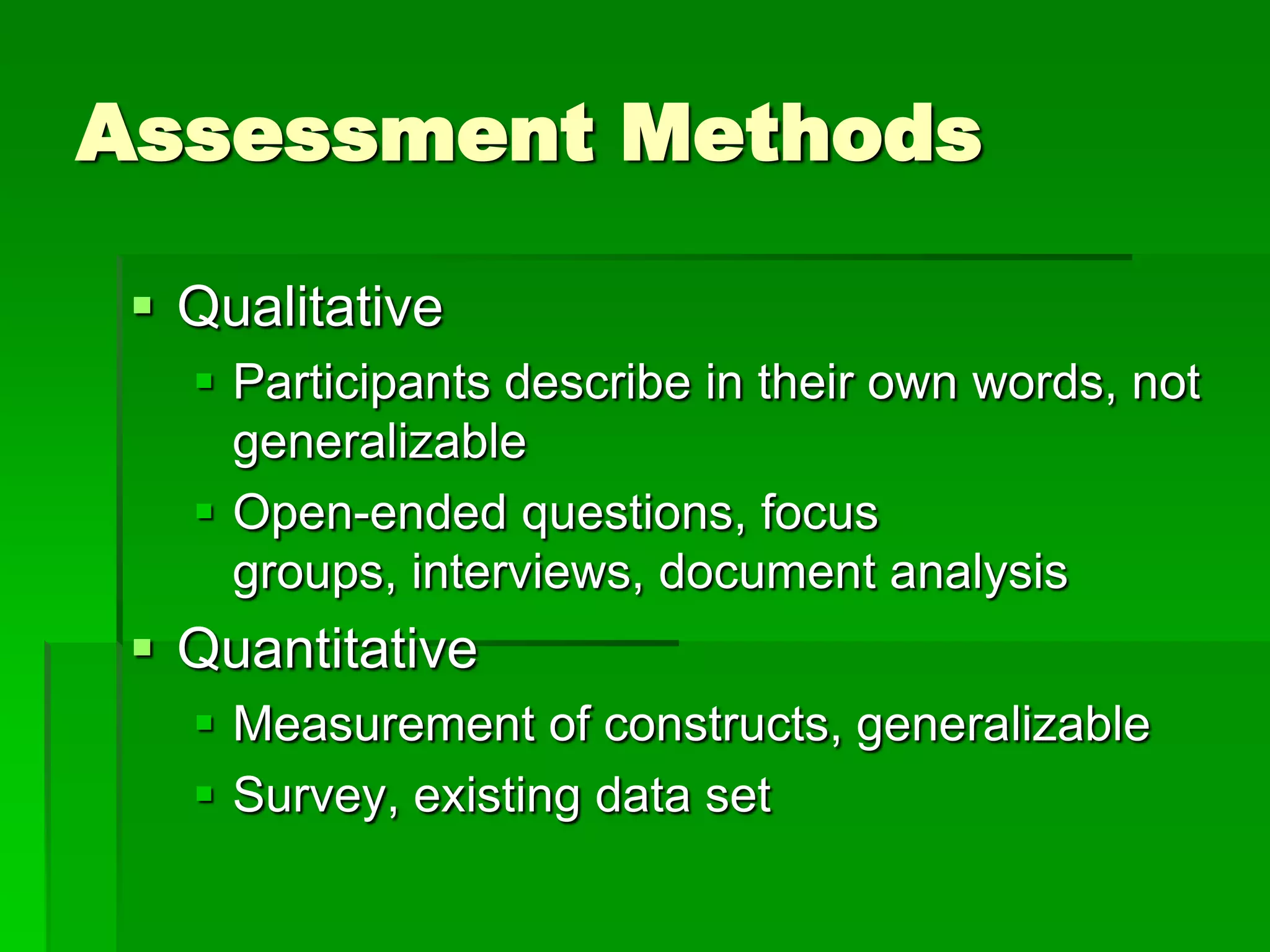
Assessment Methods

 ď‚§ Qualitative
   ď‚§ Participants describe in their own words, not
     generalizable
   ď‚§ Open-ended questions, focus
     groups, interviews, document analysis
 ď‚§ Quantitative
   ď‚§ Measurement of constructs, generalizable
   ď‚§ Survey, existing data set

Epistemology Assessment Methods

  • 1.
    Epistemological Influences on Assessment Methods Presented by: Amber Garrison March 2, 2012
  • 2.
    Epistemology ď‚§ Whatis knowledge? ď‚§ How is knowledge acquired? ď‚§ What is the way of knowing? ď‚§ The underpinnings or assumptions about what knowledge is or how it is acquired. ď‚§ There are multiple ways of knowing and most research focuses on just one.
  • 3.
    Epistemological Continuum ď‚§ Objectivevs Subjective ď‚§ Objective- Universal and tangible explanations, one Truth that can be found and generalized to explain ď‚§ Subjective- socially constructed answers, truth is relative ď‚§ Order vs Conflict ď‚§ Order- explain society as it is, create understanding, maintain status quo ď‚§ Change- purpose is to create understanding to help promote change in society
  • 4.
    Influences on Theory RadicalHumanist Change Radical Structuralist Postmod & Poststructure Critical Theory Subjective Feminist Objective Theory Social System Theory Rational Behavior Theory Interpretive Order Functionalist Burrell & Morgan, 1979
  • 5.
    Exploring Alternative Approaches ď‚§Policy is an enactment of values and is not value neutral. ď‚§ Policy is a means of exerting social control and alternative. ď‚§ Focus on bias and distribution of power between policymakers and policy targets. ď‚§ Critical approaches push towards desired change ď‚§ Pose different research questions ď‚§ Often use different methodologies ď‚§ Different role of researcher
  • 6.
    Alternative Approaches to Positivism  Critical theory  Focuses attention on structural, ideological and cultural features to understand power  Feminist perspective  Critical, but organized around women’s experiences  Postmodernist  Constructs of reality as situated in specific times and spaces
  • 7.
    Critical Theory Assumptions ď‚§Educational policies can institutionalize social inequities by reinforcing dominant social values. ď‚§ Traditional policy analyses represent incomplete realities and problems ď‚§ Actions/research should seek to change existing inequalities
  • 8.
    Feminist Theory Assumptions Place the social construction of gender at the center of inquiry because it is the principle that shapes people’s lives  Analysis of differences, local context, and specificity  Various ideological positions  Liberal, cultural, power and politics, postpositivist, critical feminist
  • 9.
    Postmodern Assumptions ď‚§Centers on reconceptualizing how we perceive, experience and understand the construction of knowledge ď‚§ Power influences discourse in construction and dissemination of knowledge ď‚§ Rejects generalizations ď‚§ Analysis focuses on multiple forms of data and interpretations
  • 10.
    Poststructuralist Assumptions ď‚§ Attentionto language within the research process ď‚§ The role of the researcher is center to how research conducted ď‚§ Research results are a construction of the researcher
  • 11.
    Assessment Methods Q Q Radical Humanist Change Radical Structuralist u u Postmod & a a Poststructure n l t i Critical Theory t Subjective Feminist Objective i Theory Social System Theory t a Rational Behavior a t Theory t i i v Interpretive Order Functionalist v e Burrell & Morgan, 1979 e
  • 12.
    Assessment Methods ď‚§Qualitative ď‚§ Participants describe in their own words, not generalizable ď‚§ Open-ended questions, focus groups, interviews, document analysis ď‚§ Quantitative ď‚§ Measurement of constructs, generalizable ď‚§ Survey, existing data set

Editor's Notes

  • #12 What types of methods do we frequently use in assessment? What quadrant would they fall in?Why is it important to understand epistemology?How do you decide what assessment methods to use?How should we incorporate our epistemological understanding to design better assessments?