THEORIES OF CURRICULUM
AND THEIR MAJOR
STRUCTURE
BY
Sehar Alam
BROAD LAYOUT OF OUR TALK:
■ Classification of CurriculumTheories
■ Major Structure of CurriculumTheories
The Meaning ofTheory
■ Theory comes from Greek word theoria that meaning
is wakefulness of mind.
■ Theory describe reality,
■ Theory aware people to their world and it’s
interaction.
CURRICULUMTHEORY
■ CT is an emerging academic discipline devoted to
examining and shaping educational curricula.
Classification of CurriculumTheory
Four type of Curriculum theories are as following.
■ Structure-oriented theories
■ Value-oriented theories
■ Content-oriented theories
■ Process-oriented theories
Structure OrientedTheories
■ This theory is related with examining the components
of the curriculum and their relationship.
■ These type of theories are descriptive and
explanatory in nature.
■ What does the term curriculum mean?
Continue……..
■ Structure oriented theorists either a micro level or
macro level.
■ Macro LevelTheorists
■ Micro levelTheorists
Macro LevelTheorists:
■ Macro level theorists attempts to improve global
theories that define as well as clarify lager elements of
curriculum structure.
John Goodlad
John Goodlad is a famous macro level theorists. Goodlad’s
describe four domain of curriculum work they interacted with
each other and as well as interact with surrounding.
■ Societal domain
■ Institutional domain
■ Instructional domain
■ Personal/ experimental domain
Micro LevelTheorists
■ Micro level theorists concerned with explaining and
describing curriculum phenomena at the instructional
and institutional level.
■ George Posner appears a greatest representative of
the micro level theorists.
■ He analyzed and describe many micro elements of
curriculum structure.
Value-OrientedTheories
■ Analyzing the value
■ These are critical in nature.
■ For example:
■ What is the nature of really liberated individuals, and
how does school constrain such liberation?
The MajorValue-OrientedTheorists
Macdonald’sTheory
■ Teaching is defined as a personality system
■ Learning is defined as a personality system too
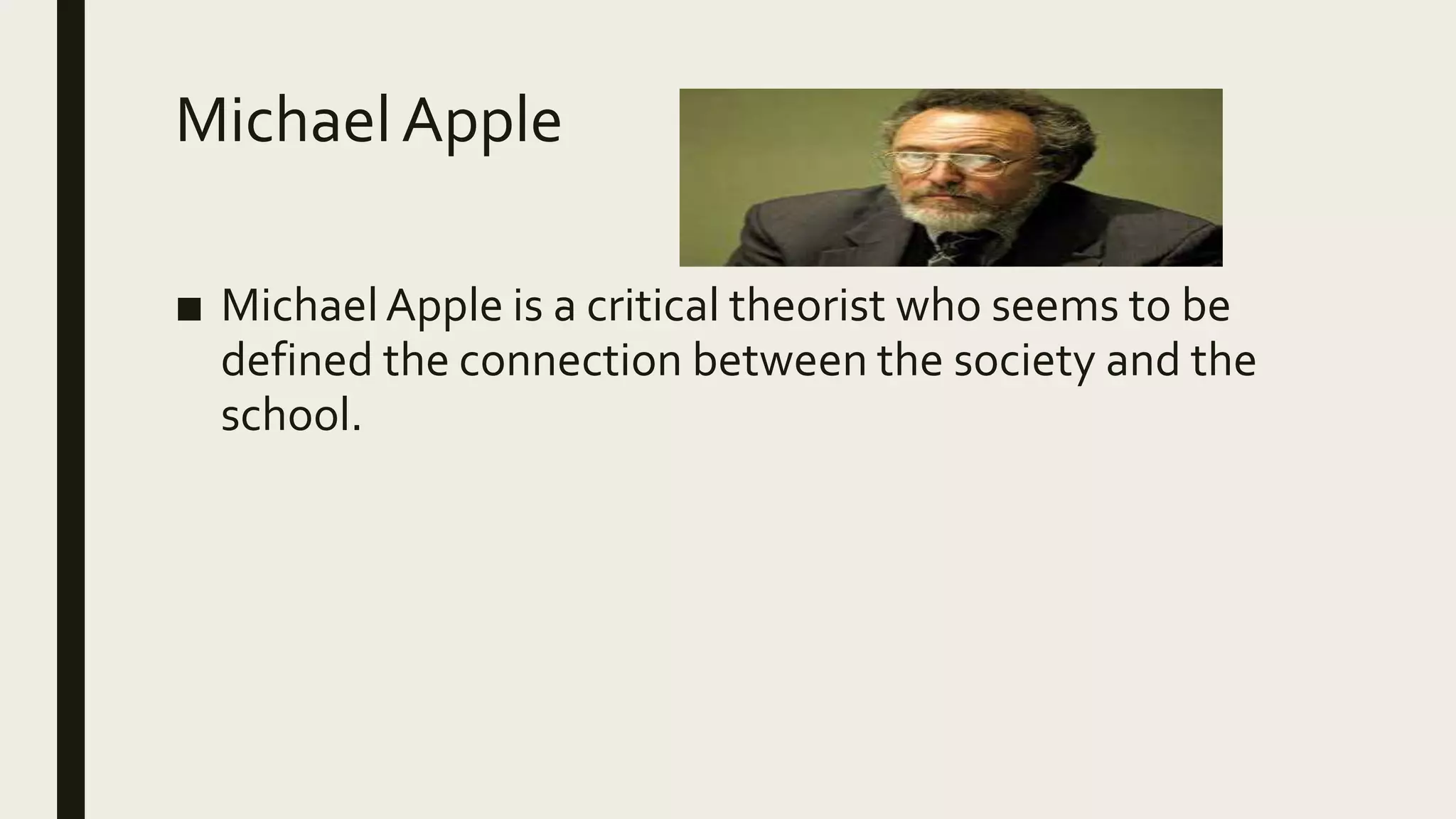
MichaelApple
■ MichaelApple is a critical theorist who seems to be
defined the connection between the society and the
school.
Content-OrientedTheories
■ Defining the content of the curriculum.
■ prescriptive in nature.
■ It rooted in analytical and empirical perspective.
Content-OrientedTheories
■ Child-CenteredTheories,
■ Knowledge-CenteredTheories, or
■ Society-CenteredTheories.
Child-CenteredTheories
■ Main child centered movements are as fellows:
■ Open Education
■ Affective Education
■ Developmental Education
knowledge-CenteredTheories
■ Structures of the disciplines
■ Ways of Knowing
Society Centered Curriculum
■ The Conformists
■ The Reformers
■ The Futurists
■ The Radicals
Process-OrientedTheories
■ How curriculum should be developed.
■ Some are descriptive and other are prescriptive in
nature.
■ For example:
■ What reform are important for different strategies of
curriculum development.
Major Structures of CurriculumTheory
■ The structure of curriculum theories are range from
classical to contemporary.
■ Major structure of curriculum theories are as fellow.
Logical Structure
■ knowledge is systematically organized as a whole.
■ Architectonics and Zetetics
Conceptual Structure
■ Cognitive structure is mental structure, pattern of
thoughts and mental tools.
■ Jean Piaget
■ Organizational structure is related schema,
equilibrium, assimilation and accommodation.
Cognitive Structure
■ Bruner’s theory based on multiple factors such as the
human nature, the situation, the hypothesizing and
the testing.
■ In the actual world his theory is intelligence operating
theory.
Empirical Structure
■ Bobbitt Morrison activity analysis and job analysis experiment is
famous in 1920.
■ In which determine the curriculum and study the adult
community.
■ This theory reflect the old assumption that school should reflect
the adult society.
■ Through empirical data curriculum theory was specified that
what was essential for adults to adjust in the society.
Existential Structure
■ In this structure individual meanings comes from
individual own appropriation.
■ Individual freely select that what myths he wants to
live.
To what extent do you tend to agree with
both of the above-mentioned phenomena?
■ Moreover, curriculum theories further classified on
the basis of major structure of the curriculum.
■ The structure of curriculum theories are range from
classical to contemporary. So structure of curriculum
theories are also important for classification.
■ So, I agree with both above mention phenome.
Curriculum theory
Curriculum
development that
based on
classroom
Instructional l theoryLearning theory
THEORIES OF CURRICULUM 	AND THEIR MAJOR STRUCTURE

THEORIES OF CURRICULUM AND THEIR MAJOR STRUCTURE

  • 2.
    THEORIES OF CURRICULUM ANDTHEIR MAJOR STRUCTURE BY Sehar Alam
  • 3.
    BROAD LAYOUT OFOUR TALK: ■ Classification of CurriculumTheories ■ Major Structure of CurriculumTheories
  • 4.
    The Meaning ofTheory ■Theory comes from Greek word theoria that meaning is wakefulness of mind. ■ Theory describe reality, ■ Theory aware people to their world and it’s interaction.
  • 5.
    CURRICULUMTHEORY ■ CT isan emerging academic discipline devoted to examining and shaping educational curricula.
  • 6.
    Classification of CurriculumTheory Fourtype of Curriculum theories are as following. ■ Structure-oriented theories ■ Value-oriented theories ■ Content-oriented theories ■ Process-oriented theories
  • 7.
    Structure OrientedTheories ■ Thistheory is related with examining the components of the curriculum and their relationship. ■ These type of theories are descriptive and explanatory in nature. ■ What does the term curriculum mean?
  • 8.
    Continue…….. ■ Structure orientedtheorists either a micro level or macro level. ■ Macro LevelTheorists ■ Micro levelTheorists
  • 9.
    Macro LevelTheorists: ■ Macrolevel theorists attempts to improve global theories that define as well as clarify lager elements of curriculum structure.
  • 10.
    John Goodlad John Goodladis a famous macro level theorists. Goodlad’s describe four domain of curriculum work they interacted with each other and as well as interact with surrounding. ■ Societal domain ■ Institutional domain ■ Instructional domain ■ Personal/ experimental domain
  • 11.
    Micro LevelTheorists ■ Microlevel theorists concerned with explaining and describing curriculum phenomena at the instructional and institutional level. ■ George Posner appears a greatest representative of the micro level theorists. ■ He analyzed and describe many micro elements of curriculum structure.
  • 12.
    Value-OrientedTheories ■ Analyzing thevalue ■ These are critical in nature. ■ For example: ■ What is the nature of really liberated individuals, and how does school constrain such liberation?
  • 13.
    The MajorValue-OrientedTheorists Macdonald’sTheory ■ Teachingis defined as a personality system ■ Learning is defined as a personality system too
  • 14.
    MichaelApple ■ MichaelApple isa critical theorist who seems to be defined the connection between the society and the school.
  • 15.
    Content-OrientedTheories ■ Defining thecontent of the curriculum. ■ prescriptive in nature. ■ It rooted in analytical and empirical perspective.
  • 16.
  • 17.
    Child-CenteredTheories ■ Main childcentered movements are as fellows: ■ Open Education ■ Affective Education ■ Developmental Education
  • 18.
    knowledge-CenteredTheories ■ Structures ofthe disciplines ■ Ways of Knowing
  • 19.
    Society Centered Curriculum ■The Conformists ■ The Reformers ■ The Futurists ■ The Radicals
  • 20.
    Process-OrientedTheories ■ How curriculumshould be developed. ■ Some are descriptive and other are prescriptive in nature. ■ For example: ■ What reform are important for different strategies of curriculum development.
  • 21.
    Major Structures ofCurriculumTheory ■ The structure of curriculum theories are range from classical to contemporary. ■ Major structure of curriculum theories are as fellow.
  • 22.
    Logical Structure ■ knowledgeis systematically organized as a whole. ■ Architectonics and Zetetics
  • 23.
    Conceptual Structure ■ Cognitivestructure is mental structure, pattern of thoughts and mental tools. ■ Jean Piaget ■ Organizational structure is related schema, equilibrium, assimilation and accommodation.
  • 24.
    Cognitive Structure ■ Bruner’stheory based on multiple factors such as the human nature, the situation, the hypothesizing and the testing. ■ In the actual world his theory is intelligence operating theory.
  • 25.
    Empirical Structure ■ BobbittMorrison activity analysis and job analysis experiment is famous in 1920. ■ In which determine the curriculum and study the adult community. ■ This theory reflect the old assumption that school should reflect the adult society. ■ Through empirical data curriculum theory was specified that what was essential for adults to adjust in the society.
  • 26.
    Existential Structure ■ Inthis structure individual meanings comes from individual own appropriation. ■ Individual freely select that what myths he wants to live.
  • 27.
    To what extentdo you tend to agree with both of the above-mentioned phenomena? ■ Moreover, curriculum theories further classified on the basis of major structure of the curriculum. ■ The structure of curriculum theories are range from classical to contemporary. So structure of curriculum theories are also important for classification. ■ So, I agree with both above mention phenome. Curriculum theory Curriculum development that based on classroom Instructional l theoryLearning theory