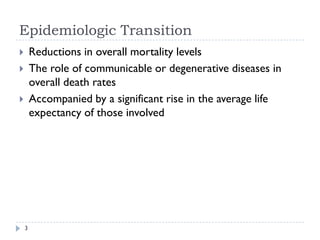
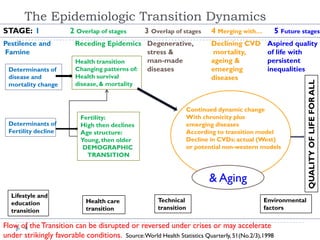
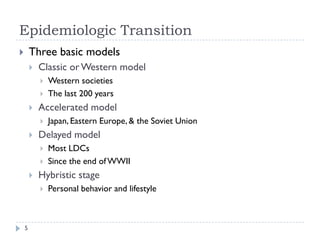
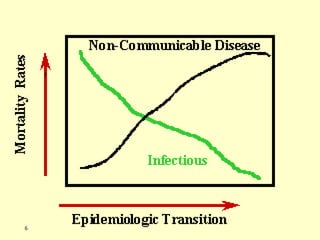
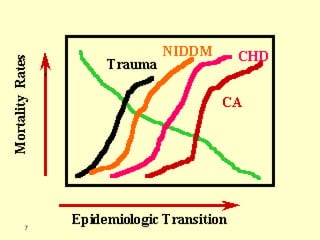
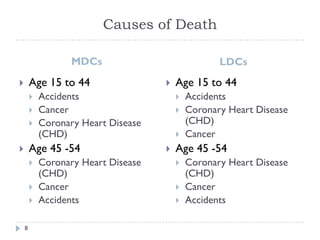
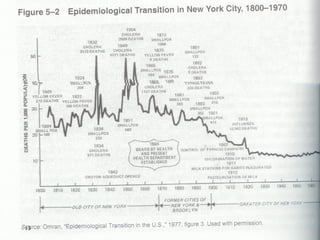
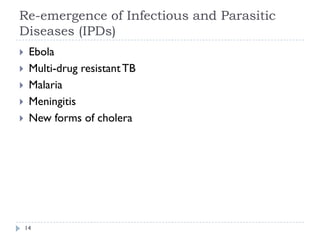
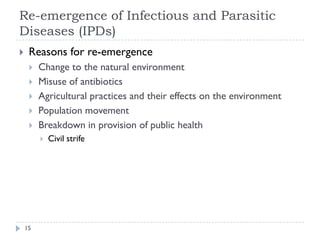
The document discusses the epidemiologic transition, which describes the transition of major causes of death from infectious diseases to chronic and degenerative diseases as populations adopt behaviors associated with economic development and improved living standards. It describes three models of transition - the classic Western model over 200 years, an accelerated model in places like Japan and Eastern Europe, and a delayed model in most low-income developing countries since WWII. The transition is accompanied by changes in mortality and morbidity patterns, as well as demographic changes as fertility declines and populations age.


![Hypothalamus short ppt by Dr. Neha [PT].pptx](https://cdn.slidesharecdn.com/ss_thumbnails/hypothalamusbydr-260124145759-b9f94a93-thumbnail.jpg?width=640&height=640&fit=bounds)


