


Course Faculty: 
Mohammad Bellal Hossain 
Associate Professor and Chairman 
Presented By: Group 1 
Group 1 Members: 
1.WasekSazzad , ZH002 
2.Shafayat Sultan , KJ010 
3.TasmiahNuzhath, KM012 
4.ZakiulAlam ,ZH013 
5.TahminaAkter Happy, SM 017 
6.SawkiaAfroz,KM019 
Date: 18.01.2014
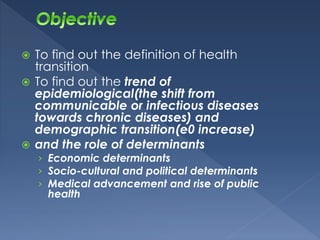
 To find out the definition of health 
transition 
 To find out the trend of 
epidemiological(the shift from 
communicable or infectious diseases 
towards chronic diseases) and 
demographic transition(e0 increase) 
 and the role of determinants 
› Economic determinants 
› Socio-cultural and political determinants 
› Medical advancement and rise of public 
health
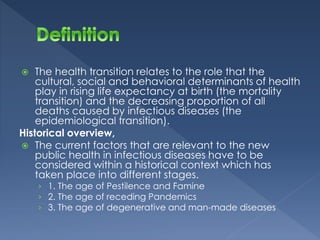
 The health transition relates to the role that the 
cultural, social and behavioral determinants of health 
play in rising life expectancy at birth (the mortality 
transition) and the decreasing proportion of all 
deaths caused by infectious diseases (the 
epidemiological transition). 
Historical overview, 
 The current factors that are relevant to the new 
public health in infectious diseases have to be 
considered within a historical context which has 
taken place into different stages. 
› 1. The age of Pestilence and Famine 
› 2. The age of receding Pandemics 
› 3. The age of degenerative and man-made diseases
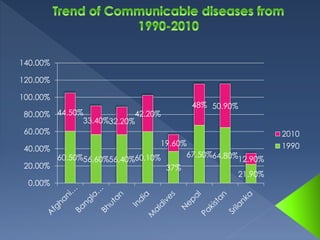
42.20% 
60.50%56.60%56.40%60.10% 
37% 
67.50%64.80% 
21.90% 
44.50% 
33.40%32.20% 
19.60% 
48% 50.90% 
12.90% 
140.00% 
120.00% 
100.00% 
80.00% 
60.00% 
40.00% 
20.00% 
0.00% 
2010 
1990
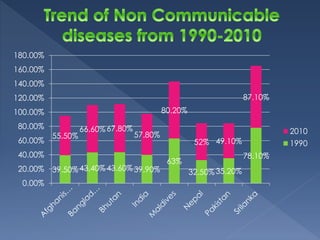
39.50%43.40%43.60%39.90% 
63% 
32.50%35.20% 
78.10% 
55.50% 
66.60%67.80% 
57.80% 
80.20% 
52% 49.10% 
87.10% 
180.00% 
160.00% 
140.00% 
120.00% 
100.00% 
80.00% 
60.00% 
40.00% 
20.00% 
0.00% 
2010 
1990
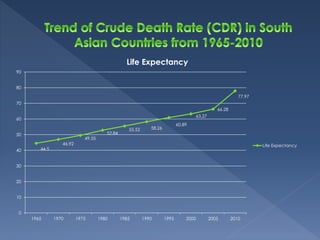
44.5 
46.92 
49.55 
52.84 
Life Expectancy 
55.52 58.26 
60.89 
63.27 
66.28 
77.97 
90 
80 
70 
60 
50 
40 
30 
20 
10 
0 
1965 1970 1975 1980 1985 1990 1995 2000 2005 2010 
Life Expectancy
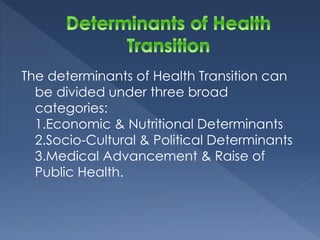
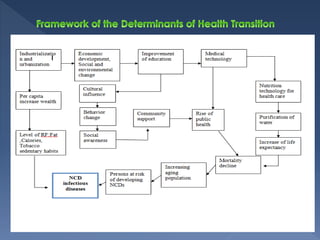
The determinants of Health Transition can 
be divided under three broad 
categories: 
1.Economic & Nutritional Determinants 
2.Socio-Cultural & Political Determinants 
3.Medical Advancement & Raise of 
Public Health.
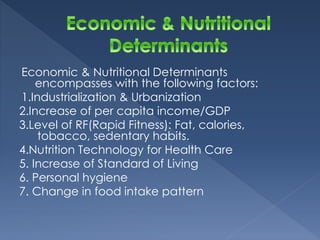
Economic & Nutritional Determinants 
encompasses with the following factors: 
1.Industrialization & Urbanization 
2.Increase of per capita income/GDP 
3.Level of RF(Rapid Fitness): Fat, calories, 
tobacco, sedentary habits. 
4.Nutrition Technology for Health Care 
5. Increase of Standard of Living 
6. Personal hygiene 
7. Change in food intake pattern
Socio-Cultural & Political Determinants 
comprises with: 
1. Improvement of education 
2. Behavior Change 
3. Cultural Influence 
4. Rise of Social Awareness 
5. Rise of Community Support
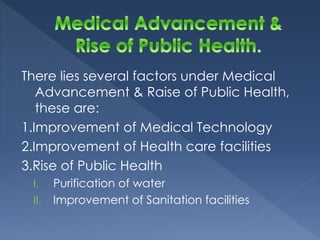
There lies several factors under Medical 
Advancement & Raise of Public Health, 
these are: 
1.Improvement of Medical Technology 
2.Improvement of Health care facilities 
3.Rise of Public Health 
I. Purification of water 
II. Improvement of Sanitation facilities
Health transition
Health transition

Health transition

  • 1.
    Course Faculty: MohammadBellal Hossain Associate Professor and Chairman Presented By: Group 1 Group 1 Members: 1.WasekSazzad , ZH002 2.Shafayat Sultan , KJ010 3.TasmiahNuzhath, KM012 4.ZakiulAlam ,ZH013 5.TahminaAkter Happy, SM 017 6.SawkiaAfroz,KM019 Date: 18.01.2014
  • 2.
     To findout the definition of health transition  To find out the trend of epidemiological(the shift from communicable or infectious diseases towards chronic diseases) and demographic transition(e0 increase)  and the role of determinants › Economic determinants › Socio-cultural and political determinants › Medical advancement and rise of public health
  • 3.
     The healthtransition relates to the role that the cultural, social and behavioral determinants of health play in rising life expectancy at birth (the mortality transition) and the decreasing proportion of all deaths caused by infectious diseases (the epidemiological transition). Historical overview,  The current factors that are relevant to the new public health in infectious diseases have to be considered within a historical context which has taken place into different stages. › 1. The age of Pestilence and Famine › 2. The age of receding Pandemics › 3. The age of degenerative and man-made diseases
  • 4.
    42.20% 60.50%56.60%56.40%60.10% 37% 67.50%64.80% 21.90% 44.50% 33.40%32.20% 19.60% 48% 50.90% 12.90% 140.00% 120.00% 100.00% 80.00% 60.00% 40.00% 20.00% 0.00% 2010 1990
  • 5.
    39.50%43.40%43.60%39.90% 63% 32.50%35.20% 78.10% 55.50% 66.60%67.80% 57.80% 80.20% 52% 49.10% 87.10% 180.00% 160.00% 140.00% 120.00% 100.00% 80.00% 60.00% 40.00% 20.00% 0.00% 2010 1990
  • 6.
    44.5 46.92 49.55 52.84 Life Expectancy 55.52 58.26 60.89 63.27 66.28 77.97 90 80 70 60 50 40 30 20 10 0 1965 1970 1975 1980 1985 1990 1995 2000 2005 2010 Life Expectancy
  • 7.
    The determinants ofHealth Transition can be divided under three broad categories: 1.Economic & Nutritional Determinants 2.Socio-Cultural & Political Determinants 3.Medical Advancement & Raise of Public Health.
  • 8.
    Economic & NutritionalDeterminants encompasses with the following factors: 1.Industrialization & Urbanization 2.Increase of per capita income/GDP 3.Level of RF(Rapid Fitness): Fat, calories, tobacco, sedentary habits. 4.Nutrition Technology for Health Care 5. Increase of Standard of Living 6. Personal hygiene 7. Change in food intake pattern
  • 9.
    Socio-Cultural & PoliticalDeterminants comprises with: 1. Improvement of education 2. Behavior Change 3. Cultural Influence 4. Rise of Social Awareness 5. Rise of Community Support
  • 10.
    There lies severalfactors under Medical Advancement & Raise of Public Health, these are: 1.Improvement of Medical Technology 2.Improvement of Health care facilities 3.Rise of Public Health I. Purification of water II. Improvement of Sanitation facilities