Taylor’s University
                             7 september 2011,
                           Kuala Lumpur, Malaysia


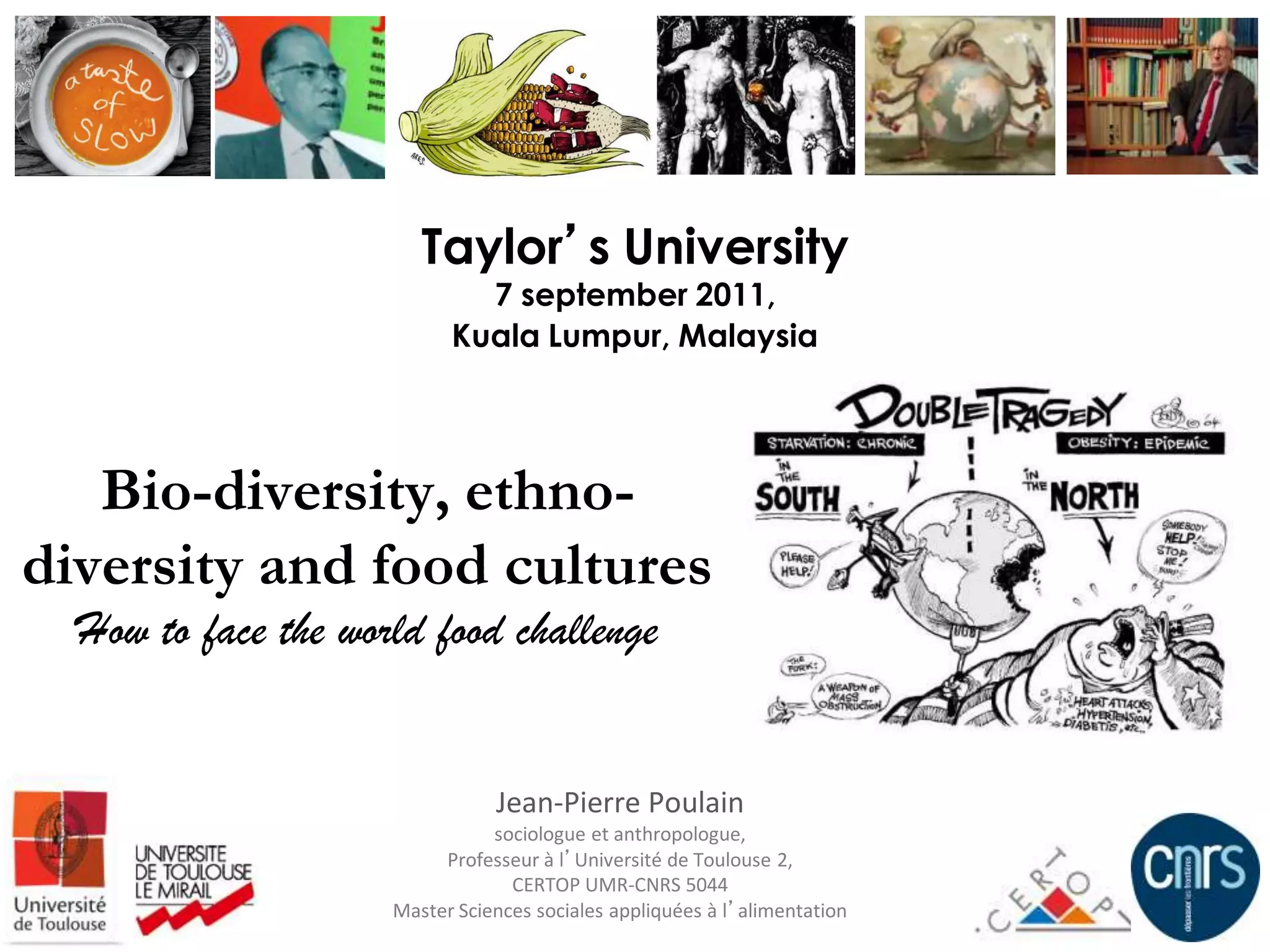
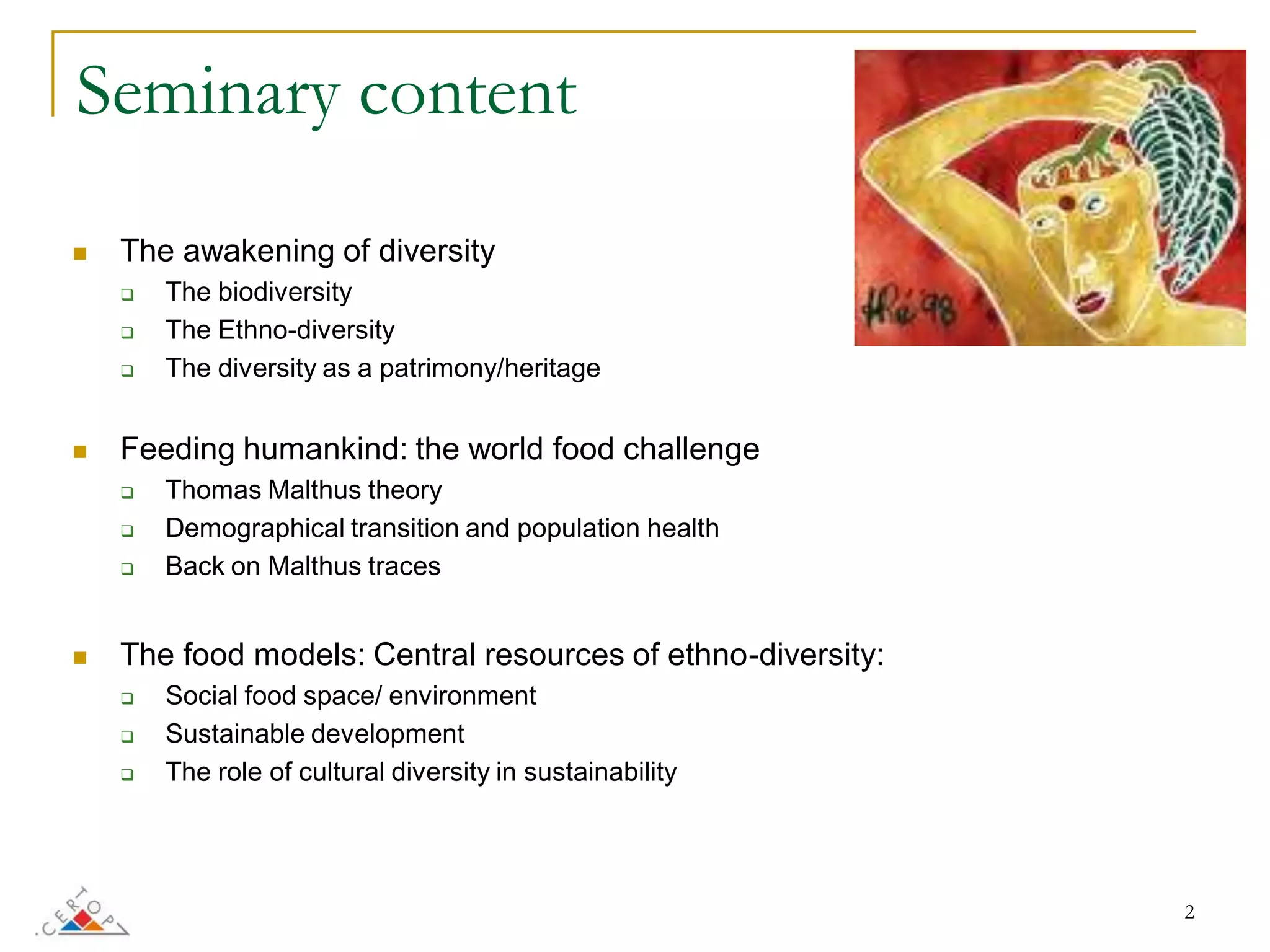
   Bio-diversity, ethno-
diversity and food cultures
  How to face the world food challenge


                                Jean-Pierre Poulain
                                sociologue et anthropologue,
                          Professeur à l’Université de Toulouse 2,
                                  CERTOP UMR-CNRS 5044
                     Master Sciences sociales appliquées à l’alimentation
Seminary content

   The awakening of diversity
       The biodiversity
       The Ethno-diversity
       The diversity as a patrimony/heritage


   Feeding humankind: the world food challenge
       Thomas Malthus theory
       Demographical transition and population health
       Back on Malthus traces


   The food models: Central resources of ethno-diversity:
       Social food space/ environment
       Sustainable development
       The role of cultural diversity in sustainability


                                                             2
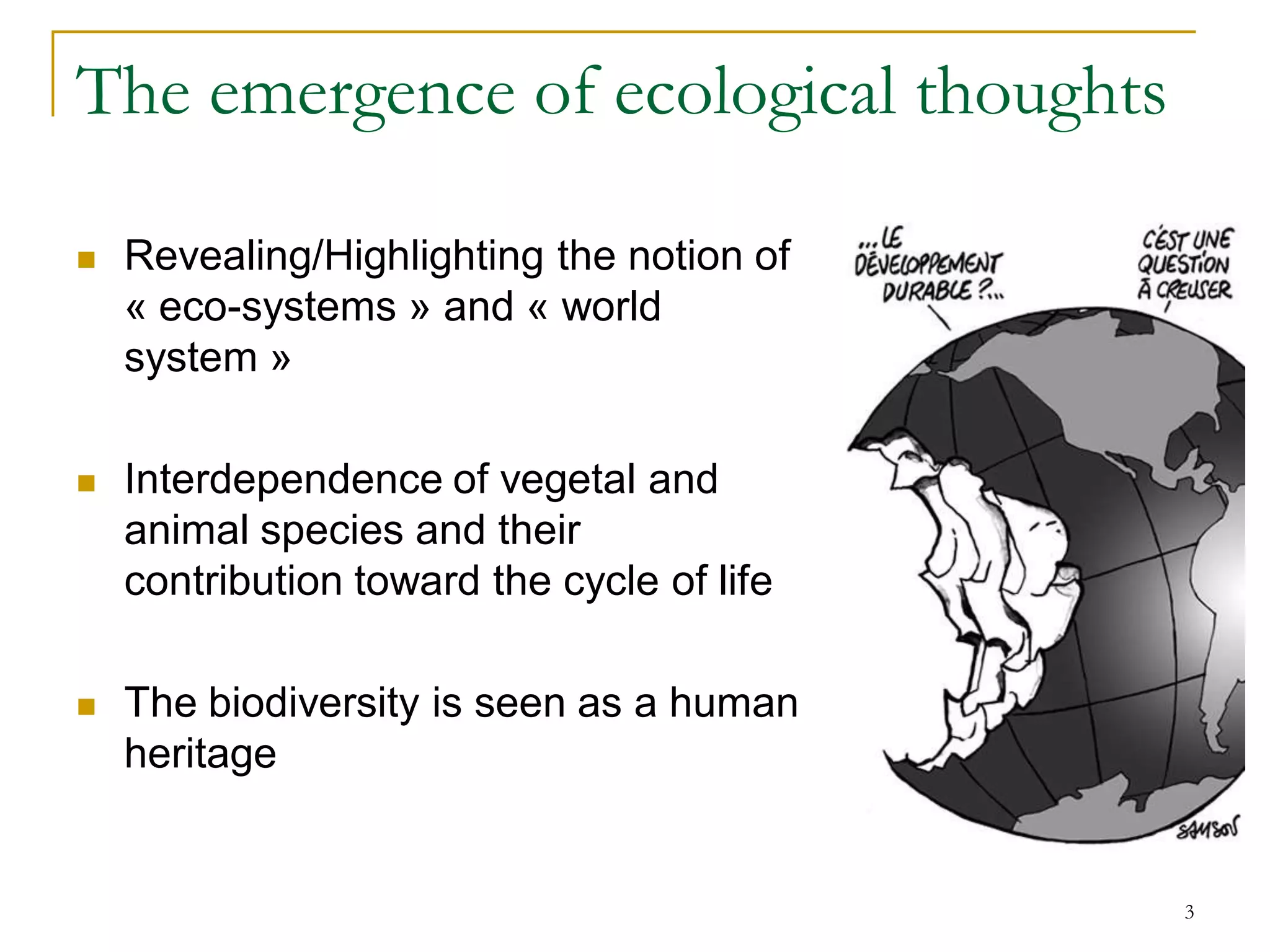
The emergence of ecological thoughts

   Revealing/Highlighting the notion of
    « eco-systems » and « world
    system »

   Interdependence of vegetal and
    animal species and their
    contribution toward the cycle of life

   The biodiversity is seen as a human
    heritage


                                            3
Consequences

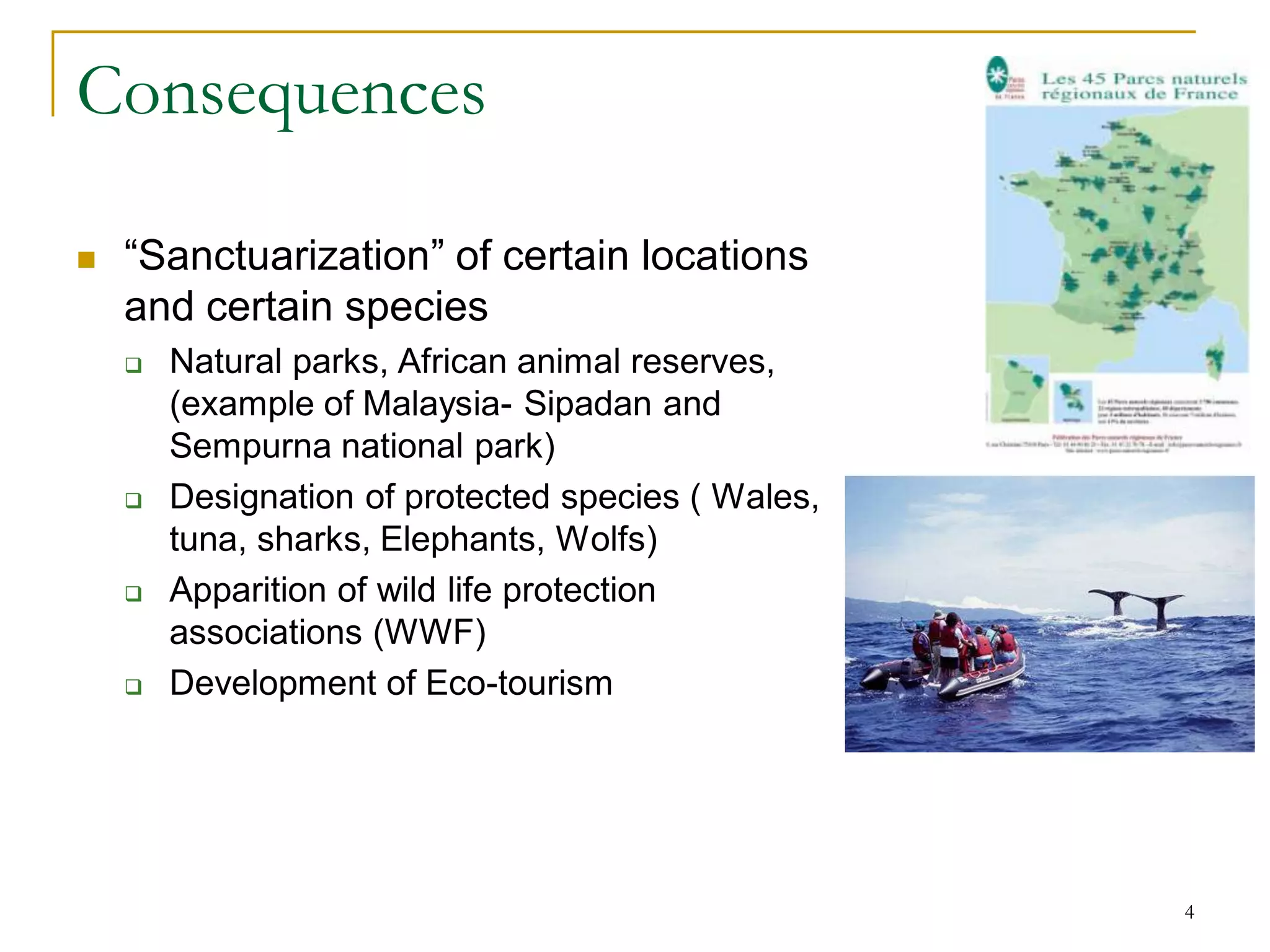
   “Sanctuarization” of certain locations
    and certain species
       Natural parks, African animal reserves,
        (example of Malaysia- Sipadan and
        Sempurna national park)
       Designation of protected species ( Wales,
        tuna, sharks, Elephants, Wolfs)
       Apparition of wild life protection
        associations (WWF)
       Development of Eco-tourism


                                                    4
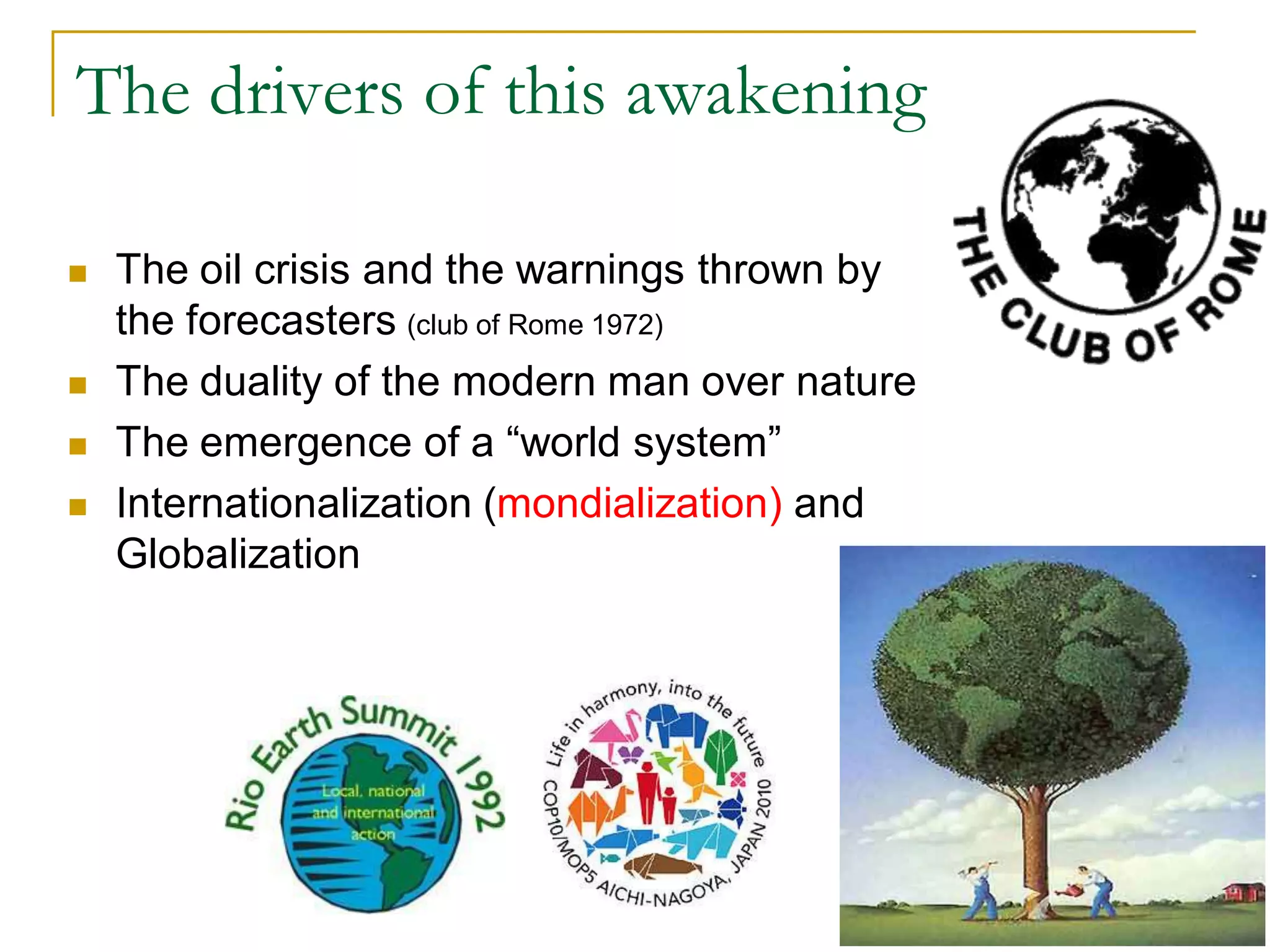
The drivers of this awakening

   The oil crisis and the warnings thrown by
    the forecasters (club of Rome 1972)
   The duality of the modern man over nature
   The emergence of a “world system”
   Internationalization (mondialization) and
    Globalization


                                                5
Rio Earth Summit

   This conference ended with:
   The creation of the action plan for the XXI ST
    century (Agenda 21),
   The United Nations Framework Convention on
    Climate Change (UNFCCC)
   The convention on bio-diversity and
   The convention to combat desertification


                                                     6
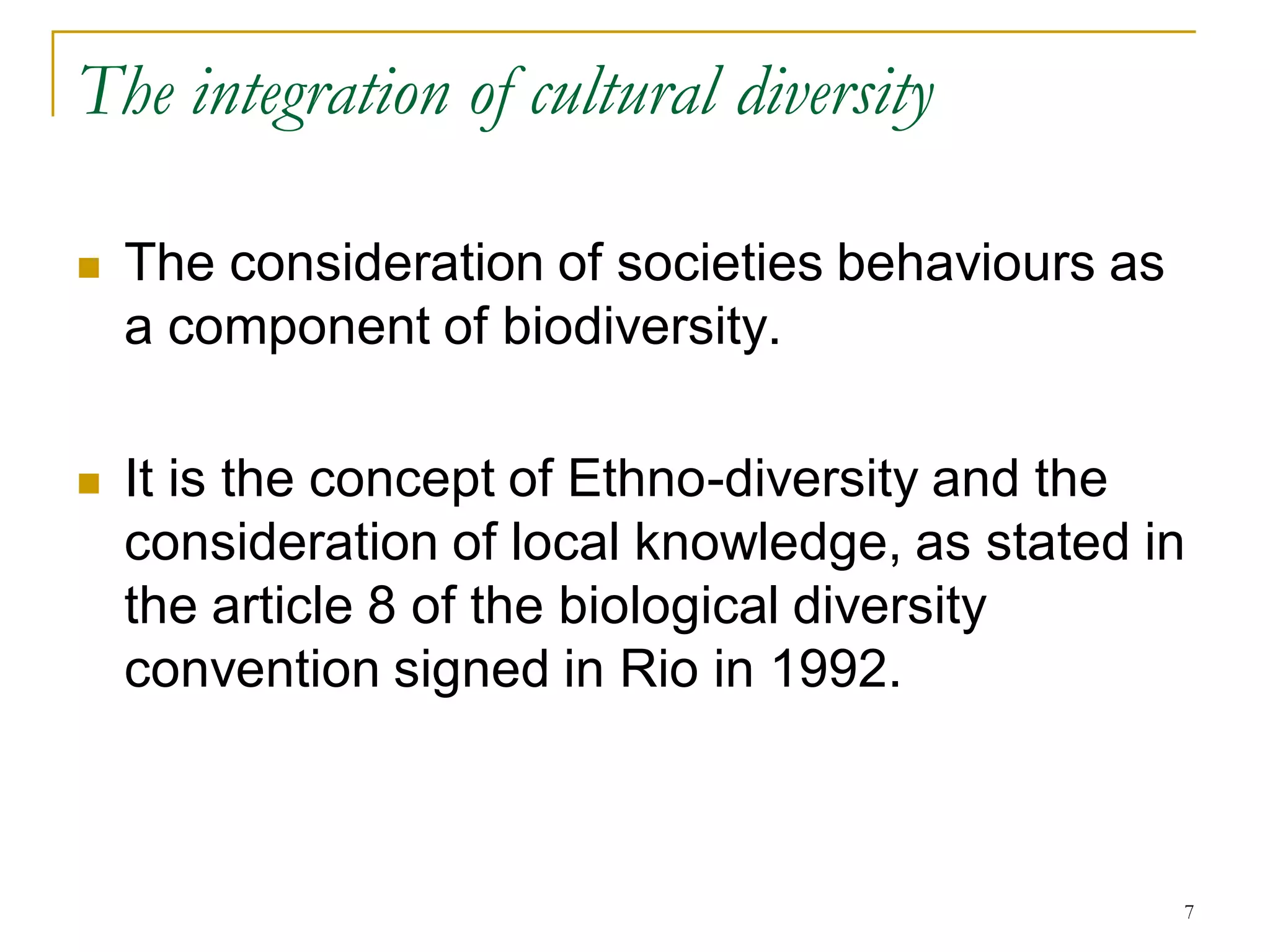
The integration of cultural diversity

   The consideration of societies behaviours as
    a component of biodiversity.

   It is the concept of Ethno-diversity and the
    consideration of local knowledge, as stated in
    the article 8 of the biological diversity
    convention signed in Rio in 1992.


                                                   7
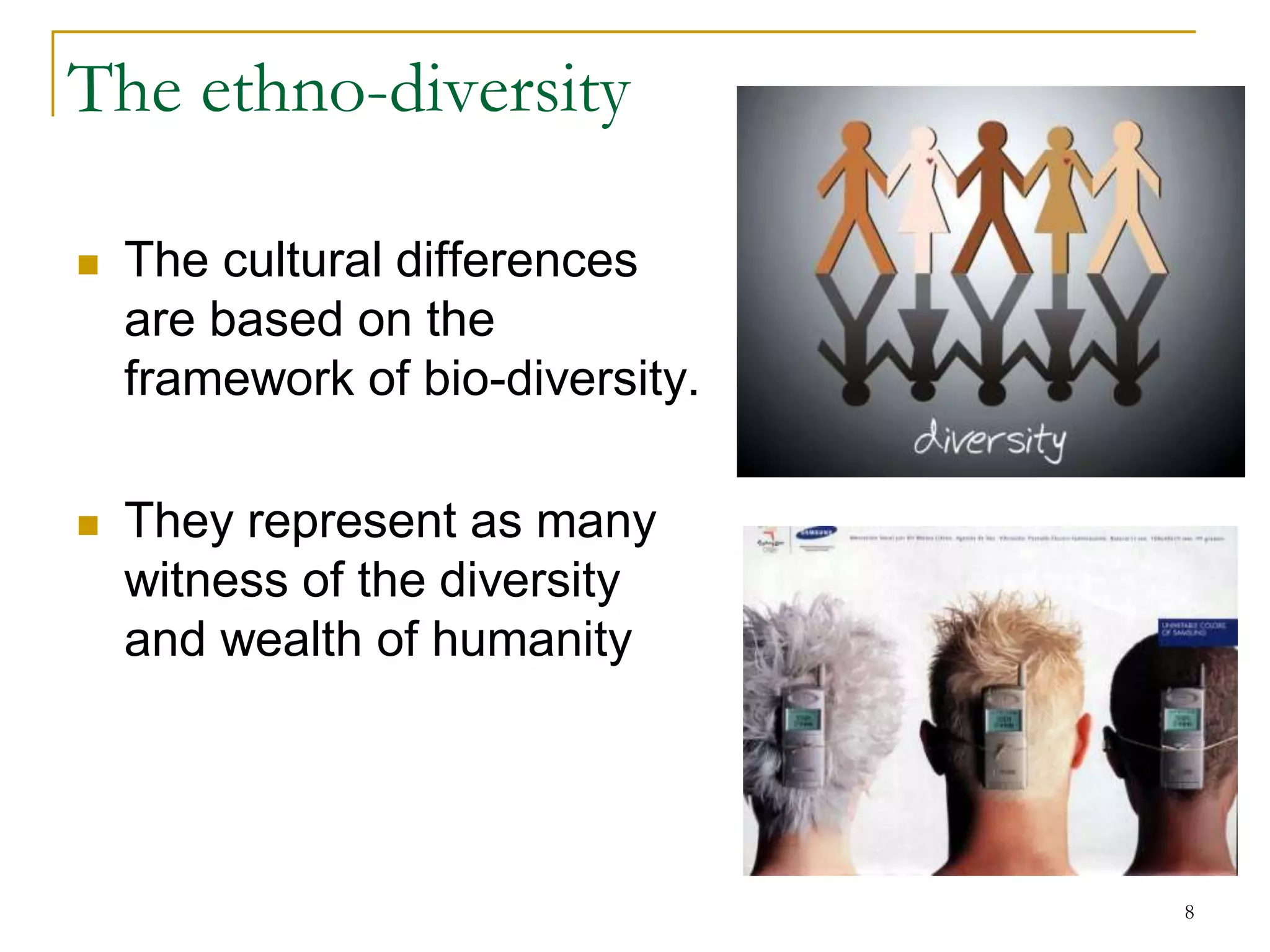
The ethno-diversity

   The cultural differences
    are based on the
    framework of bio-diversity.

   They represent as many
    witness of the diversity
    and wealth of humanity


                                  8
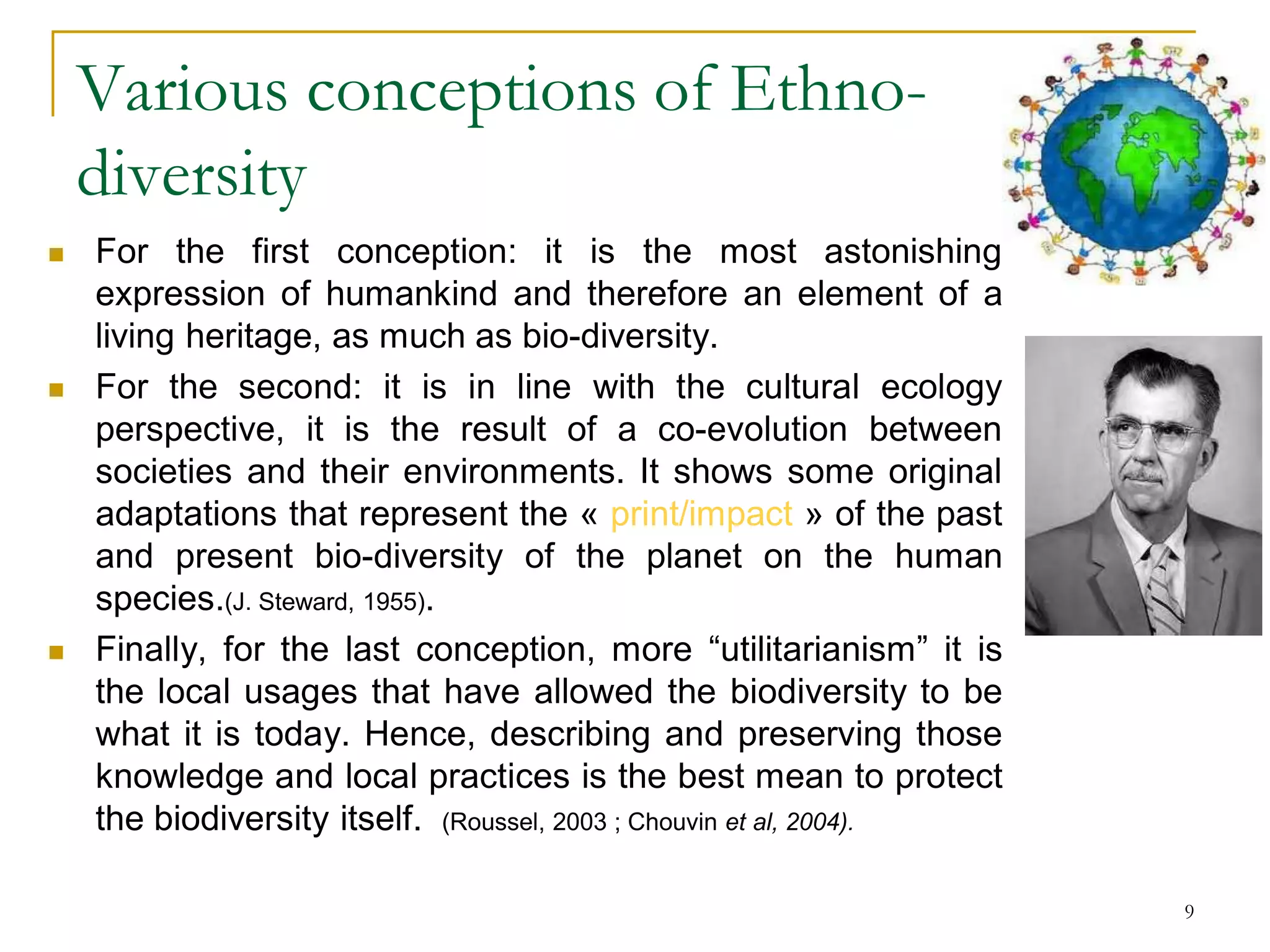
Various conceptions of Ethno-
    diversity
   For the first conception: it is the most astonishing
    expression of humankind and therefore an element of a
    living heritage, as much as bio-diversity.
   For the second: it is in line with the cultural ecology
    perspective, it is the result of a co-evolution between
    societies and their environments. It shows some original
    adaptations that represent the « print/impact » of the past
    and present bio-diversity of the planet on the human
    species.(J. Steward, 1955).
   Finally, for the last conception, more “utilitarianism” it is
    the local usages that have allowed the biodiversity to be
    what it is today. Hence, describing and preserving those
    knowledge and local practices is the best mean to protect
    the biodiversity itself. (Roussel, 2003 ; Chouvin et al, 2004).

                                                                      9
Consequences of ethno-diversity
   Broadening of the notion of heritage

       The cultural differences are brought to the
        rank of heritage

       They are no more considered as weirdness
        due to the arbitrary power of cultures, but
        the sign of the originality of the links
        between one human group and its natural
        environment.

       Therefore, those heritages need to be
        protected

       We move from biological interdependence
        to cultural interdependence                   10
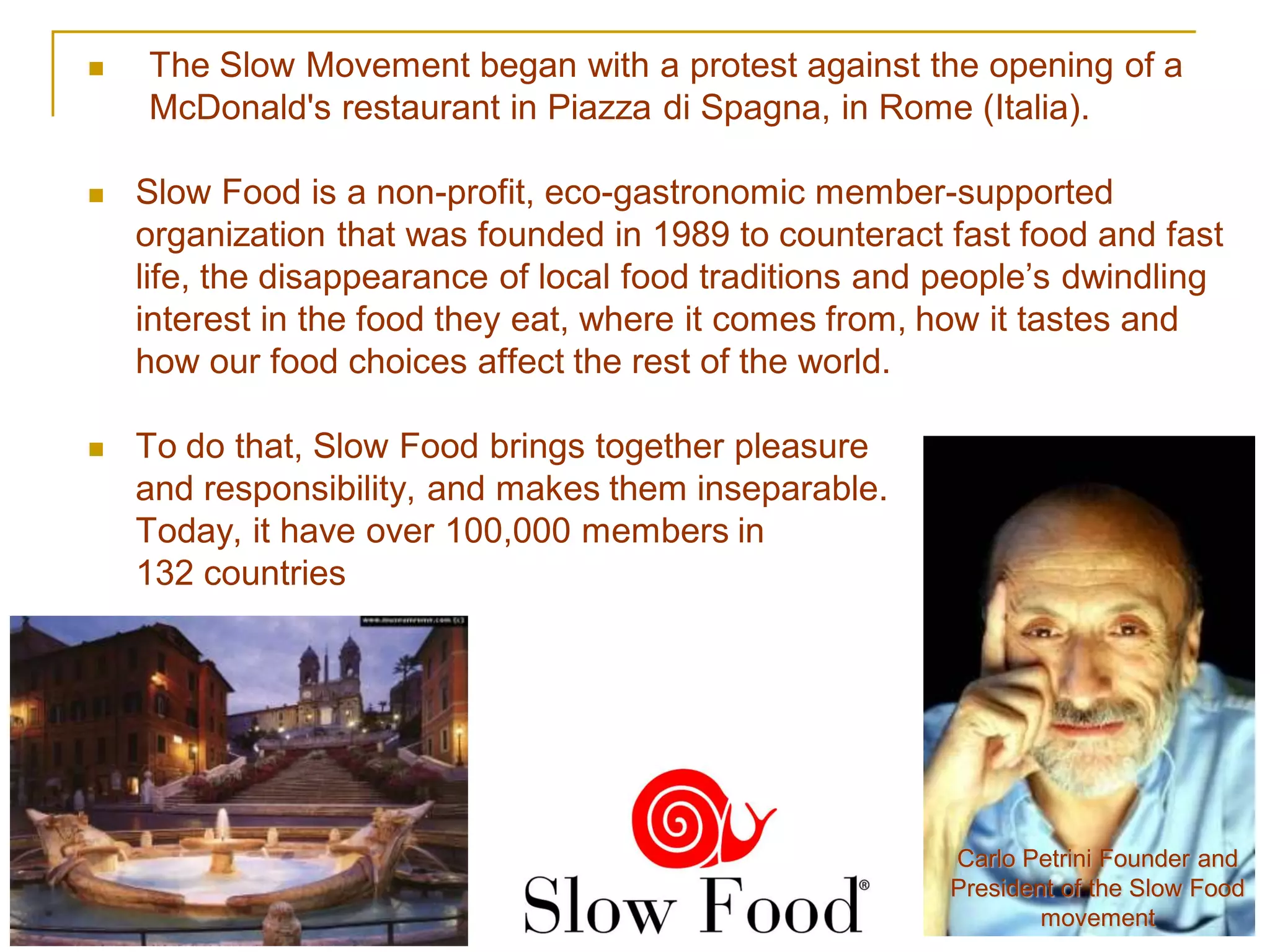
   The Slow Movement began with a protest against the opening of a
    McDonald's restaurant in Piazza di Spagna, in Rome (Italia).

   Slow Food is a non-profit, eco-gastronomic member-supported
    organization that was founded in 1989 to counteract fast food and fast
    life, the disappearance of local food traditions and people’s dwindling
    interest in the food they eat, where it comes from, how it tastes and
    how our food choices affect the rest of the world.

   To do that, Slow Food brings together pleasure
    and responsibility, and makes them inseparable.
    Today, it have over 100,000 members in
    132 countries


                                                         Carlo Petrini Founder and
                                                         President of the Slow Food
                                                                 movement
Slow Food is a non-profit, eco-gastronomic member-
supported organization that was founded in 1989 to
counteract fast food and fast life, the disappearance of
local food traditions and people’s dwindling interest in
the food they eat, where it comes from, how it tastes
and how our food choices affect the rest of the world.

To do that, Slow Food brings together pleasure and
responsibility, and makes them inseparable.
Today, we have over 100,000 members in 132 countries.
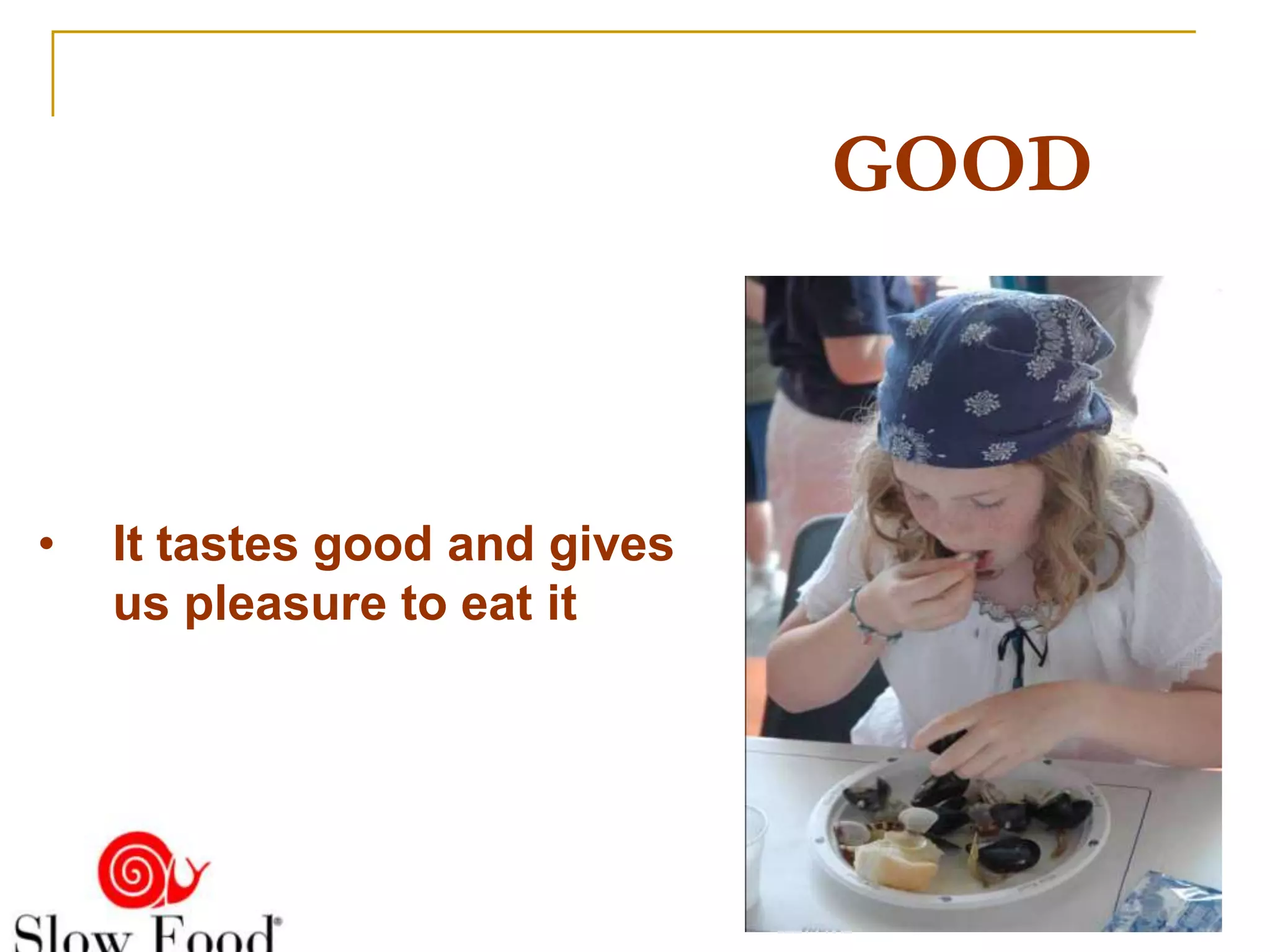
GOOD


•   It tastes good and gives
    us pleasure to eat it
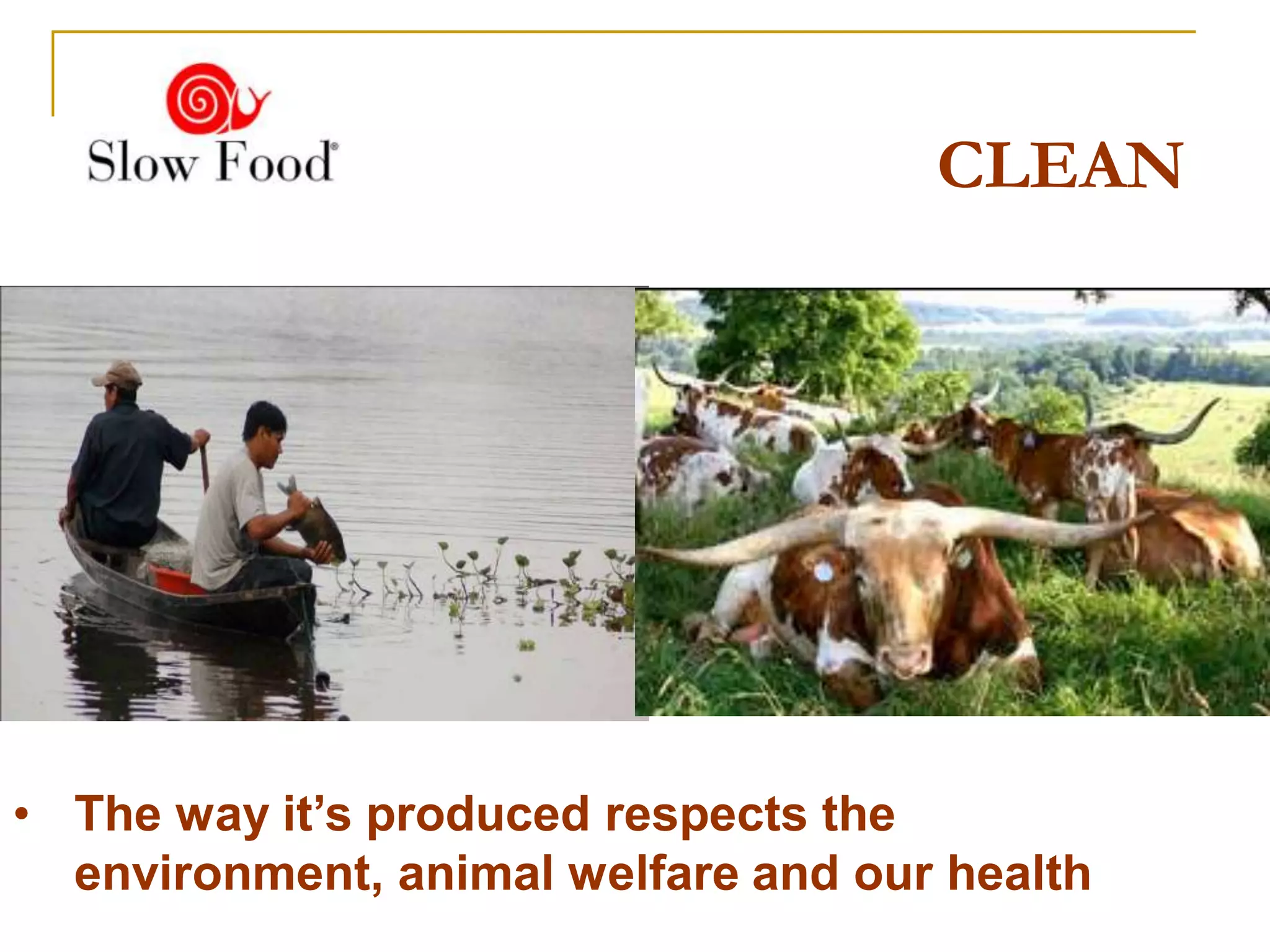
CLEAN


• The way it’s produced respects the
  environment, animal welfare and our health
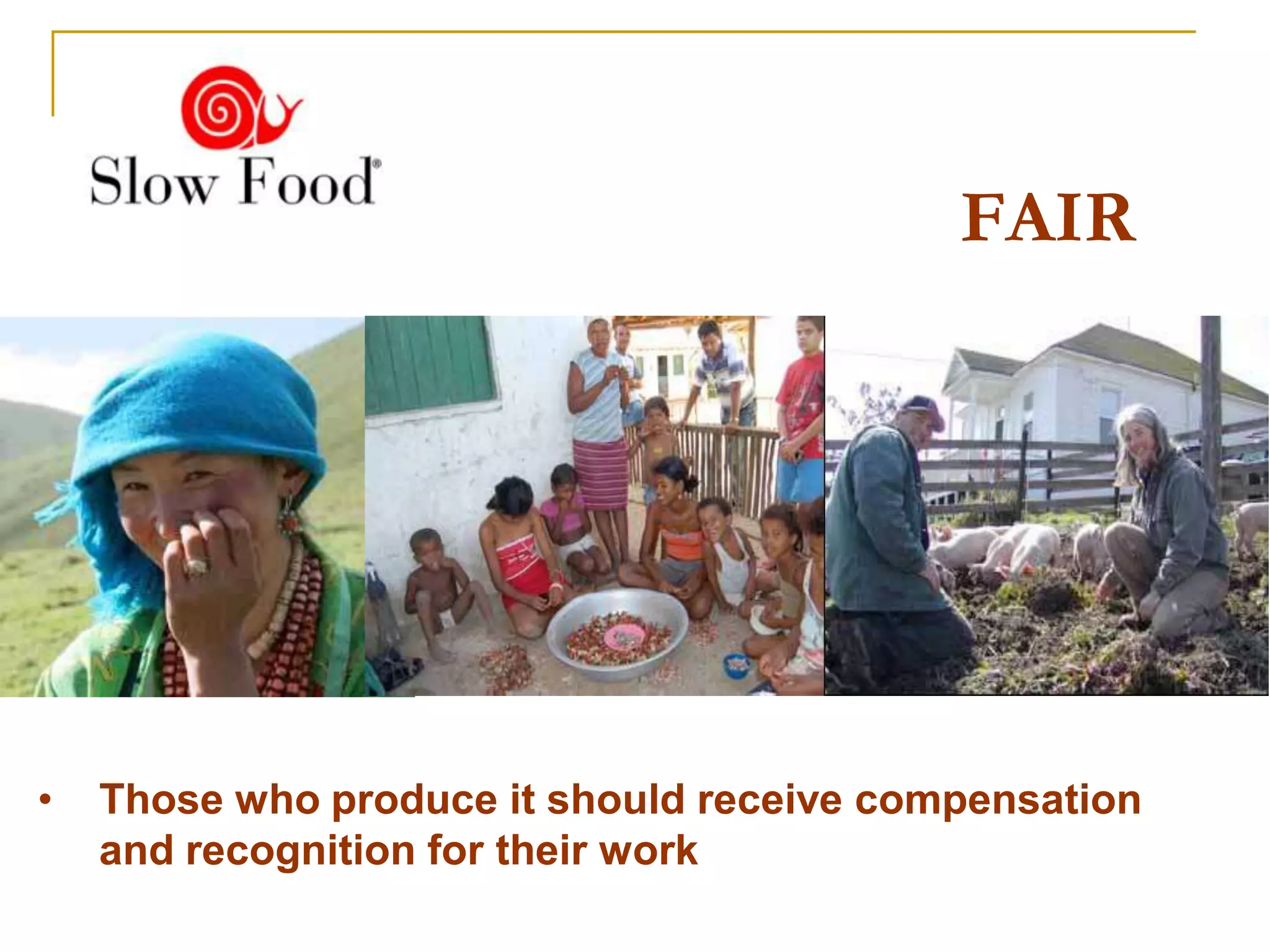
FAIR


•   Those who produce it should receive compensation
    and recognition for their work
Seminary content
   The awakening of diversity
       The biodiversity
       The Ethno-diversity
       The diversity as a patrimony


   Feeding humankind: the world food challenge
       Thomas Malthus theory
       Demographical transition and population health
       Back on Malthus traces


   The food models: Central resources of ethno-diversity:
       Social food space/ environment
       Sustainable development
       The role of cultural diversity in sustainability


                                                             16
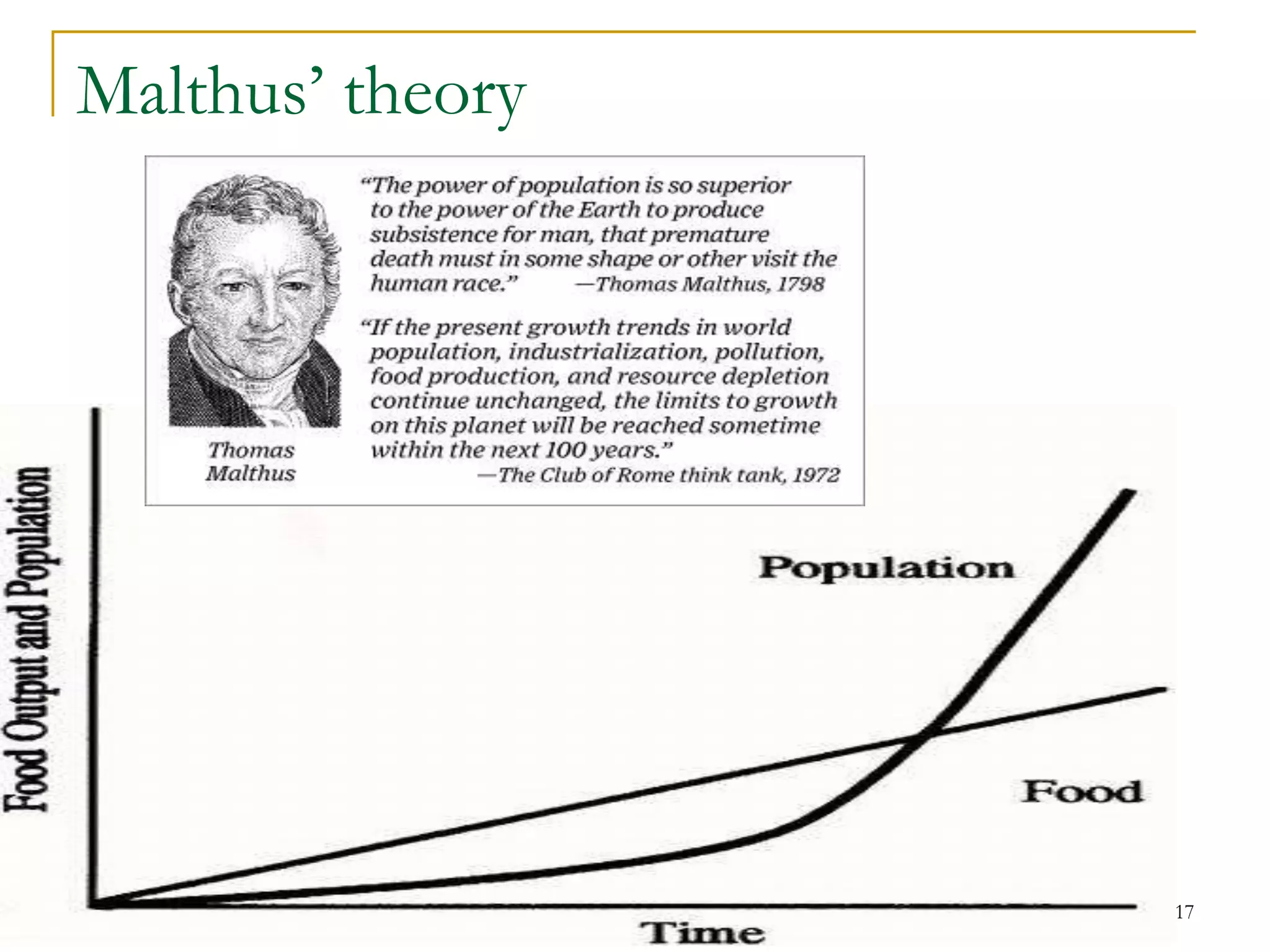
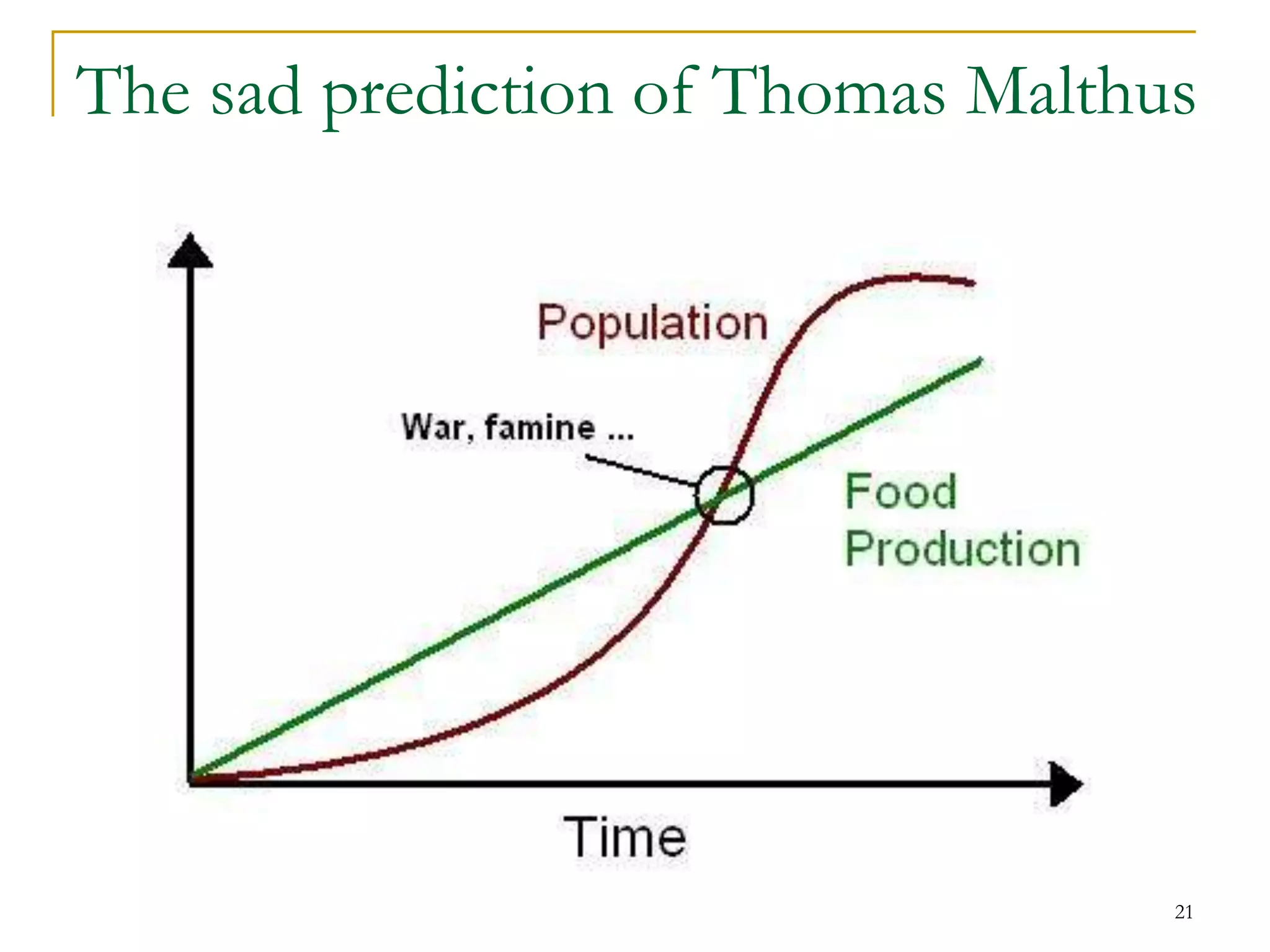
Malthus’ theory


                  17
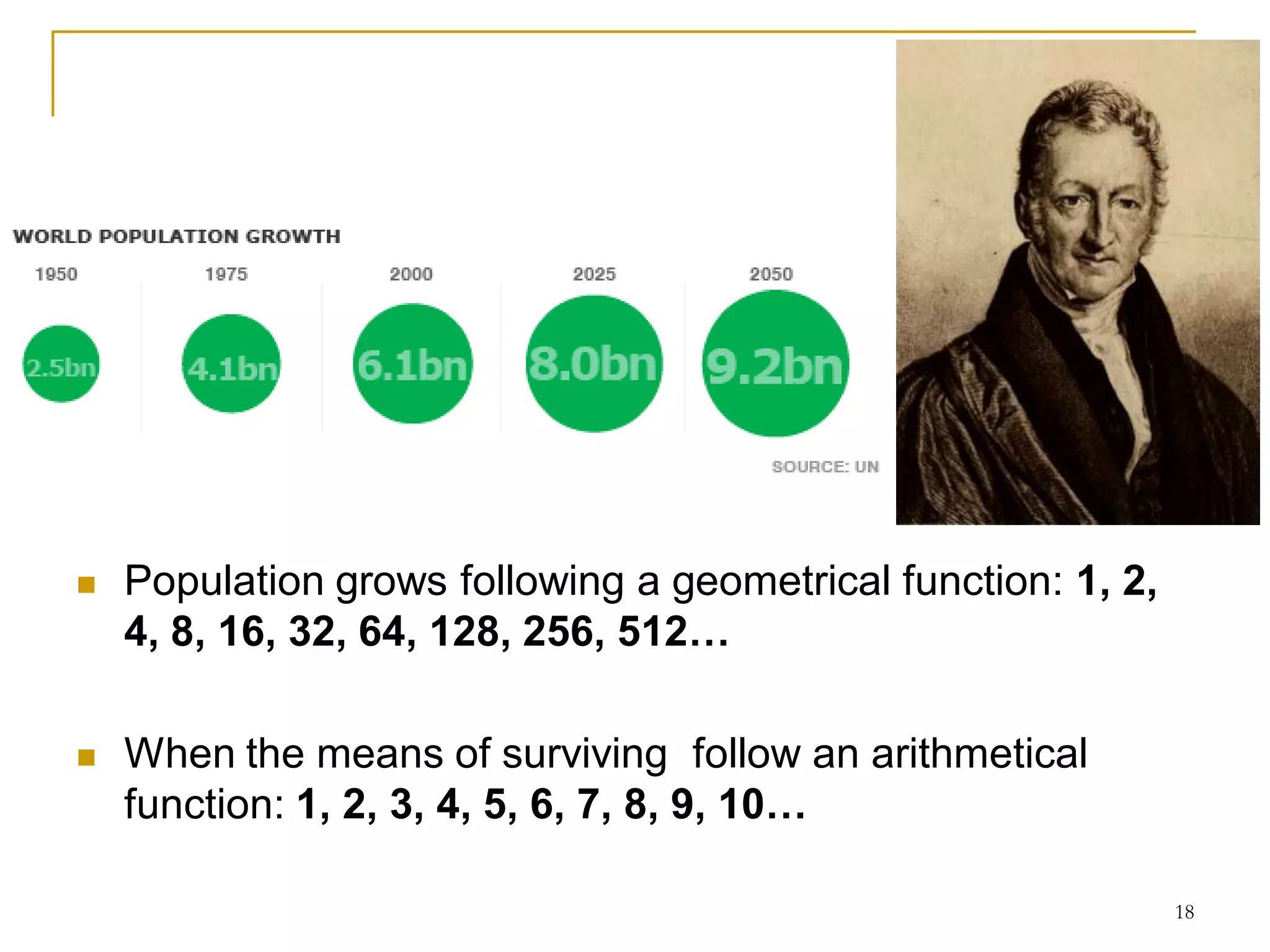
   Population grows following a geometrical function: 1, 2,
    4, 8, 16, 32, 64, 128, 256, 512…

   When the means of surviving follow an arithmetical
    function: 1, 2, 3, 4, 5, 6, 7, 8, 9, 10…

                                                               18
19
20
The sad prediction of Thomas Malthus


                                   21
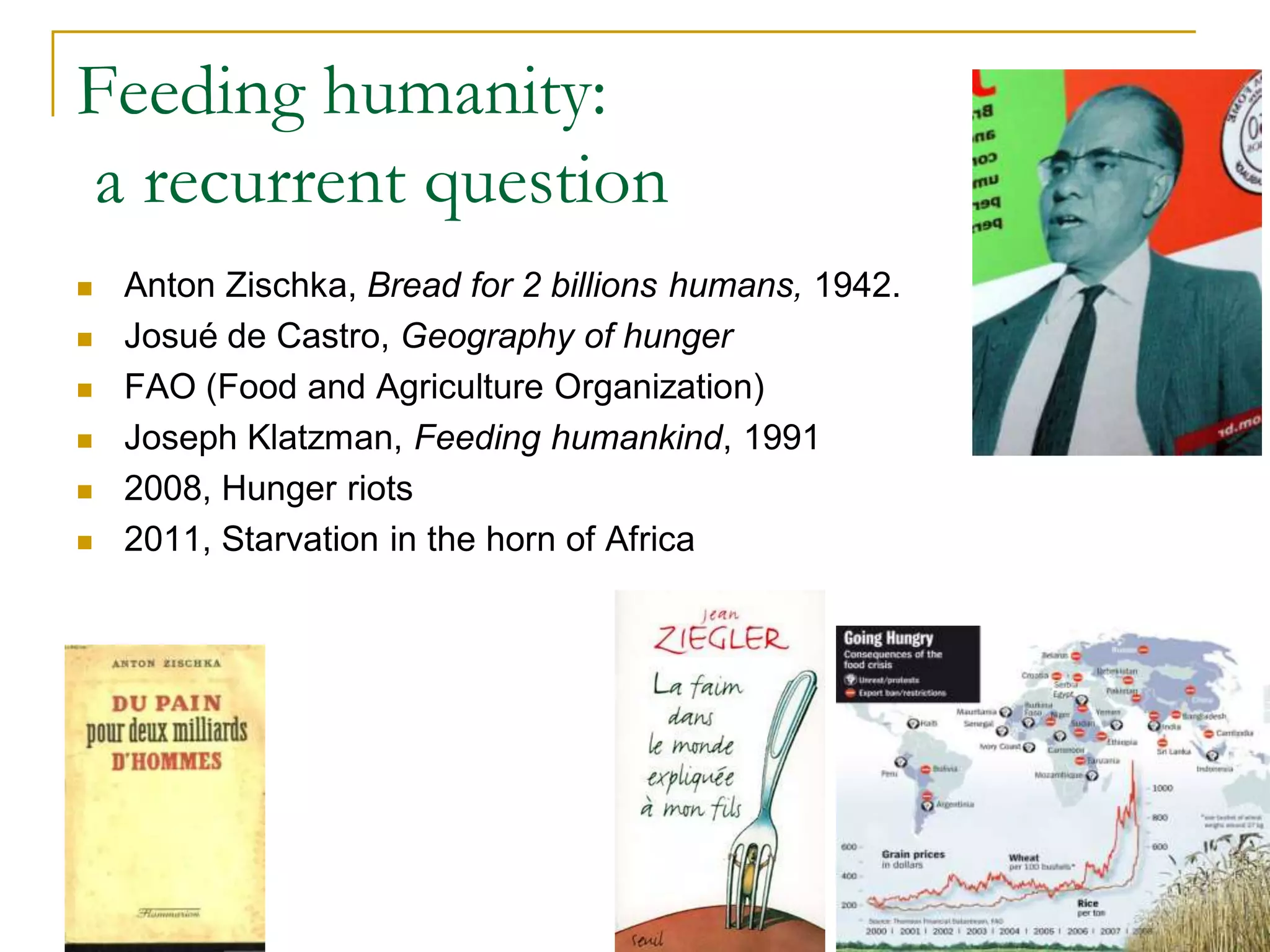
Feeding humanity:
a recurrent question
   Anton Zischka, Bread for 2 billions humans, 1942.
   Josué de Castro, Geography of hunger
   FAO (Food and Agriculture Organization)
   Joseph Klatzman, Feeding humankind, 1991
   2008, Hunger riots
   2011, Starvation in the horn of Africa


                                                        22
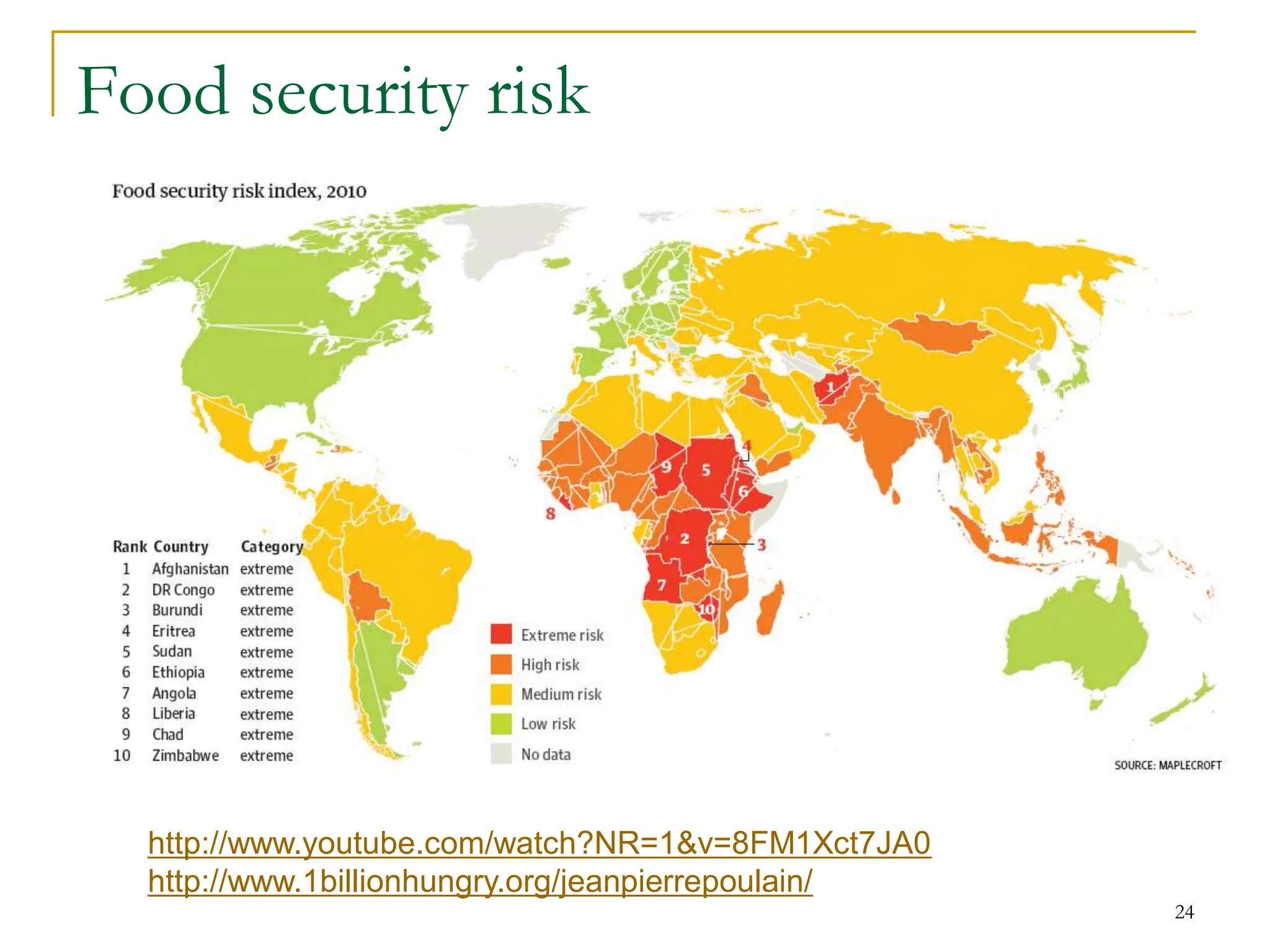
Food security risk


  http://www.youtube.com/watch?NR=1&v=8FM1Xct7JA0
  http://www.1billionhungry.org/jeanpierrepoulain/
                                                     24
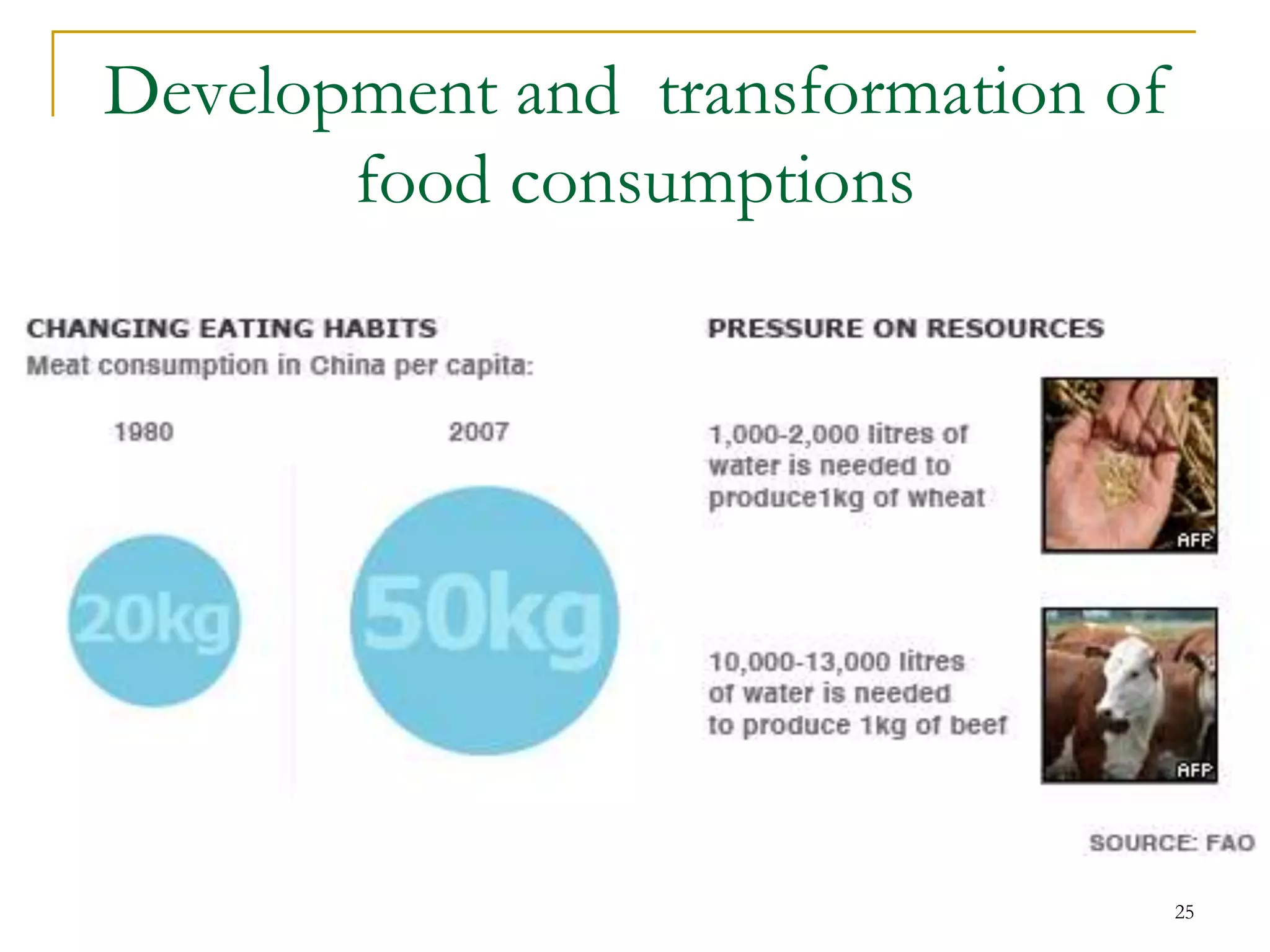
Development and transformation of
       food consumptions


                                    25
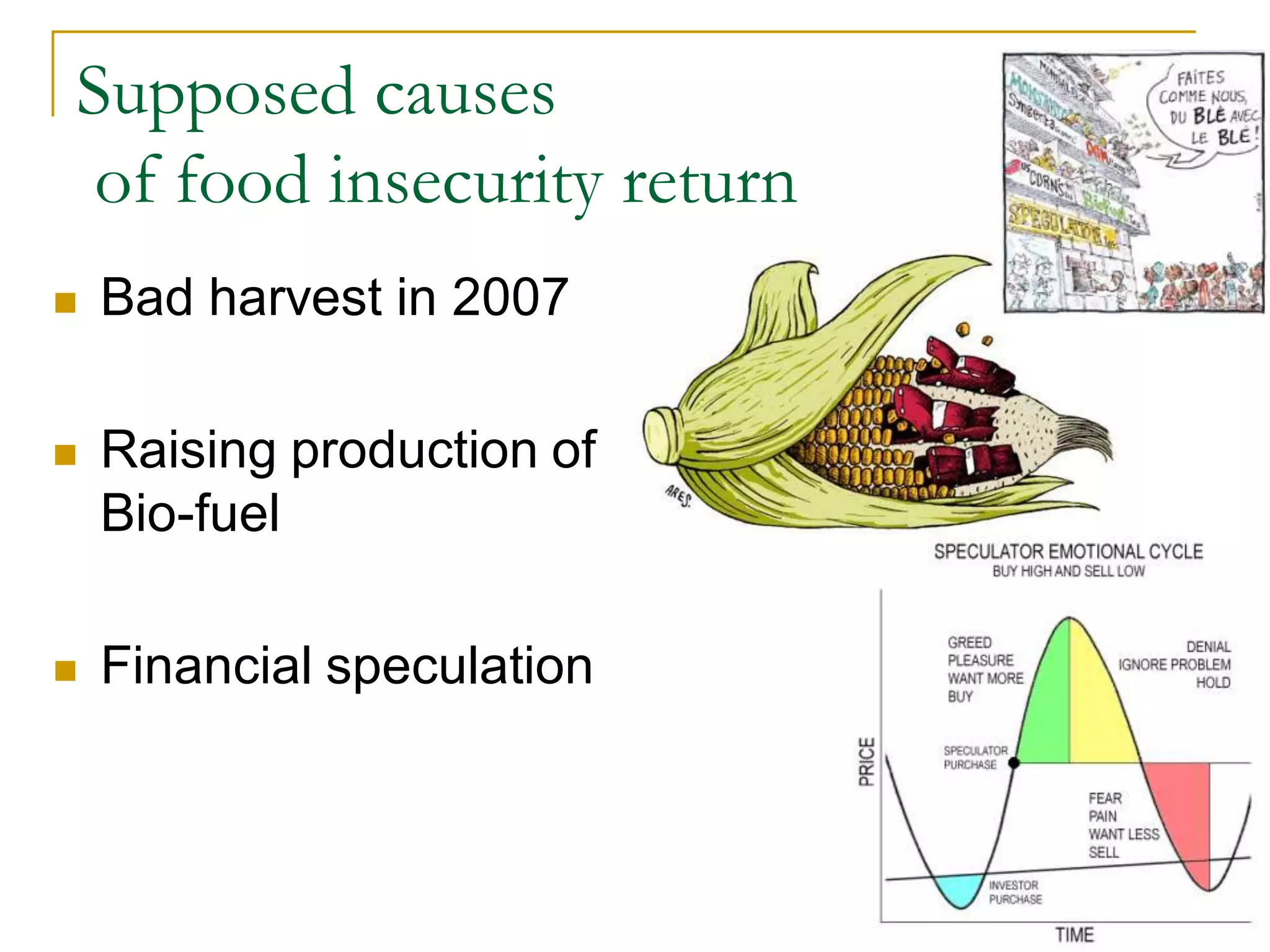
Supposed causes
 of food insecurity return
   Bad harvest in 2007

   Raising production of
    Bio-fuel

   Financial speculation


                             26
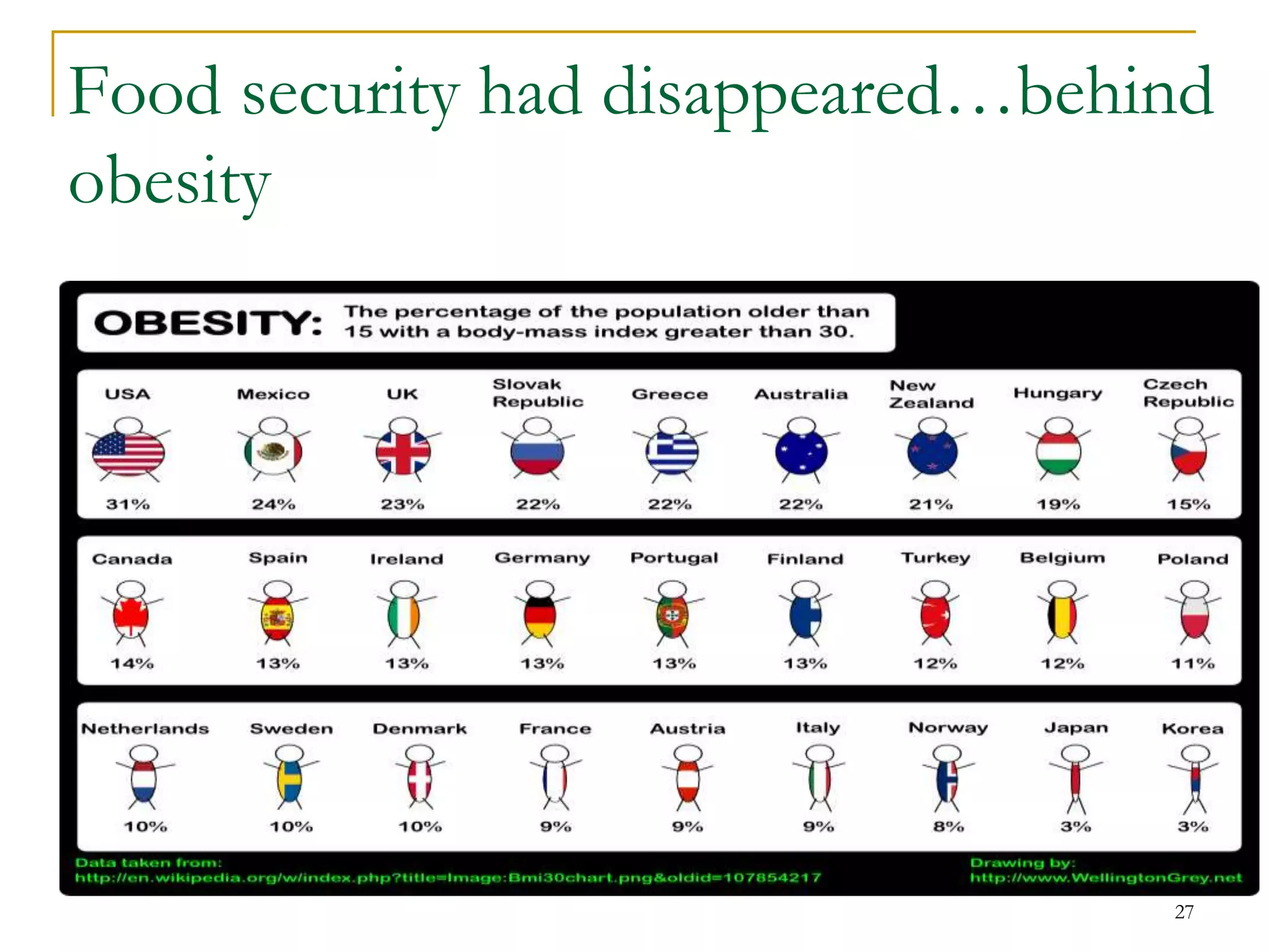
Food security had disappeared…behind
obesity


                                  27
28
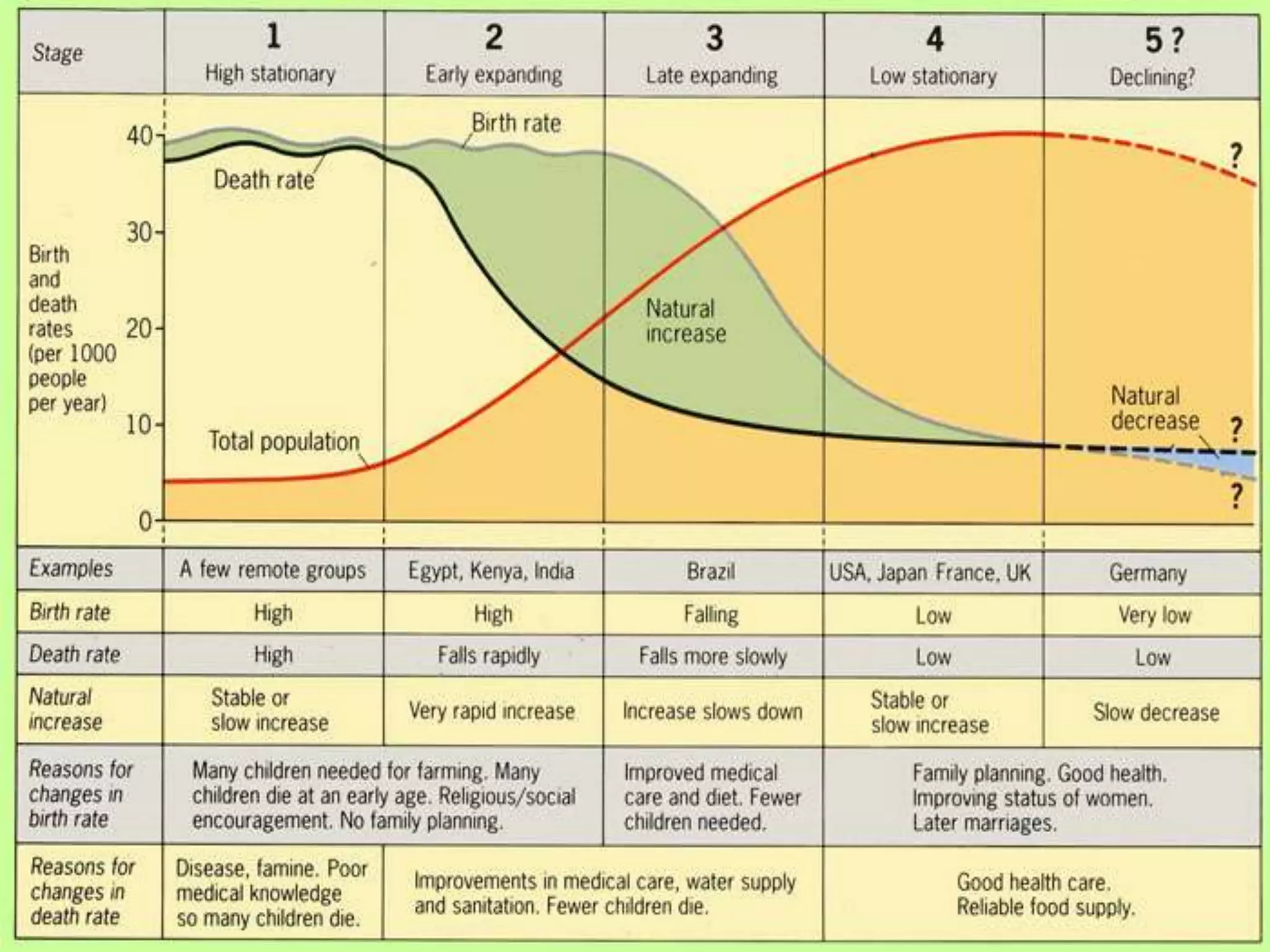
The double burden theory...


                              29
Frank Notestein at the
Rockefeller foundation

                   Conceived by Frank Notestein 1945.
                   Model of population change based
                    upon effects of economic
                    development and based on the
                    experience of the Western world.
                   It was used for decades as a model to
                    predict what should/would happen to
                    developing countries eventually.
                   All countries are supposed to pass
                    through four or five stages to reach
                    the state of maturity.
The Demographic Transition
32
Alimentation role in the epidemiological transition
   Steps          Mortality causes            Life expectancy          Alimentation role           Social differentiation
                                              and death rate                                              process

The epidemic   Infectious diseases          +- 40 years old           Rare and uncertain food    The abundance and the
               Deficiency                   High infant mortality     Strong ecological          outsourcing as a social
 and famine
               Parasitic diseases           High mortality            dependence                 distinction process
   period
      A

 Transition    Parasitic, deficiency and    Life expectancy gains     Food availability          Taste esthetization
   phase       infectious diseases          - 60 years old            increase                   Big as a social position sign
               regression,                  Infant mortality fall     Scheduled redistribution
     B         Degenerative diseases
               appearance

 Setting up    Infectious mortality         Life expectancy           Food abundance             Leanness appearance as a
      C        Quasi-disappearance          extension +70 years old                              distinction sign
               Mortality degenerative
               setting up

Degenerative   Chronicle diseases           Life expectancy           Food overabundance         Diffusion of slimness esthetic
               Settling between 45 and      progression increase      Diffusion on nutritional   model
  diseases
               54 years old and                                       knowledge                  Slimness = health
management     Regression between 55
               and 75 years old

Sociopathies   Suicides and violent death   Life expectancy           Food overabundance         Slimness model
               Growth, AIDS                 progression decrease      Food anomie                intensification
               Eating disorders and                                   “ deregulation”            Fat persons stigmatization
               obesity
Epidemiologic transition: Definition
   The epidemiologic transition is that process by
    which the pattern of mortality and disease is
    transformed from one of high mortality among
    infants and children and episodic famine and
    epidemic affecting all age groups to one of
    degenerative and man-made diseases (such as
    those attributed to smoking) affecting principally
    the elderly. Encyclopedia Britannica
   Abdel Omran. The Epidemiologic Transition: A Theory of the epidemiology of population change. Milbank
    Quarterly. 1971;49:509-538


                                                                                                            34
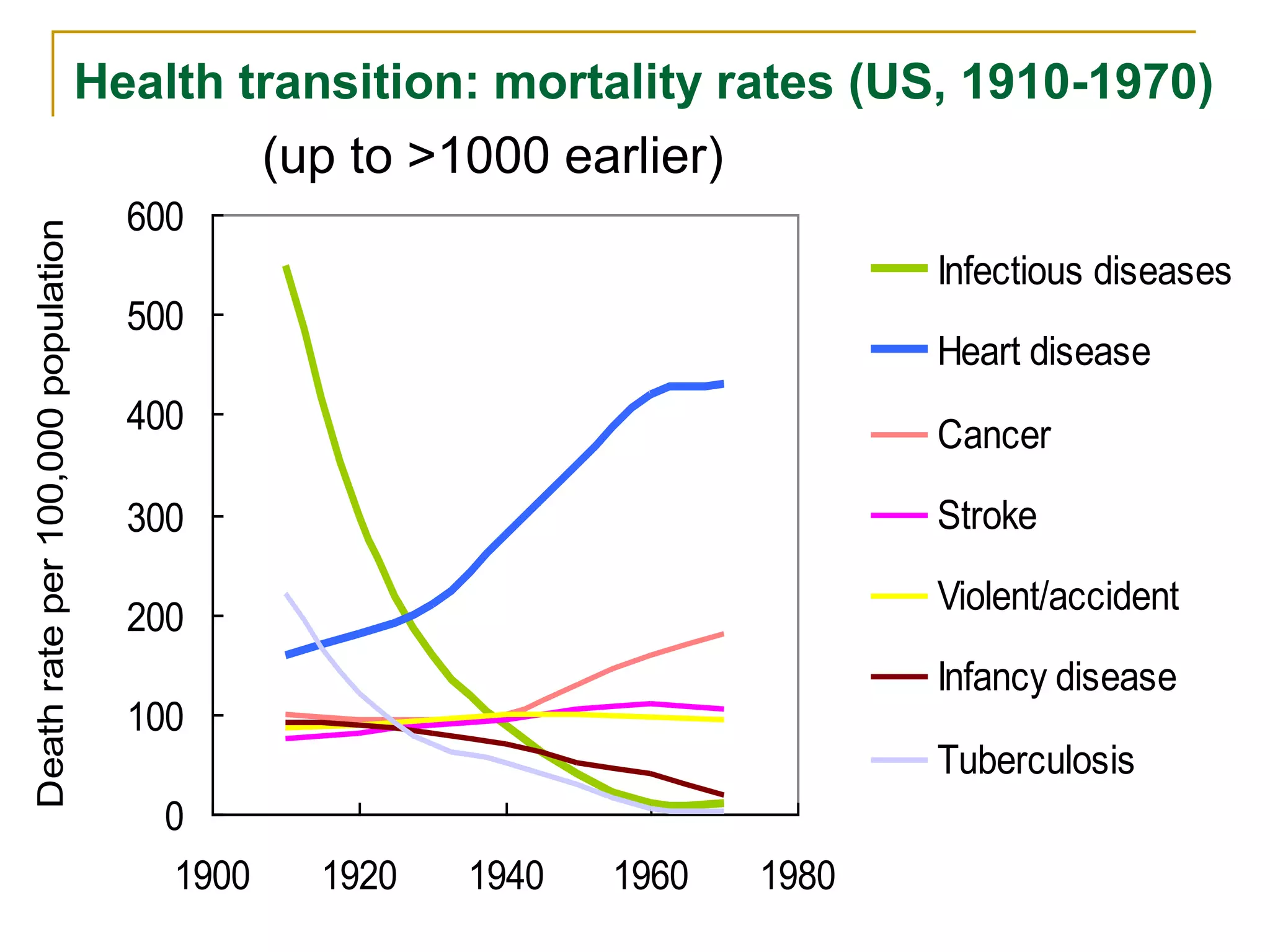
Health transition: mortality rates (US, 1910-1970)
                                              (up to >1000 earlier)
                                      600
Death rate per 100,000 population


                                                                             Infectious diseases
                                      500
                                                                             Heart disease
                                      400                                    Cancer

                                      300                                    Stroke
                                                                             Violent/accident
                                      200
                                                                             Infancy disease
                                      100
                                                                             Tuberculosis
                                       0
                                       1900     1920   1940   1960    1980             IUMSP-GCT
Life expectency


                  36
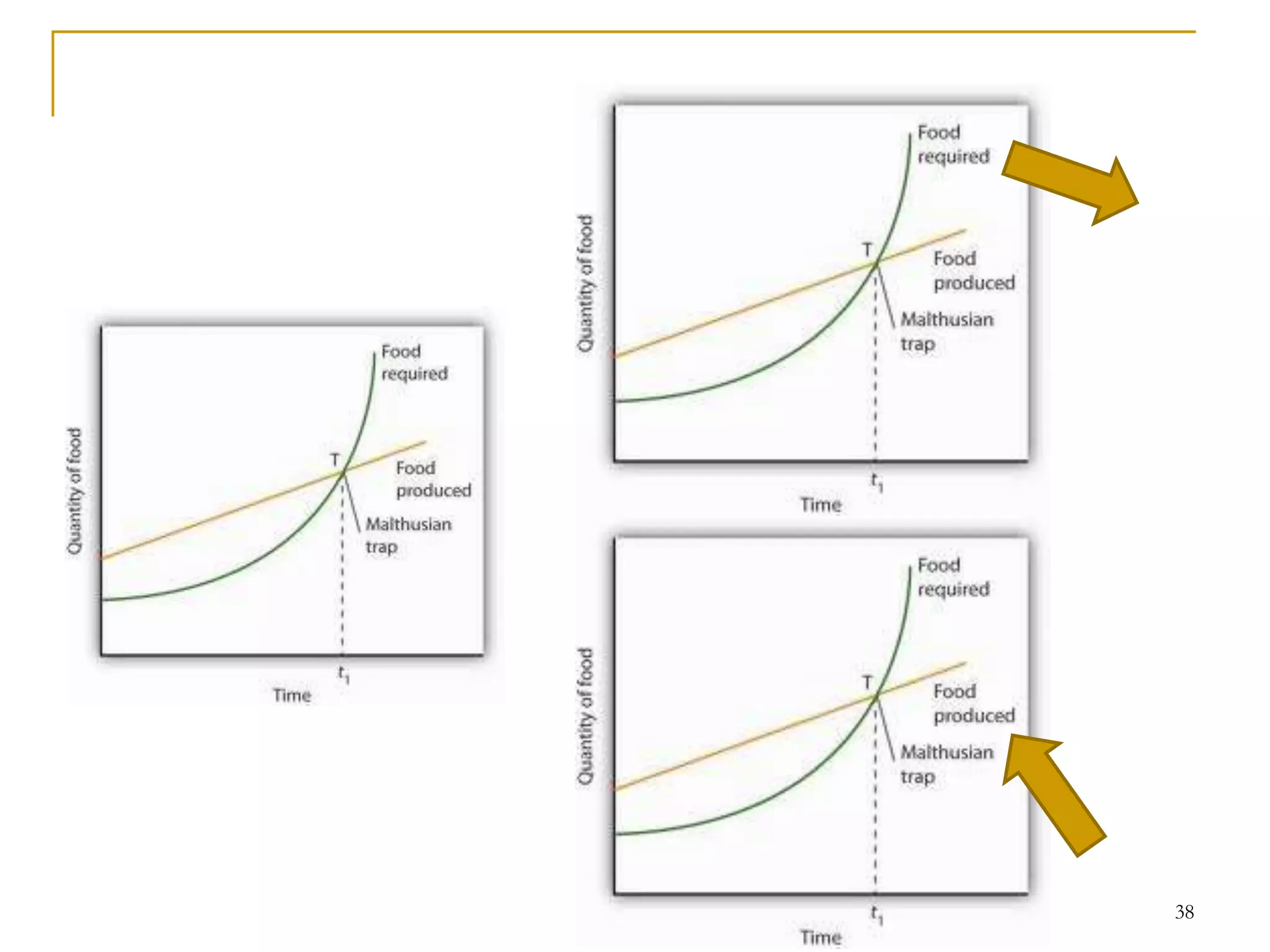
Back on Malthus’ trace
                Food production depends on:
                    Exploitable agricultural areas
                    Water supply
                    Sunlight
                    Agrarian techniques
                    Inputs (fertilizers.)
                    Agricultural machinery
                    Energy supply
                    ...


                Food requirement depends on :
                    The number of individuals to feed
                    What people consume = FOOD MODELS

                                                      37
38
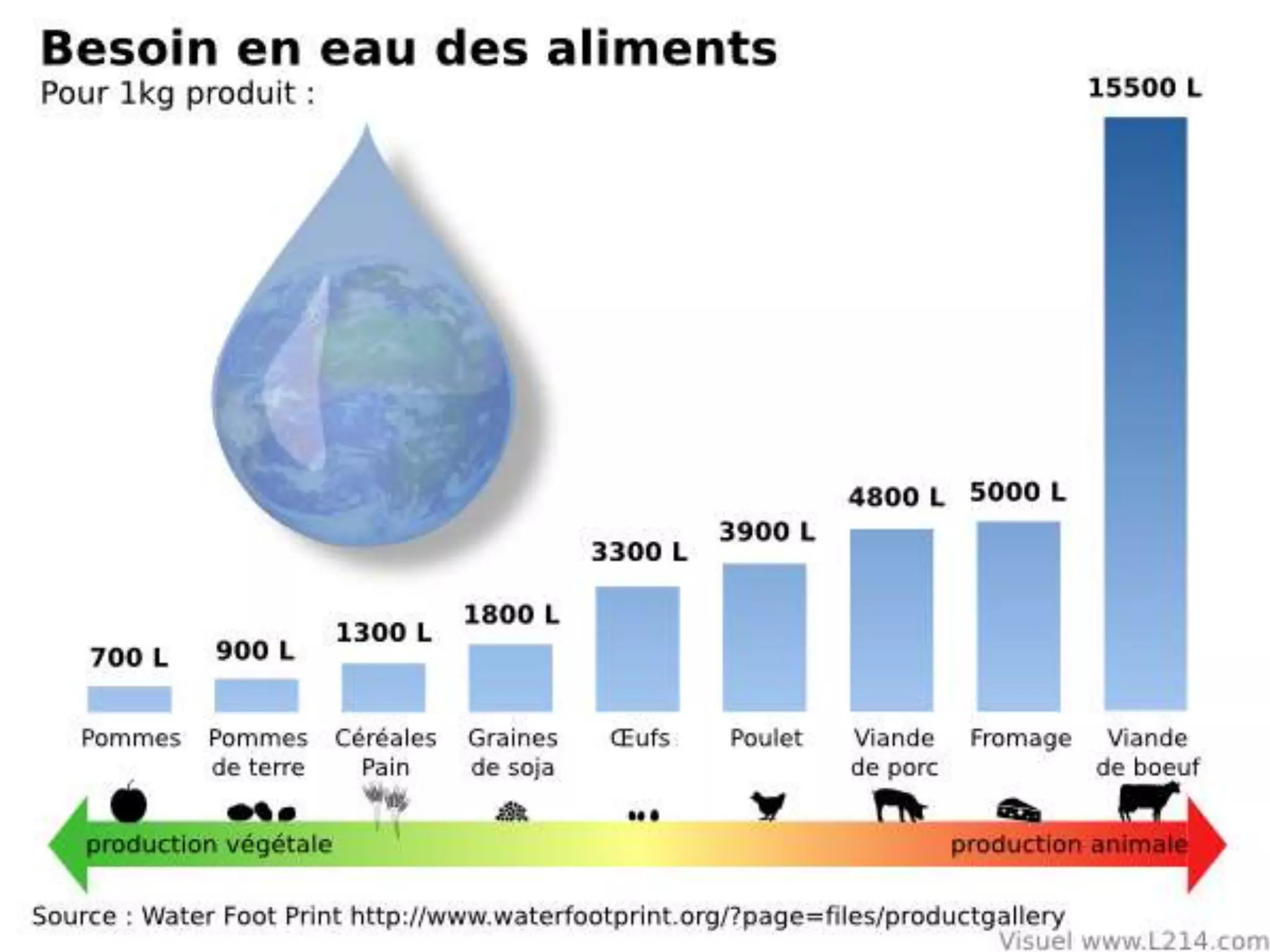
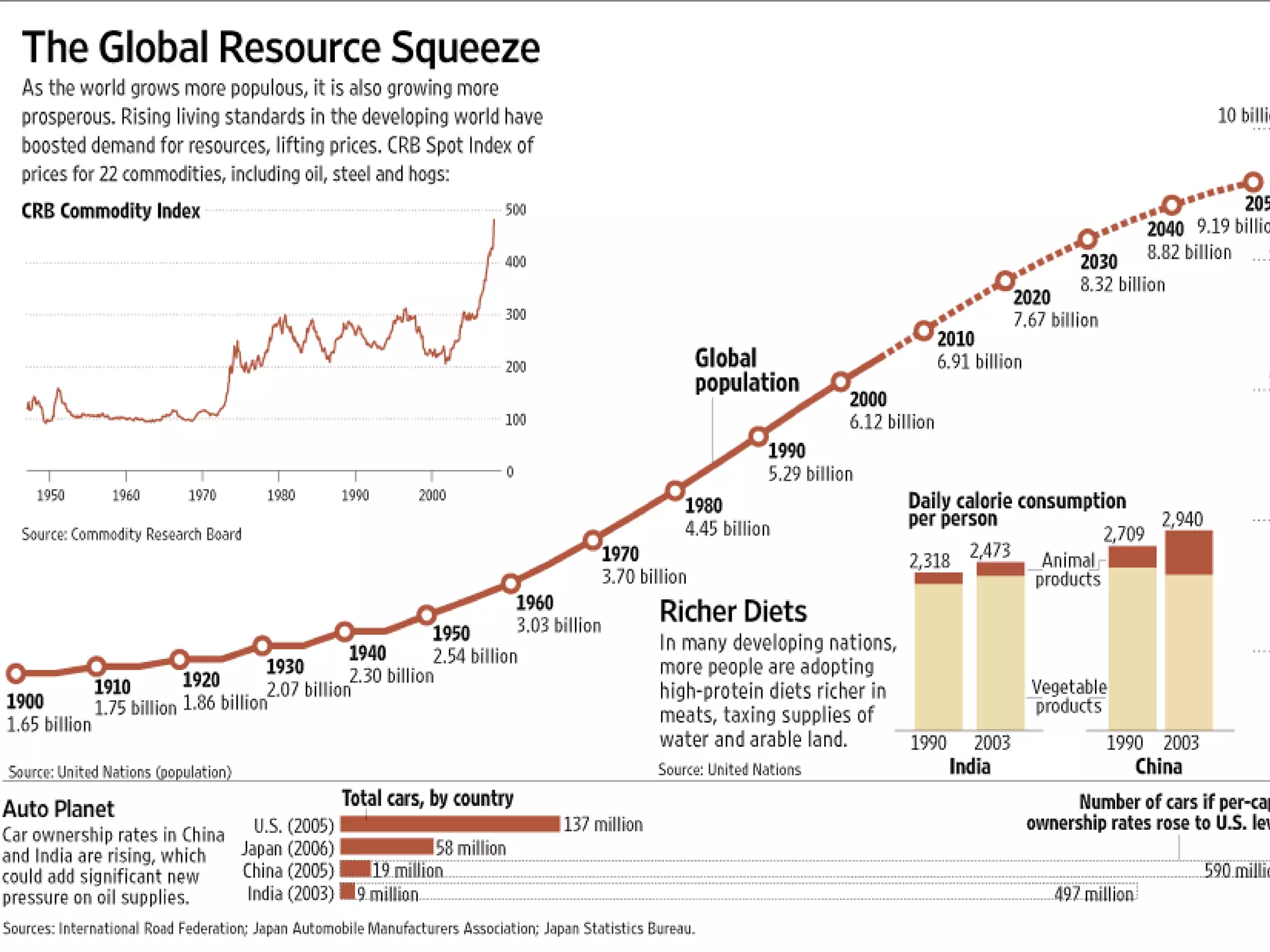
39
40
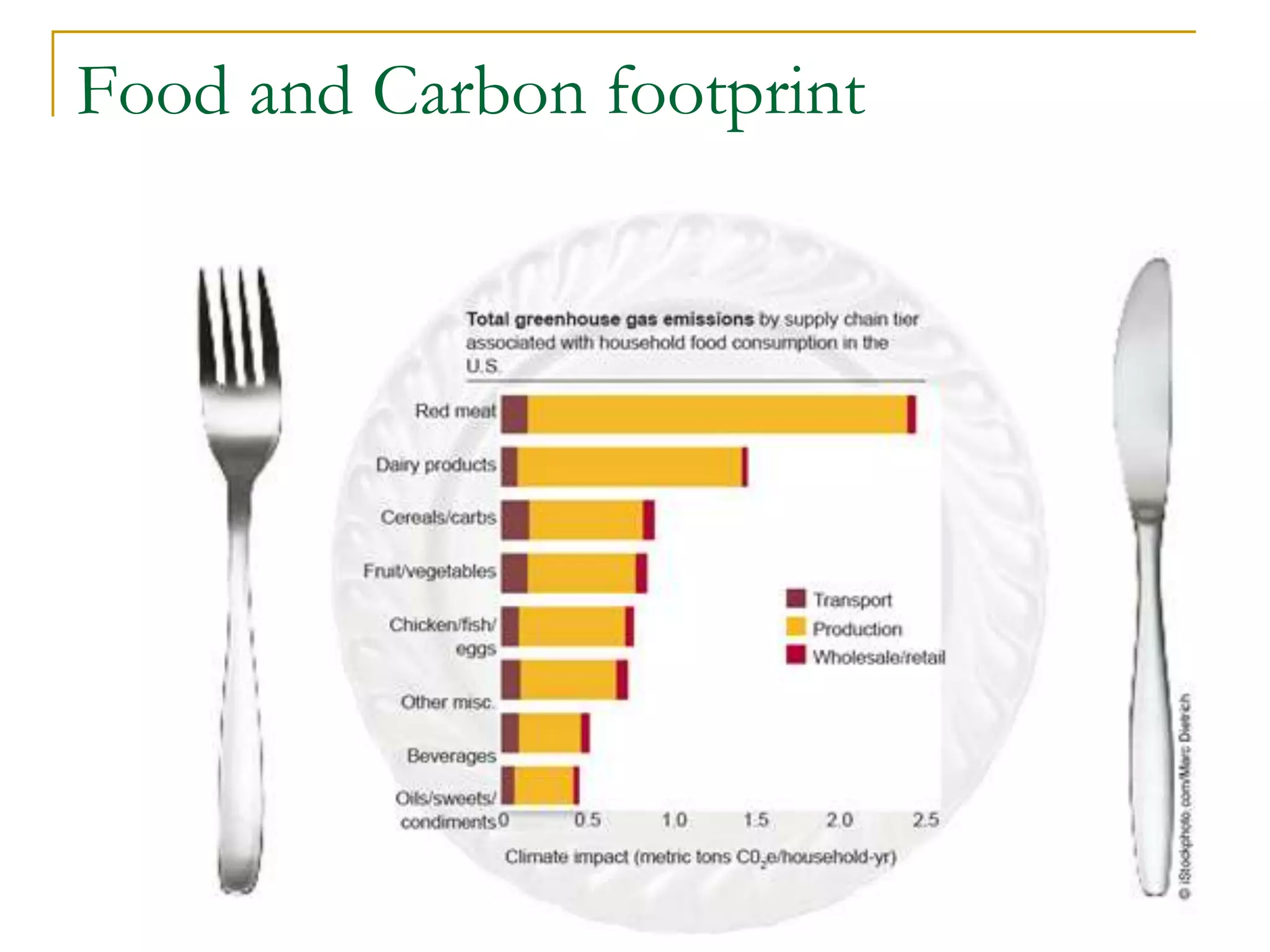
Food and Carbon footprint
Seminary content

   The awakening of diversity
       The biodiversity
       The Ethno-diversity
       The diversity as a patrimony


   Feeding humankind: the world food challenge
       Thomas Malthus theory
       Demographical transition and population health
       Back on Malthus traces


   The food models: Central resources of ethno-diversity:
       Social food space/ environment
       Sustainable development
       The role of cultural diversity in sustainability


                                                             42
The stakes of sustainability

   From 3 dimensions.... To 4 dimensions


                                                  Cultural
                           Social


                                    Environment
socio-anthropological
     framework


                                                   Cultural
                        Social


                                     Environment

                                 Economic and ecological
                                      frame work

                                                              44
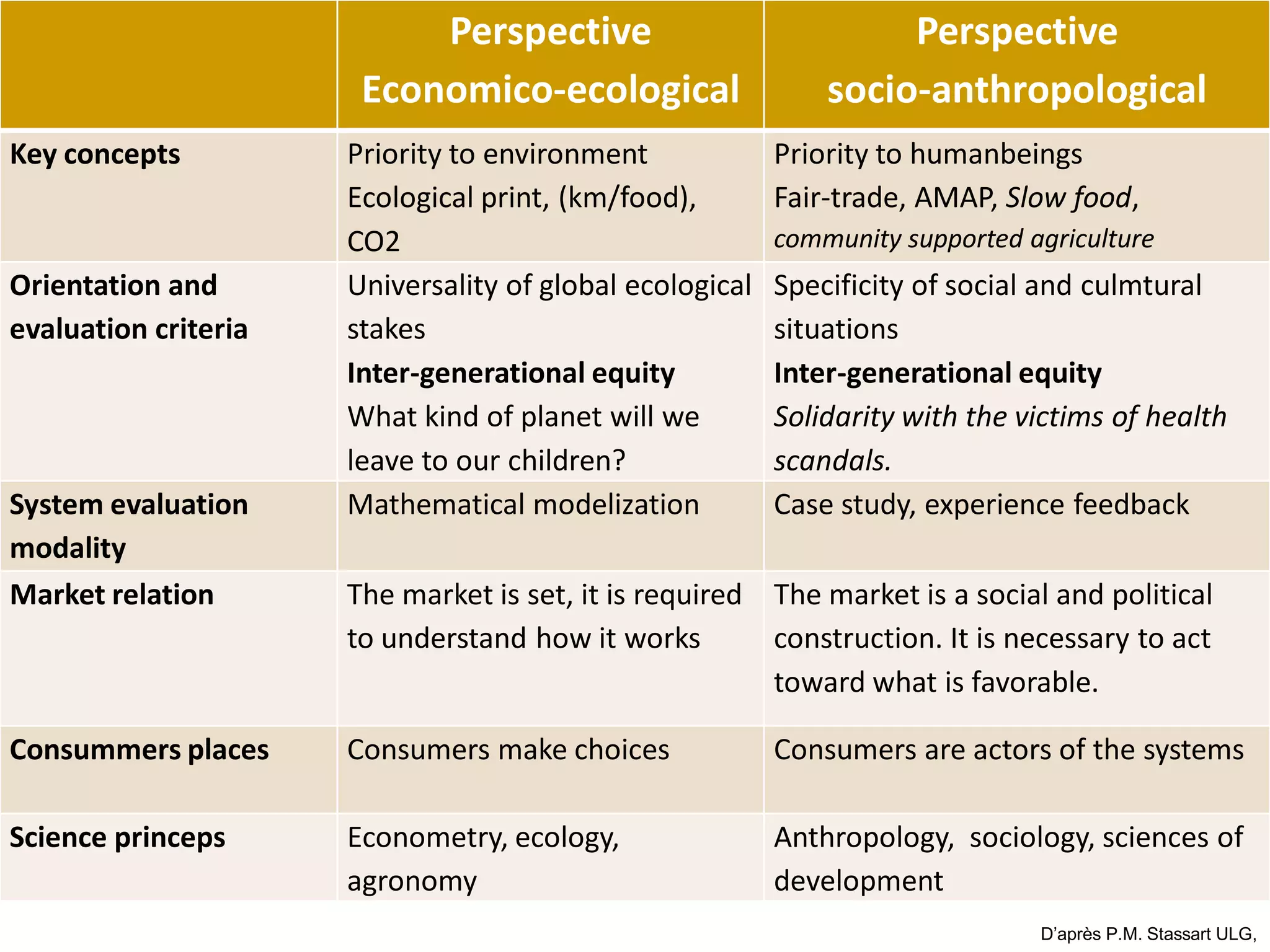
Perspective                             Perspective
                       Economico-ecological                   socio-anthropological
Key concepts          Priority to environment             Priority to humanbeings
                      Ecological print, (km/food),        Fair-trade, AMAP, Slow food,
                      CO2                                 community supported agriculture
Orientation and       Universality of global ecological   Specificity of social and culmtural
evaluation criteria   stakes                              situations
                      Inter-generational equity           Inter-generational equity
                      What kind of planet will we         Solidarity with the victims of health
                      leave to our children?              scandals.
System evaluation     Mathematical modelization           Case study, experience feedback
modality
Market relation       The market is set, it is required The market is a social and political
                      to understand how it works        construction. It is necessary to act
                                                        toward what is favorable.

Consummers places     Consumers make choices              Consumers are actors of the systems

Science princeps      Econometry, ecology,                Anthropology, sociology, sciences of
                      agronomy                            development
                                                                               D’après P.M. Stassart ULG,
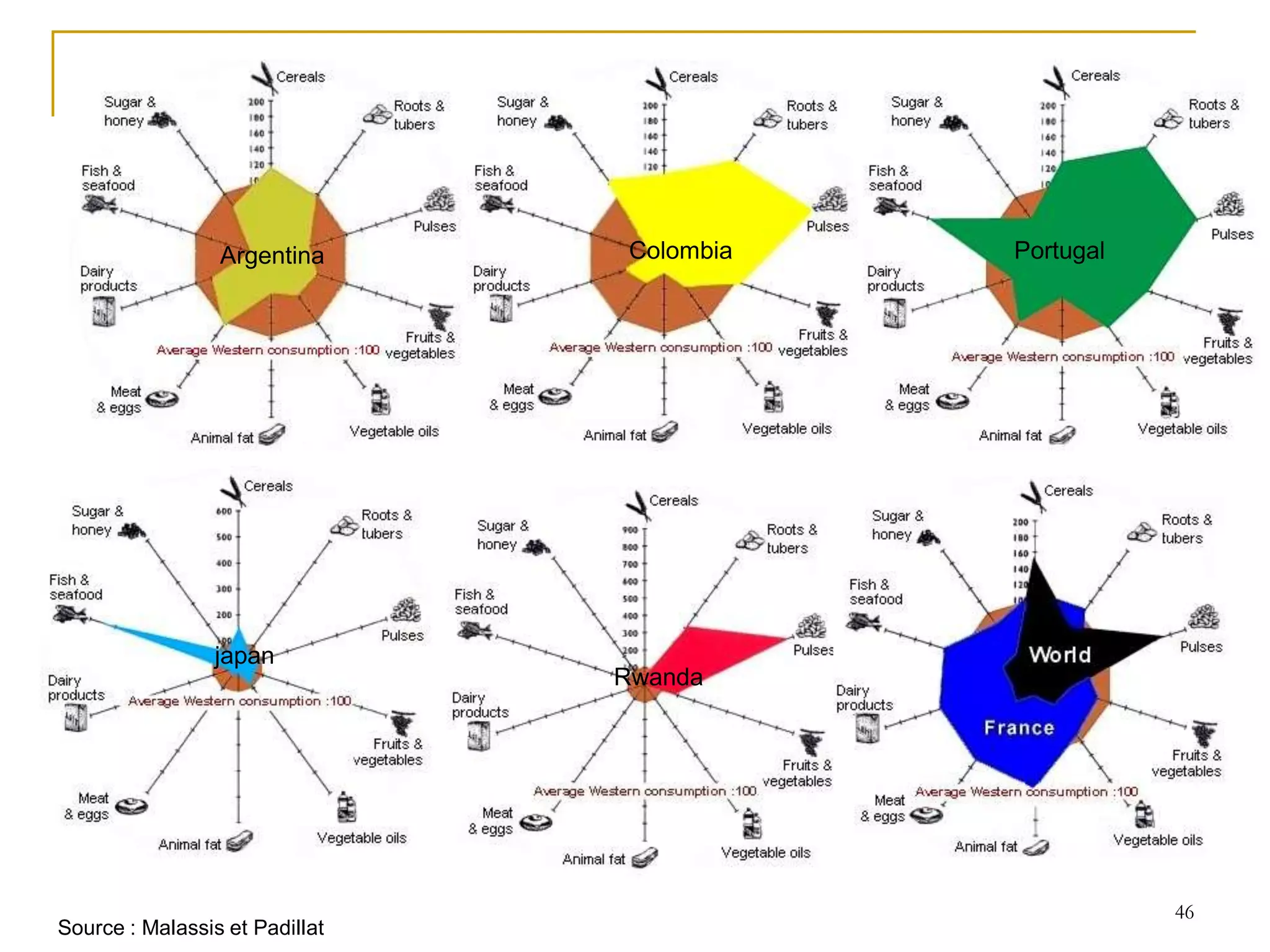
Argentina       Colombia   Portugal


                 japan
                                Rwanda


                                                       46
Source : Malassis et Padillat
47
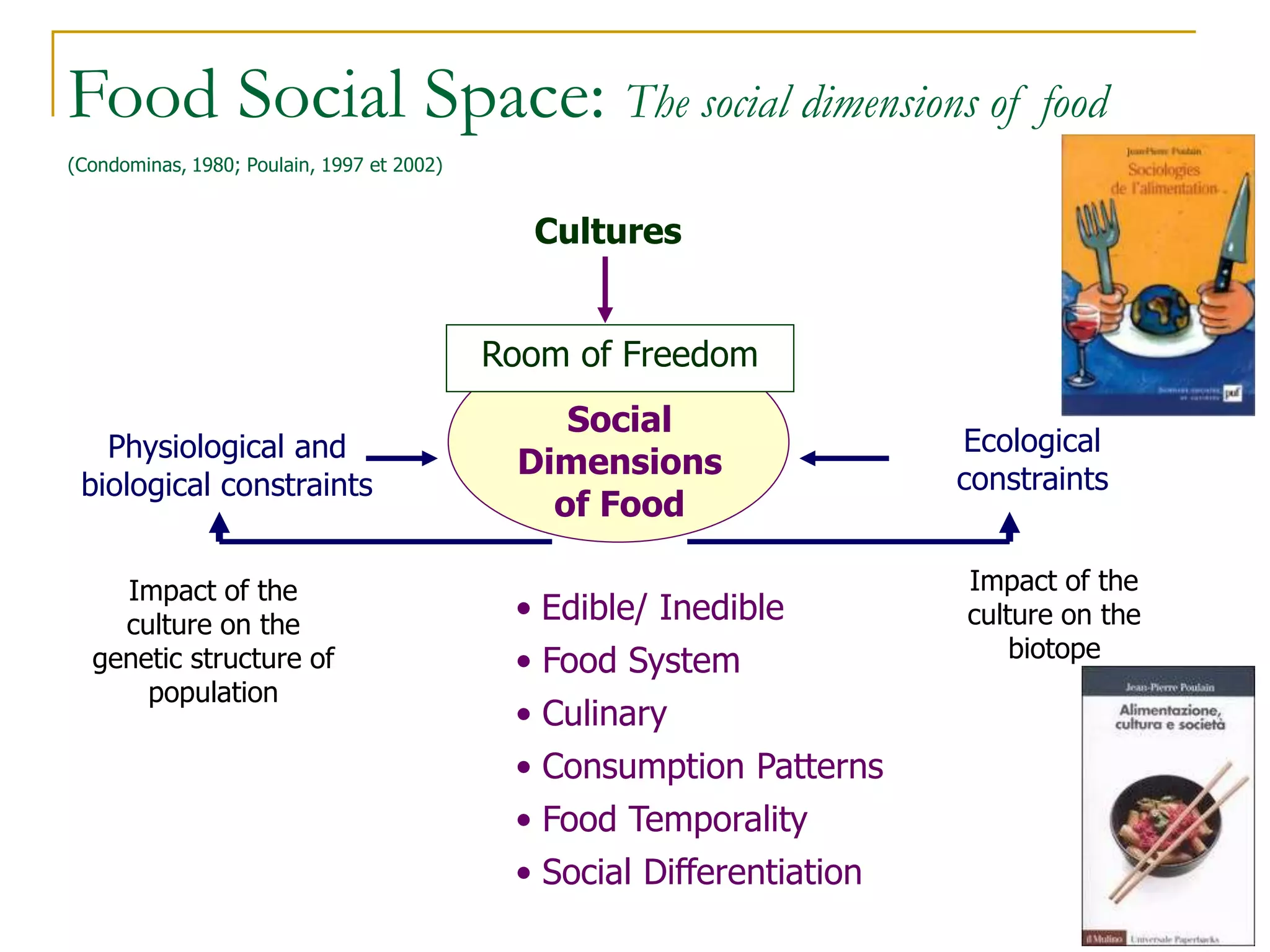
Food Social Space: The social dimensions of                                   food
(Condominas, 1980; Poulain, 1997 et 2002)


                                              Cultures


                                            Room of Freedom
                                                Social
   Physiological and                                                    Ecological
                                             Dimensions                 constraints
 biological constraints
                                               of Food

    Impact of the                                                       Impact of the
    culture on the
                                             • Edible/ Inedible         culture on the
                                                                            biotope
  genetic structure of                       • Food System
      population
                                             • Culinary
                                             • Consumption Patterns
                                             • Food Temporality
                                             • Social Differentiation
Interaction Culture-Biology, but relative
 cultural autonomy
    « Our conception of the social food space accept the
     idea of interactions , meanwhile underlining the
     existence of cultural autonomy, as long as it does not
     shakes (too much) the vital processes…..It insists on
     the fact that the elements of the natural environment
     only become resources if they completely belong to
     the cultural system.» (Poulain, 2002)


We join the conception developed by Jean Baechler :
« We have the right to affirm that the natural conceptions always involve as
answers by yes or by no to questions asked by actors situated in a given context.
… Nature doesn’t impose anything, but it makes possible or impossible some
actions conducted in a given context… » (Baechler, 2001, 469-470)
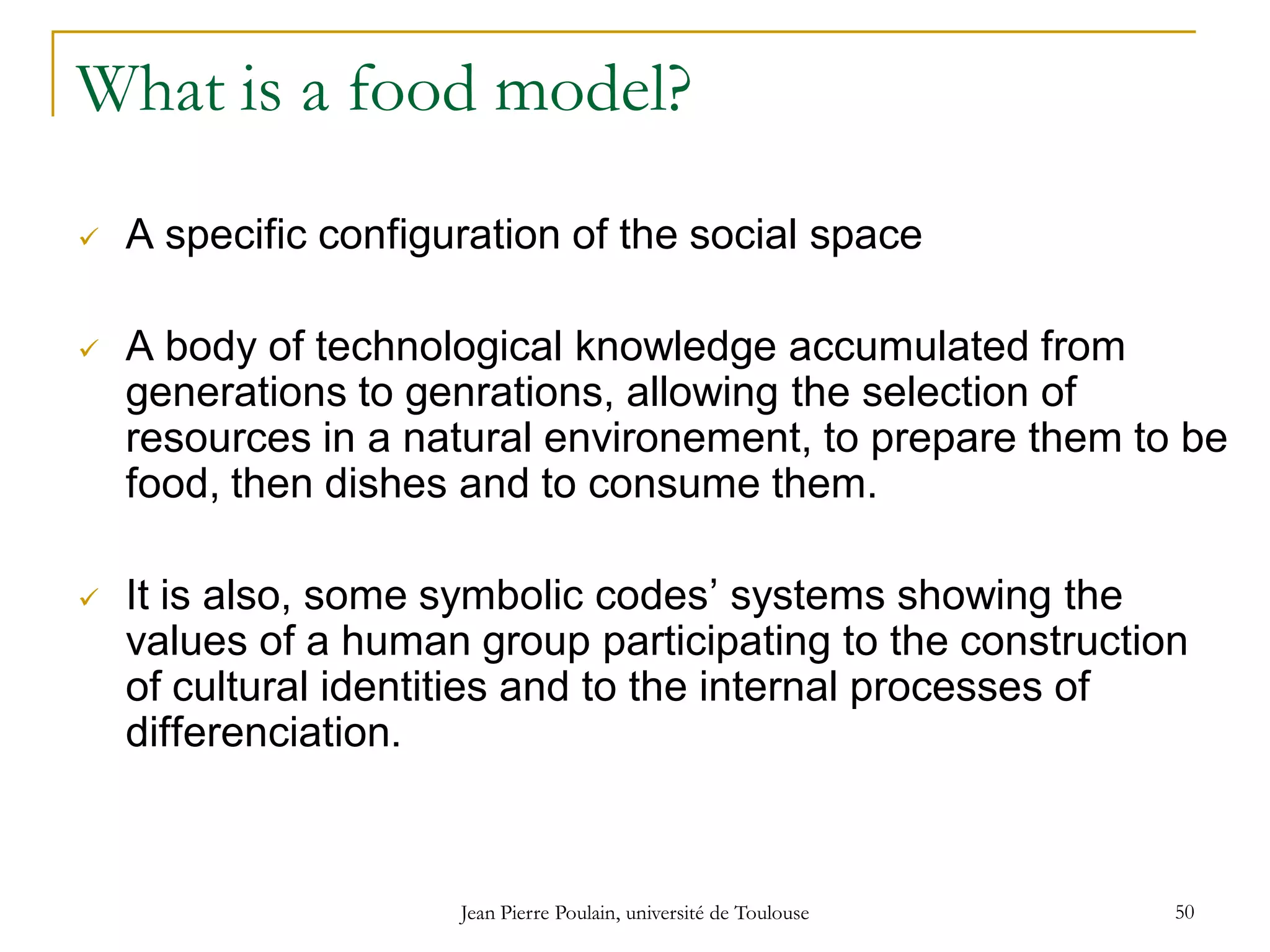
What is a food model?
   A specific configuration of the social space

   A body of technological knowledge accumulated from
    generations to genrations, allowing the selection of
    resources in a natural environement, to prepare them to be
    food, then dishes and to consume them.

   It is also, some symbolic codes’ systems showing the
    values of a human group participating to the construction
    of cultural identities and to the internal processes of
    differenciation.


                      Jean Pierre Poulain, université de Toulouse   50
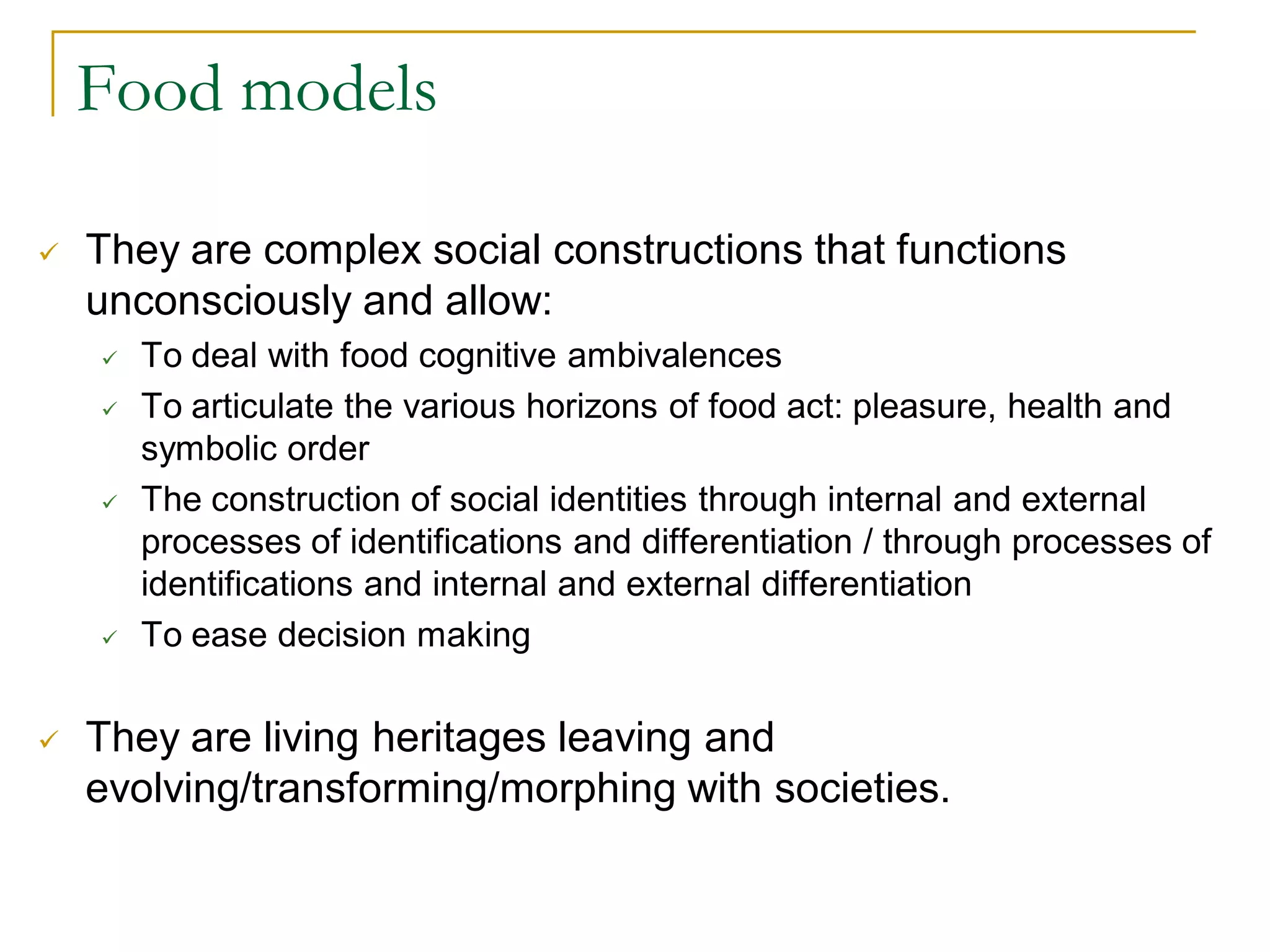
Food models

   They are complex social constructions that functions
    unconsciously and allow:
       To deal with food cognitive ambivalences
       To articulate the various horizons of food act: pleasure, health and
        symbolic order
       The construction of social identities through internal and external
        processes of identifications and differentiation / through processes of
        identifications and internal and external differentiation
       To ease decision making

   They are living heritages leaving and
    evolving/transforming/morphing with societies.
The inventory of food models
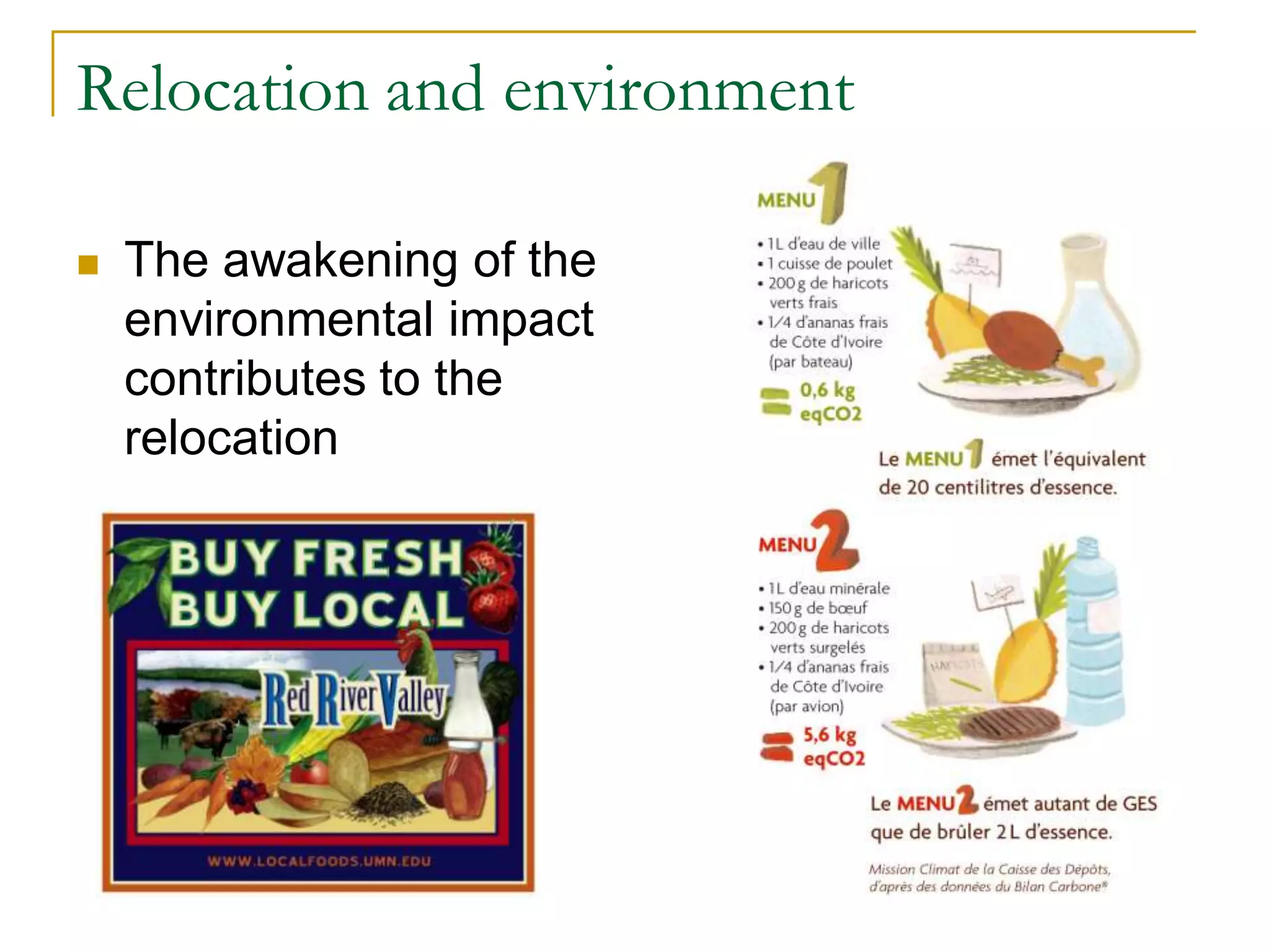
Relocation and environment

   The awakening of the
    environmental impact
    contributes to the
    relocation
   The present food production
    could be sufficient for 12
    billion people

   There are 6.3 billion of us on
    the face of the earth and more
    than 1 billion suffer from
    malnutrition and hunger

   More than half of the food we
    produce is thrown away
   http://www.youtube.com/watch?v=lyptY24Ub
    QM


                                               55
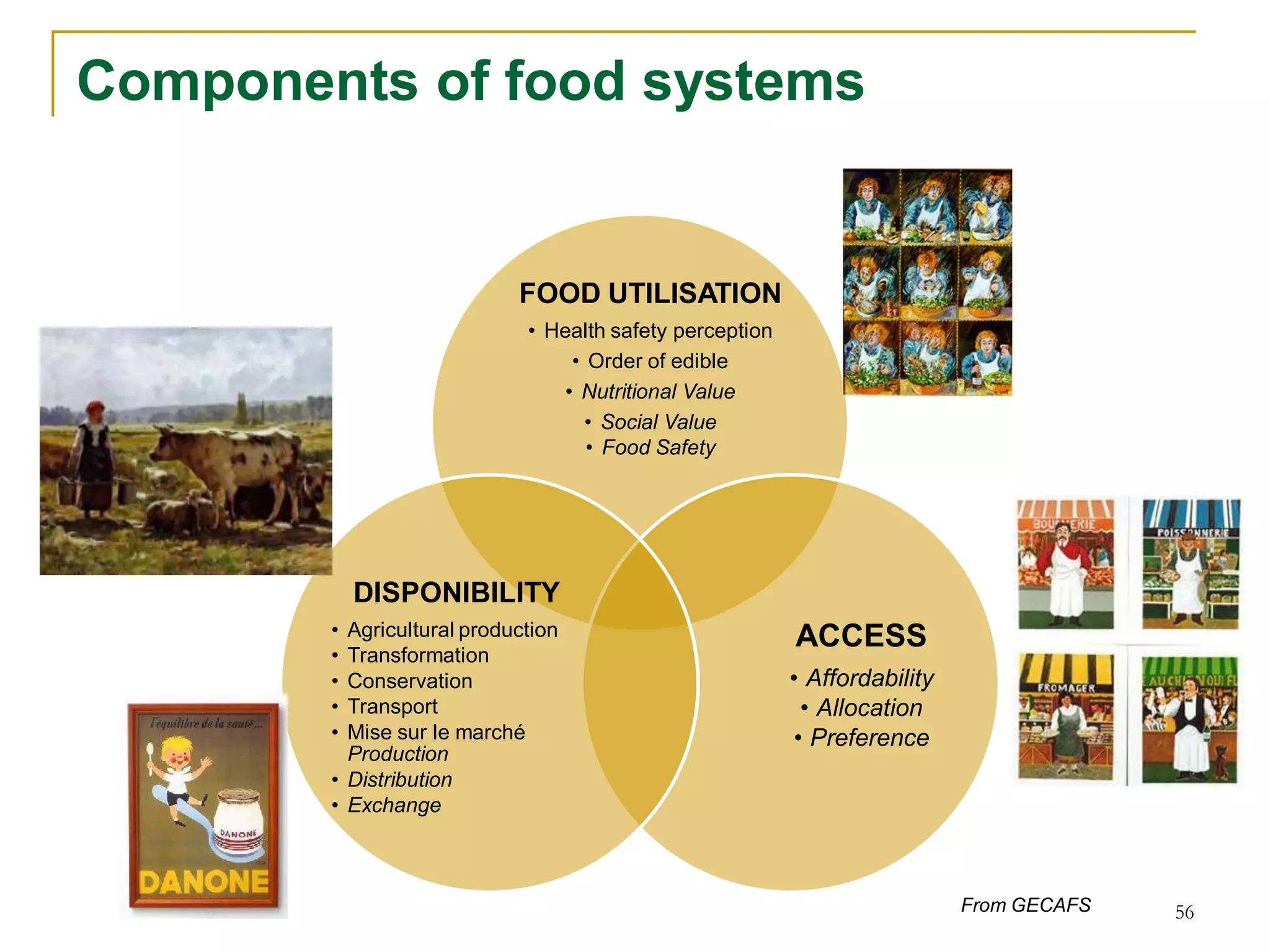
Components of food systems


                            FOOD UTILISATION
                             • Health safety perception
                                  • Order of edible
                                 • Nutritional Value
                                    • Social Value
                                    • Food Safety


            DISPONIBILITY
        • Agricultural production                         ACCESS
        • Transformation
        • Conservation                                    • Affordability
        • Transport                                        • Allocation
        • Mise sur le marché                              • Preference
          Production
        • Distribution
        • Exchange


                                                                            From GECAFS   56
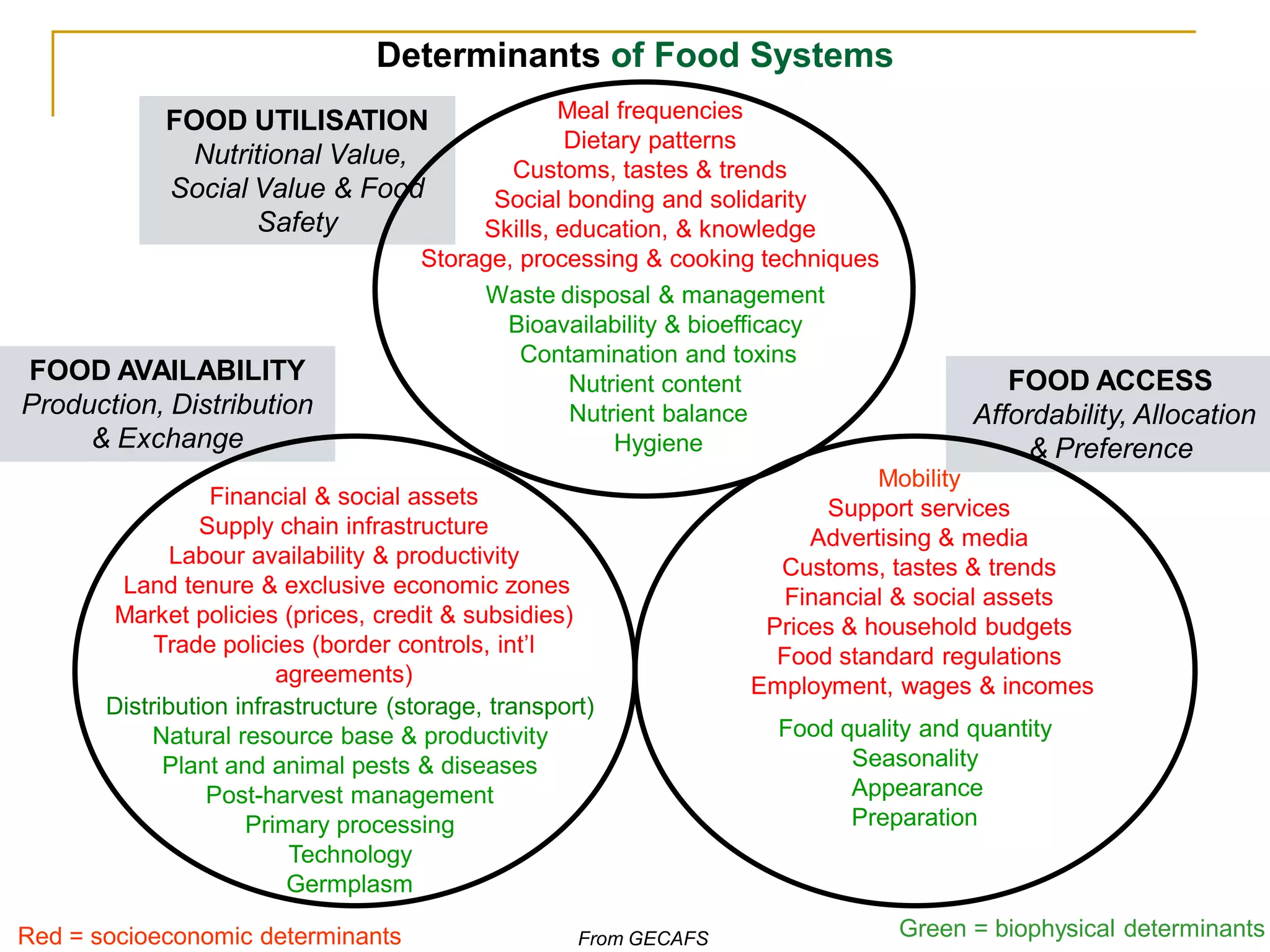
Determinants of Food Systems
             FOOD UTILISATION                      Meal frequencies
                                                    Dietary patterns
              Nutritional Value,               Customs, tastes & trends
             Social Value & Food             Social bonding and solidarity
                    Safety                 Skills, education, & knowledge
                                      Storage, processing & cooking techniques
                                           Waste disposal & management
                                              Bioavailability & bioefficacy
                                                Contamination and toxins
FOOD AVAILABILITY                                   Nutrient content                           FOOD ACCESS
Production, Distribution                            Nutrient balance                        Affordability, Allocation
     & Exchange                                         Hygiene                                  & Preference
                                                                                  Mobility
                 Financial & social assets                                    Support services
                Supply chain infrastructure                                 Advertising & media
             Labour availability & productivity                          Customs, tastes & trends
        Land tenure & exclusive economic zones                            Financial & social assets
       Market policies (prices, credit & subsidies)                     Prices & household budgets
           Trade policies (border controls, int’l                        Food standard regulations
                       agreements)                                     Employment, wages & incomes
      Distribution infrastructure (storage, transport)
           Natural resource base & productivity                          Food quality and quantity
            Plant and animal pests & diseases                                   Seasonality
                Post-harvest management                                         Appearance
                    Primary processing                                          Preparation
                        Technology
                        Germplasm

Red = socioeconomic determinants                    From GECAFS                    Green = biophysical determinants
« Through the choice of his food the
   individual choses the kind of man he
   wants to be…
By reducing bread to calories, wine to a
   drug, sex to hygiene, we deny the
   affective role of flesh et we proclaim
   that our science is sufficient to give a
   meaning to life, we leave the spiritual
   and sacred to the rank of barbarian
   vestiges.
Jean Trémolières, The big of nutrition (Le grand livre de la
    nutrition), Laffont, 1973.
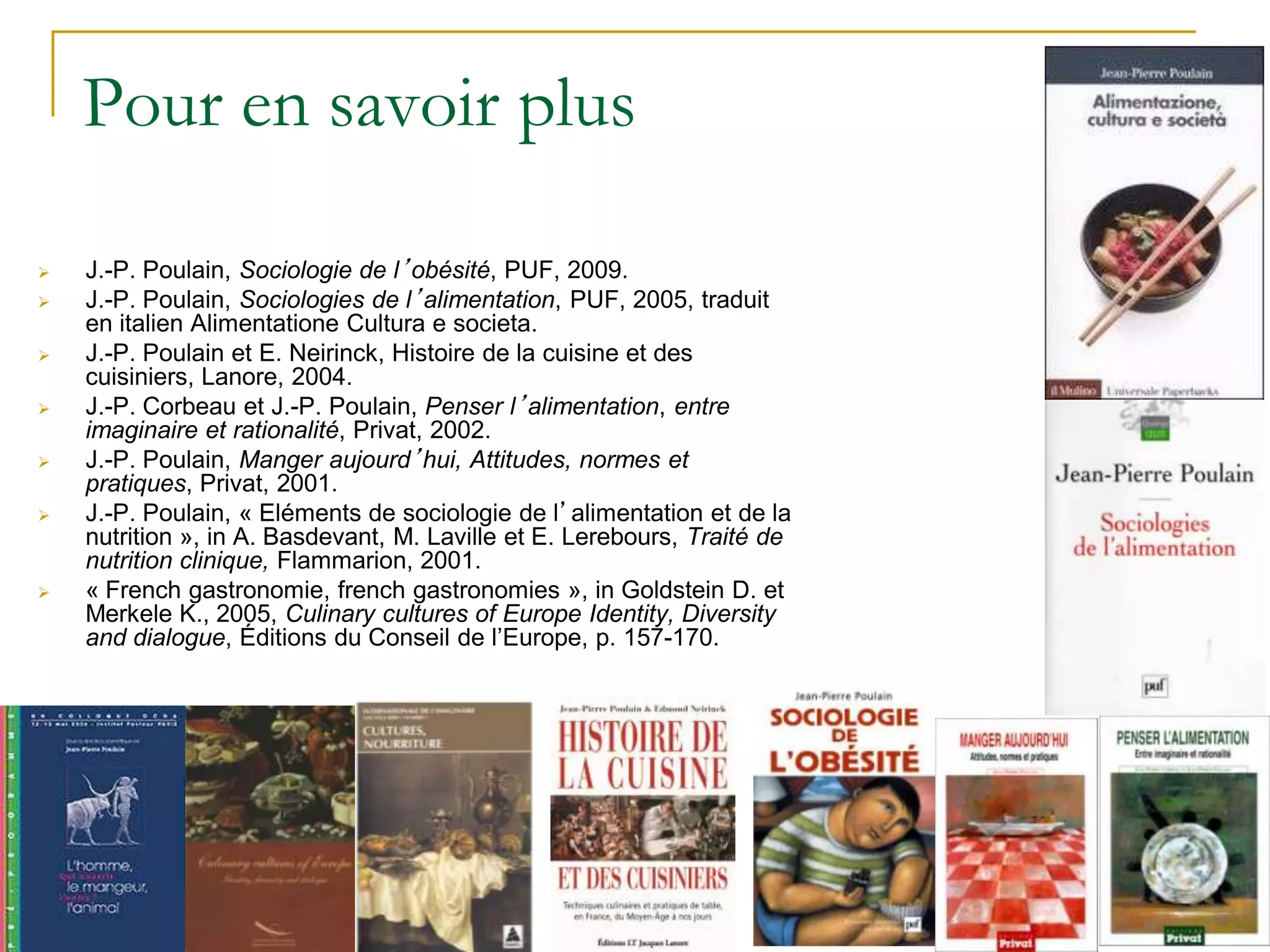
Pour en savoir plus

   J.-P. Poulain, Sociologie de l’obésité, PUF, 2009.
   J.-P. Poulain, Sociologies de l’alimentation, PUF, 2005, traduit
    en italien Alimentatione Cultura e societa.
   J.-P. Poulain et E. Neirinck, Histoire de la cuisine et des
    cuisiniers, Lanore, 2004.
   J.-P. Corbeau et J.-P. Poulain, Penser l’alimentation, entre
    imaginaire et rationalité, Privat, 2002.
   J.-P. Poulain, Manger aujourd’hui, Attitudes, normes et
    pratiques, Privat, 2001.
   J.-P. Poulain, « Eléments de sociologie de l’alimentation et de la
    nutrition », in A. Basdevant, M. Laville et E. Lerebours, Traité de
    nutrition clinique, Flammarion, 2001.
   « French gastronomie, french gastronomies », in Goldstein D. et
    Merkele K., 2005, Culinary cultures of Europe Identity, Diversity
    and dialogue, Éditions du Conseil de l’Europe, p. 157-170.
   http://www.youtube.com/watch?v=AM_PSqjI
    F0o


                                              60

Sociology of food: Food models between bio-diversity and ethno-diversity

  • 1.
    Taylor’s University 7 september 2011, Kuala Lumpur, Malaysia Bio-diversity, ethno- diversity and food cultures How to face the world food challenge Jean-Pierre Poulain sociologue et anthropologue, Professeur à l’Université de Toulouse 2, CERTOP UMR-CNRS 5044 Master Sciences sociales appliquées à l’alimentation
  • 2.
    Seminary content  The awakening of diversity  The biodiversity  The Ethno-diversity  The diversity as a patrimony/heritage  Feeding humankind: the world food challenge  Thomas Malthus theory  Demographical transition and population health  Back on Malthus traces  The food models: Central resources of ethno-diversity:  Social food space/ environment  Sustainable development  The role of cultural diversity in sustainability 2
  • 3.
    The emergence ofecological thoughts  Revealing/Highlighting the notion of « eco-systems » and « world system »  Interdependence of vegetal and animal species and their contribution toward the cycle of life  The biodiversity is seen as a human heritage 3
  • 4.
    Consequences  “Sanctuarization” of certain locations and certain species  Natural parks, African animal reserves, (example of Malaysia- Sipadan and Sempurna national park)  Designation of protected species ( Wales, tuna, sharks, Elephants, Wolfs)  Apparition of wild life protection associations (WWF)  Development of Eco-tourism 4
  • 5.
    The drivers ofthis awakening  The oil crisis and the warnings thrown by the forecasters (club of Rome 1972)  The duality of the modern man over nature  The emergence of a “world system”  Internationalization (mondialization) and Globalization 5
  • 6.
    Rio Earth Summit  This conference ended with:  The creation of the action plan for the XXI ST century (Agenda 21),  The United Nations Framework Convention on Climate Change (UNFCCC)  The convention on bio-diversity and  The convention to combat desertification 6
  • 7.
    The integration ofcultural diversity  The consideration of societies behaviours as a component of biodiversity.  It is the concept of Ethno-diversity and the consideration of local knowledge, as stated in the article 8 of the biological diversity convention signed in Rio in 1992. 7
  • 8.
    The ethno-diversity  The cultural differences are based on the framework of bio-diversity.  They represent as many witness of the diversity and wealth of humanity 8
  • 9.
    Various conceptions ofEthno- diversity  For the first conception: it is the most astonishing expression of humankind and therefore an element of a living heritage, as much as bio-diversity.  For the second: it is in line with the cultural ecology perspective, it is the result of a co-evolution between societies and their environments. It shows some original adaptations that represent the « print/impact » of the past and present bio-diversity of the planet on the human species.(J. Steward, 1955).  Finally, for the last conception, more “utilitarianism” it is the local usages that have allowed the biodiversity to be what it is today. Hence, describing and preserving those knowledge and local practices is the best mean to protect the biodiversity itself. (Roussel, 2003 ; Chouvin et al, 2004). 9
  • 10.
    Consequences of ethno-diversity  Broadening of the notion of heritage  The cultural differences are brought to the rank of heritage  They are no more considered as weirdness due to the arbitrary power of cultures, but the sign of the originality of the links between one human group and its natural environment.  Therefore, those heritages need to be protected  We move from biological interdependence to cultural interdependence 10
  • 11.
    The Slow Movement began with a protest against the opening of a McDonald's restaurant in Piazza di Spagna, in Rome (Italia).  Slow Food is a non-profit, eco-gastronomic member-supported organization that was founded in 1989 to counteract fast food and fast life, the disappearance of local food traditions and people’s dwindling interest in the food they eat, where it comes from, how it tastes and how our food choices affect the rest of the world.  To do that, Slow Food brings together pleasure and responsibility, and makes them inseparable. Today, it have over 100,000 members in 132 countries Carlo Petrini Founder and President of the Slow Food movement
  • 12.
    Slow Food isa non-profit, eco-gastronomic member- supported organization that was founded in 1989 to counteract fast food and fast life, the disappearance of local food traditions and people’s dwindling interest in the food they eat, where it comes from, how it tastes and how our food choices affect the rest of the world. To do that, Slow Food brings together pleasure and responsibility, and makes them inseparable. Today, we have over 100,000 members in 132 countries.
  • 13.
    GOOD • It tastes good and gives us pleasure to eat it
  • 14.
    CLEAN • The wayit’s produced respects the environment, animal welfare and our health
  • 15.
    FAIR • Those who produce it should receive compensation and recognition for their work
  • 16.
    Seminary content  The awakening of diversity  The biodiversity  The Ethno-diversity  The diversity as a patrimony  Feeding humankind: the world food challenge  Thomas Malthus theory  Demographical transition and population health  Back on Malthus traces  The food models: Central resources of ethno-diversity:  Social food space/ environment  Sustainable development  The role of cultural diversity in sustainability 16
  • 17.
  • 18.
    Population grows following a geometrical function: 1, 2, 4, 8, 16, 32, 64, 128, 256, 512…  When the means of surviving follow an arithmetical function: 1, 2, 3, 4, 5, 6, 7, 8, 9, 10… 18
  • 19.
  • 20.
  • 21.
    The sad predictionof Thomas Malthus 21
  • 22.
    Feeding humanity: a recurrentquestion  Anton Zischka, Bread for 2 billions humans, 1942.  Josué de Castro, Geography of hunger  FAO (Food and Agriculture Organization)  Joseph Klatzman, Feeding humankind, 1991  2008, Hunger riots  2011, Starvation in the horn of Africa 22
  • 24.
    Food security risk http://www.youtube.com/watch?NR=1&v=8FM1Xct7JA0 http://www.1billionhungry.org/jeanpierrepoulain/ 24
  • 25.
    Development and transformationof food consumptions 25
  • 26.
    Supposed causes offood insecurity return  Bad harvest in 2007  Raising production of Bio-fuel  Financial speculation 26
  • 27.
    Food security haddisappeared…behind obesity 27
  • 28.
  • 29.
    The double burdentheory... 29
  • 30.
    Frank Notestein atthe Rockefeller foundation  Conceived by Frank Notestein 1945.  Model of population change based upon effects of economic development and based on the experience of the Western world.  It was used for decades as a model to predict what should/would happen to developing countries eventually.  All countries are supposed to pass through four or five stages to reach the state of maturity.
  • 31.
  • 32.
  • 33.
    Alimentation role inthe epidemiological transition Steps Mortality causes Life expectancy Alimentation role Social differentiation and death rate process The epidemic Infectious diseases +- 40 years old Rare and uncertain food The abundance and the Deficiency High infant mortality Strong ecological outsourcing as a social and famine Parasitic diseases High mortality dependence distinction process period A Transition Parasitic, deficiency and Life expectancy gains Food availability Taste esthetization phase infectious diseases - 60 years old increase Big as a social position sign regression, Infant mortality fall Scheduled redistribution B Degenerative diseases appearance Setting up Infectious mortality Life expectancy Food abundance Leanness appearance as a C Quasi-disappearance extension +70 years old distinction sign Mortality degenerative setting up Degenerative Chronicle diseases Life expectancy Food overabundance Diffusion of slimness esthetic Settling between 45 and progression increase Diffusion on nutritional model diseases 54 years old and knowledge Slimness = health management Regression between 55 and 75 years old Sociopathies Suicides and violent death Life expectancy Food overabundance Slimness model Growth, AIDS progression decrease Food anomie intensification Eating disorders and “ deregulation” Fat persons stigmatization obesity
  • 34.
    Epidemiologic transition: Definition  The epidemiologic transition is that process by which the pattern of mortality and disease is transformed from one of high mortality among infants and children and episodic famine and epidemic affecting all age groups to one of degenerative and man-made diseases (such as those attributed to smoking) affecting principally the elderly. Encyclopedia Britannica  Abdel Omran. The Epidemiologic Transition: A Theory of the epidemiology of population change. Milbank Quarterly. 1971;49:509-538 34
  • 35.
    Health transition: mortalityrates (US, 1910-1970) (up to >1000 earlier) 600 Death rate per 100,000 population Infectious diseases 500 Heart disease 400 Cancer 300 Stroke Violent/accident 200 Infancy disease 100 Tuberculosis 0 1900 1920 1940 1960 1980 IUMSP-GCT
  • 36.
  • 37.
    Back on Malthus’trace  Food production depends on:  Exploitable agricultural areas  Water supply  Sunlight  Agrarian techniques  Inputs (fertilizers.)  Agricultural machinery  Energy supply  ...  Food requirement depends on :  The number of individuals to feed  What people consume = FOOD MODELS 37
  • 38.
  • 39.
  • 40.
  • 41.
    Food and Carbonfootprint
  • 42.
    Seminary content  The awakening of diversity  The biodiversity  The Ethno-diversity  The diversity as a patrimony  Feeding humankind: the world food challenge  Thomas Malthus theory  Demographical transition and population health  Back on Malthus traces  The food models: Central resources of ethno-diversity:  Social food space/ environment  Sustainable development  The role of cultural diversity in sustainability 42
  • 43.
    The stakes ofsustainability  From 3 dimensions.... To 4 dimensions Cultural Social Environment
  • 44.
    socio-anthropological framework Cultural Social Environment Economic and ecological frame work 44
  • 45.
    Perspective Perspective Economico-ecological socio-anthropological Key concepts Priority to environment Priority to humanbeings Ecological print, (km/food), Fair-trade, AMAP, Slow food, CO2 community supported agriculture Orientation and Universality of global ecological Specificity of social and culmtural evaluation criteria stakes situations Inter-generational equity Inter-generational equity What kind of planet will we Solidarity with the victims of health leave to our children? scandals. System evaluation Mathematical modelization Case study, experience feedback modality Market relation The market is set, it is required The market is a social and political to understand how it works construction. It is necessary to act toward what is favorable. Consummers places Consumers make choices Consumers are actors of the systems Science princeps Econometry, ecology, Anthropology, sociology, sciences of agronomy development D’après P.M. Stassart ULG,
  • 46.
    Argentina Colombia Portugal japan Rwanda 46 Source : Malassis et Padillat
  • 47.
  • 48.
    Food Social Space:The social dimensions of food (Condominas, 1980; Poulain, 1997 et 2002) Cultures Room of Freedom Social Physiological and Ecological Dimensions constraints biological constraints of Food Impact of the Impact of the culture on the • Edible/ Inedible culture on the biotope genetic structure of • Food System population • Culinary • Consumption Patterns • Food Temporality • Social Differentiation
  • 49.
    Interaction Culture-Biology, butrelative cultural autonomy  « Our conception of the social food space accept the idea of interactions , meanwhile underlining the existence of cultural autonomy, as long as it does not shakes (too much) the vital processes…..It insists on the fact that the elements of the natural environment only become resources if they completely belong to the cultural system.» (Poulain, 2002) We join the conception developed by Jean Baechler : « We have the right to affirm that the natural conceptions always involve as answers by yes or by no to questions asked by actors situated in a given context. … Nature doesn’t impose anything, but it makes possible or impossible some actions conducted in a given context… » (Baechler, 2001, 469-470)
  • 50.
    What is afood model?  A specific configuration of the social space  A body of technological knowledge accumulated from generations to genrations, allowing the selection of resources in a natural environement, to prepare them to be food, then dishes and to consume them.  It is also, some symbolic codes’ systems showing the values of a human group participating to the construction of cultural identities and to the internal processes of differenciation. Jean Pierre Poulain, université de Toulouse 50
  • 51.
    Food models  They are complex social constructions that functions unconsciously and allow:  To deal with food cognitive ambivalences  To articulate the various horizons of food act: pleasure, health and symbolic order  The construction of social identities through internal and external processes of identifications and differentiation / through processes of identifications and internal and external differentiation  To ease decision making  They are living heritages leaving and evolving/transforming/morphing with societies.
  • 52.
    The inventory offood models
  • 53.
    Relocation and environment  The awakening of the environmental impact contributes to the relocation
  • 54.
    The present food production could be sufficient for 12 billion people  There are 6.3 billion of us on the face of the earth and more than 1 billion suffer from malnutrition and hunger  More than half of the food we produce is thrown away
  • 55.
    http://www.youtube.com/watch?v=lyptY24Ub QM 55
  • 56.
    Components of foodsystems FOOD UTILISATION • Health safety perception • Order of edible • Nutritional Value • Social Value • Food Safety DISPONIBILITY • Agricultural production ACCESS • Transformation • Conservation • Affordability • Transport • Allocation • Mise sur le marché • Preference Production • Distribution • Exchange From GECAFS 56
  • 57.
    Determinants of FoodSystems FOOD UTILISATION Meal frequencies Dietary patterns Nutritional Value, Customs, tastes & trends Social Value & Food Social bonding and solidarity Safety Skills, education, & knowledge Storage, processing & cooking techniques Waste disposal & management Bioavailability & bioefficacy Contamination and toxins FOOD AVAILABILITY Nutrient content FOOD ACCESS Production, Distribution Nutrient balance Affordability, Allocation & Exchange Hygiene & Preference Mobility Financial & social assets Support services Supply chain infrastructure Advertising & media Labour availability & productivity Customs, tastes & trends Land tenure & exclusive economic zones Financial & social assets Market policies (prices, credit & subsidies) Prices & household budgets Trade policies (border controls, int’l Food standard regulations agreements) Employment, wages & incomes Distribution infrastructure (storage, transport) Natural resource base & productivity Food quality and quantity Plant and animal pests & diseases Seasonality Post-harvest management Appearance Primary processing Preparation Technology Germplasm Red = socioeconomic determinants From GECAFS Green = biophysical determinants
  • 58.
    « Through thechoice of his food the individual choses the kind of man he wants to be… By reducing bread to calories, wine to a drug, sex to hygiene, we deny the affective role of flesh et we proclaim that our science is sufficient to give a meaning to life, we leave the spiritual and sacred to the rank of barbarian vestiges. Jean Trémolières, The big of nutrition (Le grand livre de la nutrition), Laffont, 1973.
  • 59.
    Pour en savoirplus  J.-P. Poulain, Sociologie de l’obésité, PUF, 2009.  J.-P. Poulain, Sociologies de l’alimentation, PUF, 2005, traduit en italien Alimentatione Cultura e societa.  J.-P. Poulain et E. Neirinck, Histoire de la cuisine et des cuisiniers, Lanore, 2004.  J.-P. Corbeau et J.-P. Poulain, Penser l’alimentation, entre imaginaire et rationalité, Privat, 2002.  J.-P. Poulain, Manger aujourd’hui, Attitudes, normes et pratiques, Privat, 2001.  J.-P. Poulain, « Eléments de sociologie de l’alimentation et de la nutrition », in A. Basdevant, M. Laville et E. Lerebours, Traité de nutrition clinique, Flammarion, 2001.  « French gastronomie, french gastronomies », in Goldstein D. et Merkele K., 2005, Culinary cultures of Europe Identity, Diversity and dialogue, Éditions du Conseil de l’Europe, p. 157-170.
  • 60.
    http://www.youtube.com/watch?v=AM_PSqjI F0o 60