EPIDEMIOLOGY AND THE DYNAMICS OF DISEASE
TRANSMISSION DR.DURGA FIRST YEAR PG
DEPARTMENT OF COMMUNITY MEDICINE
EPIDEMIOLOGY OF INFECTIOUS DISEASE:
CONTAMINATION:
Presence of an infectious agent on body surface.eg:clothes,toys etc
INFESTATION:
Lodging,development and reproduction of arthopods on the surface of human body and
invasion of the gut by parasites.
HOST:
Person or other living animal who affords lodgement to an infectious agent. Obligate/
Intermediate/ Transport host.
EPIDEMIOLOGY:
• DEFINITION
• OBJECTIVES
• LEVELS OF PREVENTION
• THE EPIDEMIOLOGICAL APPROACH
• EXAMPLES OF HISTORICAL EPIDEMIOLOGICAL
OBSERVATIONS
• INTEGRATING PREVENTION AND TREATMENT
EPIDEMIOLOGY:
 Epidemiology is the study of the distribution and
determinants of health-related states or events in specified
populations and the application of this study to control of
health problems
OBJECTIVES OF EPIDEMIOLOGY:
 Etiology-develop prevention program,vaccine and treatment.
 Extent of disease(burden in community)- health services.
 Natural history and prognosis of disease-develop new mode of
intervention
 Evaluate both existing and newly developed preventive and therapeutic
measures and modes of health care delivery.
 To provide for developing public policy relating to environmental
problems,regarding disease prevention and health promotion.
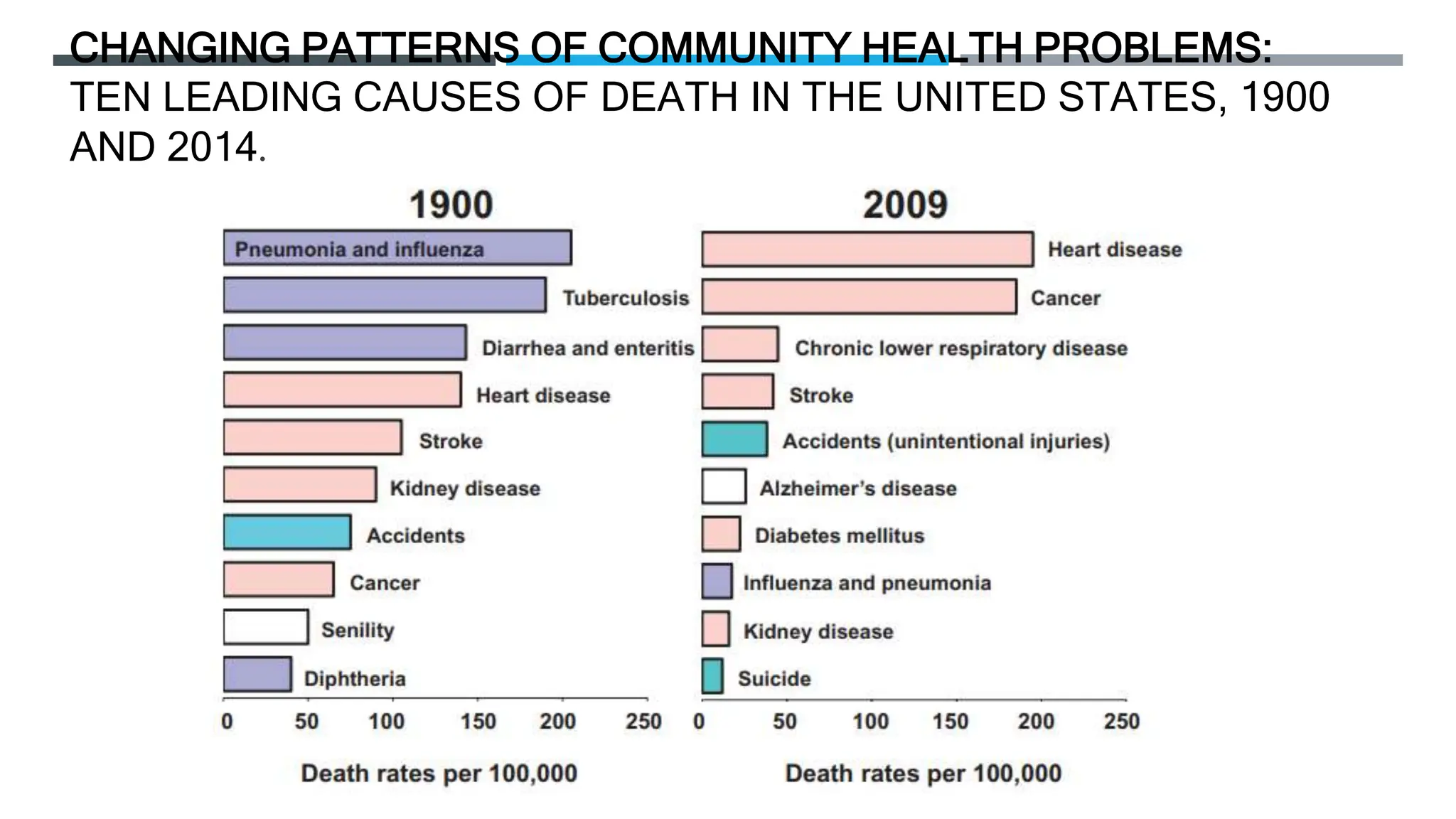
CHANGING PATTERNS OF COMMUNITY HEALTH PROBLEMS:
TEN LEADING CAUSES OF DEATH IN THE UNITED STATES, 1900
AND 2014.
LIFE EXPECTANCY AT BIRTH AND AT 65 YEARS OF AGE, BY
RACE AND SEX, UNITED STATES, 1900, 1950, AND 2014.
EPIDEMIOLOGY AND LEVELS OF PREVENTION:
 Epidemiologic evidence to be used to identify high risk population
and direct the preventive strategies like such as screening programs
for early disease detection.
 Modifiable and non modifiable risk factors
 Two approaches of prevention.
1. Population based
2. High risk
Levels of prevention are defined by considering the point of time
when interventions are applied for halting the disease progression.
PRIMODIAL PREVENTION:
 Prevention of development of risk factors in a population
group
• EG : Intervention through individual and mass health
education.
Discouraging people from adopting the harmful
lifestyle.
PRIMARY PREVENTION:
 It is done to prevent the development of a disease in a
person who is well and does not (yet) have the disease in
question
 EG: Immunization
reduce smoking to prevent lung cancer
mosquito repellents and nets
SECONDARY PREVENTION:
 Early detection and treatment of the existing disease to
reduce severity and complications
 Preclinical phase
 EG: Screening procedures for cancer or congenital
malformation
TERTIARY PREVENTION:
 Reducing the impact of the disease and preventing
complications
 Appropriate treatment of the illness combined with
ancillary approaches such as physical therapy
 Clinical phase of disease
 EG: Rehabilitaion
EPIDEMIOLOGY AND LEVELS OF PREVENTION:
EPIDEMIOLOGIC APPROACH:
1.Determine whether there is assosciation between Exposure
to a factor [eg :environmental agent] or Characteristic of a
person{eg: elevated serum cholesterol} and the disease in
question
2.to derive appropriate inferences about a possible causal
relationship from the patterns of the associations.
EPIDEMIOLOGIC APPROACH:
EPIDEMIOLOGICAL OBSERVATIONS TO PREVENTIVE
ACTIONS:
 1. Ignáz Semmelweis and Childbed Fever.
 2. Edward Jenner and Smallpox.
 3. John Snow and Cholera.
IGNÁZ SEMMELWEIS AND CHILDBED FEVER:
EDWARD JENNER AND SMALLPOX:
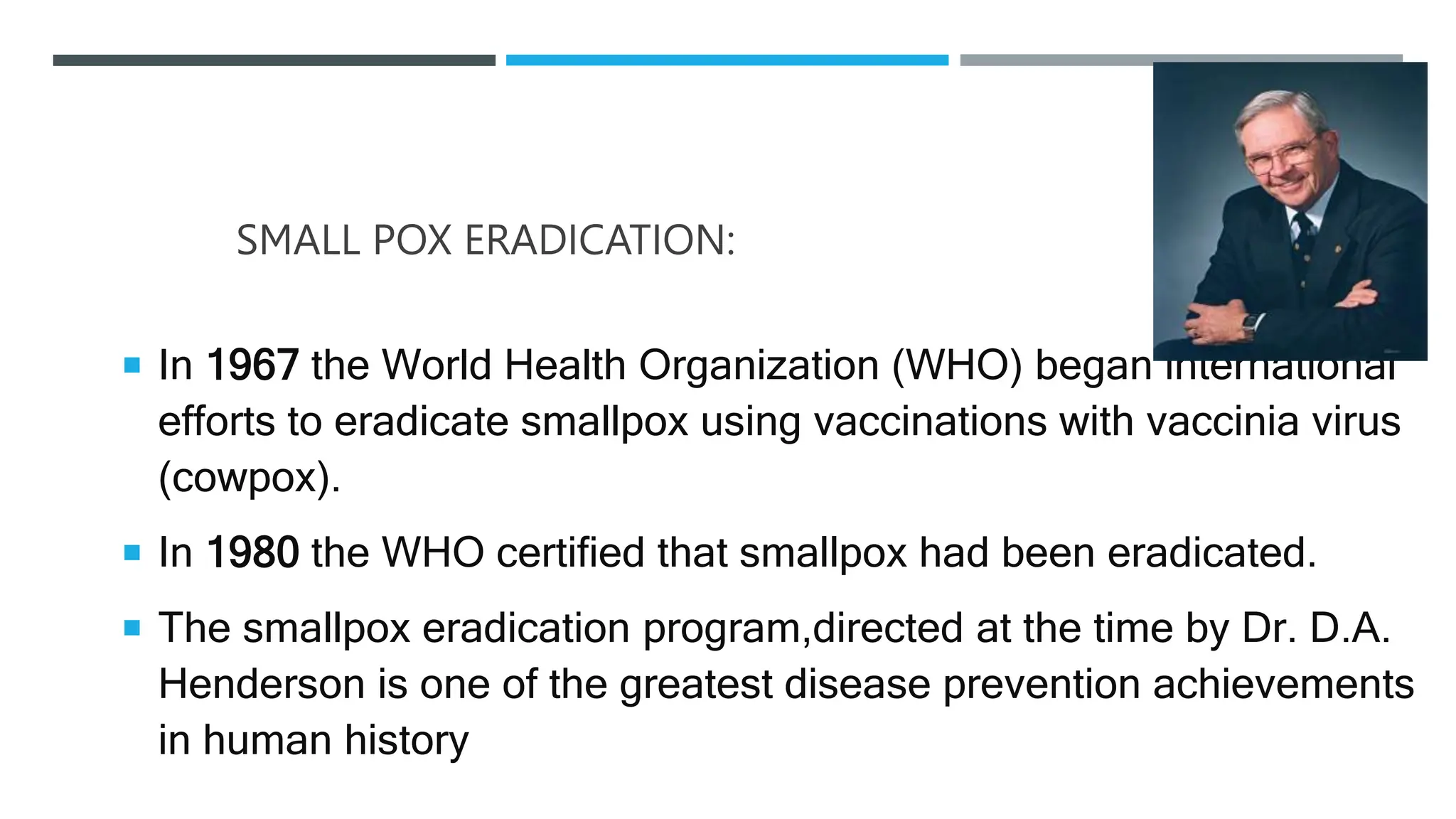
SMALL POX ERADICATION:
 In 1967 the World Health Organization (WHO) began international
efforts to eradicate smallpox using vaccinations with vaccinia virus
(cowpox).
 In 1980 the WHO certified that smallpox had been eradicated.
 The smallpox eradication program,directed at the time by Dr. D.A.
Henderson is one of the greatest disease prevention achievements
in human history
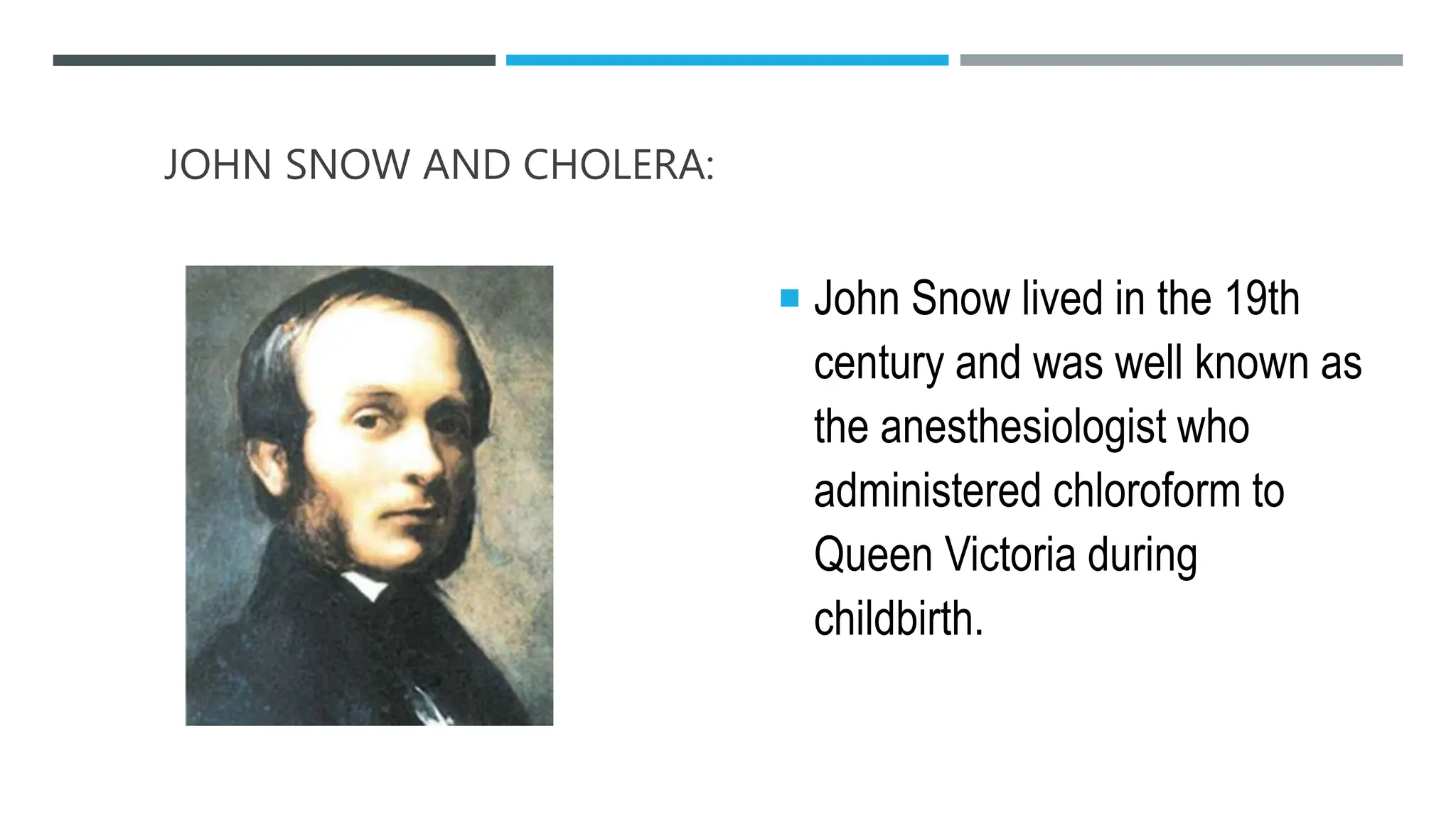
JOHN SNOW AND CHOLERA:
 John Snow lived in the 19th
century and was well known as
the anesthesiologist who
administered chloroform to
Queen Victoria during
childbirth.
JOHN SNOW AND CHOLERA:
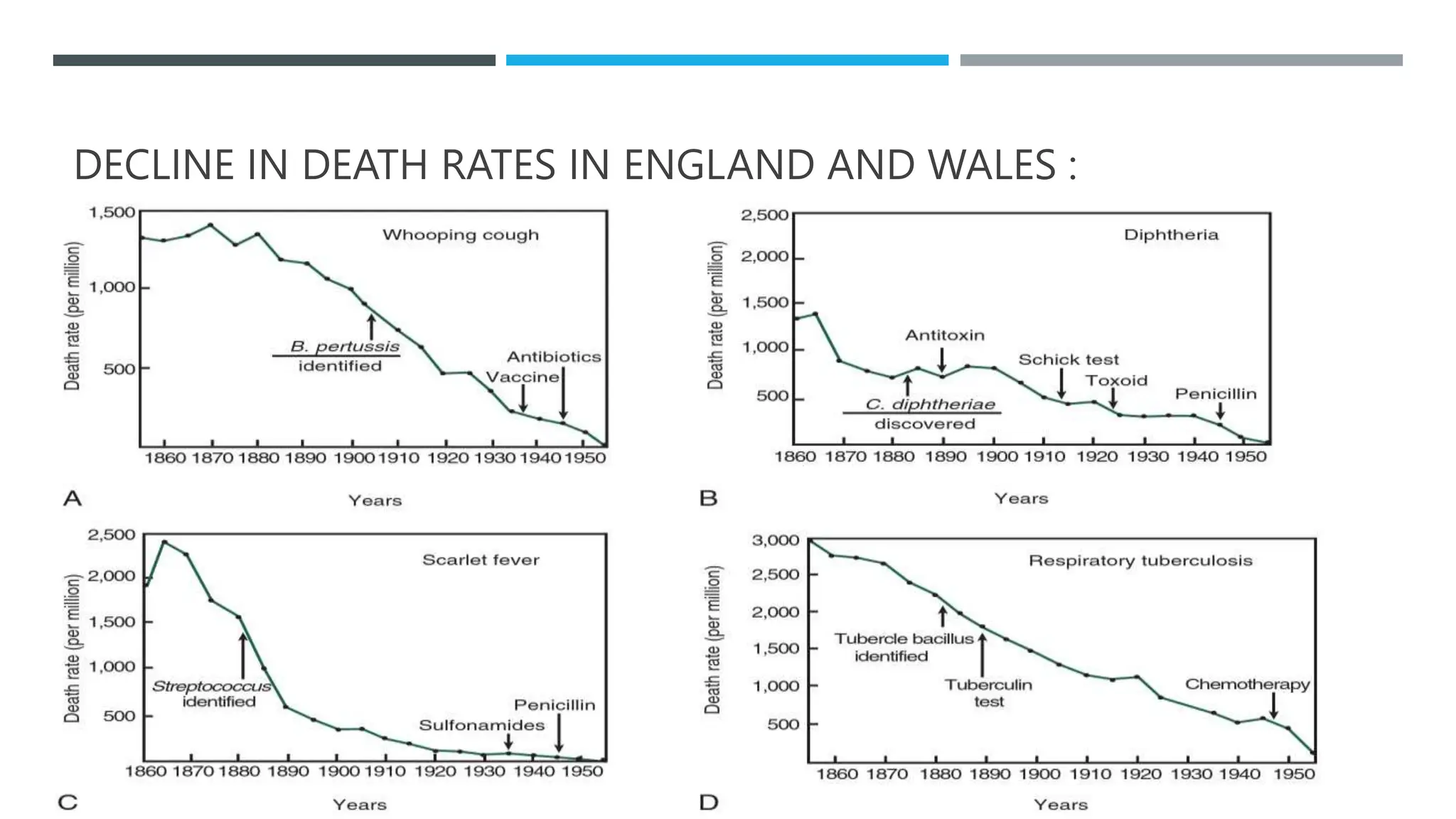
DECLINE IN DEATH RATES IN ENGLAND AND WALES :
INTEGRATING PREVENTION AND TREATMENT:
 Mutually exclusive activites.
 Truvada(tenofovir and emtricitabine) preventing HIV in high risk. Since
2004, for treatment.
 The drug being studied, crenezumab, for Alzheimer’s with mild to
moderate dementia, now used in preventive aspect .
DYNAMICS OF DISEASE TRANSMISSION
DYNAMICS OF DISEASE TRANSMISSION:
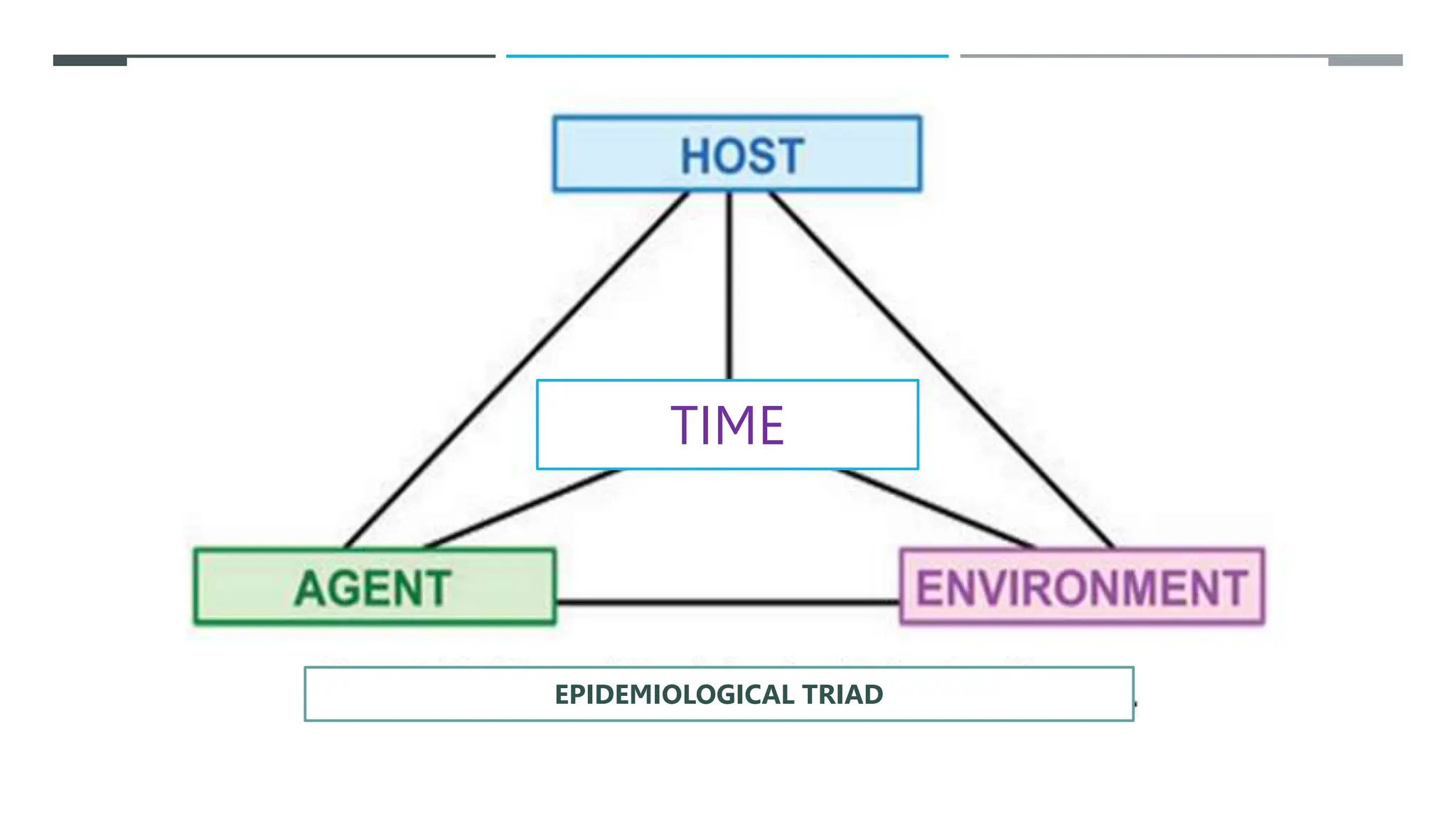
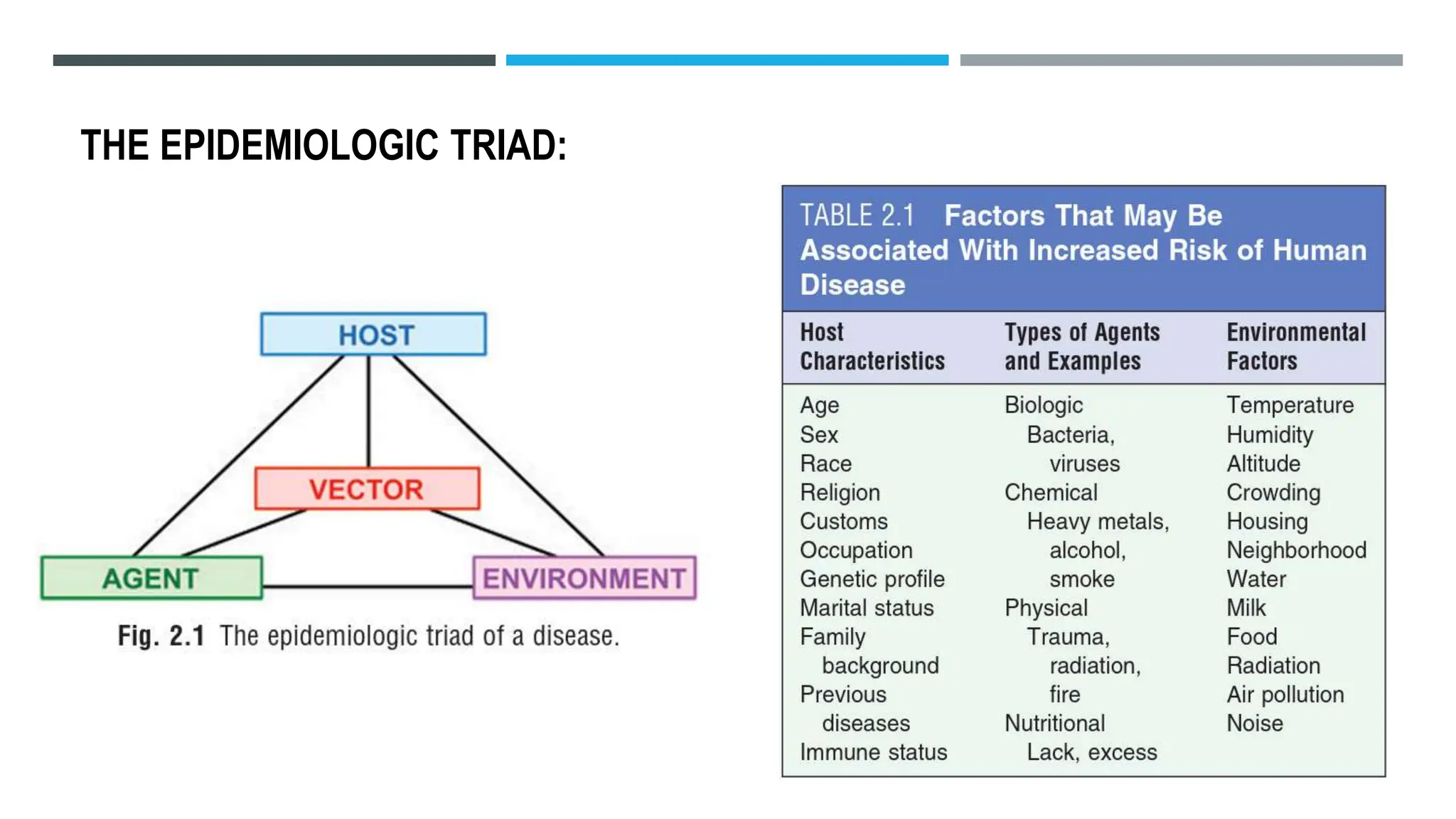
 THE EPIDEMIOLOGIC TRIAD
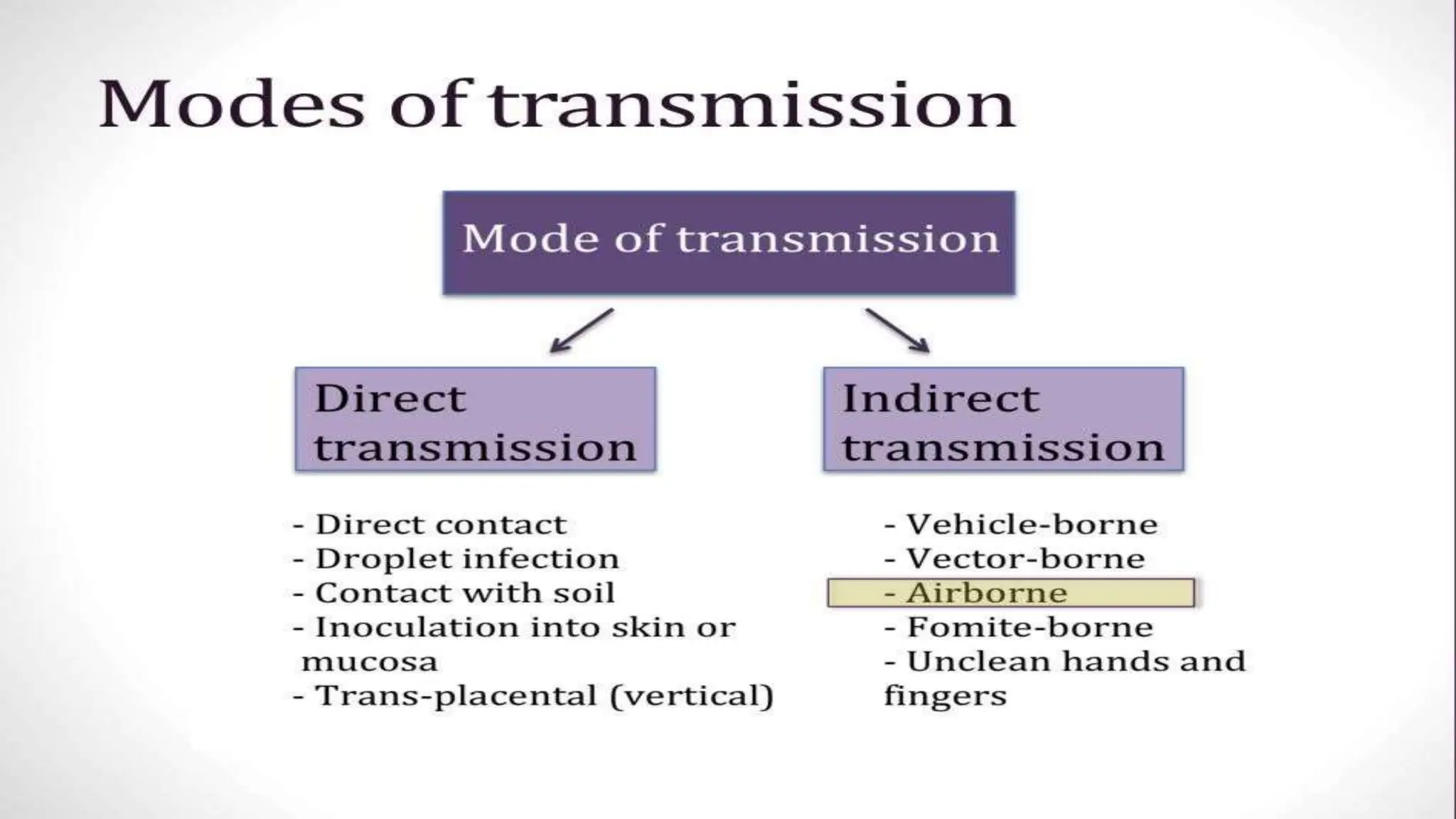
 MODES OF DISEASE TRANSMISSION
 CLINICAL AND SUBCLINICAL DISEASE
 CARRIER STATUS
 ENDEMIC,EPIDEMIC,PANDEMIC
 HERD IMMUNITY
 INCUBATION PERIOD
 ATTACK RATE
 OUTBREAK INVESTIGATION
 CROSS TABULATION
TIME
EPIDEMIOLOGICAL TRIAD
THE EPIDEMIOLOGIC TRIAD:
CLINICAL AND SUBCLINICAL DISEASE:
Clinical Disease : TIP OF ICEBERG
Clinical disease is characterized by signs and symptoms.
Non Clinical Disease: INAPPARENT
 Preclinical Disease: Destined to progress to clinical disease.
 Subclinical Disease: Not destined to become clinically apparent. This type of disease is often
diagnosed by serologic response or culture of the organism.
 Persistent Disease: A person fails to “shake off” the infection, and it persists for years, at times
for life.
 Latent Disease:Infection with no active multiplication of the agent, only the genetic material is
present in host not the viable organism
DISTRIBUTION OF CLINICAL SEVERITY FOR THREE CLASSES OF INFECTIONS:
CARRIER STATUS:
A carrier is an individual who harbors the organism but is not infected as
measured by serologic studies (no evidence of an antibody response) or by
evidence of clinical illness. Eg: Typhoid Mary
This person can still infect others, although the infectivity is often lower than with
other infections. Carrier status may be of limited duration or may be chronic,
lasting for months or years.
ENDEMIC, EPIDEMIC, AND PANDEMIC:
 Endemic is defined as the habitual presence of a disease within a given
geographic area. It may also refer to the usual occurrence of a given disease
within such an area.
 Epidemic is defined as the occurrence in a community or region of a group of
illnesses of similar nature, clearly in excess of normal expectancy, and derived
from a common or from a propagated source.
 Pandemic refers to a worldwide epidemic.
IMMUNITY AND SUSCEPTIBILITY:
 The amount of disease in a population depends on a balance between the number of
people in that population who are susceptible, and therefore at risk for the disease,
and the number of people who are not susceptible, or immune, and therefore not at risk.
 They may be immune because they have had the disease previously or because they
have been immunized.
 They also may be not susceptible on a genetic basis
 Clearly, if the entire population is immune, no epidemic will develop.
 But the balance is usually struck somewhere in between immunity and susceptibility,
and when it moves toward susceptibility, the likelihood of an outbreak increases
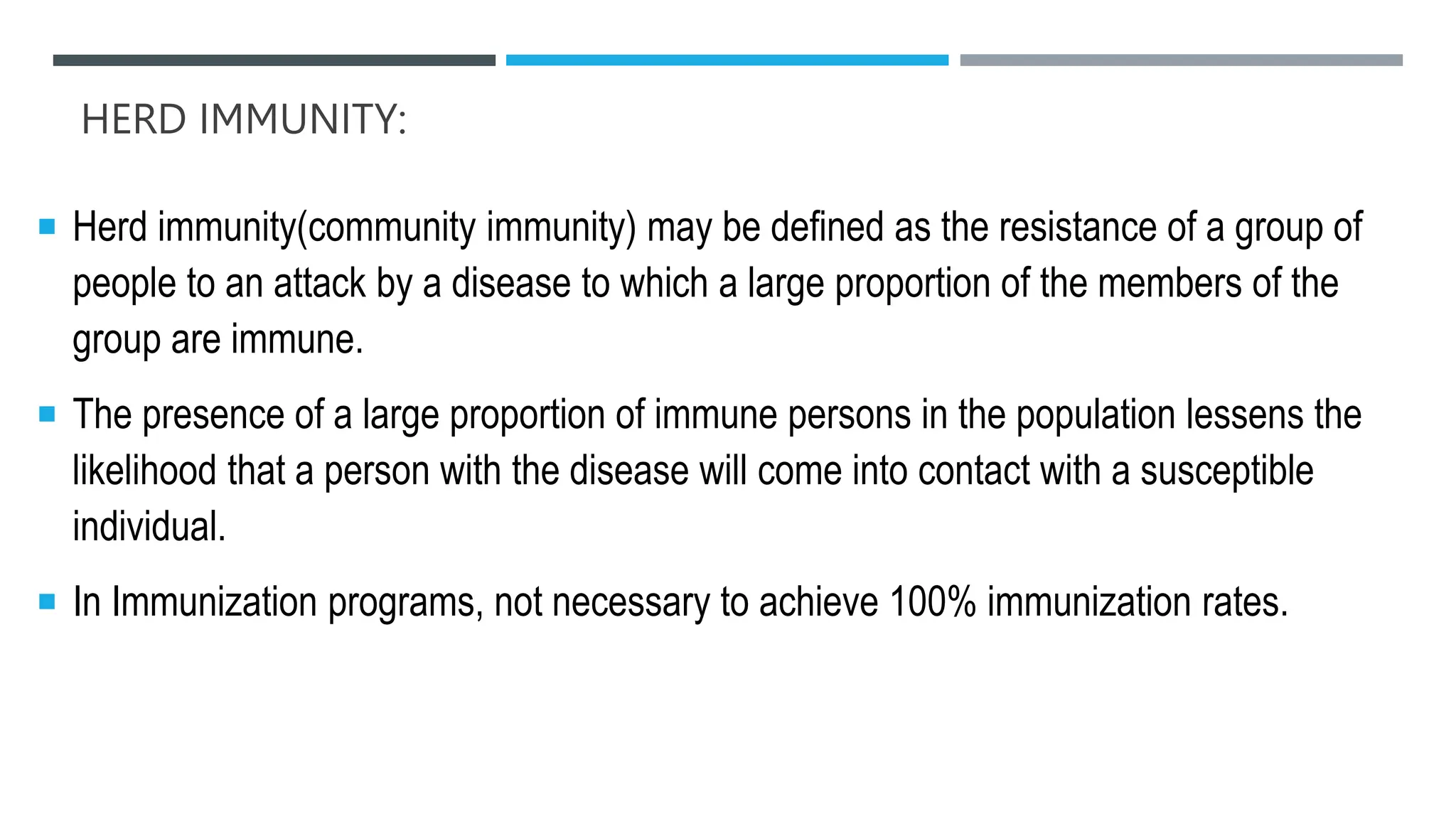
HERD IMMUNITY:
 Herd immunity(community immunity) may be defined as the resistance of a group of
people to an attack by a disease to which a large proportion of the members of the
group are immune.
 The presence of a large proportion of immune persons in the population lessens the
likelihood that a person with the disease will come into contact with a susceptible
individual.
 In Immunization programs, not necessary to achieve 100% immunization rates.
HERD IMMUNITY:
 For herd immunity to exist, certain conditions must be met
1. The disease agent is restricted to a single host within which transmission
occurs.
2. If we have reservoir in which the organism can exit outside the human
host, herd immunity will not operate.
 It operates optimally when population are constantly mixing together to an extent
– Random mixing – Interrupt the transmission.
EFFECT OF HERD IMMUNITY, UNITED STATES, 1958–61.
INCUBATION PERIOD:
 The incubation period is defined as the interval from receipt of infection to the time
of onset of clinical illness
Time needed for the organism to replicate
Site at which the organism replicate.
Dose of the infectious agent.
INCUBATION PERIOD:
SINGLE EXPOSURE EPIDEMIC CURVE:
 Salmonella typhimurium outbreak at a medical conference in
Wales, 1986.
ATTACK RATE:
 A person who acquires the disease from that exposure is called a primary case.
 A person who acquires the disease from exposure to a primary case is called a
secondary case.
 The seconary attack rate is therefore defined as the attack rate in susceptible
people who were not exposed to the suspected agent who have been exposed to
a primary case
leon gordis epidemiology  chapters- 1,2.pptx

leon gordis epidemiology chapters- 1,2.pptx

  • 1.
    EPIDEMIOLOGY AND THEDYNAMICS OF DISEASE TRANSMISSION DR.DURGA FIRST YEAR PG DEPARTMENT OF COMMUNITY MEDICINE
  • 2.
    EPIDEMIOLOGY OF INFECTIOUSDISEASE: CONTAMINATION: Presence of an infectious agent on body surface.eg:clothes,toys etc INFESTATION: Lodging,development and reproduction of arthopods on the surface of human body and invasion of the gut by parasites. HOST: Person or other living animal who affords lodgement to an infectious agent. Obligate/ Intermediate/ Transport host.
  • 3.
    EPIDEMIOLOGY: • DEFINITION • OBJECTIVES •LEVELS OF PREVENTION • THE EPIDEMIOLOGICAL APPROACH • EXAMPLES OF HISTORICAL EPIDEMIOLOGICAL OBSERVATIONS • INTEGRATING PREVENTION AND TREATMENT
  • 4.
    EPIDEMIOLOGY:  Epidemiology isthe study of the distribution and determinants of health-related states or events in specified populations and the application of this study to control of health problems
  • 5.
    OBJECTIVES OF EPIDEMIOLOGY: Etiology-develop prevention program,vaccine and treatment.  Extent of disease(burden in community)- health services.  Natural history and prognosis of disease-develop new mode of intervention  Evaluate both existing and newly developed preventive and therapeutic measures and modes of health care delivery.  To provide for developing public policy relating to environmental problems,regarding disease prevention and health promotion.
  • 6.
    CHANGING PATTERNS OFCOMMUNITY HEALTH PROBLEMS: TEN LEADING CAUSES OF DEATH IN THE UNITED STATES, 1900 AND 2014.
  • 7.
    LIFE EXPECTANCY ATBIRTH AND AT 65 YEARS OF AGE, BY RACE AND SEX, UNITED STATES, 1900, 1950, AND 2014.
  • 8.
    EPIDEMIOLOGY AND LEVELSOF PREVENTION:  Epidemiologic evidence to be used to identify high risk population and direct the preventive strategies like such as screening programs for early disease detection.  Modifiable and non modifiable risk factors  Two approaches of prevention. 1. Population based 2. High risk Levels of prevention are defined by considering the point of time when interventions are applied for halting the disease progression.
  • 9.
    PRIMODIAL PREVENTION:  Preventionof development of risk factors in a population group • EG : Intervention through individual and mass health education. Discouraging people from adopting the harmful lifestyle.
  • 10.
    PRIMARY PREVENTION:  Itis done to prevent the development of a disease in a person who is well and does not (yet) have the disease in question  EG: Immunization reduce smoking to prevent lung cancer mosquito repellents and nets
  • 11.
    SECONDARY PREVENTION:  Earlydetection and treatment of the existing disease to reduce severity and complications  Preclinical phase  EG: Screening procedures for cancer or congenital malformation
  • 12.
    TERTIARY PREVENTION:  Reducingthe impact of the disease and preventing complications  Appropriate treatment of the illness combined with ancillary approaches such as physical therapy  Clinical phase of disease  EG: Rehabilitaion
  • 13.
  • 14.
    EPIDEMIOLOGIC APPROACH: 1.Determine whetherthere is assosciation between Exposure to a factor [eg :environmental agent] or Characteristic of a person{eg: elevated serum cholesterol} and the disease in question 2.to derive appropriate inferences about a possible causal relationship from the patterns of the associations.
  • 15.
  • 16.
    EPIDEMIOLOGICAL OBSERVATIONS TOPREVENTIVE ACTIONS:  1. Ignáz Semmelweis and Childbed Fever.  2. Edward Jenner and Smallpox.  3. John Snow and Cholera.
  • 17.
    IGNÁZ SEMMELWEIS ANDCHILDBED FEVER:
  • 19.
  • 20.
    SMALL POX ERADICATION: In 1967 the World Health Organization (WHO) began international efforts to eradicate smallpox using vaccinations with vaccinia virus (cowpox).  In 1980 the WHO certified that smallpox had been eradicated.  The smallpox eradication program,directed at the time by Dr. D.A. Henderson is one of the greatest disease prevention achievements in human history
  • 21.
    JOHN SNOW ANDCHOLERA:  John Snow lived in the 19th century and was well known as the anesthesiologist who administered chloroform to Queen Victoria during childbirth.
  • 22.
    JOHN SNOW ANDCHOLERA:
  • 23.
    DECLINE IN DEATHRATES IN ENGLAND AND WALES :
  • 24.
    INTEGRATING PREVENTION ANDTREATMENT:  Mutually exclusive activites.  Truvada(tenofovir and emtricitabine) preventing HIV in high risk. Since 2004, for treatment.  The drug being studied, crenezumab, for Alzheimer’s with mild to moderate dementia, now used in preventive aspect .
  • 25.
    DYNAMICS OF DISEASETRANSMISSION
  • 26.
    DYNAMICS OF DISEASETRANSMISSION:  THE EPIDEMIOLOGIC TRIAD  MODES OF DISEASE TRANSMISSION  CLINICAL AND SUBCLINICAL DISEASE  CARRIER STATUS  ENDEMIC,EPIDEMIC,PANDEMIC  HERD IMMUNITY  INCUBATION PERIOD  ATTACK RATE  OUTBREAK INVESTIGATION  CROSS TABULATION
  • 28.
  • 29.
  • 31.
    CLINICAL AND SUBCLINICALDISEASE: Clinical Disease : TIP OF ICEBERG Clinical disease is characterized by signs and symptoms. Non Clinical Disease: INAPPARENT  Preclinical Disease: Destined to progress to clinical disease.  Subclinical Disease: Not destined to become clinically apparent. This type of disease is often diagnosed by serologic response or culture of the organism.  Persistent Disease: A person fails to “shake off” the infection, and it persists for years, at times for life.  Latent Disease:Infection with no active multiplication of the agent, only the genetic material is present in host not the viable organism
  • 32.
    DISTRIBUTION OF CLINICALSEVERITY FOR THREE CLASSES OF INFECTIONS:
  • 33.
    CARRIER STATUS: A carrieris an individual who harbors the organism but is not infected as measured by serologic studies (no evidence of an antibody response) or by evidence of clinical illness. Eg: Typhoid Mary This person can still infect others, although the infectivity is often lower than with other infections. Carrier status may be of limited duration or may be chronic, lasting for months or years.
  • 34.
    ENDEMIC, EPIDEMIC, ANDPANDEMIC:  Endemic is defined as the habitual presence of a disease within a given geographic area. It may also refer to the usual occurrence of a given disease within such an area.  Epidemic is defined as the occurrence in a community or region of a group of illnesses of similar nature, clearly in excess of normal expectancy, and derived from a common or from a propagated source.  Pandemic refers to a worldwide epidemic.
  • 35.
    IMMUNITY AND SUSCEPTIBILITY: The amount of disease in a population depends on a balance between the number of people in that population who are susceptible, and therefore at risk for the disease, and the number of people who are not susceptible, or immune, and therefore not at risk.  They may be immune because they have had the disease previously or because they have been immunized.  They also may be not susceptible on a genetic basis  Clearly, if the entire population is immune, no epidemic will develop.  But the balance is usually struck somewhere in between immunity and susceptibility, and when it moves toward susceptibility, the likelihood of an outbreak increases
  • 36.
    HERD IMMUNITY:  Herdimmunity(community immunity) may be defined as the resistance of a group of people to an attack by a disease to which a large proportion of the members of the group are immune.  The presence of a large proportion of immune persons in the population lessens the likelihood that a person with the disease will come into contact with a susceptible individual.  In Immunization programs, not necessary to achieve 100% immunization rates.
  • 37.
    HERD IMMUNITY:  Forherd immunity to exist, certain conditions must be met 1. The disease agent is restricted to a single host within which transmission occurs. 2. If we have reservoir in which the organism can exit outside the human host, herd immunity will not operate.  It operates optimally when population are constantly mixing together to an extent – Random mixing – Interrupt the transmission.
  • 38.
    EFFECT OF HERDIMMUNITY, UNITED STATES, 1958–61.
  • 39.
    INCUBATION PERIOD:  Theincubation period is defined as the interval from receipt of infection to the time of onset of clinical illness Time needed for the organism to replicate Site at which the organism replicate. Dose of the infectious agent.
  • 40.
  • 41.
    SINGLE EXPOSURE EPIDEMICCURVE:  Salmonella typhimurium outbreak at a medical conference in Wales, 1986.
  • 42.
    ATTACK RATE:  Aperson who acquires the disease from that exposure is called a primary case.  A person who acquires the disease from exposure to a primary case is called a secondary case.  The seconary attack rate is therefore defined as the attack rate in susceptible people who were not exposed to the suspected agent who have been exposed to a primary case