
EPIDEMIOLOGY OF
NON-COMMUNICABLE
DISEASES
Prabesh Ghimire
Non-communicable diseases
 Cardio-vascular diseases (Coronary Heart
Disease, Stroke)
 Cancer
Chronic respiratory disease
Diabetes
Chronic neurological diseases (Alzheimer’s,
dementia)
Arthritis/Musculoskeletal diseases
Prabesh Ghimire 2
Global status of NCDs
NCDs kill 41 million people each year (71% of all deaths
globally)
Four major NCDs account for over 80% of all premature
NCDs deaths (in 2016)
• Cardio-vascular disease: 17.9 million
• Cancer: 9 million
• Chronic respiratory diseases: 3.8million
• Diabetes: 1.6 million
Over 85% of premature deaths in low and middle income
countries
Source: World Health Statistics, 2018
Prabesh Ghimire 3
Growing nature of NCDs
 Deaths by NCDs- more than all other causes combined
 Projected to increase from 38 million in 2012 to 52 million
by 20301.
42% of all NCD deaths occurred before age of 70 years1
• 17 million in 2015
• 16 million in 2012
• 14.6 million in 2000
Risk of dying from any one of the four main NCDs
between 30-70 yrs decreased from 22% in 2000 to 18%
in 20162.
1. Global Status Report on NCDs, 2014
2. World Health Statistics, 2018
Prabesh Ghimire 4
Growing nature of NCDs-Nepal
NCDs account for estimated 65% of total deaths in Nepal
(121,000 NCD deaths)1
• In 2014- 60% of total deaths2
 The probability of dying between 30-70 years from 4
main NCDs – 22%
1. NCD progress monitor; WHO, 2017
2. NCD country profiles, 2014
Prabesh Ghimire 5
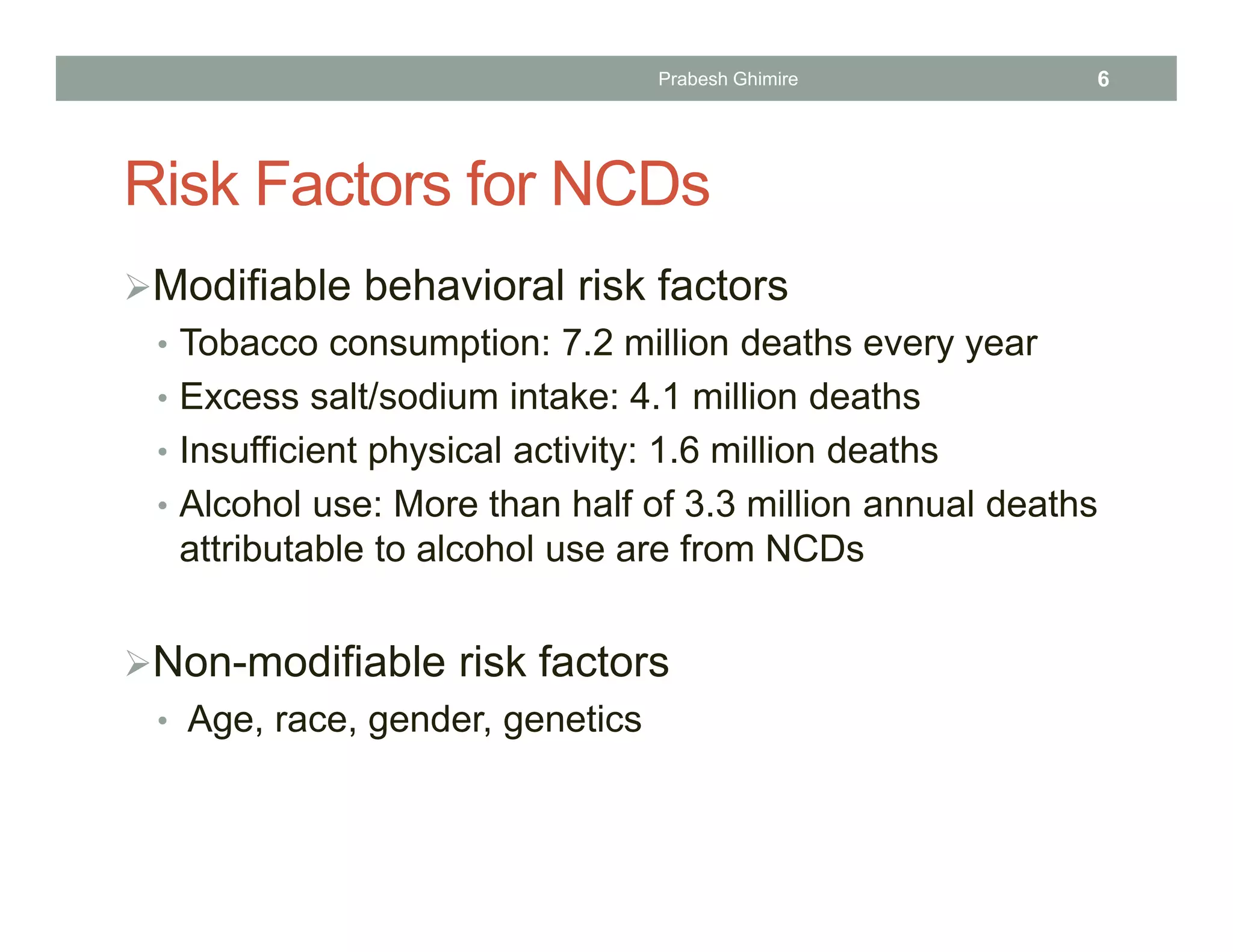
Risk Factors for NCDs
Modifiable behavioral risk factors
• Tobacco consumption: 7.2 million deaths every year
• Excess salt/sodium intake: 4.1 million deaths
• Insufficient physical activity: 1.6 million deaths
• Alcohol use: More than half of 3.3 million annual deaths
attributable to alcohol use are from NCDs
Non-modifiable risk factors
• Age, race, gender, genetics
Prabesh Ghimire 6
Risk Factors for NCDs
Metabolic risk factors
• Increased blood pressure: 19% of global deaths
• Obesity/ overweight
• Increased blood glucose levels or hyperglycemia
• Increased levels of fat in the blood or hyperlipidemia
Prabesh Ghimire 7
Critical pathway in NCDs causation
Prabesh Ghimire 8
Consequences of NCDs
 NCDs exacerbate poverty
• Excessive health care costs >> Quickly drain
household resources>>> Catastrophic
expenditure>>>impoverishment
 NCD is a major contributor to premature
mortality
 NCD threatens progress towards 2030 agenda
for Sustainable Development
• SDG goal: Reduce premature deaths from NCDs by
one-third by 2030
Prabesh Ghimire 9
Strategies for prevention and control
1. Advocacy and partnership
• Integrating NCDs into health and development plans
with special attention to social determinants of health
• Raising political awareness
2. Health promotion and risk factors minimization
a) Reducing tobacco use
• Raising taxes and prices
• Warning people about dangers of tobacco
• Ban on tobacco advertising and promotion
• Establishing tobacco surveillance
Prabesh Ghimire 10
Strategies for prevention and control
b) Reducing harmful use of alcohol
• Increasing access to consumer information about harmful
effects of alcohol
• Ban on alcohol advertising and promotion
• Prevention and treatment services to individual and
families affected by alcohol-use disorders
c) Promoting healthy diet
• Reducing food with high transfat content and other junk
food
• Strengthening food safety and labeling regulations
• Raising awareness on benefits of reducing salt and high
unsaturated fatty acids.
Prabesh Ghimire 11
Strategies for prevention and control
d) Promoting physical activity
• Implementation of improved urban planning
• Improving access to right information on physical activity
promotion and healthy lifestyle.
e) Reducing indoor air pollution
• Promoting alternative sources of energy for cooking and
heating at homes
• Promote change in structural designs of housing for better
ventilation
• Encouraging the use of improved cooking stoves
• Behaviour change communication
Prabesh Ghimire 12
Strategies for prevention and control
3. Health system strengthening for early detection
and management
• Efficient procurement and supply chain mechanism for basic drugs
and diagnostic equipment and tests.
• Capacity building of health workforce for early identification and
management of common NCDs
• Integrating cost-effective NCD interventions (PEN package) into
basic primary health care package
• Strengthening referral system for management of NCDs
Prabesh Ghimire 13
Government Efforts on NCDs
Multi-sectoral action plan on prevention and control of
NCD 2014-20
Scaling up PEN package to selected districts
 Ratified WHO FCTC in 2006-
• MPOWER package into implementation,
• Tobacco law in existence
 Population Based Cancer Registry System introduced in
Jan 2018.
Prabesh Ghimire 14
Government Efforts on NCDs
Cash support up to 100,000 to poverty stricken citizens
for treatment of selected NCDs: Cardiovascular diseases,
cancer, renal diseases…
Research: Risk factor STEPS survey
Commitments to SDG
Information, Communication and Education
Tobacco Quit-Line Telephone Counseling: 01-521200
Prabesh Ghimire 15
SELECTED
NON-COMMUNICABLE
DISEASES
Prabesh Ghimire 16
Cardiovascular Diseases (CVDs)
 Group of disorders of the heart and blood vessels
Includes
• coronary heart disease (blood vessels supplying heart
muscle)
• cerebrovascular disease (blood vessels supplying brain)
• rheumatic heart disease (damage to hear muscle and hear
valves for rheumatic fever)
• other conditions (Congenital heart disease, deep vein
thrombosis, pulmonary embolism)
Four out of five CVD deaths are due to heart attacks and
strokes.
Prabesh Ghimire 17
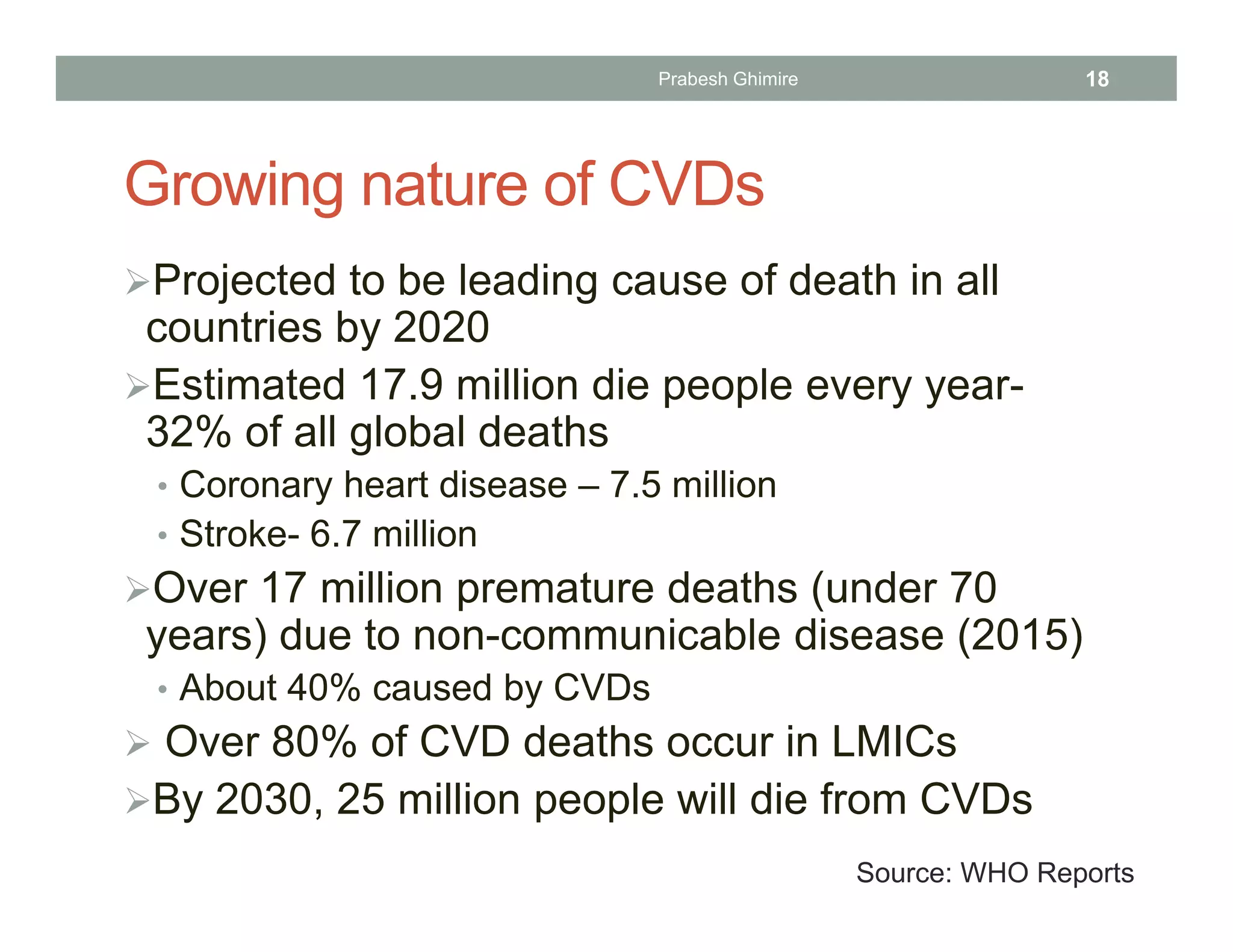
Growing nature of CVDs
Projected to be leading cause of death in all
countries by 2020
Estimated 17.9 million die people every year-
32% of all global deaths
• Coronary heart disease – 7.5 million
• Stroke- 6.7 million
Over 17 million premature deaths (under 70
years) due to non-communicable disease (2015)
• About 40% caused by CVDs
 Over 80% of CVD deaths occur in LMICs
By 2030, 25 million people will die from CVDs
Source: WHO Reports
Prabesh Ghimire 18
Growing nature of CVDs- Nepal
 Upto one-quarter (22.4) of all deaths in the Nepal were
caused by CVDs
Expected increase: 35% by 2030
One-fourth (25.7%) population 15-69 years were found
with raised blood pressure
Source: WHO STEPS survey, 2013
Prabesh Ghimire 19
Risk Factors for CVDs
Major Modifiable risk factors
• High blood pressure
• Abnormal blood lipids
• Tobacco use
• Physical inactivity
• Obesity
• Unhealthy diet (salt)
• Diabetes
Other modifiable risk factors
• Low socioeconomic status
• Mental ill health (depression)
• Psychosocial stress
• Heavy alcohol use
• Lipoprotein
Non-modifiable risk factors
• Age
• Heredity or family history
• Gender
• Ethnicity or race
Novel risk factors
• Excess homocysteine in blood
• Abnormal blood coagulation
(elevated blood levels of
fibrinogen)
Prabesh Ghimire 20
Underlying determinants of CVDs
Causes of the causes- “Social determinants of
health”
• Socio-economic and political contexts
• Socio-economic position
• Material circumstances
• Behavioral factors
• Health system factors
Prabesh Ghimire 21
Prevention and Control of CVDs
 Modifying risk factors: blood-pressure, alcohol use,
smoking cessation, physical activity (exercises)
Improving dietary practices, reduced salt intake
Lipid lowering pharmacotherapy
Antihypertensive medication
Action on Social Determinants of Health
Learning resource: Priority non-communicable diseases and conditions (wpro.who.int)
Prabesh Ghimire 22
Cancer
 Group of diseases affecting any part of body
Rapid creation of abnormal cells invading the adjoining
parts and organs >>metastases
Also called Malignant tumors and neoplasms
Prabesh Ghimire 23
Growing nature of cancer
 Second leading cause of death globally
 Globally, 1 in 6 deaths is due to cancer.
8.8 million deaths in 2015.
Common causes of cancer deaths
• Lung cancer: 1.69 million deaths
• Liver cancer: 788 thousand deaths
• Colorectal: 774 thousand deaths
• Stomach: 754 thousand death
• Breast: 571 thousand deaths
Source: Cancer factsheet, www.who.int
Prabesh Ghimire 24
Growing nature of cancer
70% of all deaths from cancer occur in low and
middle income countries1
Nepal: 7% of all deaths attributed to cancer2
By 2030 cancer deaths projected to increase by
30%2
 Mortality between 30-70 years of age: 6.7 per
10,000 population3
1. WHO.Cancer factsheet, www.who.int, 2018.
2. WHO Multisectoral action plan on NCD prevention and control.
3. NHRC, 2013
Prabesh Ghimire 25
Growing nature of cancer
Cancer deaths in Nepal1
• Males: 6,900 (17% respiratory tract, lung cancer, 13%
mouth cancer, 9% stomach)
• Females: 7,400 (18% cervical cancer, 14% respiratory
tract, lung cancer, 12% breast cancer)
1. WHO. Cancer country profiles, 2014
Prabesh Ghimire 26
Prediction of cancer incidence in Nepal
(2013-2020)
Figure source: Poudel, Krishna Kanta et al. “Prediction of the Cancer Incidence in Nepal.” Asian Pacific
Journal of Cancer Prevention : APJCP 18.1 (2017): 165–168. PMC.
Prabesh Ghimire 27
Major killers
Men Women
Lung cancer
Liver cancer
Stomach cancer
Colorectal cancer
Prostate cancer
Breast cancer
Lung cancer
Colorectal cancer
Cervical cancer
Stomach cancer
Source: WHO fact file, 2015 data
Prabesh Ghimire 28
Cervical Cancer
Cancer of female reproductive system
99% cases linked to genital infection with HPV
virus
Risk factors
• HPV infection
• Smoking
• Immune deficiency
• Family history of cervical cancer
Prabesh Ghimire 29
Lung Cancer
 Cancer that forms in tissues of the lung, usually in the
cells lining air passages
Leading cause of cancer deaths, 1.69 million deaths
globally
Affects more men than women
Risk factors
• Smoking
• Exposure to second hand smoke
• Radiation therapy of breast or chest
• Exposure to asbestos, radon, chromium, arsenic, soot or tar
• Exposure to air pollution
Prabesh Ghimire 30
Breast cancer
Cancer that forms in the tissues of the breast,
usually in the ducts or in the lobules
Occurs commonly in women, rarely occurs in
men
Risk factors
• Hormone therapies
• Weight and physical inactivity
• Age: risk increases with age
• Genetics or family history
• BRCA1 and BRCA2 genes
Prabesh Ghimire 31
Colorectal cancer
Third most common type of cancer
Forms in large intestine
Risk factors
• Aging
• Unhealthy diet
• Diabetes
• Family history of colorectal cancer
Prabesh Ghimire 32
Causes of cancer
Interaction of person’s genetic factors and 3
categories of external agents
• Physical carcinogens- UV and ionizing radiation
• Chemical carcinogens- asbestos, components of
tobacco smoke, aflatoxin (food contaminant), and
arsenic
• Biologic carcinogens- infections from certain viruses
and parasites
Prabesh Ghimire 33
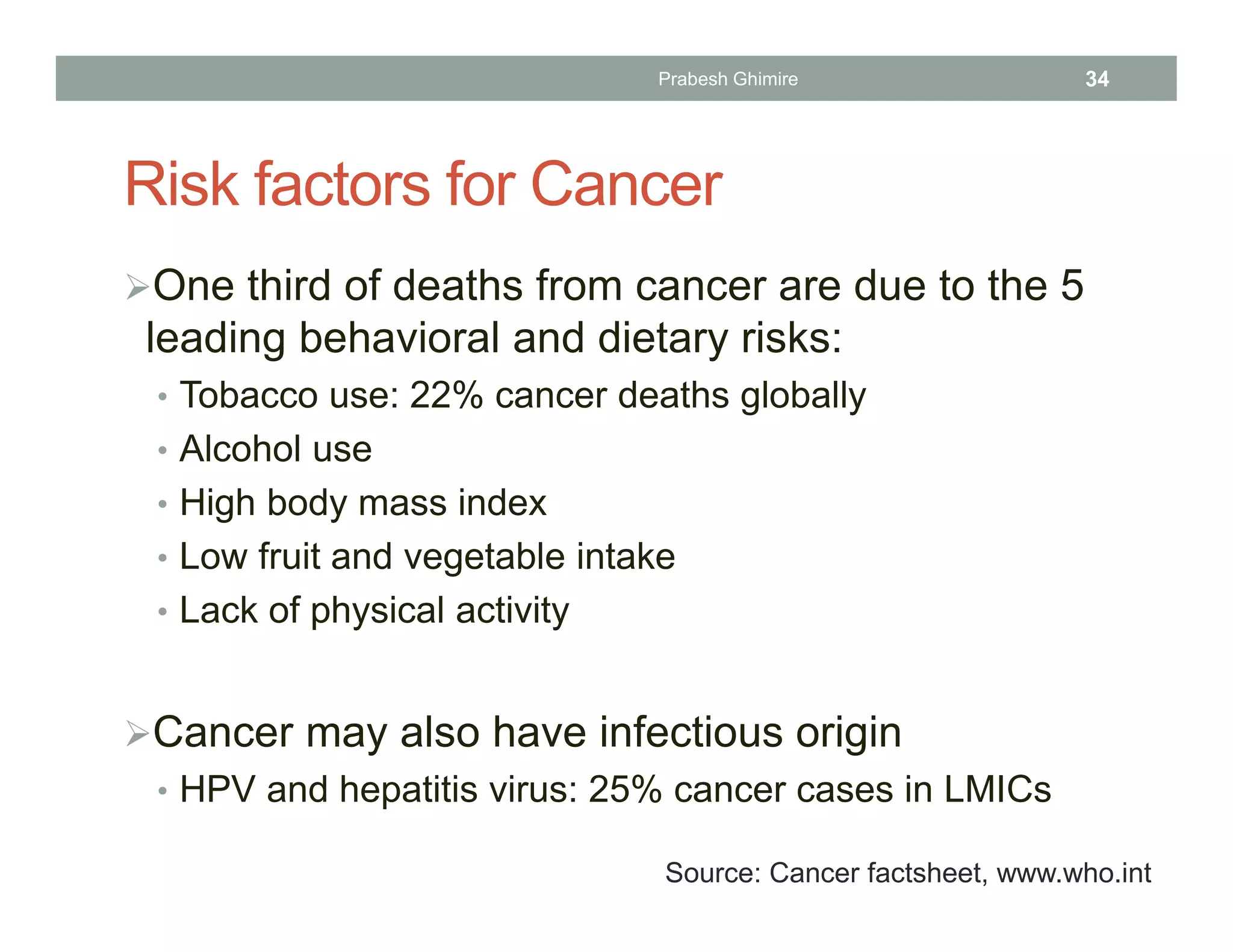
Risk factors for Cancer
One third of deaths from cancer are due to the 5
leading behavioral and dietary risks:
• Tobacco use: 22% cancer deaths globally
• Alcohol use
• High body mass index
• Low fruit and vegetable intake
• Lack of physical activity
Cancer may also have infectious origin
• HPV and hepatitis virus: 25% cancer cases in LMICs
Source: Cancer factsheet, www.who.int
Prabesh Ghimire 34
Prevention and control
Risk factors modification
• Control of tobacco use including cigarettes and
smokeless tobacco
• Healthy eating with increased fruit and vegetable
intake
• Increasing physical activity
• Control of harmful use of alcohol
• Prevention from sexually transmitted HPV-infection
• Reduced exposure to indoor smoke from use of solid
fuels.
Prabesh Ghimire 35
Prevention and control
Vaccination against HPV and hepatitis B virus:
(can prevent 1 million cases each year)
Control of occupational hazards
Reducing exposure to ultraviolet radiation
Reducing exposure to ionizing radiation
(occupational and medical diagnostic imaging)
Prabesh Ghimire 36
Prevention and control
Screening and early detection
• VIA for cervical cancer
• HPV testing for cervical cancer
• PAP cytology test
• Mammography screening for breast cancer
 Treatment
• Surgery
• Radiotherapy
• Chemotherapy
Palliative care
Prabesh Ghimire 37
Chronic Respiratory Disease
 One of the leading causes of deaths globally
 High under-diagnoses rates
90% of deaths occur in low income countries
In Nepal, Mortality between 30-70 years of age: 8 per
10,000 population
Prabesh Ghimire 38
Chronic Obstructive Pulmonary Disease
(COPD)
Umbrella term for chronic disease of lung
Prevents proper airflow in the lungs
Chronic bronchitis, emphysema
Not curable
Prabesh Ghimire 39
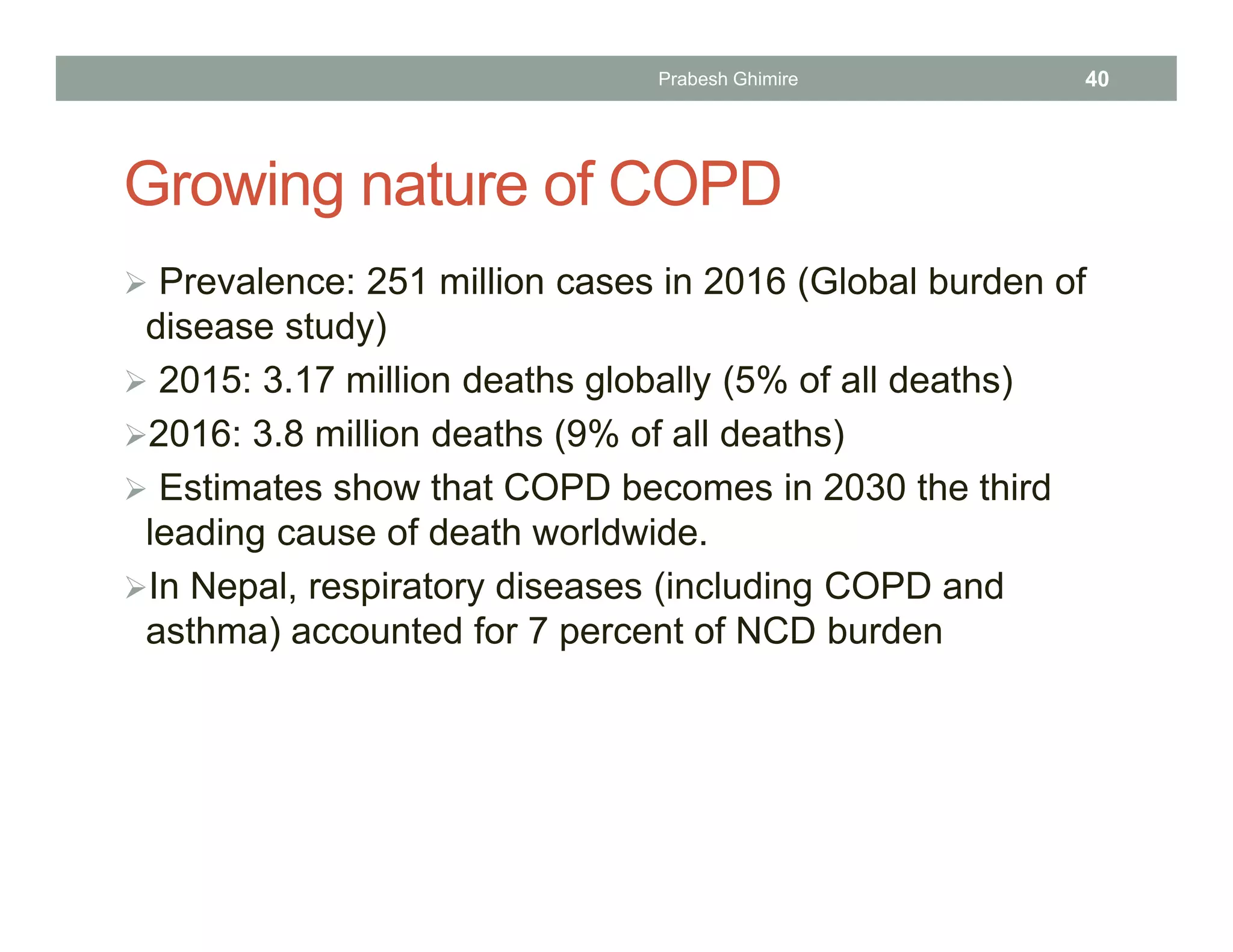
Growing nature of COPD
 Prevalence: 251 million cases in 2016 (Global burden of
disease study)
 2015: 3.17 million deaths globally (5% of all deaths)
2016: 3.8 million deaths (9% of all deaths)
 Estimates show that COPD becomes in 2030 the third
leading cause of death worldwide.
In Nepal, respiratory diseases (including COPD and
asthma) accounted for 7 percent of NCD burden
Prabesh Ghimire 40
Risk factors of COPD
Tobacco smoking
Indoor air pollution (use of solid fuel)
Outdoor air pollution
Occupational dusts and chemicals (vapours, irritants and
fumes)
Frequent lower respiratory infections during childhood
Age: usually becomes apparent after 40 or 50 years of
age)
Prabesh Ghimire 41
Asthma
Chronic disease of the air passages of the lungs which
inflames and narrows them
Recurrent attacks of breathlessness and wheezing
Common disease among children
Prabesh Ghimire 42
Growing nature of Asthma
383,000 deaths due to Asthma in 2015 (2016 WHO
estimates)
235 million people currently suffer from Asthma
80% asthma-related deaths occur in LMICs
Source: www.who.int
Prabesh Ghimire 43
Causes and risk factors of Asthma
Fundamental causes unknown
Risk factors are combination of genetic
predisposition with environmental exposures to
inhaled particles
• Indoor allergens (dust, mites, etc.)
• Outdoor allergens (such as pollens and moulds)
• Tobacco smoke
• Chemical irritants in workplace
• Air pollution
Prabesh Ghimire 44
Causes and risk factors of Asthma
Triggers of Asthma
• Cold air
• Extreme emotional arousal such as arousal, fear,
excitement
• Physical exercise
• Certain medications: aspirin, NSAIDs and beta blockers
(for high blood pressure, heart disease, migraine)
Prabesh Ghimire 45
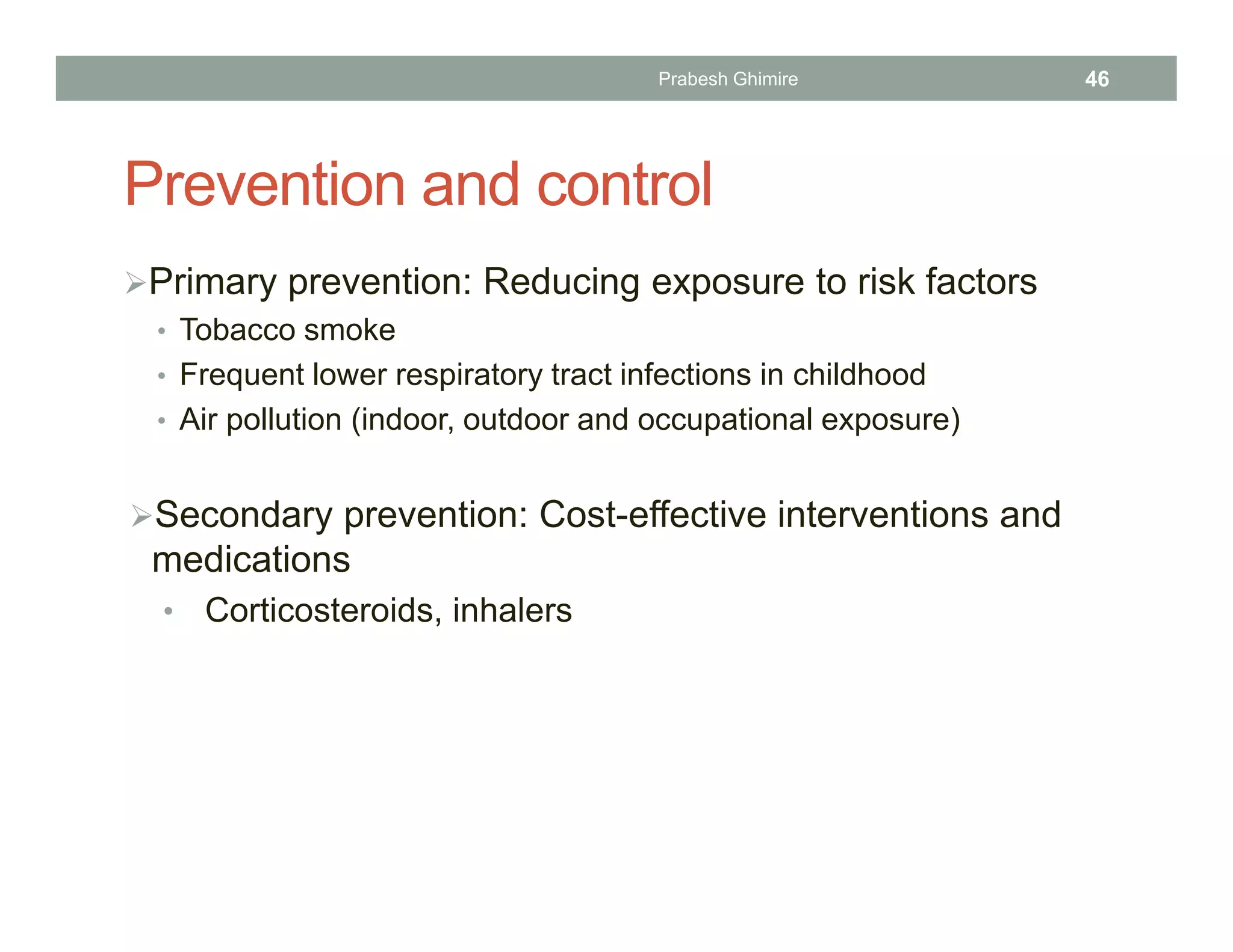
Prevention and control
Primary prevention: Reducing exposure to risk factors
• Tobacco smoke
• Frequent lower respiratory tract infections in childhood
• Air pollution (indoor, outdoor and occupational exposure)
Secondary prevention: Cost-effective interventions and
medications
• Corticosteroids, inhalers
Prabesh Ghimire 46
Diabetes
 Disorder of metabolism
4 types of diabetes: Type 1, Type 2, Gestational and Pre-
diabetes (impaired glucose tolerance)
Type 2 is caused by modifiable risk factors and is most
common worldwide
• >90% of all adult diabetes cases are Type 2
Prabesh Ghimire 47
Growing nature of diabetes
Number of adults adults living with diabetes quadrupled
between 1980 and 20141
• 422 million adults with diabetes in 2014 (108 in 1980)
Global prevalence of diabetes double between 1980 to
2014 in adult population (4.7% to 8.5%)1
1.6 million deaths in 20162
WHO projects that diabetes death will increase by two
thirds between 2008 and 2030
1. Global Report on Diabetes, 2016
2. World Health Statistics, 2018
Prabesh Ghimire 48
Diabetes in South-East Asia & Nepal
In SEAR, prevalence (18+yrs) doubled from 4.1% in 1980
to 8.6% in 2014
National Prevalence- 3.6%
• 4.6% in men and 2.7% in women
Prevalence up to 11 percent in certain areas
Prabesh Ghimire 49
Risk factors for diabetes
Major Modifiable risk factors
• Unhealthy diets
• Physical inactivity
• Obesity and overweight
• High blood pressure
• High cholesterol
Other modifiable risk factors
• Low socioeconomic status
• Heavy alcohol use
• Psychosocial stress
• High consumption of sugar
sweetened beverages
• Low consumption of fiber
Non-modifiable risk factors
• Increased age
• Family history/ genetics
• Race
Other risk factors
• Low birth weight
• Presence of autoantibodies
Prabesh Ghimire 50
Prevention and control of diabetes
Promote healthier eating- Avoiding sugar and saturated
fat intake
Increasing physical activity and maintaining body weight
Control of blood glucose
Screening for early detection and treatment of
complications
Medications for associated CVD risk factors and diabetic
complications
• control of blood pressure
• Control of lipids
Action on social determinants of health
Prabesh Ghimire 51
Learning Resources
 World Health Statistics, 2018
Global Report on Diabetes
Non-communicable diseases progress monitor, 2017
Non-communicable disease country profiles, 2014
Multi-sectoral action plan on prevention and control of
NCD in Nepal 2014-20
Non-communicable diseases risk factors: STEPS survey
Nepal 2013
Global status report on NCDs 2014
CDC. Overview of non-communicable disease and
related risk factors
Prabesh Ghimire 52
Queries and Discussions…
Prabesh Ghimire 53

Epidemiology of Non Communicable Diseases (NCDs)

  • 1.
  • 2.
    Non-communicable diseases  Cardio-vasculardiseases (Coronary Heart Disease, Stroke)  Cancer Chronic respiratory disease Diabetes Chronic neurological diseases (Alzheimer’s, dementia) Arthritis/Musculoskeletal diseases Prabesh Ghimire 2
  • 3.
    Global status ofNCDs NCDs kill 41 million people each year (71% of all deaths globally) Four major NCDs account for over 80% of all premature NCDs deaths (in 2016) • Cardio-vascular disease: 17.9 million • Cancer: 9 million • Chronic respiratory diseases: 3.8million • Diabetes: 1.6 million Over 85% of premature deaths in low and middle income countries Source: World Health Statistics, 2018 Prabesh Ghimire 3
  • 4.
    Growing nature ofNCDs  Deaths by NCDs- more than all other causes combined  Projected to increase from 38 million in 2012 to 52 million by 20301. 42% of all NCD deaths occurred before age of 70 years1 • 17 million in 2015 • 16 million in 2012 • 14.6 million in 2000 Risk of dying from any one of the four main NCDs between 30-70 yrs decreased from 22% in 2000 to 18% in 20162. 1. Global Status Report on NCDs, 2014 2. World Health Statistics, 2018 Prabesh Ghimire 4
  • 5.
    Growing nature ofNCDs-Nepal NCDs account for estimated 65% of total deaths in Nepal (121,000 NCD deaths)1 • In 2014- 60% of total deaths2  The probability of dying between 30-70 years from 4 main NCDs – 22% 1. NCD progress monitor; WHO, 2017 2. NCD country profiles, 2014 Prabesh Ghimire 5
  • 6.
    Risk Factors forNCDs Modifiable behavioral risk factors • Tobacco consumption: 7.2 million deaths every year • Excess salt/sodium intake: 4.1 million deaths • Insufficient physical activity: 1.6 million deaths • Alcohol use: More than half of 3.3 million annual deaths attributable to alcohol use are from NCDs Non-modifiable risk factors • Age, race, gender, genetics Prabesh Ghimire 6
  • 7.
    Risk Factors forNCDs Metabolic risk factors • Increased blood pressure: 19% of global deaths • Obesity/ overweight • Increased blood glucose levels or hyperglycemia • Increased levels of fat in the blood or hyperlipidemia Prabesh Ghimire 7
  • 8.
    Critical pathway inNCDs causation Prabesh Ghimire 8
  • 9.
    Consequences of NCDs NCDs exacerbate poverty • Excessive health care costs >> Quickly drain household resources>>> Catastrophic expenditure>>>impoverishment  NCD is a major contributor to premature mortality  NCD threatens progress towards 2030 agenda for Sustainable Development • SDG goal: Reduce premature deaths from NCDs by one-third by 2030 Prabesh Ghimire 9
  • 10.
    Strategies for preventionand control 1. Advocacy and partnership • Integrating NCDs into health and development plans with special attention to social determinants of health • Raising political awareness 2. Health promotion and risk factors minimization a) Reducing tobacco use • Raising taxes and prices • Warning people about dangers of tobacco • Ban on tobacco advertising and promotion • Establishing tobacco surveillance Prabesh Ghimire 10
  • 11.
    Strategies for preventionand control b) Reducing harmful use of alcohol • Increasing access to consumer information about harmful effects of alcohol • Ban on alcohol advertising and promotion • Prevention and treatment services to individual and families affected by alcohol-use disorders c) Promoting healthy diet • Reducing food with high transfat content and other junk food • Strengthening food safety and labeling regulations • Raising awareness on benefits of reducing salt and high unsaturated fatty acids. Prabesh Ghimire 11
  • 12.
    Strategies for preventionand control d) Promoting physical activity • Implementation of improved urban planning • Improving access to right information on physical activity promotion and healthy lifestyle. e) Reducing indoor air pollution • Promoting alternative sources of energy for cooking and heating at homes • Promote change in structural designs of housing for better ventilation • Encouraging the use of improved cooking stoves • Behaviour change communication Prabesh Ghimire 12
  • 13.
    Strategies for preventionand control 3. Health system strengthening for early detection and management • Efficient procurement and supply chain mechanism for basic drugs and diagnostic equipment and tests. • Capacity building of health workforce for early identification and management of common NCDs • Integrating cost-effective NCD interventions (PEN package) into basic primary health care package • Strengthening referral system for management of NCDs Prabesh Ghimire 13
  • 14.
    Government Efforts onNCDs Multi-sectoral action plan on prevention and control of NCD 2014-20 Scaling up PEN package to selected districts  Ratified WHO FCTC in 2006- • MPOWER package into implementation, • Tobacco law in existence  Population Based Cancer Registry System introduced in Jan 2018. Prabesh Ghimire 14
  • 15.
    Government Efforts onNCDs Cash support up to 100,000 to poverty stricken citizens for treatment of selected NCDs: Cardiovascular diseases, cancer, renal diseases… Research: Risk factor STEPS survey Commitments to SDG Information, Communication and Education Tobacco Quit-Line Telephone Counseling: 01-521200 Prabesh Ghimire 15
  • 16.
  • 17.
    Cardiovascular Diseases (CVDs) Group of disorders of the heart and blood vessels Includes • coronary heart disease (blood vessels supplying heart muscle) • cerebrovascular disease (blood vessels supplying brain) • rheumatic heart disease (damage to hear muscle and hear valves for rheumatic fever) • other conditions (Congenital heart disease, deep vein thrombosis, pulmonary embolism) Four out of five CVD deaths are due to heart attacks and strokes. Prabesh Ghimire 17
  • 18.
    Growing nature ofCVDs Projected to be leading cause of death in all countries by 2020 Estimated 17.9 million die people every year- 32% of all global deaths • Coronary heart disease – 7.5 million • Stroke- 6.7 million Over 17 million premature deaths (under 70 years) due to non-communicable disease (2015) • About 40% caused by CVDs  Over 80% of CVD deaths occur in LMICs By 2030, 25 million people will die from CVDs Source: WHO Reports Prabesh Ghimire 18
  • 19.
    Growing nature ofCVDs- Nepal  Upto one-quarter (22.4) of all deaths in the Nepal were caused by CVDs Expected increase: 35% by 2030 One-fourth (25.7%) population 15-69 years were found with raised blood pressure Source: WHO STEPS survey, 2013 Prabesh Ghimire 19
  • 20.
    Risk Factors forCVDs Major Modifiable risk factors • High blood pressure • Abnormal blood lipids • Tobacco use • Physical inactivity • Obesity • Unhealthy diet (salt) • Diabetes Other modifiable risk factors • Low socioeconomic status • Mental ill health (depression) • Psychosocial stress • Heavy alcohol use • Lipoprotein Non-modifiable risk factors • Age • Heredity or family history • Gender • Ethnicity or race Novel risk factors • Excess homocysteine in blood • Abnormal blood coagulation (elevated blood levels of fibrinogen) Prabesh Ghimire 20
  • 21.
    Underlying determinants ofCVDs Causes of the causes- “Social determinants of health” • Socio-economic and political contexts • Socio-economic position • Material circumstances • Behavioral factors • Health system factors Prabesh Ghimire 21
  • 22.
    Prevention and Controlof CVDs  Modifying risk factors: blood-pressure, alcohol use, smoking cessation, physical activity (exercises) Improving dietary practices, reduced salt intake Lipid lowering pharmacotherapy Antihypertensive medication Action on Social Determinants of Health Learning resource: Priority non-communicable diseases and conditions (wpro.who.int) Prabesh Ghimire 22
  • 23.
    Cancer  Group ofdiseases affecting any part of body Rapid creation of abnormal cells invading the adjoining parts and organs >>metastases Also called Malignant tumors and neoplasms Prabesh Ghimire 23
  • 24.
    Growing nature ofcancer  Second leading cause of death globally  Globally, 1 in 6 deaths is due to cancer. 8.8 million deaths in 2015. Common causes of cancer deaths • Lung cancer: 1.69 million deaths • Liver cancer: 788 thousand deaths • Colorectal: 774 thousand deaths • Stomach: 754 thousand death • Breast: 571 thousand deaths Source: Cancer factsheet, www.who.int Prabesh Ghimire 24
  • 25.
    Growing nature ofcancer 70% of all deaths from cancer occur in low and middle income countries1 Nepal: 7% of all deaths attributed to cancer2 By 2030 cancer deaths projected to increase by 30%2  Mortality between 30-70 years of age: 6.7 per 10,000 population3 1. WHO.Cancer factsheet, www.who.int, 2018. 2. WHO Multisectoral action plan on NCD prevention and control. 3. NHRC, 2013 Prabesh Ghimire 25
  • 26.
    Growing nature ofcancer Cancer deaths in Nepal1 • Males: 6,900 (17% respiratory tract, lung cancer, 13% mouth cancer, 9% stomach) • Females: 7,400 (18% cervical cancer, 14% respiratory tract, lung cancer, 12% breast cancer) 1. WHO. Cancer country profiles, 2014 Prabesh Ghimire 26
  • 27.
    Prediction of cancerincidence in Nepal (2013-2020) Figure source: Poudel, Krishna Kanta et al. “Prediction of the Cancer Incidence in Nepal.” Asian Pacific Journal of Cancer Prevention : APJCP 18.1 (2017): 165–168. PMC. Prabesh Ghimire 27
  • 28.
    Major killers Men Women Lungcancer Liver cancer Stomach cancer Colorectal cancer Prostate cancer Breast cancer Lung cancer Colorectal cancer Cervical cancer Stomach cancer Source: WHO fact file, 2015 data Prabesh Ghimire 28
  • 29.
    Cervical Cancer Cancer offemale reproductive system 99% cases linked to genital infection with HPV virus Risk factors • HPV infection • Smoking • Immune deficiency • Family history of cervical cancer Prabesh Ghimire 29
  • 30.
    Lung Cancer  Cancerthat forms in tissues of the lung, usually in the cells lining air passages Leading cause of cancer deaths, 1.69 million deaths globally Affects more men than women Risk factors • Smoking • Exposure to second hand smoke • Radiation therapy of breast or chest • Exposure to asbestos, radon, chromium, arsenic, soot or tar • Exposure to air pollution Prabesh Ghimire 30
  • 31.
    Breast cancer Cancer thatforms in the tissues of the breast, usually in the ducts or in the lobules Occurs commonly in women, rarely occurs in men Risk factors • Hormone therapies • Weight and physical inactivity • Age: risk increases with age • Genetics or family history • BRCA1 and BRCA2 genes Prabesh Ghimire 31
  • 32.
    Colorectal cancer Third mostcommon type of cancer Forms in large intestine Risk factors • Aging • Unhealthy diet • Diabetes • Family history of colorectal cancer Prabesh Ghimire 32
  • 33.
    Causes of cancer Interactionof person’s genetic factors and 3 categories of external agents • Physical carcinogens- UV and ionizing radiation • Chemical carcinogens- asbestos, components of tobacco smoke, aflatoxin (food contaminant), and arsenic • Biologic carcinogens- infections from certain viruses and parasites Prabesh Ghimire 33
  • 34.
    Risk factors forCancer One third of deaths from cancer are due to the 5 leading behavioral and dietary risks: • Tobacco use: 22% cancer deaths globally • Alcohol use • High body mass index • Low fruit and vegetable intake • Lack of physical activity Cancer may also have infectious origin • HPV and hepatitis virus: 25% cancer cases in LMICs Source: Cancer factsheet, www.who.int Prabesh Ghimire 34
  • 35.
    Prevention and control Riskfactors modification • Control of tobacco use including cigarettes and smokeless tobacco • Healthy eating with increased fruit and vegetable intake • Increasing physical activity • Control of harmful use of alcohol • Prevention from sexually transmitted HPV-infection • Reduced exposure to indoor smoke from use of solid fuels. Prabesh Ghimire 35
  • 36.
    Prevention and control Vaccinationagainst HPV and hepatitis B virus: (can prevent 1 million cases each year) Control of occupational hazards Reducing exposure to ultraviolet radiation Reducing exposure to ionizing radiation (occupational and medical diagnostic imaging) Prabesh Ghimire 36
  • 37.
    Prevention and control Screeningand early detection • VIA for cervical cancer • HPV testing for cervical cancer • PAP cytology test • Mammography screening for breast cancer  Treatment • Surgery • Radiotherapy • Chemotherapy Palliative care Prabesh Ghimire 37
  • 38.
    Chronic Respiratory Disease One of the leading causes of deaths globally  High under-diagnoses rates 90% of deaths occur in low income countries In Nepal, Mortality between 30-70 years of age: 8 per 10,000 population Prabesh Ghimire 38
  • 39.
    Chronic Obstructive PulmonaryDisease (COPD) Umbrella term for chronic disease of lung Prevents proper airflow in the lungs Chronic bronchitis, emphysema Not curable Prabesh Ghimire 39
  • 40.
    Growing nature ofCOPD  Prevalence: 251 million cases in 2016 (Global burden of disease study)  2015: 3.17 million deaths globally (5% of all deaths) 2016: 3.8 million deaths (9% of all deaths)  Estimates show that COPD becomes in 2030 the third leading cause of death worldwide. In Nepal, respiratory diseases (including COPD and asthma) accounted for 7 percent of NCD burden Prabesh Ghimire 40
  • 41.
    Risk factors ofCOPD Tobacco smoking Indoor air pollution (use of solid fuel) Outdoor air pollution Occupational dusts and chemicals (vapours, irritants and fumes) Frequent lower respiratory infections during childhood Age: usually becomes apparent after 40 or 50 years of age) Prabesh Ghimire 41
  • 42.
    Asthma Chronic disease ofthe air passages of the lungs which inflames and narrows them Recurrent attacks of breathlessness and wheezing Common disease among children Prabesh Ghimire 42
  • 43.
    Growing nature ofAsthma 383,000 deaths due to Asthma in 2015 (2016 WHO estimates) 235 million people currently suffer from Asthma 80% asthma-related deaths occur in LMICs Source: www.who.int Prabesh Ghimire 43
  • 44.
    Causes and riskfactors of Asthma Fundamental causes unknown Risk factors are combination of genetic predisposition with environmental exposures to inhaled particles • Indoor allergens (dust, mites, etc.) • Outdoor allergens (such as pollens and moulds) • Tobacco smoke • Chemical irritants in workplace • Air pollution Prabesh Ghimire 44
  • 45.
    Causes and riskfactors of Asthma Triggers of Asthma • Cold air • Extreme emotional arousal such as arousal, fear, excitement • Physical exercise • Certain medications: aspirin, NSAIDs and beta blockers (for high blood pressure, heart disease, migraine) Prabesh Ghimire 45
  • 46.
    Prevention and control Primaryprevention: Reducing exposure to risk factors • Tobacco smoke • Frequent lower respiratory tract infections in childhood • Air pollution (indoor, outdoor and occupational exposure) Secondary prevention: Cost-effective interventions and medications • Corticosteroids, inhalers Prabesh Ghimire 46
  • 47.
    Diabetes  Disorder ofmetabolism 4 types of diabetes: Type 1, Type 2, Gestational and Pre- diabetes (impaired glucose tolerance) Type 2 is caused by modifiable risk factors and is most common worldwide • >90% of all adult diabetes cases are Type 2 Prabesh Ghimire 47
  • 48.
    Growing nature ofdiabetes Number of adults adults living with diabetes quadrupled between 1980 and 20141 • 422 million adults with diabetes in 2014 (108 in 1980) Global prevalence of diabetes double between 1980 to 2014 in adult population (4.7% to 8.5%)1 1.6 million deaths in 20162 WHO projects that diabetes death will increase by two thirds between 2008 and 2030 1. Global Report on Diabetes, 2016 2. World Health Statistics, 2018 Prabesh Ghimire 48
  • 49.
    Diabetes in South-EastAsia & Nepal In SEAR, prevalence (18+yrs) doubled from 4.1% in 1980 to 8.6% in 2014 National Prevalence- 3.6% • 4.6% in men and 2.7% in women Prevalence up to 11 percent in certain areas Prabesh Ghimire 49
  • 50.
    Risk factors fordiabetes Major Modifiable risk factors • Unhealthy diets • Physical inactivity • Obesity and overweight • High blood pressure • High cholesterol Other modifiable risk factors • Low socioeconomic status • Heavy alcohol use • Psychosocial stress • High consumption of sugar sweetened beverages • Low consumption of fiber Non-modifiable risk factors • Increased age • Family history/ genetics • Race Other risk factors • Low birth weight • Presence of autoantibodies Prabesh Ghimire 50
  • 51.
    Prevention and controlof diabetes Promote healthier eating- Avoiding sugar and saturated fat intake Increasing physical activity and maintaining body weight Control of blood glucose Screening for early detection and treatment of complications Medications for associated CVD risk factors and diabetic complications • control of blood pressure • Control of lipids Action on social determinants of health Prabesh Ghimire 51
  • 52.
    Learning Resources  WorldHealth Statistics, 2018 Global Report on Diabetes Non-communicable diseases progress monitor, 2017 Non-communicable disease country profiles, 2014 Multi-sectoral action plan on prevention and control of NCD in Nepal 2014-20 Non-communicable diseases risk factors: STEPS survey Nepal 2013 Global status report on NCDs 2014 CDC. Overview of non-communicable disease and related risk factors Prabesh Ghimire 52
  • 53.