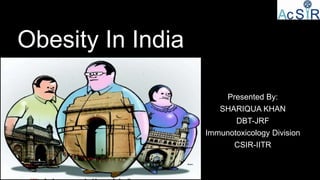
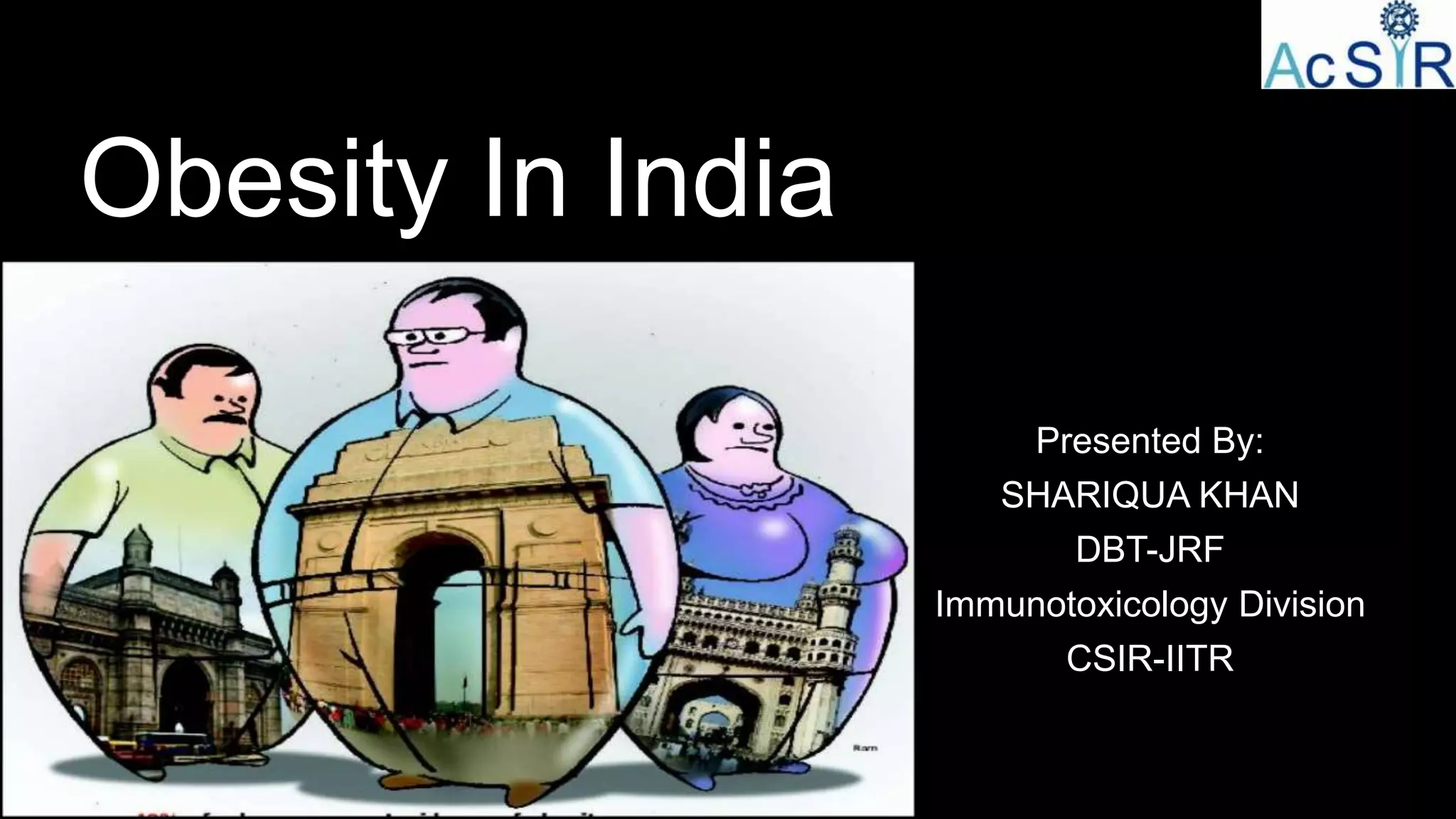
Obesity In India
Presented By:
SHARIQUA KHAN
DBT-JRF
Immunotoxicology Division
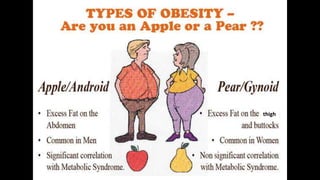
CSIR-IITR
Obesity
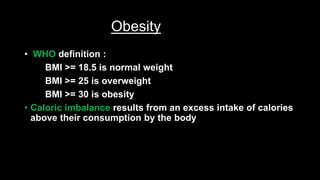
• WHO definition :
BMI >= 18.5 is normal weight
BMI >= 25 is overweight
BMI >= 30 is obesity
• Caloric imbalance results from an excess intake of calories
above their consumption by the body
gthigh
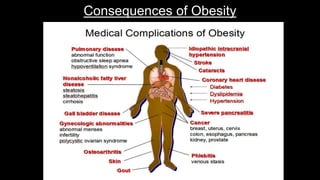
Consequences of Obesity
Indian Scenario
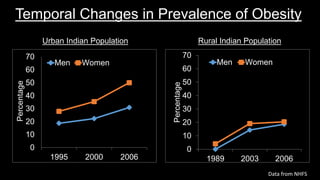
Temporal Changes in Prevalence of Obesity
Data from NHFS
0
10
20
30
40
50
60
70
1995 2000 2006
Percentage
Men Women
0
10
20
30
40
50
60
70
1989 2003 2006
Percentage
Men Women
Urban Indian Population Rural Indian Population
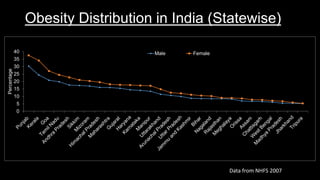
Obesity Distribution in India (Statewise)
Data from NHFS 2007
0
5
10
15
20
25
30
35
40
Percentage
Male Female
0
1
2
3
4
5
6
7
Percentage
0
2
4
6
8
10
12
Percentage
0
2
4
6
8
10
12
14
16
Percentage
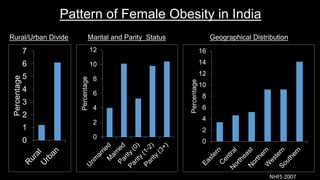
Pattern of Female Obesity in India
Rural/Urban Divide Marital and Parity Status Geographical Distribution
NHFS 2007
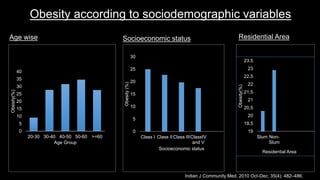
Obesity according to sociodemographic variables
Age wise
Indian J Community Med. 2010 Oct-Dec; 35(4): 482–486.
19
19.5
20
20.5
21
21.5
22
22.5
23
23.5
Slum Non-
Slum
Obesity(%)
Residential Area
0
5
10
15
20
25
30
35
40
20-30 30-40 40-50 50-60 >=60
Obesity(%)
Age Group
0
5
10
15
20
25
30
Class I Class IIClass IIIClassIV
and V
Obesity(%)
Socioeconomic status
Socioeconomic status Residential Area
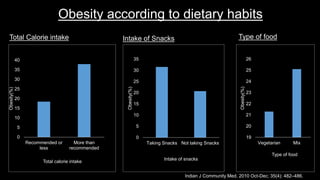
Obesity according to dietary habits
Total Calorie intake
Indian J Community Med. 2010 Oct-Dec; 35(4): 482–486.
Intake of Snacks Type of food
0
5
10
15
20
25
30
35
40
Recommended or
less
More than
recommended
Obesity(%)
Total calorie intake
0
5
10
15
20
25
30
35
Taking Snacks Not taking Snacks
Obesity(%)
Intake of snacks
19
20
21
22
23
24
25
26
Vegetarian Mix
Obesity(%)
Type of food
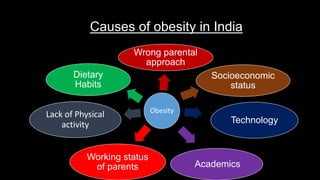
Causes of obesity in India
Obesity
Wrong parental
approach
Socioeconomic
status
Technology
Academics
Working status
of parents
Lack of Physical
activity
Dietary
Habits
Summary
• India is third most obese country in the world.
• Obesity is more common in females.
• Punjab and Kerala are the most obese states of India.
• An urgent need to educate the Indian community on the aspects of
healthy food habits and desired lifestyles to prevent obesity and its
associated ill effects.
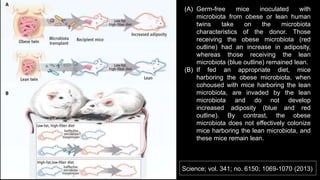
Fighting Obesity with Bacteria
Future Perspective:
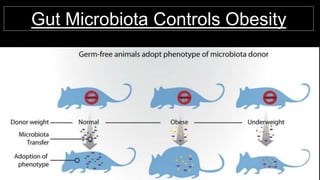
Gut Microbiota Controls Obesity
Science; vol. 341; no. 6150; 1069-1070 (2013)
(A) Germ-free mice inoculated with
microbiota from obese or lean human
twins take on the microbiota
characteristics of the donor. Those
receiving the obese microbiota (red
outline) had an increase in adiposity,
whereas those receiving the lean
microbiota (blue outline) remained lean.
(B) If fed an appropriate diet, mice
harboring the obese microbiota, when
cohoused with mice harboring the lean
microbiota, are invaded by the lean
microbiota and do not develop
increased adiposity (blue and red
outline). By contrast, the obese
microbiota does not effectively colonize
mice harboring the lean microbiota, and
these mice remain lean.
Acknowledgement
• AcSIR Classmates
• Department of Biotechnology (DBT)
THANK YOU
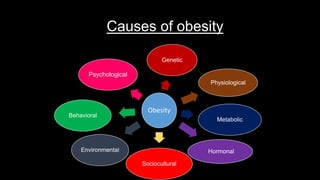
Causes of obesity
Obesity
Genetic
Physiological
Metabolic
Hormonal
Sociocultural
Environmental
Behavioral
Psychological

Obesity in india

  • 1.
    Obesity In India PresentedBy: SHARIQUA KHAN DBT-JRF Immunotoxicology Division CSIR-IITR
  • 3.
    Obesity • WHO definition: BMI >= 18.5 is normal weight BMI >= 25 is overweight BMI >= 30 is obesity • Caloric imbalance results from an excess intake of calories above their consumption by the body
  • 4.
  • 5.
  • 6.
  • 7.
    Temporal Changes inPrevalence of Obesity Data from NHFS 0 10 20 30 40 50 60 70 1995 2000 2006 Percentage Men Women 0 10 20 30 40 50 60 70 1989 2003 2006 Percentage Men Women Urban Indian Population Rural Indian Population
  • 8.
    Obesity Distribution inIndia (Statewise) Data from NHFS 2007 0 5 10 15 20 25 30 35 40 Percentage Male Female
  • 9.
    0 1 2 3 4 5 6 7 Percentage 0 2 4 6 8 10 12 Percentage 0 2 4 6 8 10 12 14 16 Percentage Pattern of FemaleObesity in India Rural/Urban Divide Marital and Parity Status Geographical Distribution NHFS 2007
  • 10.
    Obesity according tosociodemographic variables Age wise Indian J Community Med. 2010 Oct-Dec; 35(4): 482–486. 19 19.5 20 20.5 21 21.5 22 22.5 23 23.5 Slum Non- Slum Obesity(%) Residential Area 0 5 10 15 20 25 30 35 40 20-30 30-40 40-50 50-60 >=60 Obesity(%) Age Group 0 5 10 15 20 25 30 Class I Class IIClass IIIClassIV and V Obesity(%) Socioeconomic status Socioeconomic status Residential Area
  • 11.
    Obesity according todietary habits Total Calorie intake Indian J Community Med. 2010 Oct-Dec; 35(4): 482–486. Intake of Snacks Type of food 0 5 10 15 20 25 30 35 40 Recommended or less More than recommended Obesity(%) Total calorie intake 0 5 10 15 20 25 30 35 Taking Snacks Not taking Snacks Obesity(%) Intake of snacks 19 20 21 22 23 24 25 26 Vegetarian Mix Obesity(%) Type of food
  • 12.
    Causes of obesityin India Obesity Wrong parental approach Socioeconomic status Technology Academics Working status of parents Lack of Physical activity Dietary Habits
  • 13.
    Summary • India isthird most obese country in the world. • Obesity is more common in females. • Punjab and Kerala are the most obese states of India. • An urgent need to educate the Indian community on the aspects of healthy food habits and desired lifestyles to prevent obesity and its associated ill effects.
  • 14.
    Fighting Obesity withBacteria Future Perspective:
  • 15.
  • 16.
    Science; vol. 341;no. 6150; 1069-1070 (2013) (A) Germ-free mice inoculated with microbiota from obese or lean human twins take on the microbiota characteristics of the donor. Those receiving the obese microbiota (red outline) had an increase in adiposity, whereas those receiving the lean microbiota (blue outline) remained lean. (B) If fed an appropriate diet, mice harboring the obese microbiota, when cohoused with mice harboring the lean microbiota, are invaded by the lean microbiota and do not develop increased adiposity (blue and red outline). By contrast, the obese microbiota does not effectively colonize mice harboring the lean microbiota, and these mice remain lean.
  • 17.
    Acknowledgement • AcSIR Classmates •Department of Biotechnology (DBT)
  • 18.
  • 20.

Editor's Notes

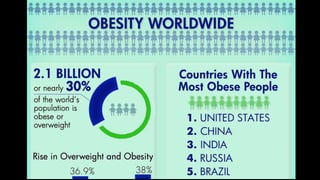
  • #2 Here I am Showing photograph Of Keith Martin , worlds fattest man Obesity is a global problem and whenever we talk about obesity , we think it is only problem of developed countries . It is a prejudice that Malnutrition is only problem of India while in reality we are facing double jeopardy (starvation – chronic (in south) , obesity- epidemic(in north)) Acc. To study published in noted journal Lancet India is just behind US and China in this global hazard list of top 10 countries with highest number of obese people.
  • #4 Obesity is a state of excess adipose tissue mass. Obesity is a disease of caloric imbalance that results from an excess intake of calories above their consumption by the body.
  • #5 Although there is no specific food that can really pinpoint where fat will be built up in the body, the uniqueness of each person dictates where or in what areas of the body these fats will be stored.