Enterobiasis (Pinworm or Threadworm)


Presentation

The patient complains of perianal itching which is worse at night, and may contribute
to insomnia or superinfection of the excoriated perianal skin. Often, an entire family is
affected.

What to do:

   •   Examine the anus to rule out other causes of itching, such as rectal prolapse,
       fecal leakage, hemorrhoids, lice (pediculosis), fungal infections (tinea or
       candidiasis), or bacterial infections (erythrasma).
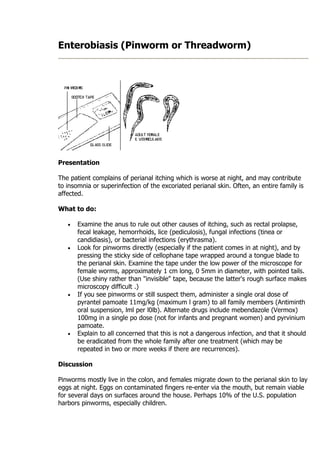
   •   Look for pinworms directly (especially if the patient comes in at night), and by
       pressing the sticky side of cellophane tape wrapped around a tongue blade to
       the perianal skin. Examine the tape under the low power of the microscope for
       female worms, approximately 1 cm long, 0 5mm in diameter, with pointed tails.
       (Use shiny rather than "invisible" tape, because the latter's rough surface makes
       microscopy difficult .)
   •   If you see pinworms or still suspect them, administer a single oral dose of
       pyrantel pamoate 11mg/kg (maximum l gram) to all family members (Antiminth
       oral suspension, lml per l0lb). Alternate drugs include mebendazole (Vermox)
       100mg in a single po dose (not for infants and pregnant women) and pyrvinium
       pamoate.
   •   Explain to all concerned that this is not a dangerous infection, and that it should
       be eradicated from the whole family after one treatment (which may be
       repeated in two or more weeks if there are recurrences).

Discussion

Pinworms mostly live in the colon, and females migrate down to the perianal skin to lay
eggs at night. Eggs on contaminated fingers re-enter via the mouth, but remain viable
for several days on surfaces around the house. Perhaps 10% of the U.S. population
harbors pinworms, especially children.

Enterobiasis

  • 1.
    Enterobiasis (Pinworm orThreadworm) Presentation The patient complains of perianal itching which is worse at night, and may contribute to insomnia or superinfection of the excoriated perianal skin. Often, an entire family is affected. What to do: • Examine the anus to rule out other causes of itching, such as rectal prolapse, fecal leakage, hemorrhoids, lice (pediculosis), fungal infections (tinea or candidiasis), or bacterial infections (erythrasma). • Look for pinworms directly (especially if the patient comes in at night), and by pressing the sticky side of cellophane tape wrapped around a tongue blade to the perianal skin. Examine the tape under the low power of the microscope for female worms, approximately 1 cm long, 0 5mm in diameter, with pointed tails. (Use shiny rather than "invisible" tape, because the latter's rough surface makes microscopy difficult .) • If you see pinworms or still suspect them, administer a single oral dose of pyrantel pamoate 11mg/kg (maximum l gram) to all family members (Antiminth oral suspension, lml per l0lb). Alternate drugs include mebendazole (Vermox) 100mg in a single po dose (not for infants and pregnant women) and pyrvinium pamoate. • Explain to all concerned that this is not a dangerous infection, and that it should be eradicated from the whole family after one treatment (which may be repeated in two or more weeks if there are recurrences). Discussion Pinworms mostly live in the colon, and females migrate down to the perianal skin to lay eggs at night. Eggs on contaminated fingers re-enter via the mouth, but remain viable for several days on surfaces around the house. Perhaps 10% of the U.S. population harbors pinworms, especially children.