Dr(Lt Col) Ashutosh Ojha
Reader ,Internal Medicine
Enteric Fever
Enteric Fevers
 The syndrome associated with enteric fevers are
produced only by a few of the Salmonella
 Salmonella typhi most important
 Salmonella paratyphi A, B,C
Typhoid fevers are prevalent in
many regions in the World
Historical landmarks in
Typhoid
 In 1880s, the typhoid bacillus was first
observed by Eberth in spleen sections and
mesenteric lymph nodes from a patient who
died from typhoid. Robert Koch confirmed a
related finding by Gaffky and succeeded in
cultivating the bacterium in 1881. But due to
the lack of differential characters, separation
of the typhoid bacillus from other enteric
bacteria was uncertain.
.
History of Sero Diagnosis
 In 1896, it was demonstrated that the serum from
an animal immunized with the typhoid bacillus
agglutinated (clumped) the typhoid bacterial cells,
and it was shown that the serum of patients
afflicted with typhoid likewise agglutinated the
typhoid bacillus. Serodiagnosis of typhoid was
thus made possible by 1896.
Typhoid Mary
 A famous example is
“Typhoid” Mary
Mallon, who was a
food handler
responsible for
infecting at least 78
people, killing 5.
These highly
infectious carriers
pose a great risk to
public health.
Typhoid Mary
 "Typhoid Mary," real name Mary Mallon, worked
as a cook in New York City in the early 1900s.
Public health pioneer Sara Josephine Baker, MD,
PhD tracked her down after discovering that she
was the common link among many people who
had become ill from typhoid fever She was traced
to typhoid outbreaks a second time so she was
put in prison again where she lived until she died.
Etiology of Typhoid fever
 Typhoid fever is a bacterial disease, caused by
Salmonella typhi. It is transmitted through the
ingestion of food or drink contaminated by the
faeces or urine of infected people.
 Para typhoid fevers are produced by other
species named
Paratyphi A, B, C
Bacteriology –Typhoid fever
 The Genus
Salmonella belong to
Enterobactericiae
 Facultative anaerobe
 Gram negative bacilli
 Distinguished from
other bacteria by
Biochemical and
antigen structure
Antigenic structure of
Salmonella
 Two sets of antigens
 Detection by serotyping
 1 Somatic or 0 Antigens contain long chain
polysaccharides ( LPS ) comprises of heat stable
polysaccharide commonly.
 2 Flagellar or H Antigens are strongly immunogenic
and induces antibody formation rapidly and in high
titers following infection or immunization. The flagellar
antigen is of a dual nature, occurring in one of the two
phases.
Paratyphoid fevers on rise
 Paratyphoid fever can be caused by any of three
serotypes of S. paratyphi A, B and C. It is similar
in its symptoms to typhoid fever, but tends to be
milder, with a lower fatality rate.
How a Typhoid fever spreads
 Salmonella Typhi lives only in humans. Persons
with typhoid fever carry the bacteria in their
bloodstream and intestinal tract. In addition, a
small number of persons, called carriers , recover
from typhoid fever but continue to carry the
bacteria. Both ill persons and carriers shed S.
Typhi in their feces (stool).
Clinical features
Typhoid fever (enteric fever) is a septicemia,
illness characterized initially by fever,
bradycardia, splenomegaly, abdominal
symptoms and 'rose spots' which are clusters
of pink mauls on the skin.
Complications such as intestinal hemorrhage
or perforation can develop in untreated
patients or when treatment is delayed.
Pathology and Pathogenesis of
Enteric fever
 Caused by
S. typhi
S.paratyphi
A B C
The organisms penetrate ileal mucosa reach mesentric
lymph nodes via Lymphatics , Multiply,
Invade Blood stream via thoracic duct
In 7 – 10 days through blood stream infect
Liver, Gall Bladder,, spleen, Kidney, Bone marrow.
After multiplication bacilli pass into blood causing
secondary and heavier bactermia
Fever
 All the events coincides with Fever and other
signs of clinical illness
 From Gall bladder further invasion occurs in
intestines
 Involvement of peyr’s patches, gut lymphoid
tissue
 Lead to inflammatory reaction, and infiltration
with monocular cells
 Leads to Necrosis, Sloughing and formation of
chacterstic typhoid ulcers
Clinical presentation
 Ingestion to onset of fever varies from 3 – 50
days.(2 weeks )
 Insidious start, early symptoms are vague
 Dull continuous head ache
 Abdominal tenderness discomfort may present
with constipation.
 May progress and present with step ladder
pattern temperature
 Temperature fall by crisis in 3 – 4th week
Other manifestations
 Relative bradycardia
 Hepatomegaly
 Splenomegaly
Rashes in Typhoid
 May present with
rash, rose spots 2 -4
mm in diameter raised
discrete irregular
blanching pink
maculae's found in
front of chest
 Appear in crops of
upto a dozen at a time
 Fade after 3 – 4 days
Complication in Typhoid
 Severe intestinal hemorrhage and intestinal
perforation
 If not diagnosed can lead to fatal complications.
Relapse
 Apparent recovery can be followed by relapse in
5 – 10 % of untreated patients
 On few occasions relapses can be severe and
may be fatal.
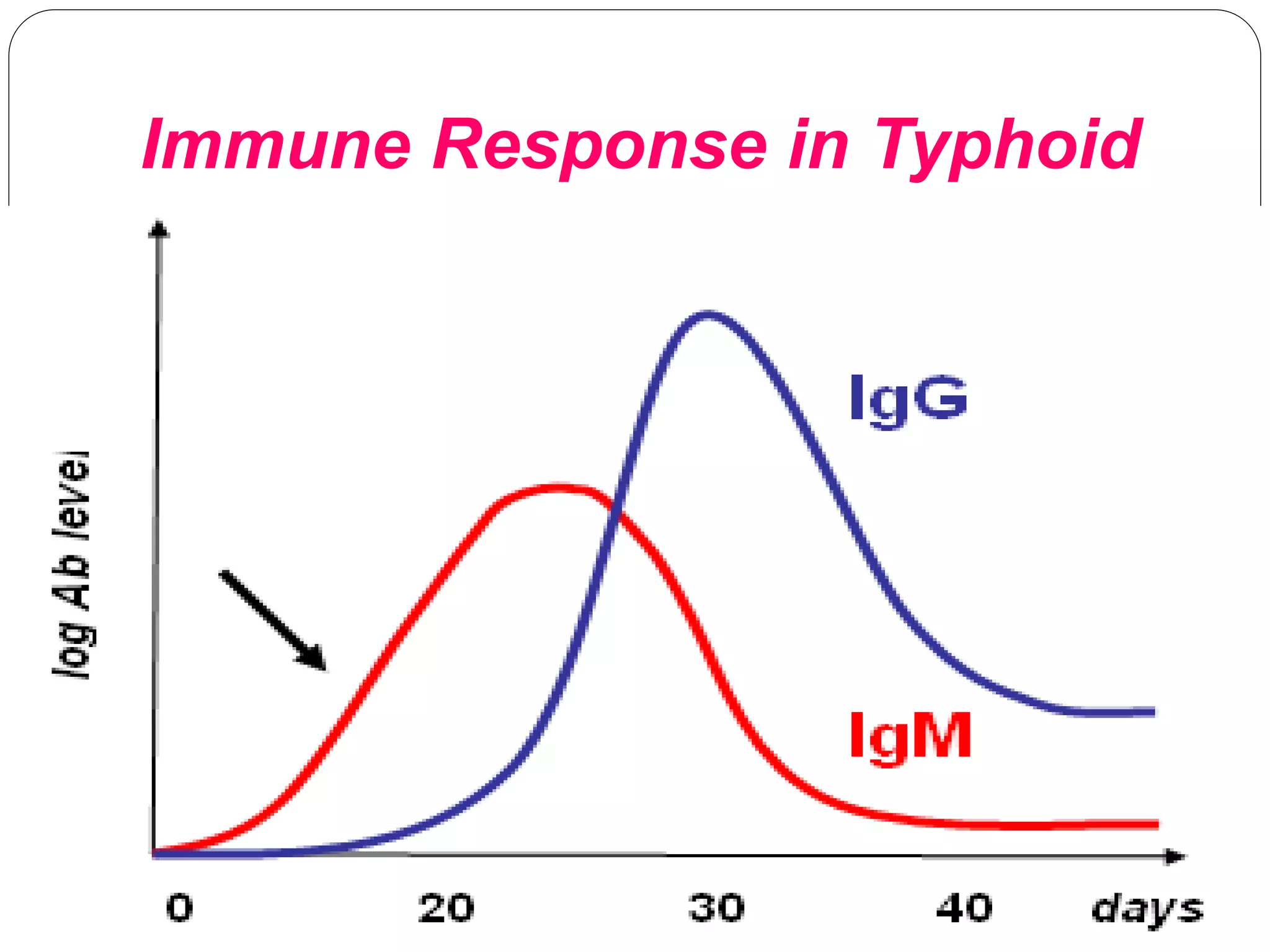
Immune Response in Typhoid
Morbidity and Mortality
 In untreated patients mortality can be up to 20 %
 Occasionally present with diarrhea may mimic
other infections, which is particularly common in
paratyphoid fever.
 Patient may present as gastro enteritis no
different from that caused by other S.enterica
serotypes.
Typhoid carriers
 Salmonella enterica causes approximately 16
million cases of typhoid fever worldwide, killing
around 500,000 per year. One in thirty of the
survivors, however, become carriers. In carriers
the bacteria remain hidden inside cells and the
gall bladder, causing new infections as they are
shed from an apparently healthy host.
Diagnosis of Enteric Fever
Blood cultures in Typhoid fever
 In Adults 5- 10 ml of Blood is collected by
venepuncture inoculated into 50 – 100 ml of Bile
broth ( 0.5 % )
 Several other media are available used as per the
availability of medium to suit their laboratory
conditions.
Blood Cultures in Typhoid
Fevers
 Bacteremia occurs
early in the disease
 Blood Cultures are
positive in
1st week in 90%
2nd week in 75%
3rd week in 60%
4th week and later in
25%
Identification of Salmonella
 Sub cultures are done after overnight incubation
at 370c,and subcultures are done on Mac
Conkey's agar
 Subcultures are repeated upto 10 days after
futher incubation.
Salmonella on Mac Conkey's
agar
Identifying Enteric Organisms
 Isolates which are Non lactose fermenting
 Motile, Indole positive
 Urease negative
 Ferment Glucose,Mannitol,Maltose
 Donot ferment Lactose, Sucrose
 Typhoid bacilli are anaerogenic
 Some of the Paratyphoid form acid and gas
 Further identification done by slide
agglutination tests
Slide agglutination tests
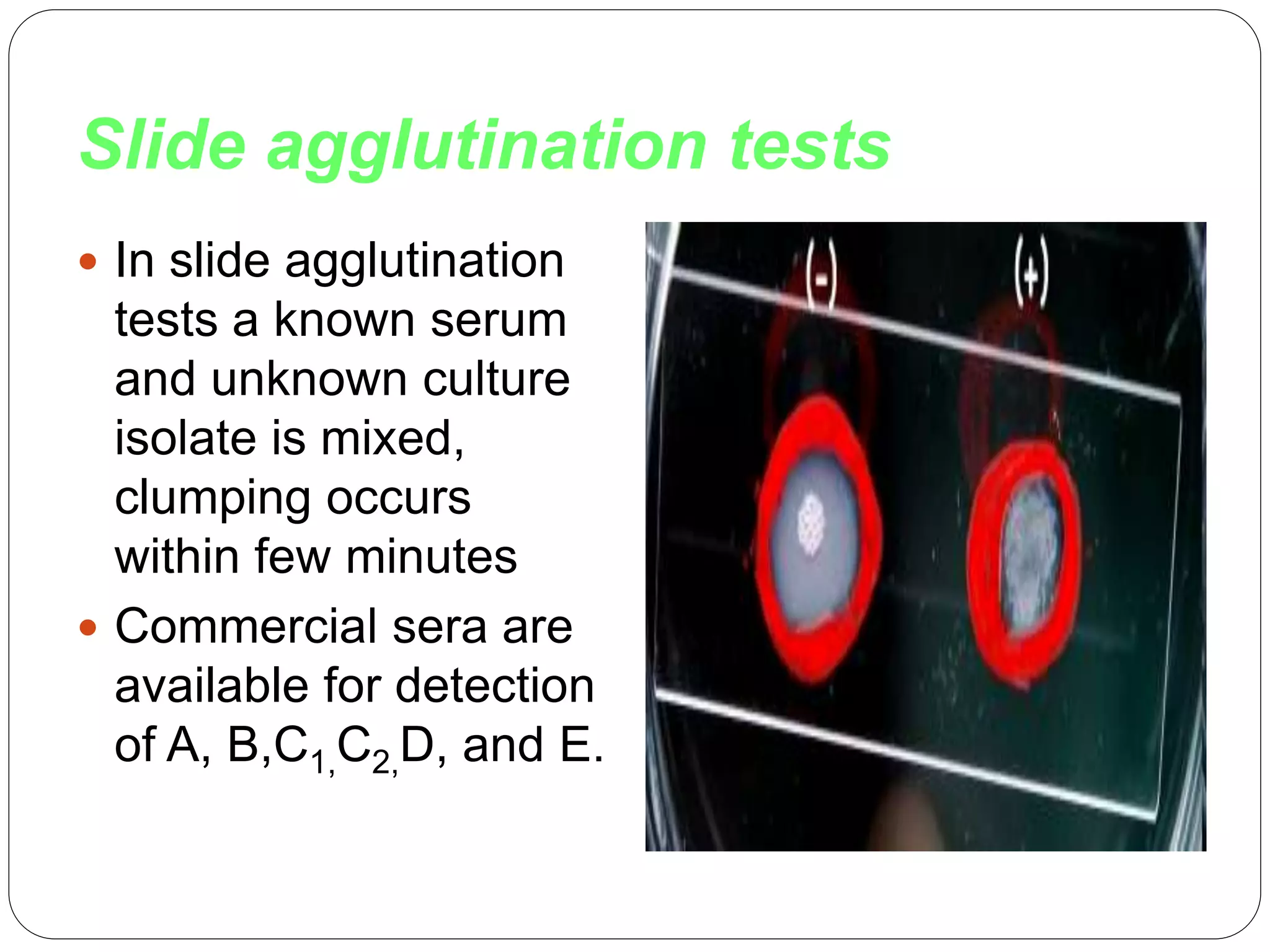
 In slide agglutination
tests a known serum
and unknown culture
isolate is mixed,
clumping occurs
within few minutes
 Commercial sera are
available for detection
of A, B,C1,C2,D, and E.
Clot culture
 Clot cultures are more productive in
yielding better results in isolation.
 A blood after clotting, the clot is lysed with
Streptokinase ,but expensive to perform in
developing countries.
Bactek and Radiometric based
methods are in recent use
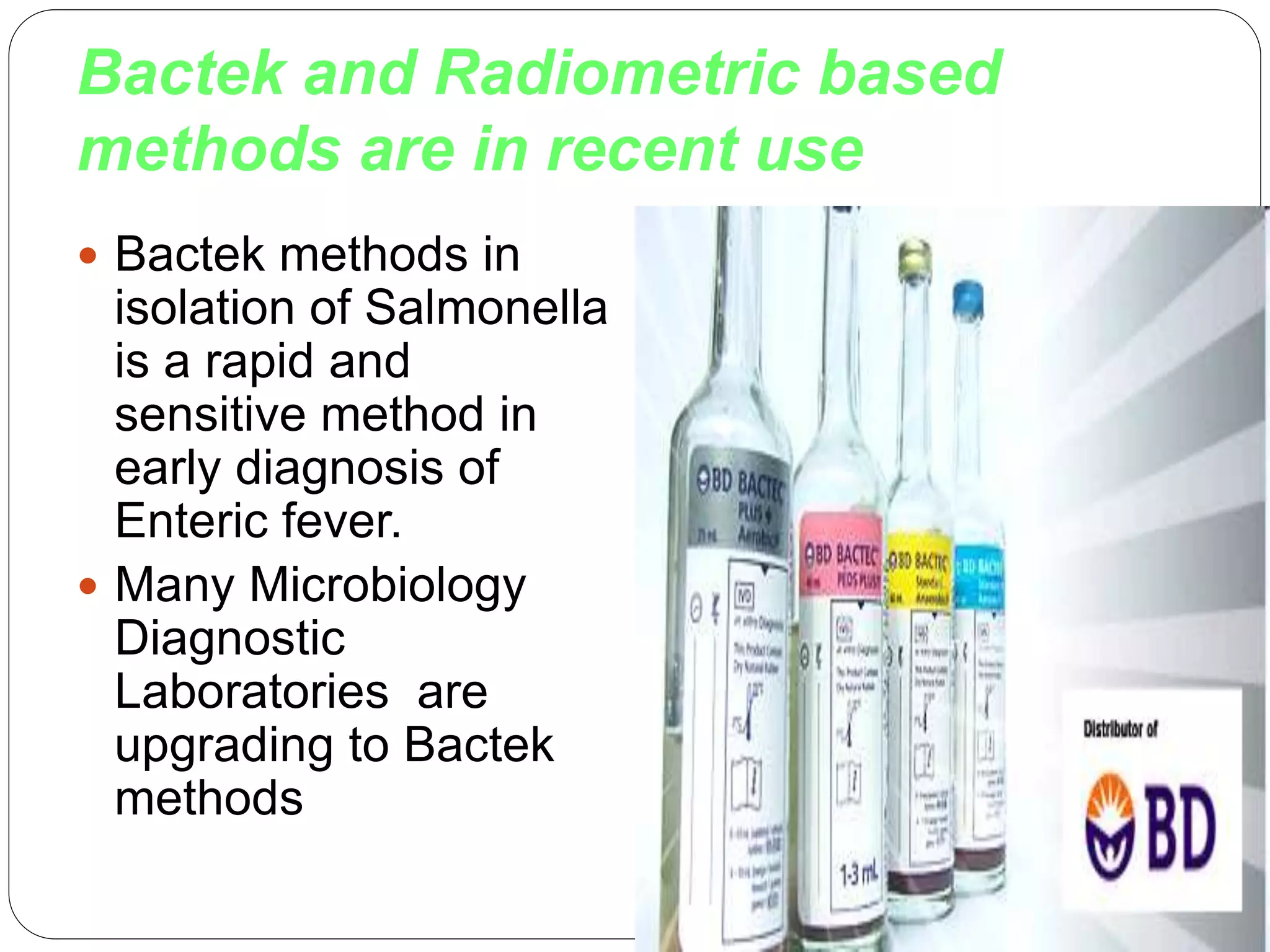
 Bactek methods in
isolation of Salmonella
is a rapid and
sensitive method in
early diagnosis of
Enteric fever.
 Many Microbiology
Diagnostic
Laboratories are
upgrading to Bactek
methods
Other methods in Isolation of
Enteric Pathogens
 Feces Culture
 Urine Culture
 Bone marrow cultures ( Highly Sensitive )
Emerging Methods in Diagnosis of
Enteric fevers.
 Detection of circulating
antigen by Co -
agglutination methods
with use of Cowan’s strain
Staphylococcus coated
with antibodies
 PCR. The advent of PCR
technology has provided
unparalleled sensitivity
and specificity for the
diagnosis of typhoid
Diagnosis of Carriers
 Useful in public health purpose.
 Useful in screening food handlers, cooks, to
detect carrier state
 Typhoid bacilli can be isolated from feces or from
bile aspirates
 Detection of Vi agglutinins in the Blood can be
determinant of carrier state.
Widal Test
 In 1896 Widal A professor of
pathology and internal
medicine at the University of
Paris (1911–29), he
developed a procedure for
diagnosing typhoid fever
based on the fact that
antibodies in the blood of an
infected individual cause the
bacteria to bind together into
clumps (the Widal reaction).
Diagnosis of Enteric Fever
Widal test
 Serum agglutinins raise abruptly during the 2nd or 3rd
week
 The widal test detects antibodies against O and H
antigens
 Two serum specimens obtained at intervals of 7 – 10
days to read the raise of antibodies.
 Serial dilutions on unknown sera are tested against
the antigens for respective Salmonella
 False positives and False negative limits the utility of
the test
 The interpretative criteria when single serum
specimens are tested vary
 Cross reactions limits the specificity
Significant Titers helps in
Diagnosis
 Following Titers of
antibodies against the
antigens are significant
when single sample is
tested
O > 1 in 160
H > 1 in 320
Testing a paired sample
for raise of antibodies
carries a greater
significance
Limitations of Widal test
 Classically, a four-fold rise of antibody in
paired sera Widal test is considered
diagnostic of typhoid fever. However,
paired sera are often difficult to obtain and
specific chemotherapy has to be instituted
on the basis of a single Widal
test. Furthermore, in areas where fever
due to infectious causes is a common
occurrence the possibility exists that false
positive reactions may occur as a result of
non-typhoid
Antimicrobial Therapy in
Typhoid
 With prompt antibiotic therapy, more than 99%
of the people with typhoid fever are cured,
although convalescence may last several
months. The antibiotic chloramphenicolSome
Trade Names
CHLOROMYCETIN
is used worldwide, but increasing resistance
to it has prompted the use of other antibiotics
(such as trimethoprim-sulfamethoxazole
BACTRIM
SEPTRA
or ciprofloxacin
Drug resistance an Emerging
concern
 Previously Choramphenicol was the drug of
choice for the treatment of typhoid fever.
However, with the development more safer
and more effective drugs the use of
Choramphenicol has declined these days. 3rd
generation cephalosporins, like Ceftriaxone,
and Flouroquinolones, like ciprofloxacin and
levofloxacin are the drugs of choice for
treatment of typhoid fever .Once again many
strains are sensitive to Choramphenicol
Vaccines for Typhoid
Prevention
 Two types of vaccines are available
 Oral and Inject able
 Oral – A live oral vaccine ( typhoral ) is a
stable mutant of S.typhi strain Ty 21a lacking
the enzyme UDP Galactose -4-epimerase.
One capsule given orally taken before food,
with glass of water or milk, on 1, 3, 5 days (
three doses )
No antibiotics should be taken during the
period of administration of vaccine
Vaccine - injectable
 The inject able vaccine, ( typhim –vi) contains
purified Vi polysaccharide antigen derived from
S.typhi strain ty21
 Given as single subcutaneous or intramuscular
injection
 Single dose is adequate.
Vaccines for Typhoid
Both vaccines are given to only > 5 years of age.
Immunity lasts for 3 years
Need a booster
Vaccines are not effective in
prevention of Paratyphoid fevers
Simple hand hygiene and
washing can reduce several
cases of Typhoid
Thank You
 Contact-9719713786
 ashutosh8116@yahoo.com
 sumitranikentanpatna@gmail.com
17 Feb2016Dr A Ojha
Available ….

Enteric fever ug

  • 1.
    Dr(Lt Col) AshutoshOjha Reader ,Internal Medicine Enteric Fever
  • 2.
    Enteric Fevers  Thesyndrome associated with enteric fevers are produced only by a few of the Salmonella  Salmonella typhi most important  Salmonella paratyphi A, B,C
  • 3.
    Typhoid fevers areprevalent in many regions in the World
  • 4.
    Historical landmarks in Typhoid In 1880s, the typhoid bacillus was first observed by Eberth in spleen sections and mesenteric lymph nodes from a patient who died from typhoid. Robert Koch confirmed a related finding by Gaffky and succeeded in cultivating the bacterium in 1881. But due to the lack of differential characters, separation of the typhoid bacillus from other enteric bacteria was uncertain. .
  • 5.
    History of SeroDiagnosis  In 1896, it was demonstrated that the serum from an animal immunized with the typhoid bacillus agglutinated (clumped) the typhoid bacterial cells, and it was shown that the serum of patients afflicted with typhoid likewise agglutinated the typhoid bacillus. Serodiagnosis of typhoid was thus made possible by 1896.
  • 6.
    Typhoid Mary  Afamous example is “Typhoid” Mary Mallon, who was a food handler responsible for infecting at least 78 people, killing 5. These highly infectious carriers pose a great risk to public health.
  • 7.
    Typhoid Mary  "TyphoidMary," real name Mary Mallon, worked as a cook in New York City in the early 1900s. Public health pioneer Sara Josephine Baker, MD, PhD tracked her down after discovering that she was the common link among many people who had become ill from typhoid fever She was traced to typhoid outbreaks a second time so she was put in prison again where she lived until she died.
  • 8.
    Etiology of Typhoidfever  Typhoid fever is a bacterial disease, caused by Salmonella typhi. It is transmitted through the ingestion of food or drink contaminated by the faeces or urine of infected people.  Para typhoid fevers are produced by other species named Paratyphi A, B, C
  • 9.
    Bacteriology –Typhoid fever The Genus Salmonella belong to Enterobactericiae  Facultative anaerobe  Gram negative bacilli  Distinguished from other bacteria by Biochemical and antigen structure
  • 10.
    Antigenic structure of Salmonella Two sets of antigens  Detection by serotyping  1 Somatic or 0 Antigens contain long chain polysaccharides ( LPS ) comprises of heat stable polysaccharide commonly.  2 Flagellar or H Antigens are strongly immunogenic and induces antibody formation rapidly and in high titers following infection or immunization. The flagellar antigen is of a dual nature, occurring in one of the two phases.
  • 11.
    Paratyphoid fevers onrise  Paratyphoid fever can be caused by any of three serotypes of S. paratyphi A, B and C. It is similar in its symptoms to typhoid fever, but tends to be milder, with a lower fatality rate.
  • 12.
    How a Typhoidfever spreads  Salmonella Typhi lives only in humans. Persons with typhoid fever carry the bacteria in their bloodstream and intestinal tract. In addition, a small number of persons, called carriers , recover from typhoid fever but continue to carry the bacteria. Both ill persons and carriers shed S. Typhi in their feces (stool).
  • 13.
    Clinical features Typhoid fever(enteric fever) is a septicemia, illness characterized initially by fever, bradycardia, splenomegaly, abdominal symptoms and 'rose spots' which are clusters of pink mauls on the skin. Complications such as intestinal hemorrhage or perforation can develop in untreated patients or when treatment is delayed.
  • 14.
    Pathology and Pathogenesisof Enteric fever  Caused by S. typhi S.paratyphi A B C The organisms penetrate ileal mucosa reach mesentric lymph nodes via Lymphatics , Multiply, Invade Blood stream via thoracic duct In 7 – 10 days through blood stream infect Liver, Gall Bladder,, spleen, Kidney, Bone marrow. After multiplication bacilli pass into blood causing secondary and heavier bactermia
  • 15.
    Fever  All theevents coincides with Fever and other signs of clinical illness  From Gall bladder further invasion occurs in intestines  Involvement of peyr’s patches, gut lymphoid tissue  Lead to inflammatory reaction, and infiltration with monocular cells  Leads to Necrosis, Sloughing and formation of chacterstic typhoid ulcers
  • 16.
    Clinical presentation  Ingestionto onset of fever varies from 3 – 50 days.(2 weeks )  Insidious start, early symptoms are vague  Dull continuous head ache  Abdominal tenderness discomfort may present with constipation.  May progress and present with step ladder pattern temperature  Temperature fall by crisis in 3 – 4th week
  • 17.
    Other manifestations  Relativebradycardia  Hepatomegaly  Splenomegaly
  • 18.
    Rashes in Typhoid May present with rash, rose spots 2 -4 mm in diameter raised discrete irregular blanching pink maculae's found in front of chest  Appear in crops of upto a dozen at a time  Fade after 3 – 4 days
  • 19.
    Complication in Typhoid Severe intestinal hemorrhage and intestinal perforation  If not diagnosed can lead to fatal complications.
  • 20.
    Relapse  Apparent recoverycan be followed by relapse in 5 – 10 % of untreated patients  On few occasions relapses can be severe and may be fatal.
  • 21.
  • 22.
    Morbidity and Mortality In untreated patients mortality can be up to 20 %  Occasionally present with diarrhea may mimic other infections, which is particularly common in paratyphoid fever.  Patient may present as gastro enteritis no different from that caused by other S.enterica serotypes.
  • 23.
    Typhoid carriers  Salmonellaenterica causes approximately 16 million cases of typhoid fever worldwide, killing around 500,000 per year. One in thirty of the survivors, however, become carriers. In carriers the bacteria remain hidden inside cells and the gall bladder, causing new infections as they are shed from an apparently healthy host.
  • 24.
  • 25.
    Blood cultures inTyphoid fever  In Adults 5- 10 ml of Blood is collected by venepuncture inoculated into 50 – 100 ml of Bile broth ( 0.5 % )  Several other media are available used as per the availability of medium to suit their laboratory conditions.
  • 26.
    Blood Cultures inTyphoid Fevers  Bacteremia occurs early in the disease  Blood Cultures are positive in 1st week in 90% 2nd week in 75% 3rd week in 60% 4th week and later in 25%
  • 27.
    Identification of Salmonella Sub cultures are done after overnight incubation at 370c,and subcultures are done on Mac Conkey's agar  Subcultures are repeated upto 10 days after futher incubation.
  • 28.
    Salmonella on MacConkey's agar
  • 29.
    Identifying Enteric Organisms Isolates which are Non lactose fermenting  Motile, Indole positive  Urease negative  Ferment Glucose,Mannitol,Maltose  Donot ferment Lactose, Sucrose  Typhoid bacilli are anaerogenic  Some of the Paratyphoid form acid and gas  Further identification done by slide agglutination tests
  • 30.
    Slide agglutination tests In slide agglutination tests a known serum and unknown culture isolate is mixed, clumping occurs within few minutes  Commercial sera are available for detection of A, B,C1,C2,D, and E.
  • 31.
    Clot culture  Clotcultures are more productive in yielding better results in isolation.  A blood after clotting, the clot is lysed with Streptokinase ,but expensive to perform in developing countries.
  • 32.
    Bactek and Radiometricbased methods are in recent use  Bactek methods in isolation of Salmonella is a rapid and sensitive method in early diagnosis of Enteric fever.  Many Microbiology Diagnostic Laboratories are upgrading to Bactek methods
  • 33.
    Other methods inIsolation of Enteric Pathogens  Feces Culture  Urine Culture  Bone marrow cultures ( Highly Sensitive )
  • 34.
    Emerging Methods inDiagnosis of Enteric fevers.  Detection of circulating antigen by Co - agglutination methods with use of Cowan’s strain Staphylococcus coated with antibodies  PCR. The advent of PCR technology has provided unparalleled sensitivity and specificity for the diagnosis of typhoid
  • 35.
    Diagnosis of Carriers Useful in public health purpose.  Useful in screening food handlers, cooks, to detect carrier state  Typhoid bacilli can be isolated from feces or from bile aspirates  Detection of Vi agglutinins in the Blood can be determinant of carrier state.
  • 36.
    Widal Test  In1896 Widal A professor of pathology and internal medicine at the University of Paris (1911–29), he developed a procedure for diagnosing typhoid fever based on the fact that antibodies in the blood of an infected individual cause the bacteria to bind together into clumps (the Widal reaction).
  • 37.
    Diagnosis of EntericFever Widal test  Serum agglutinins raise abruptly during the 2nd or 3rd week  The widal test detects antibodies against O and H antigens  Two serum specimens obtained at intervals of 7 – 10 days to read the raise of antibodies.  Serial dilutions on unknown sera are tested against the antigens for respective Salmonella  False positives and False negative limits the utility of the test  The interpretative criteria when single serum specimens are tested vary  Cross reactions limits the specificity
  • 38.
    Significant Titers helpsin Diagnosis  Following Titers of antibodies against the antigens are significant when single sample is tested O > 1 in 160 H > 1 in 320 Testing a paired sample for raise of antibodies carries a greater significance
  • 39.
    Limitations of Widaltest  Classically, a four-fold rise of antibody in paired sera Widal test is considered diagnostic of typhoid fever. However, paired sera are often difficult to obtain and specific chemotherapy has to be instituted on the basis of a single Widal test. Furthermore, in areas where fever due to infectious causes is a common occurrence the possibility exists that false positive reactions may occur as a result of non-typhoid
  • 40.
    Antimicrobial Therapy in Typhoid With prompt antibiotic therapy, more than 99% of the people with typhoid fever are cured, although convalescence may last several months. The antibiotic chloramphenicolSome Trade Names CHLOROMYCETIN is used worldwide, but increasing resistance to it has prompted the use of other antibiotics (such as trimethoprim-sulfamethoxazole BACTRIM SEPTRA or ciprofloxacin
  • 41.
    Drug resistance anEmerging concern  Previously Choramphenicol was the drug of choice for the treatment of typhoid fever. However, with the development more safer and more effective drugs the use of Choramphenicol has declined these days. 3rd generation cephalosporins, like Ceftriaxone, and Flouroquinolones, like ciprofloxacin and levofloxacin are the drugs of choice for treatment of typhoid fever .Once again many strains are sensitive to Choramphenicol
  • 42.
    Vaccines for Typhoid Prevention Two types of vaccines are available  Oral and Inject able  Oral – A live oral vaccine ( typhoral ) is a stable mutant of S.typhi strain Ty 21a lacking the enzyme UDP Galactose -4-epimerase. One capsule given orally taken before food, with glass of water or milk, on 1, 3, 5 days ( three doses ) No antibiotics should be taken during the period of administration of vaccine
  • 43.
    Vaccine - injectable The inject able vaccine, ( typhim –vi) contains purified Vi polysaccharide antigen derived from S.typhi strain ty21  Given as single subcutaneous or intramuscular injection  Single dose is adequate.
  • 44.
    Vaccines for Typhoid Bothvaccines are given to only > 5 years of age. Immunity lasts for 3 years Need a booster Vaccines are not effective in prevention of Paratyphoid fevers
  • 45.
    Simple hand hygieneand washing can reduce several cases of Typhoid
  • 46.
  • 47.
     Contact-9719713786  ashutosh8116@yahoo.com sumitranikentanpatna@gmail.com 17 Feb2016Dr A Ojha Available ….