Presented by:
Dr.Aamir
Moderated by:
Dr. Akeela
G
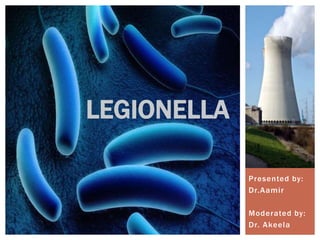
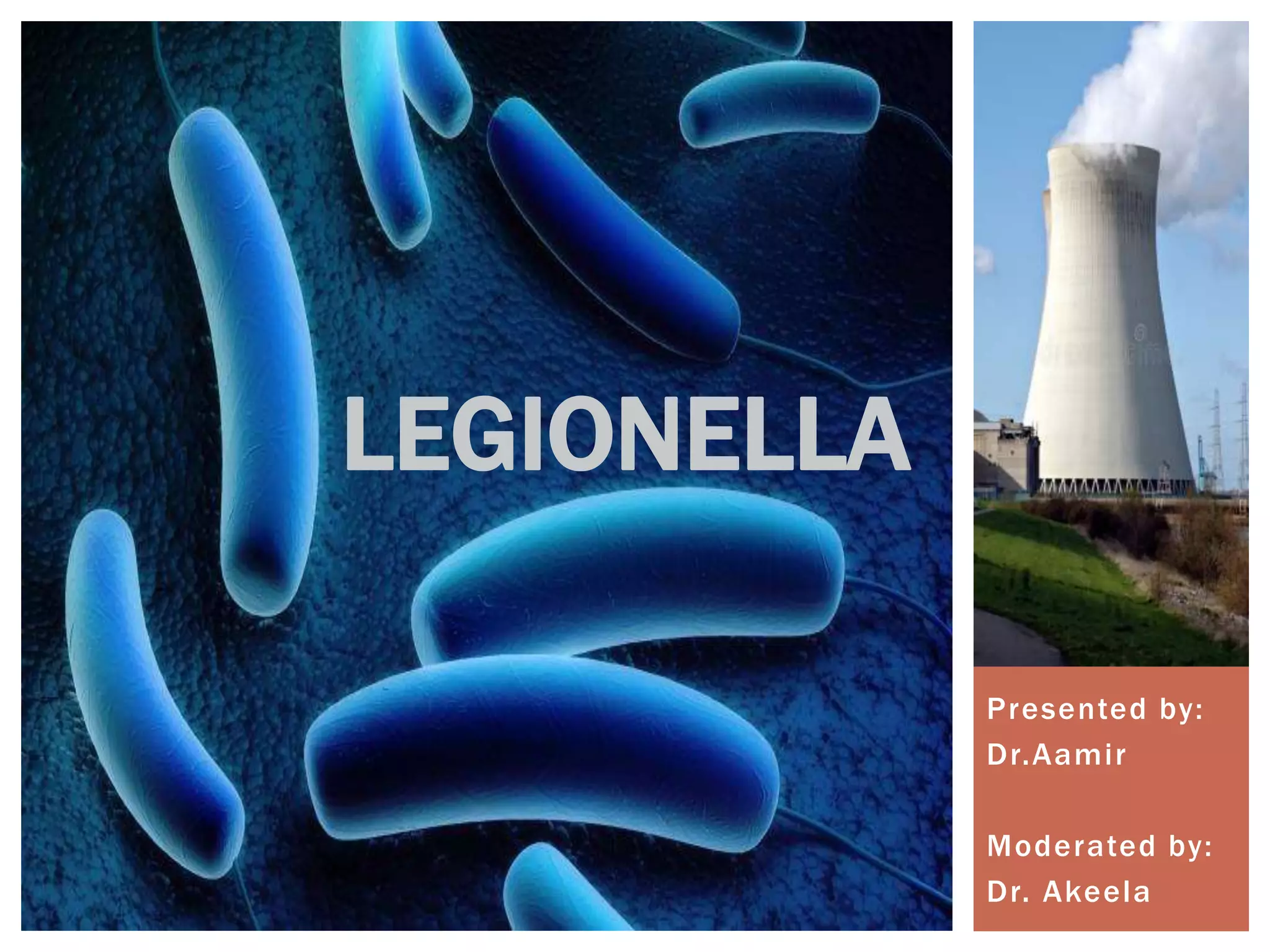
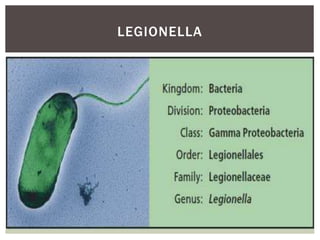
LEGIONELLA
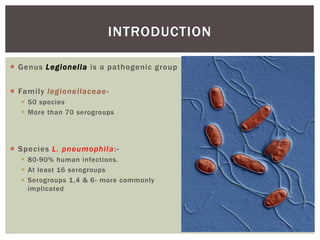
 Genus Legionella is a pathogenic group
 Family legionellaceae-
 50 species
 More than 70 serogroups
 Species L. pneumophila:-
 80-90% human infections.
 At least 16 serogroups
 Serogroups 1,4 & 6- more commonly
implicated
INTRODUCTION
 18 species other than L.pneumophila - associated with human
infections.
 L.micdadei,
 L.bozemanii,
 L.dumoffii,
 L.longbeachae are most common.
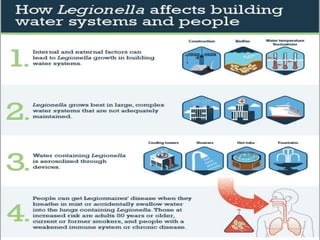
 Any infection caused by Legionella
 Collection of infections that emerged in the second half of the 20th
century
 Includes
 A pneumonia-type illness called Legionnaires' disease
 A mild flu-like illness called Pontiac fever
 Extra-pulmonary Legionellosis
 Legionella is an important pathogen in nosocomial pneumonia
 Also causes community acquired pneumonia:- a high rate of
hospital admission.
LEGIONELLOSIS
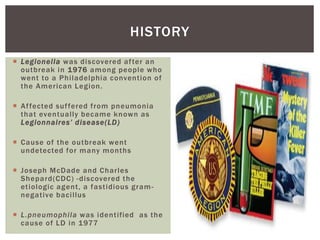
 Legionella was discovered after an
outbreak in 1976 among people who
went to a Philadelphia convention of
the American Legion.
 Affected suffered from pneumonia
that eventually became known as
Legionnaires’ disease(LD)
 Cause of the outbreak went
undetected for many months
 Joseph McDade and Charles
Shepard(CDC) -discovered the
etiologic agent, a fastidious gram-
negative bacillus
 L.pneumophila was identified as the
cause of LD in 1977
HISTORY
LEGIONELLA
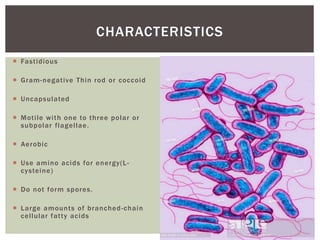
 Fastidious
 Gram-negative Thin rod or coccoid
 Uncapsulated
 Motile with one to three polar or
subpolar flagellae.
 Aerobic
 Use amino acids for energy(L-
cysteine)
 Do not form spores.
 Large amounts of branched-chain
cellular fatty acids
CHARACTERISTICS
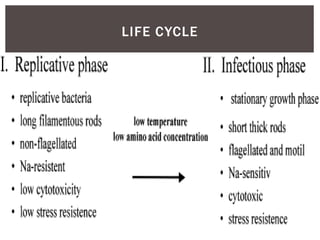
 Two major phases to the life cycle.
1. REPLICATIVE PHASE - non-motile and have a low toxicity
2. INFECTIOUS PHASE - bacteria are shorter and thicker, have
developed flagella and are highly toxic.
LIFE CYCLE
RESISTANCE
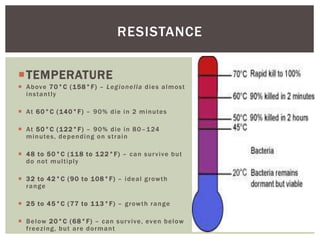
TEMPERATURE
 Above 70°C (158°F) – Legionella dies almost
instantly
 At 60°C (140°F) – 90% die in 2 minutes
 At 50°C (122°F) – 90% die in 80–124
minutes, depending on strain
 48 to 50°C (118 to 122°F) – can survive but
do not multiply
 32 to 42°C (90 to 108°F) – ideal growth
range
 25 to 45°C (77 to 113°F) – growth range
 Below 20°C (68°F) – can survive, even below
freezing, but are dormant
CHEMICALS
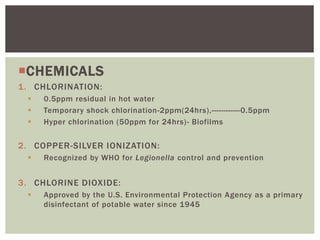
1. CHLORINATION:
 0.5ppm residual in hot water
 Temporary shock chlorination-2ppm(24hrs),------------0.5ppm
 Hyper chlorination (50ppm for 24hrs)- Biofilms
2. COPPER-SILVER IONIZATION:
 Recognized by WHO for Legionella control and prevention
3. CHLORINE DIOXIDE:
 Approved by the U.S. Environmental Protection Agency as a primary
disinfectant of potable water since 1945
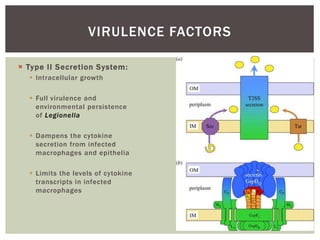
 Type II Secretion System:
 Intracellular growth
 Full virulence and
environmental persistence
of Legionella
 Dampens the cytokine
secretion from infected
macrophages and epithelia
 Limits the levels of cytokine
transcripts in infected
macrophages
VIRULENCE FACTORS
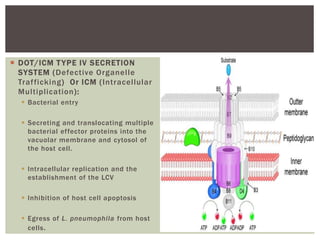
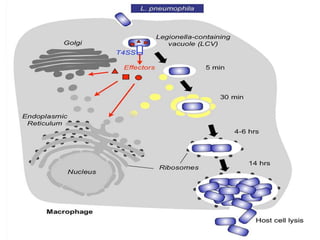
 DOT/ICM TYPE IV SECRETION
SYSTEM (Defective Organelle
Trafficking) Or ICM (Intracellular
Multiplication):
 Bacterial entry
 Secreting and translocating multiple
bacterial effector proteins into the
vacuolar membrane and cytosol of
the host cell.
 Intracellular replication and the
establishment of the LCV
 Inhibition of host cell apoptosis
 Egress of L. pneumophila from host
cells.
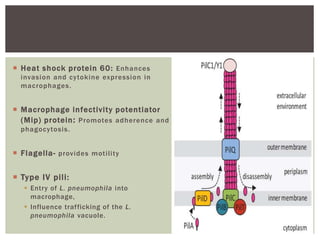
 Heat shock protein 60: Enhances
invasion and cytokine expression in
macrophages.
 Macrophage infectivity potentiator
(Mip) protein: Promotes adherence and
phagocytosis.
 Flagella- provides motility
 Type IV pili:
 Entry of L. pneumophila into
macrophage,
 Influence trafficking of the L.
pneumophila vacuole.
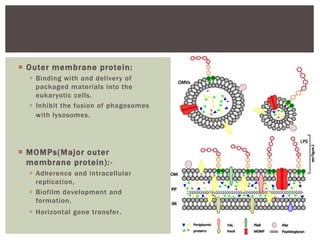
 Outer membrane protein:
 Binding with and delivery of
packaged materials into the
eukaryotic cells.
 Inhibit the fusion of phagosomes
with lysosomes.
 MOMPs(Major outer
membrane protein):-
 Adherence and intracellular
replication,
 Biofilm development and
formation,
 Horizontal gene transfer.
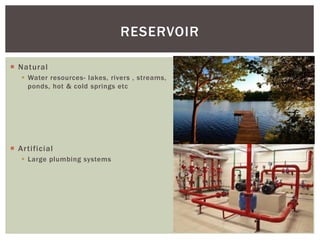
 Natural
 Water resources- lakes, rivers , streams,
ponds, hot & cold springs etc
 Artificial
 Large plumbing systems
RESERVOIR
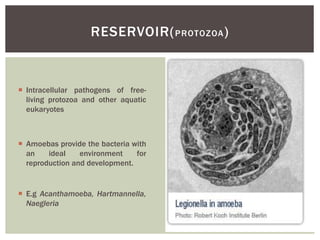
 Intracellular pathogens of free-
living protozoa and other aquatic
eukaryotes
 Amoebas provide the bacteria with
an ideal environment for
reproduction and development.
 E.g Acanthamoeba, Hartmannella,
Naegleria
RESERVOIR(PROTOZOA)
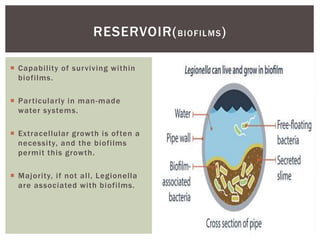
 Capability of surviving within
biofilms.
 Particularly in man-made
water systems.
 Extracellular growth is often a
necessity, and the biofilms
permit this growth.
 Majority, if not all, Legionella
are associated with biofilms.
RESERVOIR(BIOFILMS)
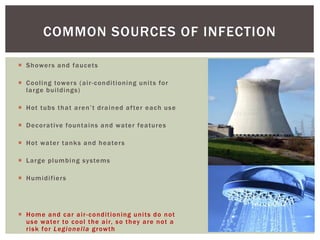
 Showers and faucets
 Cooling towers (air-conditioning units for
large buildings)
 Hot tubs that aren’t drained after each use
 Decorative fountains and water features
 Hot water tanks and heaters
 Large plumbing systems
 Humidifiers
 Home and car air-conditioning units do not
use water to cool the air, so they are not a
risk for Legionella growth
COMMON SOURCES OF INFECTION
 Do not occur as commensal flora
in man
 No person to person transmission
 Most common source of infection-
contaminated water supply
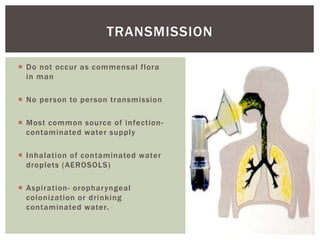
 Inhalation of contaminated water
droplets (AEROSOLS)
 Aspiration- oropharyngeal
colonization or drinking
contaminated water.
TRANSMISSION
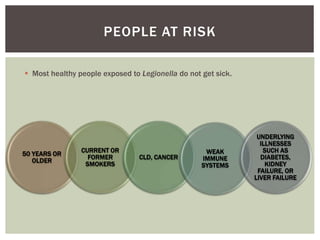
50 YEARS OR
OLDER
CURRENT OR
FORMER
SMOKERS
CLD, CANCER
WEAK
IMMUNE
SYSTEMS
UNDERLYING
ILLNESSES
SUCH AS
DIABETES,
KIDNEY
FAILURE, OR
LIVER FAILURE
PEOPLE AT RISK
 Most healthy people exposed to Legionella do not get sick.
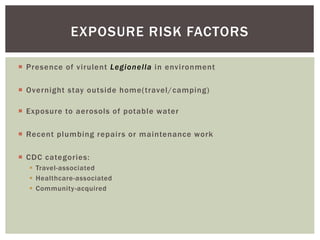
 Presence of virulent Legionella in environment
 Overnight stay outside home(travel/camping)
 Exposure to aerosols of potable water
 Recent plumbing repairs or maintenance work
 CDC categories:
 Travel-associated
 Healthcare-associated
 Community-acquired
EXPOSURE RISK FACTORS
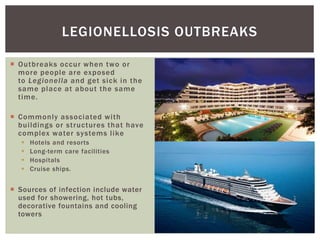
 Outbreaks occur when two or
more people are exposed
to Legionella and get sick in the
same place at about the same
time.
 Commonly associated with
buildings or structures that have
complex water systems like
 Hotels and resorts
 Long-term care facilities
 Hospitals
 Cruise ships.
 Sources of infection include water
used for showering, hot tubs,
decorative fountains and cooling
towers
LEGIONELLOSIS OUTBREAKS
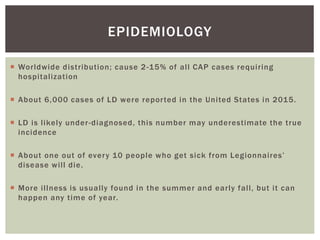
 Worldwide distribution; cause 2-15% of all CAP cases requiring
hospitalization
 About 6,000 cases of LD were reported in the United States in 2015.
 LD is likely under-diagnosed, this number may underestimate the true
incidence
 About one out of every 10 people who get sick from Legionnaires’
disease will die.
 More illness is usually found in the summer and early fall, but it can
happen any time of year.
EPIDEMIOLOGY
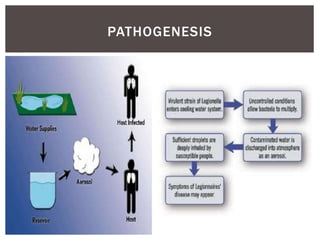
PATHOGENESIS
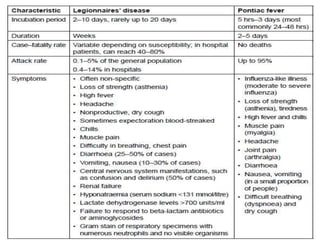
LEGIONARRE’S DISEASE
PONTAIC FEVER
EXTRAPULMONARY
LEGIONELLOSIS
CLINICAL MANIFESTATIONS
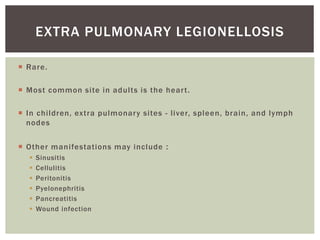
 Rare.
 Most common site in adults is the heart.
 In children, extra pulmonary sites - liver, spleen, brain, and lymph
nodes
 Other manifestations may include :
 Sinusitis
 Cellulitis
 Peritonitis
 Pyelonephritis
 Pancreatitis
 Wound infection
EXTRA PULMONARY LEGIONELLOSIS
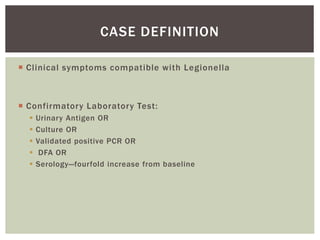
 Clinical symptoms compatible with Legionella
 Confirmatory Laboratory Test:
 Urinary Antigen OR
 Culture OR
 Validated positive PCR OR
 DFA OR
 Serology—fourfold increase from baseline
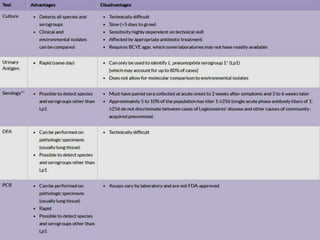
CASE DEFINITION
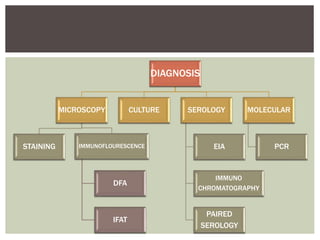
DIAGNOSIS
MICROSCOPY
STAINING IMMUNOFLOURESCENCE
DFA
IFAT
CULTURE SEROLOGY
EIA
IMMUNO
CHROMATOGRAPHY
PAIRED
SEROLOGY
MOLECULAR
PCR
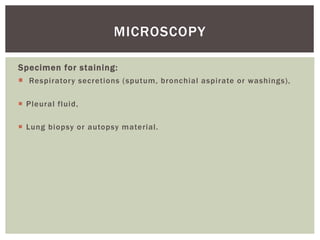
Specimen for staining:
 Respiratory secretions (sputum, bronchial aspirate or washings),
 Pleural fluid,
 Lung biopsy or autopsy material.
MICROSCOPY
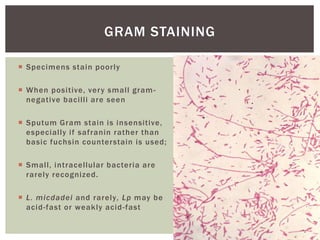
 Specimens stain poorly
 When positive, very small gram-
negative bacilli are seen
 Sputum Gram stain is insensitive,
especially if safranin rather than
basic fuchsin counterstain is used;
 Small, intracellular bacteria are
rarely recognized.
 L. micdadei and rarely, Lp may be
acid-fast or weakly acid-fast
GRAM STAINING
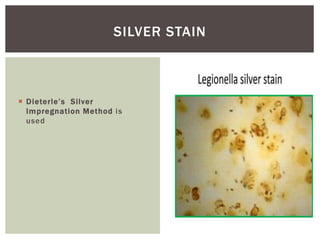
SILVER STAIN
 Dieterle’s Silver
Impregnation Method is
used
 Used for tissue & water staining
 Basic fuschin primary stain
 Malachite green counterstain
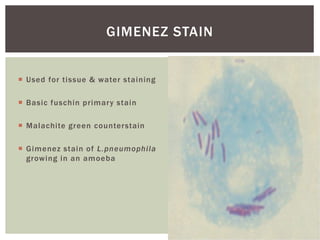
 Gimenez stain of L.pneumophila
growing in an amoeba
GIMENEZ STAIN
Direct Immunofluorescence Assays
(DFAs)
Indirect Immunofluorescence Antibody
Technique (IFAT)
IMMUNOFLUORESCENCE MICROSCOPY
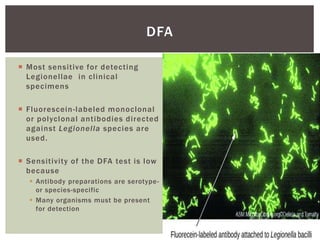
 Most sensitive for detecting
Legionellae in clinical
specimens
 Fluorescein-labeled monoclonal
or polyclonal antibodies directed
against Legionella species are
used.
 Sensitivity of the DFA test is low
because
 Antibody preparations are serotype-
or species-specific
 Many organisms must be present
for detection
DFA
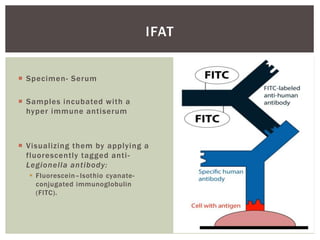
 Specimen- Serum
 Samples incubated with a
hyper immune antiserum
 Visualizing them by applying a
fluorescently tagged anti-
Legionella antibody:
 Fluorescein–Isothio cyanate-
conjugated immunoglobulin
(FITC).
IFAT
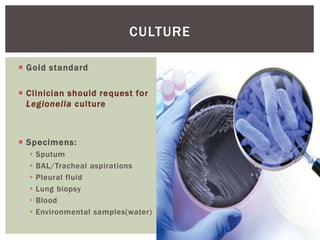
 Gold standard
 Clinician should request for
Legionella culture
 Specimens:
 Sputum
 BAL/Tracheal aspirations
 Pleural fluid
 Lung biopsy
 Blood
 Environmental samples(water)
CULTURE
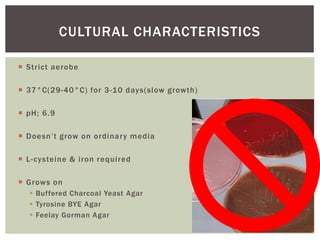
 Strict aerobe
 37°C(29-40°C) for 3-10 days(slow growth)
 pH; 6.9
 Doesn’t grow on ordinary media
 L-cysteine & iron required
 Grows on
 Buffered Charcoal Yeast Agar
 Tyrosine BYE Agar
 Feelay Gorman Agar
CULTURAL CHARACTERISTICS
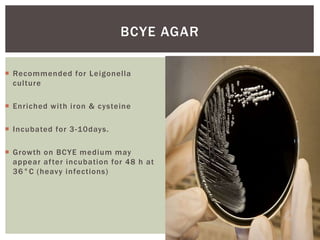
 Recommended for Leigonella
culture
 Enriched with iron & cysteine
 Incubated for 3-10days.
 Growth on BCYE medium may
appear after incubation for 48 h at
36°C (heavy infections)
BCYE AGAR
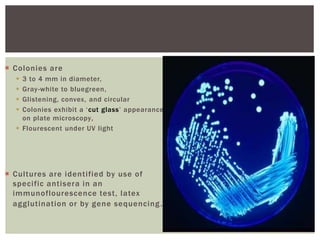
 Colonies are
 3 to 4 mm in diameter,
 Gray-white to bluegreen,
 Glistening, convex, and circular
 Colonies exhibit a ‘cut glass’ appearance
on plate microscopy,
 Flourescent under UV light
 Cultures are identified by use of
specific antisera in an
immunoflourescence test, latex
agglutination or by gene sequencing.
 Selective BCYE agar:
 Made more selective by addition of antibiotics
 Tyrosine BYE medium:
 Charcoal replaced by L-tyrosine
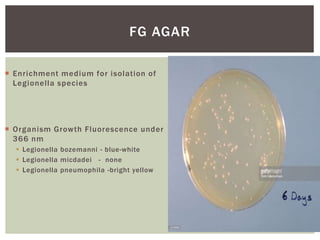
 Enrichment medium for isolation of
Legionella species
 Organism Growth Fluorescence under
366 nm
 Legionella bozemanni - blue-white
 Legionella micdadei - none
 Legionella pneumophila -bright yellow
FG AGAR
 Does not ferment routine sugars
 Hydrolyses:
 Starch
 Hippurate
 Gelatin
 Catalase positive
 Oxidase variable
BIOCHEMICAL REACTIONS
 Use bacteriological safety hood (Bio-safety cabinet 2).
 Wear gown, mask and gloves.
 Decontaminate work surface with either 5% hypochlorite or 5%
phenol.
 Autoclave all materials before discarding or cleaning.
 Since Legionella disease is primarily a pulmonary infection,
prevention and containment of aerosols is essential.
SAFETY PRECAUTIONS
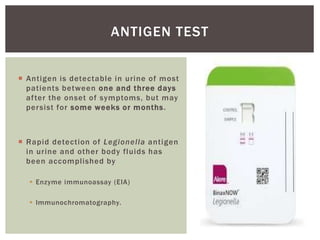
 Antigen is detectable in urine of most
patients between one and three days
after the onset of symptoms, but may
persist for some weeks or months.
 Rapid detection of Legionella antigen
in urine and other body fluids has
been accomplished by
 Enzyme immunoassay (EIA)
 Immunochromatography.
ANTIGEN TEST
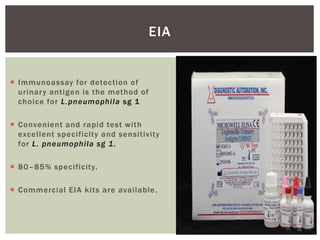
 Immunoassay for detection of
urinary antigen is the method of
choice for L.pneumophila sg 1
 Convenient and rapid test with
excellent specificity and sensitivity
for L. pneumophila sg 1.
 80–85% specificity.
 Commercial EIA kits are available.
EIA
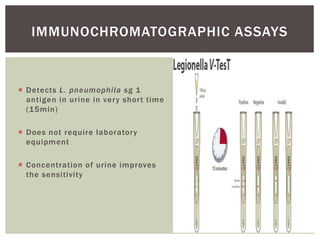
IMMUNOCHROMATOGRAPHIC ASSAYS
 Detects L. pneumophila sg 1
antigen in urine in very short time
(15min)
 Does not require laboratory
equipment
 Concentration of urine improves
the sensitivity
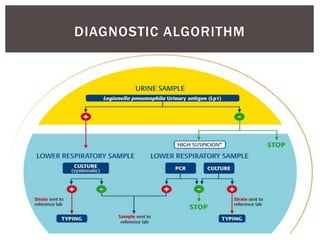
DIAGNOSTIC ALGORITHM
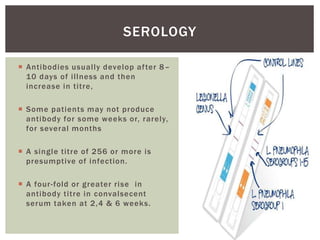
 Antibodies usually develop after 8–
10 days of illness and then
increase in titre,
 Some patients may not produce
antibody for some weeks or, rarely,
for several months
 A single titre of 256 or more is
presumptive of infection.
 A four-fold or greater rise in
antibody titre in convalsecent
serum taken at 2,4 & 6 weeks.
SEROLOGY
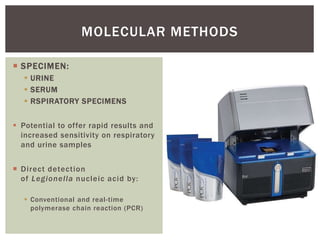
 SPECIMEN:
 URINE
 SERUM
 RSPIRATORY SPECIMENS
 Potential to offer rapid results and
increased sensitivity on respiratory
and urine samples
 Direct detection
of Legionella nucleic acid by:
 Conventional and real-time
polymerase chain reaction (PCR)
MOLECULAR METHODS
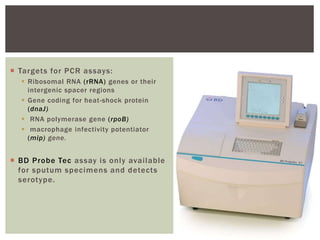
 Targets for PCR assays:
 Ribosomal RNA (rRNA) genes or their
intergenic spacer regions
 Gene coding for heat-shock protein
(dnaJ)
 RNA polymerase gene (rpoB)
 macrophage infectivity potentiator
(mip) gene.
 BD Probe Tec assay is only available
for sputum specimens and detects
serotype.
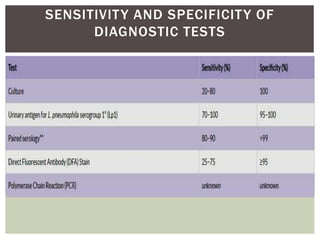
SENSITIVITY AND SPECIFICITY OF
DIAGNOSTIC TESTS
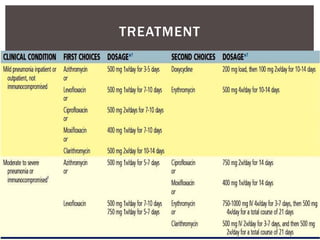
TREATMENT
 Keeping Legionella out of water systems in buildings is key to
preventing infection.
 Routine culture of hospital water supply is recommended.
 Engineering and building codes routinely advocated preventive
measures- little impact on presence of Legionella.
 Maintaining the temperature of water supplies –<25 or >50.
 Chemical treatment(chlorination) of water supplies.
 Avoid water supplies from known sources of Legionella.
PREVENTION
 No vaccine is available for Legionellosis
 Vaccination studies using heat-killed or acetone-killed cells have been
carried out in guinea pigs
 Both vaccines were shown to give moderately high levels of dose -
dependent protection.
 Correlated with antibody levels as measured by
 ELISA to an outer membrane antigen
 Indirect immunoflourescence to heat-killed cells
 A licensed vaccine for humans is most probably still many years away.
VACCINE
 Legionella can be used as a weapon.
 Genetic modification of L. pneumophila has been shown where the
mortality rate in infected animals can be increased to nearly 100%.
 A former Soviet bioengineer, Sergei Popov, stated in 2000 that his
team experimented with genetically enhanced bioweapons,
including Legionella.
WEAPONIZATION
THANKYO

Legionella

  • 1.
  • 2.
     Genus Legionellais a pathogenic group  Family legionellaceae-  50 species  More than 70 serogroups  Species L. pneumophila:-  80-90% human infections.  At least 16 serogroups  Serogroups 1,4 & 6- more commonly implicated INTRODUCTION
  • 3.
     18 speciesother than L.pneumophila - associated with human infections.  L.micdadei,  L.bozemanii,  L.dumoffii,  L.longbeachae are most common.
  • 4.
     Any infectioncaused by Legionella  Collection of infections that emerged in the second half of the 20th century  Includes  A pneumonia-type illness called Legionnaires' disease  A mild flu-like illness called Pontiac fever  Extra-pulmonary Legionellosis  Legionella is an important pathogen in nosocomial pneumonia  Also causes community acquired pneumonia:- a high rate of hospital admission. LEGIONELLOSIS
  • 5.
     Legionella wasdiscovered after an outbreak in 1976 among people who went to a Philadelphia convention of the American Legion.  Affected suffered from pneumonia that eventually became known as Legionnaires’ disease(LD)  Cause of the outbreak went undetected for many months  Joseph McDade and Charles Shepard(CDC) -discovered the etiologic agent, a fastidious gram- negative bacillus  L.pneumophila was identified as the cause of LD in 1977 HISTORY
  • 6.
  • 7.
     Fastidious  Gram-negativeThin rod or coccoid  Uncapsulated  Motile with one to three polar or subpolar flagellae.  Aerobic  Use amino acids for energy(L- cysteine)  Do not form spores.  Large amounts of branched-chain cellular fatty acids CHARACTERISTICS
  • 8.
     Two majorphases to the life cycle. 1. REPLICATIVE PHASE - non-motile and have a low toxicity 2. INFECTIOUS PHASE - bacteria are shorter and thicker, have developed flagella and are highly toxic. LIFE CYCLE
  • 9.
    RESISTANCE TEMPERATURE  Above 70°C(158°F) – Legionella dies almost instantly  At 60°C (140°F) – 90% die in 2 minutes  At 50°C (122°F) – 90% die in 80–124 minutes, depending on strain  48 to 50°C (118 to 122°F) – can survive but do not multiply  32 to 42°C (90 to 108°F) – ideal growth range  25 to 45°C (77 to 113°F) – growth range  Below 20°C (68°F) – can survive, even below freezing, but are dormant
  • 10.
    CHEMICALS 1. CHLORINATION:  0.5ppmresidual in hot water  Temporary shock chlorination-2ppm(24hrs),------------0.5ppm  Hyper chlorination (50ppm for 24hrs)- Biofilms 2. COPPER-SILVER IONIZATION:  Recognized by WHO for Legionella control and prevention 3. CHLORINE DIOXIDE:  Approved by the U.S. Environmental Protection Agency as a primary disinfectant of potable water since 1945
  • 11.
     Type IISecretion System:  Intracellular growth  Full virulence and environmental persistence of Legionella  Dampens the cytokine secretion from infected macrophages and epithelia  Limits the levels of cytokine transcripts in infected macrophages VIRULENCE FACTORS
  • 12.
     DOT/ICM TYPEIV SECRETION SYSTEM (Defective Organelle Trafficking) Or ICM (Intracellular Multiplication):  Bacterial entry  Secreting and translocating multiple bacterial effector proteins into the vacuolar membrane and cytosol of the host cell.  Intracellular replication and the establishment of the LCV  Inhibition of host cell apoptosis  Egress of L. pneumophila from host cells.
  • 13.
     Heat shockprotein 60: Enhances invasion and cytokine expression in macrophages.  Macrophage infectivity potentiator (Mip) protein: Promotes adherence and phagocytosis.  Flagella- provides motility  Type IV pili:  Entry of L. pneumophila into macrophage,  Influence trafficking of the L. pneumophila vacuole.
  • 14.
     Outer membraneprotein:  Binding with and delivery of packaged materials into the eukaryotic cells.  Inhibit the fusion of phagosomes with lysosomes.  MOMPs(Major outer membrane protein):-  Adherence and intracellular replication,  Biofilm development and formation,  Horizontal gene transfer.
  • 16.
     Natural  Waterresources- lakes, rivers , streams, ponds, hot & cold springs etc  Artificial  Large plumbing systems RESERVOIR
  • 17.
     Intracellular pathogensof free- living protozoa and other aquatic eukaryotes  Amoebas provide the bacteria with an ideal environment for reproduction and development.  E.g Acanthamoeba, Hartmannella, Naegleria RESERVOIR(PROTOZOA)
  • 18.
     Capability ofsurviving within biofilms.  Particularly in man-made water systems.  Extracellular growth is often a necessity, and the biofilms permit this growth.  Majority, if not all, Legionella are associated with biofilms. RESERVOIR(BIOFILMS)
  • 19.
     Showers andfaucets  Cooling towers (air-conditioning units for large buildings)  Hot tubs that aren’t drained after each use  Decorative fountains and water features  Hot water tanks and heaters  Large plumbing systems  Humidifiers  Home and car air-conditioning units do not use water to cool the air, so they are not a risk for Legionella growth COMMON SOURCES OF INFECTION
  • 20.
     Do notoccur as commensal flora in man  No person to person transmission  Most common source of infection- contaminated water supply  Inhalation of contaminated water droplets (AEROSOLS)  Aspiration- oropharyngeal colonization or drinking contaminated water. TRANSMISSION
  • 22.
    50 YEARS OR OLDER CURRENTOR FORMER SMOKERS CLD, CANCER WEAK IMMUNE SYSTEMS UNDERLYING ILLNESSES SUCH AS DIABETES, KIDNEY FAILURE, OR LIVER FAILURE PEOPLE AT RISK  Most healthy people exposed to Legionella do not get sick.
  • 23.
     Presence ofvirulent Legionella in environment  Overnight stay outside home(travel/camping)  Exposure to aerosols of potable water  Recent plumbing repairs or maintenance work  CDC categories:  Travel-associated  Healthcare-associated  Community-acquired EXPOSURE RISK FACTORS
  • 24.
     Outbreaks occurwhen two or more people are exposed to Legionella and get sick in the same place at about the same time.  Commonly associated with buildings or structures that have complex water systems like  Hotels and resorts  Long-term care facilities  Hospitals  Cruise ships.  Sources of infection include water used for showering, hot tubs, decorative fountains and cooling towers LEGIONELLOSIS OUTBREAKS
  • 25.
     Worldwide distribution;cause 2-15% of all CAP cases requiring hospitalization  About 6,000 cases of LD were reported in the United States in 2015.  LD is likely under-diagnosed, this number may underestimate the true incidence  About one out of every 10 people who get sick from Legionnaires’ disease will die.  More illness is usually found in the summer and early fall, but it can happen any time of year. EPIDEMIOLOGY
  • 26.
  • 28.
  • 30.
     Rare.  Mostcommon site in adults is the heart.  In children, extra pulmonary sites - liver, spleen, brain, and lymph nodes  Other manifestations may include :  Sinusitis  Cellulitis  Peritonitis  Pyelonephritis  Pancreatitis  Wound infection EXTRA PULMONARY LEGIONELLOSIS
  • 31.
     Clinical symptomscompatible with Legionella  Confirmatory Laboratory Test:  Urinary Antigen OR  Culture OR  Validated positive PCR OR  DFA OR  Serology—fourfold increase from baseline CASE DEFINITION
  • 33.
  • 34.
    Specimen for staining: Respiratory secretions (sputum, bronchial aspirate or washings),  Pleural fluid,  Lung biopsy or autopsy material. MICROSCOPY
  • 35.
     Specimens stainpoorly  When positive, very small gram- negative bacilli are seen  Sputum Gram stain is insensitive, especially if safranin rather than basic fuchsin counterstain is used;  Small, intracellular bacteria are rarely recognized.  L. micdadei and rarely, Lp may be acid-fast or weakly acid-fast GRAM STAINING
  • 36.
    SILVER STAIN  Dieterle’sSilver Impregnation Method is used
  • 37.
     Used fortissue & water staining  Basic fuschin primary stain  Malachite green counterstain  Gimenez stain of L.pneumophila growing in an amoeba GIMENEZ STAIN
  • 38.
    Direct Immunofluorescence Assays (DFAs) IndirectImmunofluorescence Antibody Technique (IFAT) IMMUNOFLUORESCENCE MICROSCOPY
  • 39.
     Most sensitivefor detecting Legionellae in clinical specimens  Fluorescein-labeled monoclonal or polyclonal antibodies directed against Legionella species are used.  Sensitivity of the DFA test is low because  Antibody preparations are serotype- or species-specific  Many organisms must be present for detection DFA
  • 40.
     Specimen- Serum Samples incubated with a hyper immune antiserum  Visualizing them by applying a fluorescently tagged anti- Legionella antibody:  Fluorescein–Isothio cyanate- conjugated immunoglobulin (FITC). IFAT
  • 41.
     Gold standard Clinician should request for Legionella culture  Specimens:  Sputum  BAL/Tracheal aspirations  Pleural fluid  Lung biopsy  Blood  Environmental samples(water) CULTURE
  • 42.
     Strict aerobe 37°C(29-40°C) for 3-10 days(slow growth)  pH; 6.9  Doesn’t grow on ordinary media  L-cysteine & iron required  Grows on  Buffered Charcoal Yeast Agar  Tyrosine BYE Agar  Feelay Gorman Agar CULTURAL CHARACTERISTICS
  • 43.
     Recommended forLeigonella culture  Enriched with iron & cysteine  Incubated for 3-10days.  Growth on BCYE medium may appear after incubation for 48 h at 36°C (heavy infections) BCYE AGAR
  • 44.
     Colonies are 3 to 4 mm in diameter,  Gray-white to bluegreen,  Glistening, convex, and circular  Colonies exhibit a ‘cut glass’ appearance on plate microscopy,  Flourescent under UV light  Cultures are identified by use of specific antisera in an immunoflourescence test, latex agglutination or by gene sequencing.
  • 45.
     Selective BCYEagar:  Made more selective by addition of antibiotics  Tyrosine BYE medium:  Charcoal replaced by L-tyrosine
  • 46.
     Enrichment mediumfor isolation of Legionella species  Organism Growth Fluorescence under 366 nm  Legionella bozemanni - blue-white  Legionella micdadei - none  Legionella pneumophila -bright yellow FG AGAR
  • 47.
     Does notferment routine sugars  Hydrolyses:  Starch  Hippurate  Gelatin  Catalase positive  Oxidase variable BIOCHEMICAL REACTIONS
  • 48.
     Use bacteriologicalsafety hood (Bio-safety cabinet 2).  Wear gown, mask and gloves.  Decontaminate work surface with either 5% hypochlorite or 5% phenol.  Autoclave all materials before discarding or cleaning.  Since Legionella disease is primarily a pulmonary infection, prevention and containment of aerosols is essential. SAFETY PRECAUTIONS
  • 49.
     Antigen isdetectable in urine of most patients between one and three days after the onset of symptoms, but may persist for some weeks or months.  Rapid detection of Legionella antigen in urine and other body fluids has been accomplished by  Enzyme immunoassay (EIA)  Immunochromatography. ANTIGEN TEST
  • 50.
     Immunoassay fordetection of urinary antigen is the method of choice for L.pneumophila sg 1  Convenient and rapid test with excellent specificity and sensitivity for L. pneumophila sg 1.  80–85% specificity.  Commercial EIA kits are available. EIA
  • 51.
    IMMUNOCHROMATOGRAPHIC ASSAYS  DetectsL. pneumophila sg 1 antigen in urine in very short time (15min)  Does not require laboratory equipment  Concentration of urine improves the sensitivity
  • 52.
  • 53.
     Antibodies usuallydevelop after 8– 10 days of illness and then increase in titre,  Some patients may not produce antibody for some weeks or, rarely, for several months  A single titre of 256 or more is presumptive of infection.  A four-fold or greater rise in antibody titre in convalsecent serum taken at 2,4 & 6 weeks. SEROLOGY
  • 54.
     SPECIMEN:  URINE SERUM  RSPIRATORY SPECIMENS  Potential to offer rapid results and increased sensitivity on respiratory and urine samples  Direct detection of Legionella nucleic acid by:  Conventional and real-time polymerase chain reaction (PCR) MOLECULAR METHODS
  • 55.
     Targets forPCR assays:  Ribosomal RNA (rRNA) genes or their intergenic spacer regions  Gene coding for heat-shock protein (dnaJ)  RNA polymerase gene (rpoB)  macrophage infectivity potentiator (mip) gene.  BD Probe Tec assay is only available for sputum specimens and detects serotype.
  • 56.
    SENSITIVITY AND SPECIFICITYOF DIAGNOSTIC TESTS
  • 58.
  • 59.
     Keeping Legionellaout of water systems in buildings is key to preventing infection.  Routine culture of hospital water supply is recommended.  Engineering and building codes routinely advocated preventive measures- little impact on presence of Legionella.  Maintaining the temperature of water supplies –<25 or >50.  Chemical treatment(chlorination) of water supplies.  Avoid water supplies from known sources of Legionella. PREVENTION
  • 60.
     No vaccineis available for Legionellosis  Vaccination studies using heat-killed or acetone-killed cells have been carried out in guinea pigs  Both vaccines were shown to give moderately high levels of dose - dependent protection.  Correlated with antibody levels as measured by  ELISA to an outer membrane antigen  Indirect immunoflourescence to heat-killed cells  A licensed vaccine for humans is most probably still many years away. VACCINE
  • 61.
     Legionella canbe used as a weapon.  Genetic modification of L. pneumophila has been shown where the mortality rate in infected animals can be increased to nearly 100%.  A former Soviet bioengineer, Sergei Popov, stated in 2000 that his team experimented with genetically enhanced bioweapons, including Legionella. WEAPONIZATION
  • 62.

Editor's Notes

  • #8  thin-0.3-0.9μm × aerobe pleomorphic, Mobile with polar/subpolar flagella, pilli & fimbrae , non-spore forming, Nutritionally fastidious
  • #42 Potentially contaminated material such as sputum or post-mortem material may also be heated at 50°C for 30 min in order to diminish growth by less heat-stable respiratory tract organisms that may inhibit growth of legionellae in culture.
  • #50 Most Legionella infections are now diagnosed by urine antigen tests, but failure to detect urinary antigen does not exclude infection with legionellae other than L. pneumophila serogroup 1.