OVERVIEW
• Define cholera
• Hystory
• Vibrio cholerea
• Physiology
• Symptoms
• Transmission
• Vaccine
• Treatment
• Conclusion
Vibrio
Cholerae
What is cholera?
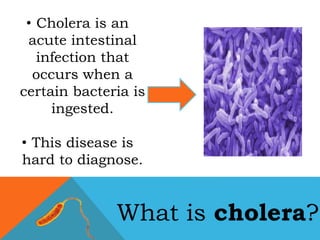
• Cholera is an
acute intestinal
infection that
occurs when a
certain bacteria is
ingested.
• This disease is
hard to diagnose.
HISTORY
• Filippo Pacini
discovered cholera in
1854.
• He discovered and
studied the bacteria
with a microscope.
• Origins from India, cases reported in 1563
• About 8 pandemics are indicated in world:
• 1817- 1823 : First Pandemic
• 1829- 1850 : Second Pandemic
• 1852- 1860 : Third Pandemic * Pacini
• 1863- 1879 : Fourth Pandemic
• 1881- 1896 : Fifth Pandemic *conclusively by
Koch
• 1899- 1923 : Sixth Pandemic
• 1961 : Seventh Pandemic
• 1992 : Eighth Pandemic
• According to the WHO, 56,958 cases of cholera
were reported in 2007.
Vibrio Cholerae
Taxonomy
• Reign: Bacteria
• Phylum: Proteobacterea
• Class: Gama
Proteobacterea
• Order: Vibreonales
• Family: Vibrionacea
• Genus: Vibreo
• Species: Vibrio Cholerae
PHYSIOLOGY
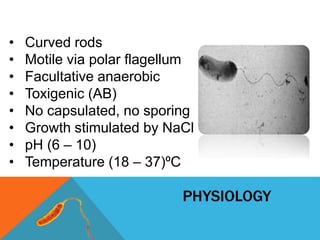
• Curved rods
• Motile via polar flagellum
• Facultative anaerobic
• Toxigenic (AB)
• No capsulated, no sporing
• Growth stimulated by NaCl
• pH (6 – 10)
• Temperature (18 – 37)ºC
symptoms
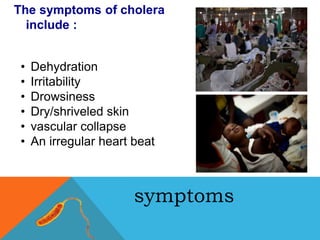
• Dehydration
• Irritability
• Drowsiness
• Dry/shriveled skin
• vascular collapse
• An irregular heart beat
The symptoms of cholera
include :
profuse, watery
diarrhea
stomach
pains
leg cramps Mild fever
Vomiting Sunken eyes
and cheeks
Having a dry
mouth
with extreme
thirst
Decreased urinary
output
symptoms
THE DEATH
symptoms
Transmissions
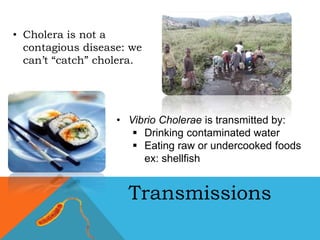
• Cholera is not a
contagious disease: we
can’t “catch” cholera.
• Vibrio Cholerae is transmitted by:
 Drinking contaminated water
 Eating raw or undercooked foods
ex: shellfish
Where is cholera
most common?
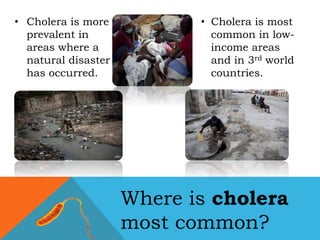
• Cholera is most
common in low-
income areas
and in 3rd world
countries.
• Cholera is more
prevalent in
areas where a
natural disaster
has occurred.
What is the mortality
incidence of cholera?
• Untreated cases: Average- 50%
Epidemics- 90%
• Treated cases: Less than 1%
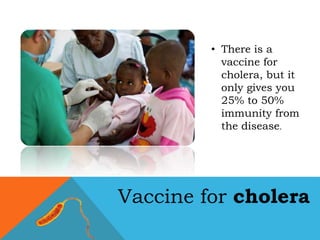
Vaccine for cholera
• There is a
vaccine for
cholera, but it
only gives you
25% to 50%
immunity from
the disease.
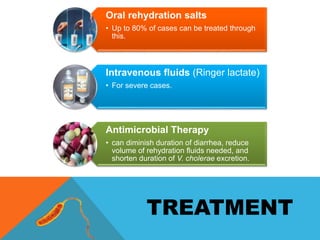
Oral rehydration salts
• Up to 80% of cases can be treated through
this.
Intravenous fluids (Ringer lactate)
• For severe cases.
Antimicrobial Therapy
• can diminish duration of diarrhea, reduce
volume of rehydration fluids needed, and
shorten duration of V. cholerae excretion.
TREATMENT
PREVENTION
• Basic health education and hygiene
• Chemoprophylaxis
• Provision of safe water and sanitation
• The bacterium doesn’t like acid environment
“block with acidic water and acid food…
CONCLUSION

Cholera

  • 2.
    OVERVIEW • Define cholera •Hystory • Vibrio cholerea • Physiology • Symptoms • Transmission • Vaccine • Treatment • Conclusion
  • 3.
    Vibrio Cholerae What is cholera? •Cholera is an acute intestinal infection that occurs when a certain bacteria is ingested. • This disease is hard to diagnose.
  • 4.
    HISTORY • Filippo Pacini discoveredcholera in 1854. • He discovered and studied the bacteria with a microscope.
  • 5.
    • Origins fromIndia, cases reported in 1563 • About 8 pandemics are indicated in world: • 1817- 1823 : First Pandemic • 1829- 1850 : Second Pandemic • 1852- 1860 : Third Pandemic * Pacini • 1863- 1879 : Fourth Pandemic • 1881- 1896 : Fifth Pandemic *conclusively by Koch • 1899- 1923 : Sixth Pandemic • 1961 : Seventh Pandemic • 1992 : Eighth Pandemic • According to the WHO, 56,958 cases of cholera were reported in 2007.
  • 6.
    Vibrio Cholerae Taxonomy • Reign:Bacteria • Phylum: Proteobacterea • Class: Gama Proteobacterea • Order: Vibreonales • Family: Vibrionacea • Genus: Vibreo • Species: Vibrio Cholerae
  • 7.
    PHYSIOLOGY • Curved rods •Motile via polar flagellum • Facultative anaerobic • Toxigenic (AB) • No capsulated, no sporing • Growth stimulated by NaCl • pH (6 – 10) • Temperature (18 – 37)ºC
  • 8.
    symptoms • Dehydration • Irritability •Drowsiness • Dry/shriveled skin • vascular collapse • An irregular heart beat The symptoms of cholera include :
  • 9.
    profuse, watery diarrhea stomach pains leg crampsMild fever Vomiting Sunken eyes and cheeks Having a dry mouth with extreme thirst Decreased urinary output symptoms
  • 10.
  • 11.
    Transmissions • Cholera isnot a contagious disease: we can’t “catch” cholera. • Vibrio Cholerae is transmitted by:  Drinking contaminated water  Eating raw or undercooked foods ex: shellfish
  • 12.
    Where is cholera mostcommon? • Cholera is most common in low- income areas and in 3rd world countries. • Cholera is more prevalent in areas where a natural disaster has occurred.
  • 13.
    What is themortality incidence of cholera? • Untreated cases: Average- 50% Epidemics- 90% • Treated cases: Less than 1%
  • 14.
    Vaccine for cholera •There is a vaccine for cholera, but it only gives you 25% to 50% immunity from the disease.
  • 15.
    Oral rehydration salts •Up to 80% of cases can be treated through this. Intravenous fluids (Ringer lactate) • For severe cases. Antimicrobial Therapy • can diminish duration of diarrhea, reduce volume of rehydration fluids needed, and shorten duration of V. cholerae excretion. TREATMENT
  • 16.
    PREVENTION • Basic healtheducation and hygiene • Chemoprophylaxis • Provision of safe water and sanitation • The bacterium doesn’t like acid environment “block with acidic water and acid food… CONCLUSION