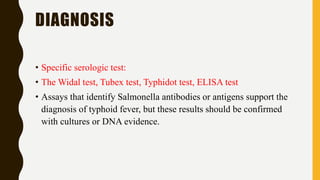
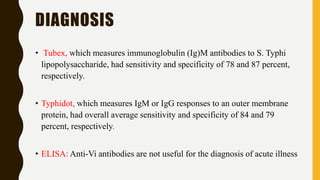
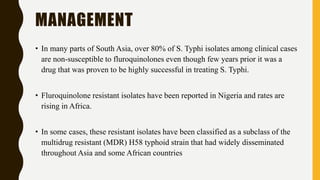
This document provides an overview of enteric (typhoid) fever. It discusses the epidemiology, etiology, pathogenesis, clinical features, diagnosis and management. Some key points:
- Enteric fever is most prevalent in impoverished areas with poor sanitation. South/Southeast Asia and Africa have high rates.
- Salmonella enterica serotypes Typhi and Paratyphi cause the disease. Risk factors include consumption of contaminated food/water and poor hand hygiene.
- The bacteria invade the small intestine and spread systematically, potentially causing complications like bowel perforation if untreated.
- Classic symptoms include prolonged fever, abdominal pain, and rose colored rash. Untreated cases