Activity 1
 Individually, think of a key word that best describe
 your conception of ‘teaching’.

 Compare your conception of ‘teaching’ with your
 partner.

 In groups, list down 3 key words derived from the
 various conceptions of ‘teaching gathered.
“imparting knowledge”
Teaching = Facilitating Learning
   Learning-centered (not teacher-centered)


   Interactive (not one-way, passive mode)
Teaching = Facilitating Learning
   Participative (not teacher involvement only)


   Meaningful (not just rote & surface learning)
Activity 2
 What do you think are attributes of ‘meaningful’
 learning?
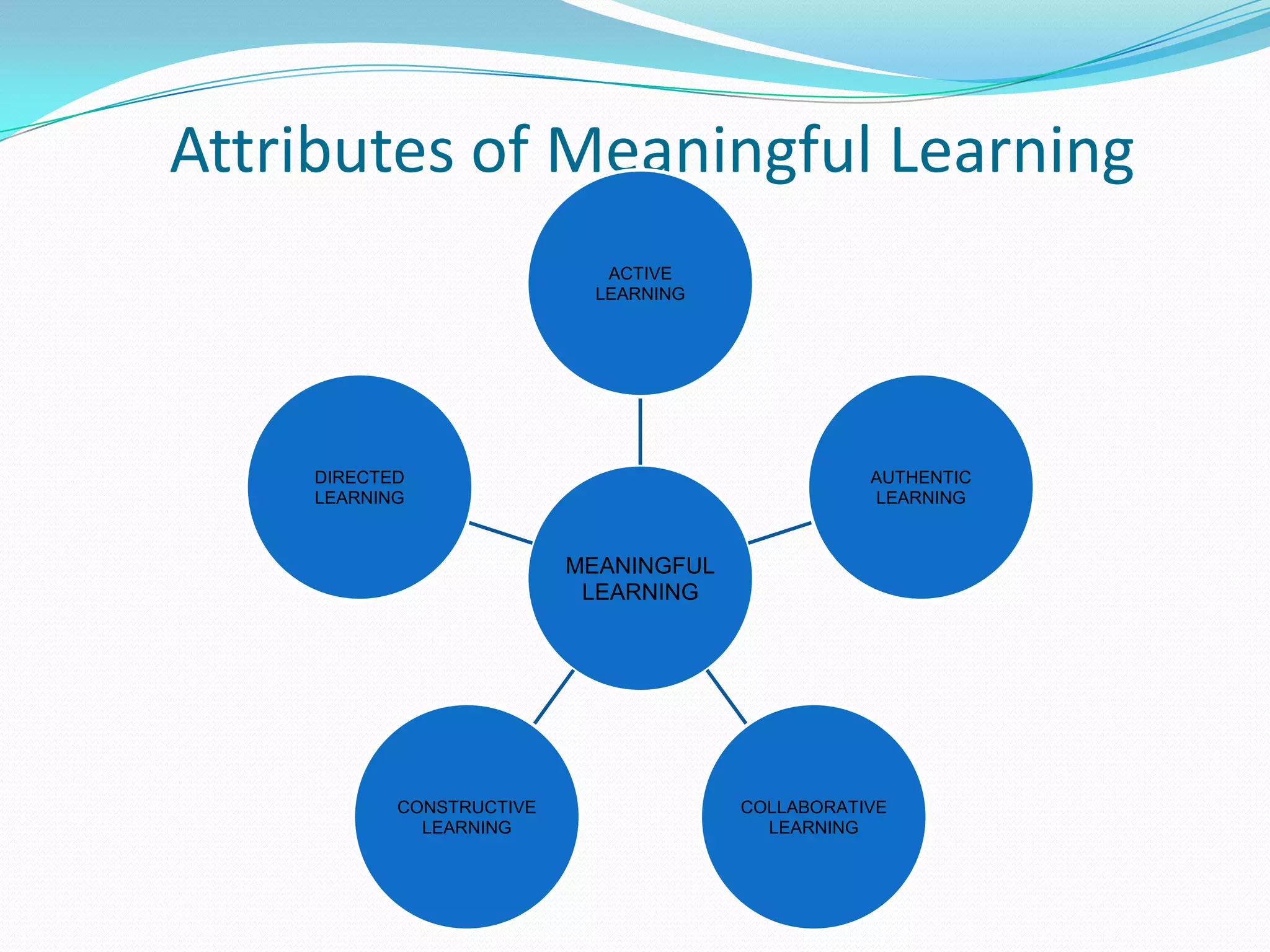
Attributes of Meaningful Learning
                             ACTIVE
                            LEARNING


    DIRECTED                                      AUTHENTIC
    LEARNING                                      LEARNING


                          MEANINGFUL
                           LEARNING


           CONSTRUCTIVE                COLLABORATIVE
             LEARNING                    LEARNING
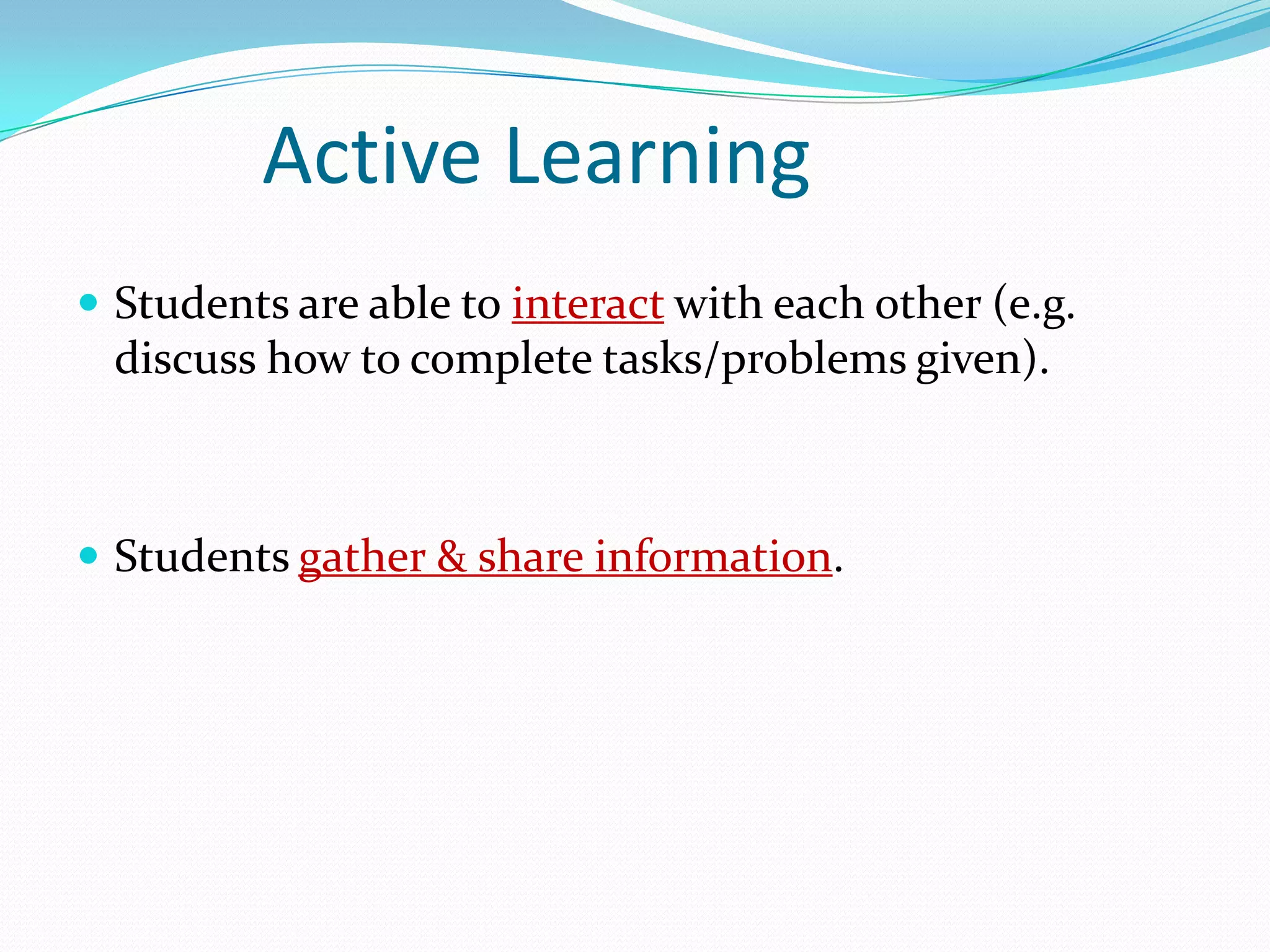
Active Learning
 Students are able to interact with each other (e.g.
  discuss how to complete tasks/problems given).


 Students gather & share information.
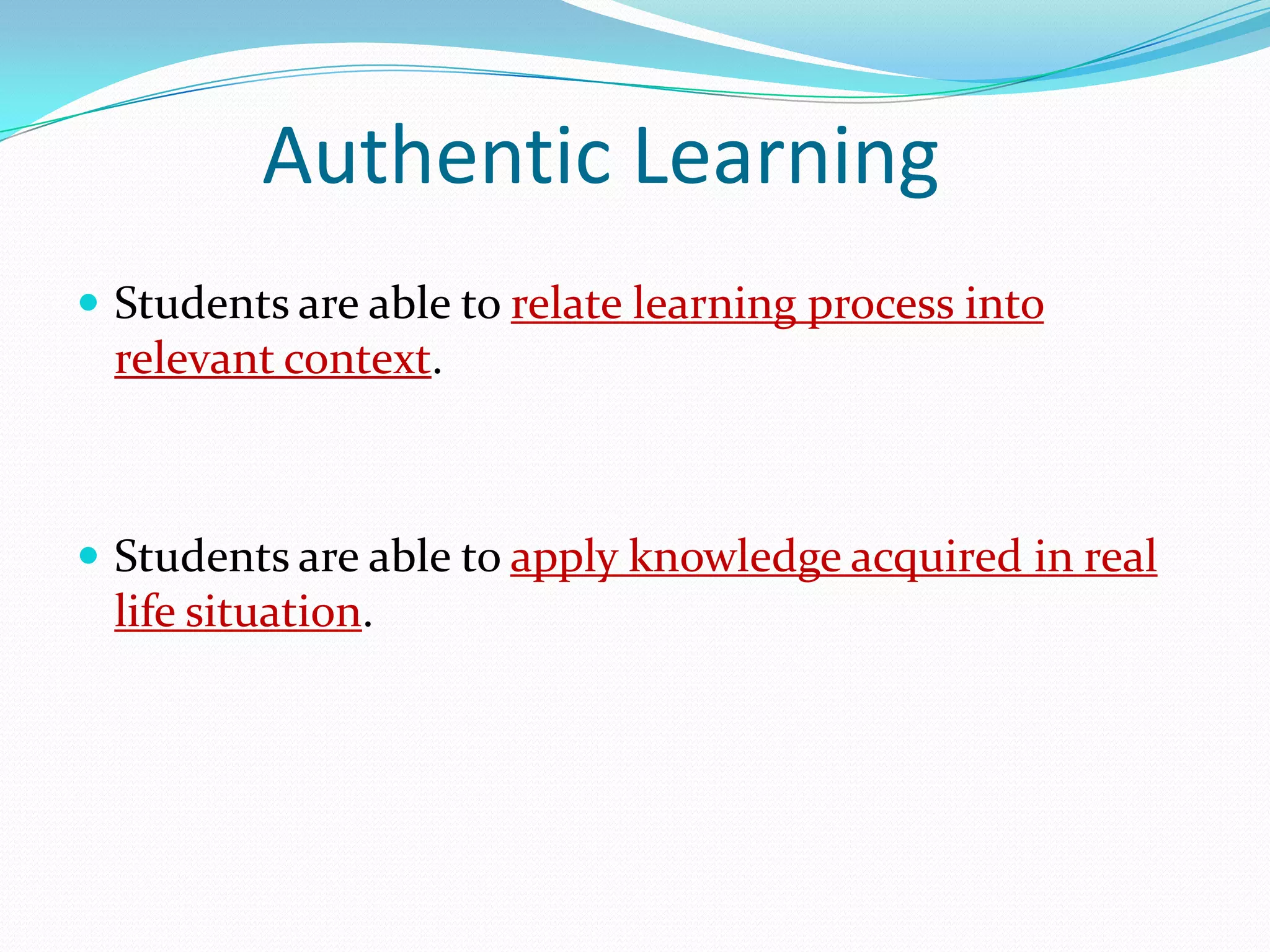
Authentic Learning
 Students are able to relate learning process into
  relevant context.


 Students are able to apply knowledge acquired in real
  life situation.
Directed Learning
 Students are able to make decisions & be responsible
  of them.


 Students are free to use alternative ways to construct
  knowledge.
Constructive Learning
 Students are able to reflect on their learning processes
  & activities.


 Students are able to evaluate & criticize views of others
  constructively.
Collaborative Learning
 Students are able to contribute ideas toward achieving
 a common goal.


 Students are able to complete tasks given
 collaboratively.
“Learning is something students do,
  not something done to students.”

            Alfie Kohn
How would you define ‘active
learning’?


What characterizes ‘active learning’ &
makes different from ‘inactive
learning’?
Active Learning
 “. . . instructional activities involving students in
 doing things & thinking about what they are
 doing” (Bonwell et al. 1991).
Active Learning
• Learning is not a spectator sport.


• The more actively engaged the learner is, the more
  learning takes place.
Active Learning
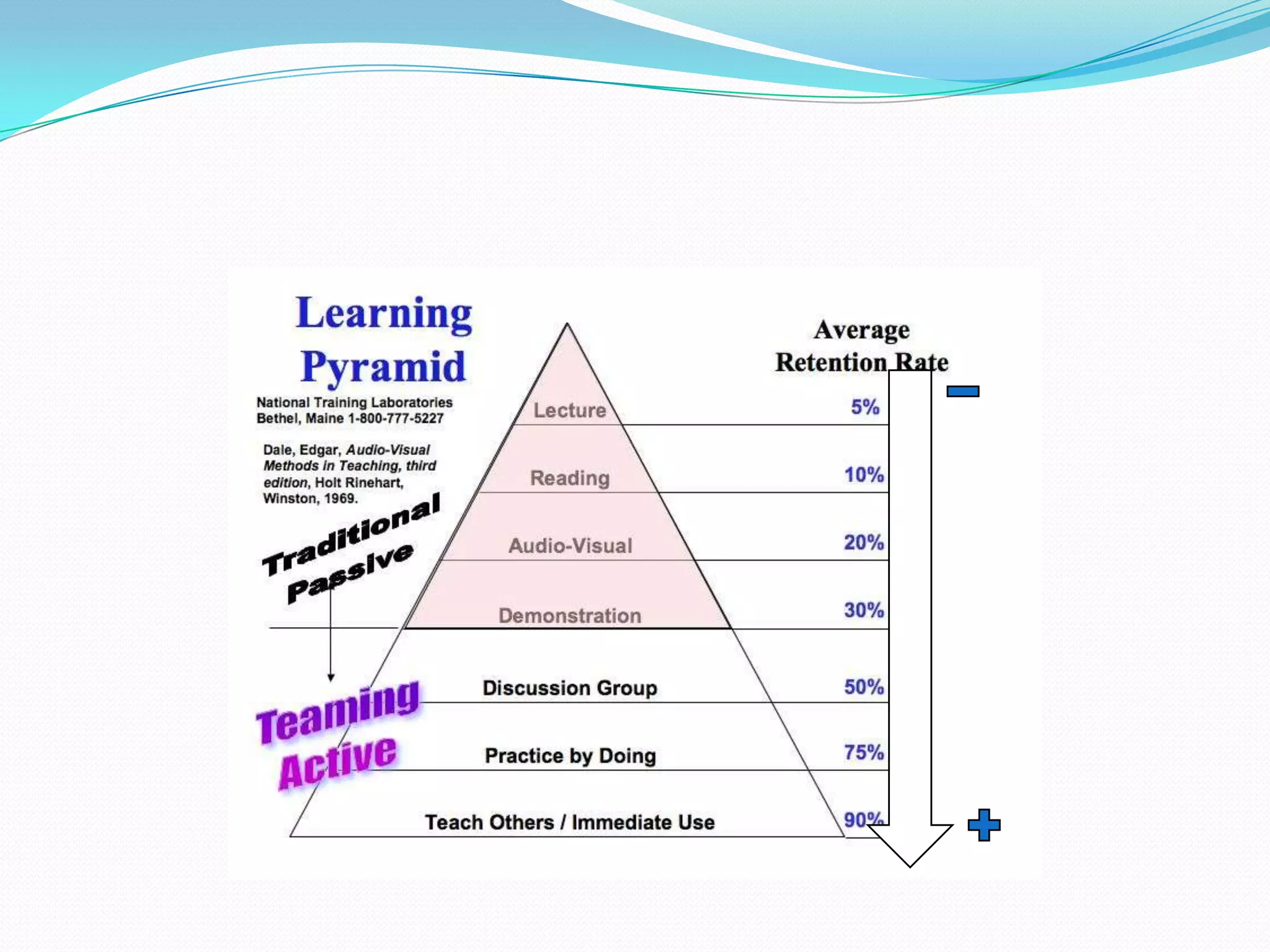
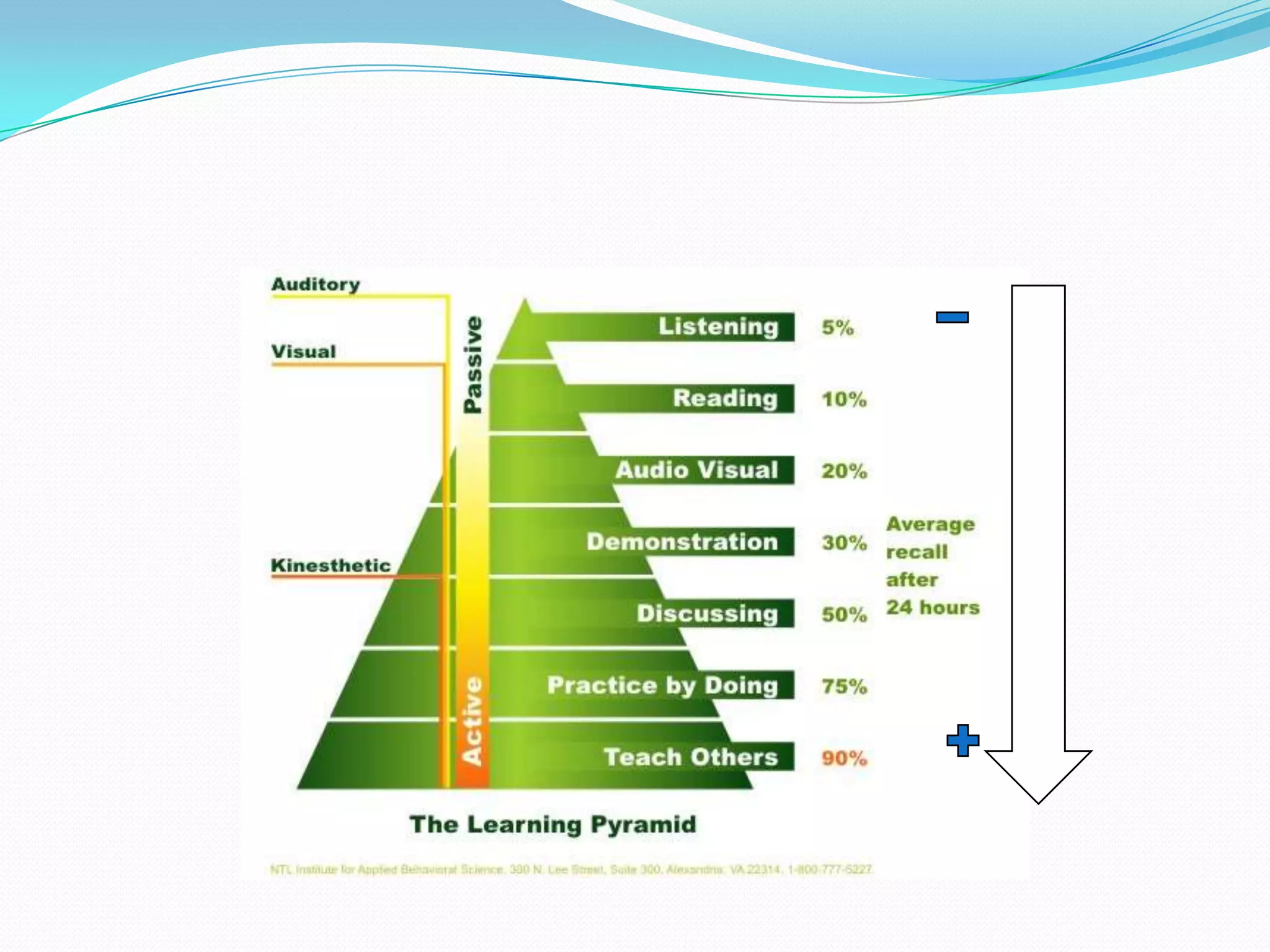
• Different instructional methodologies have greater
  rates of retention.
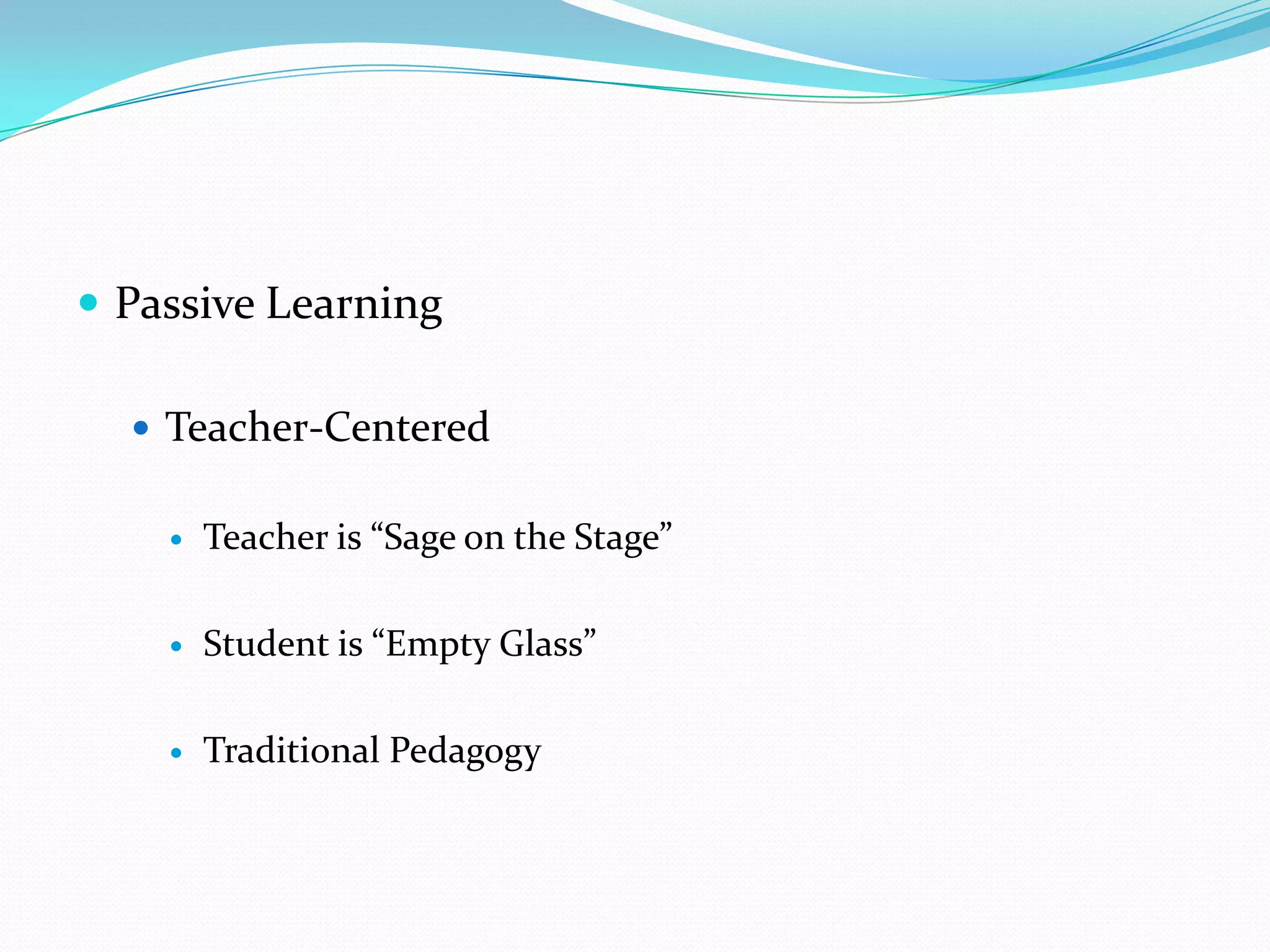
 Passive Learning

   Teacher-Centered


       Teacher is “Sage on the Stage”

       Student is “Empty Glass”

       Traditional Pedagogy
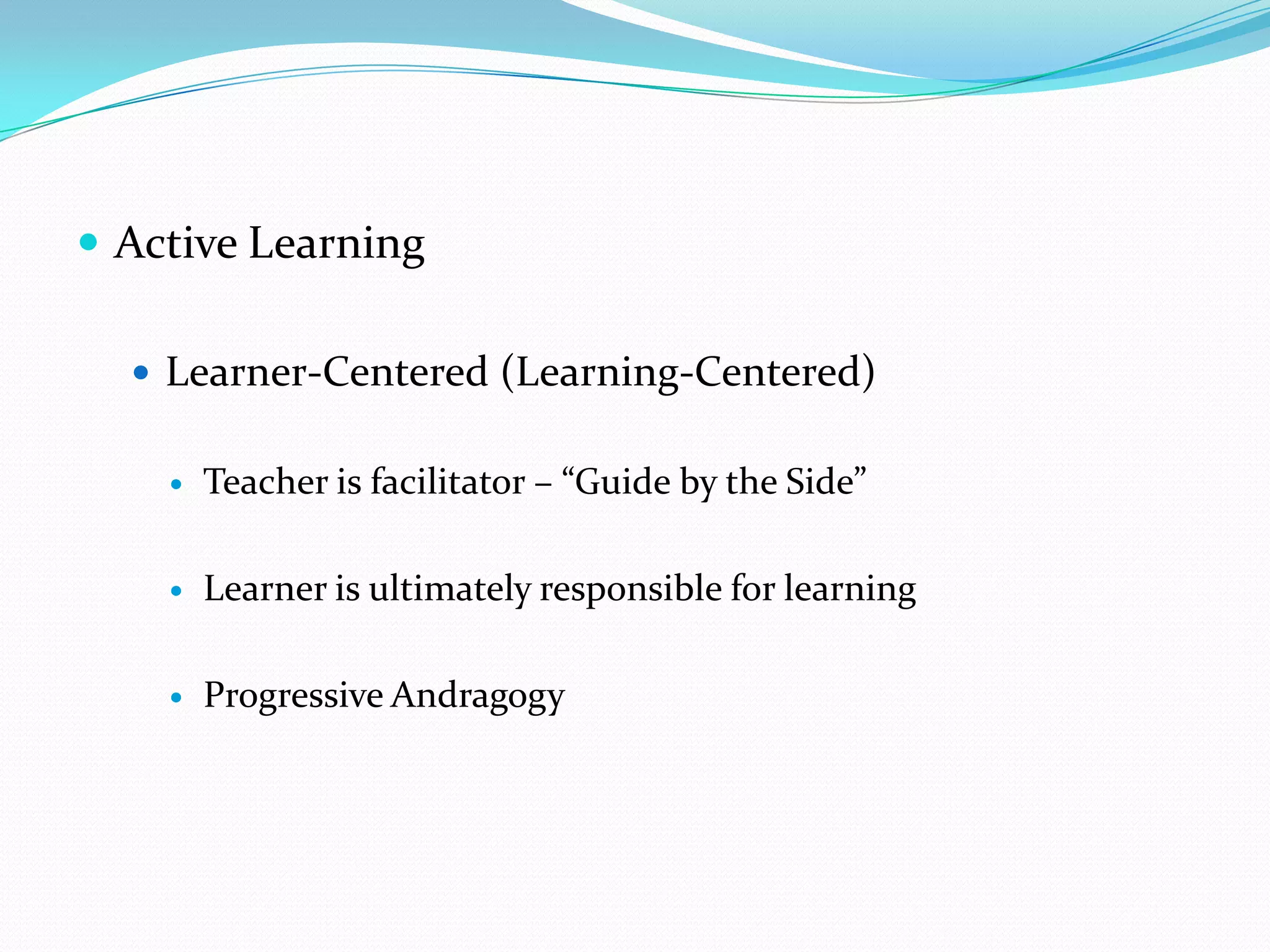
 Active Learning

   Learner-Centered (Learning-Centered)


       Teacher is facilitator – “Guide by the Side”

       Learner is ultimately responsible for learning

       Progressive Andragogy
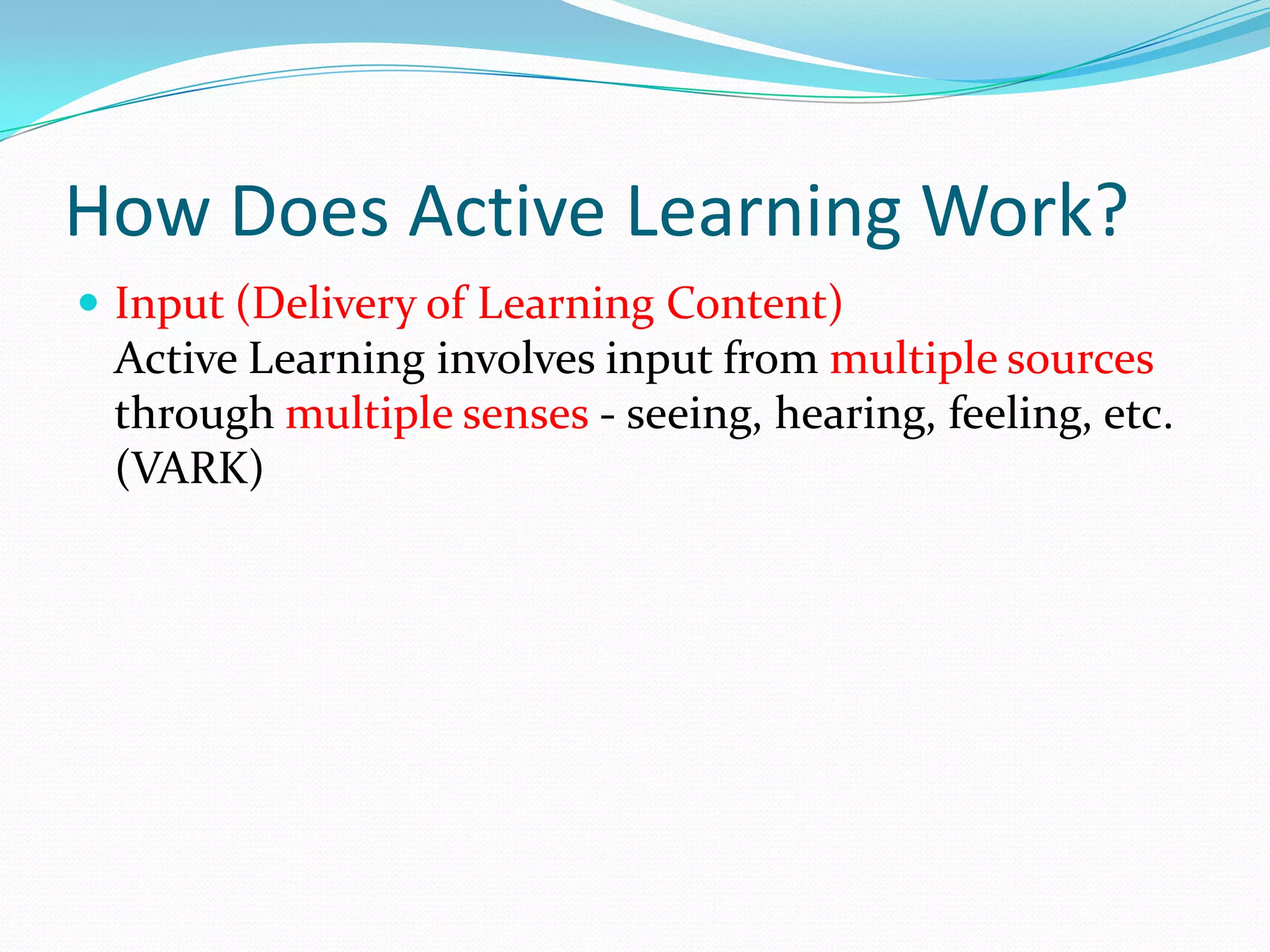
How Does Active Learning Work?
 Input (Delivery of Learning Content)
 Active Learning involves input from multiple sources
 through multiple senses - seeing, hearing, feeling, etc.
 (VARK)
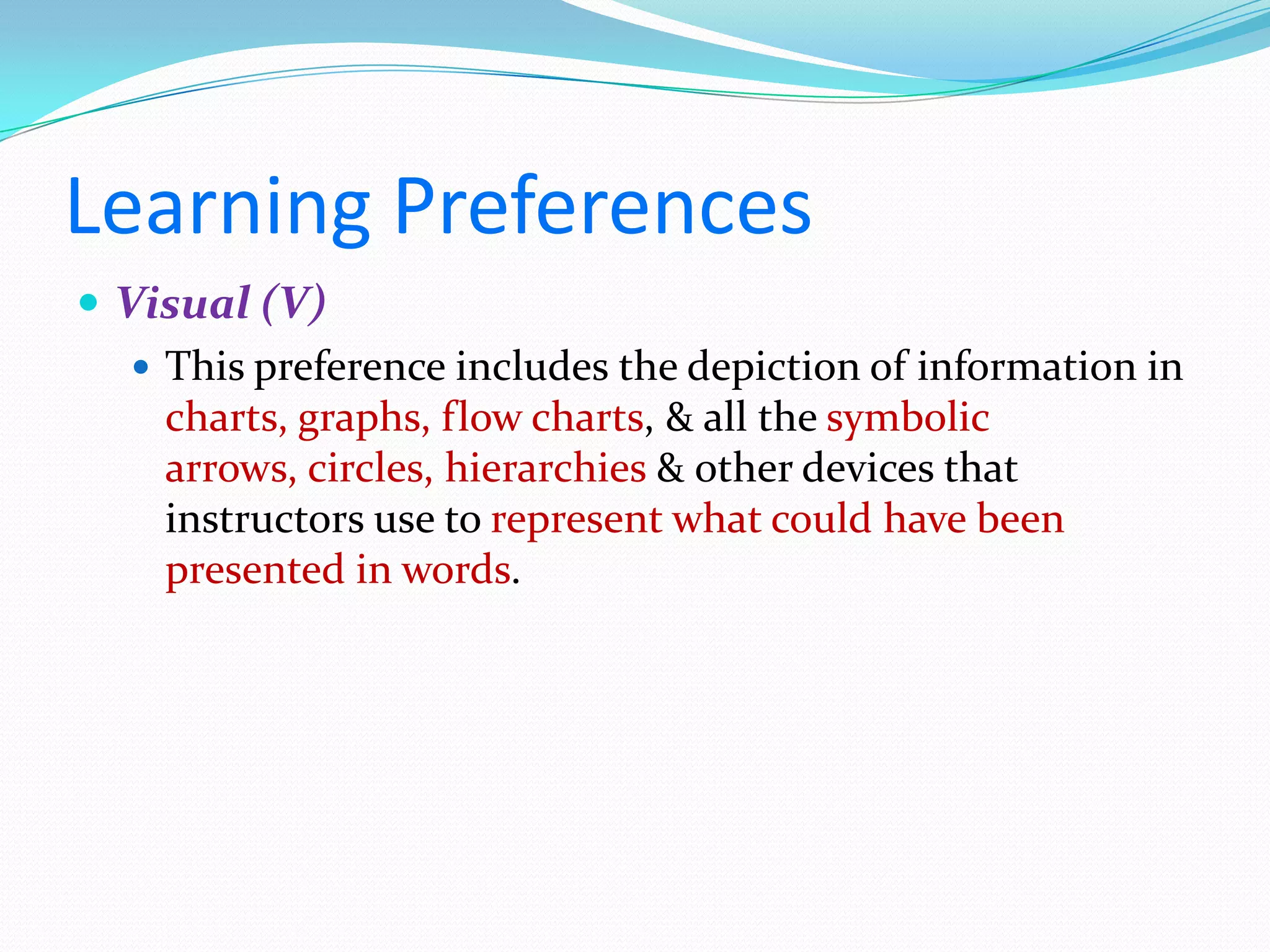
Learning Preferences
 Visual (V)
    This preference includes the depiction of information in
     charts, graphs, flow charts, & all the symbolic
     arrows, circles, hierarchies & other devices that
     instructors use to represent what could have been
     presented in words.
Learning Preferences
 Aural / Auditory (A)
    This perceptual mode describes a preference for
     information that is "heard."


   Students with this modality report that they learn best
    from lectures, tutorials, tapes, group
    discussion, speaking, web chat, talking things through.
Learning Preferences
 Read/write (R)
    This preference is for information displayed as words.


    This preference emphasizes text-based input and output
    — reading & writing in all its forms.
Learning Preferences
 Kinesthetic (K)
   By definition, this modality refers to the perceptual
    preference related to the use of experience & practice
    (simulated or real).


    Although such an experience may invoke other
    modalities, the key is that the student is connected to
    reality- either through experience, example, practice or
    simulation.
How Does Active Learning Work?
 Process (Learning Activities)
 Active Learning involves process: interacting with
 other people & materials, stimulating multiple areas of
 the brain to act.
How Does Active Learning Work?
 Output (Learning Evaluations)
  Active Learning involves output: requiring students to
 produce a response or a solution or some evidence of
 the interactive learning that is taking place.
So. . . .
 Learning Activities that:
    Use more complexity of thought, and
    Force greater interaction with content and/or others


 Generally result in:
    Greater retention of course content material
Using Learning Activities
 The important thing is to:

   Get students involved & engaged-
       Thinking about the subject
       Doing something realistic with the subject if possible- real
        world applications or simulations
       Working with others if possible
       Reflecting upon what they did & sharing with others
Active Learning Activity
What kinds of things can an instructor do to:
   Get students thinking about the subject?


   Get students doing something realistic with the subject?


   Get students working with others in learning the
    subject?
Active Learning Activity
What kinds of things can an instructor do to:
   Get students reflecting on what they have done with the
    subject?


   Get students sharing & discussing ideas & results with
    others students?
In short, …
 Active Learning gets students involved in the learning
  process & helps them participate in the construction of
  their own knowledge, giving them a sense of ownership.
In short, …
 Active learning is Learner-centered (Learning-centered) as
  opposed to teacher-centered.
In short, …
 Active learning involves input from multiple sources using
  multiple senses.
In short, …
 Active learning often involves collaborative work with other
  learners.
In short, …
 The use of active learning strategies can increase retention
  & comprehension of course content material.
What Web tools can we use to
promote active learning?

Engaging student in active learning

  • 1.
    Activity 1  Individually,think of a key word that best describe your conception of ‘teaching’.  Compare your conception of ‘teaching’ with your partner.  In groups, list down 3 key words derived from the various conceptions of ‘teaching gathered.
  • 2.
  • 3.
    Teaching = FacilitatingLearning  Learning-centered (not teacher-centered)  Interactive (not one-way, passive mode)
  • 4.
    Teaching = FacilitatingLearning  Participative (not teacher involvement only)  Meaningful (not just rote & surface learning)
  • 5.
    Activity 2  Whatdo you think are attributes of ‘meaningful’ learning?
  • 6.
    Attributes of MeaningfulLearning ACTIVE LEARNING DIRECTED AUTHENTIC LEARNING LEARNING MEANINGFUL LEARNING CONSTRUCTIVE COLLABORATIVE LEARNING LEARNING
  • 7.
    Active Learning  Studentsare able to interact with each other (e.g. discuss how to complete tasks/problems given).  Students gather & share information.
  • 8.
    Authentic Learning  Studentsare able to relate learning process into relevant context.  Students are able to apply knowledge acquired in real life situation.
  • 9.
    Directed Learning  Studentsare able to make decisions & be responsible of them.  Students are free to use alternative ways to construct knowledge.
  • 10.
    Constructive Learning  Studentsare able to reflect on their learning processes & activities.  Students are able to evaluate & criticize views of others constructively.
  • 11.
    Collaborative Learning  Studentsare able to contribute ideas toward achieving a common goal.  Students are able to complete tasks given collaboratively.
  • 12.
    “Learning is somethingstudents do, not something done to students.” Alfie Kohn
  • 13.
    How would youdefine ‘active learning’? What characterizes ‘active learning’ & makes different from ‘inactive learning’?
  • 14.
    Active Learning  “.. . instructional activities involving students in doing things & thinking about what they are doing” (Bonwell et al. 1991).
  • 15.
    Active Learning • Learningis not a spectator sport. • The more actively engaged the learner is, the more learning takes place.
  • 16.
    Active Learning • Differentinstructional methodologies have greater rates of retention.
  • 17.
     Passive Learning  Teacher-Centered  Teacher is “Sage on the Stage”  Student is “Empty Glass”  Traditional Pedagogy
  • 18.
     Active Learning  Learner-Centered (Learning-Centered)  Teacher is facilitator – “Guide by the Side”  Learner is ultimately responsible for learning  Progressive Andragogy
  • 19.
    How Does ActiveLearning Work?  Input (Delivery of Learning Content) Active Learning involves input from multiple sources through multiple senses - seeing, hearing, feeling, etc. (VARK)
  • 20.
    Learning Preferences  Visual(V)  This preference includes the depiction of information in charts, graphs, flow charts, & all the symbolic arrows, circles, hierarchies & other devices that instructors use to represent what could have been presented in words.
  • 21.
    Learning Preferences  Aural/ Auditory (A)  This perceptual mode describes a preference for information that is "heard."  Students with this modality report that they learn best from lectures, tutorials, tapes, group discussion, speaking, web chat, talking things through.
  • 22.
    Learning Preferences  Read/write(R)  This preference is for information displayed as words.  This preference emphasizes text-based input and output — reading & writing in all its forms.
  • 23.
    Learning Preferences  Kinesthetic(K)  By definition, this modality refers to the perceptual preference related to the use of experience & practice (simulated or real).  Although such an experience may invoke other modalities, the key is that the student is connected to reality- either through experience, example, practice or simulation.
  • 24.
    How Does ActiveLearning Work?  Process (Learning Activities) Active Learning involves process: interacting with other people & materials, stimulating multiple areas of the brain to act.
  • 25.
    How Does ActiveLearning Work?  Output (Learning Evaluations) Active Learning involves output: requiring students to produce a response or a solution or some evidence of the interactive learning that is taking place.
  • 28.
    So. . ..  Learning Activities that:  Use more complexity of thought, and  Force greater interaction with content and/or others  Generally result in:  Greater retention of course content material
  • 29.
    Using Learning Activities The important thing is to:  Get students involved & engaged-  Thinking about the subject  Doing something realistic with the subject if possible- real world applications or simulations  Working with others if possible  Reflecting upon what they did & sharing with others
  • 30.
    Active Learning Activity Whatkinds of things can an instructor do to:  Get students thinking about the subject?  Get students doing something realistic with the subject?  Get students working with others in learning the subject?
  • 31.
    Active Learning Activity Whatkinds of things can an instructor do to:  Get students reflecting on what they have done with the subject?  Get students sharing & discussing ideas & results with others students?
  • 32.
    In short, … Active Learning gets students involved in the learning process & helps them participate in the construction of their own knowledge, giving them a sense of ownership.
  • 33.
    In short, … Active learning is Learner-centered (Learning-centered) as opposed to teacher-centered.
  • 34.
    In short, … Active learning involves input from multiple sources using multiple senses.
  • 35.
    In short, … Active learning often involves collaborative work with other learners.
  • 36.
    In short, … The use of active learning strategies can increase retention & comprehension of course content material.
  • 37.
    What Web toolscan we use to promote active learning?