Who needs a lesson plan or who needs to know how to do it? Do good lesson plans ensure students will learn what is intended? What do effective plans do?
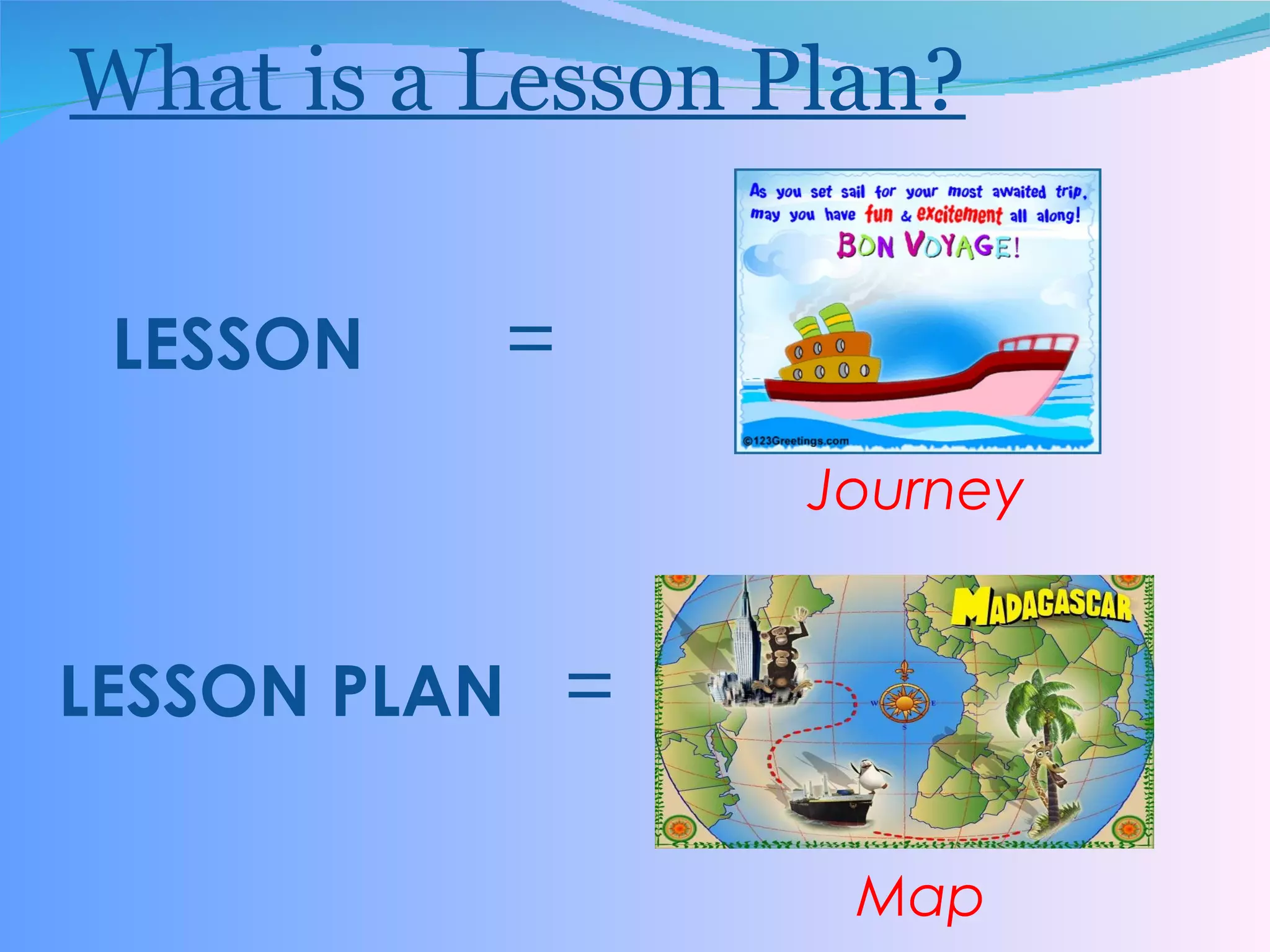
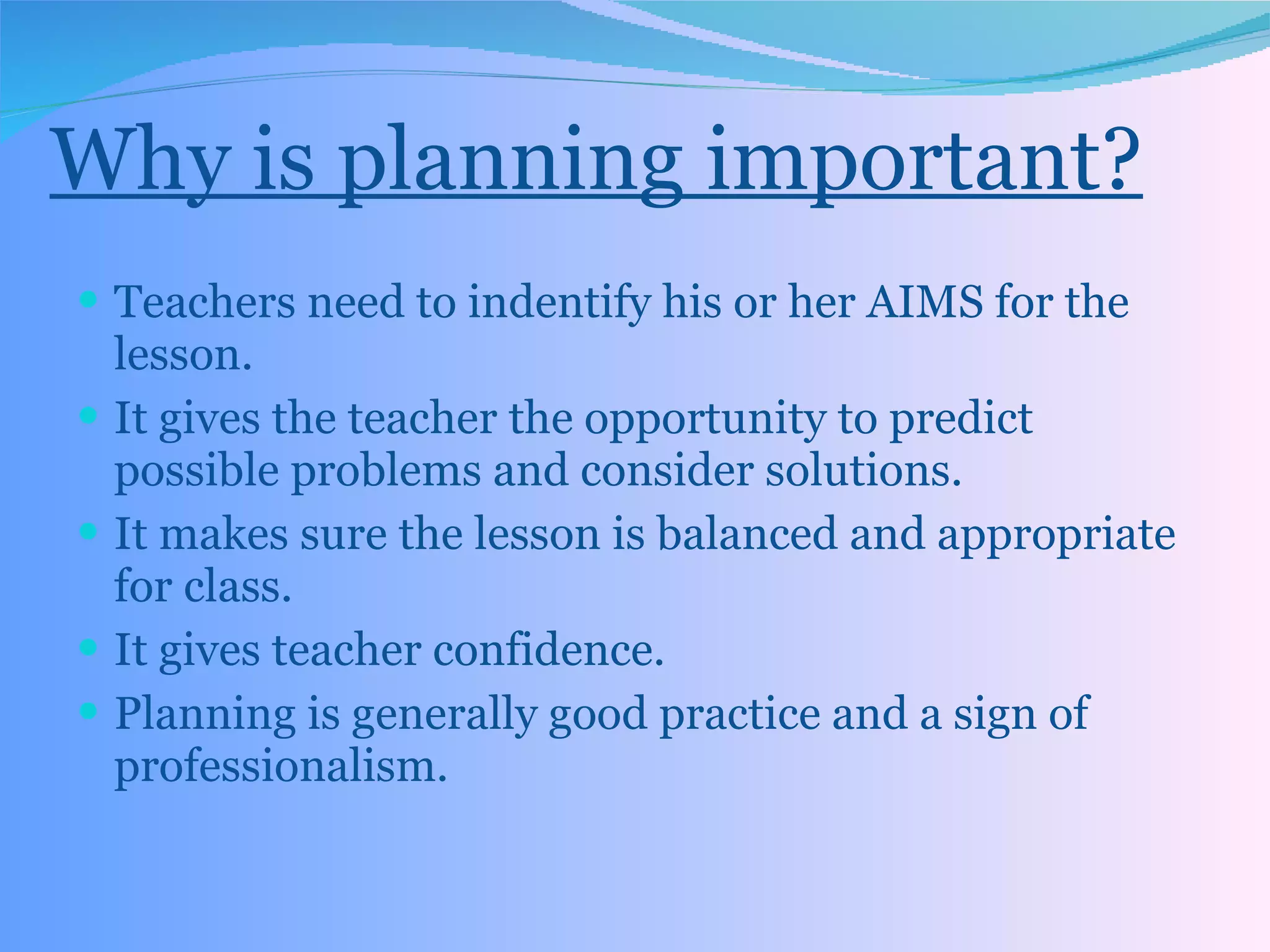
What is a Lesson Plan? LESSON   = Journey LESSON PLAN  = Map
Why is planning important? Teachers need to indentify his or her AIMS for the lesson. It gives the teacher the opportunity to predict possible problems and consider solutions. It makes sure the lesson is balanced and appropriate for class. It gives teacher confidence. Planning is generally good practice and a sign of professionalism.
VS.
Principles of Planning Aims  –  Consider realistic goals. -  What do the students know already? -  What do the students need to know? -  What did you do with the students in the previous class? -  How well do the class work together? -  How motivated are the students? Variety  –  a way of getting and keeping the students engaged and interested. Flexibility  –  expect the unexpected!
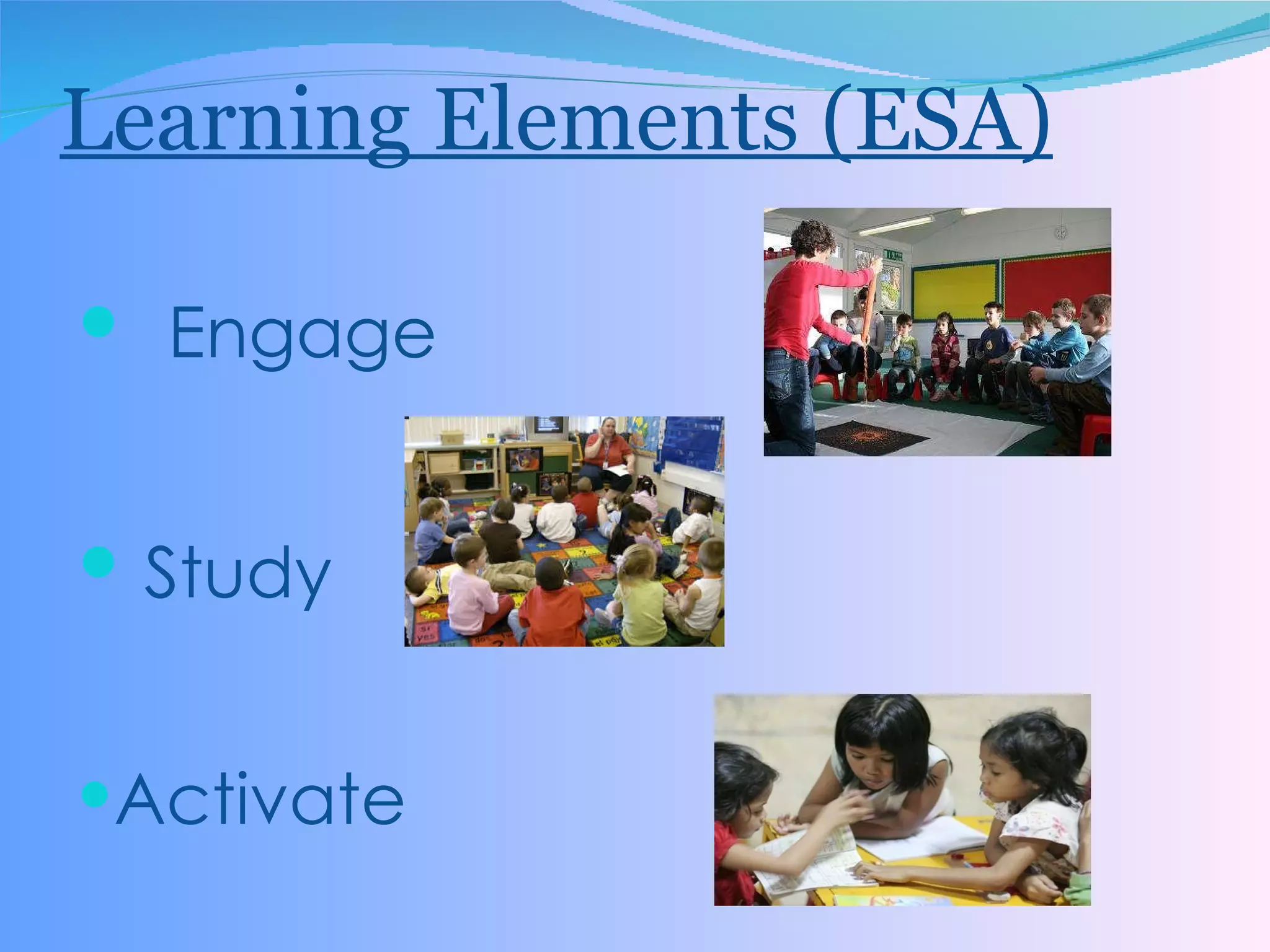
Learning Elements (ESA) Engage Study Activate
What should a lesson plan contain?  (I)
What should a lesson plan contain?  (II) DESCRIPTION OF THE STUDENTS. OBJECTIVES/AIMS We say what we hope to achieve. The more specific we are, the easier it will be to see whether or not we have achieved those aims. Broad aims are bound to be less useful. Primary and Secondary aims. EXPECTED LEARNING: Students will be able to… Students will …
PROCEDURES – description of how it will be executed. TIMING – to have an idea of how long we expect things to take. ANTICIPATED PROBLEMS – list of potential difficulties – and suggestions about what to do if they arise. EXTRA ACTIVITIES/ MATERIAL.
 
Remember! Write clear and specific objectives that align with course objectives. Inform students of lesson objectives. Promote recall or prior learning. Use activities and assessments to promote learning and to meet lesson objectives. Give students  feedback on their progress. Gauge your timing for each activity. Keep a record of the materials needed to complete the lesson. Incorporate student activity and interaction into the lesson. Record your own reflections and your students’on the success of the class .
Because lesson plans can help you: Incorporate good teaching practices in every lesson. Efficiently prepare for the next time you offer the course.  Be critically reflective in your teaching.  Share teaching ideas with your colleagues.

Lesson planning

  • 1.
  • 2.
    Who needs alesson plan or who needs to know how to do it? Do good lesson plans ensure students will learn what is intended? What do effective plans do?
  • 3.
    What is aLesson Plan? LESSON = Journey LESSON PLAN = Map
  • 4.
    Why is planningimportant? Teachers need to indentify his or her AIMS for the lesson. It gives the teacher the opportunity to predict possible problems and consider solutions. It makes sure the lesson is balanced and appropriate for class. It gives teacher confidence. Planning is generally good practice and a sign of professionalism.
  • 5.
  • 6.
    Principles of PlanningAims – Consider realistic goals. - What do the students know already? - What do the students need to know? - What did you do with the students in the previous class? - How well do the class work together? - How motivated are the students? Variety – a way of getting and keeping the students engaged and interested. Flexibility – expect the unexpected!
  • 7.
    Learning Elements (ESA)Engage Study Activate
  • 8.
    What should alesson plan contain? (I)
  • 9.
    What should alesson plan contain? (II) DESCRIPTION OF THE STUDENTS. OBJECTIVES/AIMS We say what we hope to achieve. The more specific we are, the easier it will be to see whether or not we have achieved those aims. Broad aims are bound to be less useful. Primary and Secondary aims. EXPECTED LEARNING: Students will be able to… Students will …
  • 10.
    PROCEDURES – descriptionof how it will be executed. TIMING – to have an idea of how long we expect things to take. ANTICIPATED PROBLEMS – list of potential difficulties – and suggestions about what to do if they arise. EXTRA ACTIVITIES/ MATERIAL.
  • 11.
  • 12.
    Remember! Write clearand specific objectives that align with course objectives. Inform students of lesson objectives. Promote recall or prior learning. Use activities and assessments to promote learning and to meet lesson objectives. Give students feedback on their progress. Gauge your timing for each activity. Keep a record of the materials needed to complete the lesson. Incorporate student activity and interaction into the lesson. Record your own reflections and your students’on the success of the class .
  • 13.
    Because lesson planscan help you: Incorporate good teaching practices in every lesson. Efficiently prepare for the next time you offer the course. Be critically reflective in your teaching. Share teaching ideas with your colleagues.