Co-Teaching
   Nicole Garon
    EDIM 510
What is Co-Teaching?
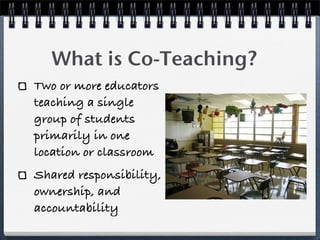
Two or more educators
teaching a single
group of students
primarily in one
location or classroom
Shared responsibility,
ownership, and
accountability
Co-Teaching Models
One Teach, One Observe: One teacher
leads whole group instruction while the
other makes observations and collects
data about the students
One Teach, One Drift: One teacher leads
whole group instruction and the other
provides unobtrusive assistance to
students as needed
Co-Teaching Models
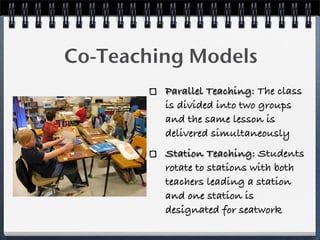
         Parallel Teaching: The class
         is divided into two groups
         and the same lesson is
         delivered simultaneously
         Station Teaching: Students
         rotate to stations with both
         teachers leading a station
         and one station is
         designated for seatwork
Co-Teaching Models
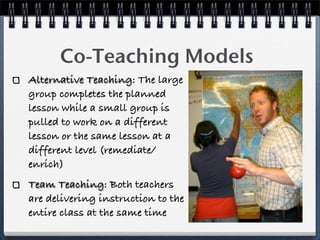
Alternative Teaching: The large
group completes the planned
lesson while a small group is
pulled to work on a different
lesson or the same lesson at a
different level (remediate/
enrich)
Team Teaching: Both teachers
are delivering instruction to the
entire class at the same time
Challenges of Co-Teaching
Finding time to plan
together
Establishing trust
Establishing roles and
responsibilities
Deciding on a mutually
agreeable classroom
management model
Benefits of Co-Teaching
           Sense of belonging for
           students with special needs
           Mutual respect between special
           needs students and regular
           education students
           An additional educator to
           deliver differentiated
           instruction
           Sense of support for teachers
           involved
Sources
Baxter, Judy. (2005). 9:15 AM-Students Reading and Working on Seatwork.
Retrieved September 26, 2010, from: http://www.flickr.com/photos/judybaxter/
7229079/.

Cook, Lynne. (2004). Co-Teaching: Principles, Practices, and Pragmatics. Retrieved
from http://www.ped.state.nm.us/seo/library/qrtrly.0404.coteaching.lcook.pdf.

Emery, James. (2007). Boys in Classroom. Retrieved September 26, 2010, from :
http://www.flickr.com/photos/emeryjl/511011540/.

Mcmt, Dave. (2005). Pocket-sized Classroom. Retrieved September 26, 2010, from:
http://www.flickr.com/photos/dave_mcmt/187432802/.

State of Progress. (2007). Coteaching. Retrieved September 26, 2010, from: http://
www.flickr.com/photos/stateofprogress/2064681868/.

Wilkin, Garret and Kitty. (2008). Wilkin/Prunk Coteaching Team. Retrieved
September 26, 2010, from: http://www.flickr.com/photos/gareandkitty/
2998312150/.

Co-Teaching

  • 1.
    Co-Teaching Nicole Garon EDIM 510
  • 2.
    What is Co-Teaching? Twoor more educators teaching a single group of students primarily in one location or classroom Shared responsibility, ownership, and accountability
  • 3.
    Co-Teaching Models One Teach,One Observe: One teacher leads whole group instruction while the other makes observations and collects data about the students One Teach, One Drift: One teacher leads whole group instruction and the other provides unobtrusive assistance to students as needed
  • 4.
    Co-Teaching Models Parallel Teaching: The class is divided into two groups and the same lesson is delivered simultaneously Station Teaching: Students rotate to stations with both teachers leading a station and one station is designated for seatwork
  • 5.
    Co-Teaching Models Alternative Teaching:The large group completes the planned lesson while a small group is pulled to work on a different lesson or the same lesson at a different level (remediate/ enrich) Team Teaching: Both teachers are delivering instruction to the entire class at the same time
  • 6.
    Challenges of Co-Teaching Findingtime to plan together Establishing trust Establishing roles and responsibilities Deciding on a mutually agreeable classroom management model
  • 7.
    Benefits of Co-Teaching Sense of belonging for students with special needs Mutual respect between special needs students and regular education students An additional educator to deliver differentiated instruction Sense of support for teachers involved
  • 8.
    Sources Baxter, Judy. (2005).9:15 AM-Students Reading and Working on Seatwork. Retrieved September 26, 2010, from: http://www.flickr.com/photos/judybaxter/ 7229079/. Cook, Lynne. (2004). Co-Teaching: Principles, Practices, and Pragmatics. Retrieved from http://www.ped.state.nm.us/seo/library/qrtrly.0404.coteaching.lcook.pdf. Emery, James. (2007). Boys in Classroom. Retrieved September 26, 2010, from : http://www.flickr.com/photos/emeryjl/511011540/. Mcmt, Dave. (2005). Pocket-sized Classroom. Retrieved September 26, 2010, from: http://www.flickr.com/photos/dave_mcmt/187432802/. State of Progress. (2007). Coteaching. Retrieved September 26, 2010, from: http:// www.flickr.com/photos/stateofprogress/2064681868/. Wilkin, Garret and Kitty. (2008). Wilkin/Prunk Coteaching Team. Retrieved September 26, 2010, from: http://www.flickr.com/photos/gareandkitty/ 2998312150/.