ENDOSCOPY IN
SURGERY
NUR IZZATUL NAJWA BINTI SHARUPUDDIN
082015100036
LEARNING OBJECTIVES
At the end of this seminar, we should be able to
understand :
• The definition of endoscopy and endoscope
• Upper & lower GI endoscopy
• The indication for diagnostic and therapeutic endoscopy/ colonoscopy/
endoscopic retrograde cholangiopancreatography
• The recognition and management of complications
• Briefly on other types of endoscopy,
• Endoscopic ultrasound
• Respiratory
• Cystoscopy
• Endoscopy Greek Word ‘Endo’ = Inside ‘scopy ‘= to see
ENDOSCOPY
Examination of the interior of a canal or hollow viscus by means
of a special instrument, such as an endoscope
ENDOSCOPE
Device using fiber optics and powerful lens systems to provide
lighting and visualization of the interior of cavity. The portion of
the endoscope inserted into the body may be rigid or flexible,
depending upon the medical procedure.
INTRODUCTION
The digestive tract consists of the followings :
• Mouth
• Throat
• Esophagus
• Stomach
• Duodenum
• Small bowel
• Colon
• Rectum
• Anus
• And other GI organs .
INTRODUCTION
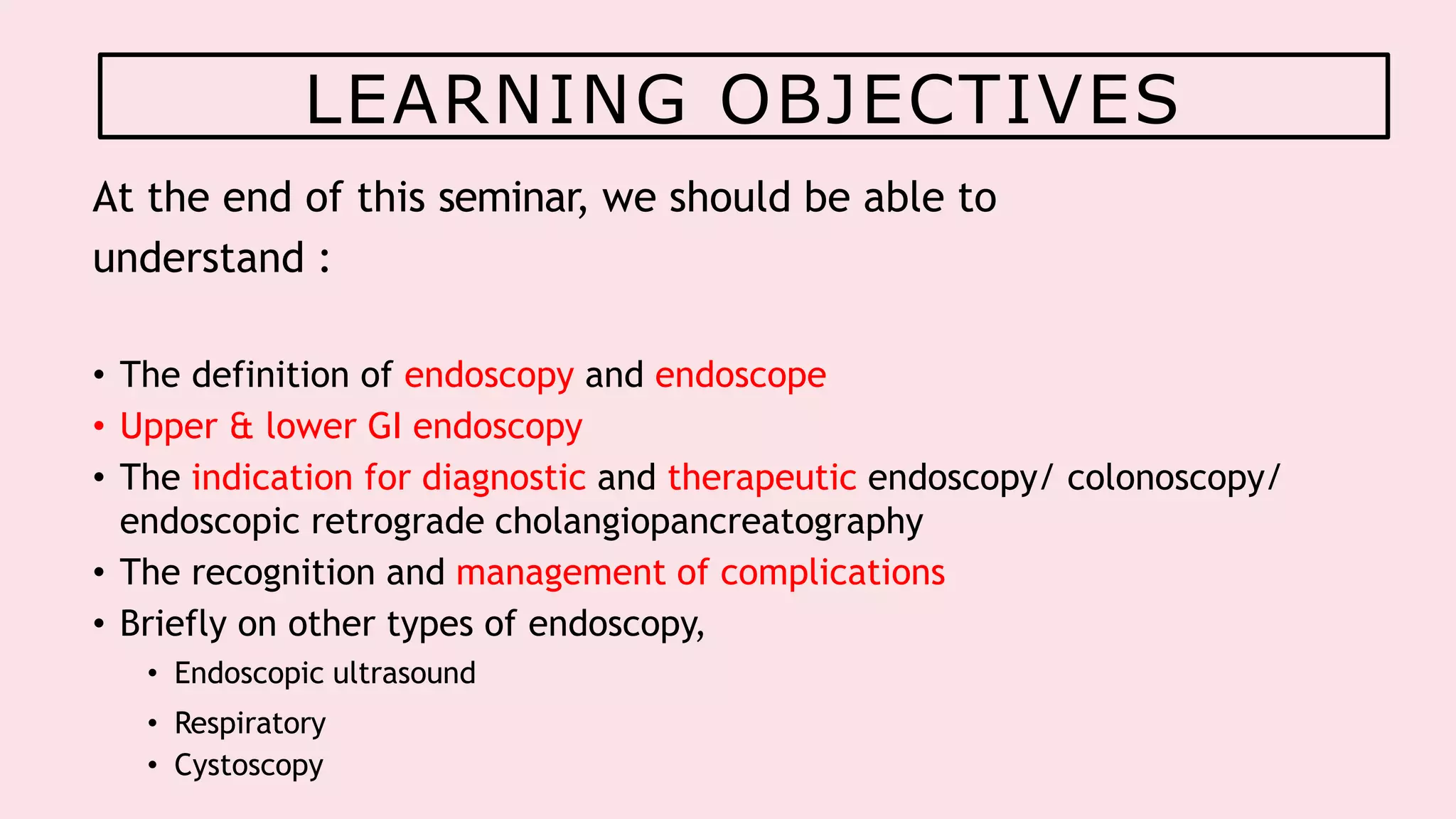
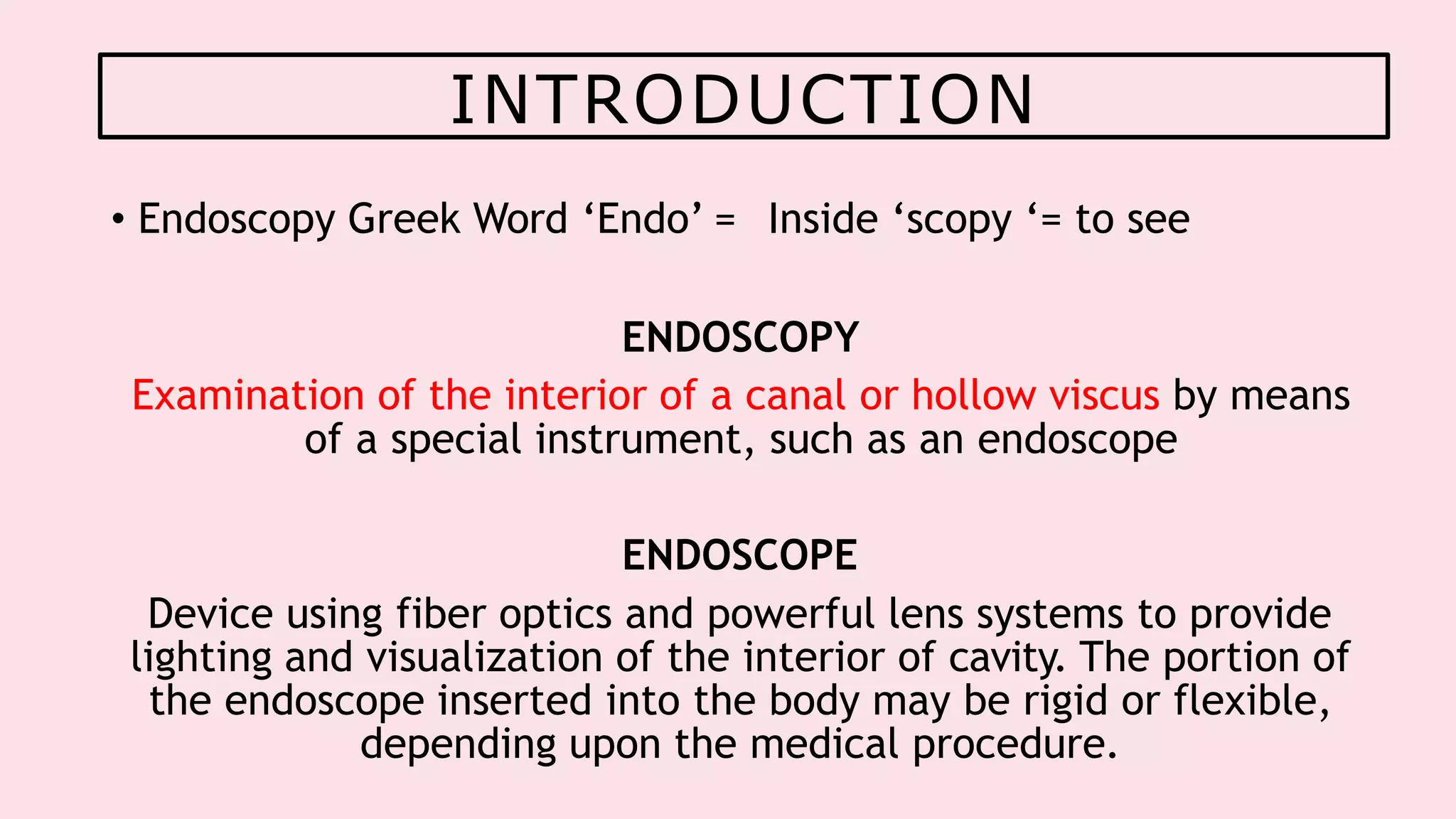
•Gastroscopy
(OGD)
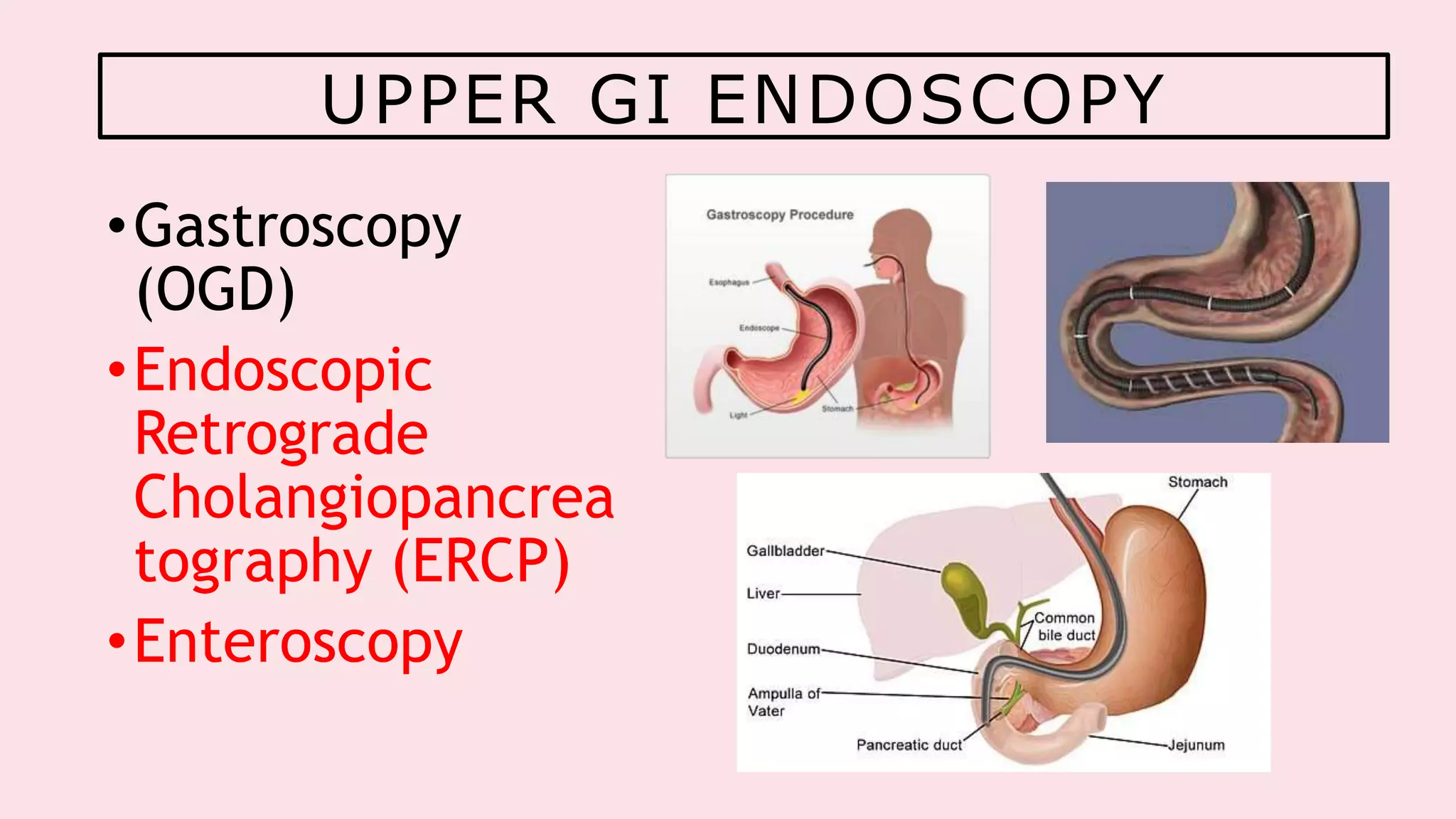
•Endoscopic
Retrograde
Cholangiopancrea
tography (ERCP)
•Enteroscopy
UPPER GI ENDOSCOPY
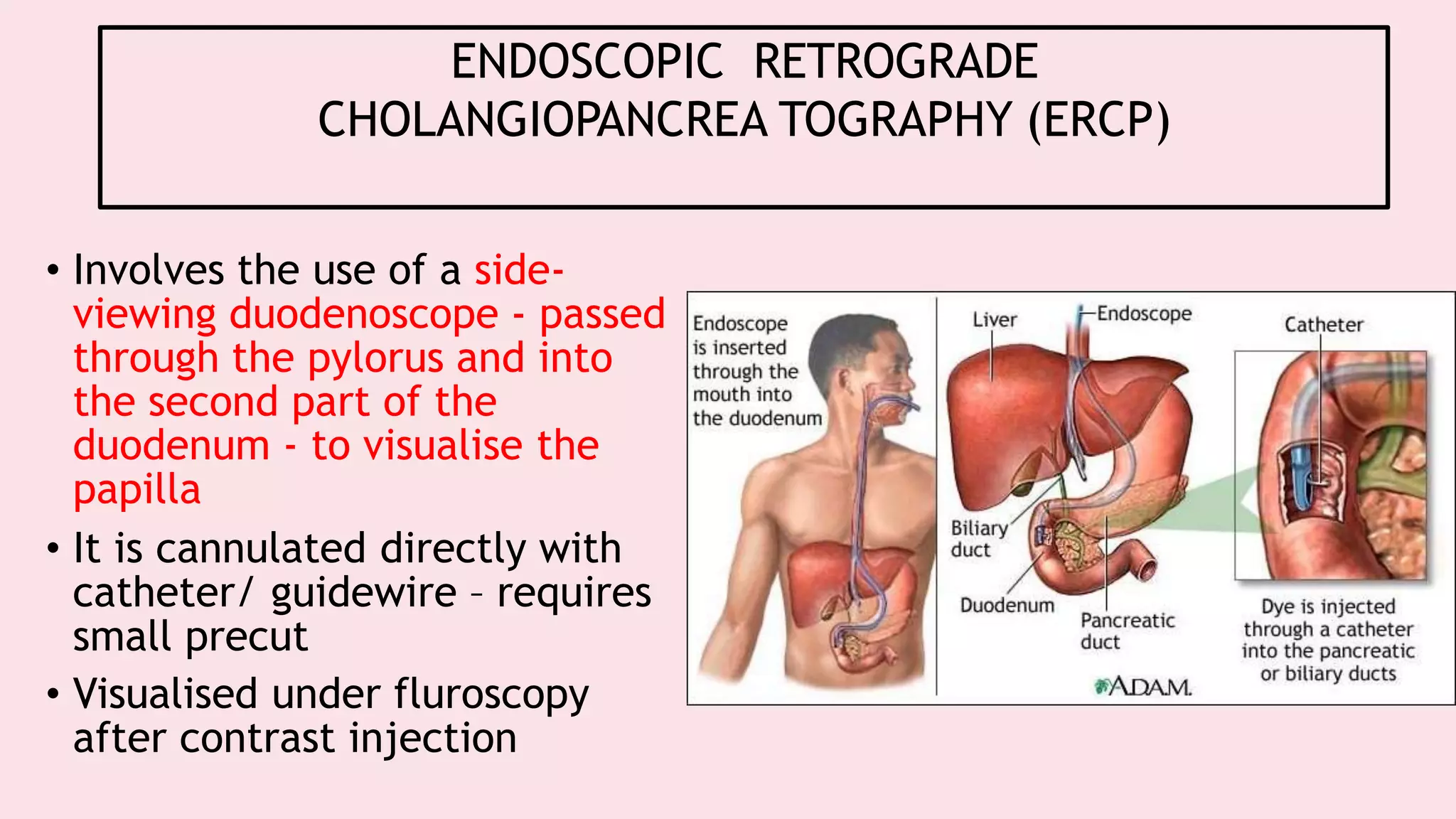
• Involves the use of a side-
viewing duodenoscope - passed
through the pylorus and into
the second part of the
duodenum - to visualise the
papilla
• It is cannulated directly with
catheter/ guidewire – requires
small precut
• Visualised under fluroscopy
after contrast injection
ENDOSCOPIC RETROGRADE
CHOLANGIOPANCREA TOGRAPHY (ERCP)
Preoperative procedure :
•Routine blood screening including clotting screen
•Respiratory & cardiovascular assessment
•Oxygen saturation monitoring
THERAPEUTIC ERCP
Indication :
•Relief biliary obstruction – gallstone & biliary stricture
If there is delay in reliefing – require percutaneous drainage
Adequate biliary sphincterotomy normally performed over well positioned guidewire
Gallstones <1 cm will pass spontaneously in days & weeks
Most endoscopists prefer to ensure duct clearance at initial procedure to reduce
risk of impaction, cholangitis / pancreatitis
Trawling of duct using balloon catheter / extraction using wire basket
If standard techniques fail – mechanical lithotripsy is done – placement of
removable plastic stent
Correct stent placement confirmed by flow of bile after release & presence of air in
biliary tree on follow up radiographs
Other indications :
• Pancreatic disease
• Pancreatic stone extraction
• Dilatation of pancreatic duct strictures
• Transgastric drainage of pancreatic pseudocysts
• Assessment of biliary dysmotility (sphincter of Oddi
dysfunction)
THERAPEUTIC ERCP
• Duodenal perforation (1.3%)/hemorrhage after scope insertion/
sphincterotomy (1.4%)
• Pancreatitis (4.3%)
• Sepsis (3-30%)
• Mortality (1%)
Post sphincterotomy complications :
• CT scan required in patients with pain, tachycardia / hypotension
postprocedure
• Can be severe – extensive pancreatic necrosis
• Recommended to administered per-rectal indomethacin/diclofenac
immediately before / after procedure – to decrease post ERCP pancreatitis
COMPLICATIONS OF ERCP
RISK FACTORS FOR POST – ERCP PANCREATITIS
Definite
 Suspected SOD
 Young age
 Normal bilirubin
 Prior ERCP – related pancreatitis
 Difficult cannulation
 Pancreatic duct
 contrast injection
 Balloon dilatation of biliary
sphincter
Possible
 Female
 Low volume of ERCP performed
 Absent CBD stone
ENDOSCOPIC ASSESSMENT OF SMALL BOWEL
(ENTEROSCOPE )
Indications :
• GI blood loss –with recurrent iron deficiency anemia (occult
hemorrhage)/recurrent overt blood loss per rectum (cryptic
hemorrhage) in pt with normal OGD (with duodenal biopsies) &
colonoscopy
• Malabsorption
• Exclusion of cryptic IBD- Crohn disease
• Targeting lesions in imaging
• Inherited polyposis syndrome
TECHNIQUE
1) STANDARD ENTEROSCOPE – may reach in proximal small
bowel
• Requires 45 minutes
• May be uncomfortable – requires sedation
• Long thin endoscope inserted transnasally into stomach &
pushed through pylorus with gastroscope passed through mouth
• Carried distally by peristalsis propels balloon inflated at tip
• Limitations – long examination time (6-8 hours), discomfort to
patient, danger of perforation
• If area of interest was outside reach of standard
enteroscope , direct access via enterotomy
• Advance technique of small bowel assessment :
• Capsule endoscope allows diagnostic mucosal view of entire
small bowel
• Single/double-balloon enteroscopy – endoscopic access to
entire small bowel for biopsy & therapeutics
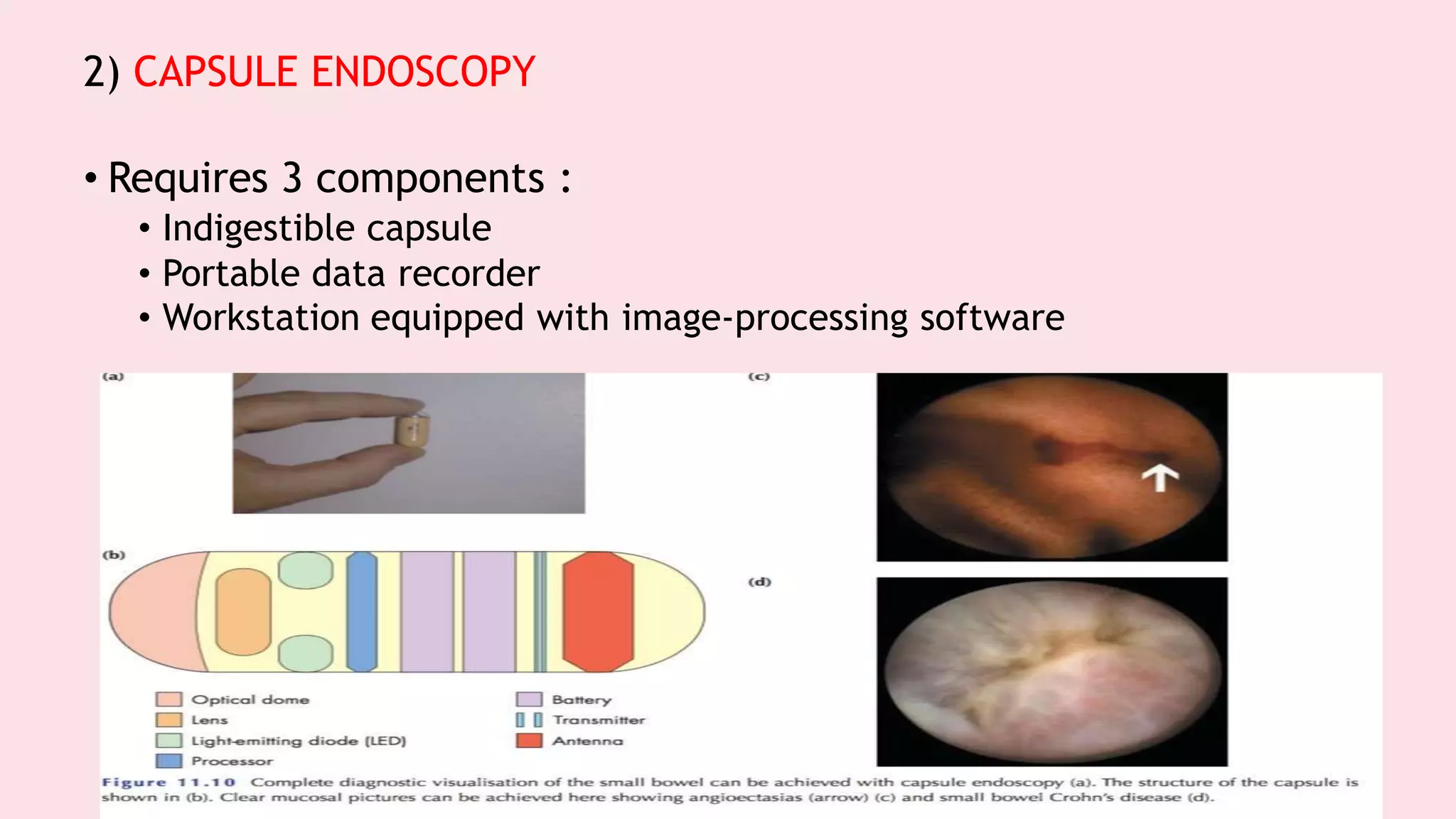
2) CAPSULE ENDOSCOPY
• Requires 3 components :
• Indigestible capsule
• Portable data recorder
• Workstation equipped with image-processing software
• Provides good visualisation from mouth to colon with
high diagnostic yield
• ‘Gold standard’ for GI bleeding
• Contraindications :
• Small bowel strictures – may cause acute obstruction
requiring retrieval at laparotomy / via laparoscopy
• Gastroparesis
• Pseudo-obstruction
3) SINGLE/DOUBLE-BALLOON ENTEROSCOPY
• Direct visualisation & therapeutic intervention for entire small
bowel via oral / rectal route
• Developed in Japan 2001 – thin enteroscope & overtube both
fitted with a balloon
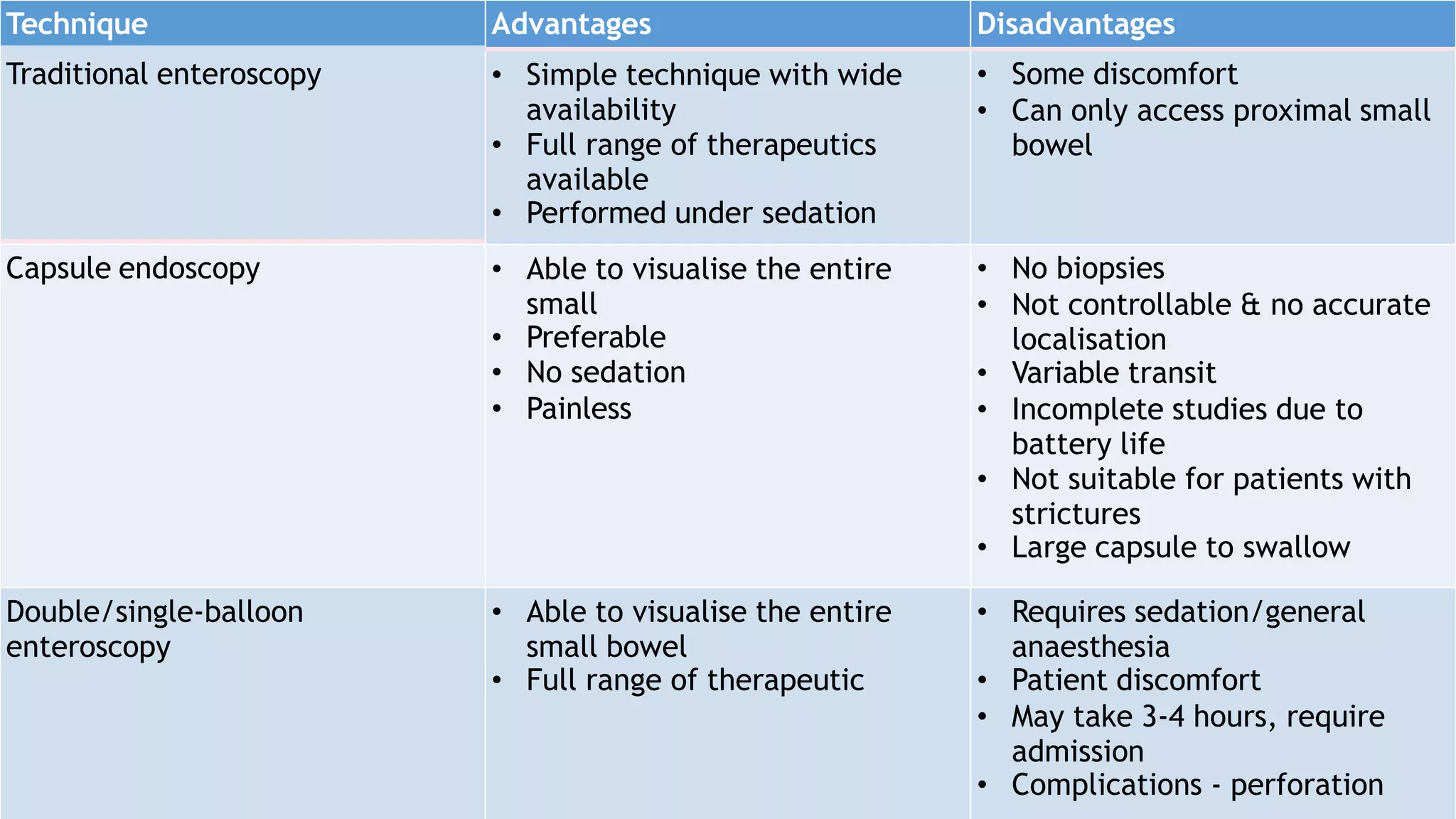
Technique Advantages Disadvantages
Traditional enteroscopy • Simple technique with wide
availability
• Full range of therapeutics
available
• Performed under sedation
• Some discomfort
• Can only access proximal small
bowel
Capsule endoscopy • Able to visualise the entire
small
• Preferable
• No sedation
• Painless
• No biopsies
• Not controllable & no accurate
localisation
• Variable transit
• Incomplete studies due to
battery life
• Not suitable for patients with
strictures
• Large capsule to swallow
Double/single-balloon
enteroscopy
• Able to visualise the entire
small bowel
• Full range of therapeutic
• Requires sedation/general
anaesthesia
• Patient discomfort
• May take 3-4 hours, require
admission
• Complications - perforation
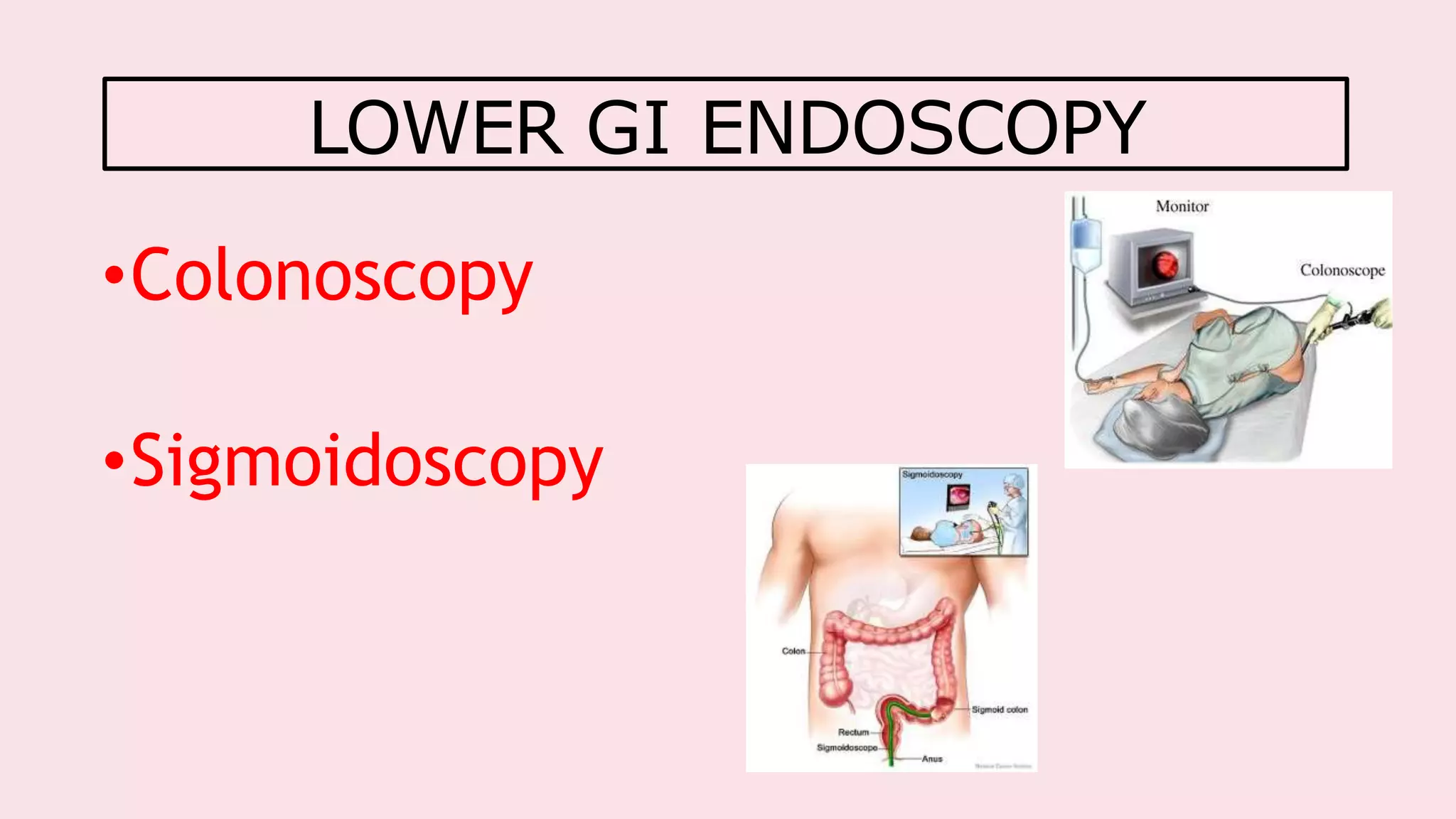
LOWER GI ENDOSCOPY
•Colonoscopy
•Sigmoidoscopy
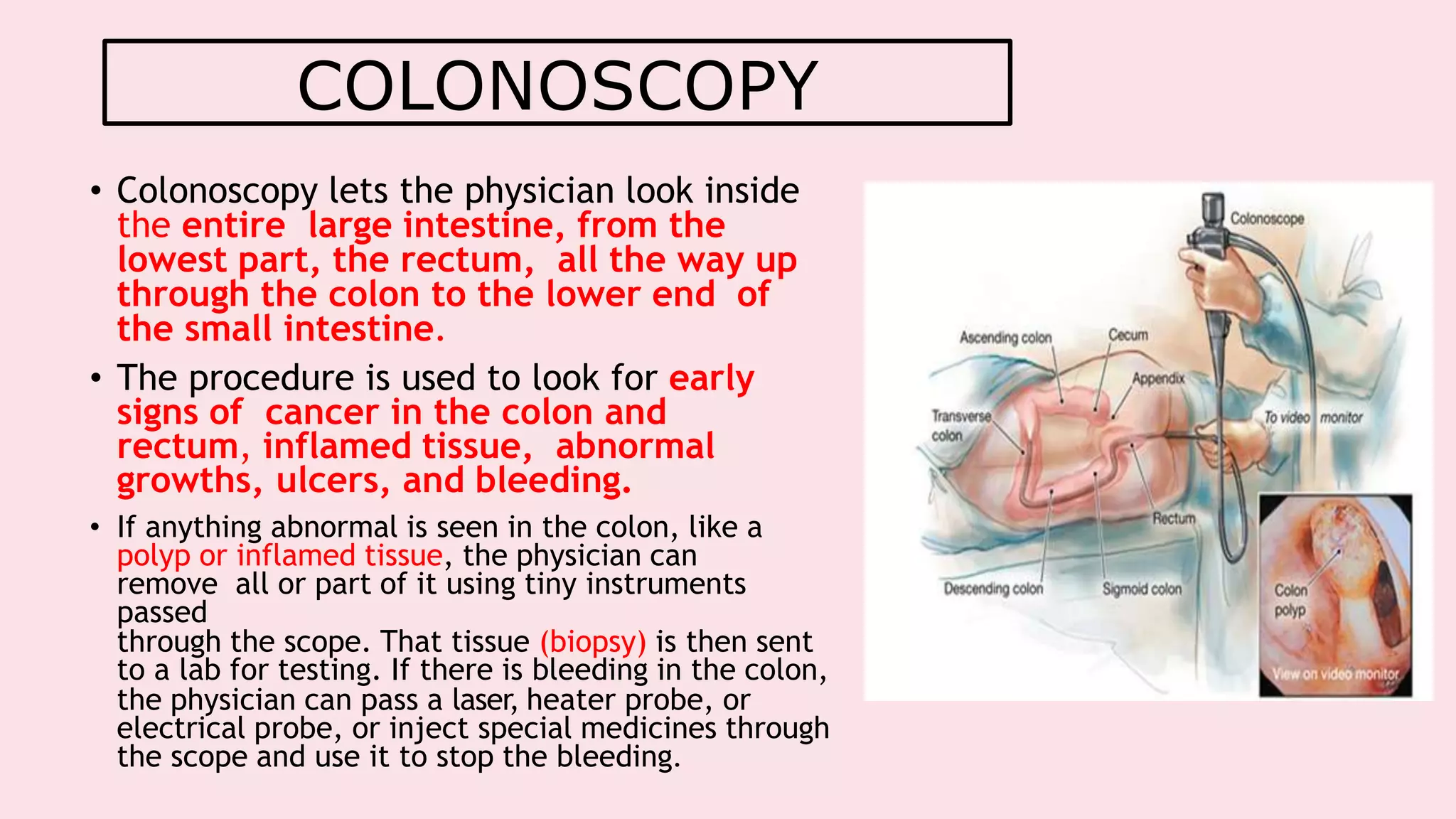
COLONOSCOPY
• Colonoscopy lets the physician look inside
the entire large intestine, from the
lowest part, the rectum, all the way up
through the colon to the lower end of
the small intestine.
• The procedure is used to look for early
signs of cancer in the colon and
rectum, inflamed tissue, abnormal
growths, ulcers, and bleeding.
• If anything abnormal is seen in the colon, like a
polyp or inflamed tissue, the physician can
remove all or part of it using tiny instruments
passed
through the scope. That tissue (biopsy) is then sent
to a lab for testing. If there is bleeding in the colon,
the physician can pass a laser, heater probe, or
electrical probe, or inject special medicines through
the scope and use it to stop the bleeding.
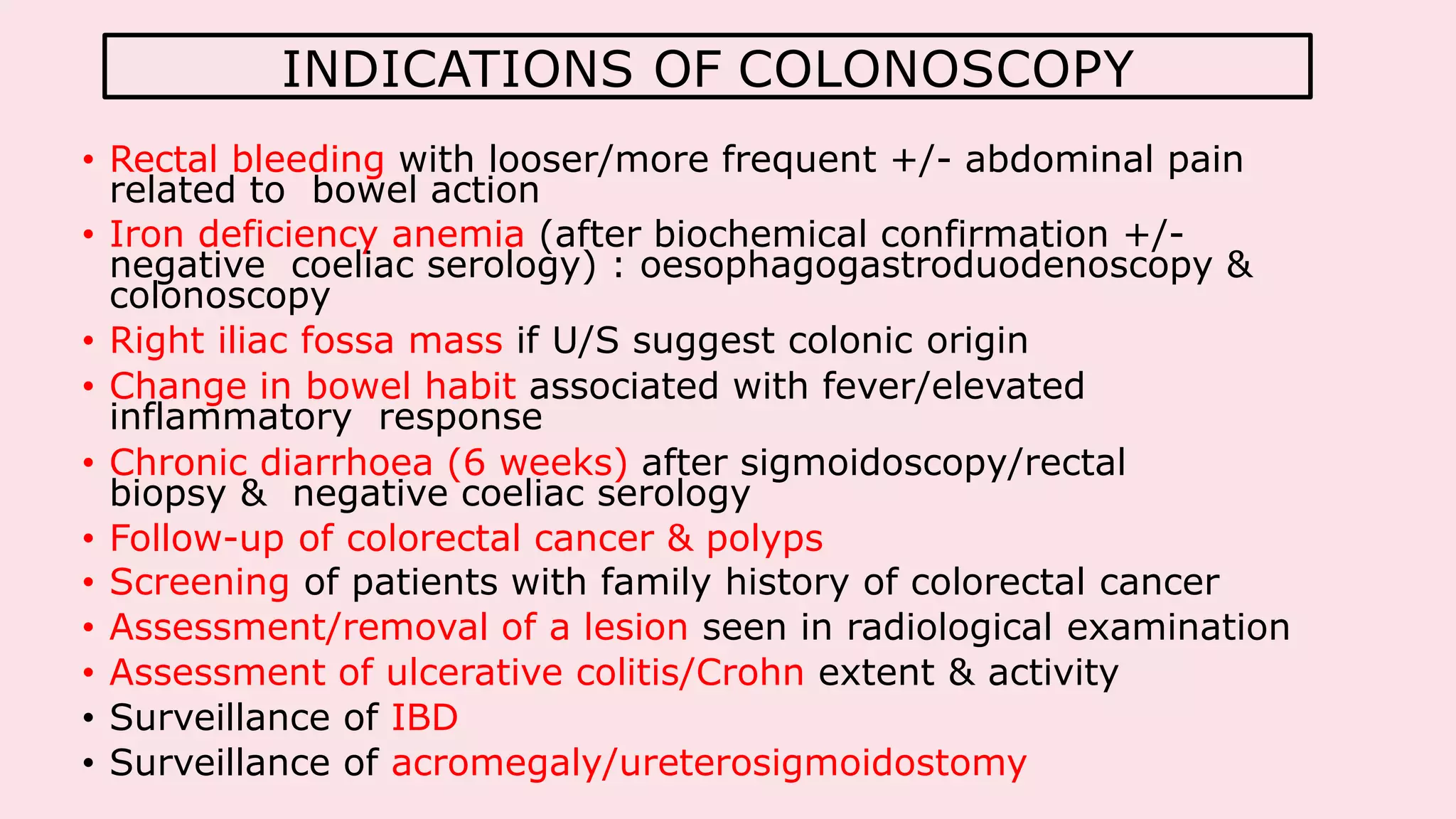
INDICATIONS OF COLONOSCOPY
• Rectal bleeding with looser/more frequent +/- abdominal pain
related to bowel action
• Iron deficiency anemia (after biochemical confirmation +/-
negative coeliac serology) : oesophagogastroduodenoscopy &
colonoscopy
• Right iliac fossa mass if U/S suggest colonic origin
• Change in bowel habit associated with fever/elevated
inflammatory response
• Chronic diarrhoea (6 weeks) after sigmoidoscopy/rectal
biopsy & negative coeliac serology
• Follow-up of colorectal cancer & polyps
• Screening of patients with family history of colorectal cancer
• Assessment/removal of a lesion seen in radiological examination
• Assessment of ulcerative colitis/Crohn extent & activity
• Surveillance of IBD
• Surveillance of acromegaly/ureterosigmoidostomy
COMPLICATIONS OF COLONOSCOPY
Absolute :
 Suspected perforation of intestine
 Signs of peritonitis in toxic patient
Relative :
 Severe acute colitis
 Gross acute gastrointestinal bleeding
 Poor bowel preparation
 Recent surgical anastomosis
 Partial or complete intestinal obstruction
 Abdominal or iliac aneurysm
SIGMOIDOSCOPY
• To look at the inside of the large intestine from the rectum
through the last part of the colon : sigmoid or
descending colon
Indications :
• To find the cause of diarrhea, abdominal pain, or constipation
• To look for early signs of cancer in the descending colon and
rectum. With flexible sigmoidoscopy, the physician can see
bleeding, inflammation, abnormal growths, and ulcers in
the descending colon and rectum.
• Flexible sigmoidoscopy is not sufficient to detect polyps or
cancer in the ascending or transverse colon two-thirds of the
colon
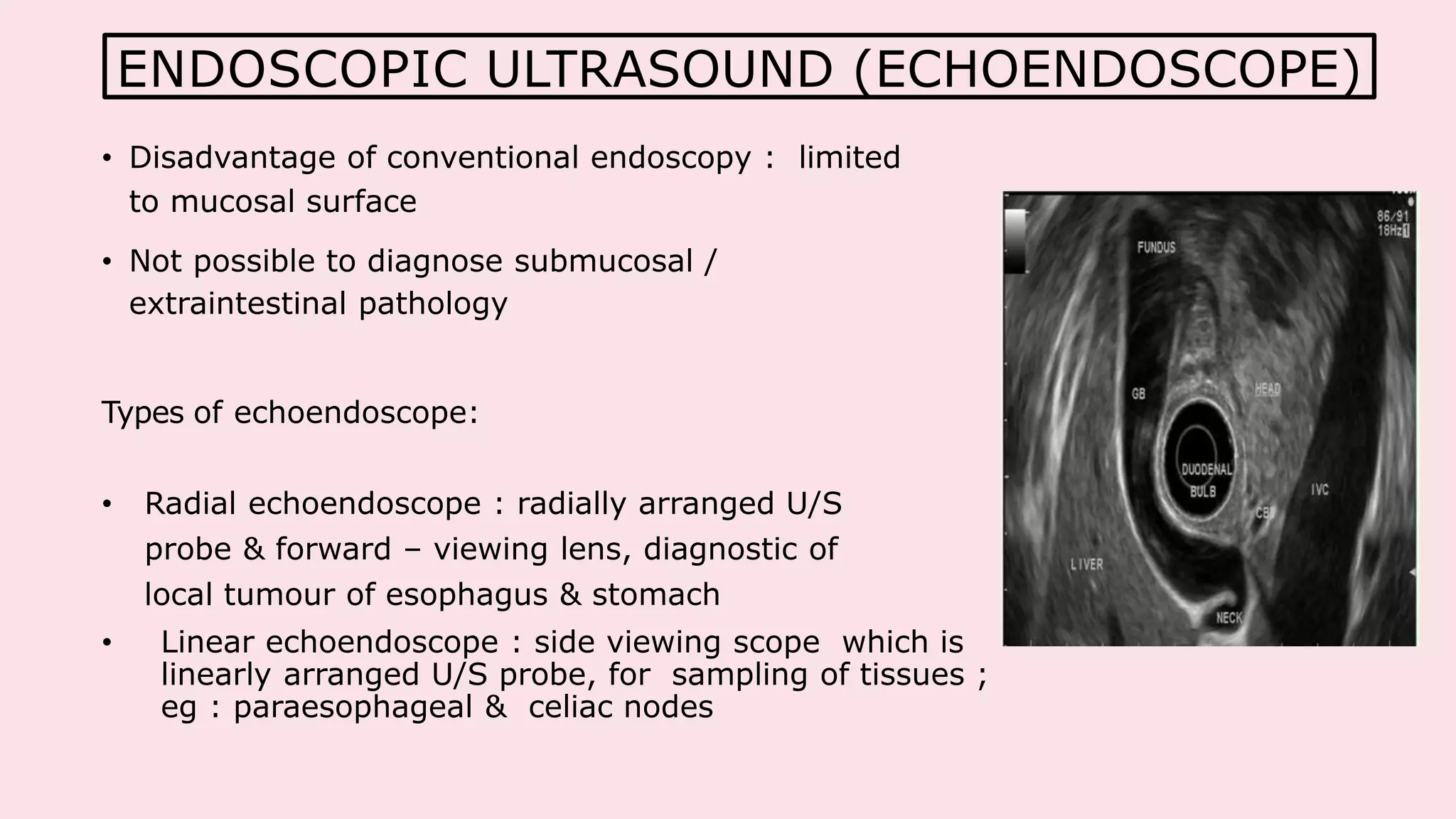
ENDOSCOPIC ULTRASOUND (ECHOENDOSCOPE)
• Disadvantage of conventional endoscopy : limited
to mucosal surface
• Not possible to diagnose submucosal /
extraintestinal pathology
Types of echoendoscope:
• Radial echoendoscope : radially arranged U/S
probe & forward – viewing lens, diagnostic of
local tumour of esophagus & stomach
• Linear echoendoscope : side viewing scope which is
linearly arranged U/S probe, for sampling of tissues ;
eg : paraesophageal & celiac nodes
INDICATIONS FOR ENDOSCOPIC ULTRASOUND
Diagnostic
 Staging of esophageal/gastric malignancy
 Staging of hepatobiliary malignancy
 Diagnosis of choledochal microlithiasis
Therapeutic
 Biopsy of paraesophageal LN
 Biopsy of submucosal upper GI lesions
 Biopsy of pancreaticobiliary mass
 Biopsy of portal lymphadenopathy
 Biopsy of left adrenal & left liver massess
 Transgastric drainage of pancreatic pseudocyst
 Celiac plexus block
IMPROVED ENDOSCOPIC IMAGING
Chromoendoscopy, narrow band imaging & high
resolution magnification endoscopy
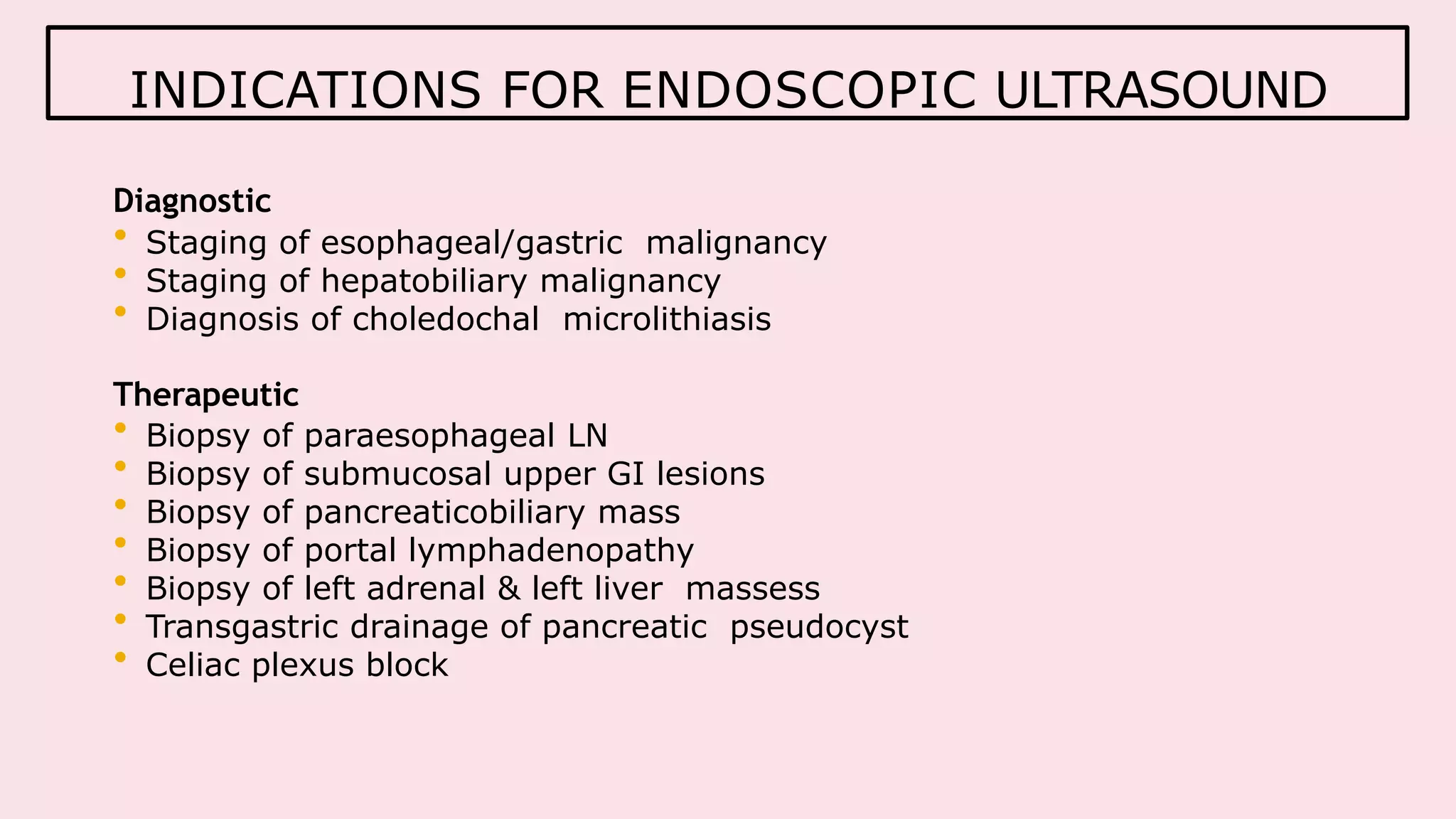
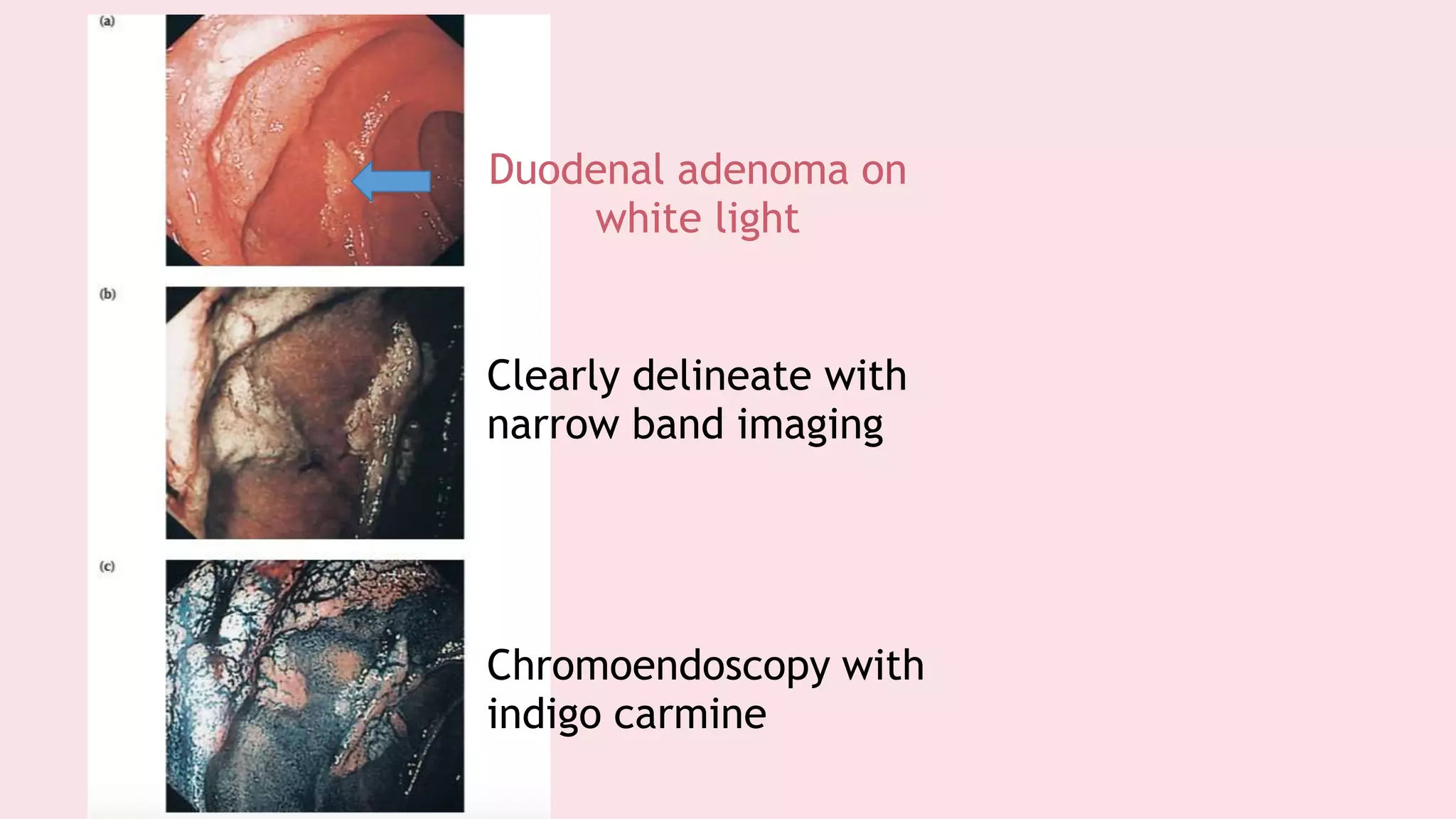
• Chromoendoscopy – topical application of stains / pigments to
improve tissue localisation, characterisation / diagnosis
• Agents that is used : methylene blue (vital), indigo carmine
(contrast) & India ink (tattooing), acetic acid & Lugol’s iodine
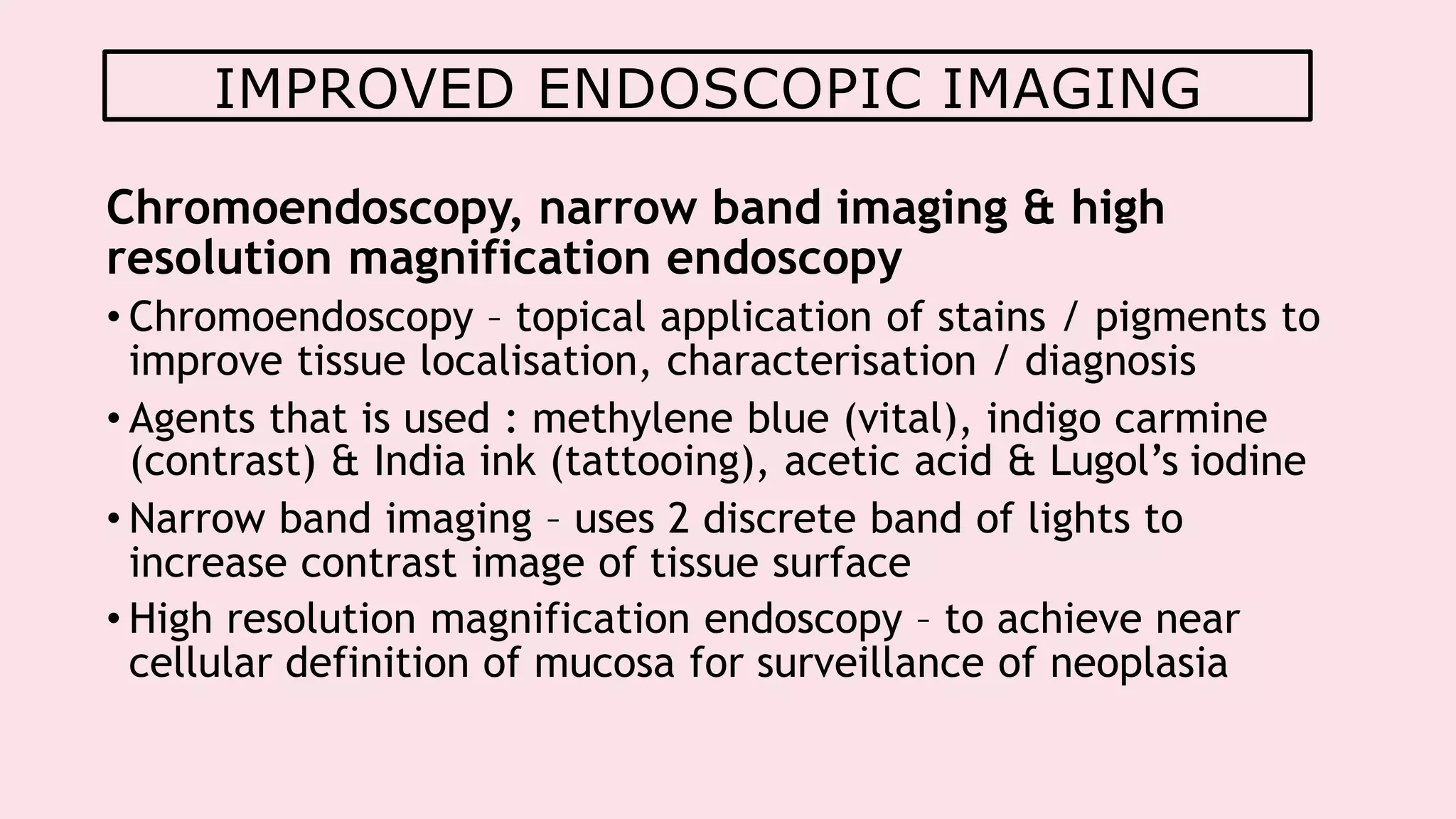
• Narrow band imaging – uses 2 discrete band of lights to
increase contrast image of tissue surface
• High resolution magnification endoscopy – to achieve near
cellular definition of mucosa for surveillance of neoplasia
Duodenal adenoma on
white light
Clearly delineate with
narrow band imaging
Chromoendoscopy with
indigo carmine
RESPIRATORY ENDOSCOPY
•Bronchoscopy
•Laryngoscopy
BRONCHOSCOPY
• A bronchoscope is a tube with a tiny
camera on the end which is inserted
through the nose (or mouth) into
the lungs. During a bronchoscopy
procedure, a scope will be inserted
through the nostril until it passes
through the throat into the trachea
and bronchi. A bronchoscope is used
to provide a view of the airways of the
lung. The scope also allows the doctor
to collect lung secretions and lung
tissue for biopsy for tissue
specimens.
LARYNGOSCOPY
CYSTOSCOPY
• Cystoscopy is a procedure that
uses a flexible fiber optic scope
inserted through the urethra into
the urinary bladder.
• The bladder is filled with water
and the interior of the bladder is
inspected.
• The image seen through the
cystoscope may also be viewed
on a color monitor and recorded
on videotape for later evaluation.
SUMMARY
• The definition of endoscopy and endoscope
• Upper & lower GI endoscopy
• The indication for diagnostic and therapeutic endoscopy/ colonoscopy/
endoscopic retrograde cholangiopancreatography
• The recognition and management of complications
• Briefly on other types of endoscopy
• Endoscopic ultrasound
• Respiratory
• Cystoscopy
References
• Bailey & Love’s H. B., & M. L. (2018). Short Practice of
Surgery(27th ed., Vol. 1). Boca Ratonca : CRC Press
• M., S. B. (2016). SRBs Manual of Surgery : Jaypee Brothers
Medical P.
Endoscopy in surgery

Endoscopy in surgery

  • 1.
    ENDOSCOPY IN SURGERY NUR IZZATULNAJWA BINTI SHARUPUDDIN 082015100036
  • 2.
    LEARNING OBJECTIVES At theend of this seminar, we should be able to understand : • The definition of endoscopy and endoscope • Upper & lower GI endoscopy • The indication for diagnostic and therapeutic endoscopy/ colonoscopy/ endoscopic retrograde cholangiopancreatography • The recognition and management of complications • Briefly on other types of endoscopy, • Endoscopic ultrasound • Respiratory • Cystoscopy
  • 3.
    • Endoscopy GreekWord ‘Endo’ = Inside ‘scopy ‘= to see ENDOSCOPY Examination of the interior of a canal or hollow viscus by means of a special instrument, such as an endoscope ENDOSCOPE Device using fiber optics and powerful lens systems to provide lighting and visualization of the interior of cavity. The portion of the endoscope inserted into the body may be rigid or flexible, depending upon the medical procedure. INTRODUCTION
  • 4.
    The digestive tractconsists of the followings : • Mouth • Throat • Esophagus • Stomach • Duodenum • Small bowel • Colon • Rectum • Anus • And other GI organs . INTRODUCTION
  • 5.
  • 6.
    • Involves theuse of a side- viewing duodenoscope - passed through the pylorus and into the second part of the duodenum - to visualise the papilla • It is cannulated directly with catheter/ guidewire – requires small precut • Visualised under fluroscopy after contrast injection ENDOSCOPIC RETROGRADE CHOLANGIOPANCREA TOGRAPHY (ERCP)
  • 8.
    Preoperative procedure : •Routineblood screening including clotting screen •Respiratory & cardiovascular assessment •Oxygen saturation monitoring THERAPEUTIC ERCP
  • 9.
    Indication : •Relief biliaryobstruction – gallstone & biliary stricture If there is delay in reliefing – require percutaneous drainage Adequate biliary sphincterotomy normally performed over well positioned guidewire Gallstones <1 cm will pass spontaneously in days & weeks Most endoscopists prefer to ensure duct clearance at initial procedure to reduce risk of impaction, cholangitis / pancreatitis Trawling of duct using balloon catheter / extraction using wire basket If standard techniques fail – mechanical lithotripsy is done – placement of removable plastic stent Correct stent placement confirmed by flow of bile after release & presence of air in biliary tree on follow up radiographs
  • 11.
    Other indications : •Pancreatic disease • Pancreatic stone extraction • Dilatation of pancreatic duct strictures • Transgastric drainage of pancreatic pseudocysts • Assessment of biliary dysmotility (sphincter of Oddi dysfunction) THERAPEUTIC ERCP
  • 12.
    • Duodenal perforation(1.3%)/hemorrhage after scope insertion/ sphincterotomy (1.4%) • Pancreatitis (4.3%) • Sepsis (3-30%) • Mortality (1%) Post sphincterotomy complications : • CT scan required in patients with pain, tachycardia / hypotension postprocedure • Can be severe – extensive pancreatic necrosis • Recommended to administered per-rectal indomethacin/diclofenac immediately before / after procedure – to decrease post ERCP pancreatitis COMPLICATIONS OF ERCP
  • 13.
    RISK FACTORS FORPOST – ERCP PANCREATITIS Definite  Suspected SOD  Young age  Normal bilirubin  Prior ERCP – related pancreatitis  Difficult cannulation  Pancreatic duct  contrast injection  Balloon dilatation of biliary sphincter Possible  Female  Low volume of ERCP performed  Absent CBD stone
  • 14.
    ENDOSCOPIC ASSESSMENT OFSMALL BOWEL (ENTEROSCOPE ) Indications : • GI blood loss –with recurrent iron deficiency anemia (occult hemorrhage)/recurrent overt blood loss per rectum (cryptic hemorrhage) in pt with normal OGD (with duodenal biopsies) & colonoscopy • Malabsorption • Exclusion of cryptic IBD- Crohn disease • Targeting lesions in imaging • Inherited polyposis syndrome
  • 15.
    TECHNIQUE 1) STANDARD ENTEROSCOPE– may reach in proximal small bowel • Requires 45 minutes • May be uncomfortable – requires sedation • Long thin endoscope inserted transnasally into stomach & pushed through pylorus with gastroscope passed through mouth • Carried distally by peristalsis propels balloon inflated at tip • Limitations – long examination time (6-8 hours), discomfort to patient, danger of perforation
  • 17.
    • If areaof interest was outside reach of standard enteroscope , direct access via enterotomy • Advance technique of small bowel assessment : • Capsule endoscope allows diagnostic mucosal view of entire small bowel • Single/double-balloon enteroscopy – endoscopic access to entire small bowel for biopsy & therapeutics
  • 18.
    2) CAPSULE ENDOSCOPY •Requires 3 components : • Indigestible capsule • Portable data recorder • Workstation equipped with image-processing software
  • 20.
    • Provides goodvisualisation from mouth to colon with high diagnostic yield • ‘Gold standard’ for GI bleeding • Contraindications : • Small bowel strictures – may cause acute obstruction requiring retrieval at laparotomy / via laparoscopy • Gastroparesis • Pseudo-obstruction
  • 21.
    3) SINGLE/DOUBLE-BALLOON ENTEROSCOPY •Direct visualisation & therapeutic intervention for entire small bowel via oral / rectal route • Developed in Japan 2001 – thin enteroscope & overtube both fitted with a balloon
  • 23.
    Technique Advantages Disadvantages Traditionalenteroscopy • Simple technique with wide availability • Full range of therapeutics available • Performed under sedation • Some discomfort • Can only access proximal small bowel Capsule endoscopy • Able to visualise the entire small • Preferable • No sedation • Painless • No biopsies • Not controllable & no accurate localisation • Variable transit • Incomplete studies due to battery life • Not suitable for patients with strictures • Large capsule to swallow Double/single-balloon enteroscopy • Able to visualise the entire small bowel • Full range of therapeutic • Requires sedation/general anaesthesia • Patient discomfort • May take 3-4 hours, require admission • Complications - perforation
  • 24.
  • 25.
    COLONOSCOPY • Colonoscopy letsthe physician look inside the entire large intestine, from the lowest part, the rectum, all the way up through the colon to the lower end of the small intestine. • The procedure is used to look for early signs of cancer in the colon and rectum, inflamed tissue, abnormal growths, ulcers, and bleeding. • If anything abnormal is seen in the colon, like a polyp or inflamed tissue, the physician can remove all or part of it using tiny instruments passed through the scope. That tissue (biopsy) is then sent to a lab for testing. If there is bleeding in the colon, the physician can pass a laser, heater probe, or electrical probe, or inject special medicines through the scope and use it to stop the bleeding.
  • 26.
    INDICATIONS OF COLONOSCOPY •Rectal bleeding with looser/more frequent +/- abdominal pain related to bowel action • Iron deficiency anemia (after biochemical confirmation +/- negative coeliac serology) : oesophagogastroduodenoscopy & colonoscopy • Right iliac fossa mass if U/S suggest colonic origin • Change in bowel habit associated with fever/elevated inflammatory response • Chronic diarrhoea (6 weeks) after sigmoidoscopy/rectal biopsy & negative coeliac serology • Follow-up of colorectal cancer & polyps • Screening of patients with family history of colorectal cancer • Assessment/removal of a lesion seen in radiological examination • Assessment of ulcerative colitis/Crohn extent & activity • Surveillance of IBD • Surveillance of acromegaly/ureterosigmoidostomy
  • 28.
    COMPLICATIONS OF COLONOSCOPY Absolute:  Suspected perforation of intestine  Signs of peritonitis in toxic patient Relative :  Severe acute colitis  Gross acute gastrointestinal bleeding  Poor bowel preparation  Recent surgical anastomosis  Partial or complete intestinal obstruction  Abdominal or iliac aneurysm
  • 29.
    SIGMOIDOSCOPY • To lookat the inside of the large intestine from the rectum through the last part of the colon : sigmoid or descending colon Indications : • To find the cause of diarrhea, abdominal pain, or constipation • To look for early signs of cancer in the descending colon and rectum. With flexible sigmoidoscopy, the physician can see bleeding, inflammation, abnormal growths, and ulcers in the descending colon and rectum. • Flexible sigmoidoscopy is not sufficient to detect polyps or cancer in the ascending or transverse colon two-thirds of the colon
  • 32.
    ENDOSCOPIC ULTRASOUND (ECHOENDOSCOPE) •Disadvantage of conventional endoscopy : limited to mucosal surface • Not possible to diagnose submucosal / extraintestinal pathology Types of echoendoscope: • Radial echoendoscope : radially arranged U/S probe & forward – viewing lens, diagnostic of local tumour of esophagus & stomach • Linear echoendoscope : side viewing scope which is linearly arranged U/S probe, for sampling of tissues ; eg : paraesophageal & celiac nodes
  • 33.
    INDICATIONS FOR ENDOSCOPICULTRASOUND Diagnostic  Staging of esophageal/gastric malignancy  Staging of hepatobiliary malignancy  Diagnosis of choledochal microlithiasis Therapeutic  Biopsy of paraesophageal LN  Biopsy of submucosal upper GI lesions  Biopsy of pancreaticobiliary mass  Biopsy of portal lymphadenopathy  Biopsy of left adrenal & left liver massess  Transgastric drainage of pancreatic pseudocyst  Celiac plexus block
  • 34.
    IMPROVED ENDOSCOPIC IMAGING Chromoendoscopy,narrow band imaging & high resolution magnification endoscopy • Chromoendoscopy – topical application of stains / pigments to improve tissue localisation, characterisation / diagnosis • Agents that is used : methylene blue (vital), indigo carmine (contrast) & India ink (tattooing), acetic acid & Lugol’s iodine • Narrow band imaging – uses 2 discrete band of lights to increase contrast image of tissue surface • High resolution magnification endoscopy – to achieve near cellular definition of mucosa for surveillance of neoplasia
  • 35.
    Duodenal adenoma on whitelight Clearly delineate with narrow band imaging Chromoendoscopy with indigo carmine
  • 36.
  • 37.
    BRONCHOSCOPY • A bronchoscopeis a tube with a tiny camera on the end which is inserted through the nose (or mouth) into the lungs. During a bronchoscopy procedure, a scope will be inserted through the nostril until it passes through the throat into the trachea and bronchi. A bronchoscope is used to provide a view of the airways of the lung. The scope also allows the doctor to collect lung secretions and lung tissue for biopsy for tissue specimens.
  • 38.
  • 39.
    CYSTOSCOPY • Cystoscopy isa procedure that uses a flexible fiber optic scope inserted through the urethra into the urinary bladder. • The bladder is filled with water and the interior of the bladder is inspected. • The image seen through the cystoscope may also be viewed on a color monitor and recorded on videotape for later evaluation.
  • 40.
    SUMMARY • The definitionof endoscopy and endoscope • Upper & lower GI endoscopy • The indication for diagnostic and therapeutic endoscopy/ colonoscopy/ endoscopic retrograde cholangiopancreatography • The recognition and management of complications • Briefly on other types of endoscopy • Endoscopic ultrasound • Respiratory • Cystoscopy
  • 41.
    References • Bailey &Love’s H. B., & M. L. (2018). Short Practice of Surgery(27th ed., Vol. 1). Boca Ratonca : CRC Press • M., S. B. (2016). SRBs Manual of Surgery : Jaypee Brothers Medical P.