Endoscopy
Endoscopy is a procedure that allows a doctor to view the inside of a
person's body. Originally, endoscopy was only used in the esophagus,
stomach, and colon. Now, doctors use endoscopy to diagnose diseases
of the ear, nose, throat, heart, urinary tract, joints, and abdomen.
Endoscope
the doctor inserts a tool
called an endoscope into
a person’s body. Most
endoscopes are thin
tubes with a powerful
light and tiny camera at
the end.
• There are several types of endoscopes.
• The length and flexibility of the endoscope depends on the part of the
body the doctor needs to see.
 For example,
1. an endoscope that helps a doctor examine the joints is often rigid.
2. However, one used to view the inside of the colon is flexible.
Other tools used during an endoscopy
Typically, an endoscope has a channel through which the doctor
inserts tools to collect tissue or provide treatment. These tools
include:
Flexible forceps, a tool that looks like tongs, for taking a tissue
sample.
Biopsy forceps for removing a tissue sample or a suspicious growth.
Cytology brush for taking cell samples.
Suture removal forceps for removing stitches inside the body.
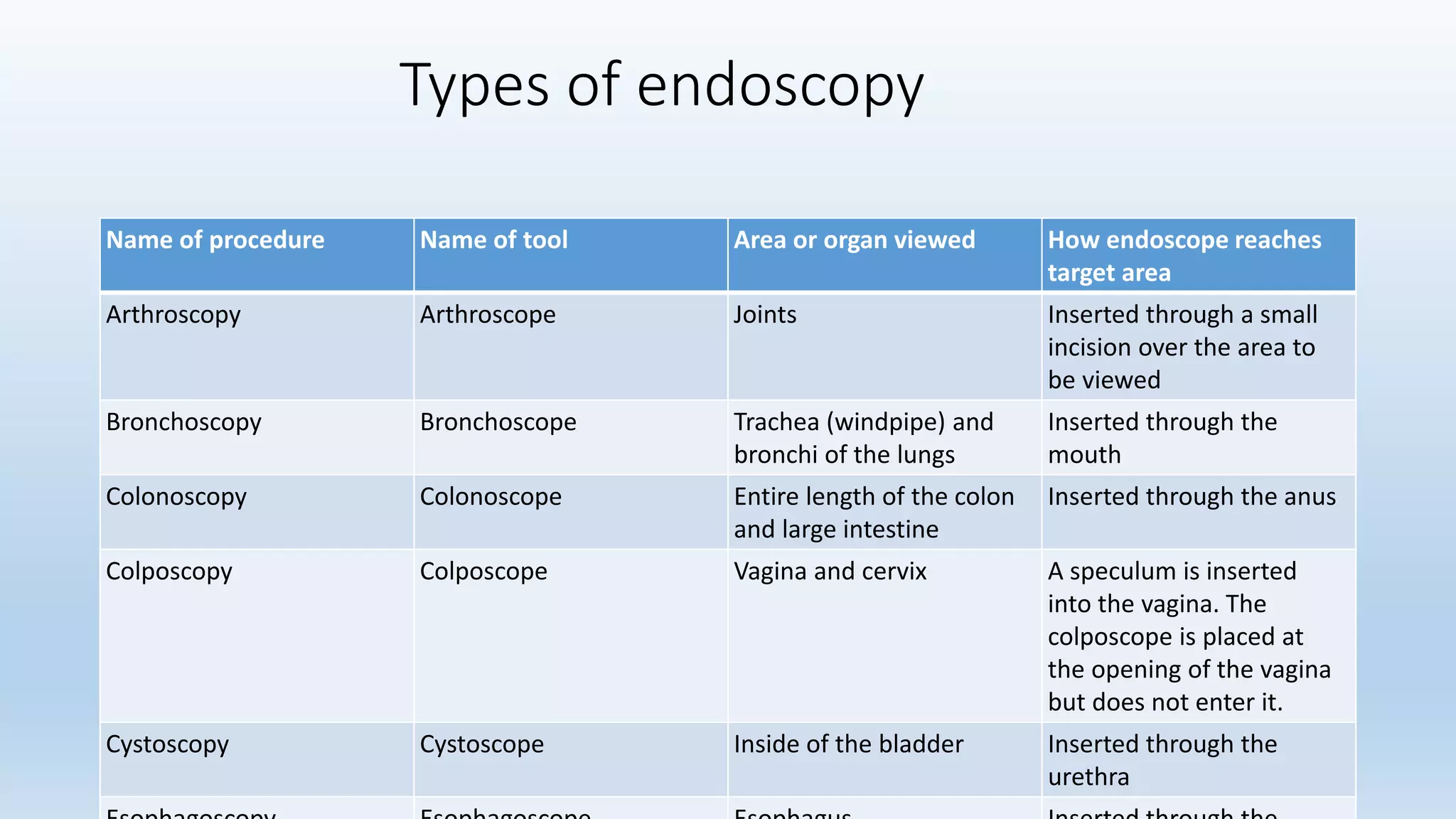
Types of endoscopy
Name of procedure Name of tool Area or organ viewed How endoscope reaches
target area
Arthroscopy Arthroscope Joints Inserted through a small
incision over the area to
be viewed
Bronchoscopy Bronchoscope Trachea (windpipe) and
bronchi of the lungs
Inserted through the
mouth
Colonoscopy Colonoscope Entire length of the colon
and large intestine
Inserted through the anus
Colposcopy Colposcope Vagina and cervix A speculum is inserted
into the vagina. The
colposcope is placed at
the opening of the vagina
but does not enter it.
Cystoscopy Cystoscope Inside of the bladder Inserted through the
urethra
Why we need an endoscopy???
Endoscopy allows your doctor to visually examine an organ without
having to make a large incision.
Endoscopy is typically used to:
• help your doctor determine the cause of any abnormal symptoms
you’re having.
• remove a small sample of tissue, which can then be sent to a lab for
further testing; this is called an endoscopic biopsy.
• help your doctor see inside the body during a surgical procedure,
such as repairing a stomach ulcer, or removing gallstones or tumors.
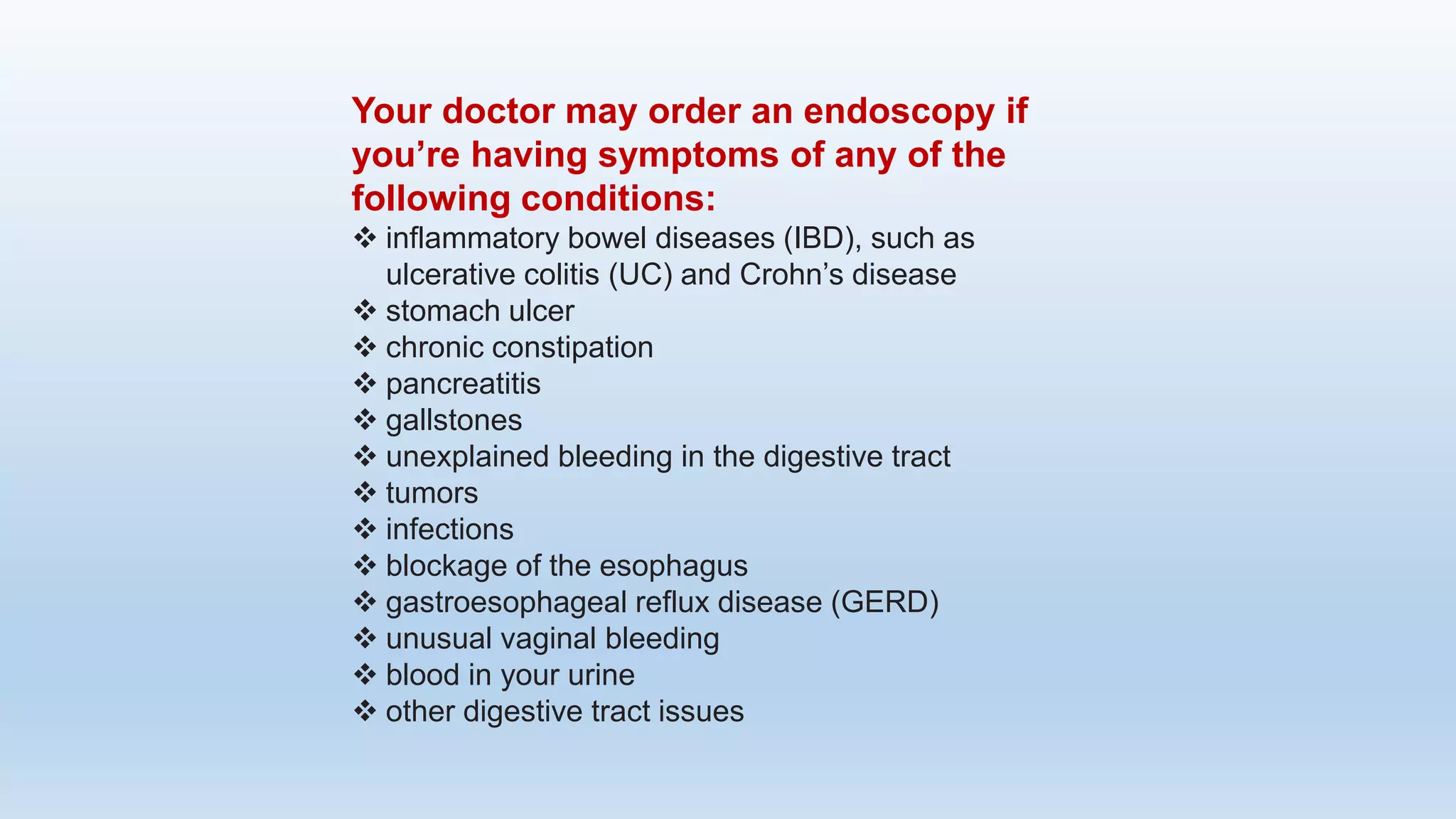
Your doctor may order an endoscopy if
you’re having symptoms of any of the
following conditions:
 inflammatory bowel diseases (IBD), such as
ulcerative colitis (UC) and Crohn’s disease
 stomach ulcer
 chronic constipation
 pancreatitis
 gallstones
 unexplained bleeding in the digestive tract
 tumors
 infections
 blockage of the esophagus
 gastroesophageal reflux disease (GERD)
 unusual vaginal bleeding
 blood in your urine
 other digestive tract issues
latest techniques in endoscopy technology
1. Capsule endoscopy:
A revolutionary procedure known as a capsule
endoscopy may be used when other tests aren’t
conclusive. During a capsule endoscopy, you
swallow a small pill with a tiny camera inside.
The capsule passes through your digestive tract,
without any discomfort to you, and creates
thousands of images of the intestines as it
moves through.
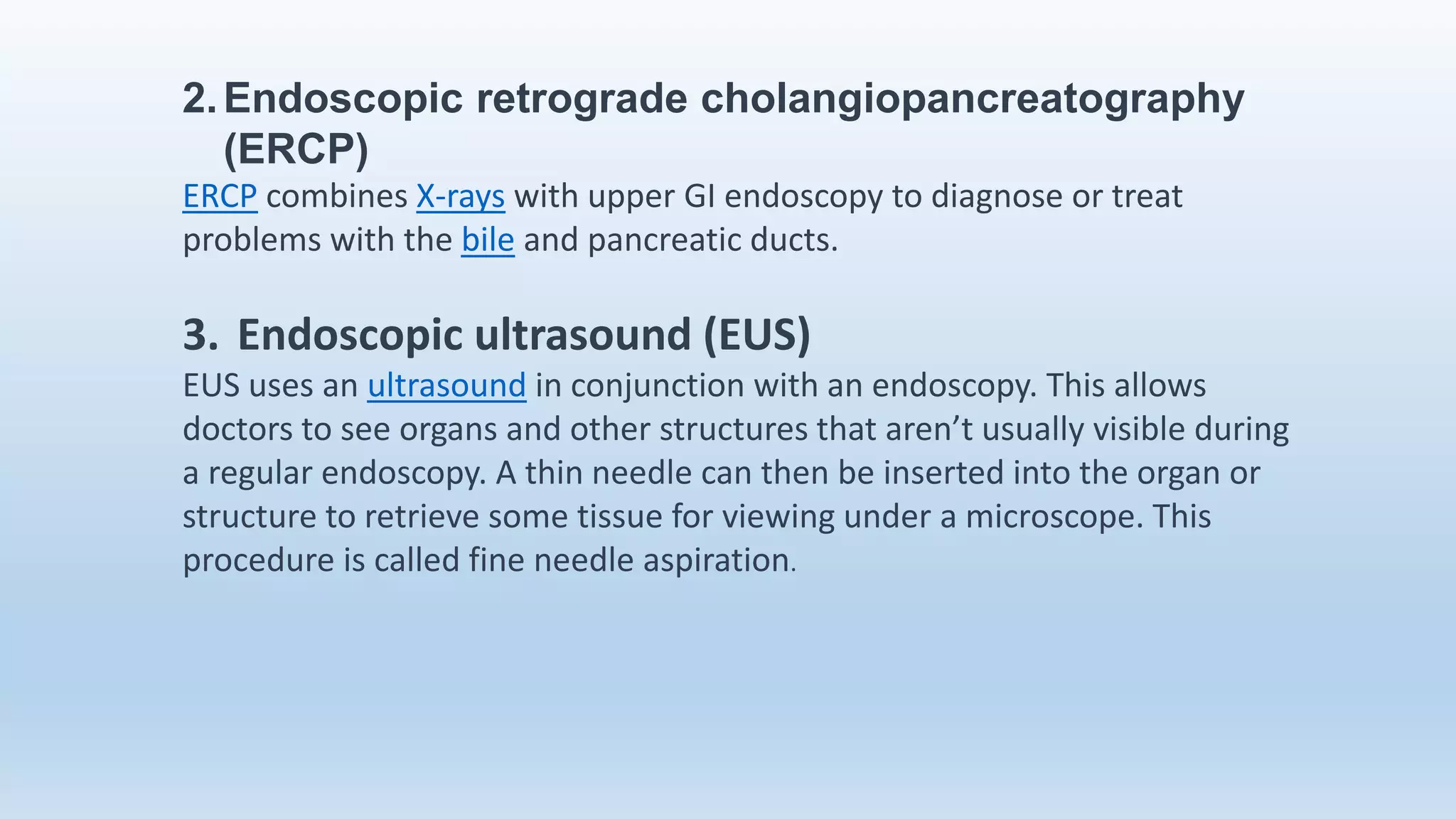
2.Endoscopic retrograde cholangiopancreatography
(ERCP)
ERCP combines X-rays with upper GI endoscopy to diagnose or treat
problems with the bile and pancreatic ducts.
3. Endoscopic ultrasound (EUS)
EUS uses an ultrasound in conjunction with an endoscopy. This allows
doctors to see organs and other structures that aren’t usually visible during
a regular endoscopy. A thin needle can then be inserted into the organ or
structure to retrieve some tissue for viewing under a microscope. This
procedure is called fine needle aspiration.
4.Endoscopic mucosal resection (EMR)
EMR is a technique used to help doctors remove cancerous tissue in the digestive
tract
5. Narrow band imaging (NBI)
NBI uses a special filter to help create more contrast between vessels and the
mucosa. The mucosa is the inner lining of the digestive tract.
risks of an endoscopy
chest pain
damage to your organs, including possible perforation
Fever
persistent pain in the area of the endoscopy
redness and swelling at the incision site
Endoscopy and types of endoscopy

Endoscopy and types of endoscopy

  • 2.
    Endoscopy Endoscopy is aprocedure that allows a doctor to view the inside of a person's body. Originally, endoscopy was only used in the esophagus, stomach, and colon. Now, doctors use endoscopy to diagnose diseases of the ear, nose, throat, heart, urinary tract, joints, and abdomen.
  • 3.
    Endoscope the doctor insertsa tool called an endoscope into a person’s body. Most endoscopes are thin tubes with a powerful light and tiny camera at the end.
  • 4.
    • There areseveral types of endoscopes. • The length and flexibility of the endoscope depends on the part of the body the doctor needs to see.  For example, 1. an endoscope that helps a doctor examine the joints is often rigid. 2. However, one used to view the inside of the colon is flexible.
  • 5.
    Other tools usedduring an endoscopy Typically, an endoscope has a channel through which the doctor inserts tools to collect tissue or provide treatment. These tools include: Flexible forceps, a tool that looks like tongs, for taking a tissue sample. Biopsy forceps for removing a tissue sample or a suspicious growth. Cytology brush for taking cell samples. Suture removal forceps for removing stitches inside the body.
  • 6.
    Types of endoscopy Nameof procedure Name of tool Area or organ viewed How endoscope reaches target area Arthroscopy Arthroscope Joints Inserted through a small incision over the area to be viewed Bronchoscopy Bronchoscope Trachea (windpipe) and bronchi of the lungs Inserted through the mouth Colonoscopy Colonoscope Entire length of the colon and large intestine Inserted through the anus Colposcopy Colposcope Vagina and cervix A speculum is inserted into the vagina. The colposcope is placed at the opening of the vagina but does not enter it. Cystoscopy Cystoscope Inside of the bladder Inserted through the urethra
  • 7.
    Why we needan endoscopy??? Endoscopy allows your doctor to visually examine an organ without having to make a large incision. Endoscopy is typically used to: • help your doctor determine the cause of any abnormal symptoms you’re having. • remove a small sample of tissue, which can then be sent to a lab for further testing; this is called an endoscopic biopsy. • help your doctor see inside the body during a surgical procedure, such as repairing a stomach ulcer, or removing gallstones or tumors.
  • 8.
    Your doctor mayorder an endoscopy if you’re having symptoms of any of the following conditions:  inflammatory bowel diseases (IBD), such as ulcerative colitis (UC) and Crohn’s disease  stomach ulcer  chronic constipation  pancreatitis  gallstones  unexplained bleeding in the digestive tract  tumors  infections  blockage of the esophagus  gastroesophageal reflux disease (GERD)  unusual vaginal bleeding  blood in your urine  other digestive tract issues
  • 9.
    latest techniques inendoscopy technology 1. Capsule endoscopy: A revolutionary procedure known as a capsule endoscopy may be used when other tests aren’t conclusive. During a capsule endoscopy, you swallow a small pill with a tiny camera inside. The capsule passes through your digestive tract, without any discomfort to you, and creates thousands of images of the intestines as it moves through.
  • 10.
    2.Endoscopic retrograde cholangiopancreatography (ERCP) ERCPcombines X-rays with upper GI endoscopy to diagnose or treat problems with the bile and pancreatic ducts. 3. Endoscopic ultrasound (EUS) EUS uses an ultrasound in conjunction with an endoscopy. This allows doctors to see organs and other structures that aren’t usually visible during a regular endoscopy. A thin needle can then be inserted into the organ or structure to retrieve some tissue for viewing under a microscope. This procedure is called fine needle aspiration.
  • 11.
    4.Endoscopic mucosal resection(EMR) EMR is a technique used to help doctors remove cancerous tissue in the digestive tract 5. Narrow band imaging (NBI) NBI uses a special filter to help create more contrast between vessels and the mucosa. The mucosa is the inner lining of the digestive tract.
  • 12.
    risks of anendoscopy chest pain damage to your organs, including possible perforation Fever persistent pain in the area of the endoscopy redness and swelling at the incision site