
OVARY & TESTIS
Dr. P. Suganya
Assistant Professor
Department of Biotechnology
Sri Kaliswari College (Autonomous),
Sivakasi
INTRODUCTION
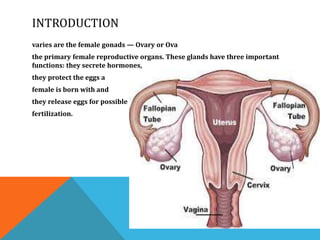
varies are the female gonads — Ovary or Ova
the primary female reproductive organs. These glands have three important
functions: they secrete hormones,
they protect the eggs a
female is born with and
they release eggs for possible
fertilization.
SIZE & LOCATION
Human females are typically born with two ovaries
stemming from the uterus.
Before puberty, ovaries are just long bundles of
tissue.
As the female matures, so do her ovaries. When
mature, ovaries are about the size of a large
grape, according to Endocrine Web.
The ovaries lie on either side of the uterus against
the pelvic wall in a region called the ovarian
fossa. They are held in place by ligaments
attached to the uterus.
FUNCTIONS
The ovary is a ductless reproductive gland in which the female
reproductive cells are produced. Females have a pair of ovaries, held by
a membrane beside the uterus on each side of the lower abdomen.
The ovary is needed in reproduction since it is responsible for producing
the female reproductive cells, or ova.
During ovulation, a follicle (a small cavity in the ovary) expels an egg
under the stimulation of gonadotropic hormones released by the
pituitary gland, the luteinizing hormone and the follicle-stimulating
hormone. The rest of the follicle, or the corpus luteum, secretes the
sex hormones estrogen and progesterone, which regulate
menstruation and control the development of the sex organs.
The sex hormones and the gonadotropic hormones interact with each
other to control the menstrual cycle.
When an egg matures, it is released and passes into the fallopian tube
toward the uterus. If the ovum is fertilized by the male reproductive
cell, or sperm, conception happens and pregnancy begins.
An ovary is normally firm and smooth and is about the size of an almond.
Among the various reproductive tract cancers, ovarian cancer is the
leading cause of death in women.
DISEASES
Polycystic ovary syndrome (PCOS) is an ailment
defined by multiple cysts growing on the
outer edge of the ovaries due to a lack of
hormones that allow an egg to be released
from the follicle. This disorder can lead to
infertility and other serious complications
such as heart disease, diabetes or stroke.
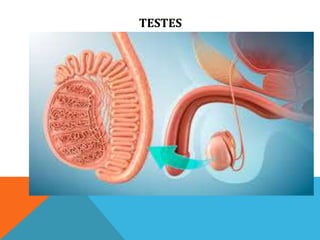
TESTES
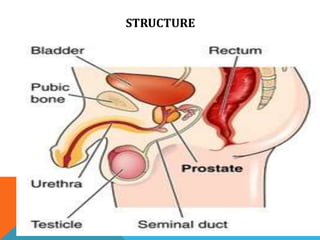
STRUCTURE
INTRODUCTION
 In humans each testis weighs about 25 grams (0.875 ounce) and is
4–5 cm (1.6–2.0 inches) long and 2–3 cm (0.8–1.2 inches) in
diameter.
 Each is covered by a fibrous capsule called the tunica albuginea
and is divided by partitions of fibrous tissue from the
 tunica albuginea into 200 to 400 wedge-shaped sections, or lobes.
 Within each lobe are 3 to 10 coiled tubules, called seminiferous
tubules,
 which produce the sperm cells.
 The partitions between the lobes and the seminiferous tubules
both converge in one area near the anal side of each testis to form
what is called the mediastinum testis.
SPERMATOGENESIS
The seminiferous tubules, in which the sperm
are produced, constitute about 90 percent of the
testicular mass.
In the young male the tubules are simple and
composed of undeveloped sperm-producing cells
(spermatogonia) and the Sertoli cells.
In the older male the tubules become branched,
and spermatogonia are changed into the fertile
sperm cells after a series of transformations
called spermatogenesis.
The Sertoli cells found in both young and adult
males mechanically support and protect the
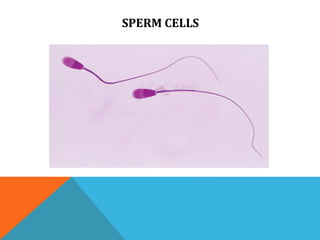
SPERM CELLS
DISEASES
A hydrocele happens when excess fluid builds up in the cavities
around one of your testicles. This is sometimes present at birth, but
it can also result from an injury or inflammation.
Hydrocele symptoms include:
testicular swelling that gets more noticeable as the day goes on
a dull ache in your scrotum
feeling heaviness in your scrotum
Testicular cancer
a lump in your testicle
feeling heaviness in your scrotum
fluids in your scrotum
testicular pain
abdominal or back pain
swollen or tender breast tissue
SYMPTOMS
long-term pain that’s either dull or sharp
swelling
tenderness
a sensation of heaviness
Other symptoms of a problem with the testes include:
feeling sick
throwing up
abnormal abdominal or back pain
having to pee frequently
abnormal growth of breast tissue
TREATMENTS
Do a monthly testicular self-exam
Roll each testicle around in your scrotum using your fingers. Check
for lumps and swollen or tender areas.
Bathe regularly
Take a shower or bath every day to keep your entire genital area clean. This
reduces your risk of infections that can cause other complications. Keep
your penis and scrotal area dry after bathing. Moisture trapped in the
area can quickly become a breeding ground for bacteria.
Wear loose, comfortable clothing
Try to avoid wearing tight underwear and pants. Allow your scrotum to
hang naturally from your body to help keep the scrotal temperature low
and prevent injury.
Wear protection when you have sex
Wear a condom when doing any kind of sexual activity involving your
penis. This helps to prevent sexually transmitted diseases that affect
your scrotum and testicles.
Ovary &  testis

Ovary & testis

  • 1.
    OVARY & TESTIS Dr.P. Suganya Assistant Professor Department of Biotechnology Sri Kaliswari College (Autonomous), Sivakasi
  • 2.
    INTRODUCTION varies are thefemale gonads — Ovary or Ova the primary female reproductive organs. These glands have three important functions: they secrete hormones, they protect the eggs a female is born with and they release eggs for possible fertilization.
  • 3.
    SIZE & LOCATION Humanfemales are typically born with two ovaries stemming from the uterus. Before puberty, ovaries are just long bundles of tissue. As the female matures, so do her ovaries. When mature, ovaries are about the size of a large grape, according to Endocrine Web. The ovaries lie on either side of the uterus against the pelvic wall in a region called the ovarian fossa. They are held in place by ligaments attached to the uterus.
  • 4.
    FUNCTIONS The ovary isa ductless reproductive gland in which the female reproductive cells are produced. Females have a pair of ovaries, held by a membrane beside the uterus on each side of the lower abdomen. The ovary is needed in reproduction since it is responsible for producing the female reproductive cells, or ova. During ovulation, a follicle (a small cavity in the ovary) expels an egg under the stimulation of gonadotropic hormones released by the pituitary gland, the luteinizing hormone and the follicle-stimulating hormone. The rest of the follicle, or the corpus luteum, secretes the sex hormones estrogen and progesterone, which regulate menstruation and control the development of the sex organs. The sex hormones and the gonadotropic hormones interact with each other to control the menstrual cycle. When an egg matures, it is released and passes into the fallopian tube toward the uterus. If the ovum is fertilized by the male reproductive cell, or sperm, conception happens and pregnancy begins. An ovary is normally firm and smooth and is about the size of an almond. Among the various reproductive tract cancers, ovarian cancer is the leading cause of death in women.
  • 5.
    DISEASES Polycystic ovary syndrome(PCOS) is an ailment defined by multiple cysts growing on the outer edge of the ovaries due to a lack of hormones that allow an egg to be released from the follicle. This disorder can lead to infertility and other serious complications such as heart disease, diabetes or stroke.
  • 6.
  • 7.
  • 8.
    INTRODUCTION  In humanseach testis weighs about 25 grams (0.875 ounce) and is 4–5 cm (1.6–2.0 inches) long and 2–3 cm (0.8–1.2 inches) in diameter.  Each is covered by a fibrous capsule called the tunica albuginea and is divided by partitions of fibrous tissue from the  tunica albuginea into 200 to 400 wedge-shaped sections, or lobes.  Within each lobe are 3 to 10 coiled tubules, called seminiferous tubules,  which produce the sperm cells.  The partitions between the lobes and the seminiferous tubules both converge in one area near the anal side of each testis to form what is called the mediastinum testis.
  • 9.
    SPERMATOGENESIS The seminiferous tubules,in which the sperm are produced, constitute about 90 percent of the testicular mass. In the young male the tubules are simple and composed of undeveloped sperm-producing cells (spermatogonia) and the Sertoli cells. In the older male the tubules become branched, and spermatogonia are changed into the fertile sperm cells after a series of transformations called spermatogenesis. The Sertoli cells found in both young and adult males mechanically support and protect the
  • 10.
  • 11.
    DISEASES A hydrocele happenswhen excess fluid builds up in the cavities around one of your testicles. This is sometimes present at birth, but it can also result from an injury or inflammation. Hydrocele symptoms include: testicular swelling that gets more noticeable as the day goes on a dull ache in your scrotum feeling heaviness in your scrotum Testicular cancer a lump in your testicle feeling heaviness in your scrotum fluids in your scrotum testicular pain abdominal or back pain swollen or tender breast tissue
  • 12.
    SYMPTOMS long-term pain that’seither dull or sharp swelling tenderness a sensation of heaviness Other symptoms of a problem with the testes include: feeling sick throwing up abnormal abdominal or back pain having to pee frequently abnormal growth of breast tissue
  • 13.
    TREATMENTS Do a monthlytesticular self-exam Roll each testicle around in your scrotum using your fingers. Check for lumps and swollen or tender areas. Bathe regularly Take a shower or bath every day to keep your entire genital area clean. This reduces your risk of infections that can cause other complications. Keep your penis and scrotal area dry after bathing. Moisture trapped in the area can quickly become a breeding ground for bacteria. Wear loose, comfortable clothing Try to avoid wearing tight underwear and pants. Allow your scrotum to hang naturally from your body to help keep the scrotal temperature low and prevent injury. Wear protection when you have sex Wear a condom when doing any kind of sexual activity involving your penis. This helps to prevent sexually transmitted diseases that affect your scrotum and testicles.