1
ENCEPHALITIS
2
INTRODUCTION
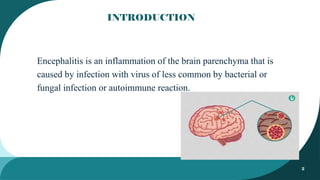
Encephalitis is an inflammation of the brain parenchyma that is
caused by infection with virus of less common by bacterial or
fungal infection or autoimmune reaction.
3
ETIOLOGY
The exact cause of encephalitis is still unknown, but when the cause is known
the most common cause is viral infection.
Common organism are Herpes Simplex virus 1 & 2, Epsteir Barr Virus,
Entrovirus, Mosqutio Borne Virus like West Nile, Tick Borne Virus, Rabis Virus,
Rubeola, Arbovirus.
Other cause are CVA, Immune Compromised and Upper respiratory Tract
Infection.
Non causative factors are autoimmune, vasculitis, neoplastic.
4
PATHOPHYSIOLOGY
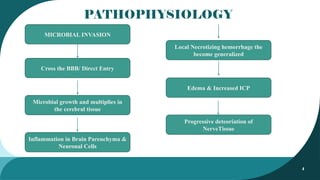
MICROBIAL INVASION
Cross the BBB/ Direct Entry
Microbial growth and multiplies in
the cerebral tissue
Inflammation in Brain Parenchyma &
Neuronal Cells
Local Necrotizing hemorrhage the
become generalized
Edema & Increased ICP
Progressive deteoriation of
NerveTissue
5
SIGN & SYMPTOMS
• Symptoms may develop within hours or week after exposure.
• The main Symptom is Fever >380
C within 72hrs or after presentation.
• Headache, Disorientation, Neurological Defects
• Seizures, Increased ICP may result in altered consciousness
• Nausea and Vomiting.
• Motor weakness such as Hemiparesis may be seen.
• Increased Deep Tendon Reflex and Extensor Plantar responses noted.
• Hypothalamic Pituitary involvement may result in Hypothermia, Diabetes etc.
6
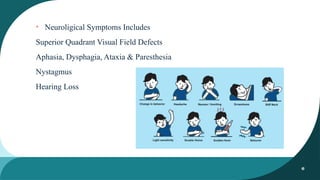
• Neuroligical Symptoms Includes
Superior Quadrant Visual Field Defects
Aphasia, Dysphagia, Ataxia & Paresthesia
Nystagmus
Hearing Loss
7
DIAGNOSTIC EVALUATIONS
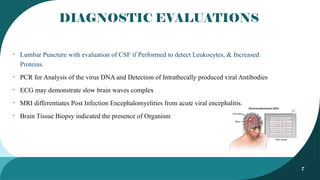
• Lumbar Puncture with evaluation of CSF if Performed to detect Leukocytes, & Increased
Proteins.
• PCR for Analysis of the virus DNA and Detection of Intrathecally produced viral Antibodies
• ECG may demonstrate slow brain waves complex
• MRI differentiates Post Infection Encephalomyelities from acute viral encephalitis.
• Brain Tissue Biopsy indicated the presence of Organism
8
MANAGEMENT
• Differentiate acute viral encephalitis from non infectious disease like
Sarcoidosis, SLE etc.
• In Patient with immune compromised like HIV, differentiate acute viral
encephalitis from cytomegalovirus encephalitis, toxoplasmic encephalitis.
• Patient with Cytomegalovirus may be treated with Ganciclovir & Foscarnet.
• Patient with Toxoplasma encephilities nay be treated with Daraprim &
Sulpadoxine.
• Patient with Herpes Simplex can be treated with IV Acyclovir for 10-2 days. And
mother who have genital herpes simplex may be treated with acyclovir during 3rd
Trimester to avoid transportation of virus from mother to child during delivery.
9
• Antipyrtics to reduce fever.
• Antibiotic therapy same as Menangities can be adopted.
• Corticosteriods can be administrated.
• Craniotomy to reduce Intracranial Pressure.
Thank you

Encephilities by Dr. Prashanth Gadgade..

  • 1.
  • 2.
    2 INTRODUCTION Encephalitis is aninflammation of the brain parenchyma that is caused by infection with virus of less common by bacterial or fungal infection or autoimmune reaction.
  • 3.
    3 ETIOLOGY The exact causeof encephalitis is still unknown, but when the cause is known the most common cause is viral infection. Common organism are Herpes Simplex virus 1 & 2, Epsteir Barr Virus, Entrovirus, Mosqutio Borne Virus like West Nile, Tick Borne Virus, Rabis Virus, Rubeola, Arbovirus. Other cause are CVA, Immune Compromised and Upper respiratory Tract Infection. Non causative factors are autoimmune, vasculitis, neoplastic.
  • 4.
    4 PATHOPHYSIOLOGY MICROBIAL INVASION Cross theBBB/ Direct Entry Microbial growth and multiplies in the cerebral tissue Inflammation in Brain Parenchyma & Neuronal Cells Local Necrotizing hemorrhage the become generalized Edema & Increased ICP Progressive deteoriation of NerveTissue
  • 5.
    5 SIGN & SYMPTOMS •Symptoms may develop within hours or week after exposure. • The main Symptom is Fever >380 C within 72hrs or after presentation. • Headache, Disorientation, Neurological Defects • Seizures, Increased ICP may result in altered consciousness • Nausea and Vomiting. • Motor weakness such as Hemiparesis may be seen. • Increased Deep Tendon Reflex and Extensor Plantar responses noted. • Hypothalamic Pituitary involvement may result in Hypothermia, Diabetes etc.
  • 6.
    6 • Neuroligical SymptomsIncludes Superior Quadrant Visual Field Defects Aphasia, Dysphagia, Ataxia & Paresthesia Nystagmus Hearing Loss
  • 7.
    7 DIAGNOSTIC EVALUATIONS • LumbarPuncture with evaluation of CSF if Performed to detect Leukocytes, & Increased Proteins. • PCR for Analysis of the virus DNA and Detection of Intrathecally produced viral Antibodies • ECG may demonstrate slow brain waves complex • MRI differentiates Post Infection Encephalomyelities from acute viral encephalitis. • Brain Tissue Biopsy indicated the presence of Organism
  • 8.
    8 MANAGEMENT • Differentiate acuteviral encephalitis from non infectious disease like Sarcoidosis, SLE etc. • In Patient with immune compromised like HIV, differentiate acute viral encephalitis from cytomegalovirus encephalitis, toxoplasmic encephalitis. • Patient with Cytomegalovirus may be treated with Ganciclovir & Foscarnet. • Patient with Toxoplasma encephilities nay be treated with Daraprim & Sulpadoxine. • Patient with Herpes Simplex can be treated with IV Acyclovir for 10-2 days. And mother who have genital herpes simplex may be treated with acyclovir during 3rd Trimester to avoid transportation of virus from mother to child during delivery.
  • 9.
    9 • Antipyrtics toreduce fever. • Antibiotic therapy same as Menangities can be adopted. • Corticosteriods can be administrated. • Craniotomy to reduce Intracranial Pressure.
  • 10.