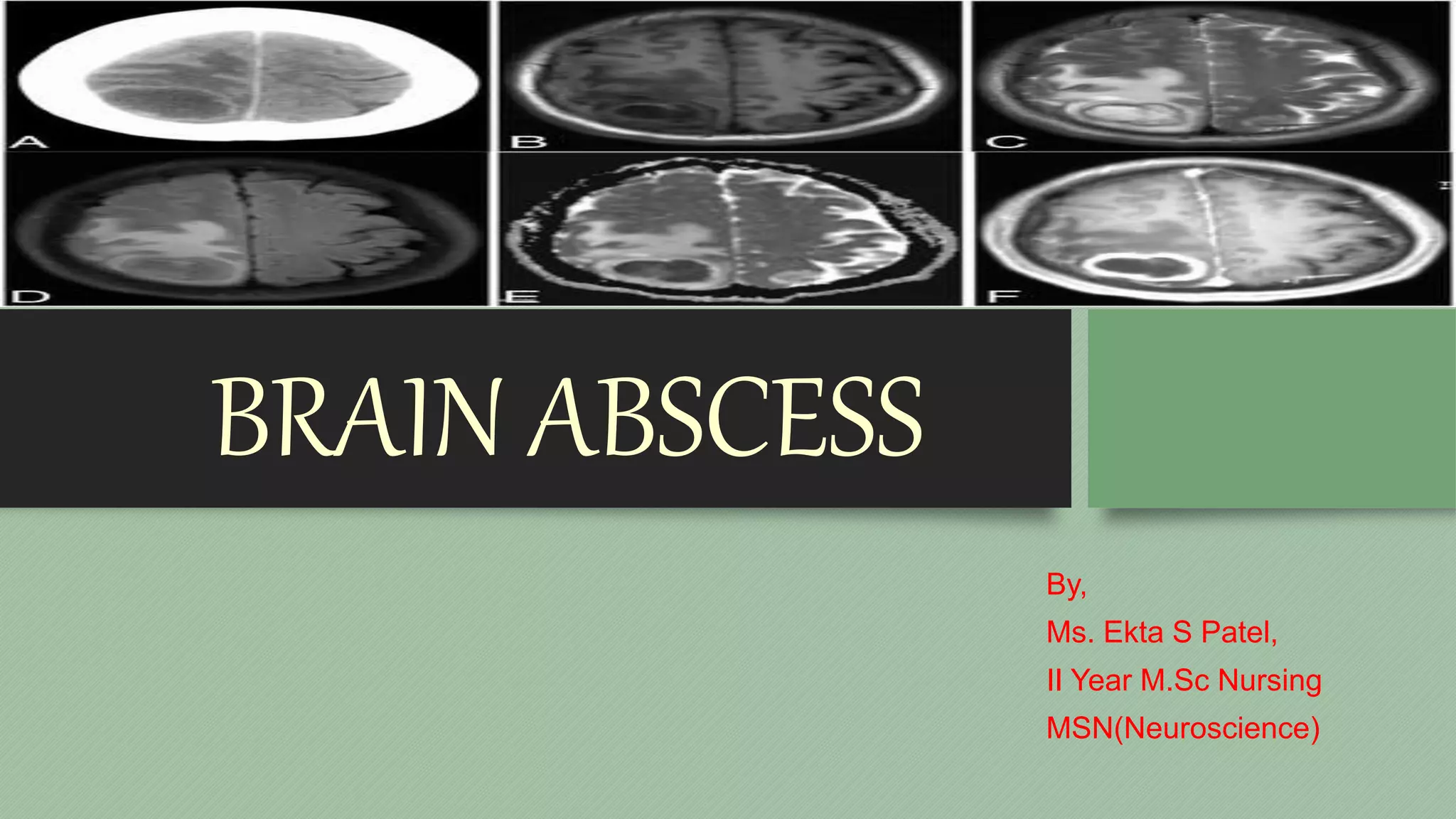
BRAIN ABSCESS
By,
Ms. Ekta S Patel,
II Year M.Sc Nursing
MSN(Neuroscience)
Introduction:
• A brain abscess is a collection of
pus enclosed in the brain tissue,
caused by a bacterial or fungal
infection.
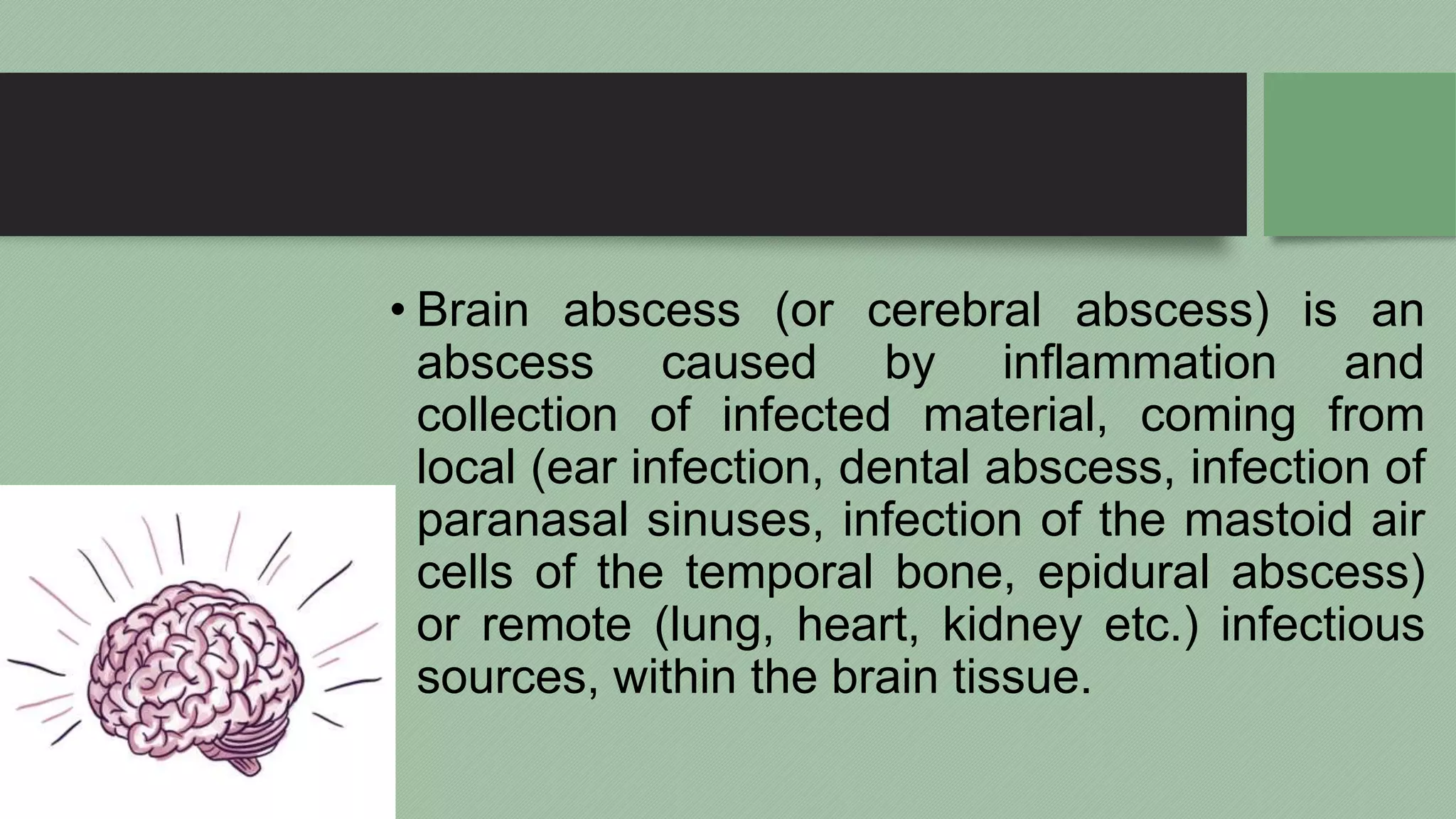
• Brain abscess (or cerebral abscess) is an
abscess caused by inflammation and
collection of infected material, coming from
local (ear infection, dental abscess, infection of
paranasal sinuses, infection of the mastoid air
cells of the temporal bone, epidural abscess)
or remote (lung, heart, kidney etc.) infectious
sources, within the brain tissue.
• The infection may also be introduced
through a skull fracture following a head
trauma or surgical procedures.
• Brain abscess is usually associated with
congenital heart disease in young
children. It may occur at any age but is
most frequent in the third decade of life.
Definition:
• Brain abscess is defined as
purulence and inflammation in
one or more localized regions
within the brain parenchyma.
Causes and risk factors:
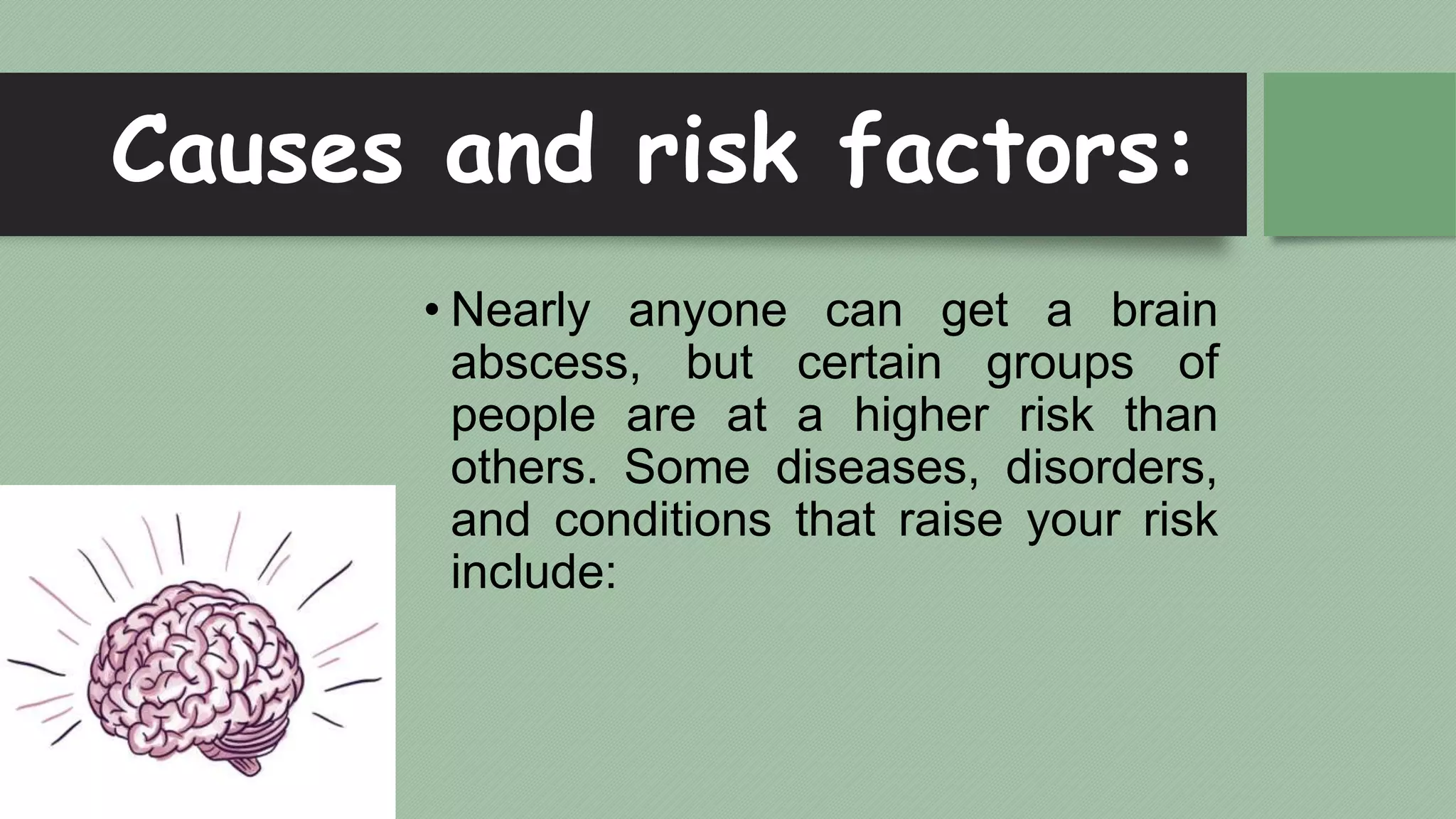
• Nearly anyone can get a brain
abscess, but certain groups of
people are at a higher risk than
others. Some diseases, disorders,
and conditions that raise your risk
include:
• A compromised immune system
due to HIV or AIDS
• Cancer and other chronic illnesses
• Congenital heart disease
• Major head injury or skull fracture
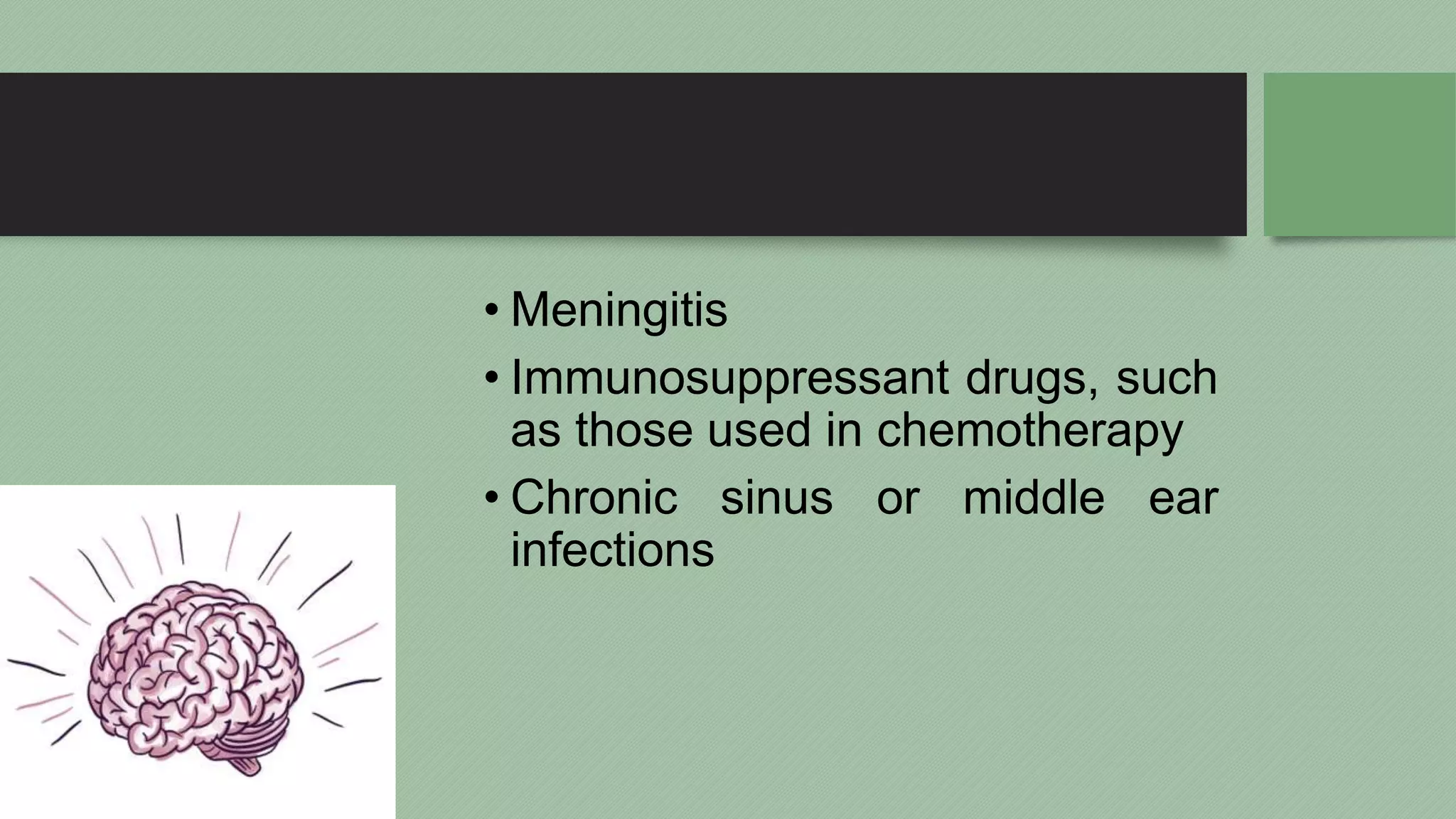
• Meningitis
• Immunosuppressant drugs, such
as those used in chemotherapy
• Chronic sinus or middle ear
infections
Sign and symptoms
• Symptoms may develop slowly,
over a period of 2 weeks, or
they may develop suddenly.
They may include:
1. Changes in mental status
• Confusion
• Decreasing
responsiveness
• Drowsiness
• Eventual coma
• Inattention
• Irritability
• Slow thought processes
2. Decreased movement
3. Decreased sensation
4. Decreased speech
(aphasia)
5. Fever and chills
6. Headache
7. Language difficulties
8. Loss of coordination
9. Loss of muscle function,
typically on one side
10. Seizures
11. Stiff neck
12. Vision changes
13. Vomiting
Diagnostic evaluation:
• A brain and nervous system
(neurological) exam will usually
show signs of increased
intracranial pressure and
problems with brain function.
• Tests to diagnose a brain abscess
may include:
• Blood cultures
• Chest x-ray
• Complete blood count (CBC)
• Head CT scan
• Electroencephalogram (EEG)
• MRI of head
• Testing for the presence of antibodies to
organisms such as Toxoplasma gondii
and Taenia solium
• A needle biopsy is usually
performed to identify the
cause of the infection.
Treatment:
• A brain abscess is a medical
emergency. Pressure inside
the skull may become high
enough to be life threatening.
Patient need to stay in the
hospital until the condition is
stable. Some people may need
life support.
Medication, not surgery, is
recommended if patient have:
• Several abscesses (rare)
• A small abscess (less than 2 cm)
• An abscess deep in the brain
• An abscess and meningitis
• Shunts in the brain for hydrocephalus (in some
cases the shunt may need to be removed
temporarily or replaced)
• Toxoplasma gondii
infection in a person with
HIV
• Antibiotics will be prescribed.
Antibiotics that work against a
number of different bacteria (broad
spectrum antibiotics) are most
commonly used.
• Antifungal medications may also
be prescribed if the infection is
likely caused by a fungus.
• Immediate treatment may be
needed if an abscess is injuring
brain tissue by pressing on it, or
there is a large abscess with a
large amount of swelling around
that it is raising pressure in the
brain.
Surgery is needed if:
• Increased pressure in the brain continues
or gets worse
• The brain abscess does not get smaller
after medication
• The brain abscess contains gas (produced
by some types of bacteria)
• The brain abscess might break open
(rupture)
• Surgery consists of opening the skull,
exposing the brain, and draining the
abscess. Laboratory tests are often
done to examine the fluid. This can
help identify what is causing the
infection, so that more appropriate
antibiotics or antifungal drugs can be
prescribed.
• The surgical procedure used
depends on the size and depth of
the abscess. The entire abscess
may be removed (excised) if it is
near the surface and enclosed in
a sac.
• Needle aspiration guided by CT or
MRI scan may be needed for a deep
abscess. During this procedure,
medications may be injected directly
into the mass.
• Certain diuretics and steroids may
also be used to reduce swelling of the
brain.
Prognosis:
• If untreated, a brain abscess is almost
always deadly. With treatment, the death
rate is about 10 - 30%. The earlier treatment
is received, the better.
• Some patients may have long-term
neurological problems after surgery.
Complications:
• Brain damage
• Meningitis that is severe and life
threatening
• Return (recurrence) of infection
• Seizures
Nursing Management & Interventions
• Nursing interventions
should support the medical
treatment, as do patient
teaching activities that
address neurosurgical
procedures.
• Patients and families need to
be advised of
neurologic deficits that may
remain after treatment
(hemiparesis,
seizures, visual deficits, and
cranial nerve palsies).
• Frequently assess neurologic status,
especially LOC, speech and
sensorimotor and cranial nerve
functions.
• WOF signs of increased ICP: decreased
LOC, vomiting, abnormal pupil response
and depressed respirations.
• The nurse assesses the family’s
ability to express their distress at
the patient’s condition, cope with
the patient’s illness and deficits,
and obtain support.
• Always provide safety measures.

Brain abscess

  • 1.
    BRAIN ABSCESS By, Ms. EktaS Patel, II Year M.Sc Nursing MSN(Neuroscience)
  • 2.
    Introduction: • A brainabscess is a collection of pus enclosed in the brain tissue, caused by a bacterial or fungal infection.
  • 3.
    • Brain abscess(or cerebral abscess) is an abscess caused by inflammation and collection of infected material, coming from local (ear infection, dental abscess, infection of paranasal sinuses, infection of the mastoid air cells of the temporal bone, epidural abscess) or remote (lung, heart, kidney etc.) infectious sources, within the brain tissue.
  • 4.
    • The infectionmay also be introduced through a skull fracture following a head trauma or surgical procedures. • Brain abscess is usually associated with congenital heart disease in young children. It may occur at any age but is most frequent in the third decade of life.
  • 5.
    Definition: • Brain abscessis defined as purulence and inflammation in one or more localized regions within the brain parenchyma.
  • 6.
    Causes and riskfactors: • Nearly anyone can get a brain abscess, but certain groups of people are at a higher risk than others. Some diseases, disorders, and conditions that raise your risk include:
  • 7.
    • A compromisedimmune system due to HIV or AIDS • Cancer and other chronic illnesses • Congenital heart disease • Major head injury or skull fracture
  • 8.
    • Meningitis • Immunosuppressantdrugs, such as those used in chemotherapy • Chronic sinus or middle ear infections
  • 9.
    Sign and symptoms •Symptoms may develop slowly, over a period of 2 weeks, or they may develop suddenly. They may include:
  • 10.
    1. Changes inmental status • Confusion
  • 11.
  • 12.
  • 13.
  • 14.
  • 15.
  • 16.
  • 17.
    2. Decreased movement 3.Decreased sensation 4. Decreased speech (aphasia) 5. Fever and chills 6. Headache
  • 18.
    7. Language difficulties 8.Loss of coordination 9. Loss of muscle function, typically on one side 10. Seizures 11. Stiff neck 12. Vision changes 13. Vomiting
  • 19.
    Diagnostic evaluation: • Abrain and nervous system (neurological) exam will usually show signs of increased intracranial pressure and problems with brain function. • Tests to diagnose a brain abscess may include: • Blood cultures
  • 20.
    • Chest x-ray •Complete blood count (CBC) • Head CT scan • Electroencephalogram (EEG) • MRI of head • Testing for the presence of antibodies to organisms such as Toxoplasma gondii and Taenia solium
  • 21.
    • A needlebiopsy is usually performed to identify the cause of the infection.
  • 22.
    Treatment: • A brainabscess is a medical emergency. Pressure inside the skull may become high enough to be life threatening. Patient need to stay in the hospital until the condition is stable. Some people may need life support.
  • 23.
    Medication, not surgery,is recommended if patient have: • Several abscesses (rare) • A small abscess (less than 2 cm) • An abscess deep in the brain • An abscess and meningitis • Shunts in the brain for hydrocephalus (in some cases the shunt may need to be removed temporarily or replaced)
  • 24.
    • Toxoplasma gondii infectionin a person with HIV
  • 25.
    • Antibiotics willbe prescribed. Antibiotics that work against a number of different bacteria (broad spectrum antibiotics) are most commonly used.
  • 26.
    • Antifungal medicationsmay also be prescribed if the infection is likely caused by a fungus. • Immediate treatment may be needed if an abscess is injuring brain tissue by pressing on it, or there is a large abscess with a large amount of swelling around that it is raising pressure in the brain.
  • 27.
    Surgery is neededif: • Increased pressure in the brain continues or gets worse • The brain abscess does not get smaller after medication • The brain abscess contains gas (produced by some types of bacteria) • The brain abscess might break open (rupture)
  • 28.
    • Surgery consistsof opening the skull, exposing the brain, and draining the abscess. Laboratory tests are often done to examine the fluid. This can help identify what is causing the infection, so that more appropriate antibiotics or antifungal drugs can be prescribed.
  • 29.
    • The surgicalprocedure used depends on the size and depth of the abscess. The entire abscess may be removed (excised) if it is near the surface and enclosed in a sac.
  • 30.
    • Needle aspirationguided by CT or MRI scan may be needed for a deep abscess. During this procedure, medications may be injected directly into the mass. • Certain diuretics and steroids may also be used to reduce swelling of the brain.
  • 31.
    Prognosis: • If untreated,a brain abscess is almost always deadly. With treatment, the death rate is about 10 - 30%. The earlier treatment is received, the better. • Some patients may have long-term neurological problems after surgery.
  • 32.
    Complications: • Brain damage •Meningitis that is severe and life threatening • Return (recurrence) of infection • Seizures
  • 33.
    Nursing Management &Interventions • Nursing interventions should support the medical treatment, as do patient teaching activities that address neurosurgical procedures.
  • 34.
    • Patients andfamilies need to be advised of neurologic deficits that may remain after treatment (hemiparesis, seizures, visual deficits, and cranial nerve palsies).
  • 35.
    • Frequently assessneurologic status, especially LOC, speech and sensorimotor and cranial nerve functions. • WOF signs of increased ICP: decreased LOC, vomiting, abnormal pupil response and depressed respirations.
  • 36.
    • The nurseassesses the family’s ability to express their distress at the patient’s condition, cope with the patient’s illness and deficits, and obtain support. • Always provide safety measures.