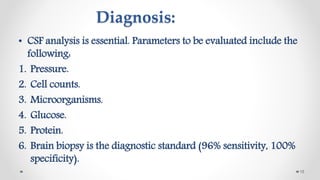
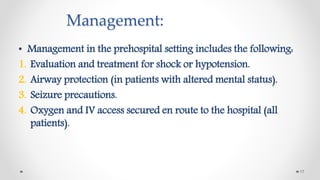
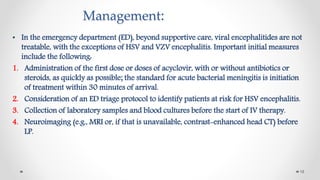
1. Encephalitis is an inflammation of the brain parenchyma that presents as diffuse or focal neurological dysfunction. It is usually caused by a viral infection, though bacteria, fungi, and other causes can also produce encephalitis.
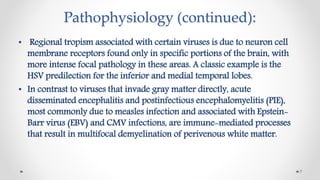
2. Common viruses that cause encephalitis include herpes simplex virus, varicella zoster virus, mumps virus, measles virus, and West Nile virus. The virus enters the brain either through bloodstream spread or travel along neural pathways.
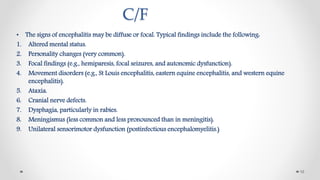
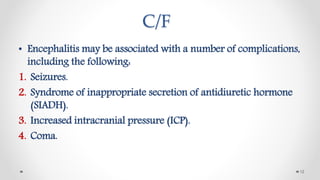
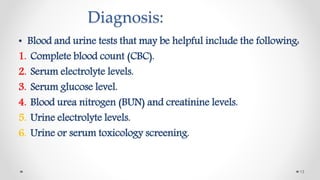
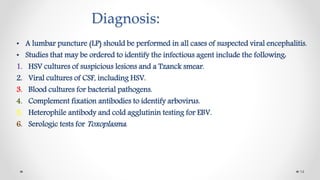
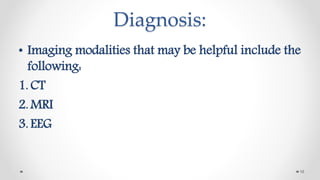
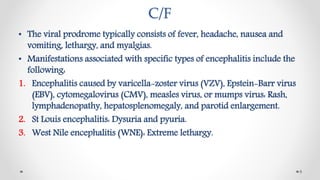
3. Symptoms of encephalitis include altered mental status, personality changes, seizures, focal neurological deficits, and headache. Diagnosis involves blood and CSF tests to identify infectious agents and brain imaging to examine abnormalities


![C/F
• The classic presentation is encephalopathy with diffuse or focal neurologic
symptoms, including the following:
1. Behavioral and personality changes, with decreased level of consciousness.
2. Neck pain, stiffness.
3. Photophobia.
4. Lethargy.
5. Generalized or focal seizures (60% of children with California virus encephalitis
[CE]).
6. Acute confusion or amnestic states.
7. Flaccid paralysis (10% of patients with WNE).
9](https://image.slidesharecdn.com/encephalitis1-210703093909/85/Encephalitis-9-320.jpg)