


Employee Training & DevelopmentRVSIMSR 26 March 2010
Today’s Agenda Importance of TrainingWho Will Do the TrainingHow Employees Learn BestDeveloping a Job Training ProgramRetrainingOrientation
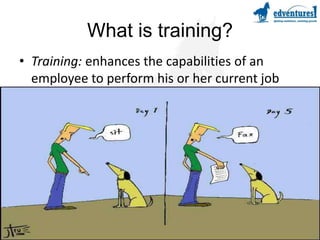
What is training?Training: enhances the capabilities of an employee to perform his or her current jobFocuses on the current jobExamples for a bank teller: Training program to correctly identify counterfeit currencyTraining program in the bank’s new computer system used by tellers to process customer’s transactions
What is development?Development: enhances the capabilities of an employee to be ready to perform possible future jobs
Focuses on future jobs
Developmental education programs
Examples for a bank teller:
Bank sends the teller to a day-long workshop on “Emerging Issues in Finance & Banking”
Bank pays for the employee to get his or her MBA degree
Developmental job experiences
Examples: job rotation or job enlargement
Developmental interpersonal relationships
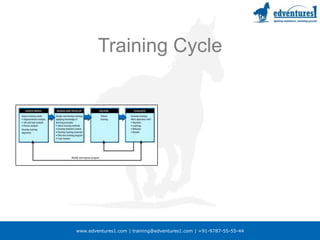
Example: mentoringTraining Cycle
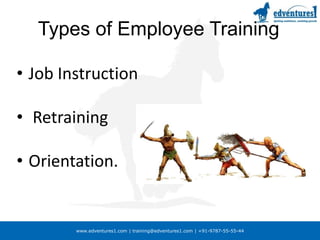
Types of Employee TrainingJob Instruction RetrainingOrientation.
Types of TrainingThe big sister, big brother, orbuddy system is when a old hand shows a newcomer the ropes.When good training is absent there is likely to be an atmosphere of tension, crisis, and conflict because nobody knows what to do.
The Benefits of Training: SupervisorGives the more time to manageStandardized performanceLess absenteeismLess turnoverReduced tensionConsistencyLower costsMore customersBetter service
The Benefits of Training: WorkersGives the confidence to do their jobsReduces tensionBoost morale and job satisfactionReduces injuries and accidentsGives them a chance to advance.
Then why is training often neglected?Urgency of needTraining timeCostsEmployee turnoverShort-term workerDiversity of workerKinds of jobs (simple-complex)Not knowing exactly what you want your people to do and how
Who will do the Training?The magic apron method: people train themselves the easiest ways to get the job done, and what will keep them from getting into trouble.The person that is leaving trains: teaches shortcuts and ways of breaking the rules.Big sister, big brother, or buddy method: passes on bad habits and may resent new person as a competitor.The logical person to train new workers is YOURSEF!
How do Employees Learn the Best?Learning is the acquisition of skills, knowledge, or attitudes.
How employees learn the best:When they are actively involved in the learning process-(to do this choose a appropriate teaching method).Training is relevant and practical.Training material is organized and presented in chunks.Training is in an informal, quiet, and comfortable setting.When they have a good trainer.When they receive feedback on performance.When they are rewarded.
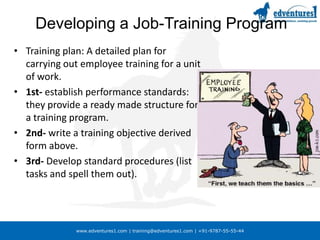
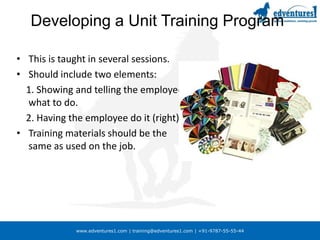
Developing a Job-Training ProgramTraining plan: A detailed plan for carrying out employee training for a unit of work.1st- establish performance standards: they provide a ready made structure for a training program. 2nd- write a training objective derived form above.3rd- Develop standard procedures (list tasks and spell them out).

Employee training development

  • 1.
    Employee Training &DevelopmentRVSIMSR 26 March 2010
  • 2.
    Today’s Agenda Importanceof TrainingWho Will Do the TrainingHow Employees Learn BestDeveloping a Job Training ProgramRetrainingOrientation
  • 3.
    What is training?Training:enhances the capabilities of an employee to perform his or her current jobFocuses on the current jobExamples for a bank teller: Training program to correctly identify counterfeit currencyTraining program in the bank’s new computer system used by tellers to process customer’s transactions
  • 4.
    What is development?Development:enhances the capabilities of an employee to be ready to perform possible future jobs
  • 5.
  • 6.
  • 7.
    Examples for abank teller:
  • 8.
    Bank sends theteller to a day-long workshop on “Emerging Issues in Finance & Banking”
  • 9.
    Bank pays forthe employee to get his or her MBA degree
  • 10.
  • 11.
    Examples: job rotationor job enlargement
  • 12.
  • 13.
  • 14.
    Types of EmployeeTrainingJob Instruction RetrainingOrientation.
  • 15.
    Types of TrainingThebig sister, big brother, orbuddy system is when a old hand shows a newcomer the ropes.When good training is absent there is likely to be an atmosphere of tension, crisis, and conflict because nobody knows what to do.
  • 16.
    The Benefits ofTraining: SupervisorGives the more time to manageStandardized performanceLess absenteeismLess turnoverReduced tensionConsistencyLower costsMore customersBetter service
  • 17.
    The Benefits ofTraining: WorkersGives the confidence to do their jobsReduces tensionBoost morale and job satisfactionReduces injuries and accidentsGives them a chance to advance.
  • 18.
    Then why istraining often neglected?Urgency of needTraining timeCostsEmployee turnoverShort-term workerDiversity of workerKinds of jobs (simple-complex)Not knowing exactly what you want your people to do and how
  • 19.
    Who will dothe Training?The magic apron method: people train themselves the easiest ways to get the job done, and what will keep them from getting into trouble.The person that is leaving trains: teaches shortcuts and ways of breaking the rules.Big sister, big brother, or buddy method: passes on bad habits and may resent new person as a competitor.The logical person to train new workers is YOURSEF!
  • 20.
    How do EmployeesLearn the Best?Learning is the acquisition of skills, knowledge, or attitudes.
  • 21.
    How employees learnthe best:When they are actively involved in the learning process-(to do this choose a appropriate teaching method).Training is relevant and practical.Training material is organized and presented in chunks.Training is in an informal, quiet, and comfortable setting.When they have a good trainer.When they receive feedback on performance.When they are rewarded.
  • 22.
    Developing a Job-TrainingProgramTraining plan: A detailed plan for carrying out employee training for a unit of work.1st- establish performance standards: they provide a ready made structure for a training program. 2nd- write a training objective derived form above.3rd- Develop standard procedures (list tasks and spell them out).