www.humanikaconsulting.com
1
2
Objectives
 Define training and development (T&D).
 Explain factors influencing T&D
 Describe the T&D process and how training
needs are determined and objectives
established.
 Identify the various T&D methods.
 Define orientation and identify its purposes.
3
Objectives
 Identify special training needs.
 Identify the means by which T&D programs are
implemented and evaluated
 Describe training partnerships that exist between
business, government, and education
 Distinguish between career and job security
 Explain career planning and development.
 Define organizational development (OD) and
describe various OD techniques
4
Training and
Development
(T&D)
 Human Resource Development – Major HRM
function consisting not only of T&D, but also
individual career planning and development
activities and performance appraisal
 Training and Development – Heart of a
continuous effort designed to improve
employee competency and organizational
performance 5
Training and Development (T&D)
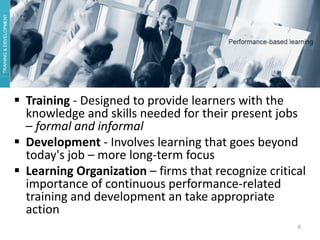
 Training - Designed to provide learners with the
knowledge and skills needed for their present jobs
– formal and informal
 Development - Involves learning that goes beyond
today's job – more long-term focus
 Learning Organization – firms that recognize critical
importance of continuous performance-related
training and development an take appropriate
action
6
Increasing a person education level increases
productivity
7
Factors Influencing T&D
 Top management
support
 Commitment from
specialists and
generalists
 Technological advances
 Organizational
complexity
 Learning style
8
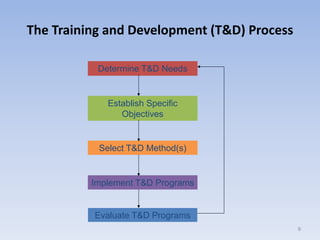
The Training and Development (T&D) Process
9
Determine T&D Needs
Establish Specific
Objectives
Select T&D Method(s)
Implement T&D Programs
Evaluate T&D Programs
In order to compete effectively, firms
must keep employees well trained. 10
Establishing Training and Development Objectives
 Desired end results
 Clear and concise objectives must be formulated
11
T&D Methods
 Classroom Programs
 Mentoring
 Coaching
 Role Playing
 Simulations
 Distance Learning and
Videoconferencing
 E-learning
 On-the-Job Training
 Job Rotation
 Internships
12
Classroom Programs
 Continue to be effective for many types of
employee training
 May incorporate some of other methods
13
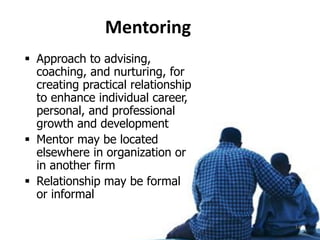
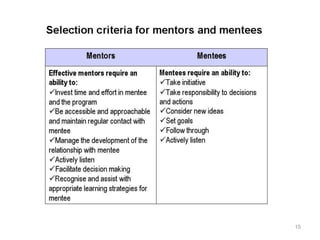
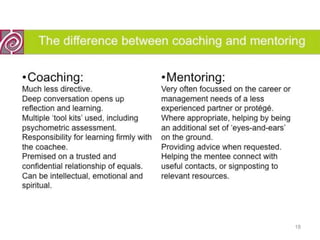
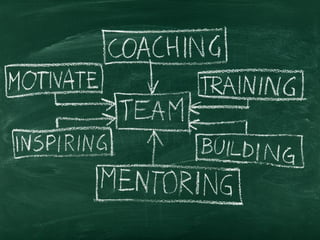
Mentoring
 Approach to advising,
coaching, and nurturing, for
creating practical relationship
to enhance individual career,
personal, and professional
growth and development
 Mentor may be located
elsewhere in organization or
in another firm
 Relationship may be formal
or informal
14
15
16
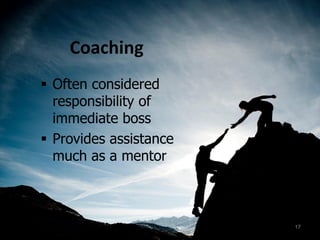
Coaching
 Often considered
responsibility of
immediate boss
 Provides assistance
much as a mentor
17
18
19
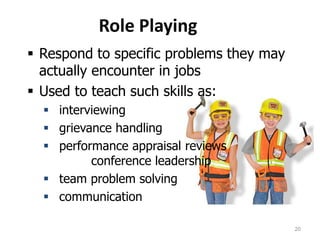
Role Playing
 Respond to specific problems they may
actually encounter in jobs
 Used to teach such skills as:
 interviewing
 grievance handling
 performance appraisal reviews
conference leadership
 team problem solving
 communication
20
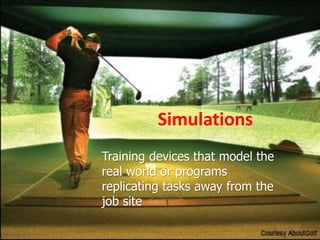
Simulations
Training devices that model the
real world or programs
replicating tasks away from the
job site
21
Distance Learning and
Videoconferencing
 Interactive training
 Used to:
increase access to
training ensure
consistency of instruction
reduce cost of delivering
T&D programs
22
E-Learning
Umbrella term
describing online
instruction
23
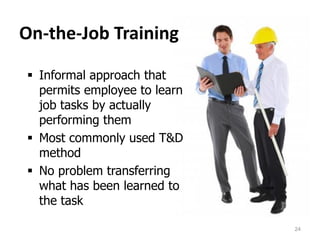
On-the-Job Training
 Informal approach that
permits employee to learn
job tasks by actually
performing them
 Most commonly used T&D
method
 No problem transferring
what has been learned to
the task
24
Job Rotation
 Employees move
from one job to
another to broaden
experience
 Helps new employees
understand variety of
jobs
25
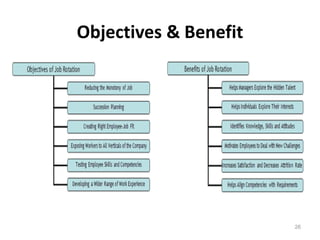
Objectives & Benefit
26
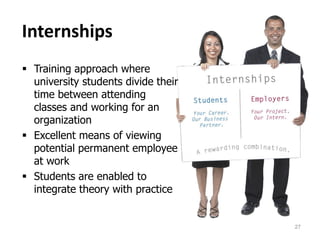
Internships
 Training approach where
university students divide their
time between attending
classes and working for an
organization
 Excellent means of viewing
potential permanent employee
at work
 Students are enabled to
integrate theory with practice
27
Management Development
 All learning experiences resulting in upgrading of skills
and knowledge needed in current and future managerial
positions
 Imperative managers keep up with latest developments
in their fields while managing ever-changing workforce in
a dynamic environment
 Requires personal commitment of individual manager
28
Reasons to Conduct Management Training
Outside of the Company
 An outside perspective
 New viewpoints
 Possibility of taking executives out of
work environment
 Exposure to faculty experts and
research
 Broader vision
29
Reasons to Conduct Management Training
Inside of the Company
 Training more specific to needs
 Lower costs
 Less time
 Consistent, relevant material
 More control of content and faculty
30
Orientation
 Initial T&D effort
designed for
employees
 Strives to inform
them about company,
job and workgroup
 On-boarding
31
Additional Benefits of Orientation
Effective in
retaining and
motivating
personnel
32
33
Implementing Human Resource
Development Programs
 Implies change
 Feel they are too busy to engage in T&D efforts
 Qualified trainers must be available
 Trainers must understand company objectives
34
Evaluating Human Resource
Development
 Ask participant’s opinions
 Determine extent of learning
 Will training change behavior?
 Have T&D objectives been accomplished?
 Benchmarking
 Evaluation difficult, but necessary
35
Organization Development
• Survey feedback process
• Quality circles
• Team building
• Sensitivity training
36
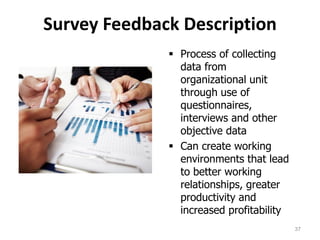
Survey Feedback Description
 Process of collecting
data from
organizational unit
through use of
questionnaires,
interviews and other
objective data
 Can create working
environments that lead
to better working
relationships, greater
productivity and
increased profitability
37
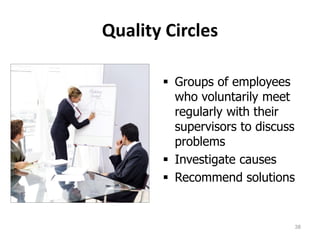
Quality Circles
 Groups of employees
who voluntarily meet
regularly with their
supervisors to discuss
problems
 Investigate causes
 Recommend solutions
38
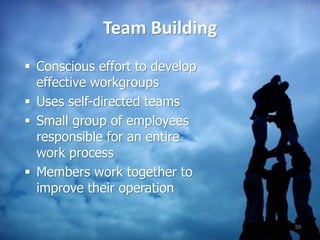
Team Building
 Conscious effort to develop
effective workgroups
 Uses self-directed teams
 Small group of employees
responsible for an entire
work process
 Members work together to
improve their operation
39
 Participants learn about themselves and how others perceive
them
 No agenda, leaders, authority, power positions
 People learn through dialogue
 Participants encouraged to learn about themselves and others in
group
 Also called T-group training 40
Learning and Sharing...
for Better 1ndONEsia

Training and Development

  • 1.
  • 2.
  • 3.
    Objectives  Define trainingand development (T&D).  Explain factors influencing T&D  Describe the T&D process and how training needs are determined and objectives established.  Identify the various T&D methods.  Define orientation and identify its purposes. 3
  • 4.
    Objectives  Identify specialtraining needs.  Identify the means by which T&D programs are implemented and evaluated  Describe training partnerships that exist between business, government, and education  Distinguish between career and job security  Explain career planning and development.  Define organizational development (OD) and describe various OD techniques 4
  • 5.
    Training and Development (T&D)  HumanResource Development – Major HRM function consisting not only of T&D, but also individual career planning and development activities and performance appraisal  Training and Development – Heart of a continuous effort designed to improve employee competency and organizational performance 5
  • 6.
    Training and Development(T&D)  Training - Designed to provide learners with the knowledge and skills needed for their present jobs – formal and informal  Development - Involves learning that goes beyond today's job – more long-term focus  Learning Organization – firms that recognize critical importance of continuous performance-related training and development an take appropriate action 6
  • 7.
    Increasing a personeducation level increases productivity 7
  • 8.
    Factors Influencing T&D Top management support  Commitment from specialists and generalists  Technological advances  Organizational complexity  Learning style 8
  • 9.
    The Training andDevelopment (T&D) Process 9 Determine T&D Needs Establish Specific Objectives Select T&D Method(s) Implement T&D Programs Evaluate T&D Programs
  • 10.
    In order tocompete effectively, firms must keep employees well trained. 10
  • 11.
    Establishing Training andDevelopment Objectives  Desired end results  Clear and concise objectives must be formulated 11
  • 12.
    T&D Methods  ClassroomPrograms  Mentoring  Coaching  Role Playing  Simulations  Distance Learning and Videoconferencing  E-learning  On-the-Job Training  Job Rotation  Internships 12
  • 13.
    Classroom Programs  Continueto be effective for many types of employee training  May incorporate some of other methods 13
  • 14.
    Mentoring  Approach toadvising, coaching, and nurturing, for creating practical relationship to enhance individual career, personal, and professional growth and development  Mentor may be located elsewhere in organization or in another firm  Relationship may be formal or informal 14
  • 15.
  • 16.
  • 17.
    Coaching  Often considered responsibilityof immediate boss  Provides assistance much as a mentor 17
  • 18.
  • 19.
  • 20.
    Role Playing  Respondto specific problems they may actually encounter in jobs  Used to teach such skills as:  interviewing  grievance handling  performance appraisal reviews conference leadership  team problem solving  communication 20
  • 21.
    Simulations Training devices thatmodel the real world or programs replicating tasks away from the job site 21
  • 22.
    Distance Learning and Videoconferencing Interactive training  Used to: increase access to training ensure consistency of instruction reduce cost of delivering T&D programs 22
  • 23.
  • 24.
    On-the-Job Training  Informalapproach that permits employee to learn job tasks by actually performing them  Most commonly used T&D method  No problem transferring what has been learned to the task 24
  • 25.
    Job Rotation  Employeesmove from one job to another to broaden experience  Helps new employees understand variety of jobs 25
  • 26.
  • 27.
    Internships  Training approachwhere university students divide their time between attending classes and working for an organization  Excellent means of viewing potential permanent employee at work  Students are enabled to integrate theory with practice 27
  • 28.
    Management Development  Alllearning experiences resulting in upgrading of skills and knowledge needed in current and future managerial positions  Imperative managers keep up with latest developments in their fields while managing ever-changing workforce in a dynamic environment  Requires personal commitment of individual manager 28
  • 29.
    Reasons to ConductManagement Training Outside of the Company  An outside perspective  New viewpoints  Possibility of taking executives out of work environment  Exposure to faculty experts and research  Broader vision 29
  • 30.
    Reasons to ConductManagement Training Inside of the Company  Training more specific to needs  Lower costs  Less time  Consistent, relevant material  More control of content and faculty 30
  • 31.
    Orientation  Initial T&Deffort designed for employees  Strives to inform them about company, job and workgroup  On-boarding 31
  • 32.
    Additional Benefits ofOrientation Effective in retaining and motivating personnel 32
  • 33.
  • 34.
    Implementing Human Resource DevelopmentPrograms  Implies change  Feel they are too busy to engage in T&D efforts  Qualified trainers must be available  Trainers must understand company objectives 34
  • 35.
    Evaluating Human Resource Development Ask participant’s opinions  Determine extent of learning  Will training change behavior?  Have T&D objectives been accomplished?  Benchmarking  Evaluation difficult, but necessary 35
  • 36.
    Organization Development • Surveyfeedback process • Quality circles • Team building • Sensitivity training 36
  • 37.
    Survey Feedback Description Process of collecting data from organizational unit through use of questionnaires, interviews and other objective data  Can create working environments that lead to better working relationships, greater productivity and increased profitability 37
  • 38.
    Quality Circles  Groupsof employees who voluntarily meet regularly with their supervisors to discuss problems  Investigate causes  Recommend solutions 38
  • 39.
    Team Building  Consciouseffort to develop effective workgroups  Uses self-directed teams  Small group of employees responsible for an entire work process  Members work together to improve their operation 39
  • 40.
     Participants learnabout themselves and how others perceive them  No agenda, leaders, authority, power positions  People learn through dialogue  Participants encouraged to learn about themselves and others in group  Also called T-group training 40
  • 41.