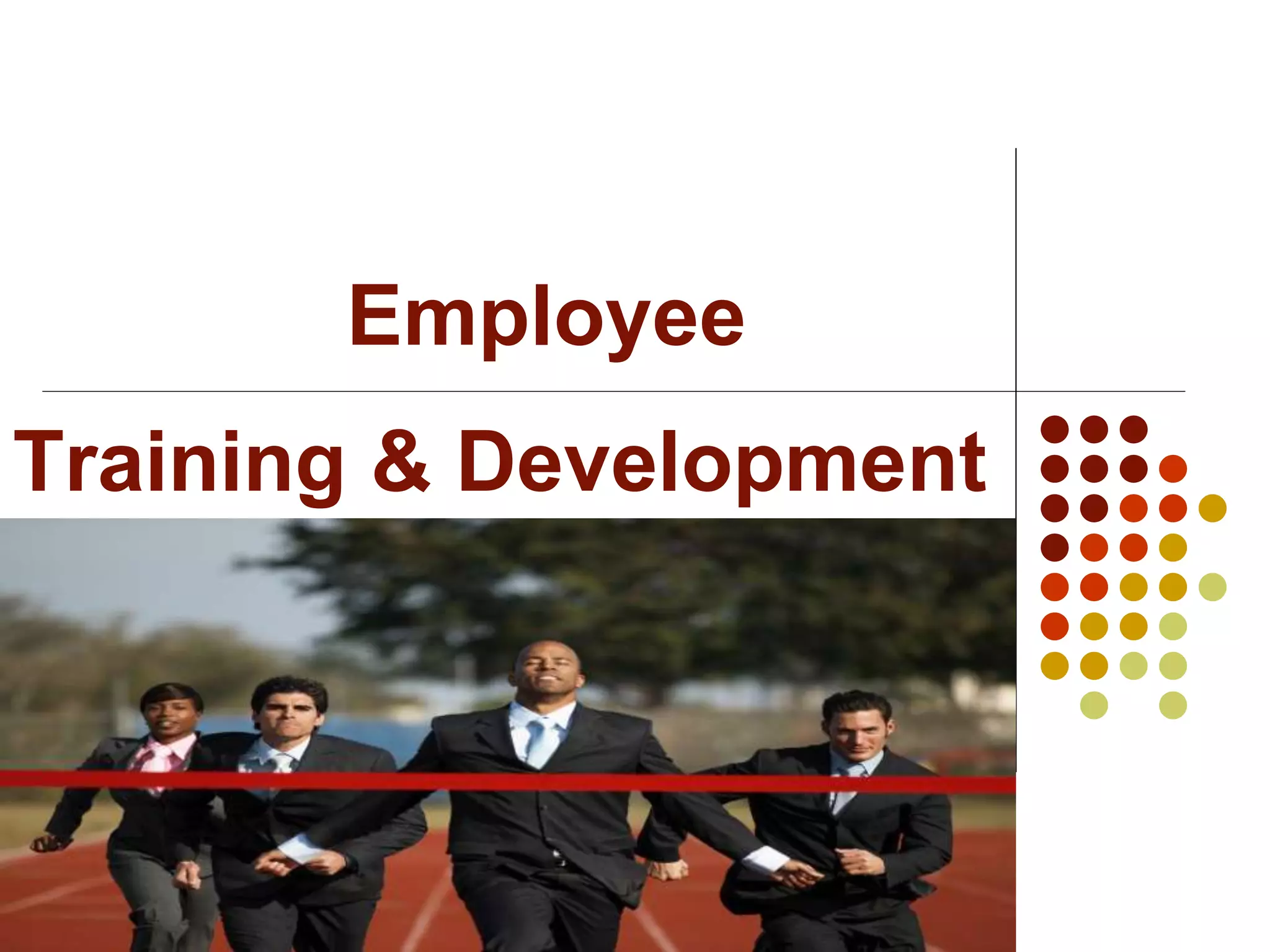
Employee
Training & Development
Why training & development?
Key challenges for organizations:
 Compete
 Improve quality & customer service
 Cost reduction
 Enhance productivity
 Adaptation to technology
Training vs Development
 Job related abilities,
application driven and
help improve
performance on
currently held job
 Immediately useful
 Short term periodic
process
 Help person to grow
and enhance future
responsibilities and
performance
 Individual, job and
career enhancement
 Long term ongoing
process
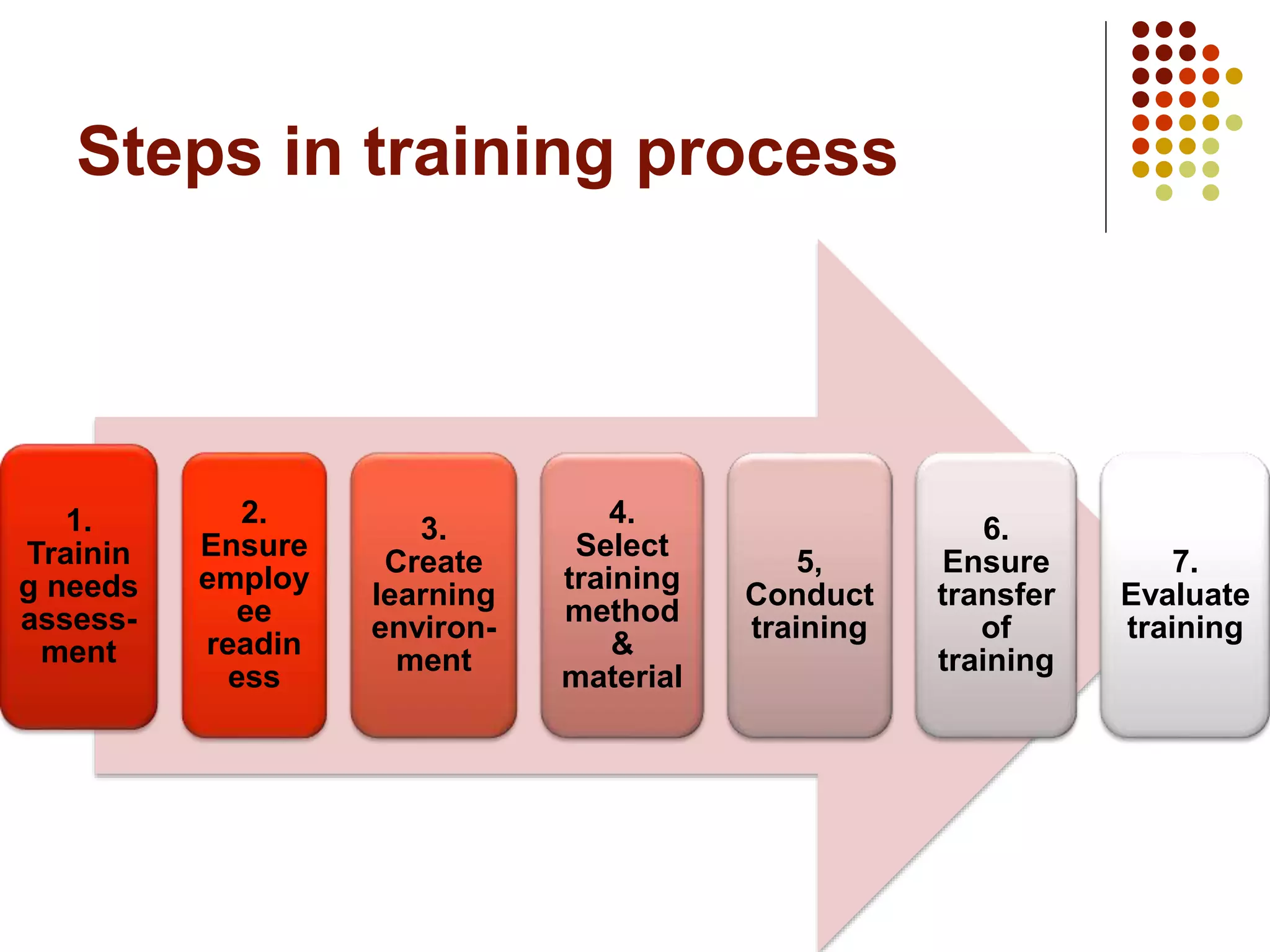
Steps in training process
1.
Trainin
g needs
assess-
ment
2.
Ensure
employ
ee
readin
ess
3.
Create
learning
environ-
ment
4.
Select
training
method
&
material
5,
Conduct
training
6.
Ensure
transfer
of
training
7.
Evaluate
training
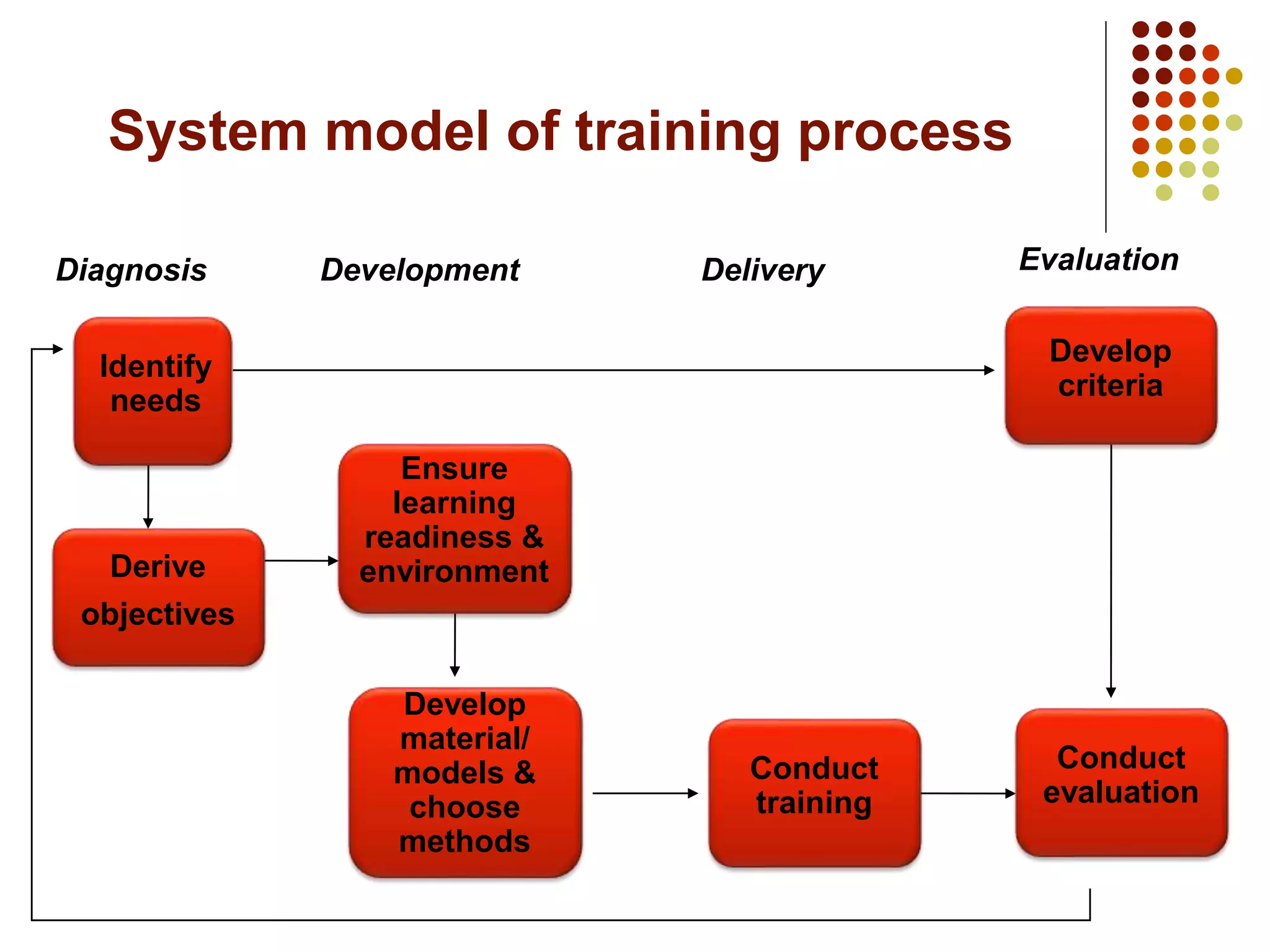
System model of training process
Diagnosis Development Delivery Evaluation
Identify
needs
Ensure
learning
readiness &
environment
Develop
material/
models &
choose
methods
Conduct
evaluation
Conduct
training
Develop
criteria
Derive
objectives
1. Training needs assessment
 Determine required training
 New employees
 Current employees
 Organization Analysis
 Job/ Task Analysis
 Individual/ Person Analysis
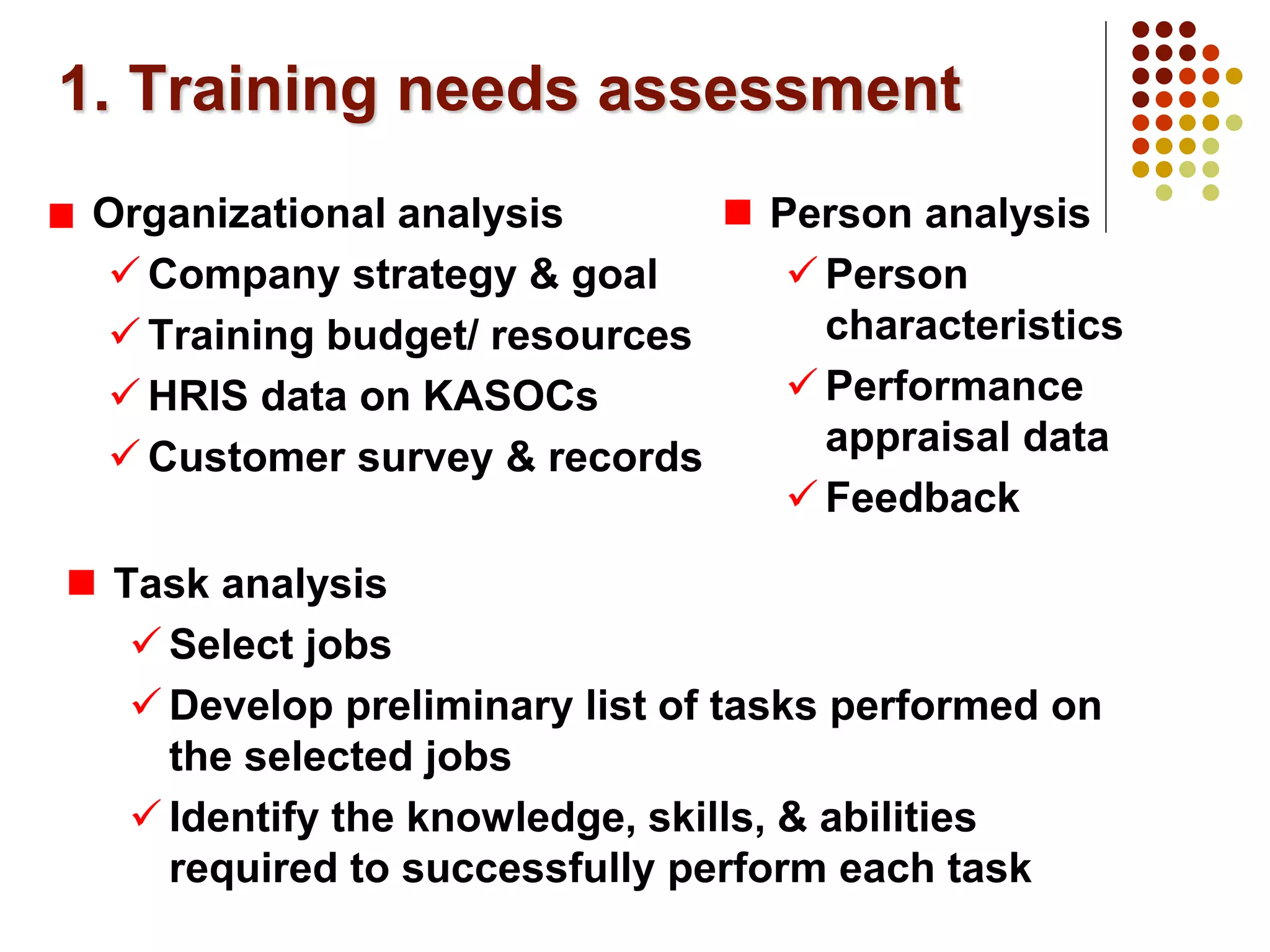
1. Training needs assessment
Organizational analysis
 Company strategy & goal
 Training budget/ resources
 HRIS data on KASOCs
 Customer survey & records
 Person analysis
 Person
characteristics
 Performance
appraisal data
 Feedback
 Task analysis
 Select jobs
 Develop preliminary list of tasks performed on
the selected jobs
 Identify the knowledge, skills, & abilities
required to successfully perform each task
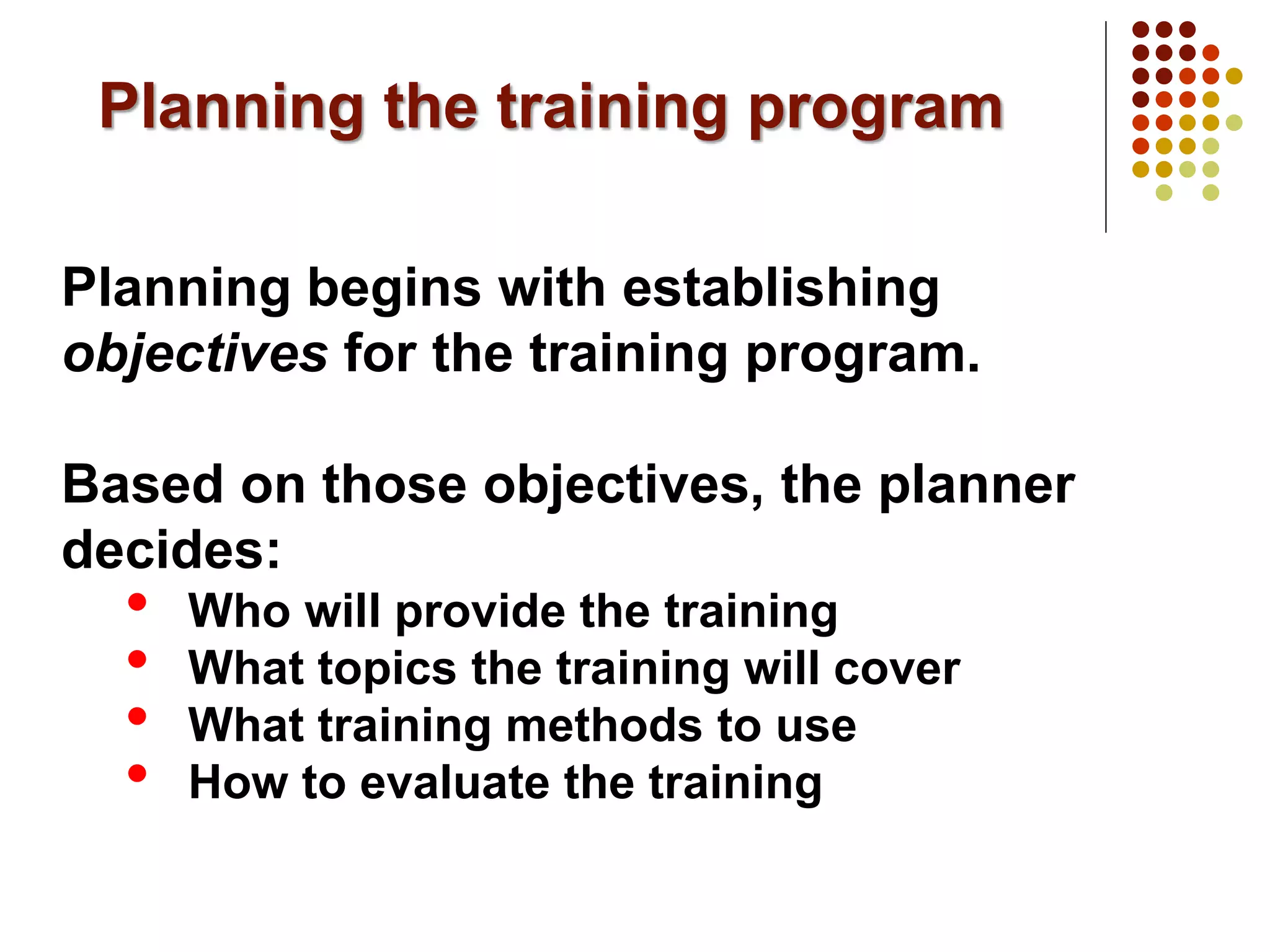
Planning the training program
Planning begins with establishing
objectives for the training program.
Based on those objectives, the planner
decides:
• Who will provide the training
• What topics the training will cover
• What training methods to use
• How to evaluate the training
9
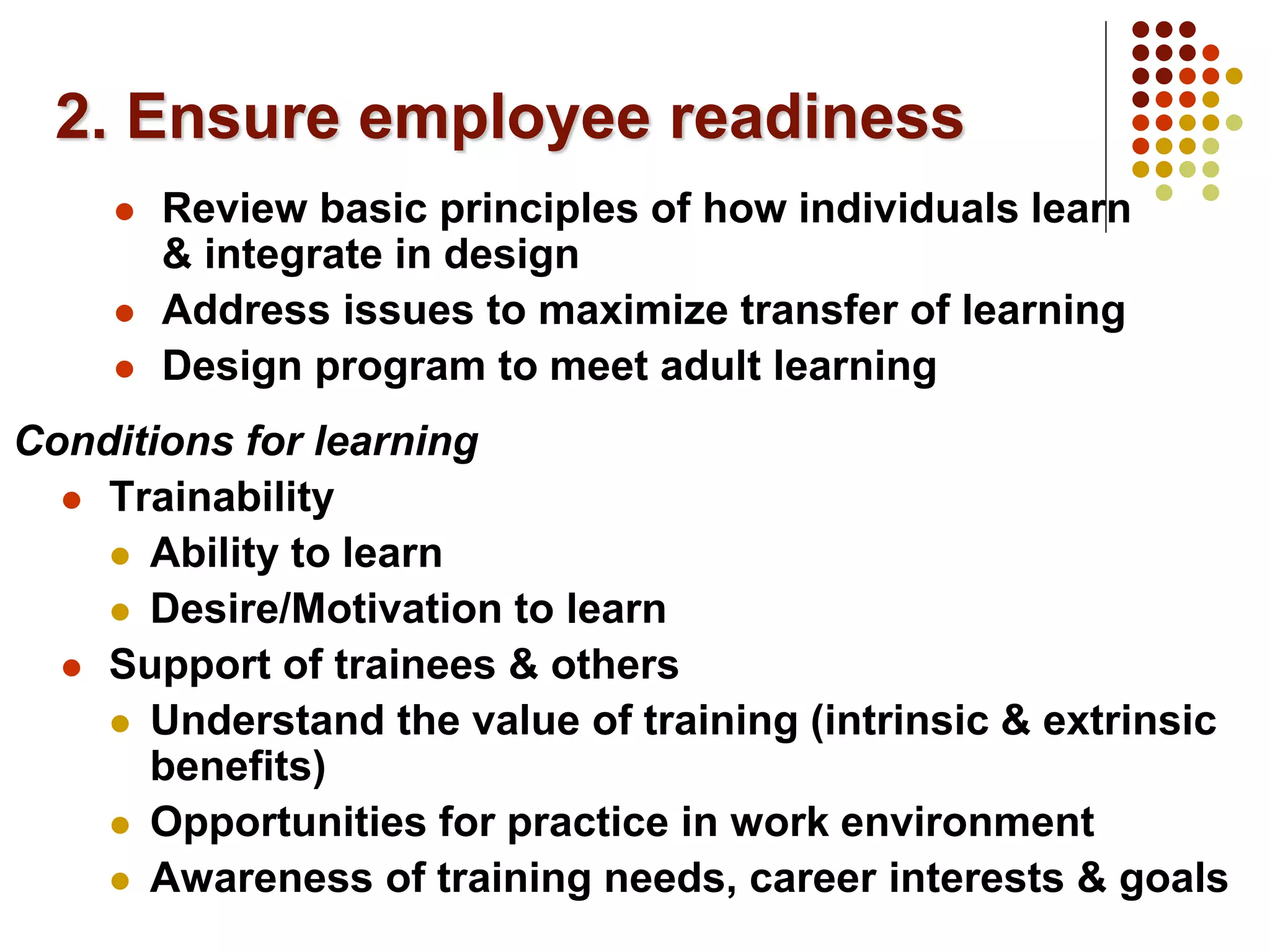
2. Ensure employee readiness
Conditions for learning
 Trainability
 Ability to learn
 Desire/Motivation to learn
 Support of trainees & others
 Understand the value of training (intrinsic & extrinsic
benefits)
 Opportunities for practice in work environment
 Awareness of training needs, career interests & goals
 Review basic principles of how individuals learn
& integrate in design
 Address issues to maximize transfer of learning
 Design program to meet adult learning
3. Create learning environment
Conditions for learning environment
 Whole vs Part learning
 Break down complex task
 Combine part learning with whole learning
 Massed vs Spaced practice
 Provide feedback to correct mistakes
 Over-learning
 Increases retention & makes behavior & skills
more automatic
Learning requires effective practice sessions
 Provide sufficient practice time
 Distribute practice sessions over multiple days
 Allow time for overlearning
4. Training methods
Two categories
1. Informational
 Transmittal in nature
 Uses one way communication
2. Experiential
 Interactional in nature
 Uses two way communication
5. Conduct training
Types of training
 Threshold/ Orientation training
 Continuing or Refresher training
 Remedial training
 Upgrading training
 Retraining
 Cross training/ upscaling training
 Re-entry training
6. Ensure transfer of learning
• On-the-job use of knowledge, skills, and
behaviors learned in training
• Consider climate for transfer situations before,
during and after training
Can be measured by asking employees three
questions about specific training tasks:
1. Do you perform the task?
2. How many times do you perform the task?
3. To what extent do you perform difficult and
challenging learned tasks?
 Measuring individual and group
performance
 Plenty of methods to evaluate
 Costly to measure
7. Evaluation of training
Why bother with training evaluation?
 Training evaluation enables you to
identify ways in which you can improve
your training.
 Training evaluation enables you to
determine that your training is aligned
with business objectives.
 Training evaluation enables you to
demonstrate the value that training is
adding to the companies bottom line etc.
Kirkpatrick’s four levels
Reaction
Learning
Behaviour
Results
4. Training methods
1. Informational
 Lecture
 Audio Visual
 Self directed learning
 Independent study
 eLearning
2. Experiential
 On the job training (OJT)
 Coaching, mentoring, job rotation, apprenticeship
 Computer based training (CBT)
 Distance learning program
Lectures
Traditional Technique
Introductory materials on new knowledge, ideas or an ice breaker
Method is combined with audio visual, group discussions for
more effective and interesting.
Low cost
Limitations: passive, depends on trainer’s ability to make session
interesting.
Audio visuals
Effective mean of conducting training
Boost moral
Slides, movies, video clips, teletraining, video conferencing.
Lots of training program with geographical dispersed population
Allows for replay and lots of versatility in training.
Independent Studies
 Not applicable for all jobs
 Trainee are free to complete their job at their
own pace
 More research and more education based
facilities i.e. Library, departments have to be
build.
 Limitation: Though no continual evaluation by
training i.e. More prone to demoralized.
OJT: Coaching & Mentoring
OJT: Apprenticeship
OJT: Job Rotation
TELLER
DEPARTMENT
TREASURY
DEPARTMENT
CUSTOMER
SERVICE
DEPARTMENT
CREDIT
DEPARTMENT

Employee Training & development

  • 1.
  • 2.
    Why training &development? Key challenges for organizations:  Compete  Improve quality & customer service  Cost reduction  Enhance productivity  Adaptation to technology
  • 3.
    Training vs Development Job related abilities, application driven and help improve performance on currently held job  Immediately useful  Short term periodic process  Help person to grow and enhance future responsibilities and performance  Individual, job and career enhancement  Long term ongoing process
  • 4.
    Steps in trainingprocess 1. Trainin g needs assess- ment 2. Ensure employ ee readin ess 3. Create learning environ- ment 4. Select training method & material 5, Conduct training 6. Ensure transfer of training 7. Evaluate training
  • 5.
    System model oftraining process Diagnosis Development Delivery Evaluation Identify needs Ensure learning readiness & environment Develop material/ models & choose methods Conduct evaluation Conduct training Develop criteria Derive objectives
  • 6.
    1. Training needsassessment  Determine required training  New employees  Current employees  Organization Analysis  Job/ Task Analysis  Individual/ Person Analysis
  • 7.
    1. Training needsassessment Organizational analysis  Company strategy & goal  Training budget/ resources  HRIS data on KASOCs  Customer survey & records  Person analysis  Person characteristics  Performance appraisal data  Feedback  Task analysis  Select jobs  Develop preliminary list of tasks performed on the selected jobs  Identify the knowledge, skills, & abilities required to successfully perform each task
  • 8.
    Planning the trainingprogram Planning begins with establishing objectives for the training program. Based on those objectives, the planner decides: • Who will provide the training • What topics the training will cover • What training methods to use • How to evaluate the training
  • 9.
    9 2. Ensure employeereadiness Conditions for learning  Trainability  Ability to learn  Desire/Motivation to learn  Support of trainees & others  Understand the value of training (intrinsic & extrinsic benefits)  Opportunities for practice in work environment  Awareness of training needs, career interests & goals  Review basic principles of how individuals learn & integrate in design  Address issues to maximize transfer of learning  Design program to meet adult learning
  • 10.
    3. Create learningenvironment Conditions for learning environment  Whole vs Part learning  Break down complex task  Combine part learning with whole learning  Massed vs Spaced practice  Provide feedback to correct mistakes  Over-learning  Increases retention & makes behavior & skills more automatic Learning requires effective practice sessions  Provide sufficient practice time  Distribute practice sessions over multiple days  Allow time for overlearning
  • 11.
    4. Training methods Twocategories 1. Informational  Transmittal in nature  Uses one way communication 2. Experiential  Interactional in nature  Uses two way communication
  • 12.
    5. Conduct training Typesof training  Threshold/ Orientation training  Continuing or Refresher training  Remedial training  Upgrading training  Retraining  Cross training/ upscaling training  Re-entry training
  • 13.
    6. Ensure transferof learning • On-the-job use of knowledge, skills, and behaviors learned in training • Consider climate for transfer situations before, during and after training Can be measured by asking employees three questions about specific training tasks: 1. Do you perform the task? 2. How many times do you perform the task? 3. To what extent do you perform difficult and challenging learned tasks?
  • 14.
     Measuring individualand group performance  Plenty of methods to evaluate  Costly to measure 7. Evaluation of training
  • 15.
    Why bother withtraining evaluation?  Training evaluation enables you to identify ways in which you can improve your training.  Training evaluation enables you to determine that your training is aligned with business objectives.  Training evaluation enables you to demonstrate the value that training is adding to the companies bottom line etc.
  • 16.
  • 17.
    4. Training methods 1.Informational  Lecture  Audio Visual  Self directed learning  Independent study  eLearning 2. Experiential  On the job training (OJT)  Coaching, mentoring, job rotation, apprenticeship  Computer based training (CBT)  Distance learning program
  • 18.
    Lectures Traditional Technique Introductory materialson new knowledge, ideas or an ice breaker Method is combined with audio visual, group discussions for more effective and interesting. Low cost Limitations: passive, depends on trainer’s ability to make session interesting.
  • 19.
    Audio visuals Effective meanof conducting training Boost moral Slides, movies, video clips, teletraining, video conferencing. Lots of training program with geographical dispersed population Allows for replay and lots of versatility in training.
  • 20.
    Independent Studies  Notapplicable for all jobs  Trainee are free to complete their job at their own pace  More research and more education based facilities i.e. Library, departments have to be build.  Limitation: Though no continual evaluation by training i.e. More prone to demoralized.
  • 21.
    OJT: Coaching &Mentoring
  • 22.
  • 23.

Editor's Notes