● Edema
● Transudate vs Exudate
Dr. Salman Ansari
Dept. of Pathology
Kanachur Institute of Medical Sciences
● Normal physiology
● Edema - types and causes
● Transudate
● Exudate
● Differences between transudate and exudate
Contents
Physiology
Exudation: process of escape of fluid from blood vessels
into extravascular space
Edema: defined as accumulation of excess of fluid in
interstitial tissues
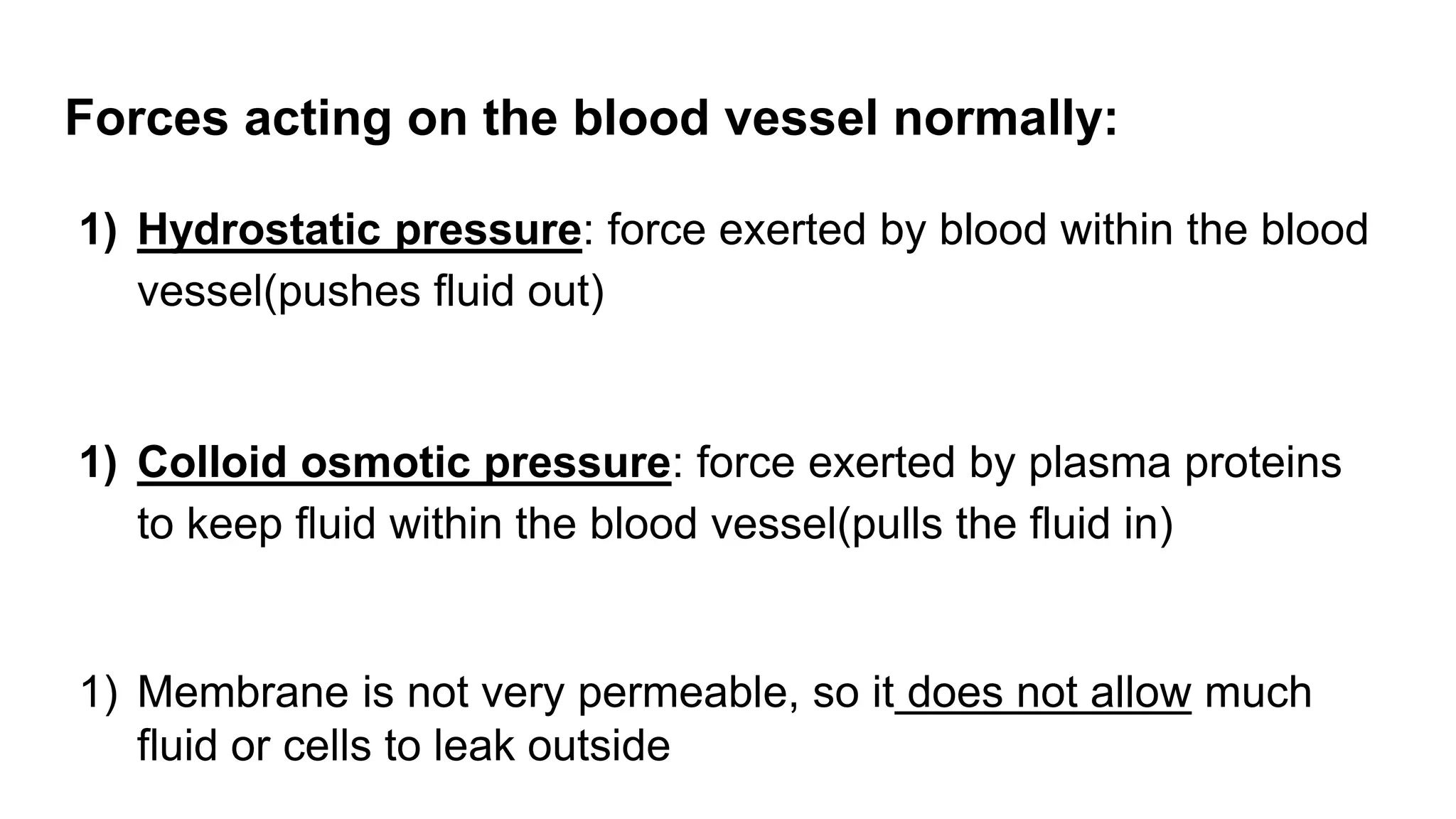
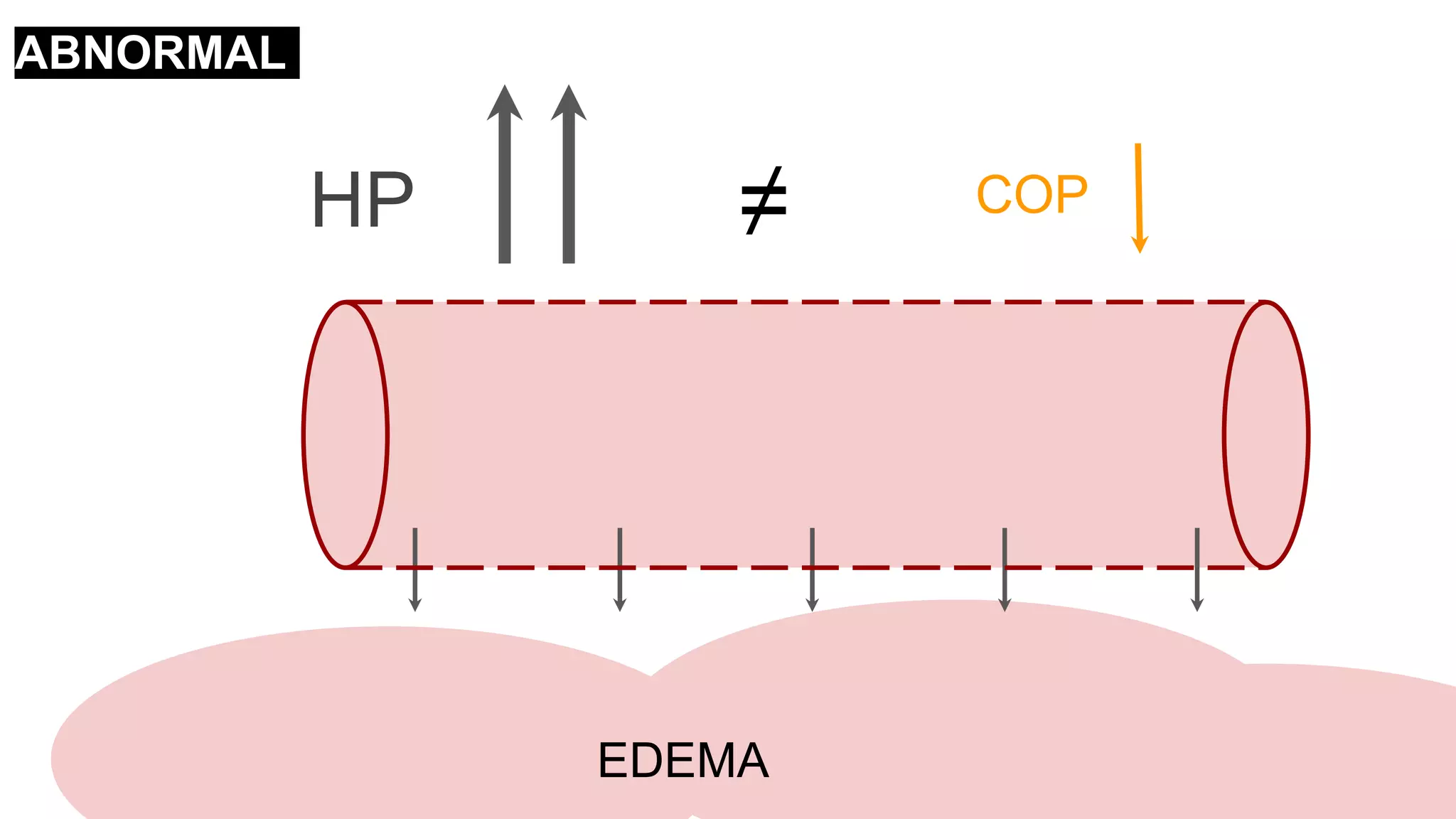
Forces acting on the blood vessel normally:
1) Hydrostatic pressure: force exerted by blood within the blood
vessel(pushes fluid out)
1) Colloid osmotic pressure: force exerted by plasma proteins
to keep fluid within the blood vessel(pulls the fluid in)
1) Membrane is not very permeable, so it does not allow much
fluid or cells to leak outside
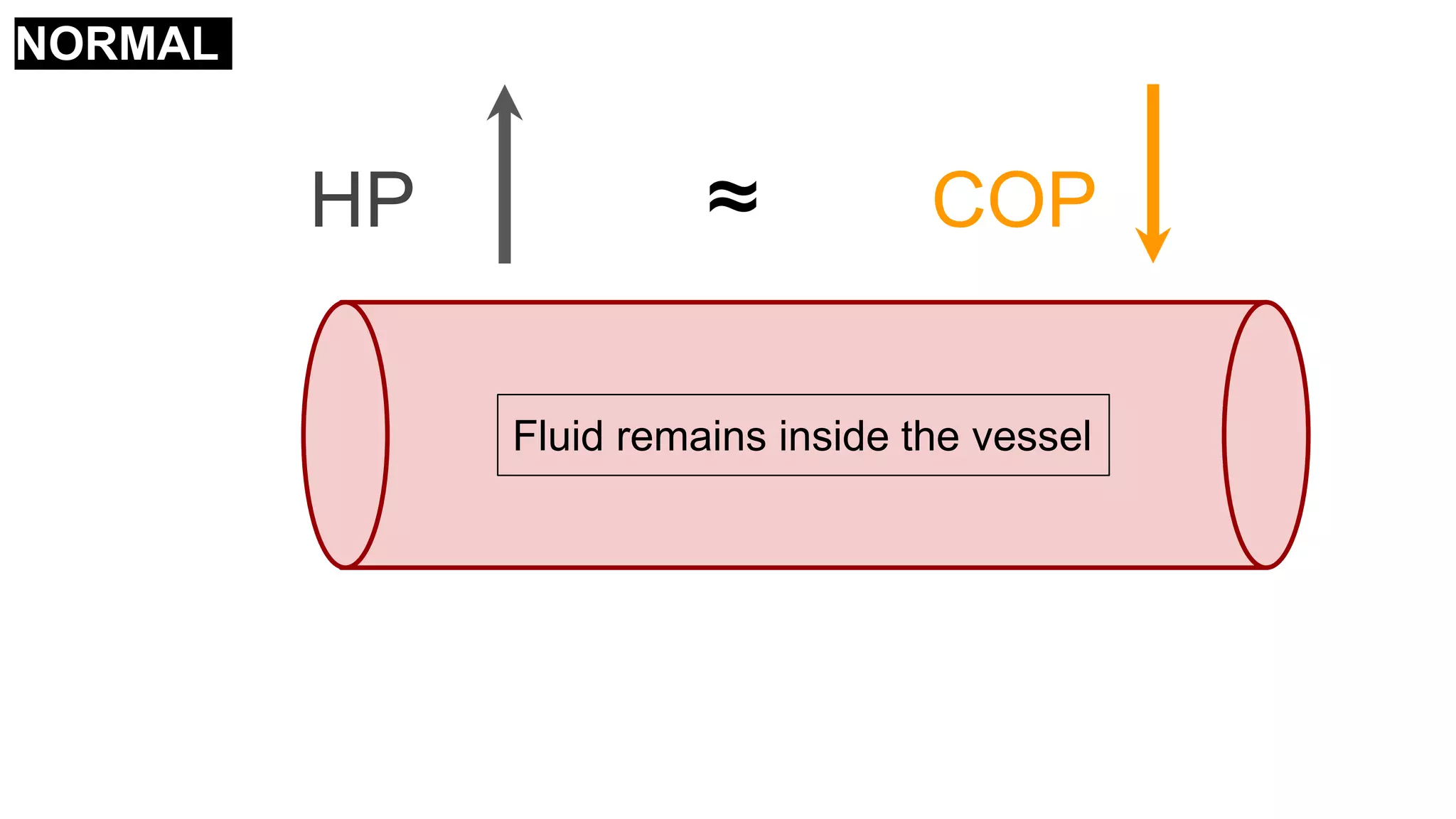
HP COP
≈
Fluid remains inside the vessel
NORMAL
HP COP
≠
EDEMA
ABNORMAL
Edema
Local edema
Generalised edema
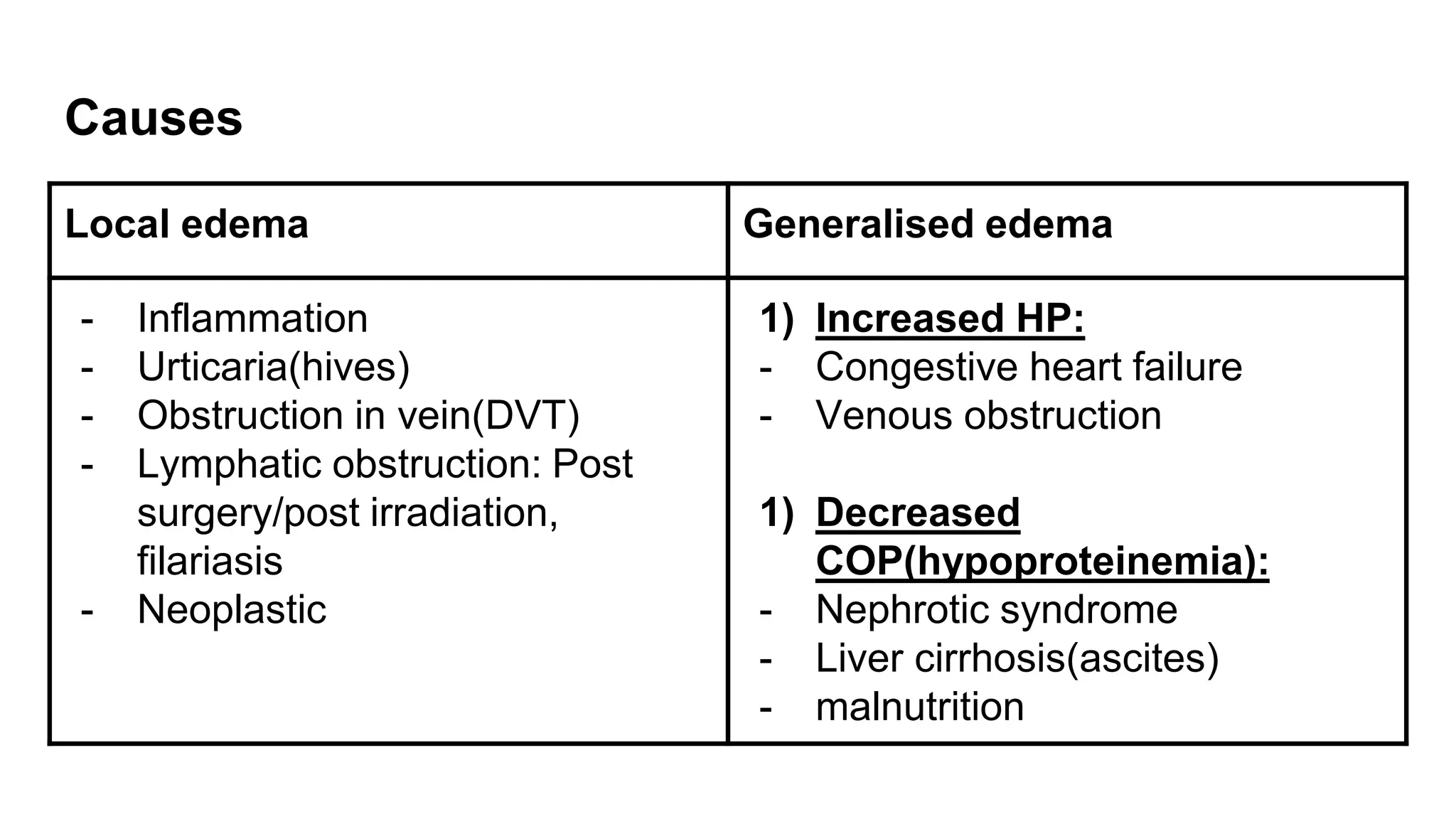
Causes
Local edema Generalised edema
- Inflammation
- Urticaria(hives)
- Obstruction in vein(DVT)
- Lymphatic obstruction: Post
surgery/post irradiation,
filariasis
- Neoplastic
1) Increased HP:
- Congestive heart failure
- Venous obstruction
1) Decreased
COP(hypoproteinemia):
- Nephrotic syndrome
- Liver cirrhosis(ascites)
- malnutrition
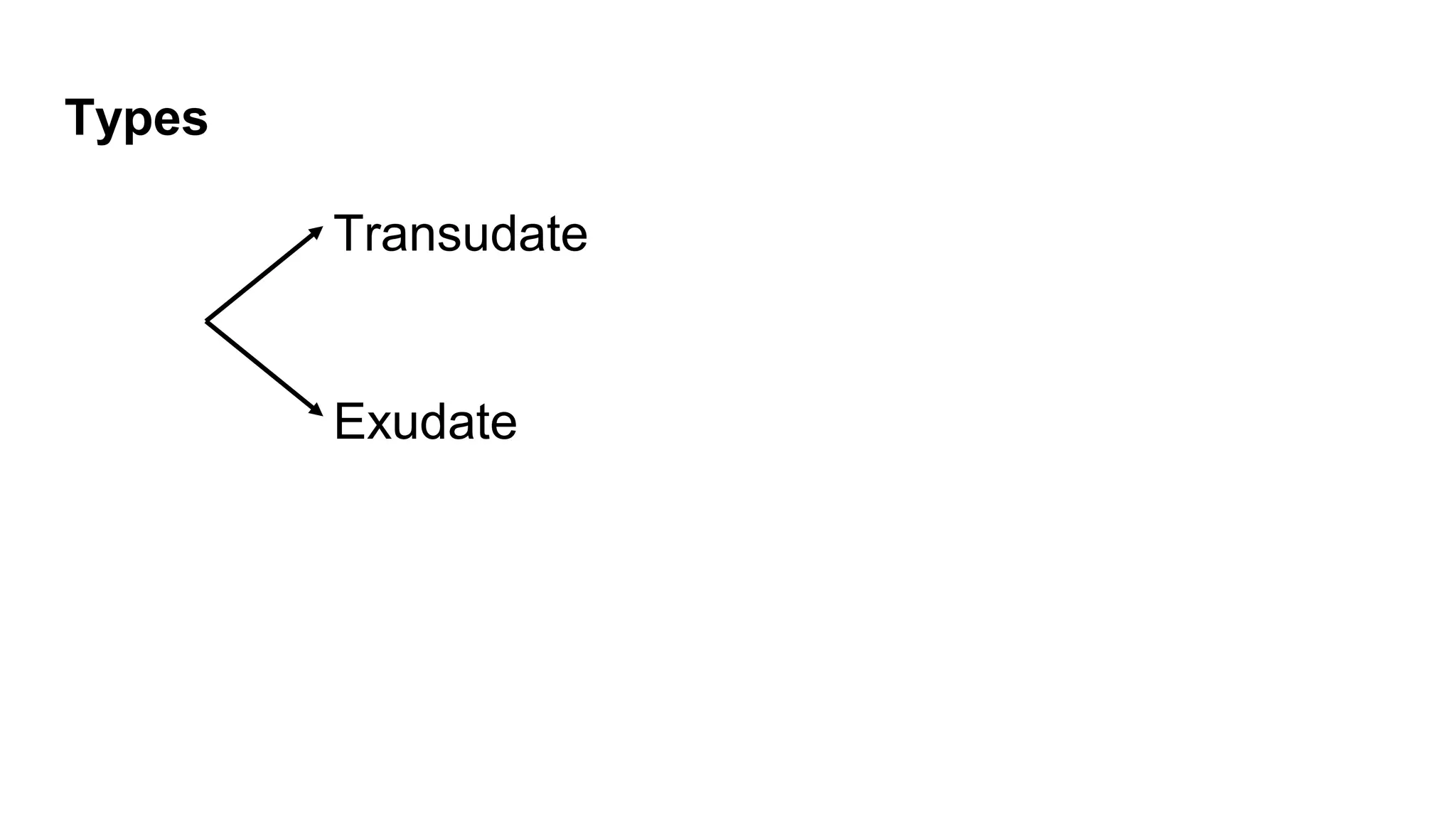
Types
Transudate
Exudate
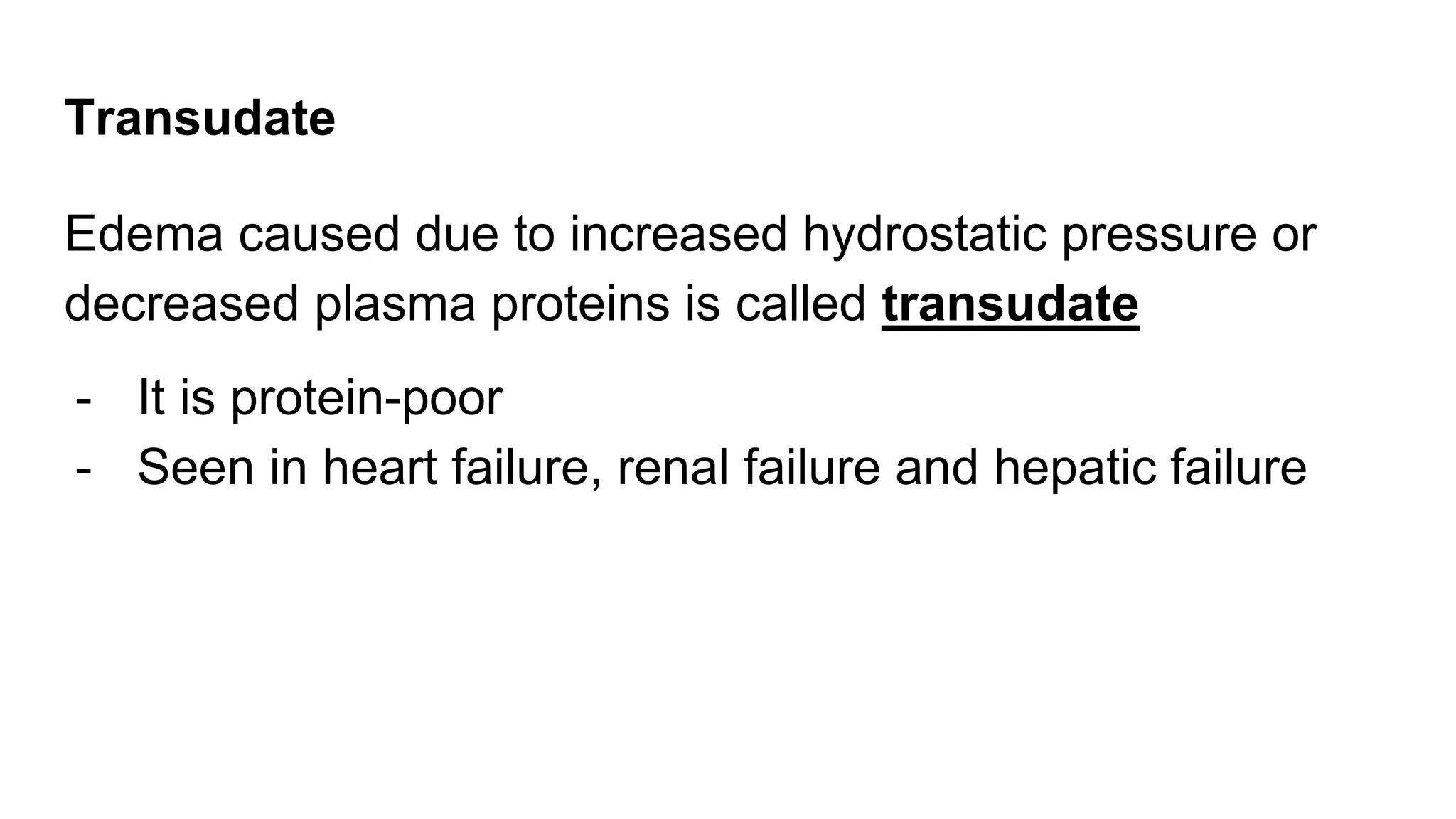
Transudate
Edema caused due to increased hydrostatic pressure or
decreased plasma proteins is called transudate
- It is protein-poor
- Seen in heart failure, renal failure and hepatic failure
Transudate
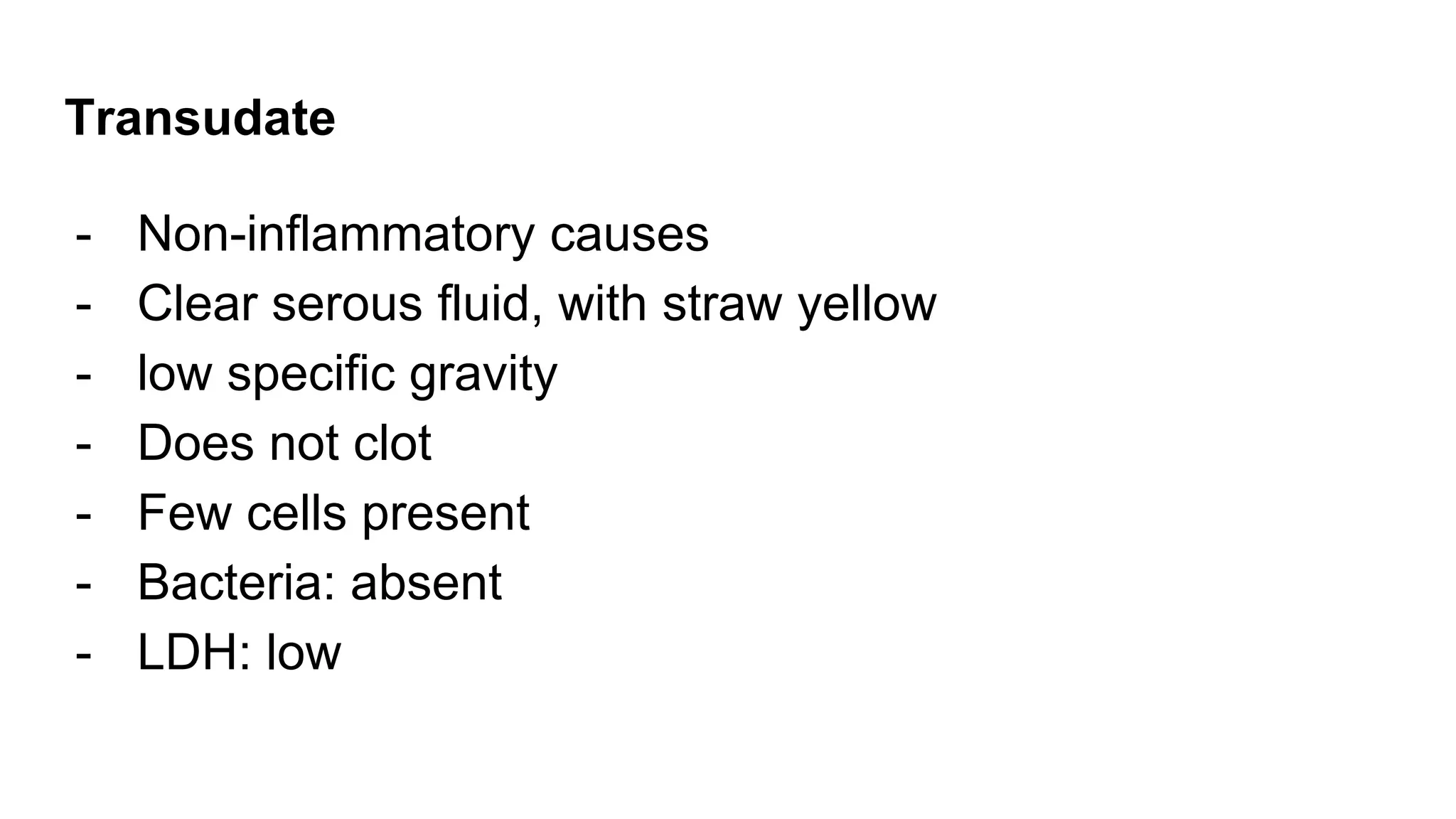
- Non-inflammatory causes
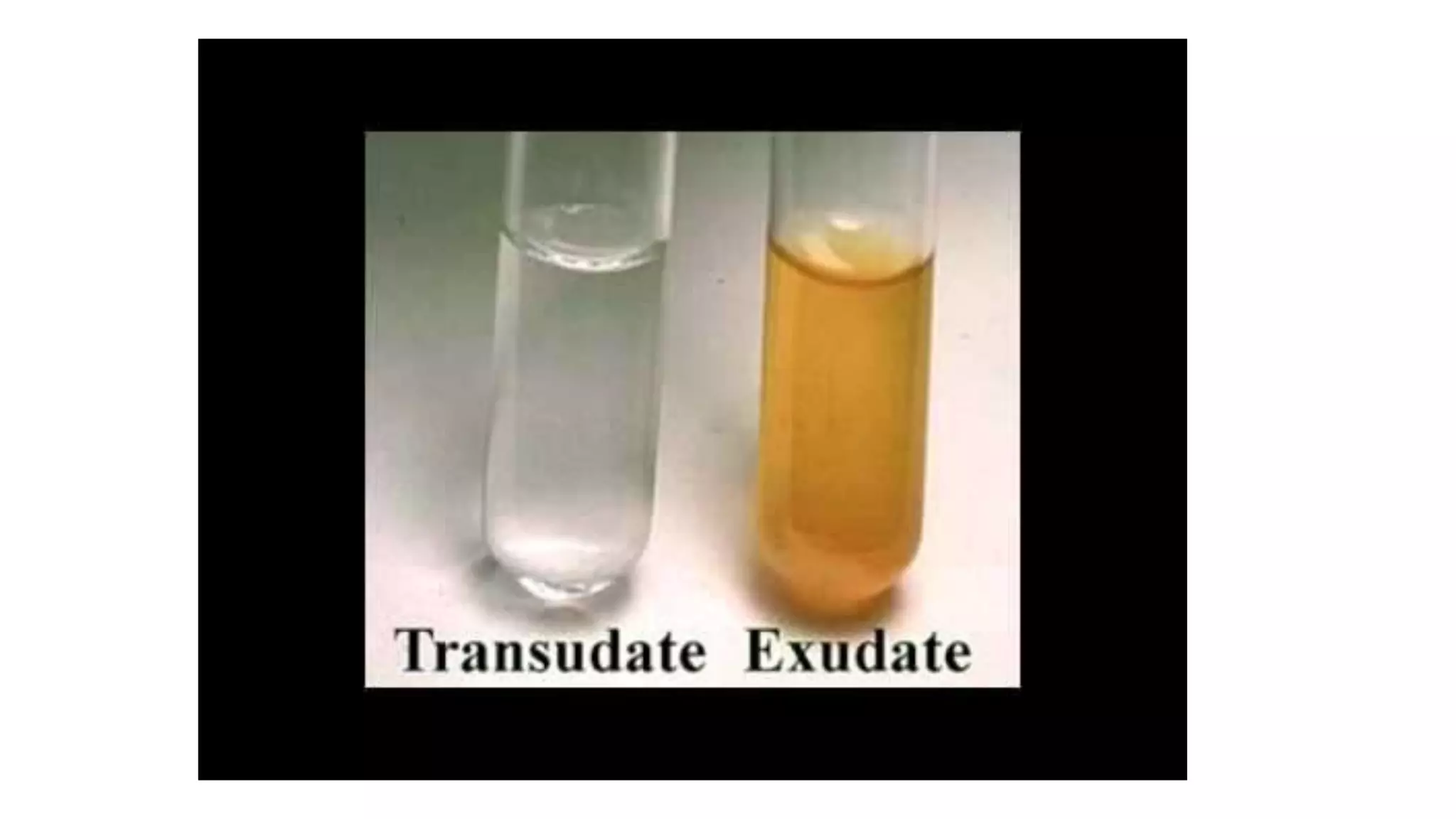
- Clear serous fluid, with straw yellow
- low specific gravity
- Does not clot
- Few cells present
- Bacteria: absent
- LDH: low
Exudate
Edema fluid due to increased vascular permeability in
inflammatory conditions is called exudate
- Protein-rich
- Due to inflammatory causes
Exudate
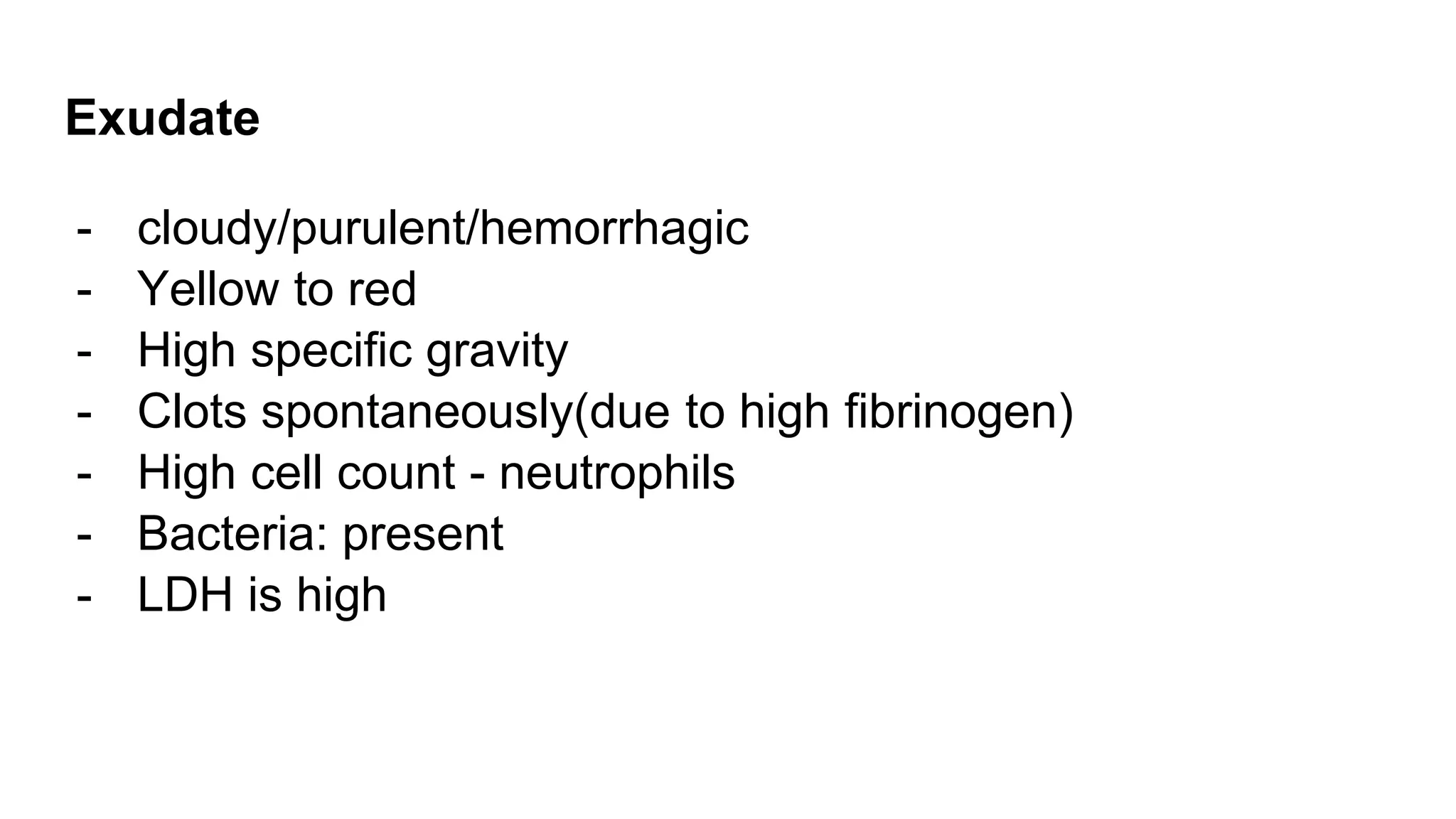
- cloudy/purulent/hemorrhagic
- Yellow to red
- High specific gravity
- Clots spontaneously(due to high fibrinogen)
- High cell count - neutrophils
- Bacteria: present
- LDH is high
Characteristic Transudate Exudate
Mechanism Due to non-inflammatory process(high HP) &
normal vascular permeability
Inflammatory process with increased
vascular permeability
Appearance Clear, serous fluid Cloudy/purulent/hemorrhagic
Colour Straw yellow Yellow to red
Specific gravity <1.018 >1.018
Protein Low(<2 g/dl) High(>2 g/dl)
Clot Absent Present
Cell count Low High
Type of cell Few lymphocytes Neutrophils, lymphocytes
Bacteria Absent Usually present
LDH Low High
For notes,
scan:
References:
● Ramadas Nayak - Textbook of Pathology for Allied
Health Sciences
Questions:
salman.s.ansari92@gmail.com
For PPT, scan:

Edema, Transudate vs Exudate - Pathology - Allied courses

  • 1.
    ● Edema ● Transudatevs Exudate Dr. Salman Ansari Dept. of Pathology Kanachur Institute of Medical Sciences
  • 2.
    ● Normal physiology ●Edema - types and causes ● Transudate ● Exudate ● Differences between transudate and exudate Contents
  • 3.
    Physiology Exudation: process ofescape of fluid from blood vessels into extravascular space Edema: defined as accumulation of excess of fluid in interstitial tissues
  • 4.
    Forces acting onthe blood vessel normally: 1) Hydrostatic pressure: force exerted by blood within the blood vessel(pushes fluid out) 1) Colloid osmotic pressure: force exerted by plasma proteins to keep fluid within the blood vessel(pulls the fluid in) 1) Membrane is not very permeable, so it does not allow much fluid or cells to leak outside
  • 5.
    HP COP ≈ Fluid remainsinside the vessel NORMAL
  • 6.
  • 7.
  • 8.
    Causes Local edema Generalisededema - Inflammation - Urticaria(hives) - Obstruction in vein(DVT) - Lymphatic obstruction: Post surgery/post irradiation, filariasis - Neoplastic 1) Increased HP: - Congestive heart failure - Venous obstruction 1) Decreased COP(hypoproteinemia): - Nephrotic syndrome - Liver cirrhosis(ascites) - malnutrition
  • 9.
  • 10.
    Transudate Edema caused dueto increased hydrostatic pressure or decreased plasma proteins is called transudate - It is protein-poor - Seen in heart failure, renal failure and hepatic failure
  • 11.
    Transudate - Non-inflammatory causes -Clear serous fluid, with straw yellow - low specific gravity - Does not clot - Few cells present - Bacteria: absent - LDH: low
  • 12.
    Exudate Edema fluid dueto increased vascular permeability in inflammatory conditions is called exudate - Protein-rich - Due to inflammatory causes
  • 13.
    Exudate - cloudy/purulent/hemorrhagic - Yellowto red - High specific gravity - Clots spontaneously(due to high fibrinogen) - High cell count - neutrophils - Bacteria: present - LDH is high
  • 15.
    Characteristic Transudate Exudate MechanismDue to non-inflammatory process(high HP) & normal vascular permeability Inflammatory process with increased vascular permeability Appearance Clear, serous fluid Cloudy/purulent/hemorrhagic Colour Straw yellow Yellow to red Specific gravity <1.018 >1.018 Protein Low(<2 g/dl) High(>2 g/dl) Clot Absent Present Cell count Low High Type of cell Few lymphocytes Neutrophils, lymphocytes Bacteria Absent Usually present LDH Low High
  • 16.
    For notes, scan: References: ● RamadasNayak - Textbook of Pathology for Allied Health Sciences Questions: salman.s.ansari92@gmail.com For PPT, scan: