AGRANULOCYTOSIS
RATHEESH.R.L
DEFINITION
• Agranulocytosis, also known as agranulosis or
granulopenia, is an acute condition involving a
severe and dangerous leukopenia (lowered white
blood cell count), most commonly of neutrophils
causing a neutropenia in the circulating blood.
ETIOLOGY
• The exact cause is unknown
• It may be because of either decreased
production of neutrophils or increased
destruction of neutrophils
decreased production of neutrophils
Aplastic anemia
Cancers, lymphoma and leukemia
Chemotherapy
Radiation therapy
increased destruction of neutrophils
• Hypersplenism
• Auto immune disorders
• Bacterial or viral infections
• Bone marrow diseases or destruction
• Use of drugs- psychotrophic medicines, anti thyroid
agents, anti coagulants and antibiotics
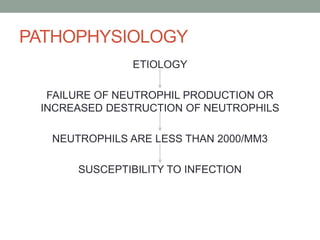
PATHOPHYSIOLOGY
ETIOLOGY
FAILURE OF NEUTROPHIL PRODUCTION OR
INCREASED DESTRUCTION OF NEUTROPHILS
NEUTROPHILS ARE LESS THAN 2000/MM3
SUSCEPTIBILITY TO INFECTION
CLINICAL FEATURES
THE EARLY SYMPTOMS ARE
• sudden fever
• chills
• sore throat
• weakness in your limbs
• sore mouth and gums
• mouth ulcers
• bleeding gums
LATE SYMPTOMS INCLUDE
• fast heart rate
• rapid breathing
• low blood pressure
• skin abscesses
DIAGNOSIS
• HISTORY COLLECTION AND PHYSICAL EXAMINATION
• BLOOD STUDIES
The diagnosis is made after a complete blood count,
a routine blood test. The absolute neutrophil count in this
test will be below 500, and can reach 0 cells/mm³
• CULTURE STUDIES
culture of urine, blood and ulcerative lesion in throat
are positive for bacteria
management
• 1. colony stimulating factors:
use of growth factors such as granulocyte-
colony stimulating factors or granulocyte-macrophage-
colony stimulating factor and erythropoiten can be effective
in increasing neutrophil production.
• 2, antibiotics
combination of broad spectrum antibiotics are
usually administered incase of viral and bacterial infections.
• 3. corticosteroids
corticosteroids may be used if the cause is an
immunological disorder
NURSING MANAGEMENT
• Monitor patients leukocyte count regularlly
• Maintain strict aseptic techniques during procedures
• Maintain proper isolation of the patient
• Administer proper antibiotics to the patient
• Provide skin care and prevent dryness of the skin
• Maintain proper hygiene
• Instruct to avoid acidic foods and alcoholic beverages
• Provide psychological support to the patients
• Encourage to avoid self medications
NURSING DIAGNOSIS
• Risk for infection related to neutropenia
• Risk for impaired skin integrity related to pancytopenia
• Knowledge deficit related to toxic agents that causes
agranulocytosis
Agranulocytosis

Agranulocytosis

  • 1.
  • 2.
    DEFINITION • Agranulocytosis, alsoknown as agranulosis or granulopenia, is an acute condition involving a severe and dangerous leukopenia (lowered white blood cell count), most commonly of neutrophils causing a neutropenia in the circulating blood.
  • 3.
    ETIOLOGY • The exactcause is unknown • It may be because of either decreased production of neutrophils or increased destruction of neutrophils
  • 4.
    decreased production ofneutrophils Aplastic anemia Cancers, lymphoma and leukemia Chemotherapy Radiation therapy
  • 5.
    increased destruction ofneutrophils • Hypersplenism • Auto immune disorders • Bacterial or viral infections • Bone marrow diseases or destruction • Use of drugs- psychotrophic medicines, anti thyroid agents, anti coagulants and antibiotics
  • 6.
    PATHOPHYSIOLOGY ETIOLOGY FAILURE OF NEUTROPHILPRODUCTION OR INCREASED DESTRUCTION OF NEUTROPHILS NEUTROPHILS ARE LESS THAN 2000/MM3 SUSCEPTIBILITY TO INFECTION
  • 7.
    CLINICAL FEATURES THE EARLYSYMPTOMS ARE • sudden fever • chills • sore throat • weakness in your limbs • sore mouth and gums • mouth ulcers • bleeding gums
  • 8.
    LATE SYMPTOMS INCLUDE •fast heart rate • rapid breathing • low blood pressure • skin abscesses
  • 9.
    DIAGNOSIS • HISTORY COLLECTIONAND PHYSICAL EXAMINATION • BLOOD STUDIES The diagnosis is made after a complete blood count, a routine blood test. The absolute neutrophil count in this test will be below 500, and can reach 0 cells/mm³ • CULTURE STUDIES culture of urine, blood and ulcerative lesion in throat are positive for bacteria
  • 10.
    management • 1. colonystimulating factors: use of growth factors such as granulocyte- colony stimulating factors or granulocyte-macrophage- colony stimulating factor and erythropoiten can be effective in increasing neutrophil production.
  • 11.
    • 2, antibiotics combinationof broad spectrum antibiotics are usually administered incase of viral and bacterial infections. • 3. corticosteroids corticosteroids may be used if the cause is an immunological disorder
  • 12.
    NURSING MANAGEMENT • Monitorpatients leukocyte count regularlly • Maintain strict aseptic techniques during procedures • Maintain proper isolation of the patient • Administer proper antibiotics to the patient • Provide skin care and prevent dryness of the skin
  • 13.
    • Maintain properhygiene • Instruct to avoid acidic foods and alcoholic beverages • Provide psychological support to the patients • Encourage to avoid self medications
  • 14.
    NURSING DIAGNOSIS • Riskfor infection related to neutropenia • Risk for impaired skin integrity related to pancytopenia • Knowledge deficit related to toxic agents that causes agranulocytosis