Downloaded 222 times


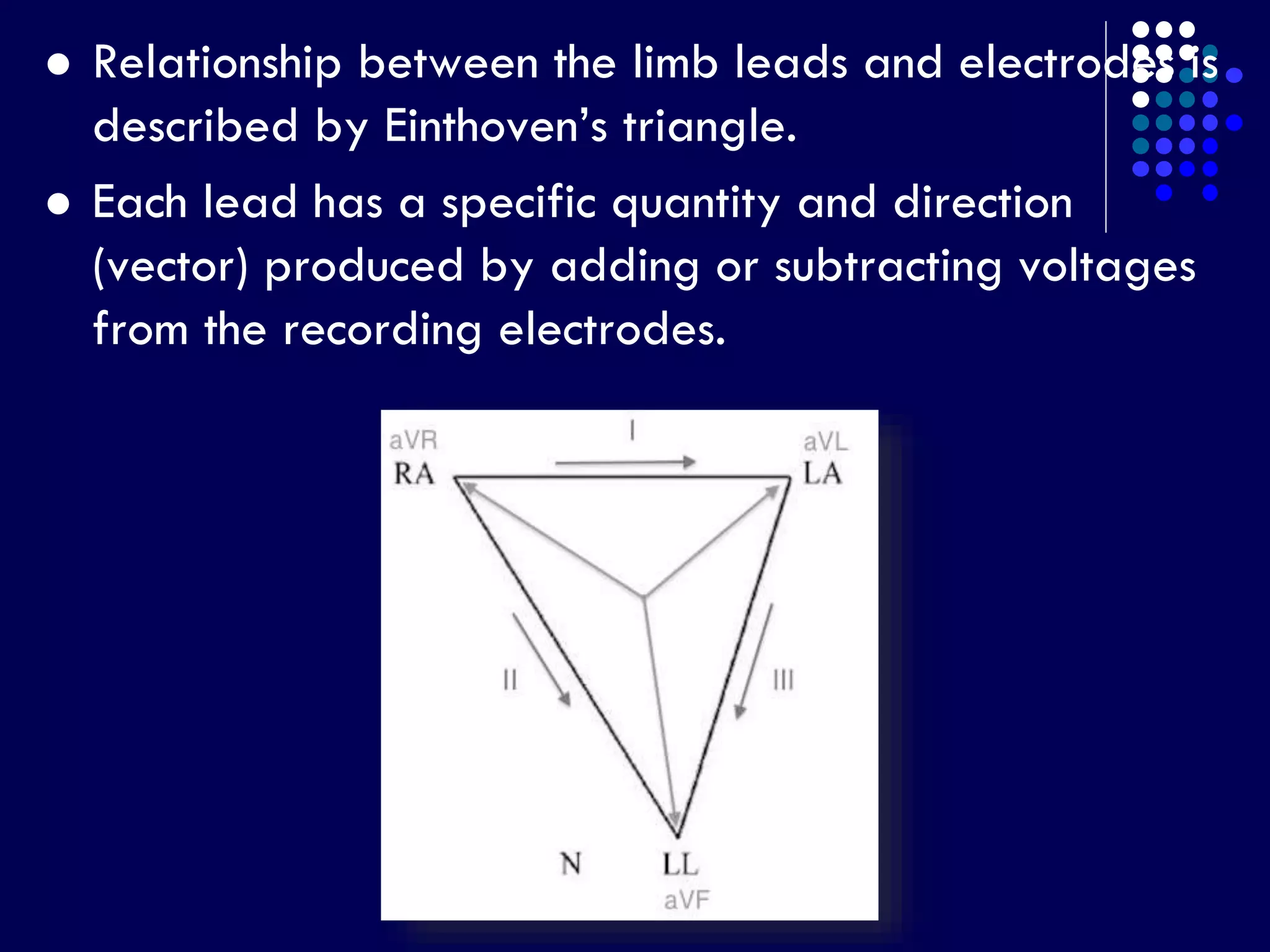
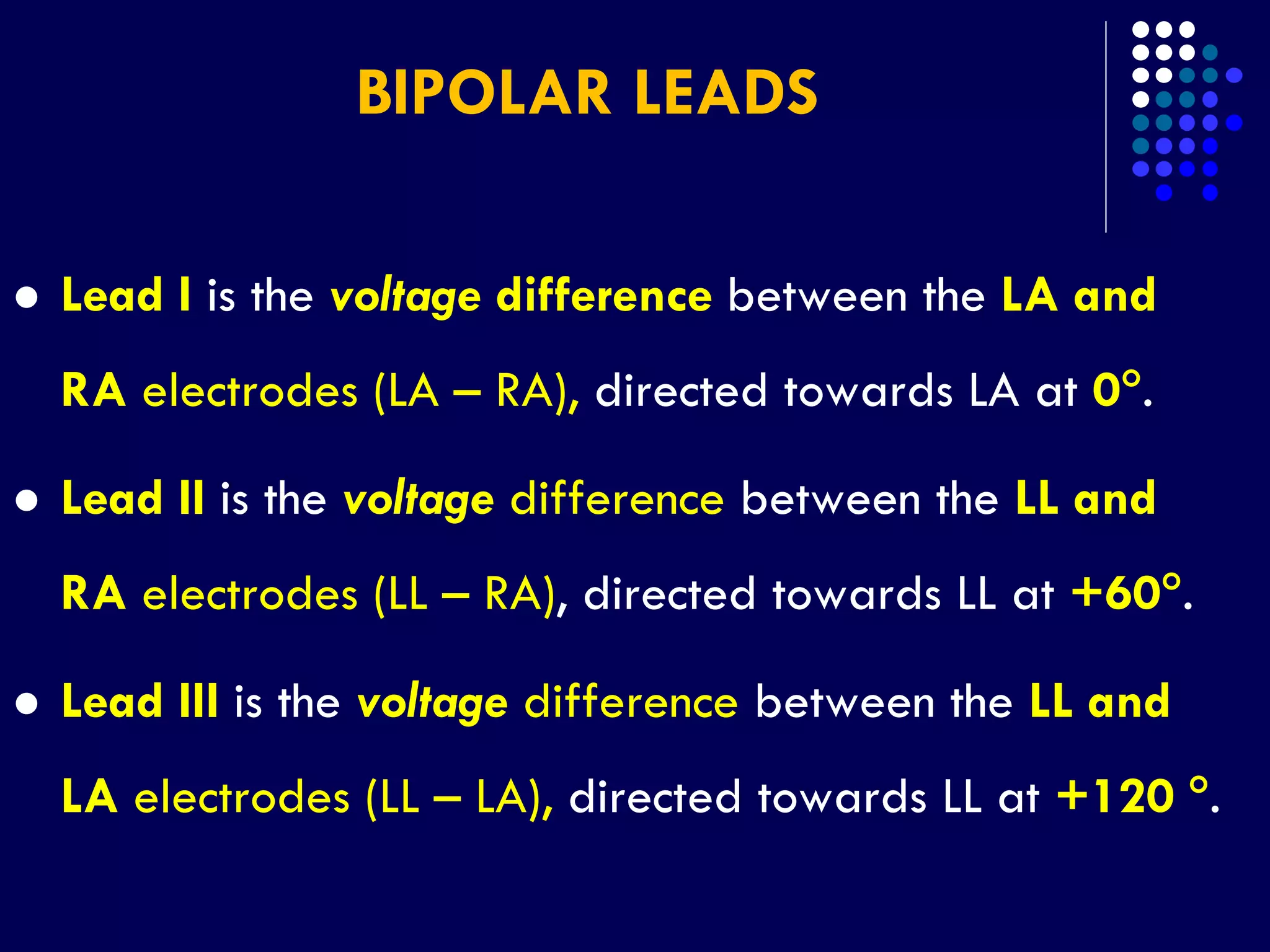
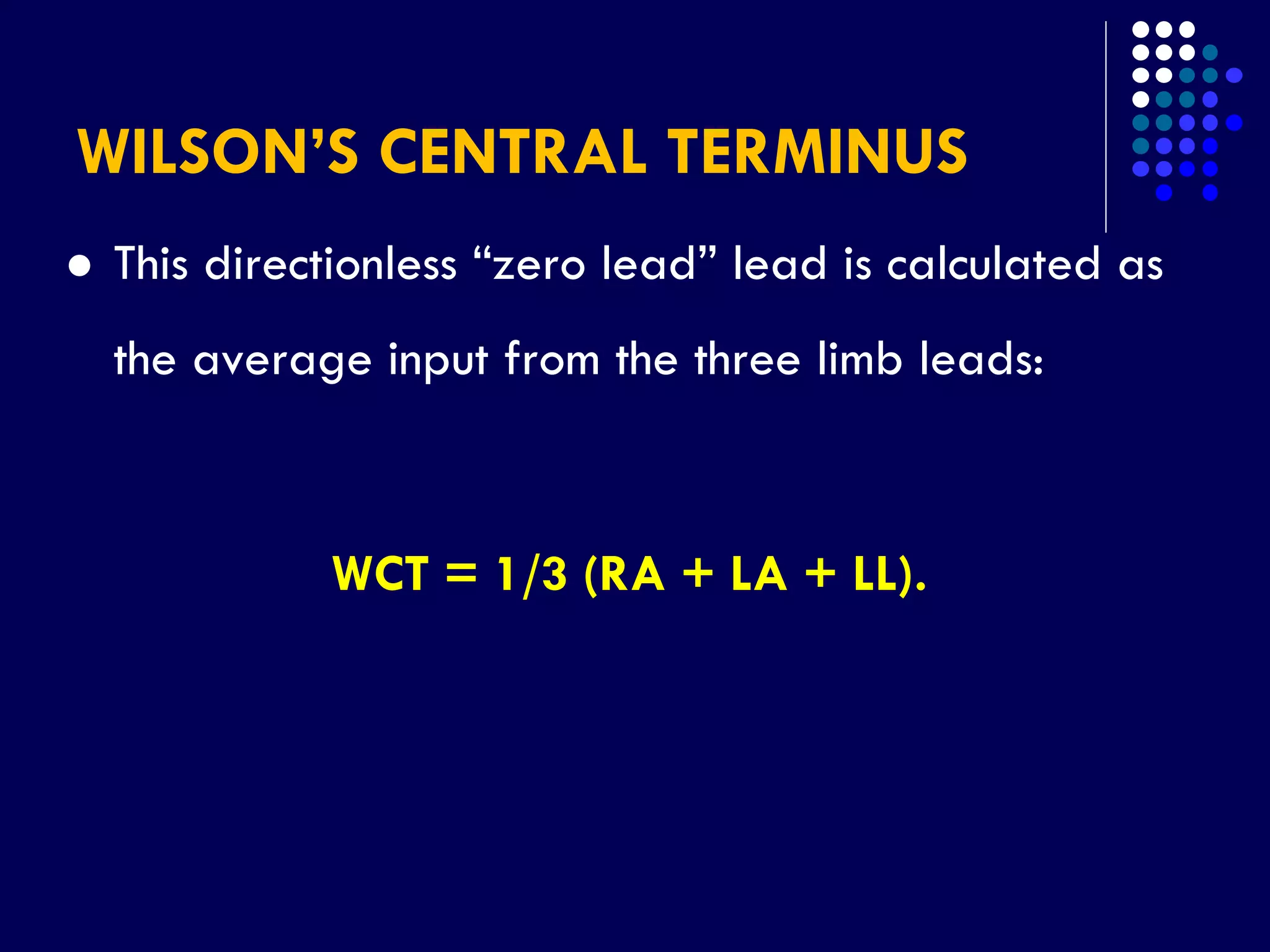
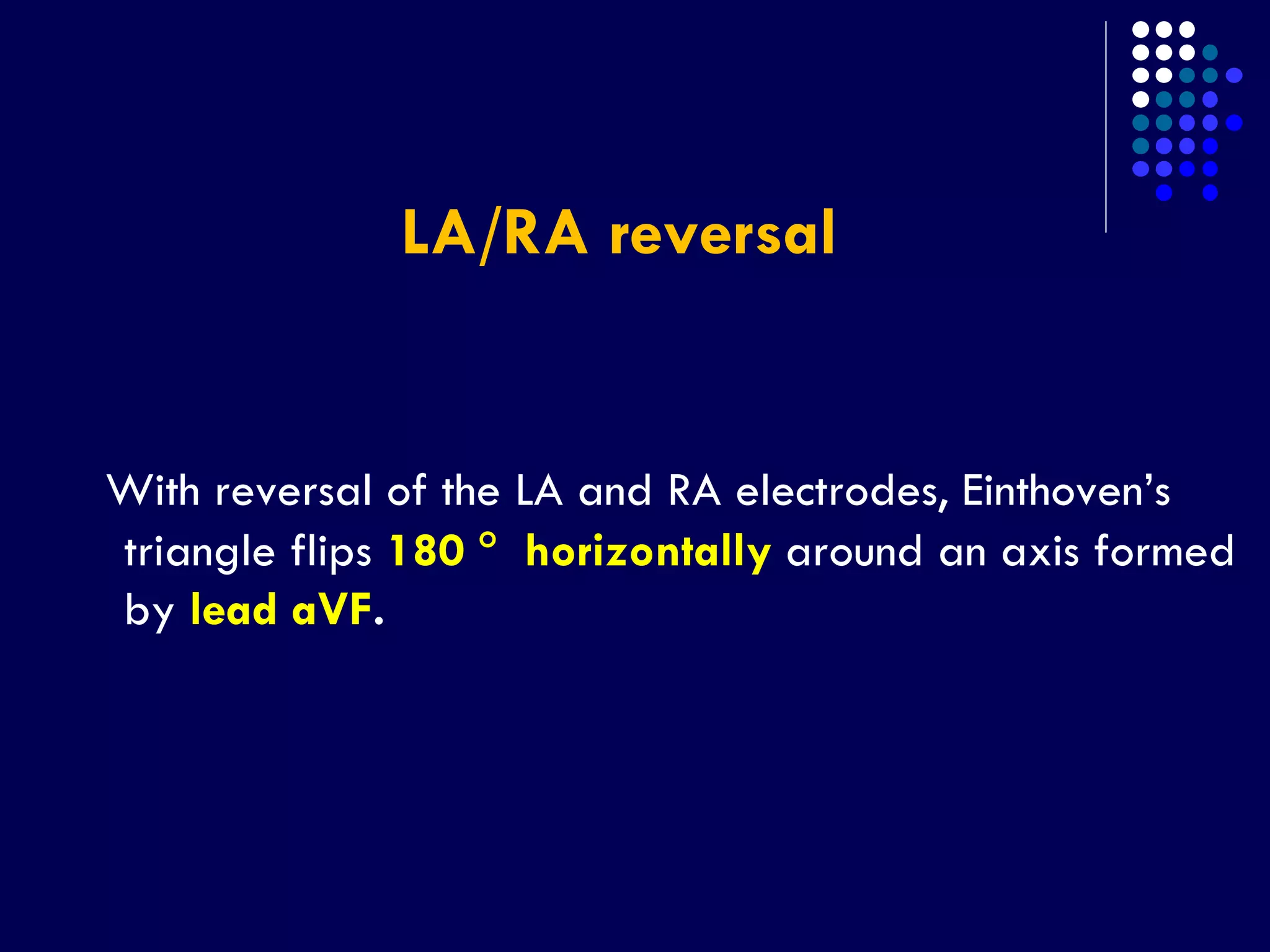
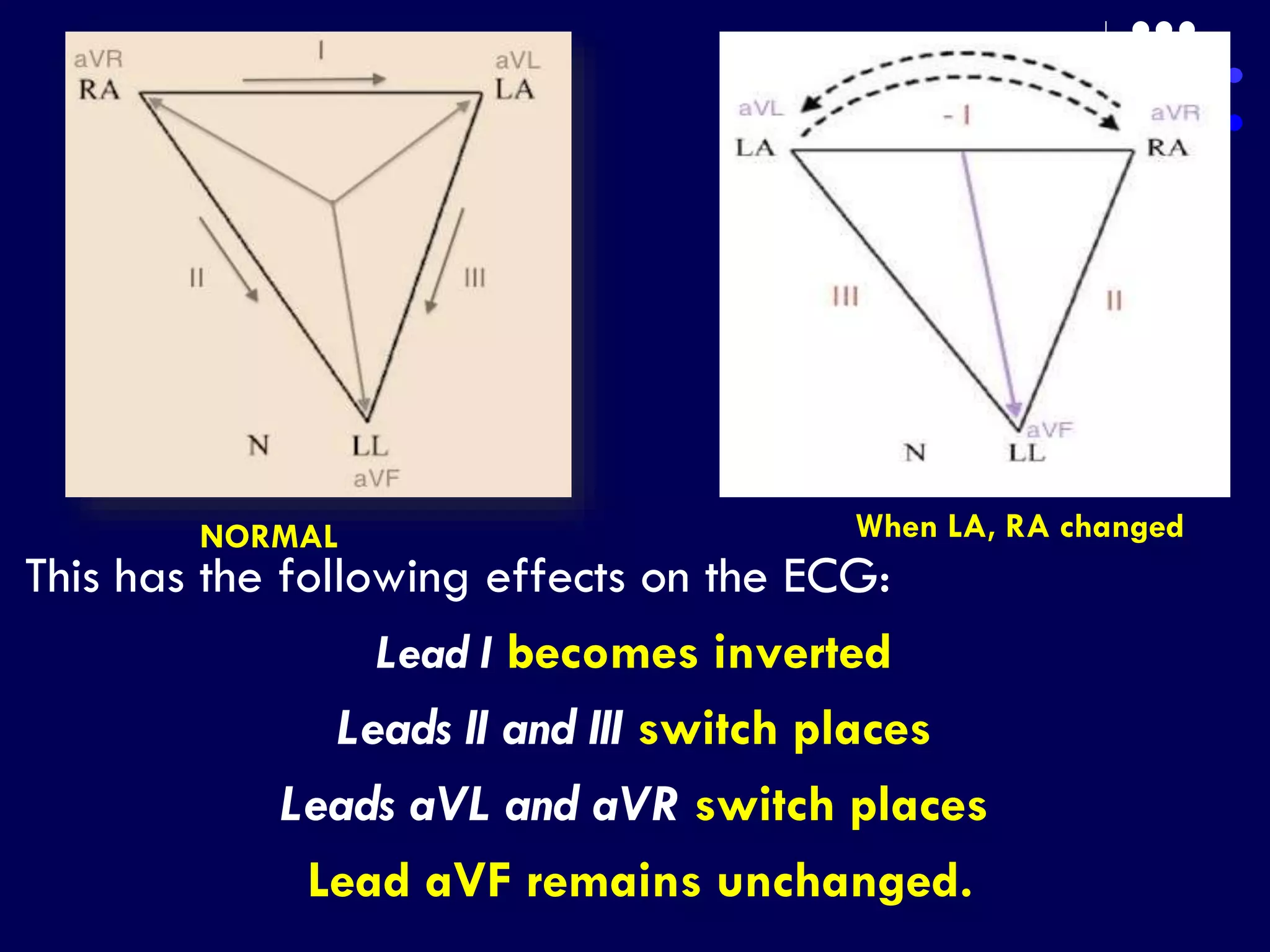
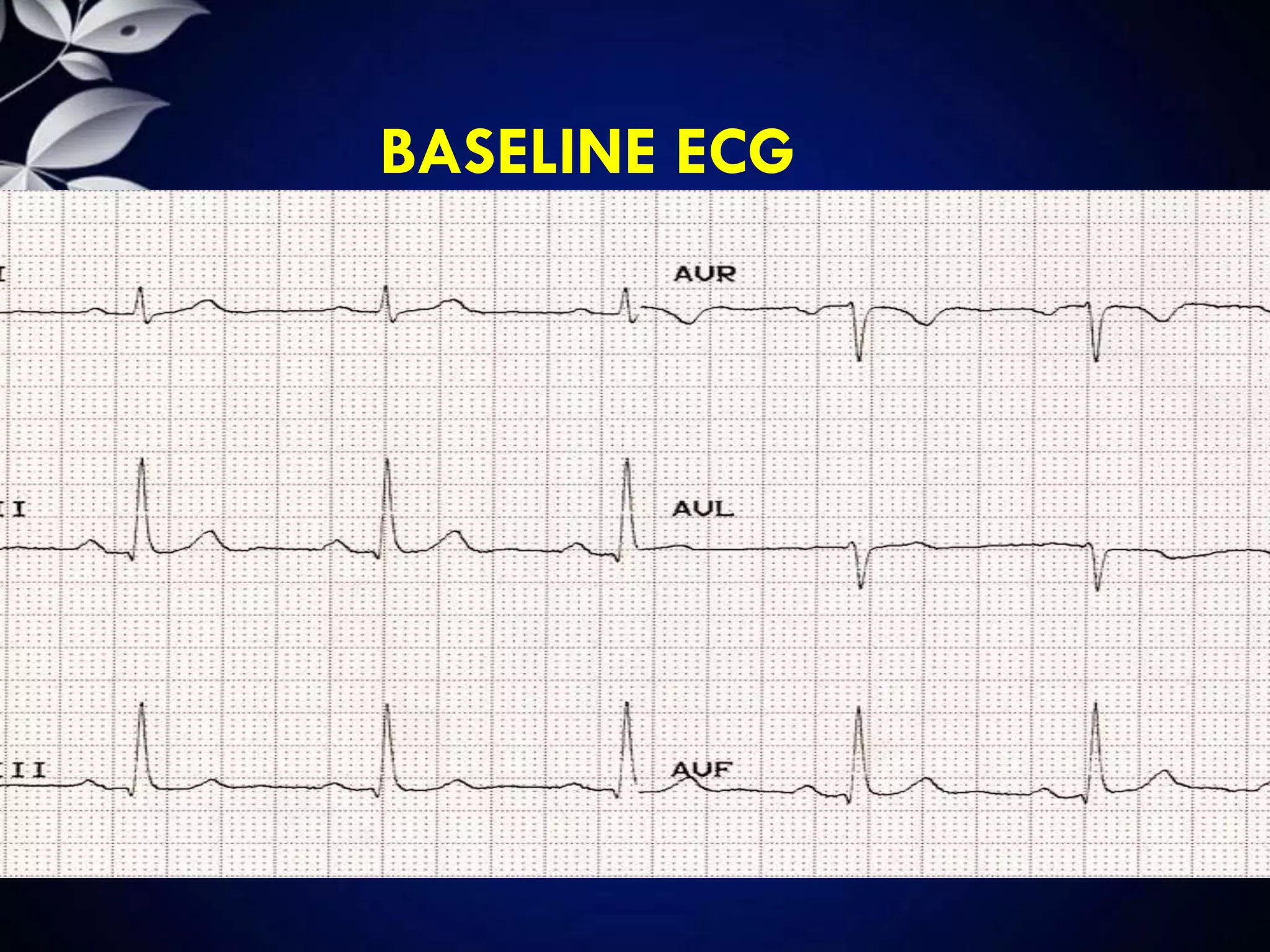
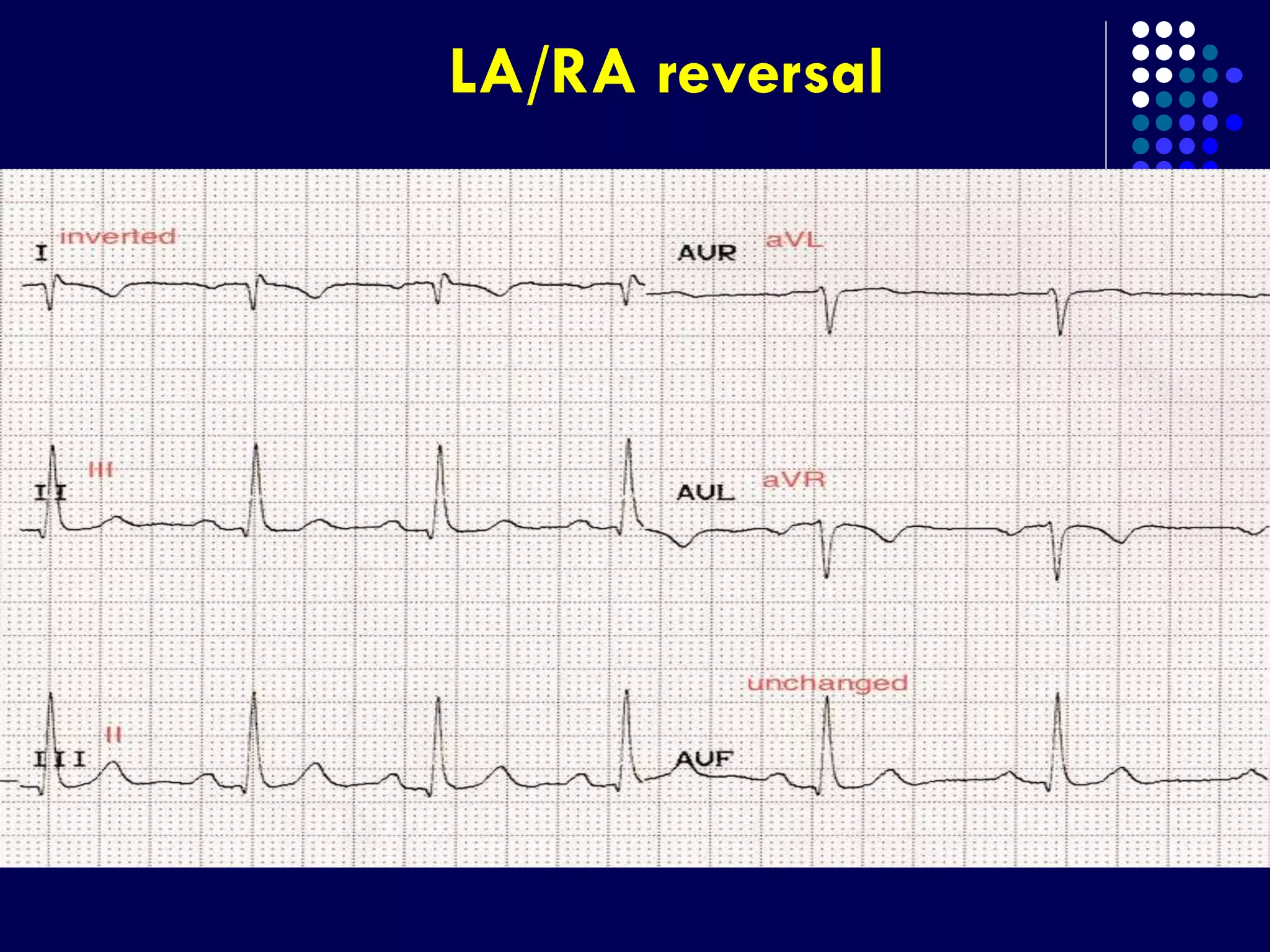
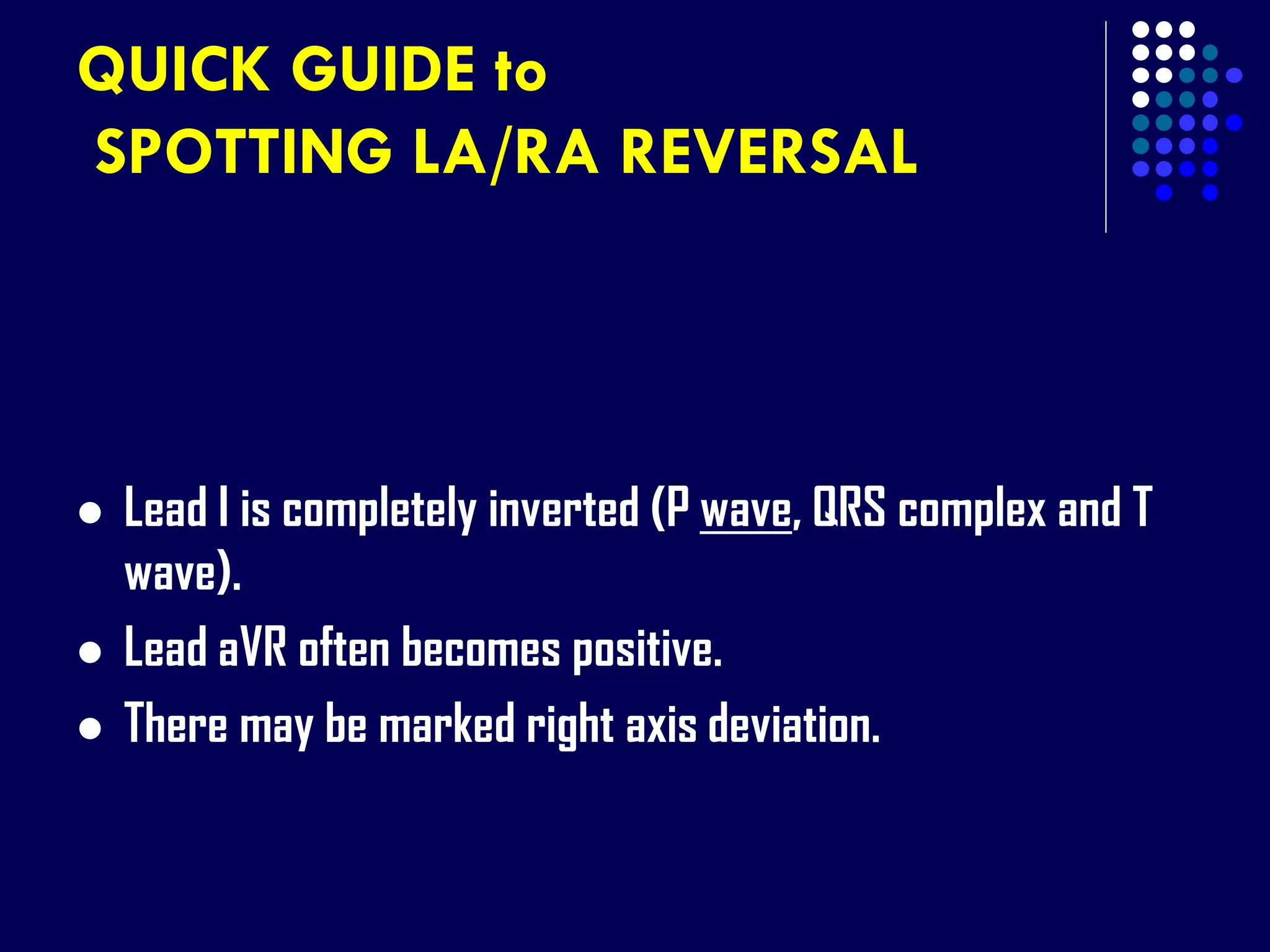
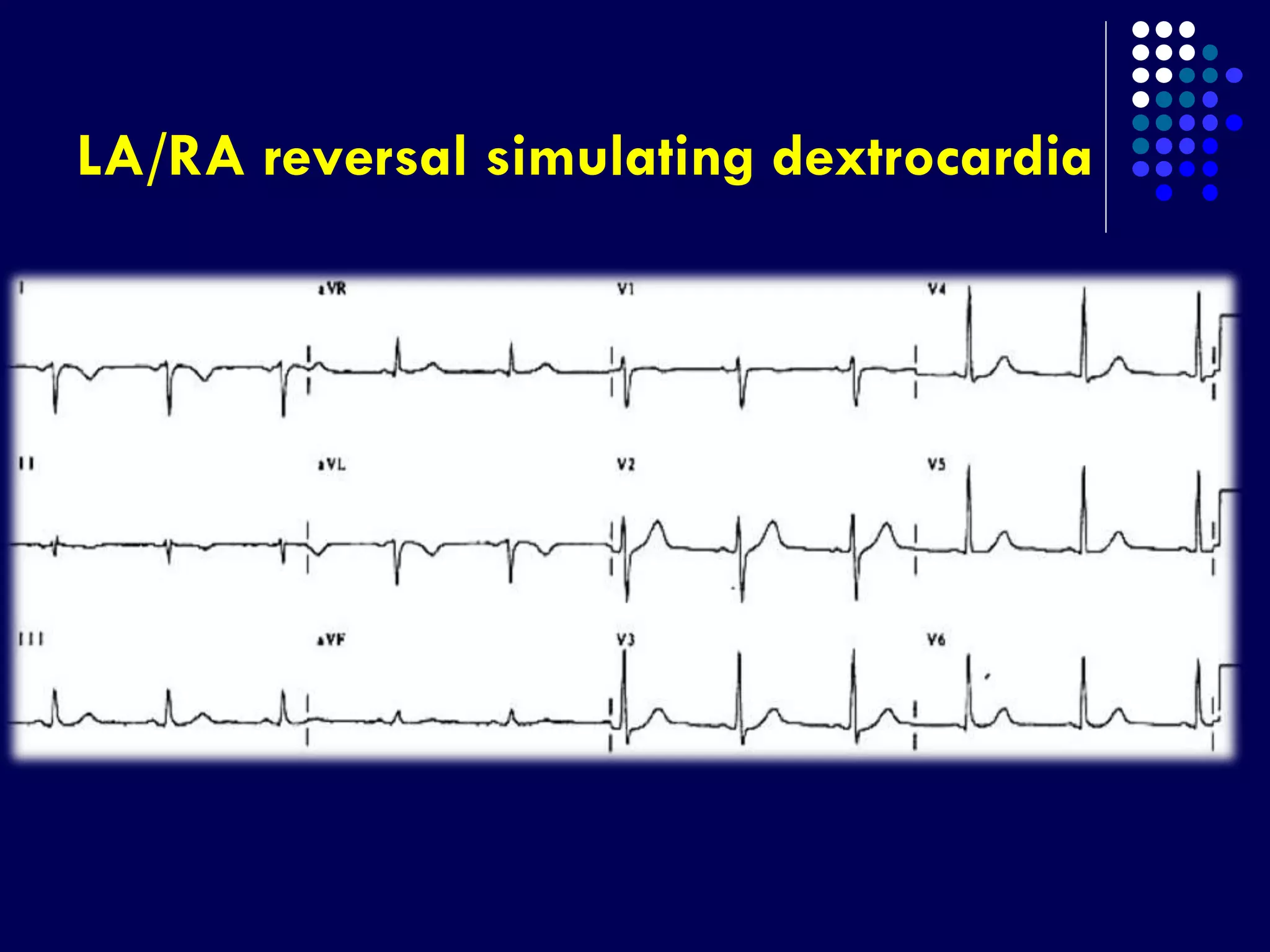
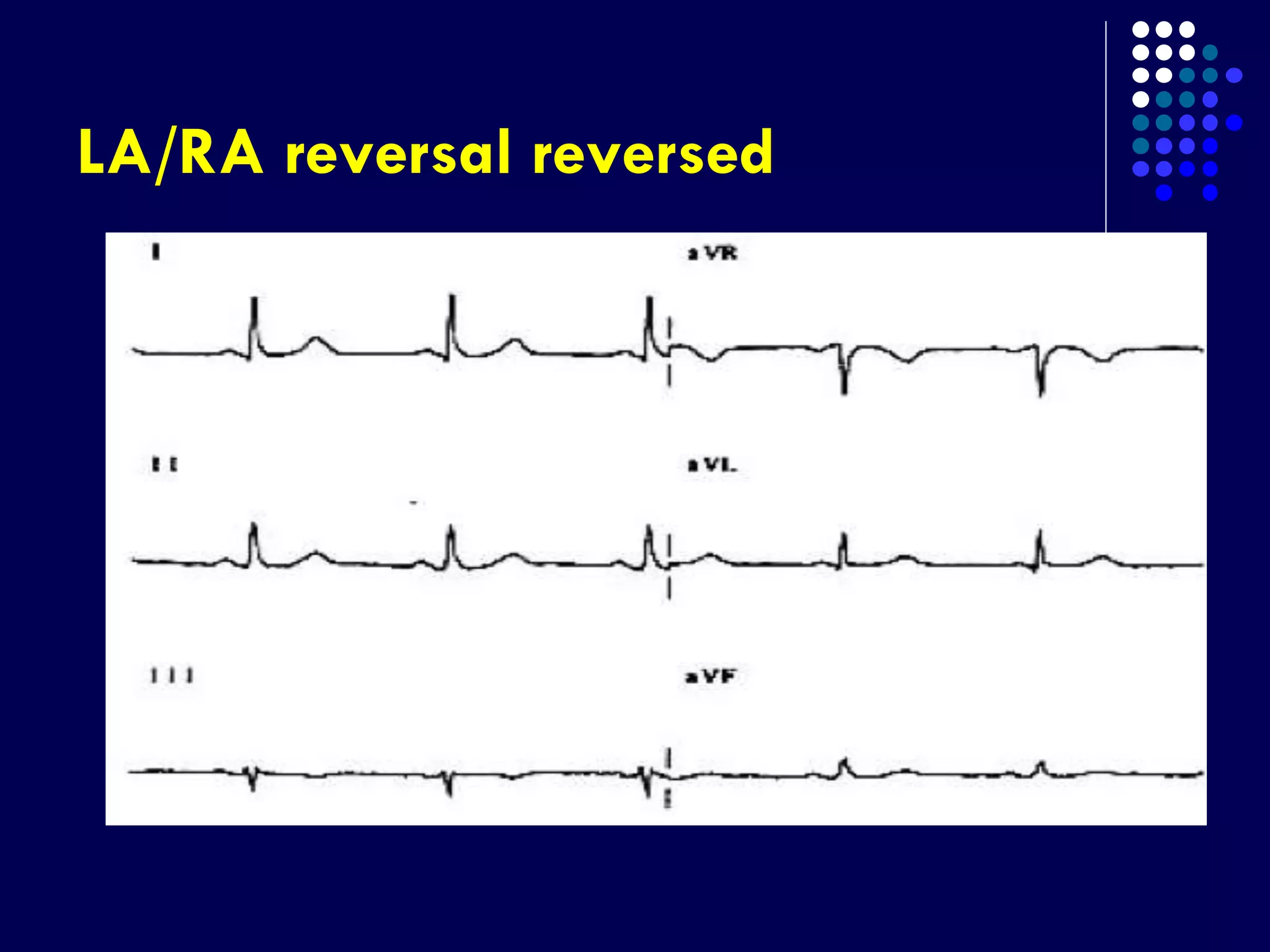
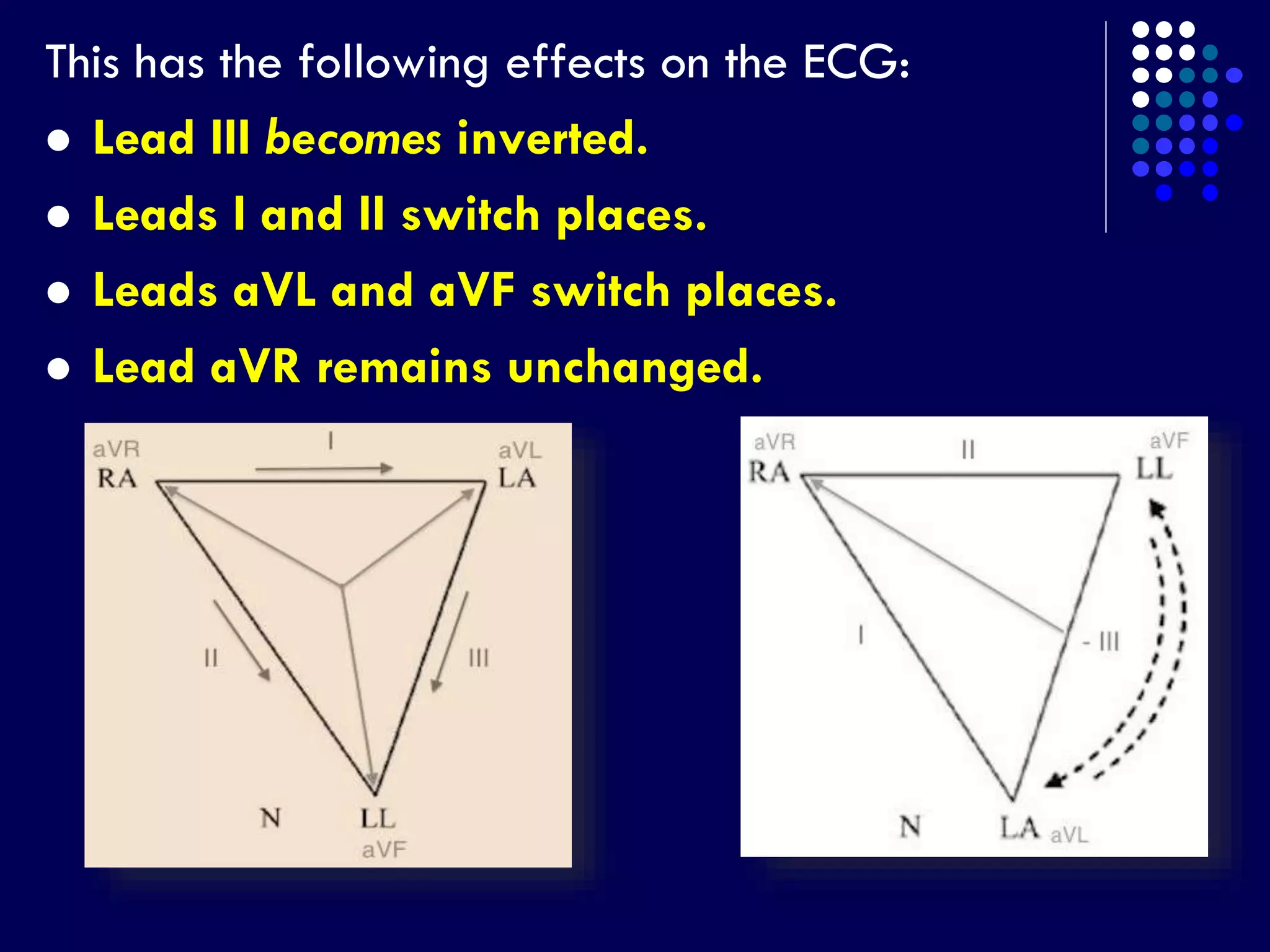
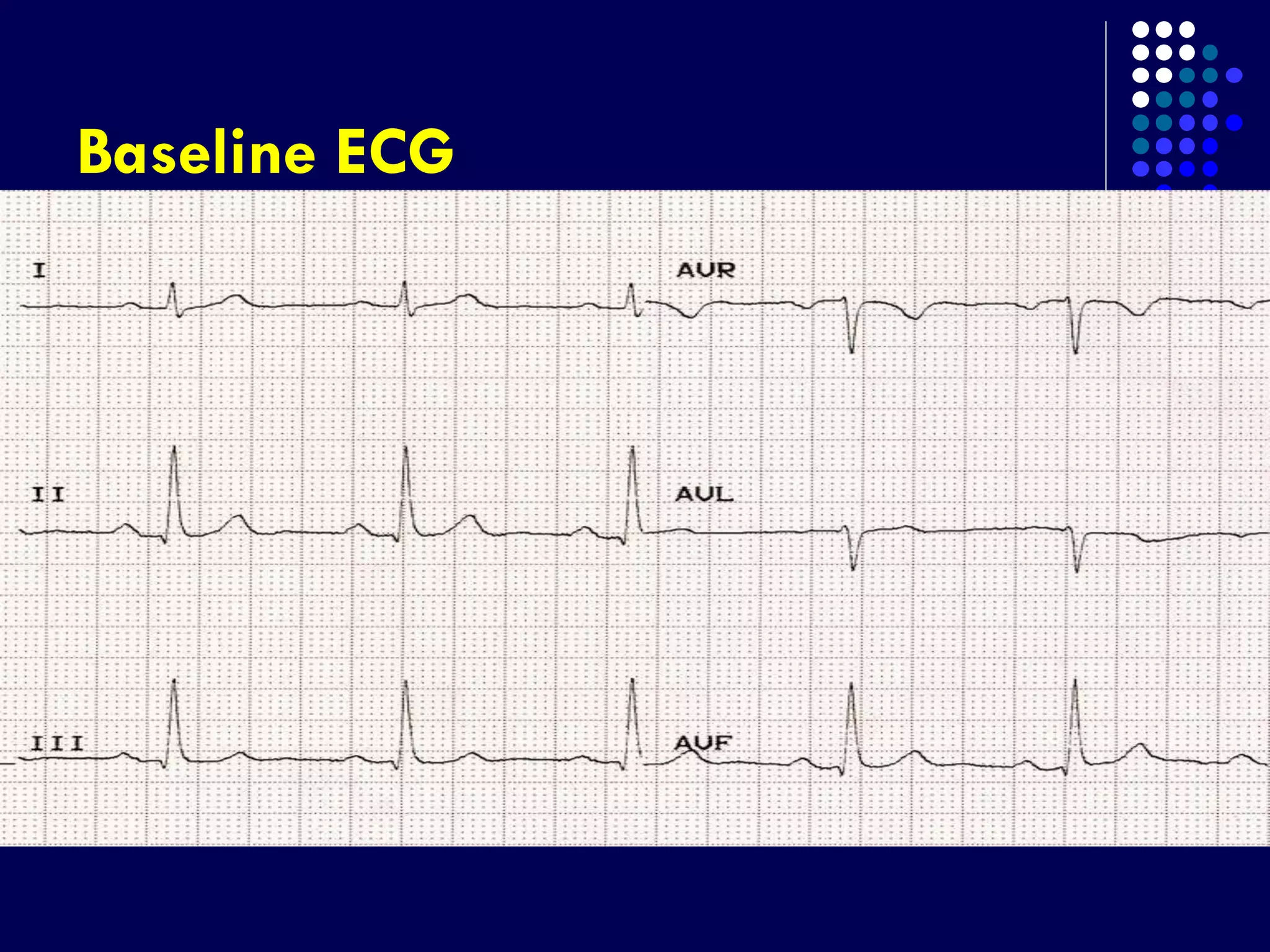
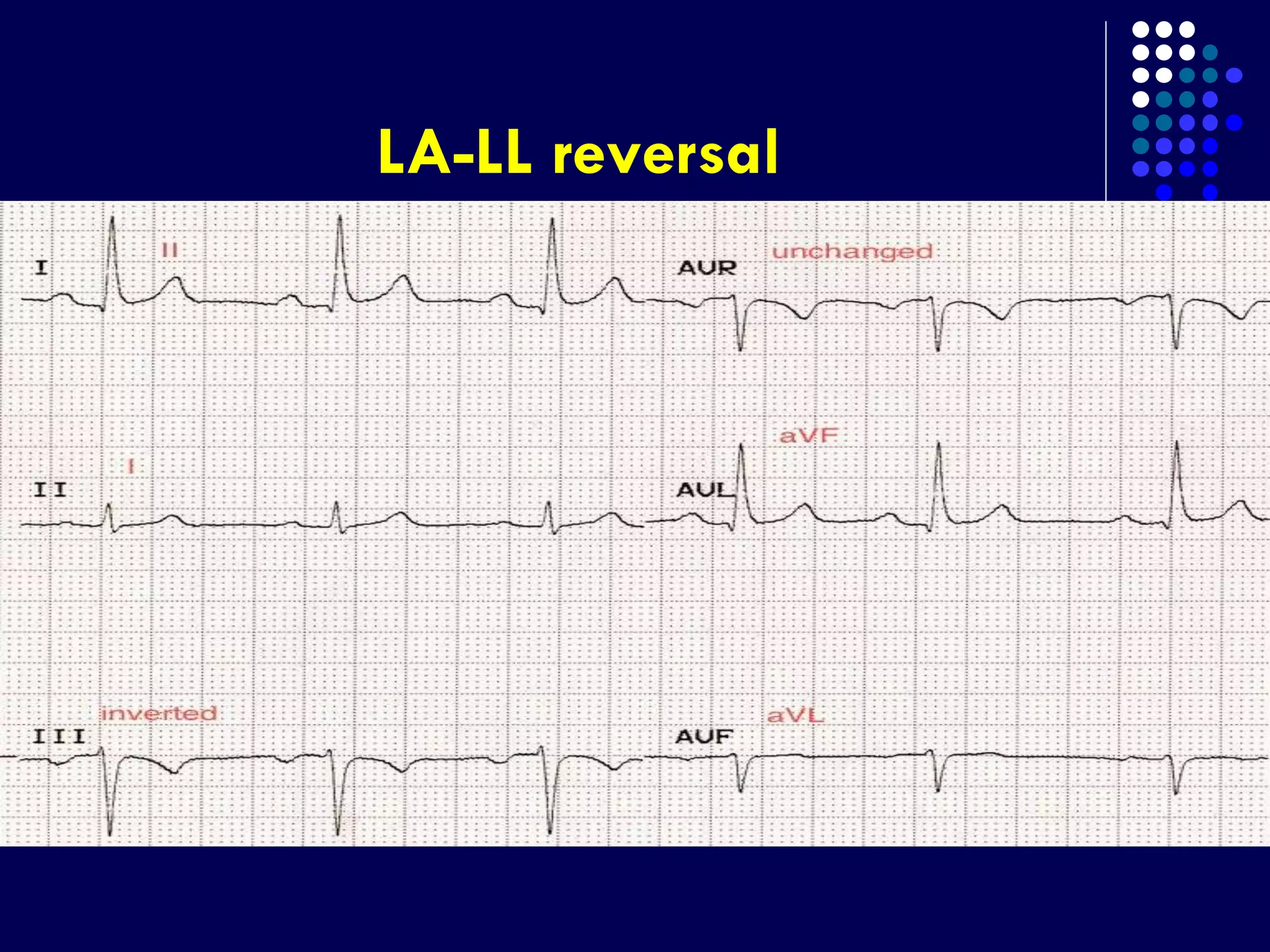
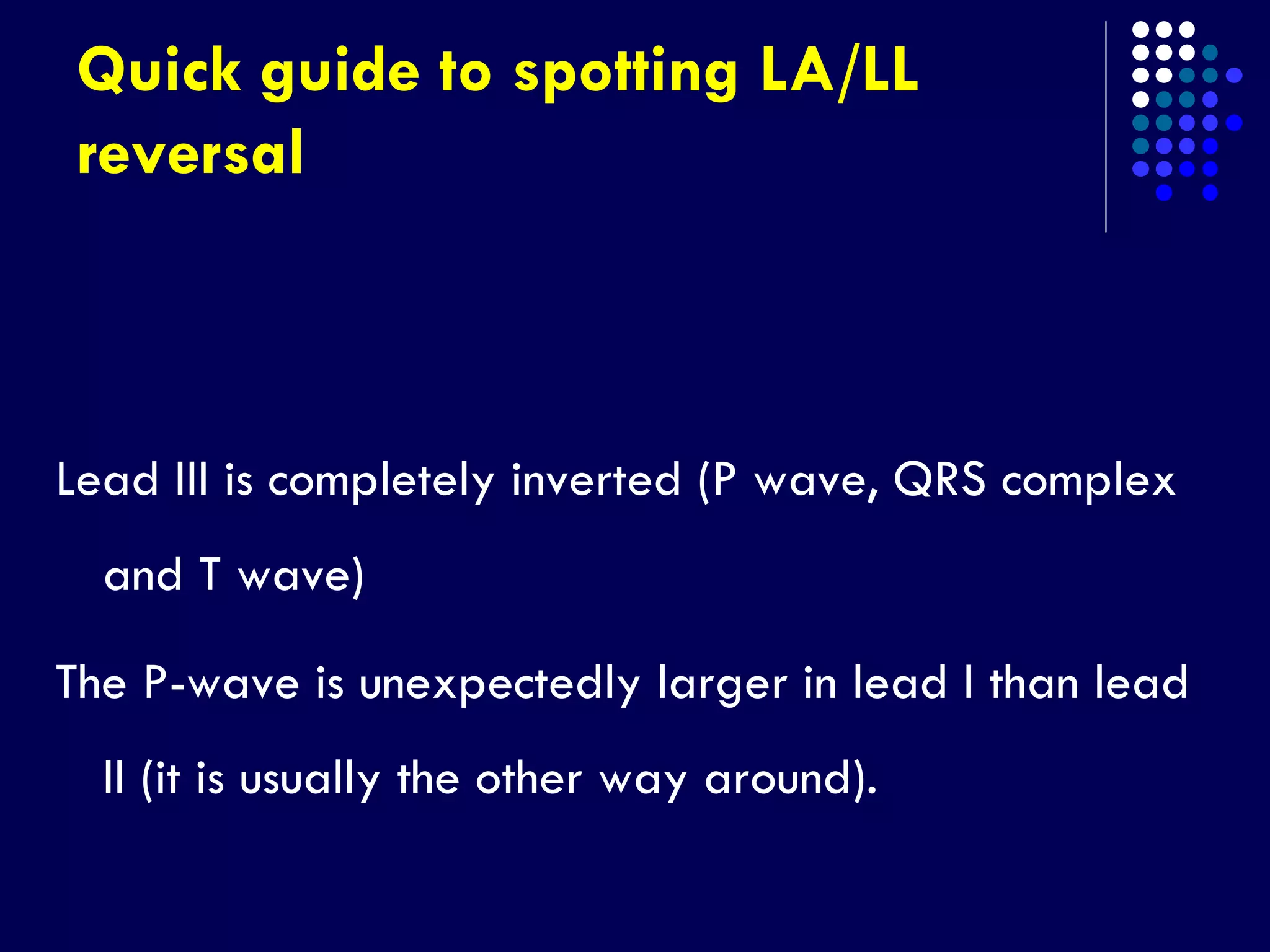
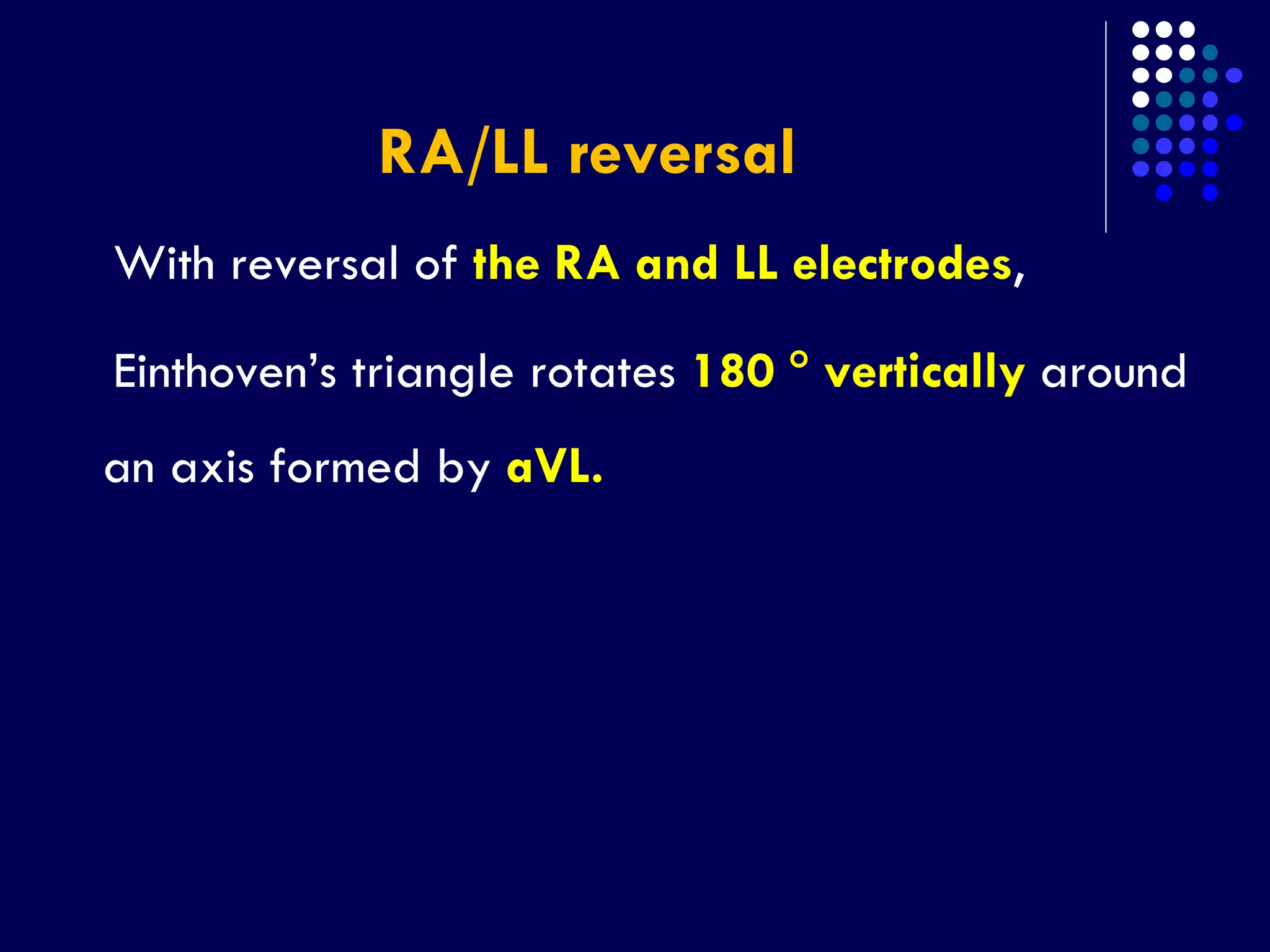
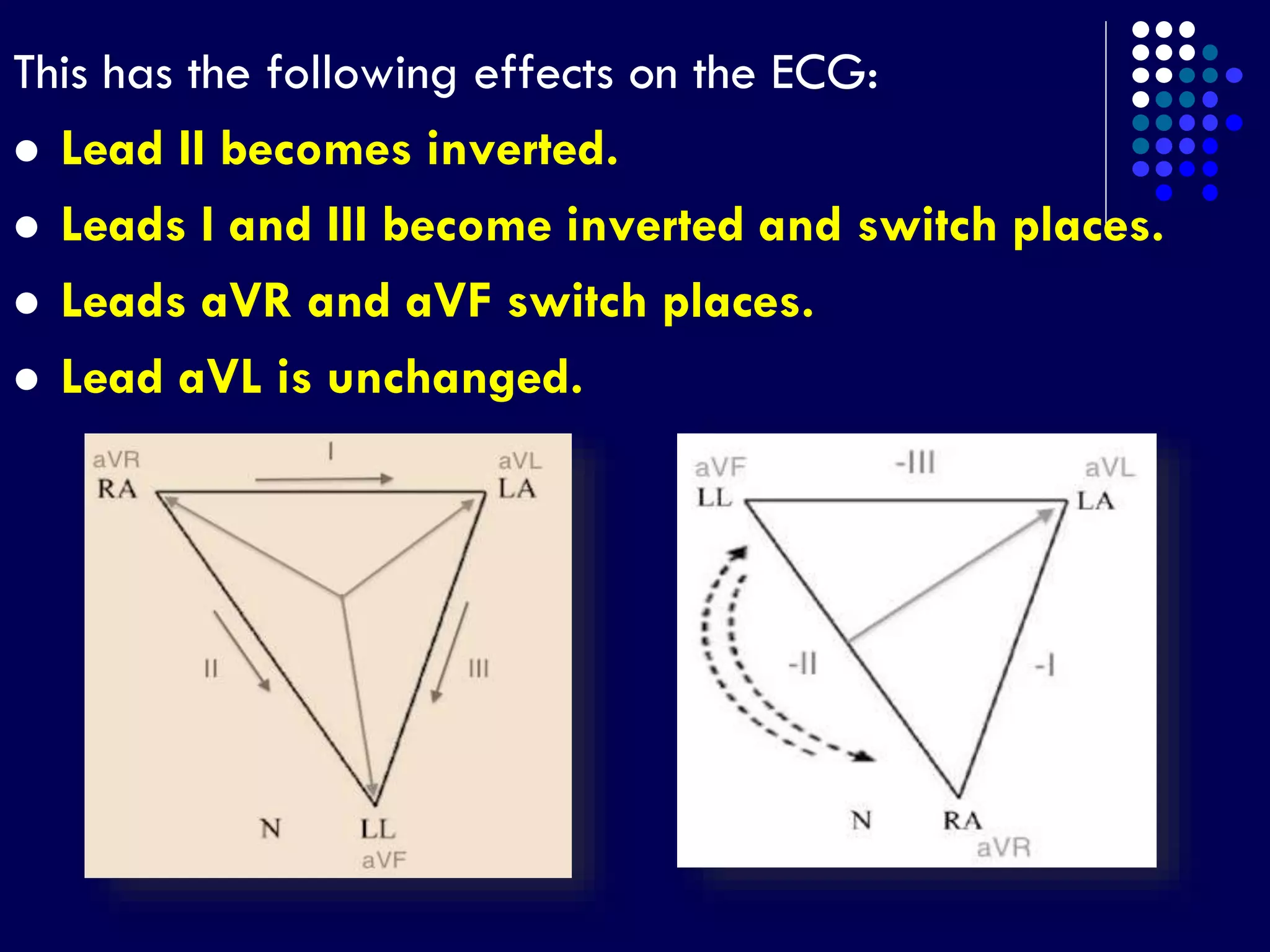
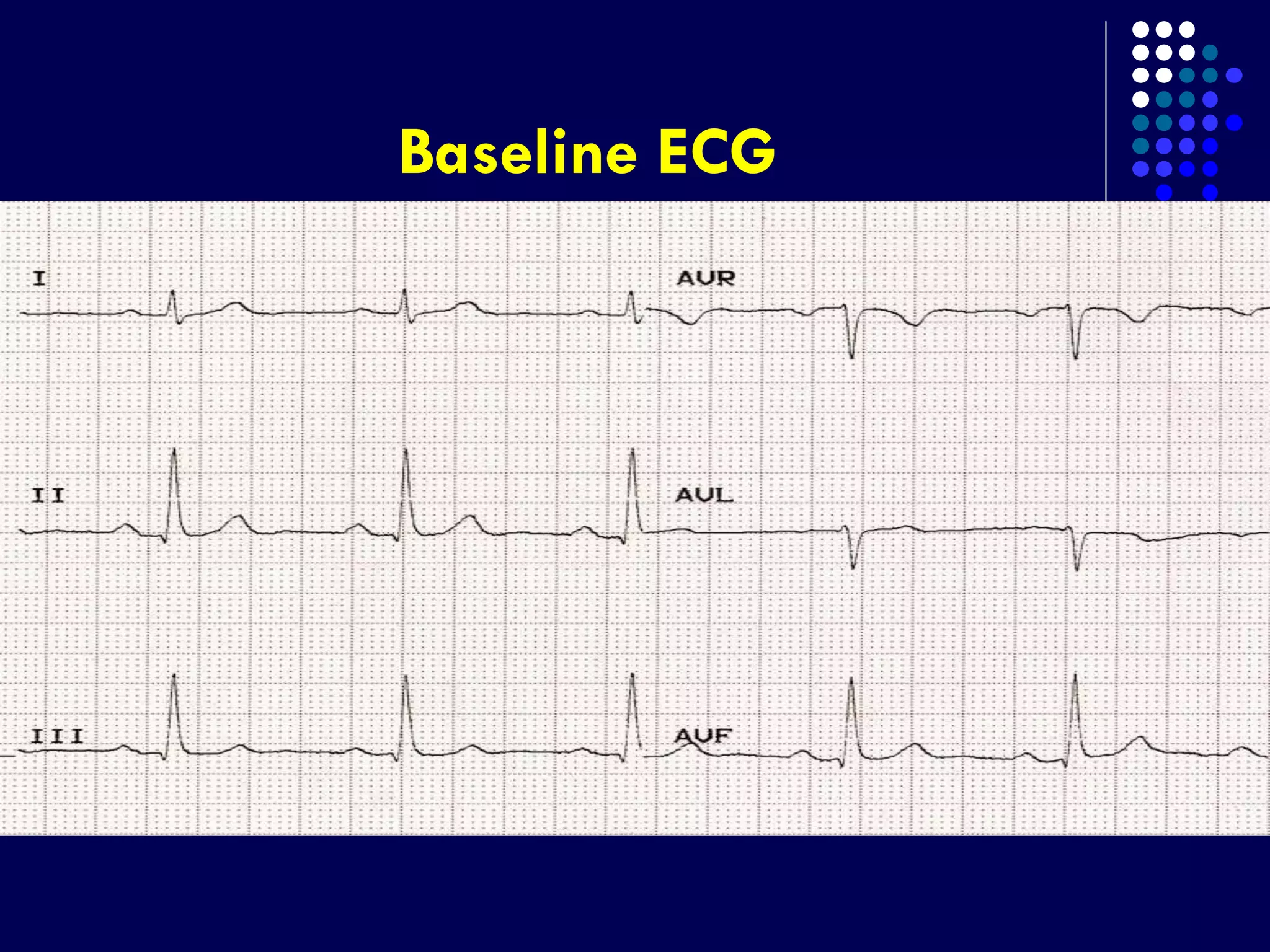
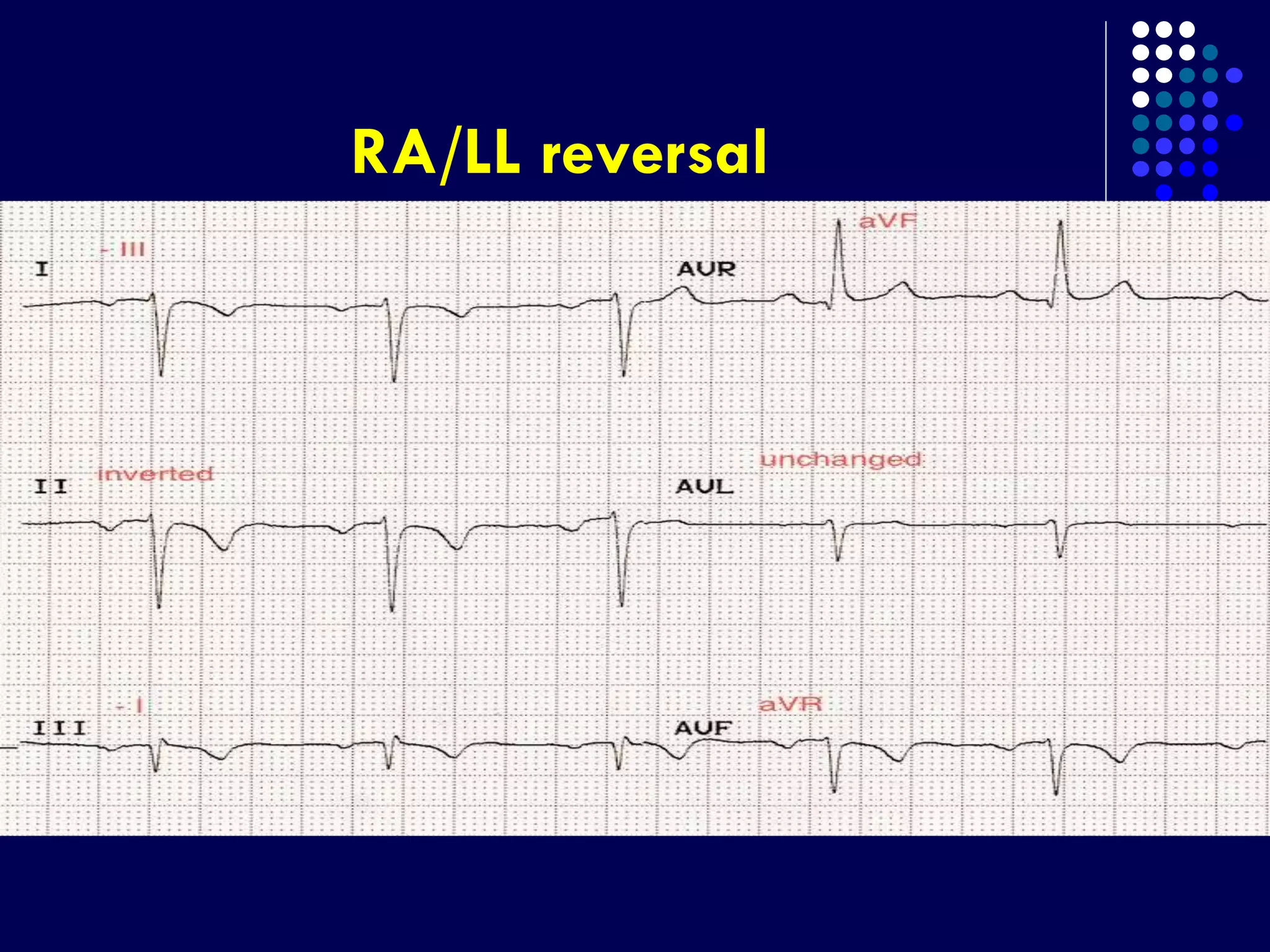
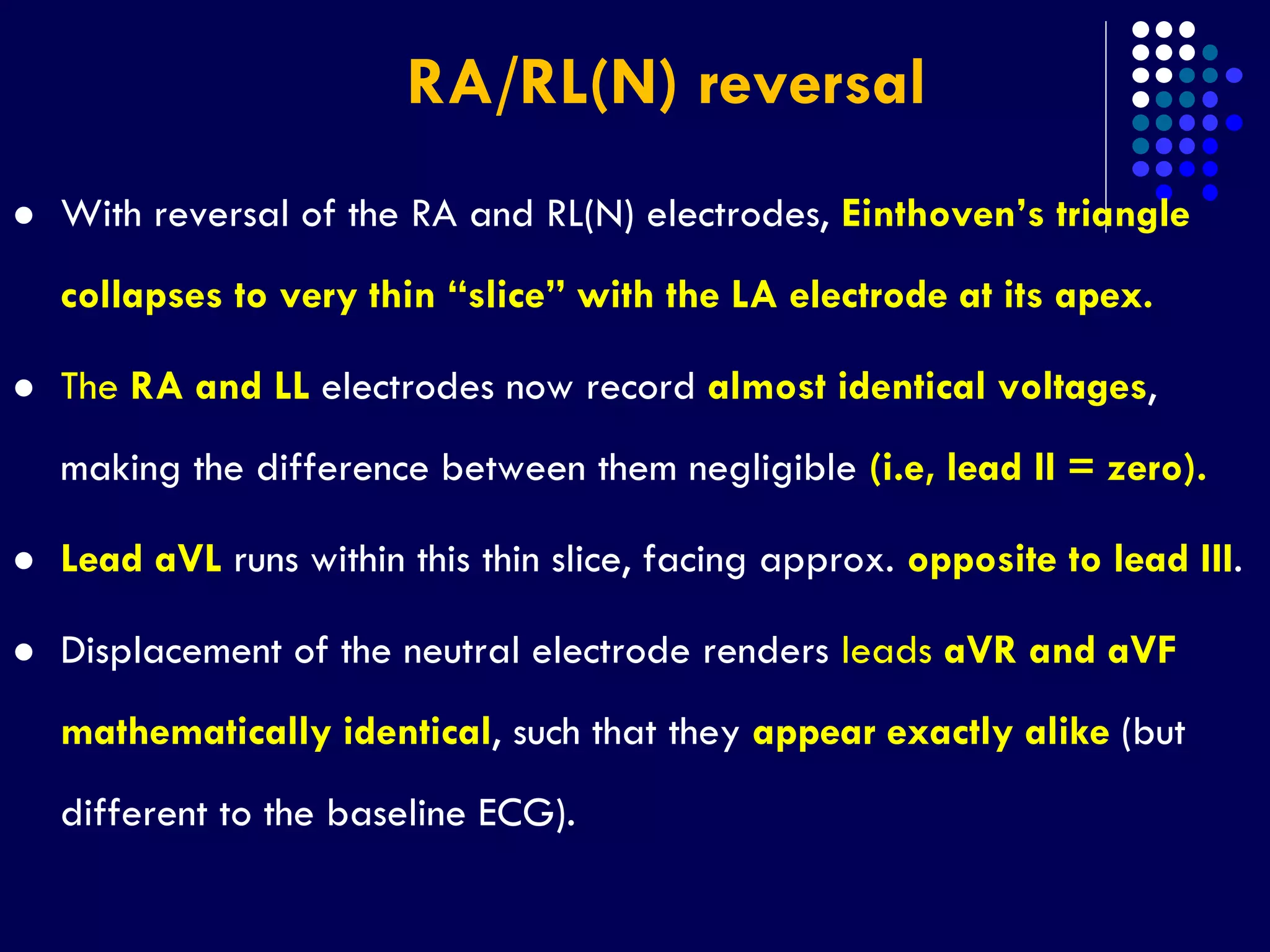
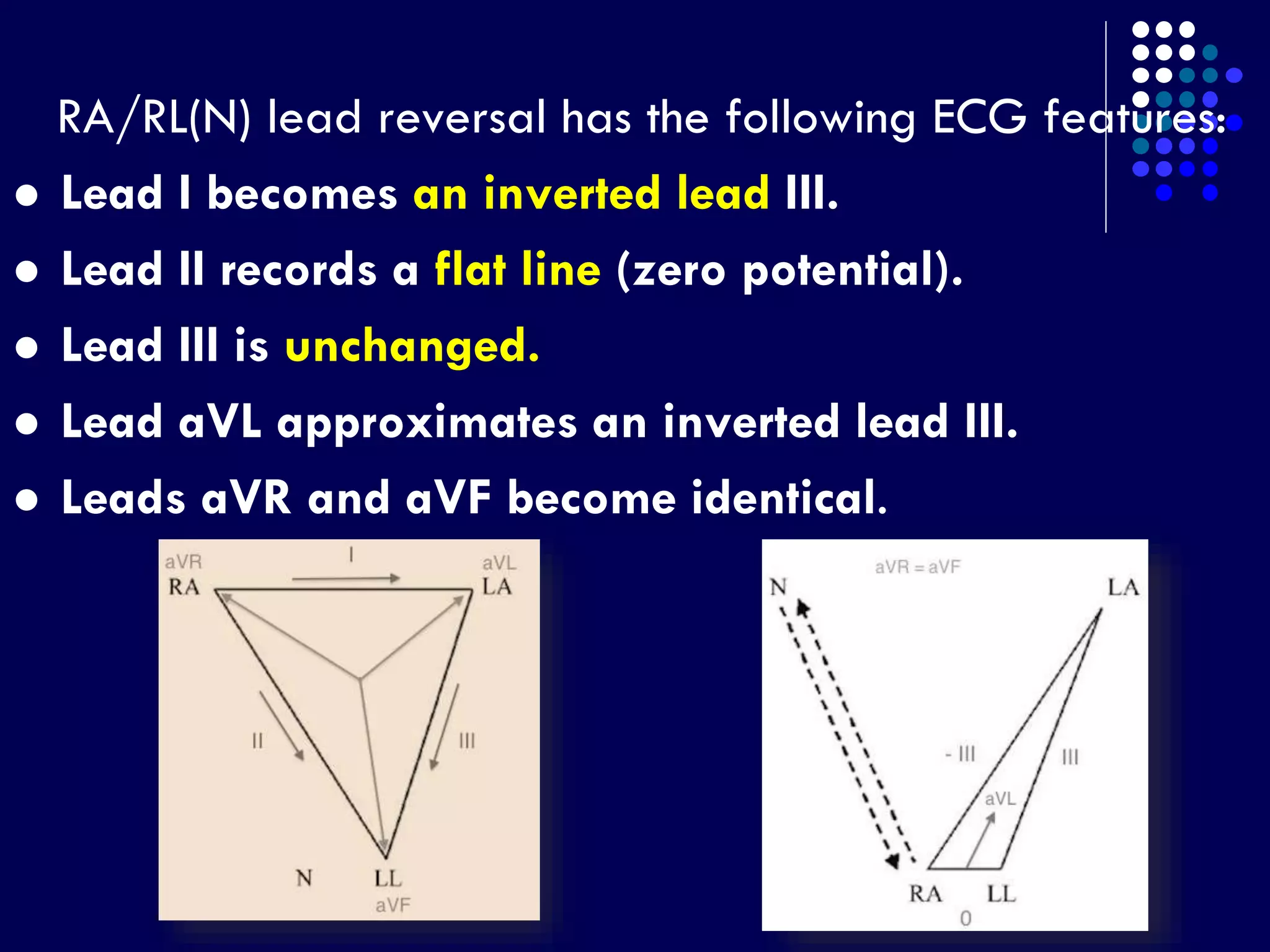

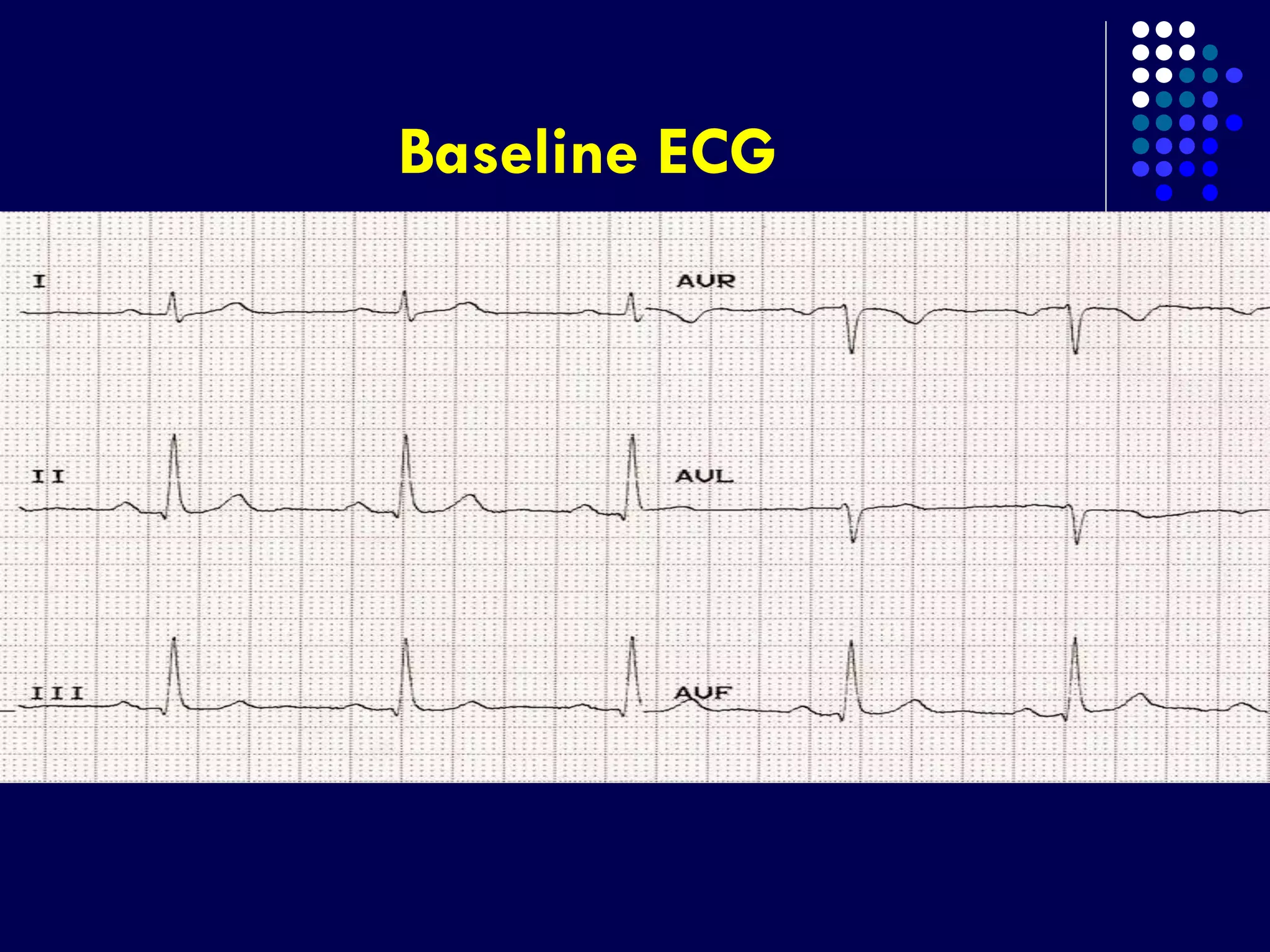
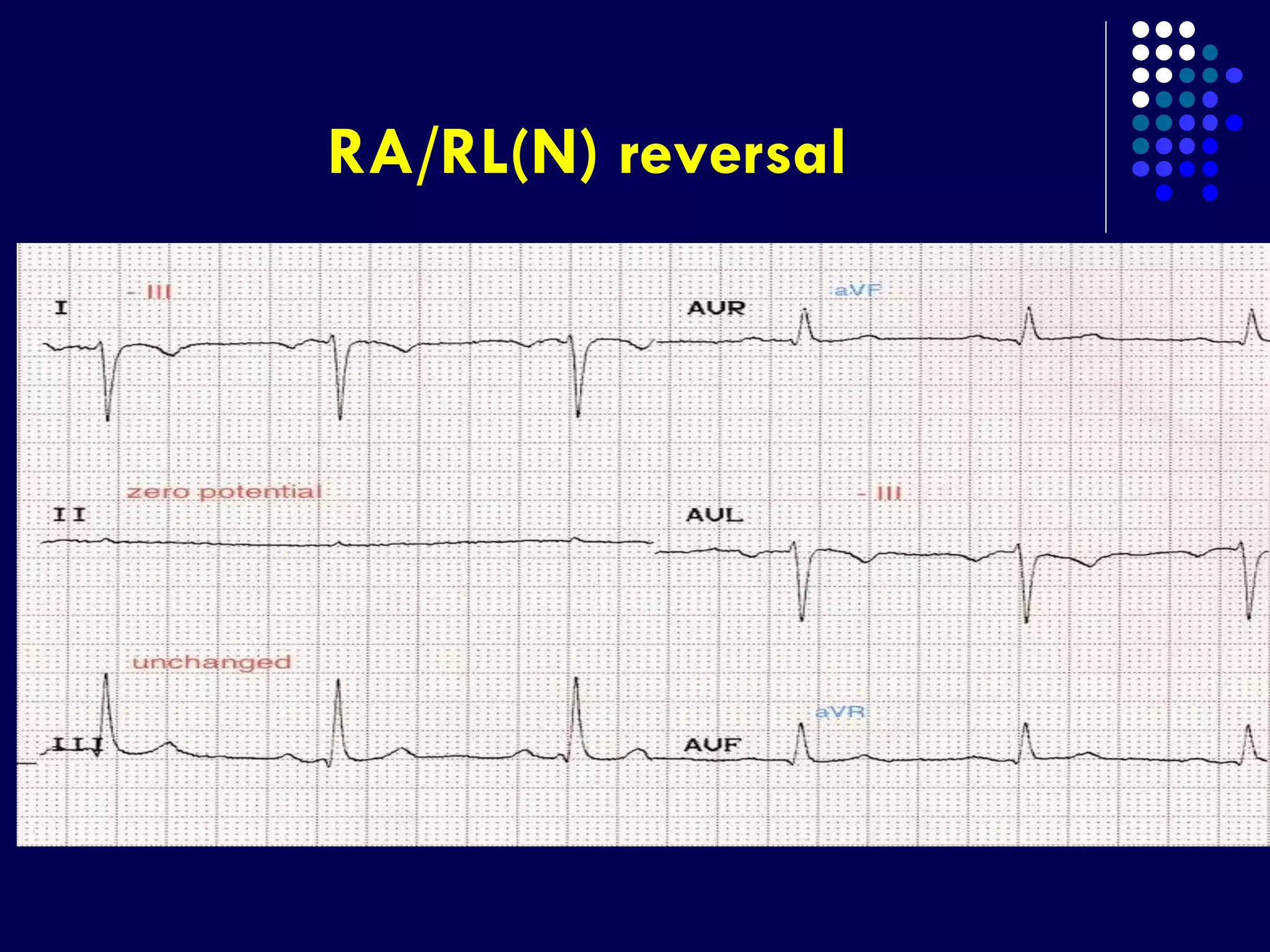
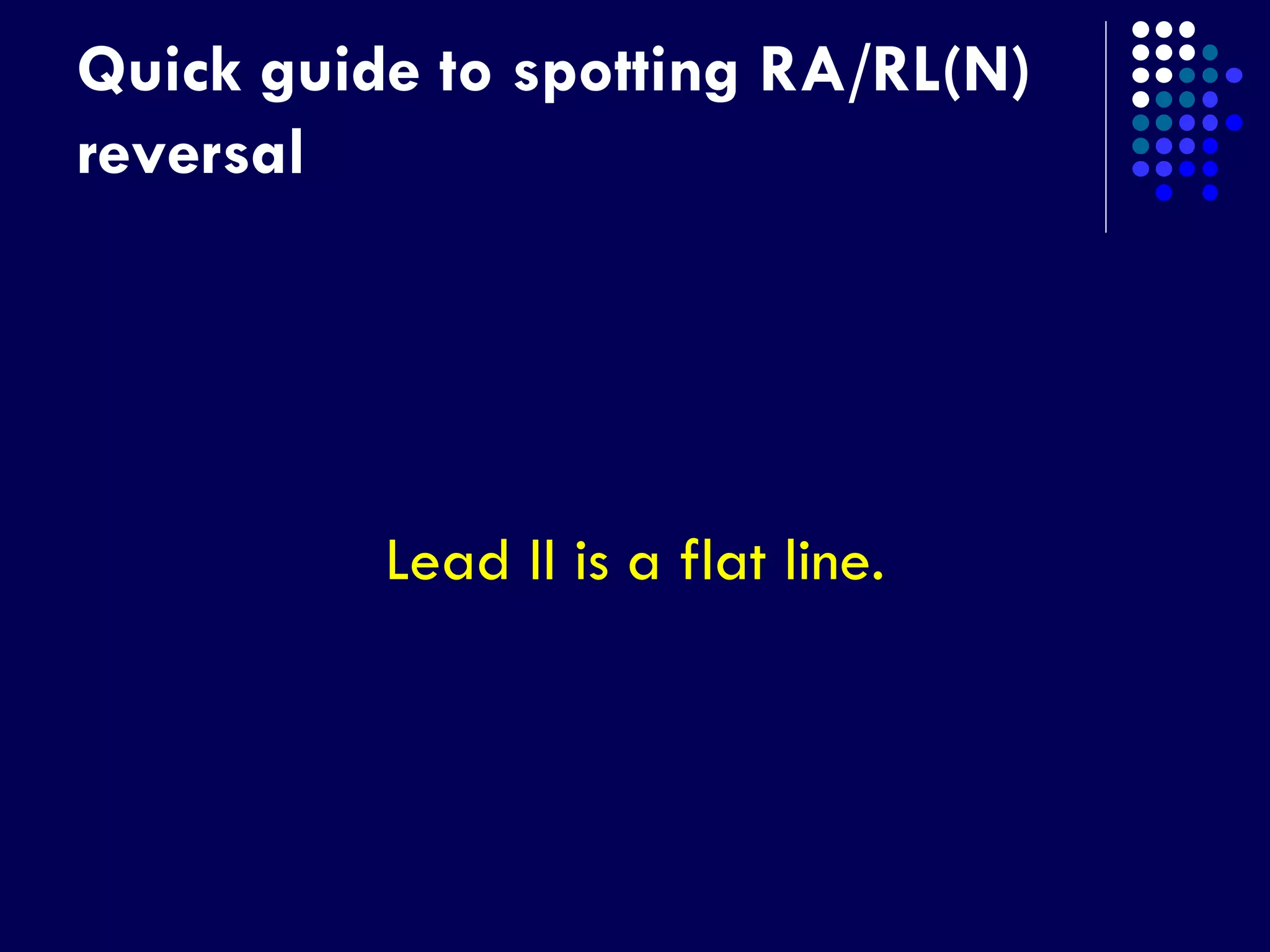
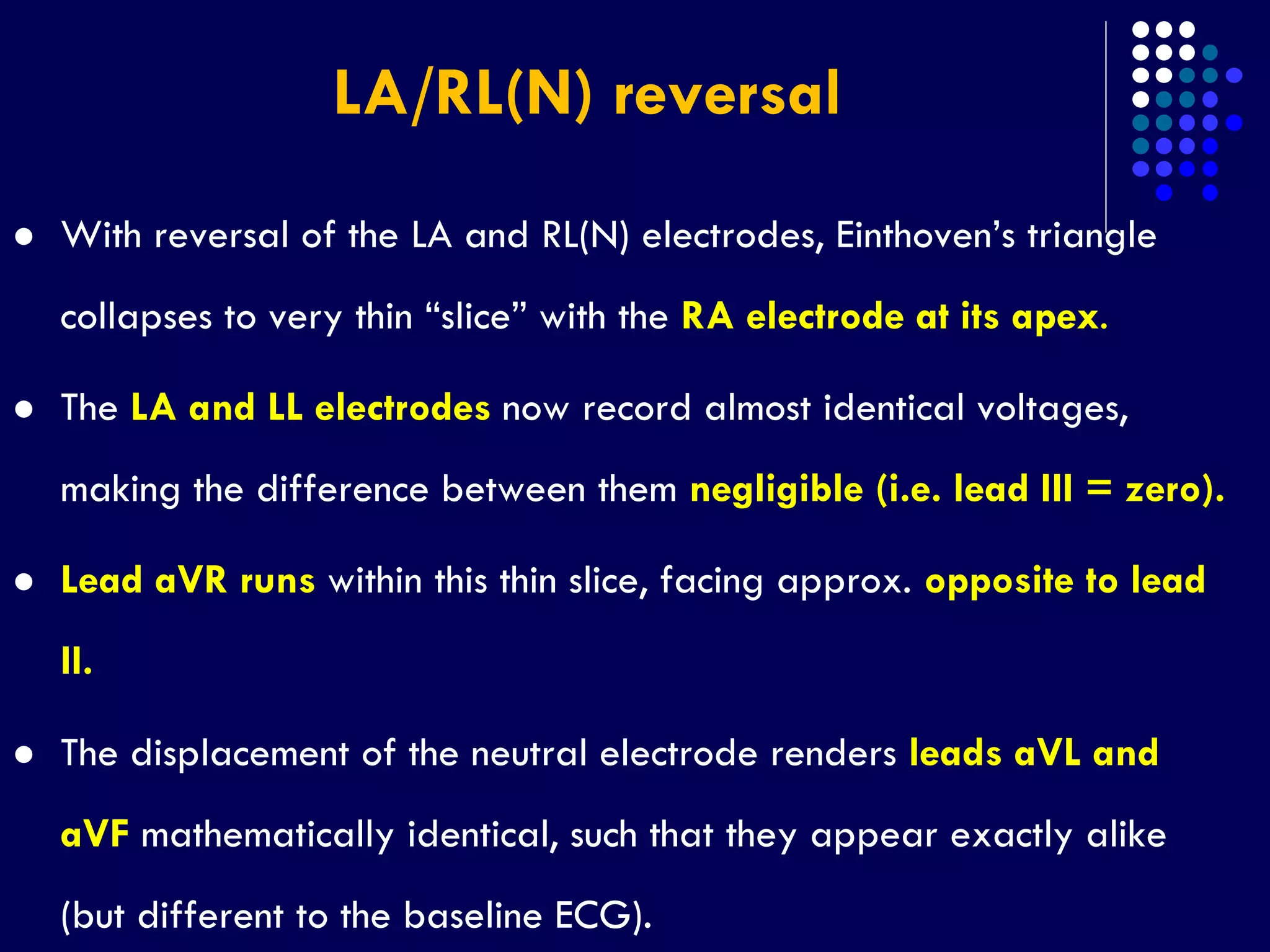
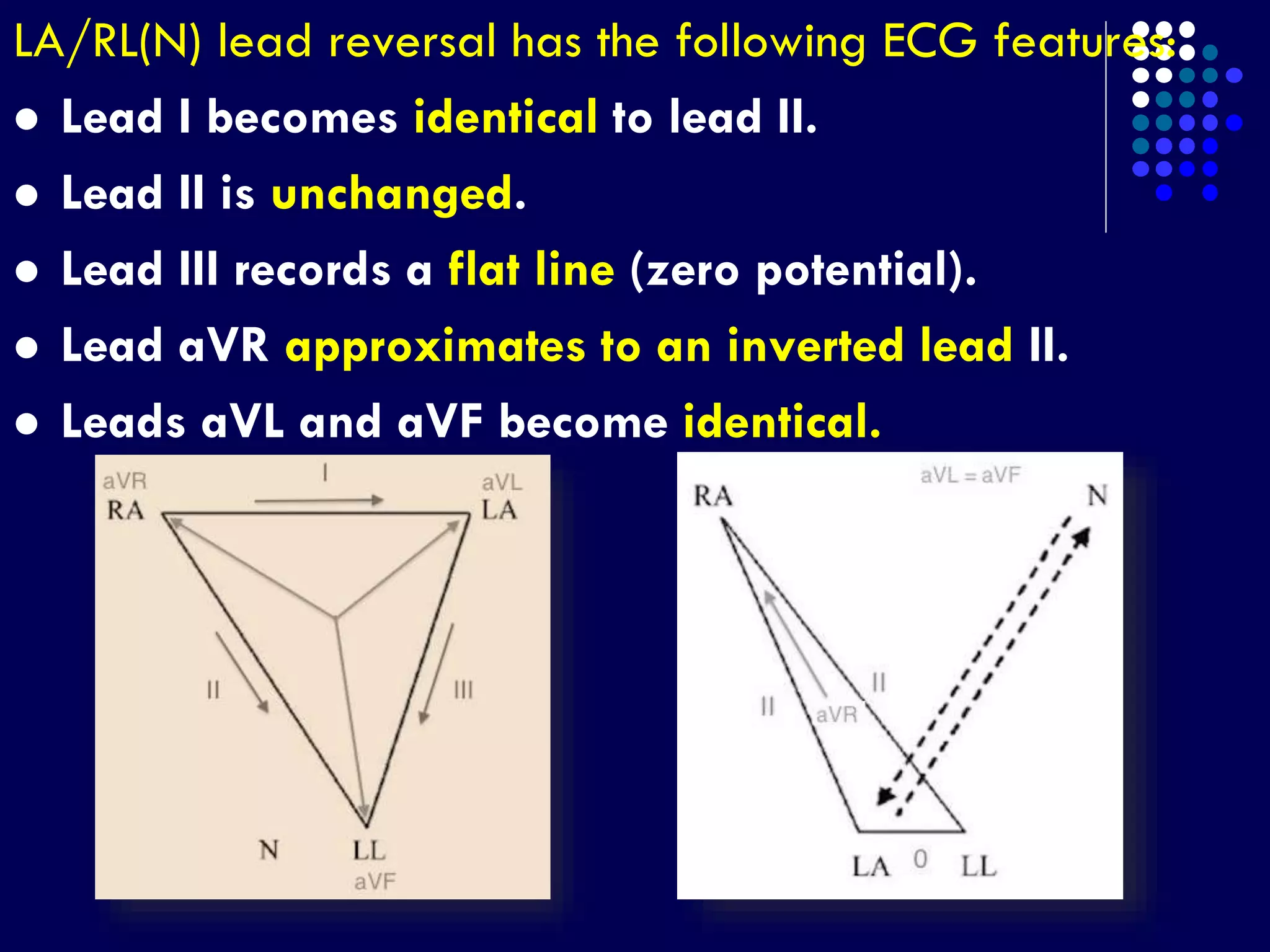

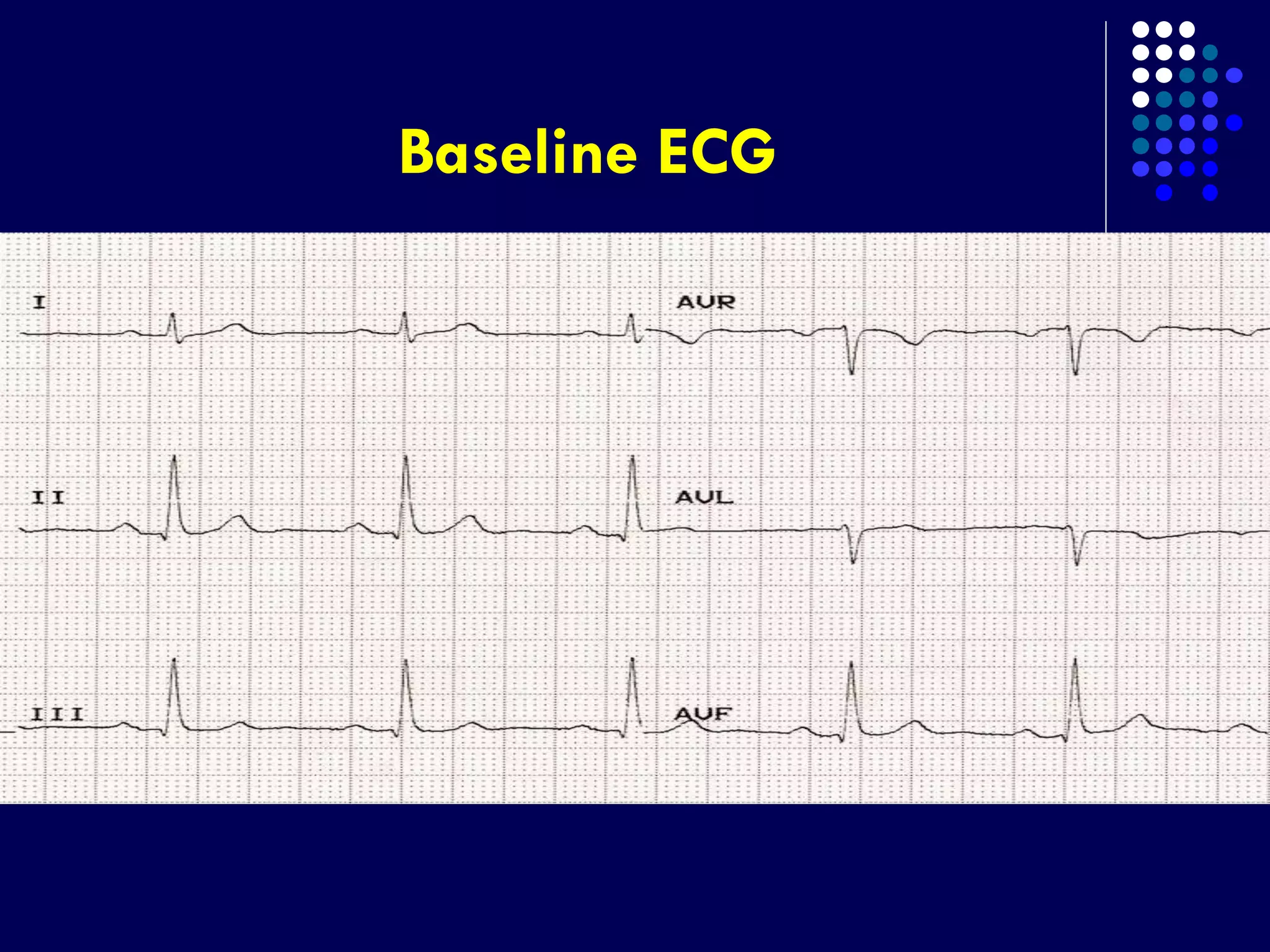
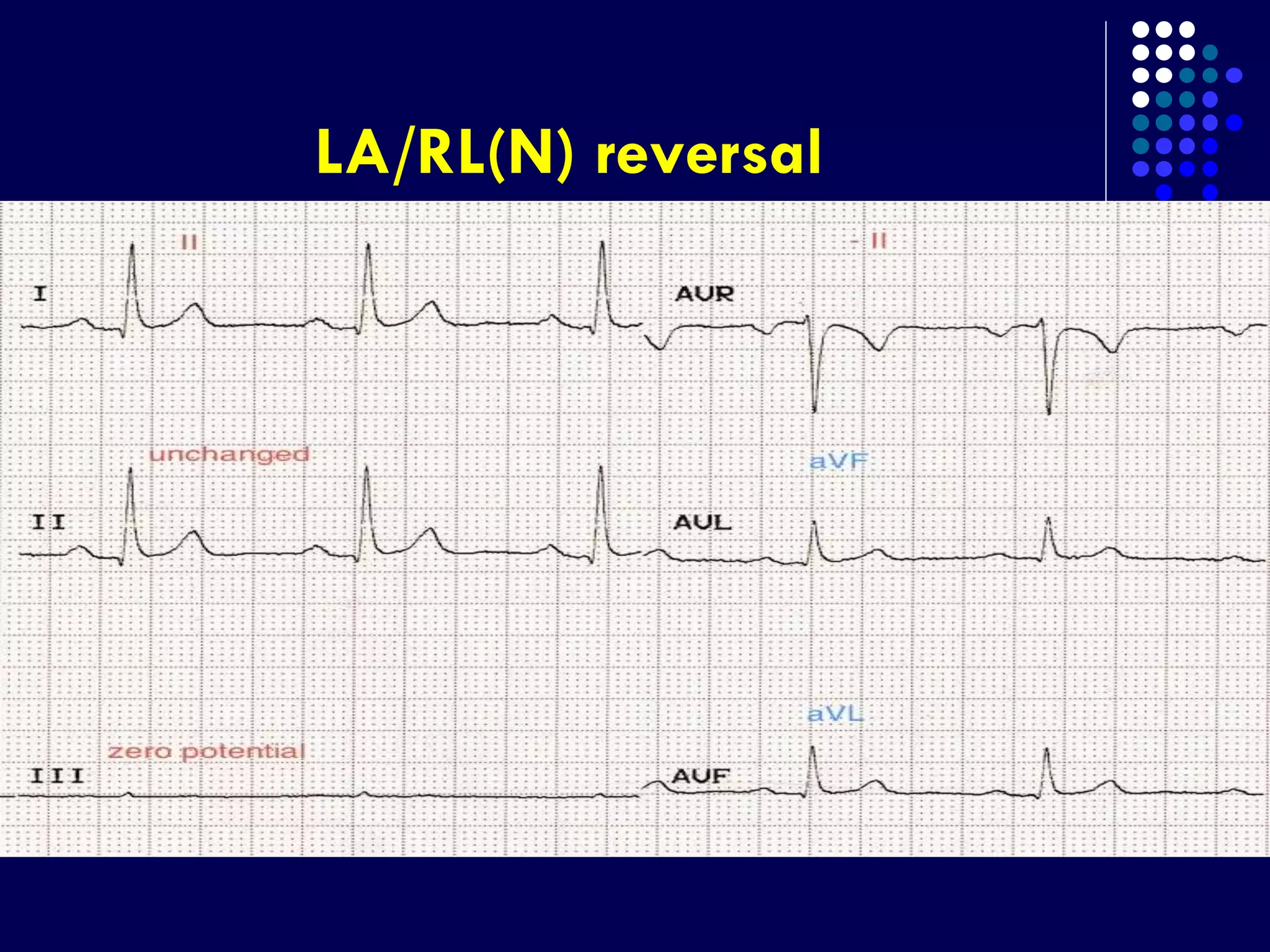
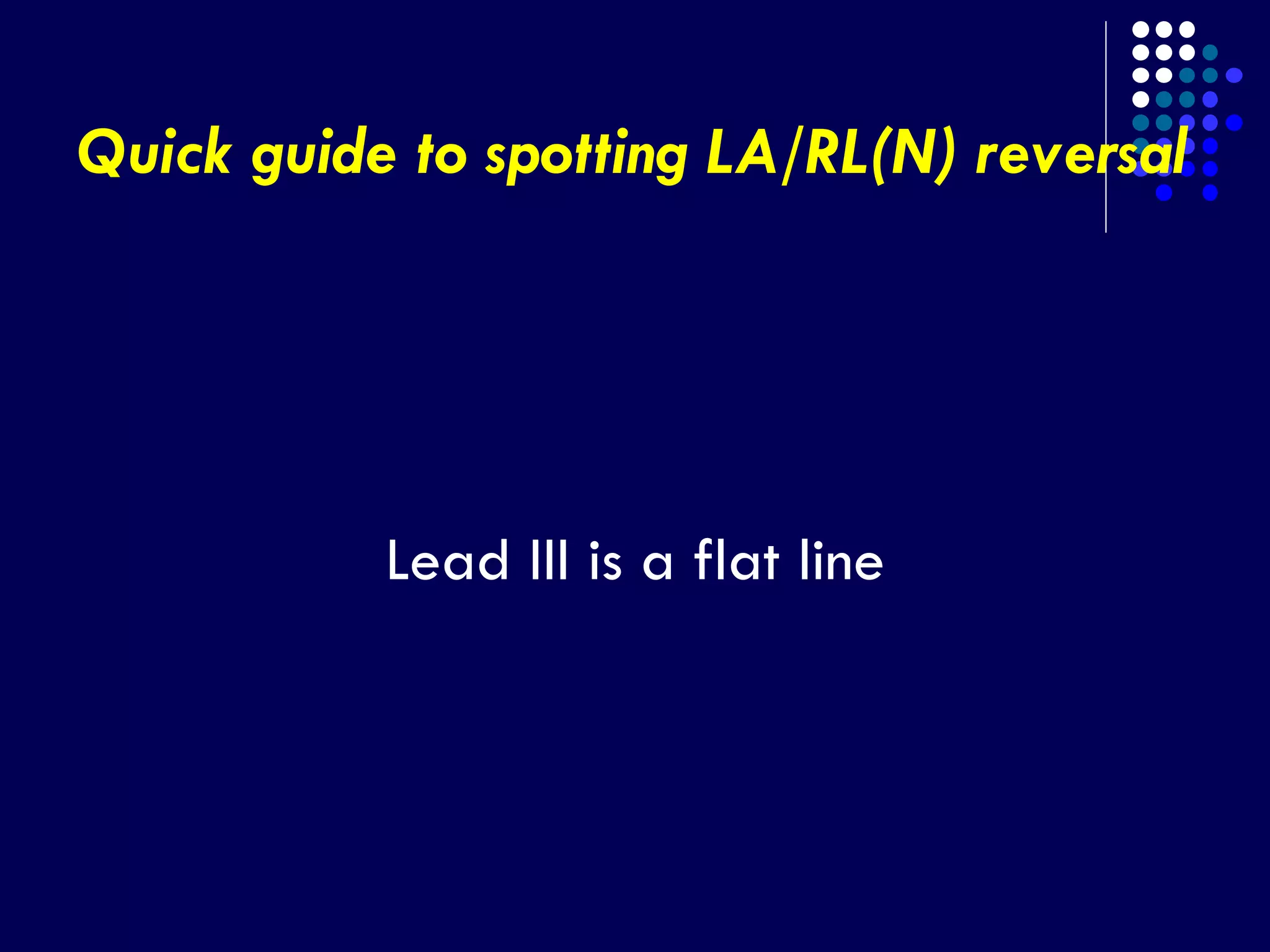
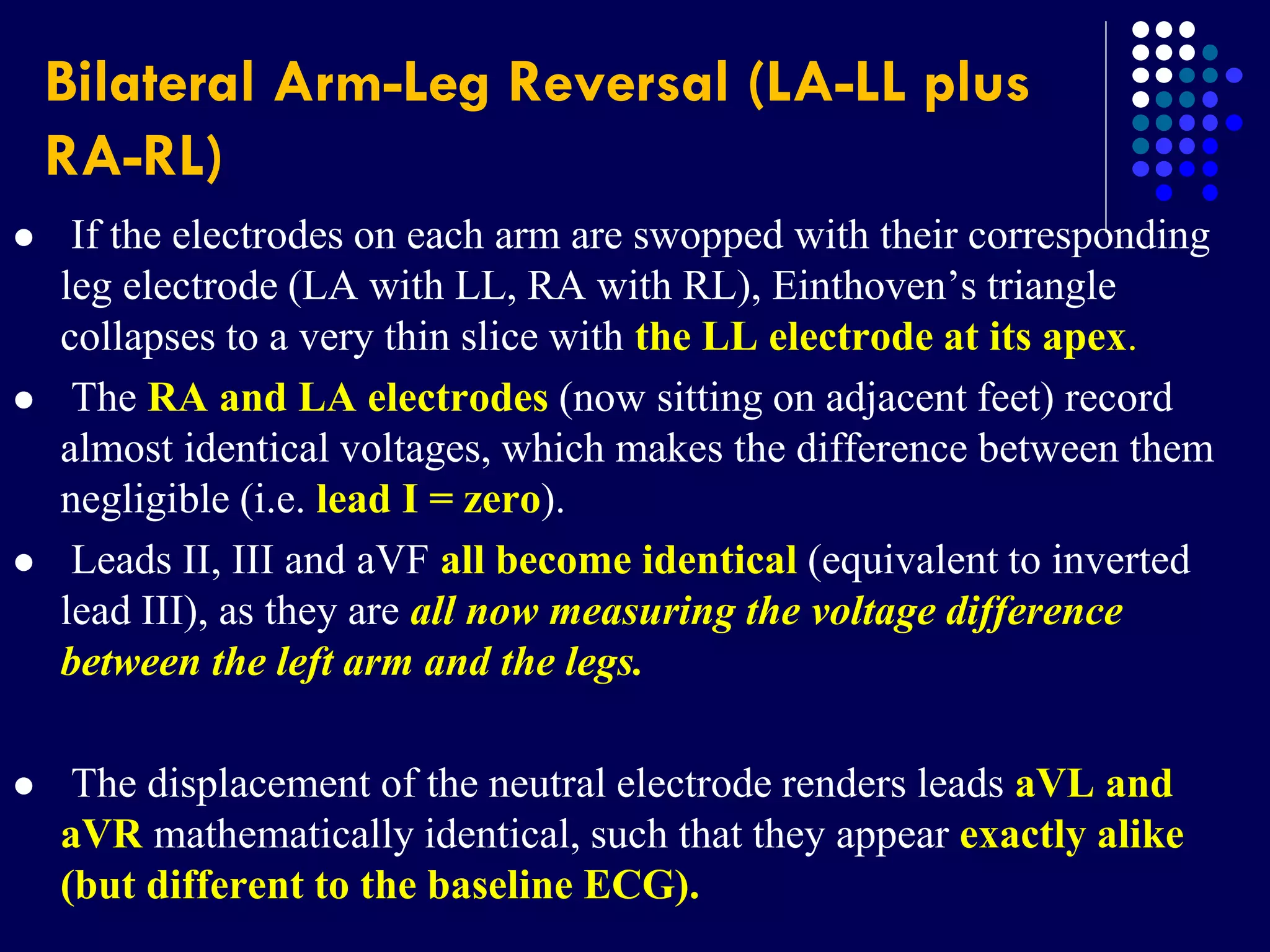


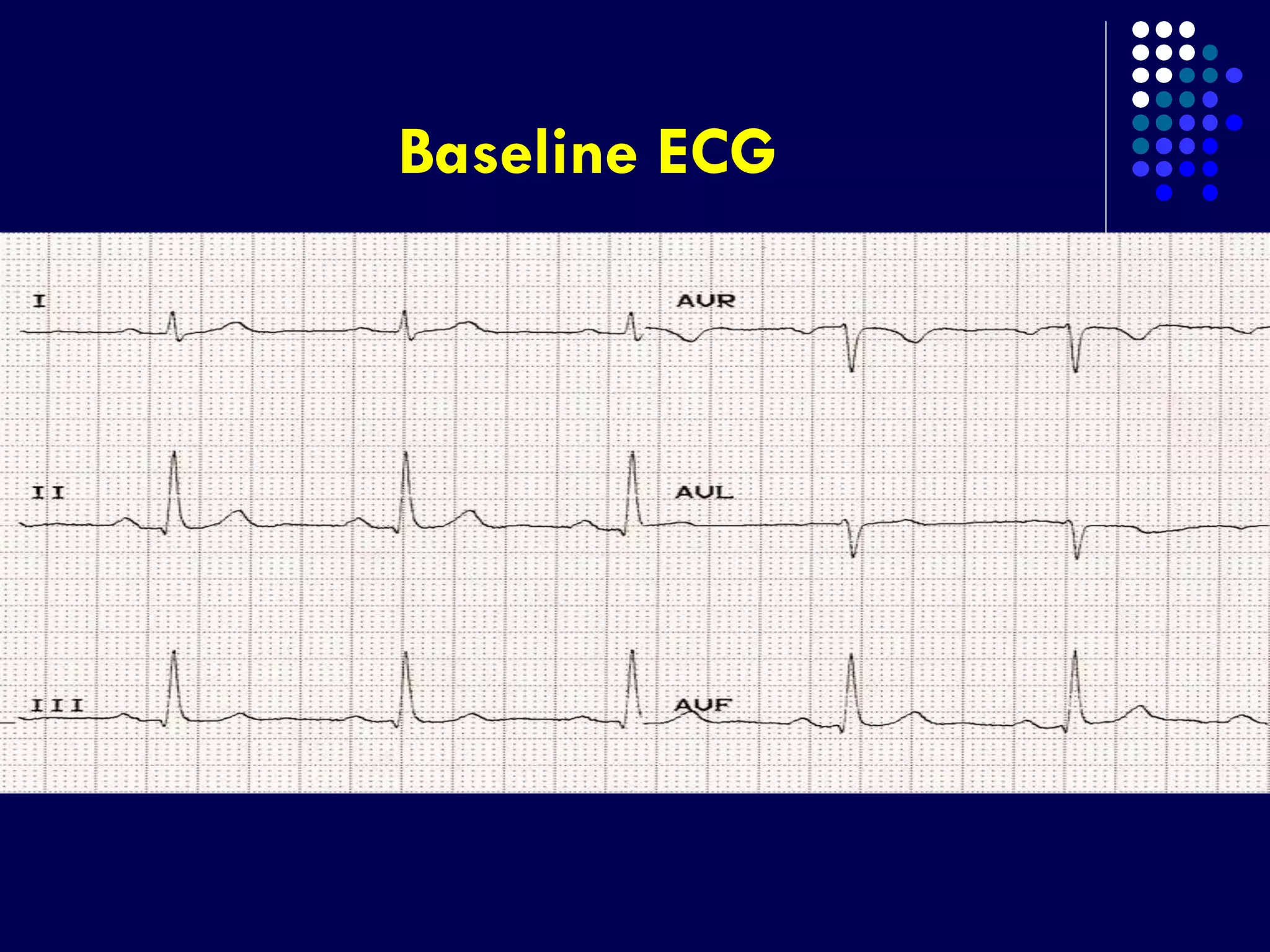
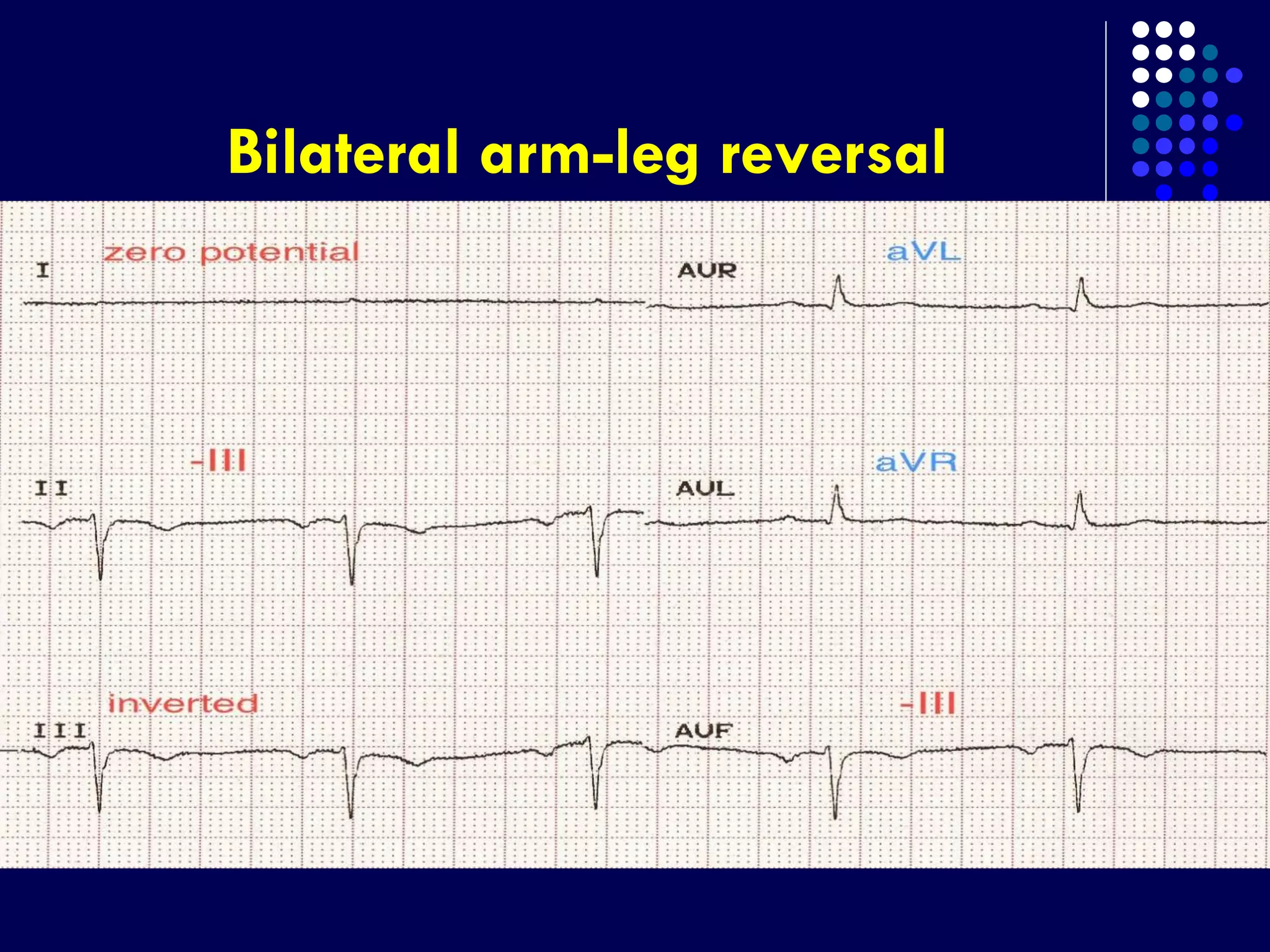

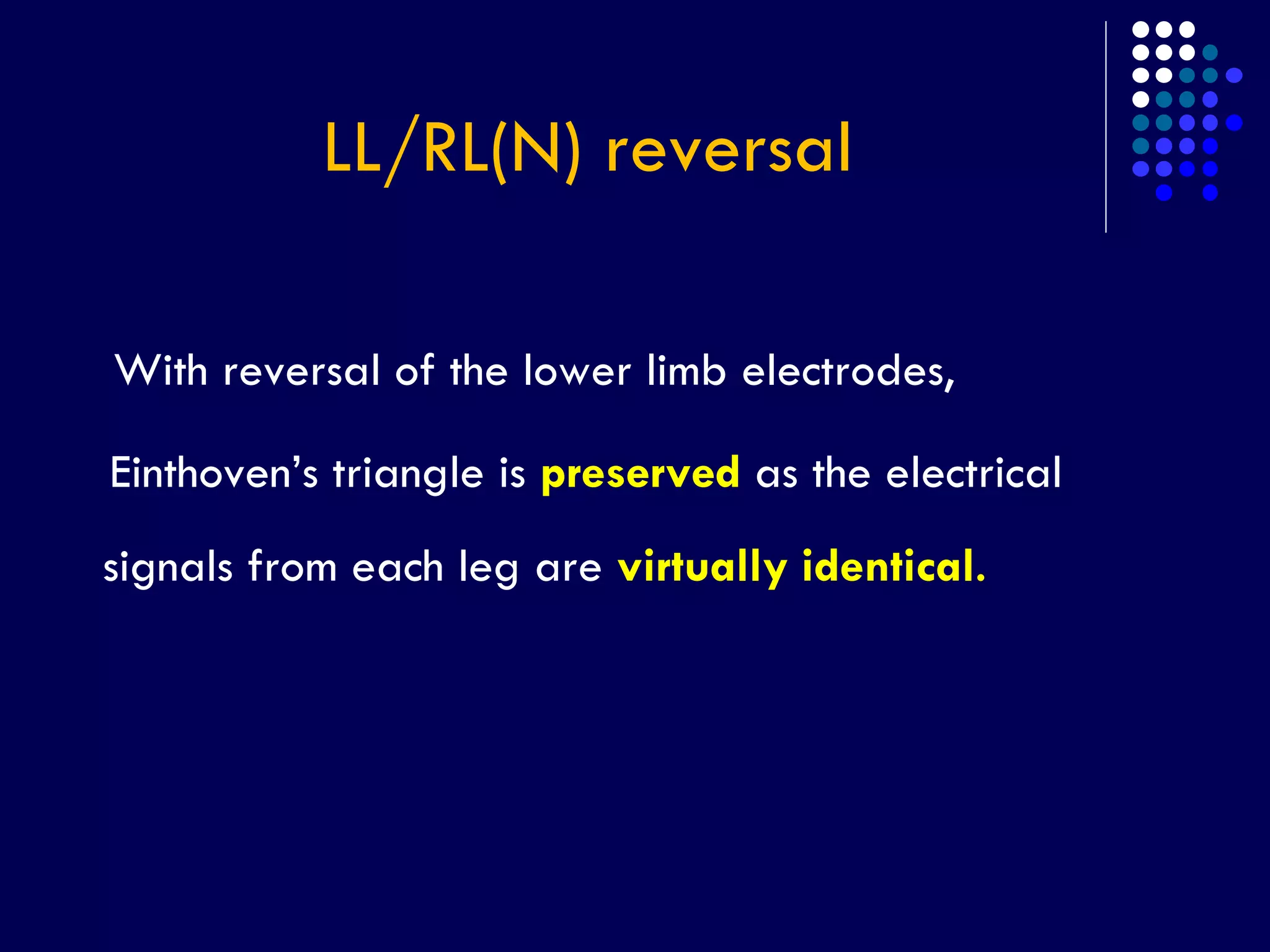

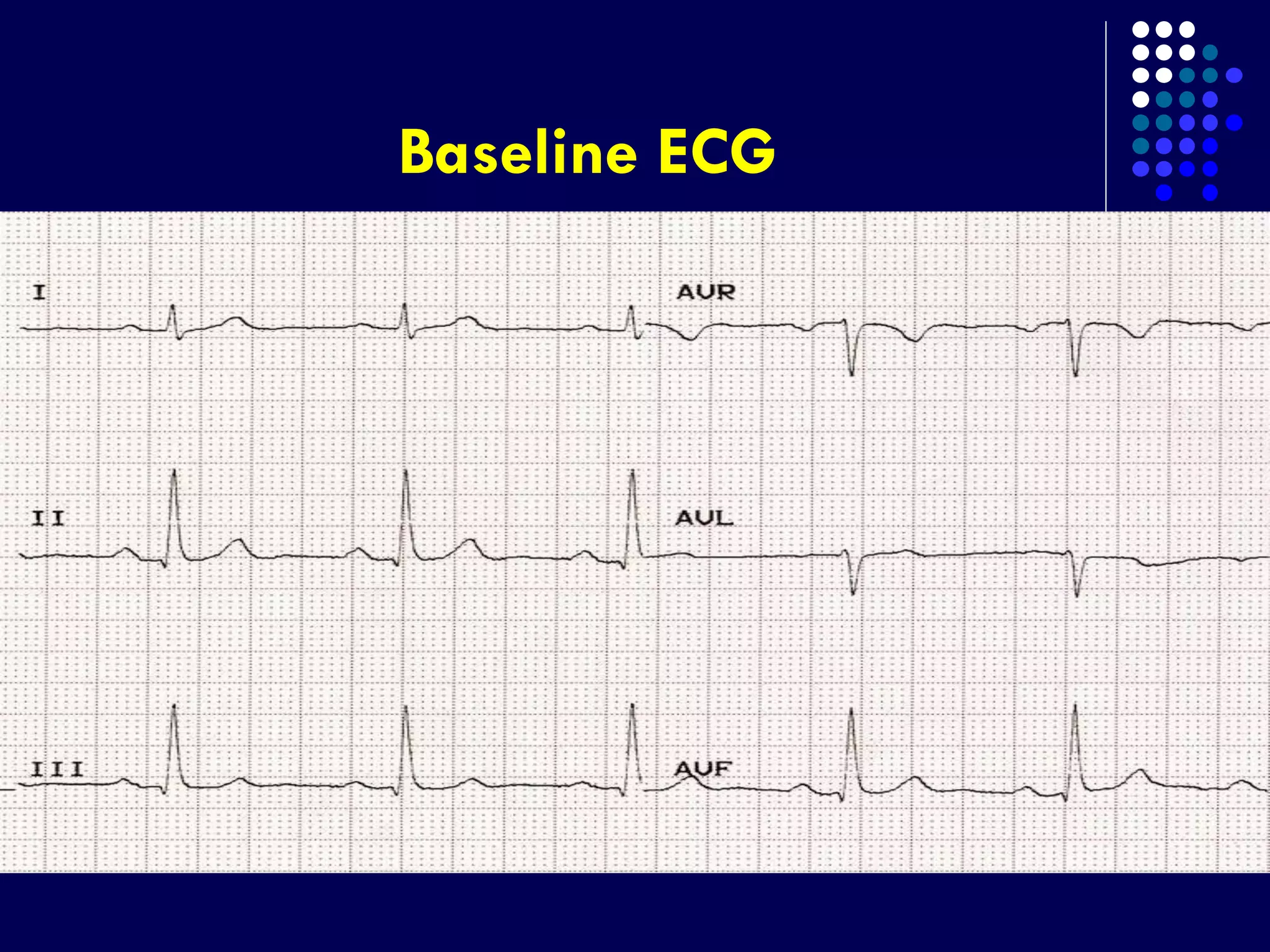
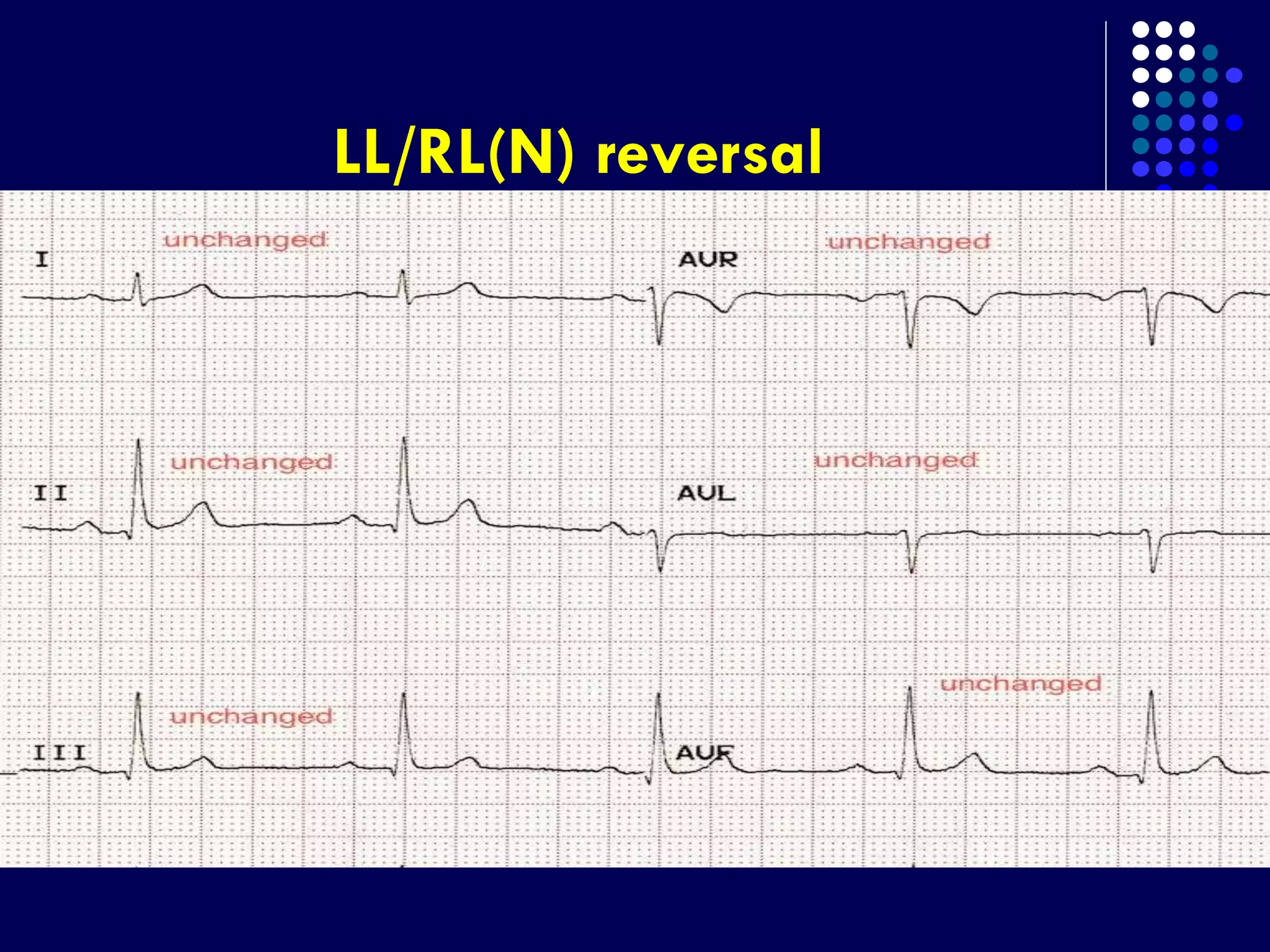



1) Accidental misplacement of limb lead electrodes can cause ECG abnormalities that mimic pathology. Understanding Einthoven's triangle and how it relates the leads to electrodes is important for interpreting these abnormalities. 2) When the limb electrodes are swapped, Einthoven's triangle "flips" or "rotates" changing which leads invert, remain the same, or switch positions. Disrupting the triangle also distorts the central terminal altering all leads. 3) Specific electrode reversals cause predictable changes - LA/RA reversal inverts lead I; LA/LL reversal inverts lead III; bilateral arm-leg reversal makes lead I flat and leads II/III/aVF identical.


