ECG QUIZ
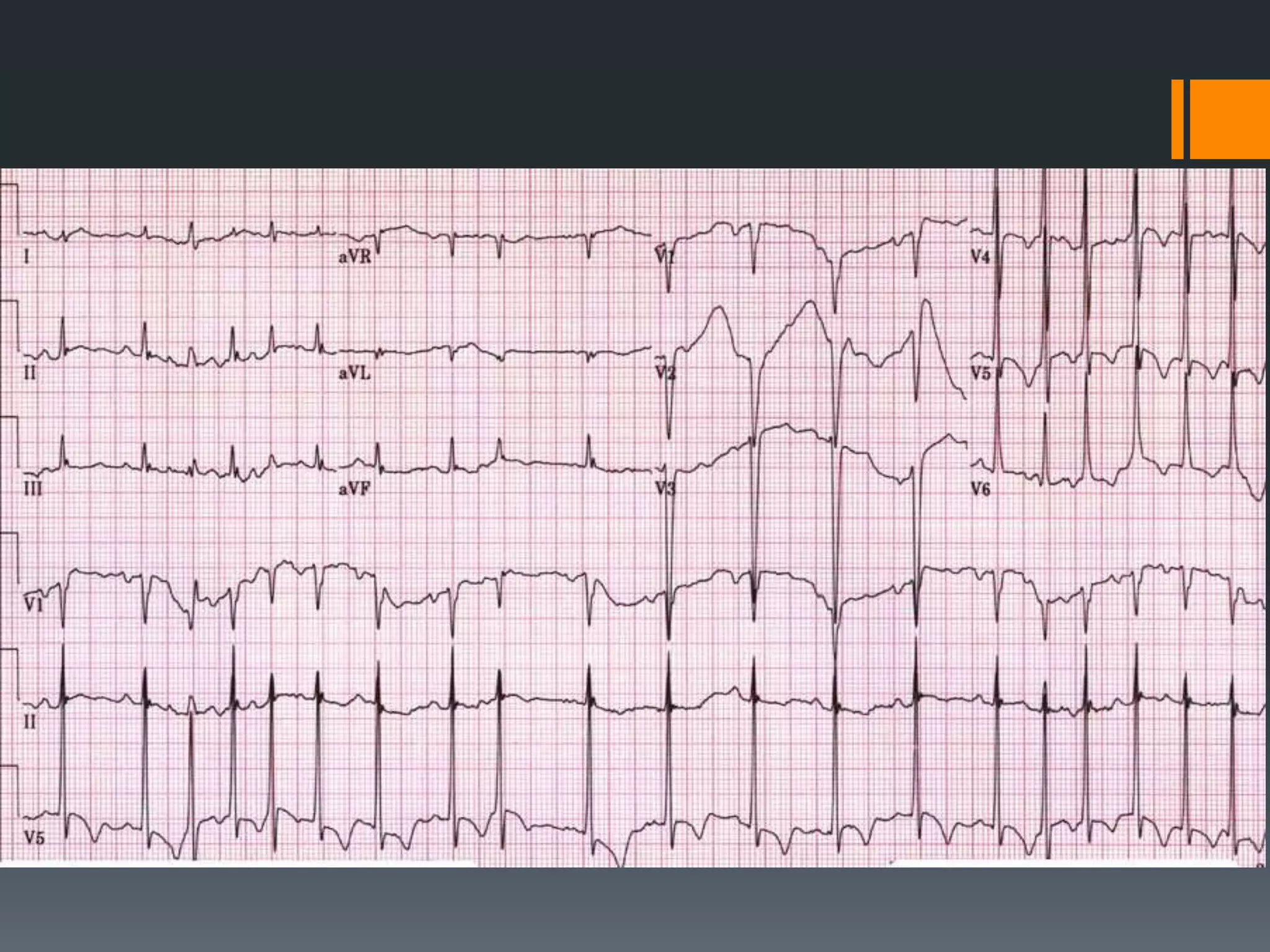
LIMB LEAD REVERSAL
 LA and RA reversal
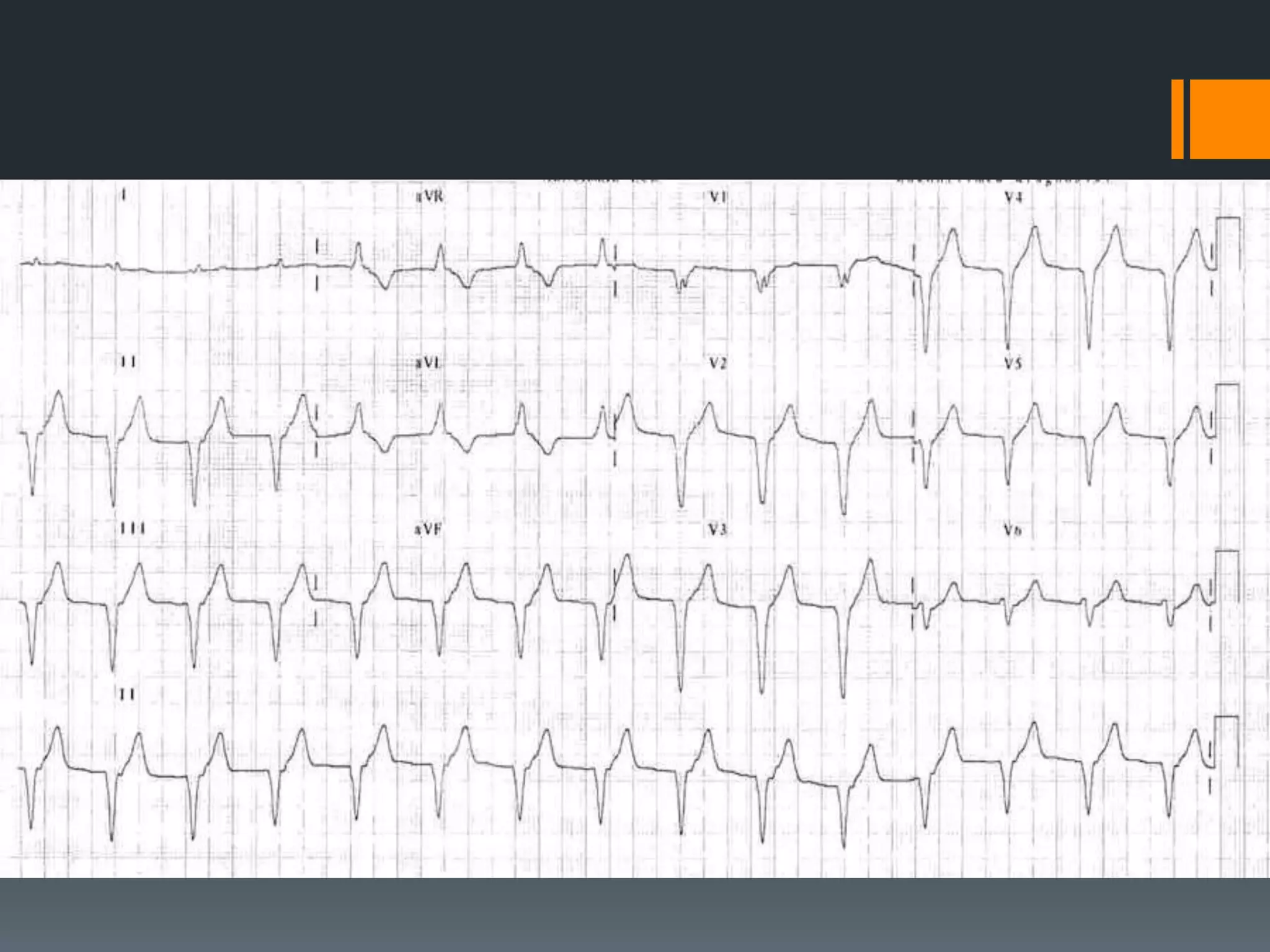
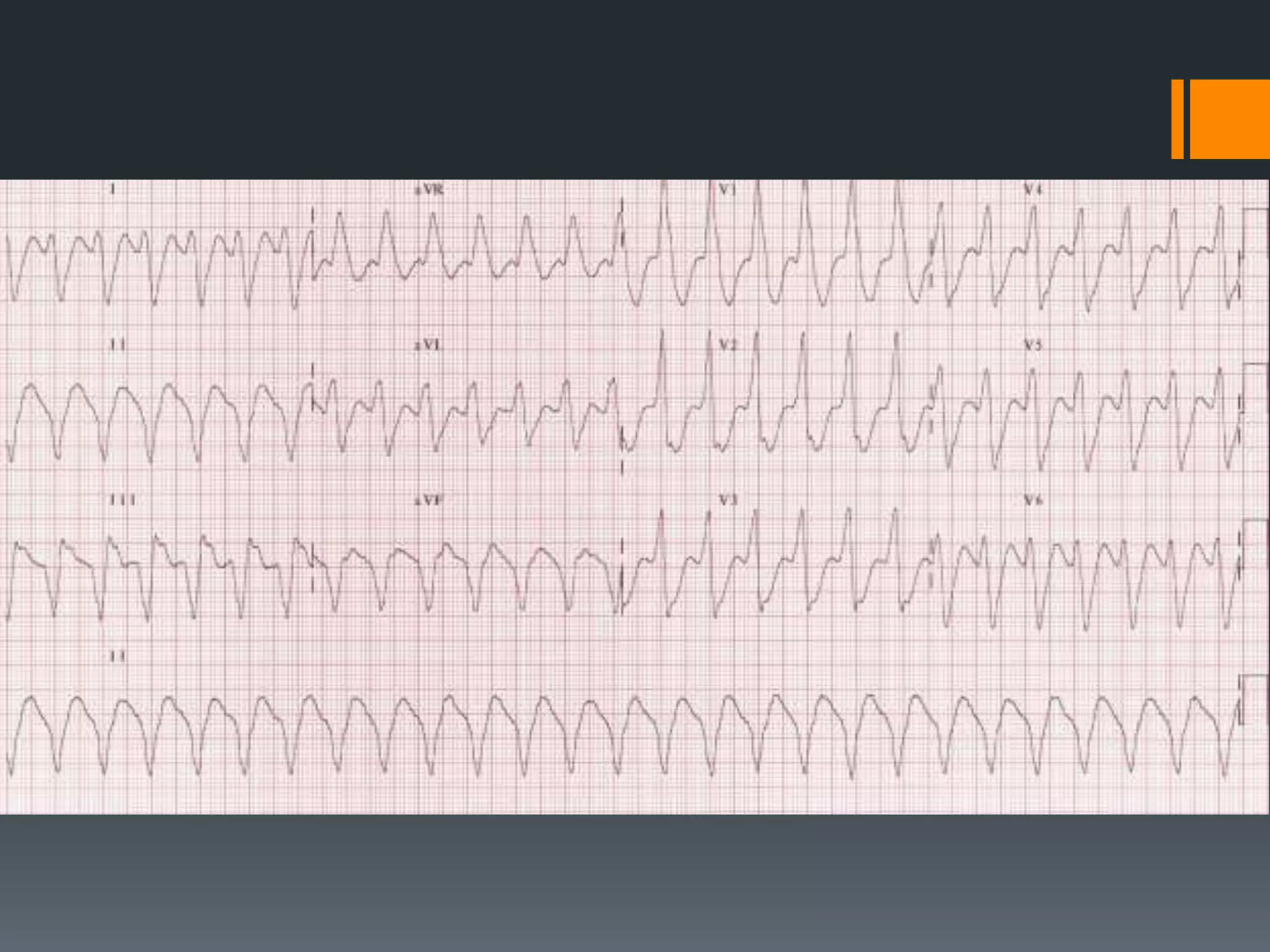
SINE WAVE PATTERN ECG
 Typical of Hyperkalemia
 Increased chances of asystole.
 Inj. Calcium gluconate IV to be given before control of
hyperkalemia.
 Insulin infusion ,injection lasix and B agonists have faster
action .
ACCELERATED
IDIOVENTRICULAR RHYTHM
 Accelerated because rate more than 50 and less than 100 bpm
 Also called as slow VT
 It is a reperfusion arrhythmia
 Need not be treated
ATRIAL FLUTTER with 4:1
conduction
 Typical
 Atypical
 Atypical mostly after surgeries
 Atrial flutter is the only arrhythmia which can be cardioverted with least
energy.
HYPOKALEMIA
 Typical U waves seen
 Camel hump sign.
 Prolonged repolarisation.
COMPLETE HEART BLOCK
 P and QRS complexes not related
 P waves marching through QRS
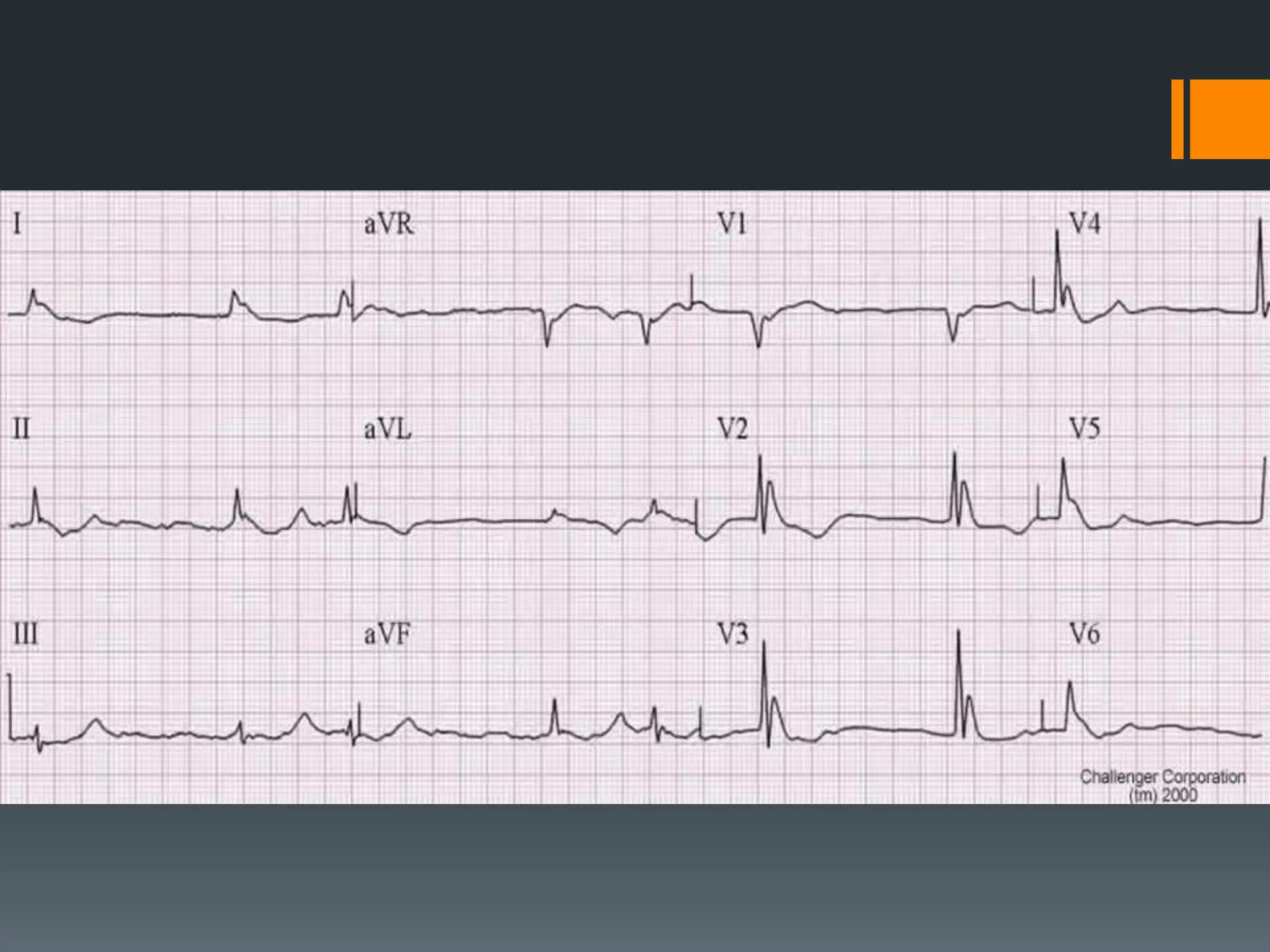
DEXTROCARDIA
 Similar to limb lead reversal LA and RA
 In precordial leads V1- V6 R wave regresses in height – the
differentiating point.
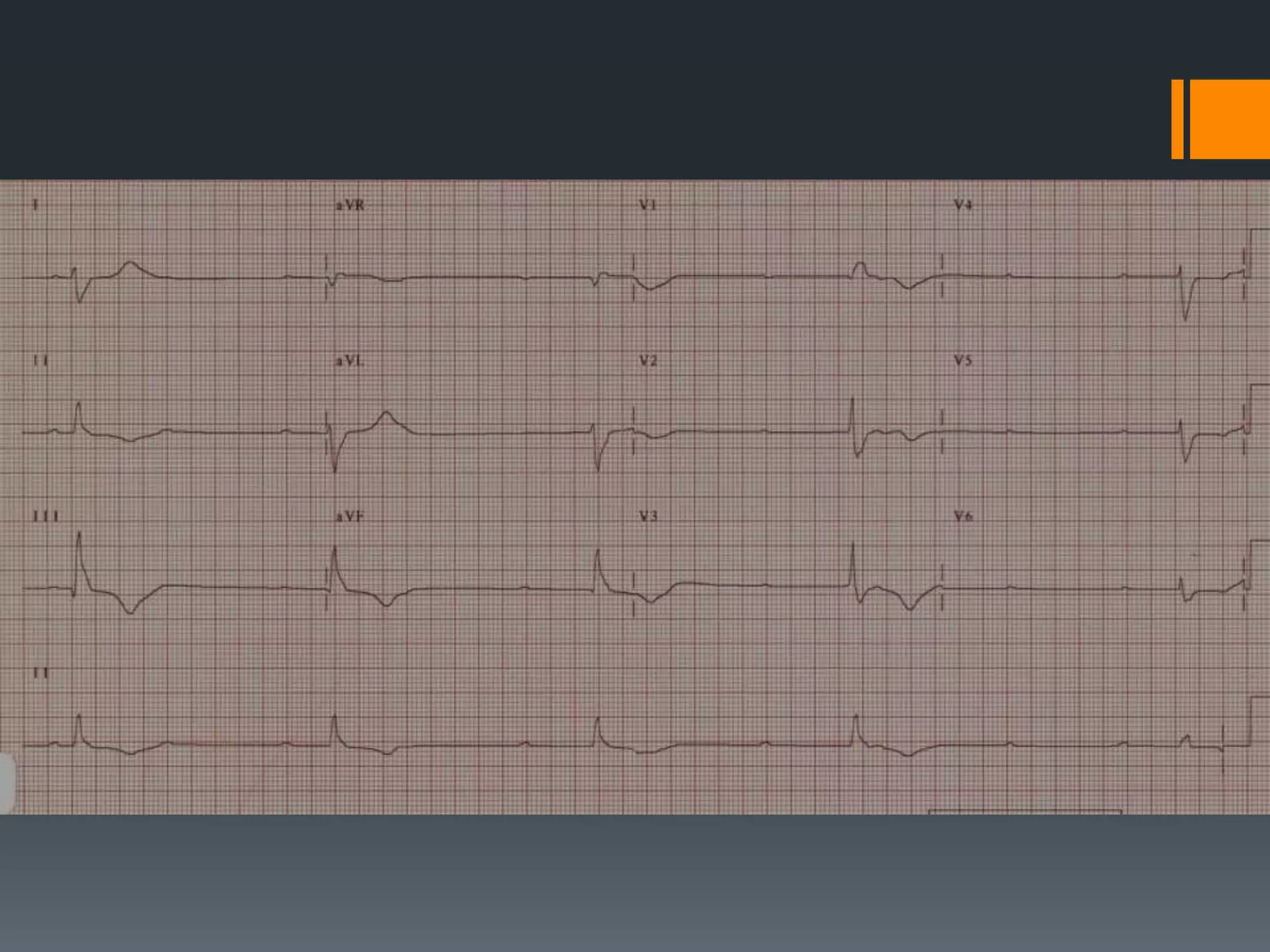
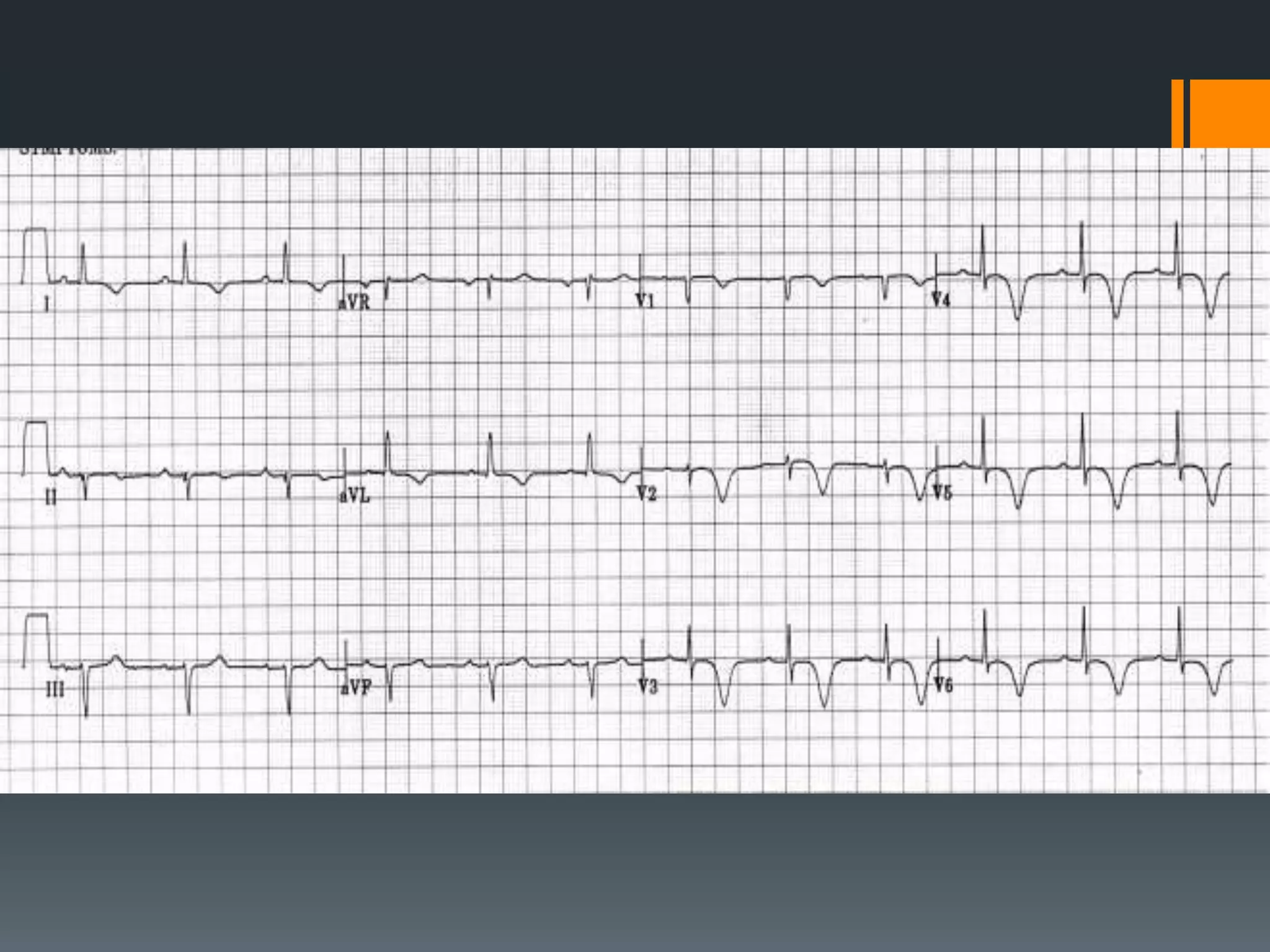
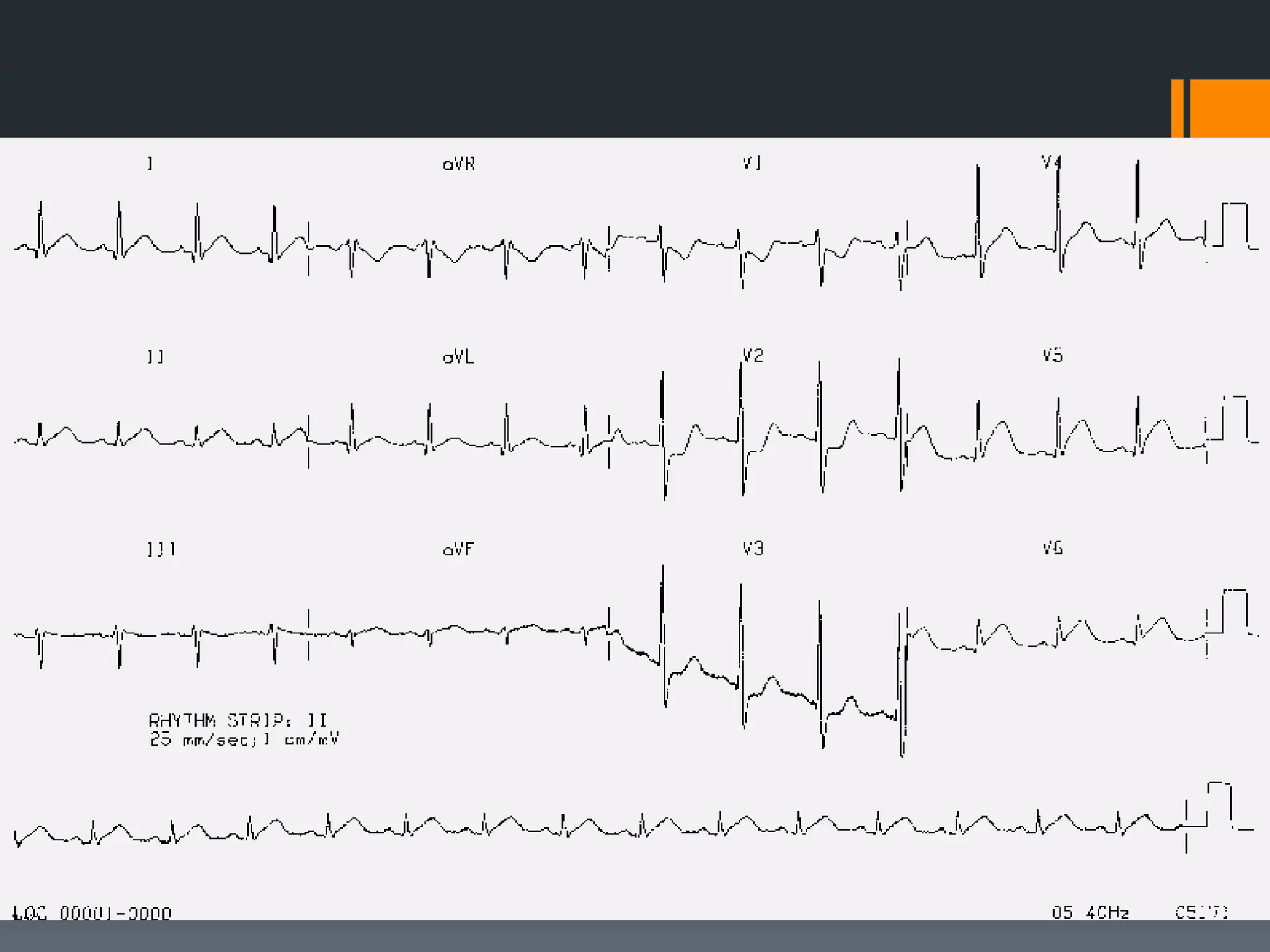
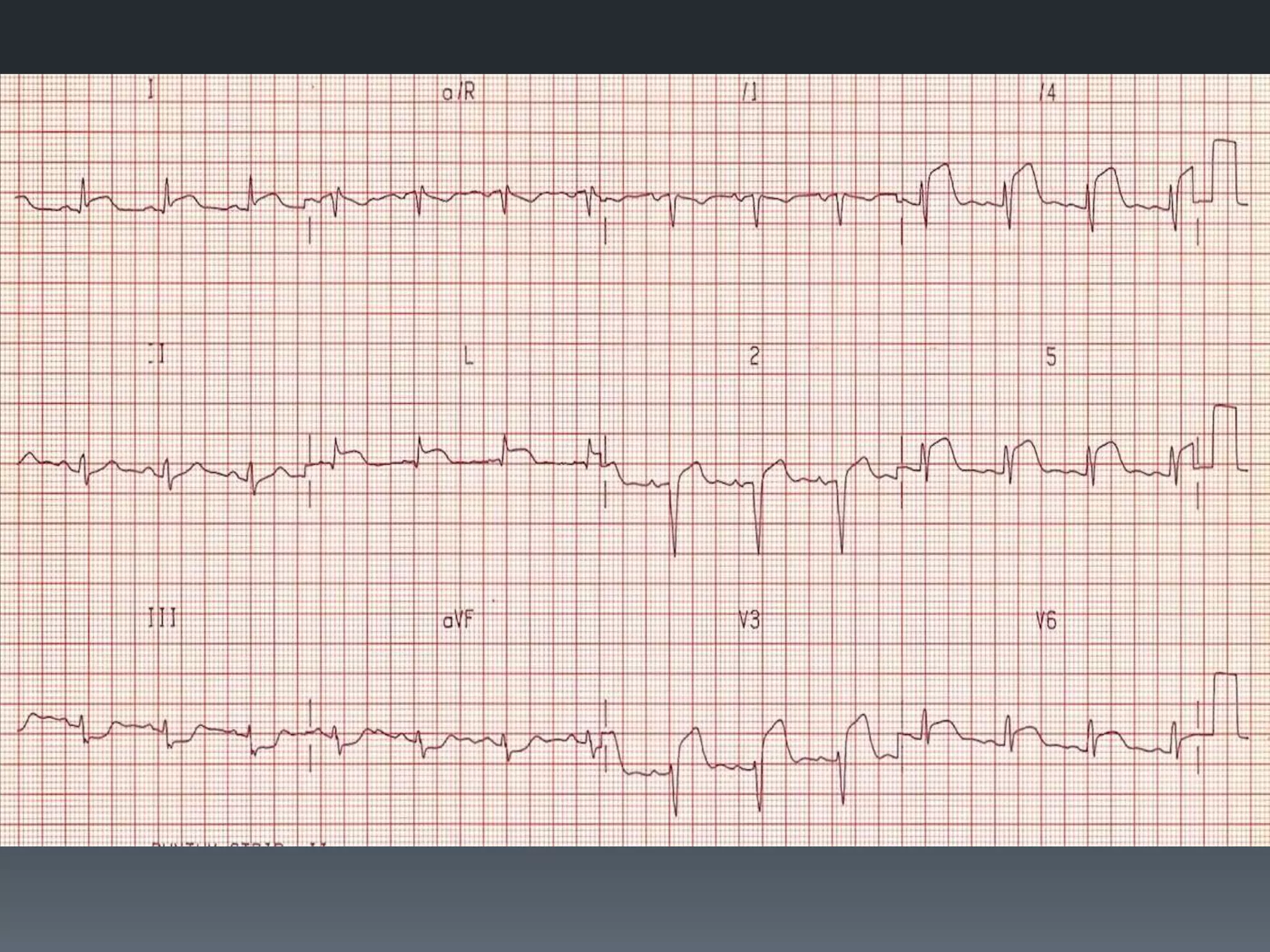
WELLEN’S SYNDROME
 Deeply inverted T waves in precordial leads
 Type B
 Indicates proxmial LAD tight stenosis
 ECG changes typically seen after relief of pain
 The rule – any patient with chest pain should be monitored
for 24 hrs preferably in ICU.
COMPLETE LBBB
 New onset LBBB – MI equivalent
WELLENS SYNDROME TYPE A
 Biphasic t waves seen in anterior precordial leads
 Not an STEMI as there are no reciprocal changes.
VENTRICULAR TACHYCARDIA
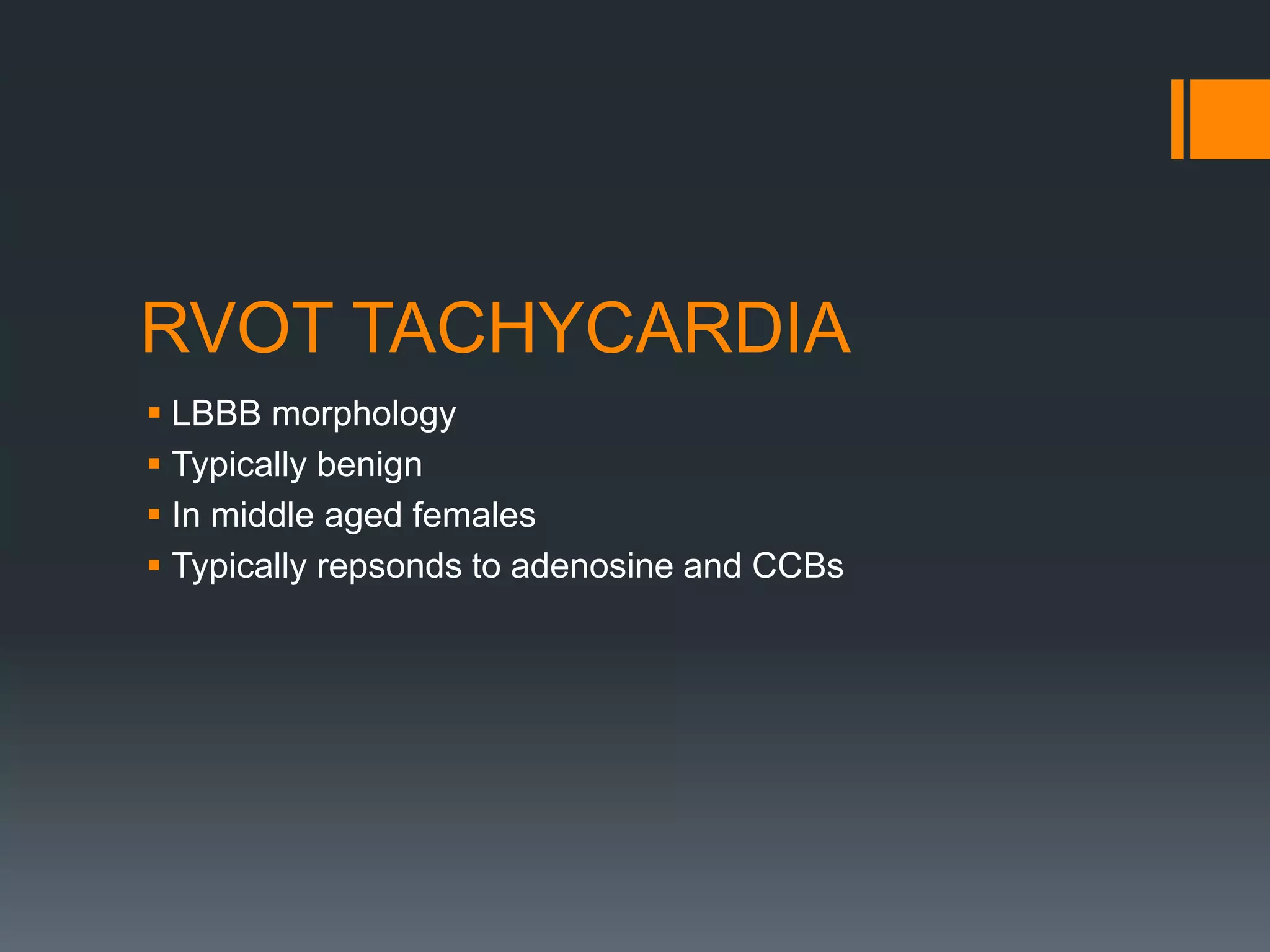
RVOT TACHYCARDIA
 LBBB morphology
 Typically benign
 In middle aged females
 Typically repsonds to adenosine and CCBs
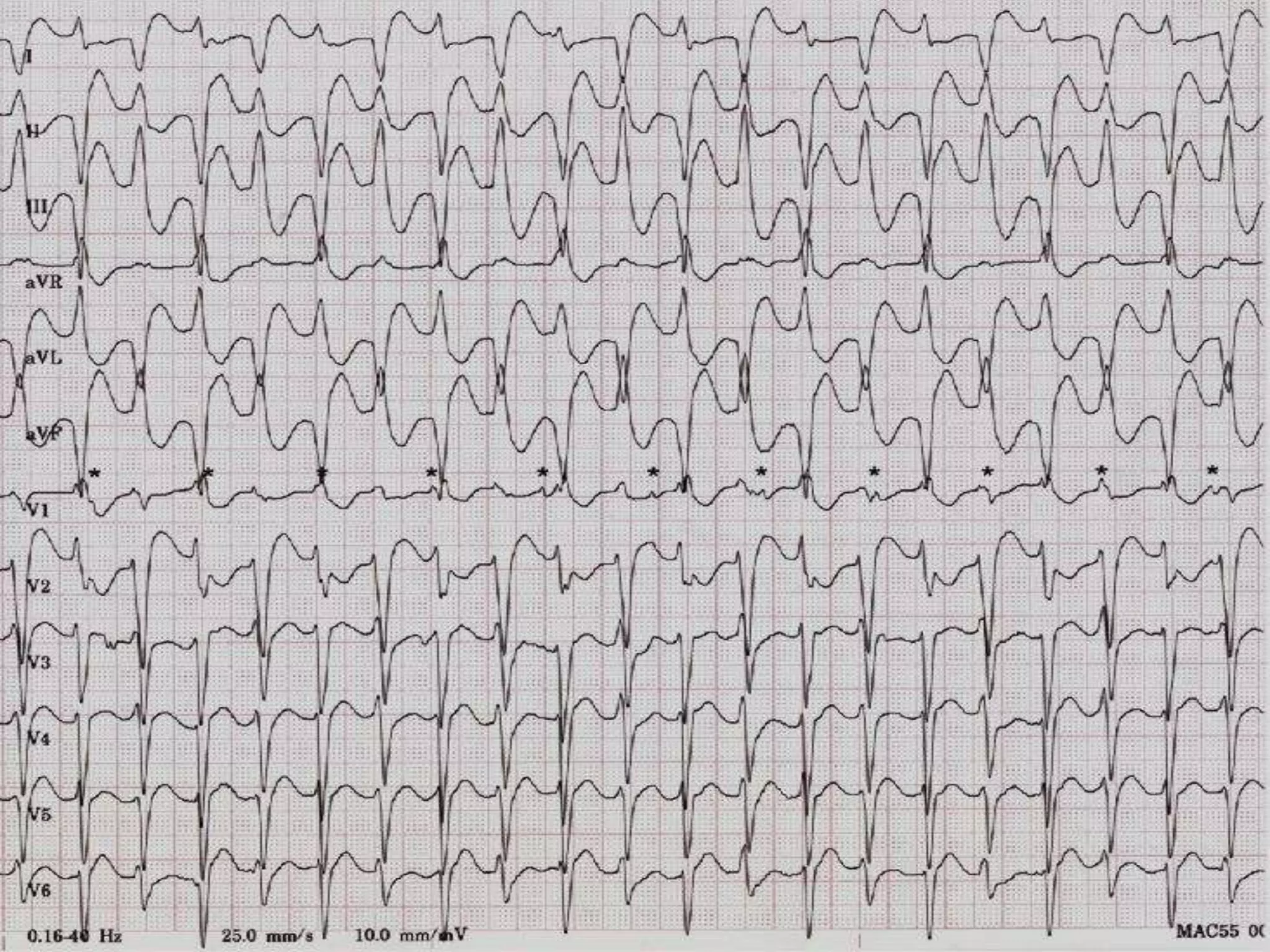
BIDIRECTIONAL TACHYCARDIA
 Sine qua non of digoxin toxicity
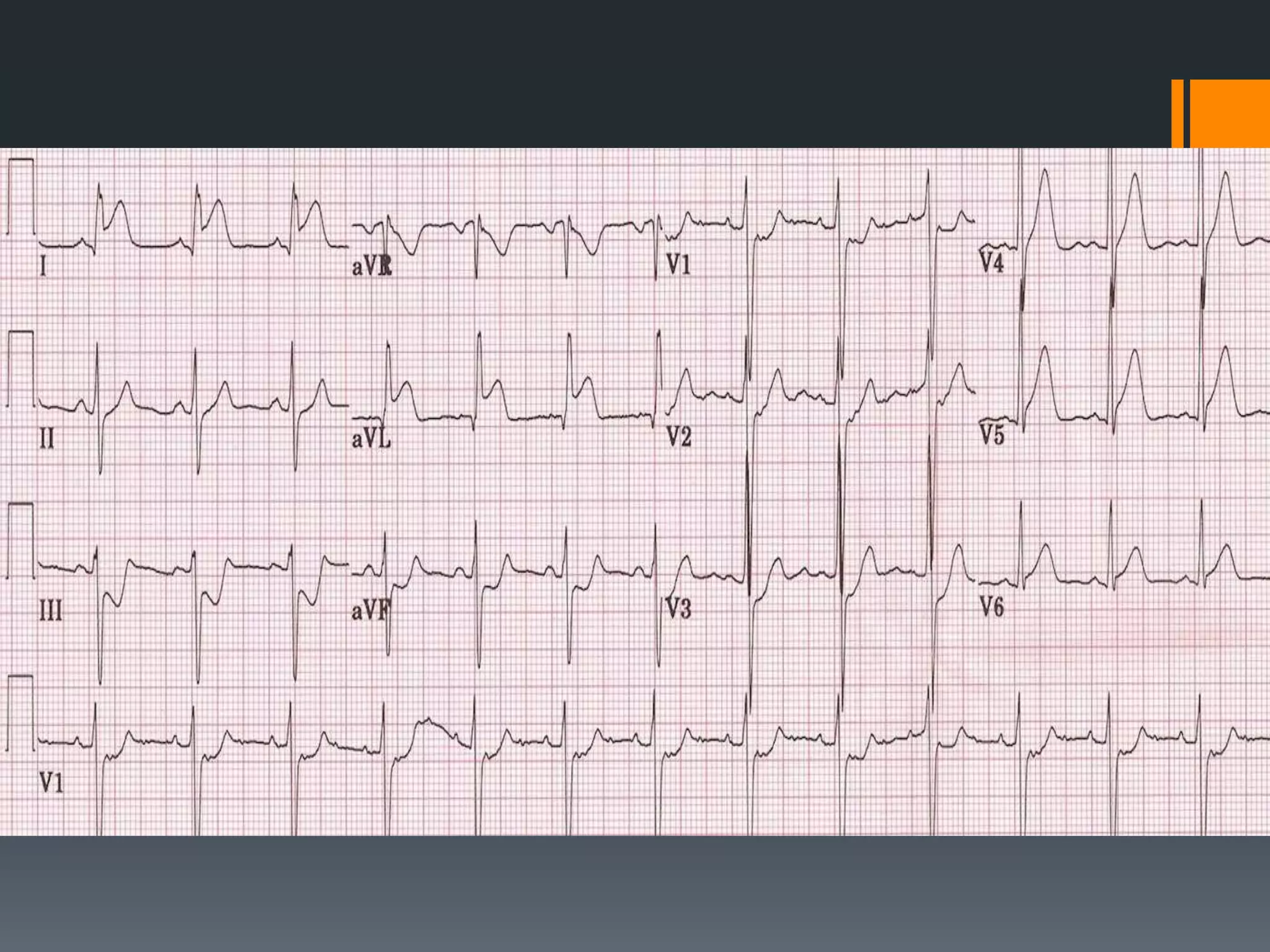
POSTERIOR WALL MI
 Mirror images in V1- V3
 Usually associated with inferior and lateral wall MI’
 Isolated is rare occurrence
 Leads v7 –v9 to be taken
OSBORN J WAVE
 Seen in hypothermia
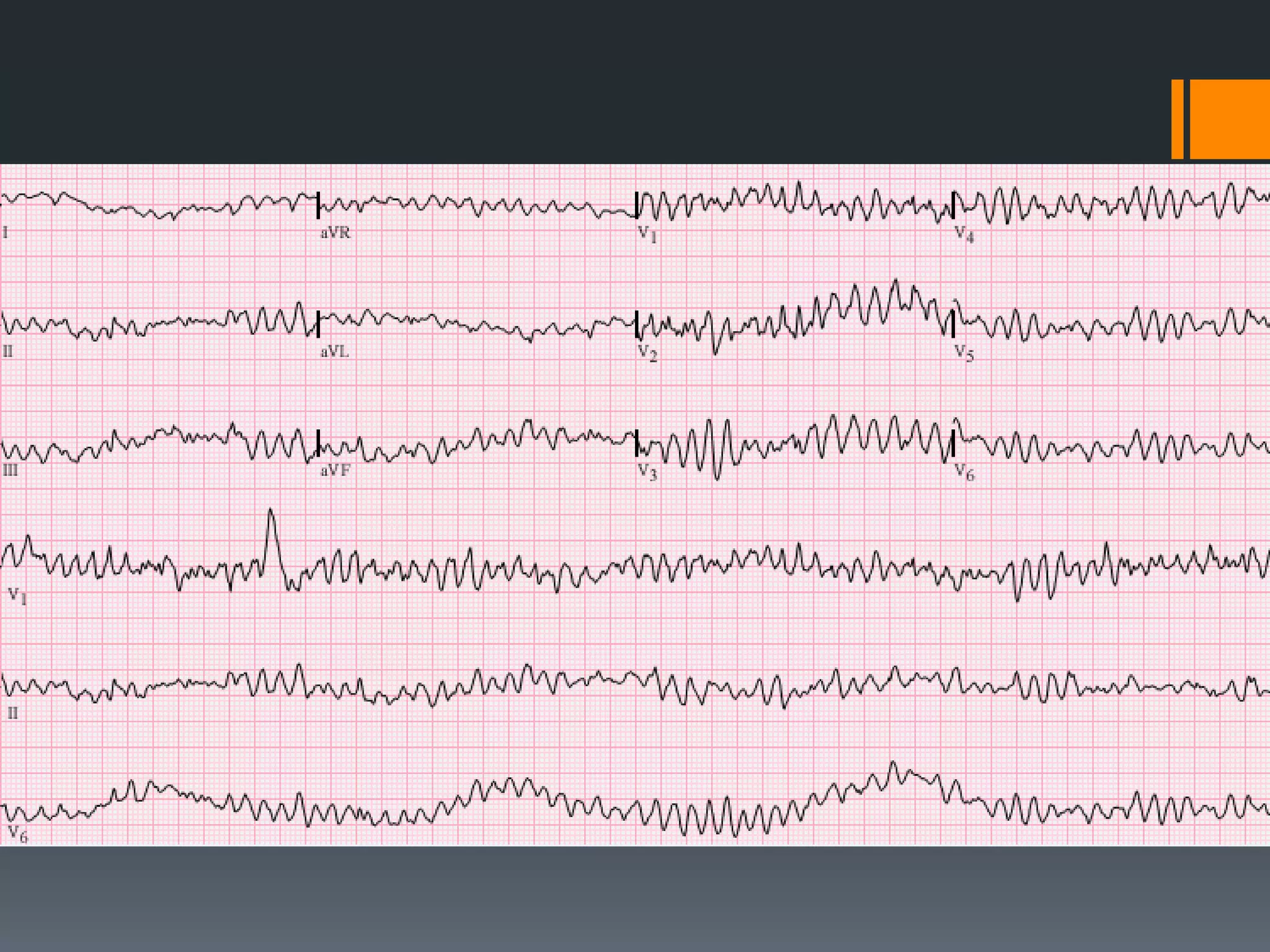
VENTRICULAR FIBRILLATION
 To be on nonsynchronous mode while giving shock
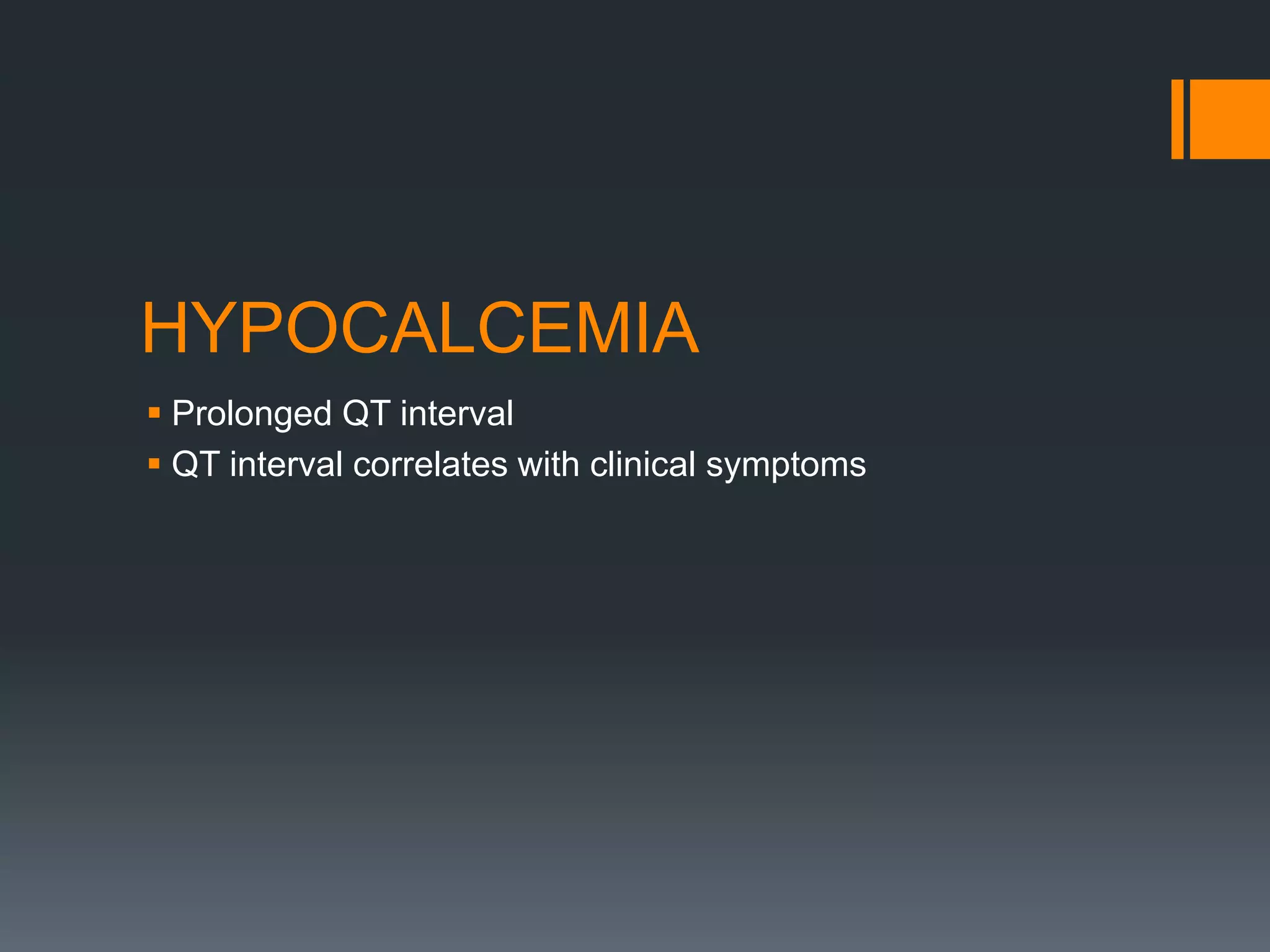
HYPOCALCEMIA
 Prolonged QT interval
 QT interval correlates with clinical symptoms
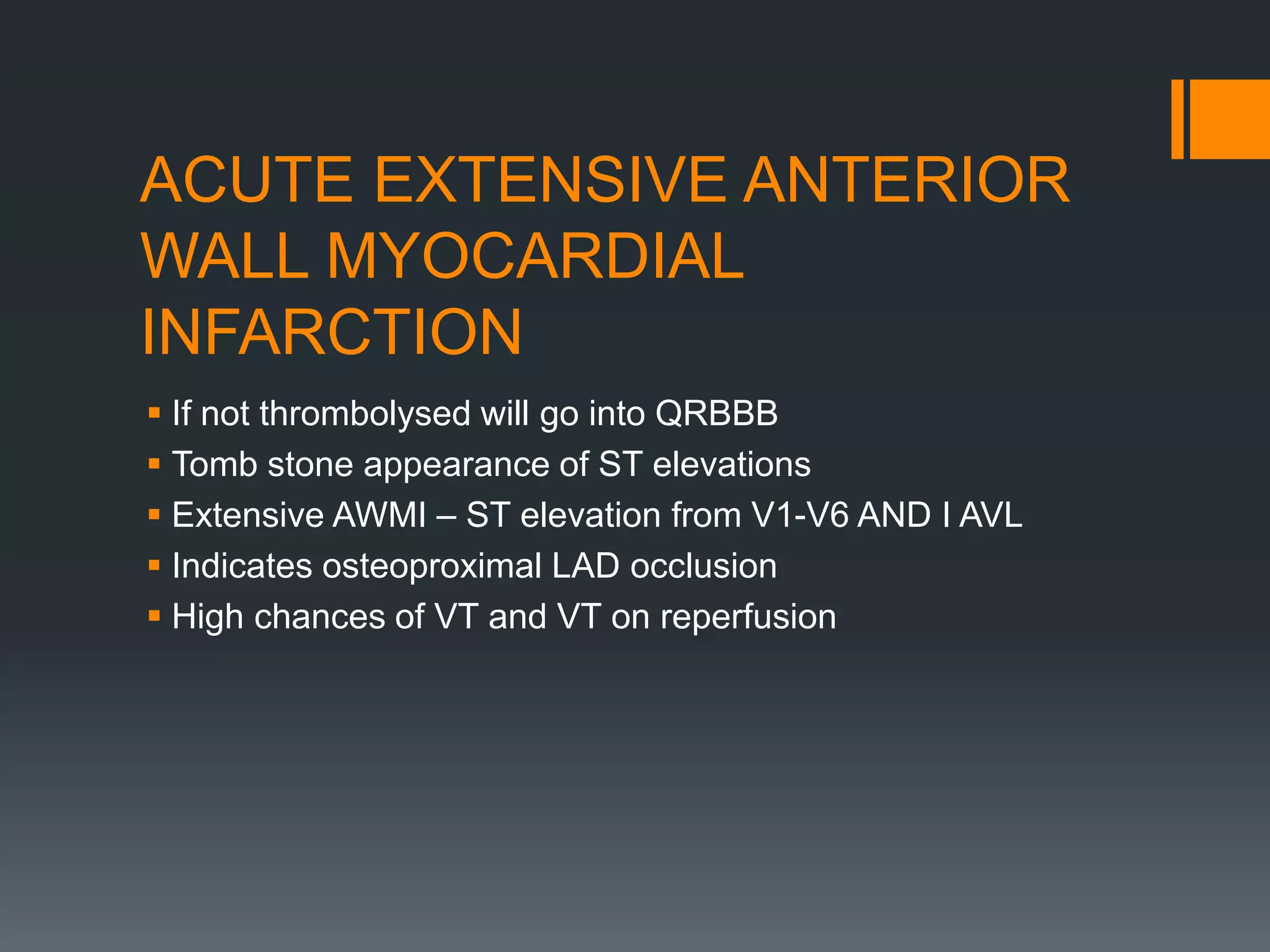
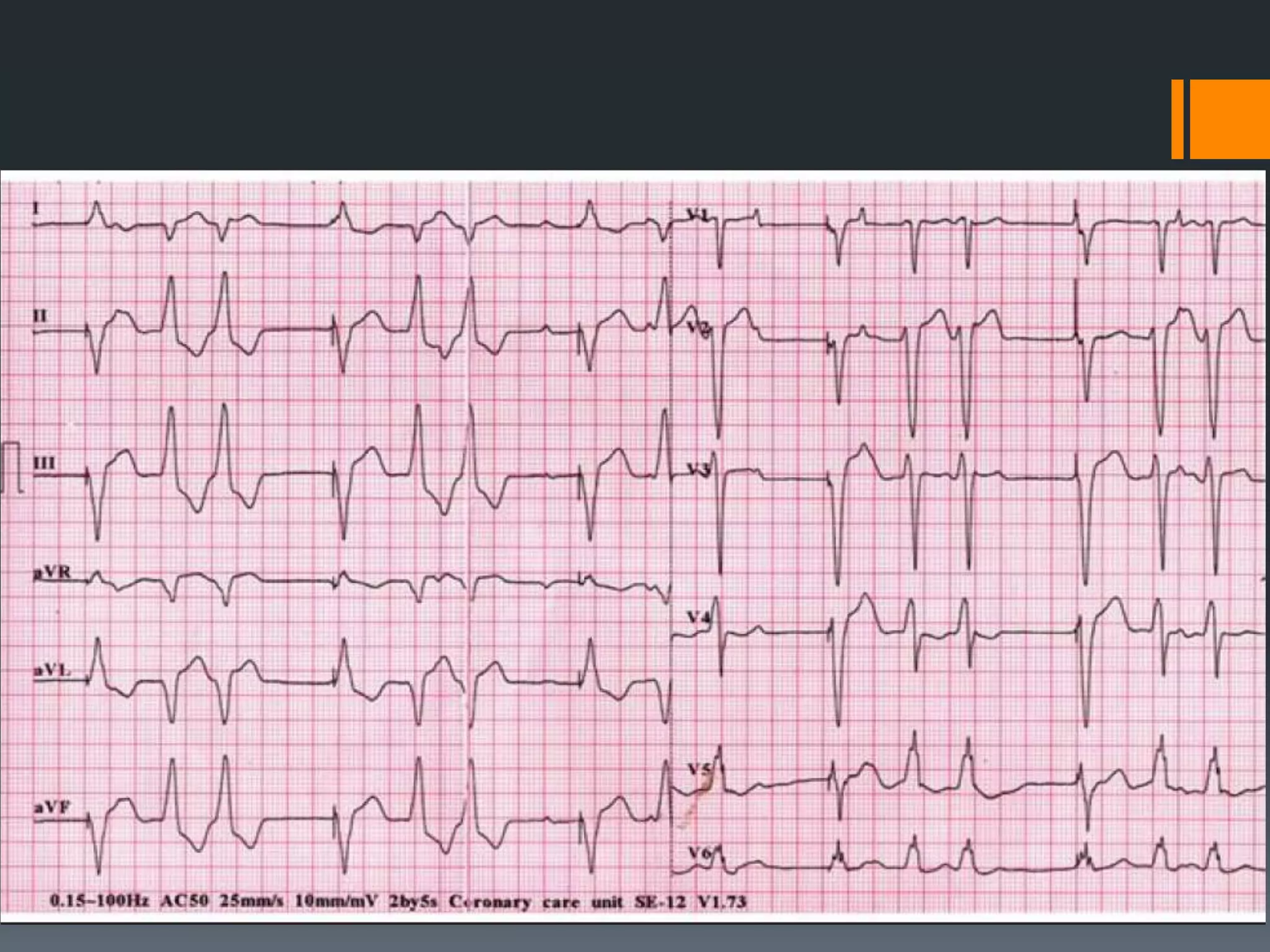
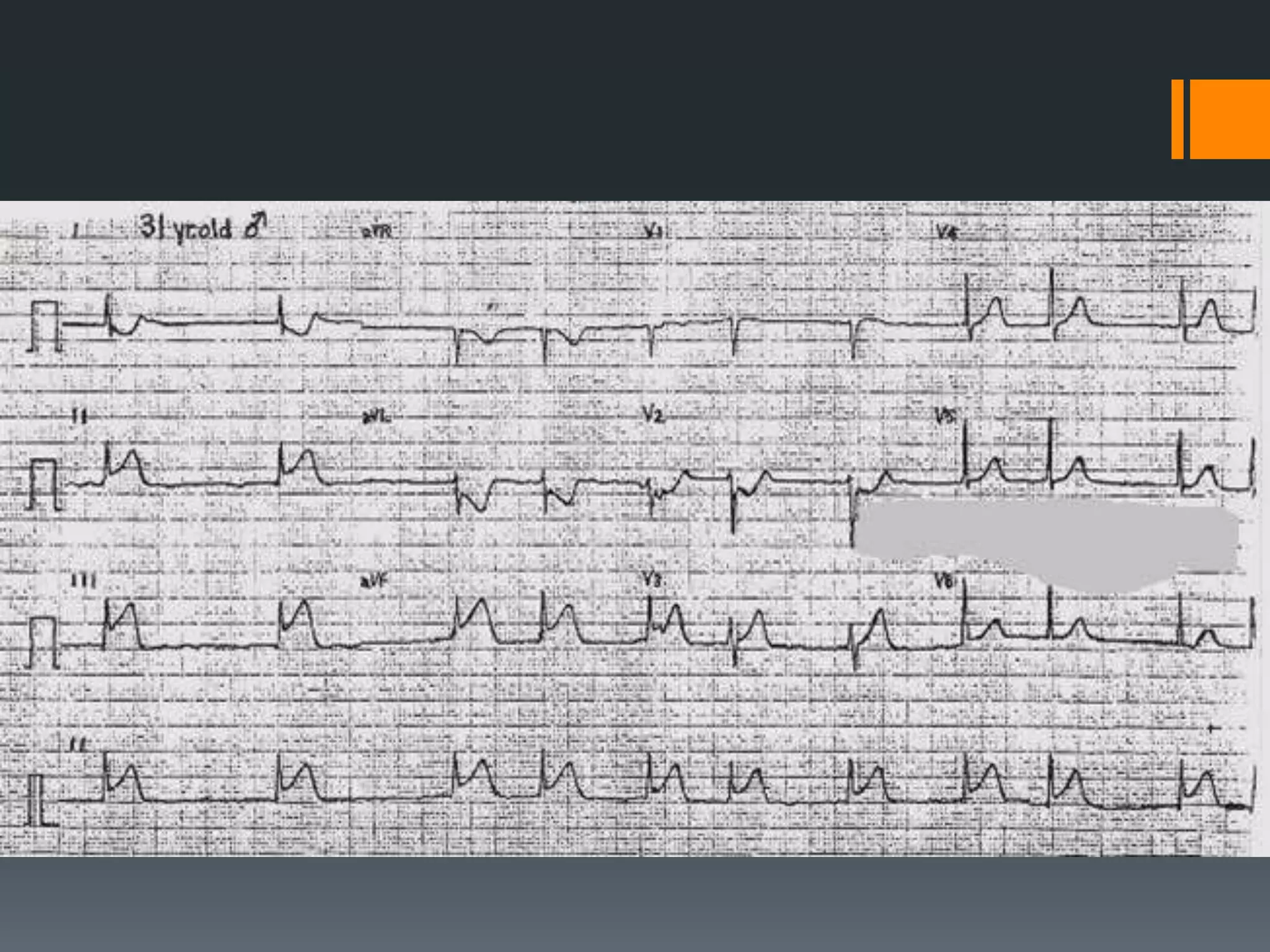
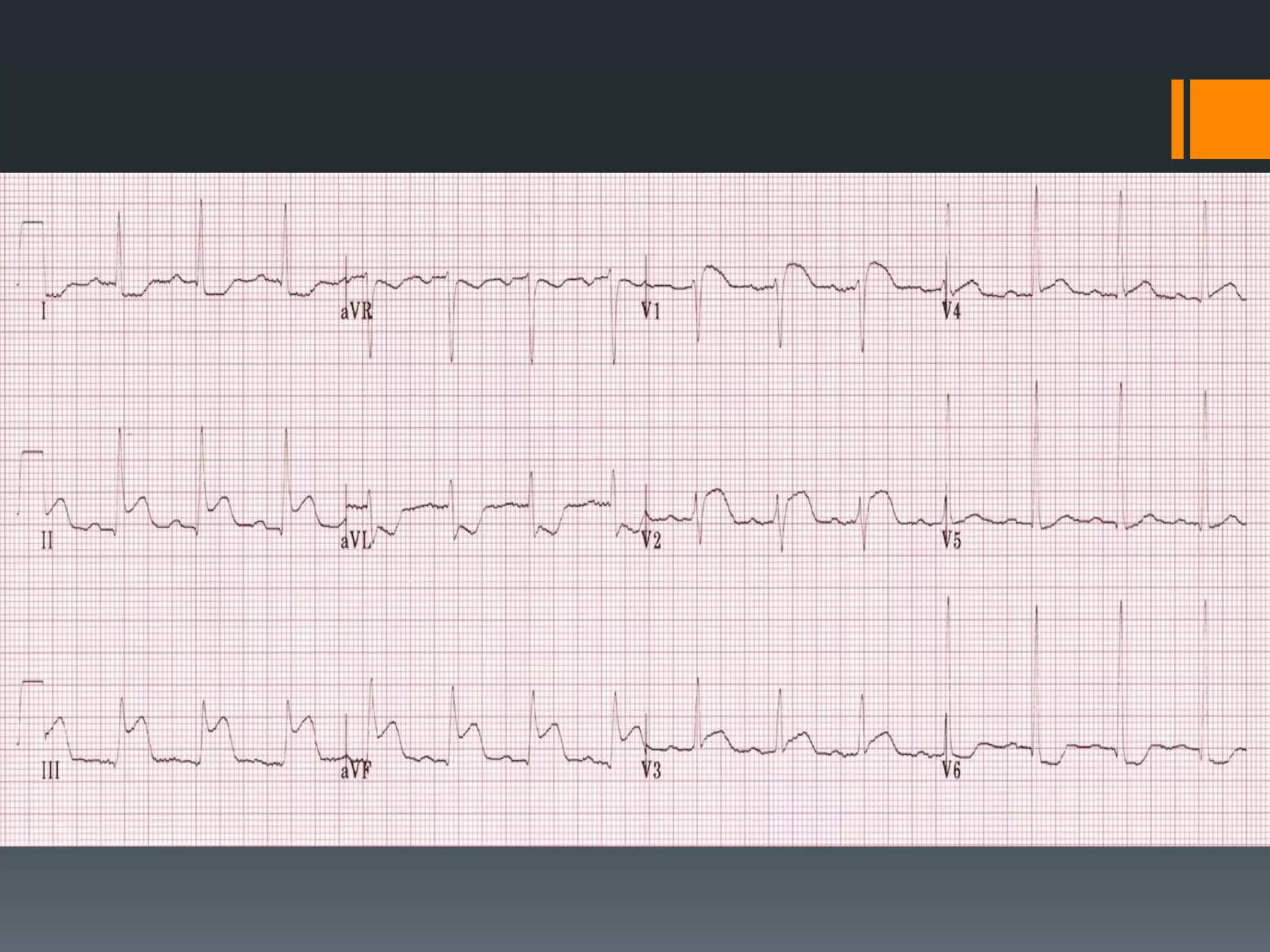
ACUTE EXTENSIVE ANTERIOR
WALL MYOCARDIAL
INFARCTION
 If not thrombolysed will go into QRBBB
 Tomb stone appearance of ST elevations
 Extensive AWMI – ST elevation from V1-V6 AND I AVL
 Indicates osteoproximal LAD occlusion
 High chances of VT and VT on reperfusion
MULTIFOCAL ATRIAL
TACHYCARDIA
 Usually seen in COPD patients
 They are refractory to usual drug treatment of SVT
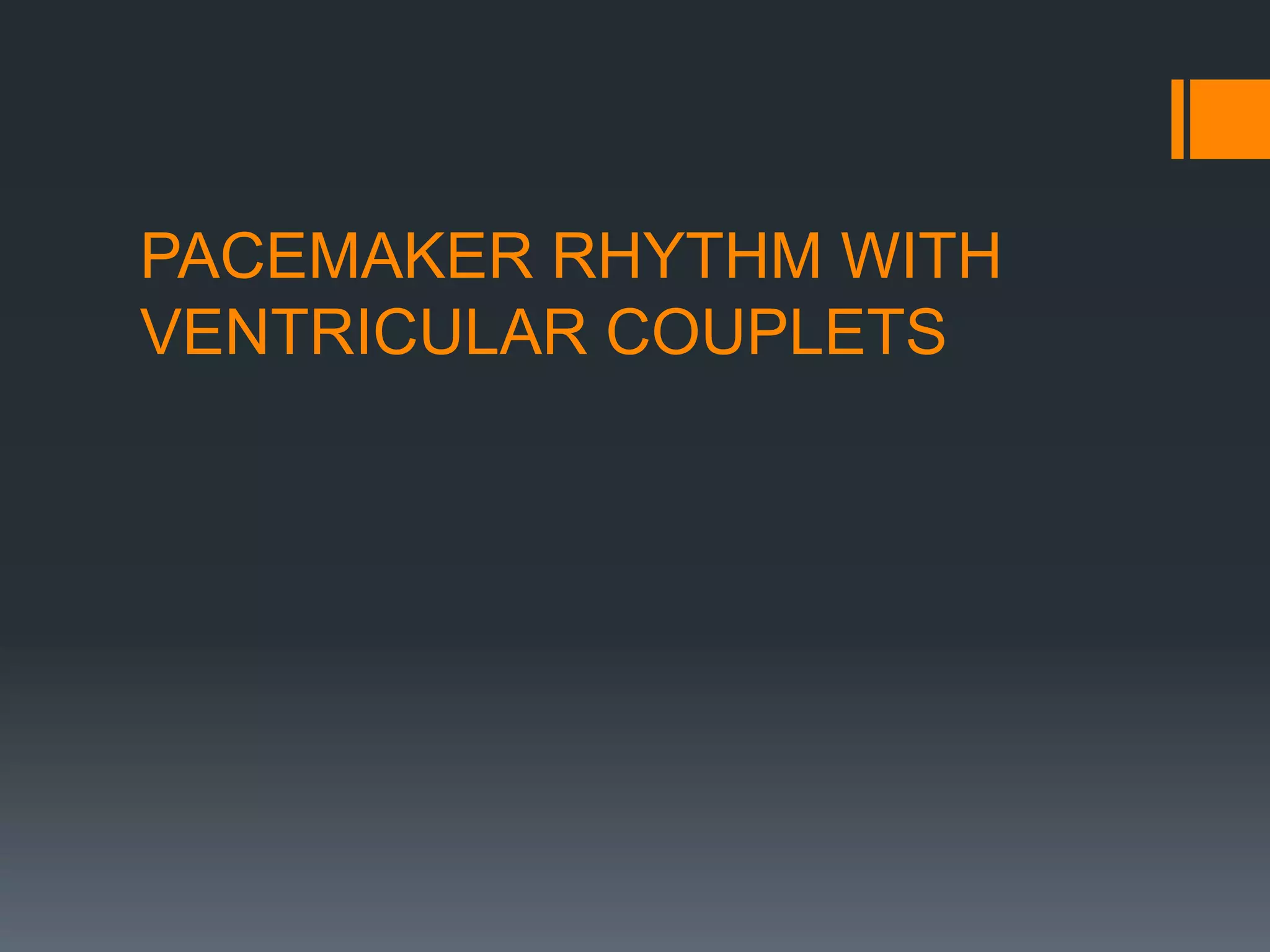
PACEMAKER RHYTHM WITH
VENTRICULAR COUPLETS
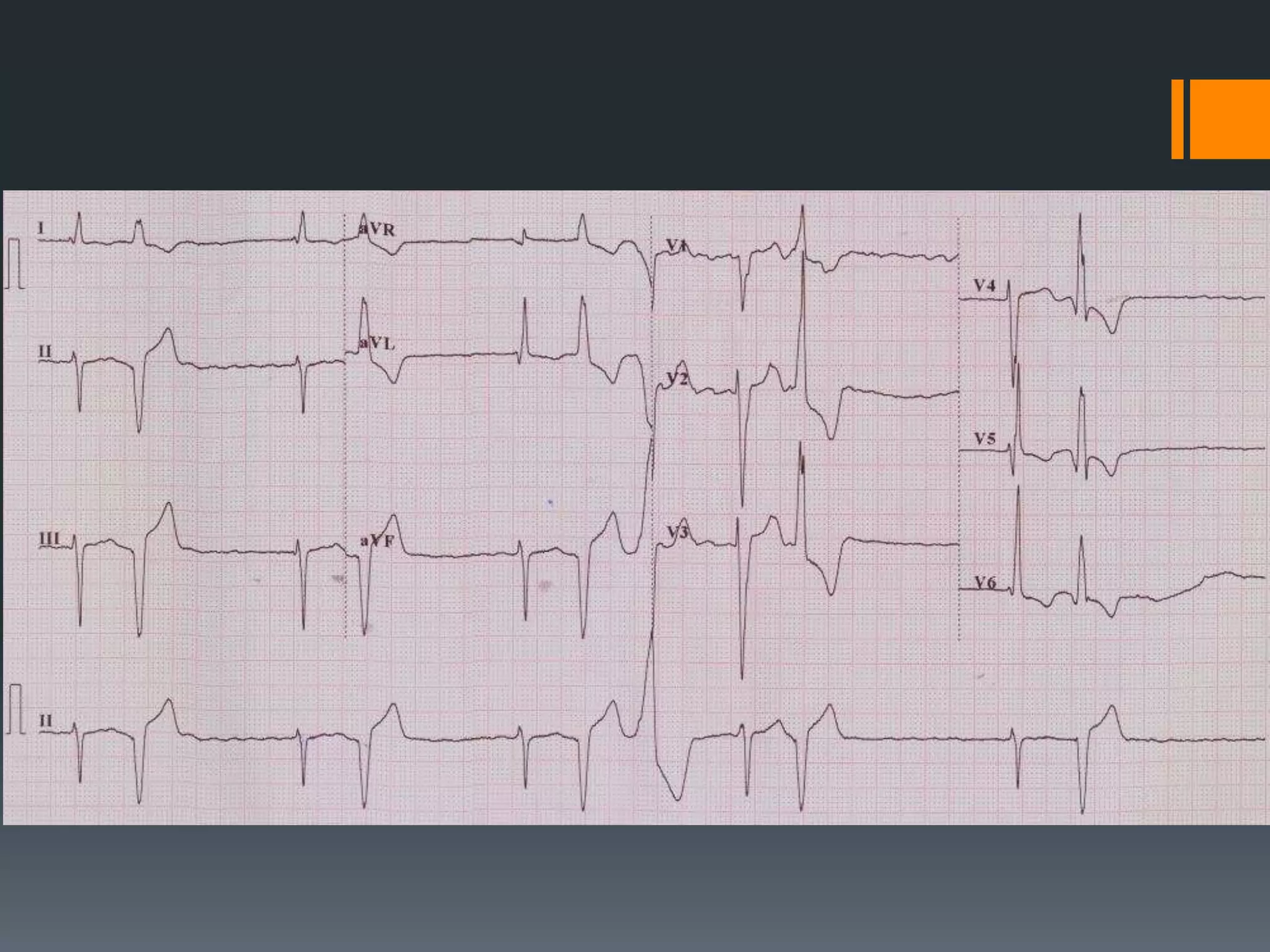
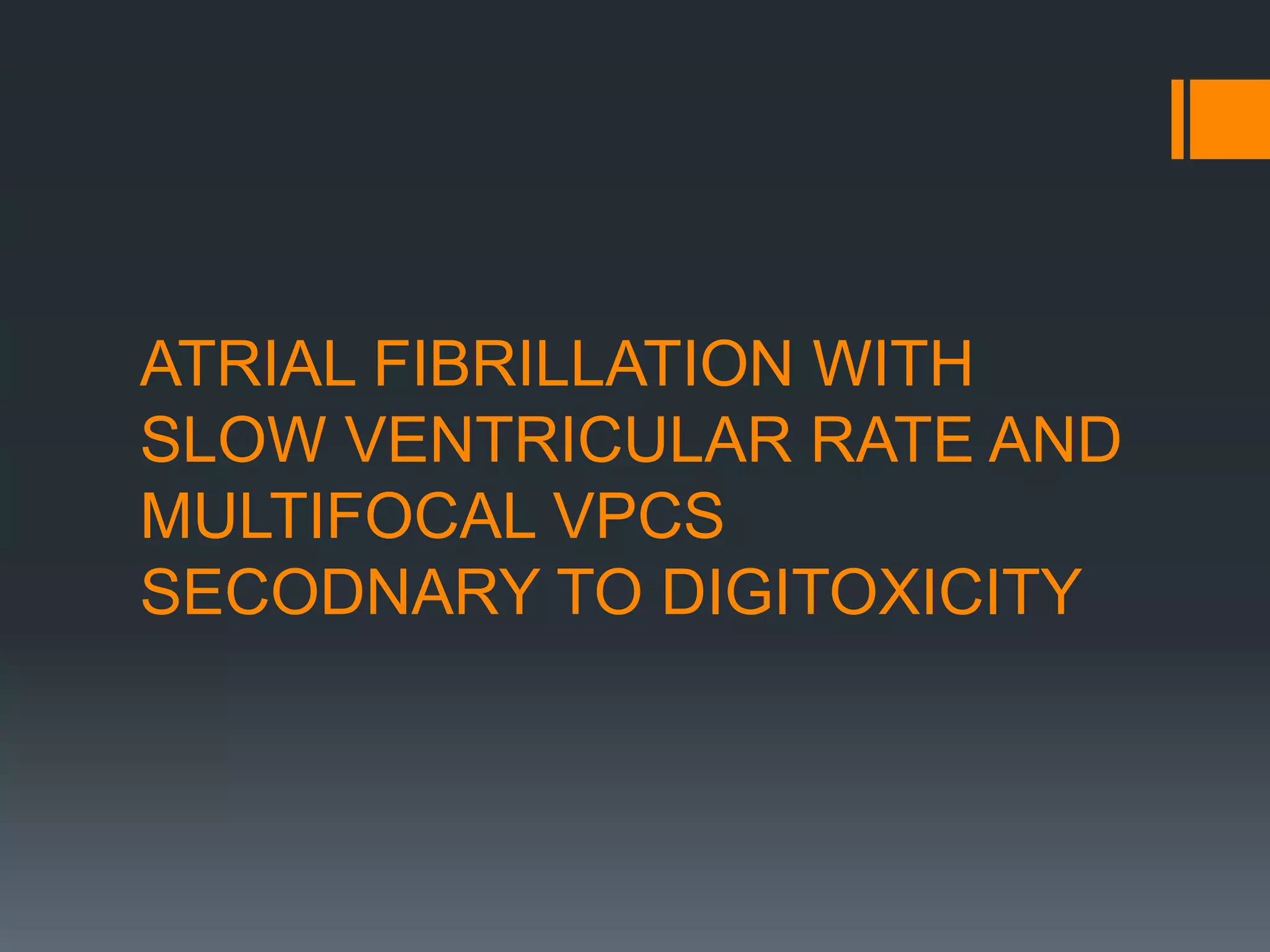
ATRIAL FIBRILLATION WITH
SLOW VENTRICULAR RATE AND
MULTIFOCAL VPCS
SECODNARY TO DIGITOXICITY
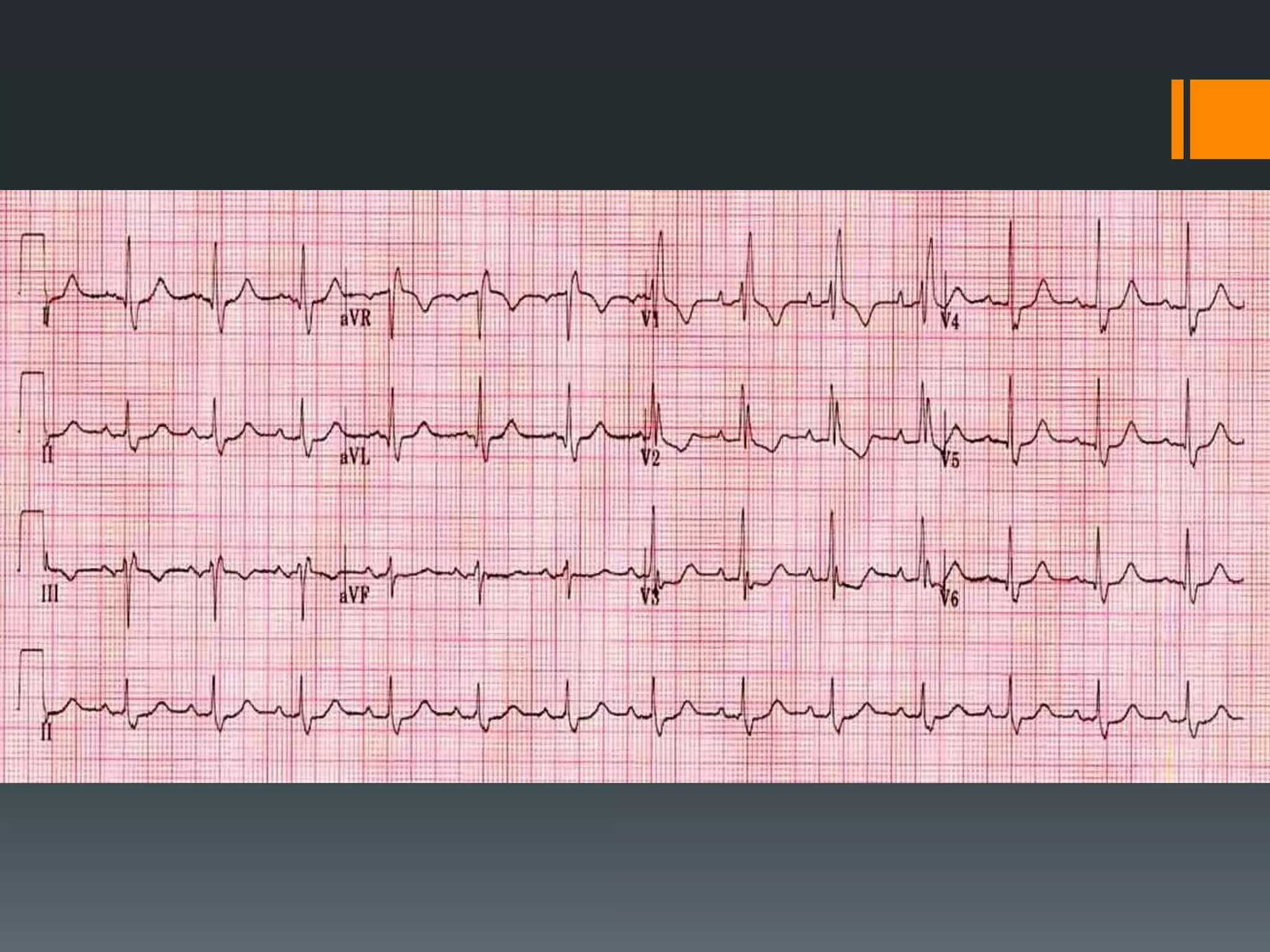
COMPLETE RBBB
 Usually seen in males
 Smokers
 Common varinat in elderly people secondary to sclerosis of
conduction system
INFERIOR WALL STEMI WITH R
ON T PHENOMENON
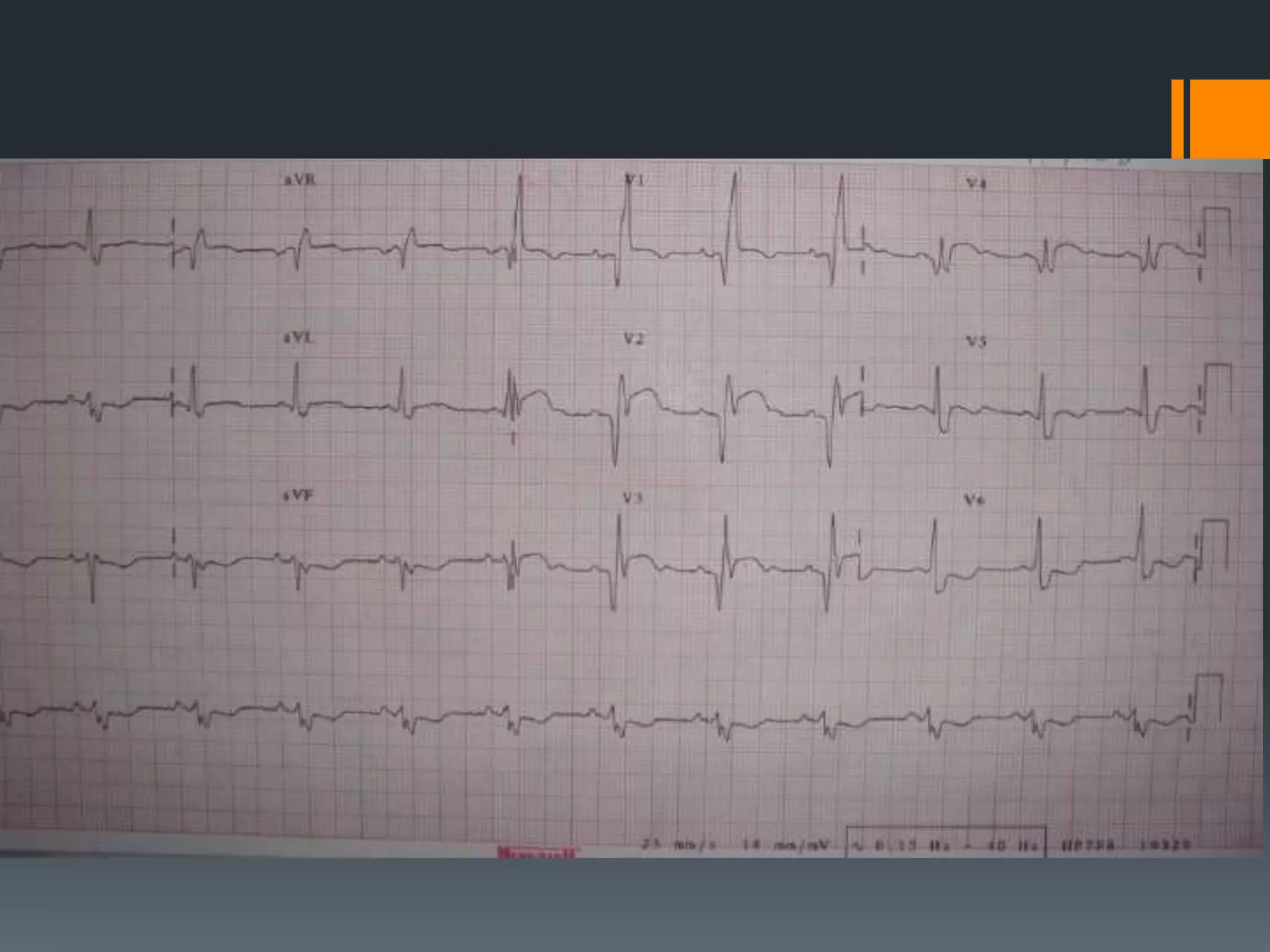
SVT AVNRT
 ELECTRICAL ALTERNANS
QRBBB WITH LAFB
EPSILON WAVE
 ARVD
S1Q3T3 +RVH strain
 Massive pulmonary emoblism
 Seen in 15% ecgs
 Most common in sinus tachycardia
PULMONARY HYPERTENSION
ECG P PULMONALE
BIATRIAL ENLARGEMENT
RIGHT VENTRICULAR
HYPERTROPHY
SEVERE
MITRAL STENOSIS
LEFT VENTRICULAR
HYPERTROPHY
 Intraventricular conduction delay
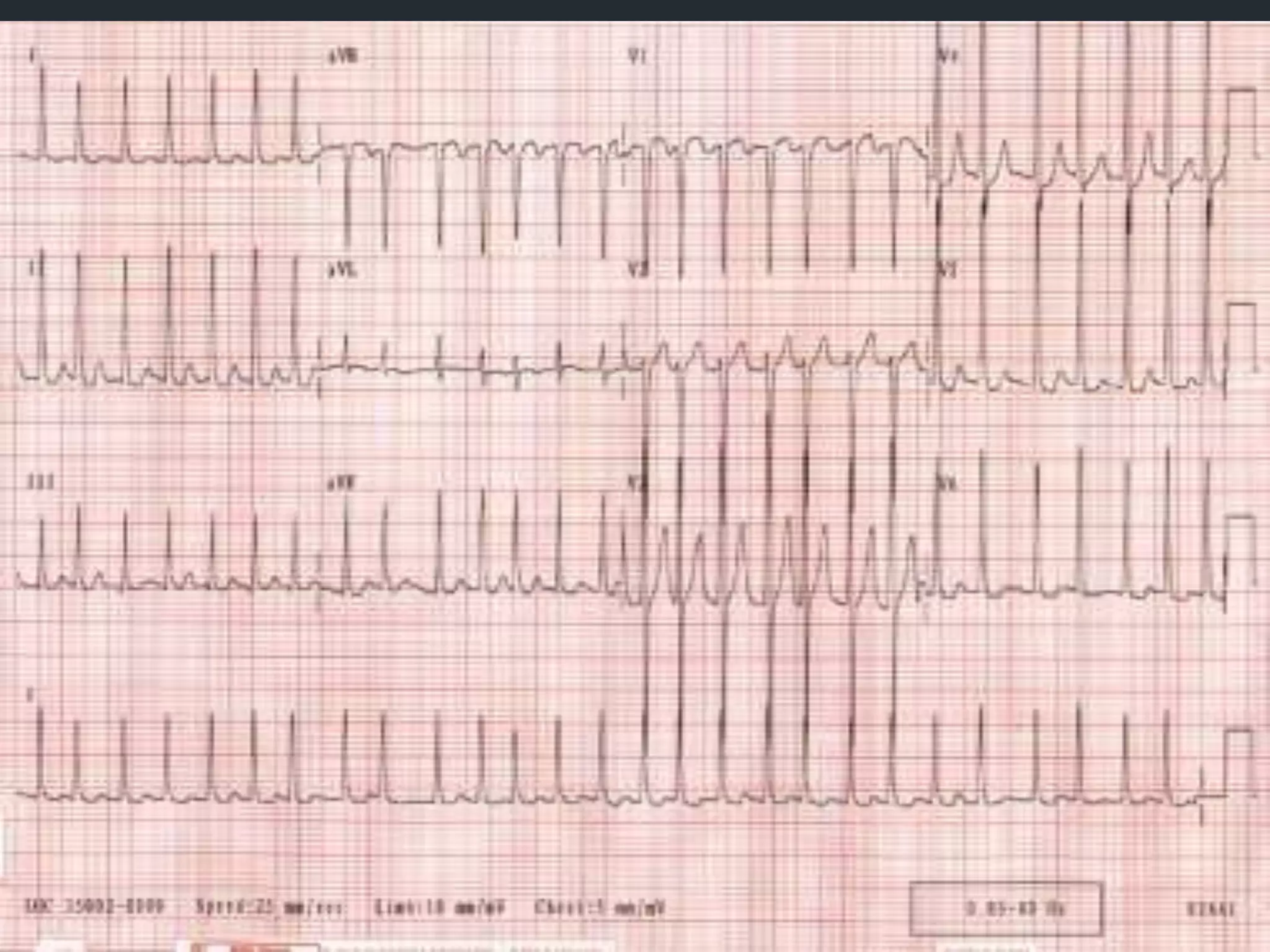
ATRIAL FIBRILLATION WITH FVR
 Grand father of arrhythmias

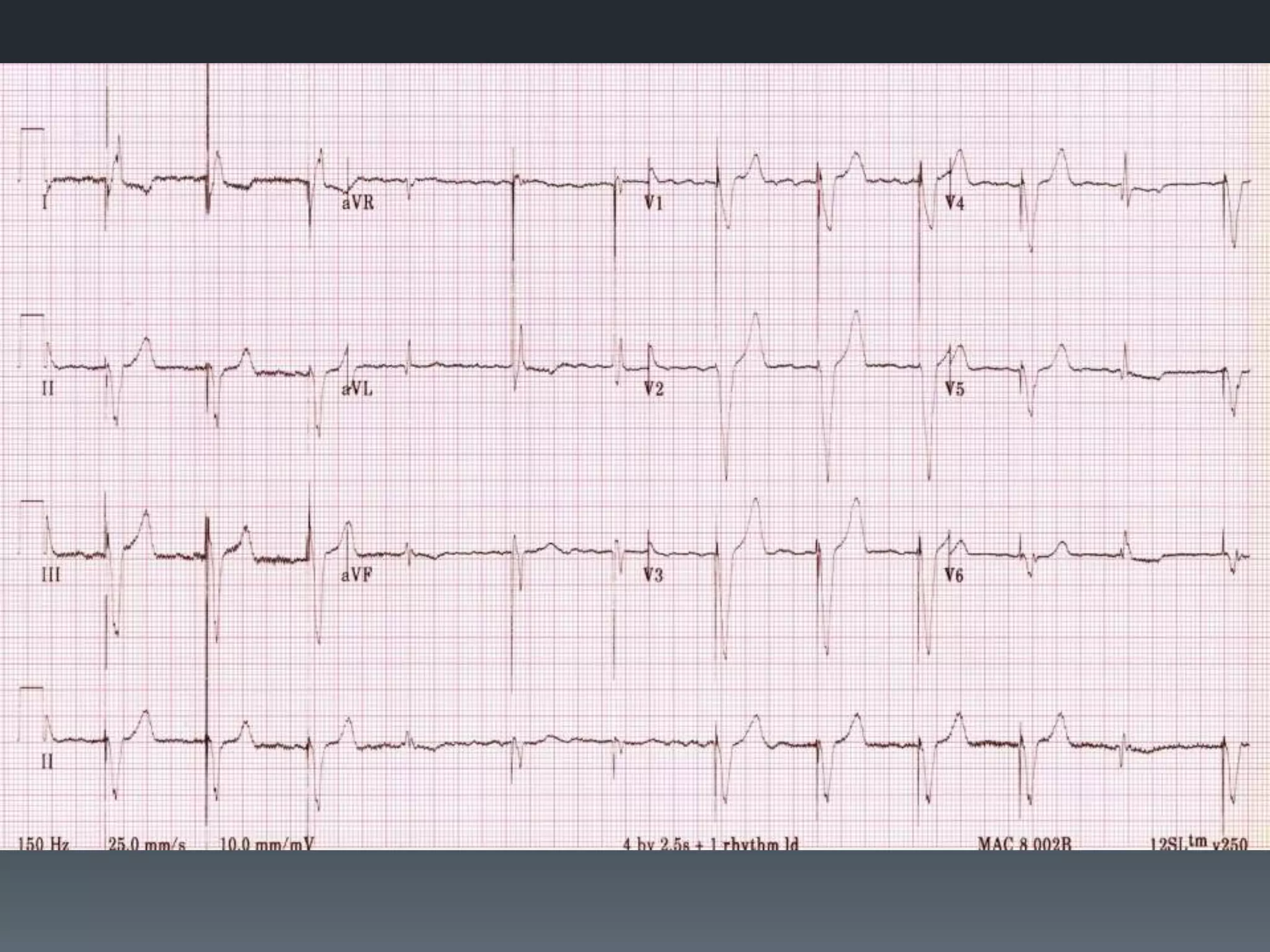
PACEMAKER RHYTHM
 VVI mode
What is PARDEE’S sign?
ST segment elevation suggestive of
coronary artery obstruction
IWMI WITH AF
IW MI + RVMI
 Lead III > II
 V1 ST ELEVATION
 V4R typically shows Stelevation
 But they are trasient
EXTENSIVE ANTERIOR WALL
STEMI
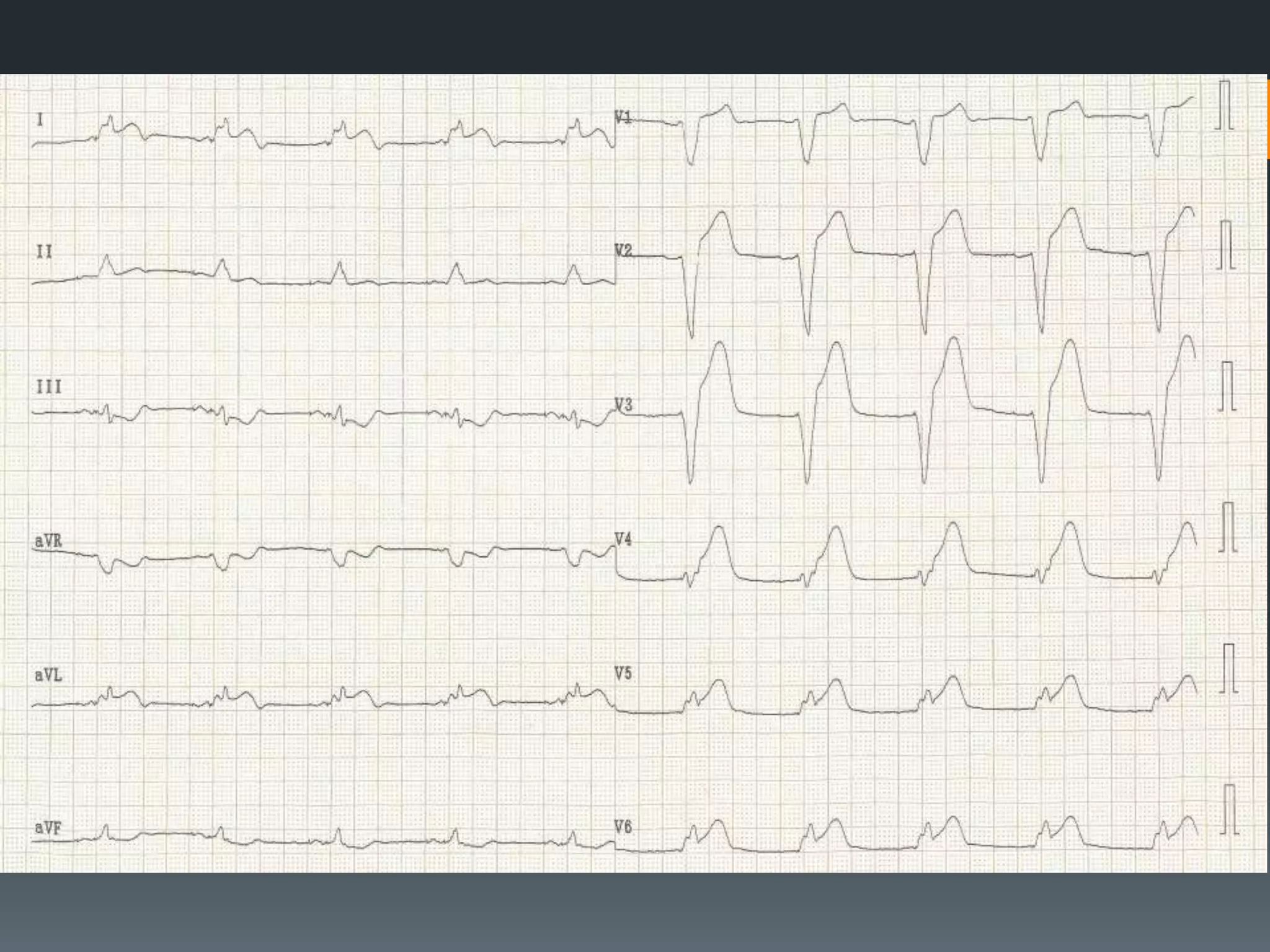
HIGH LATERAL MI WITH PWMI
MI IN LBBB PATIENT
 SGARBOSSA CRITERIA
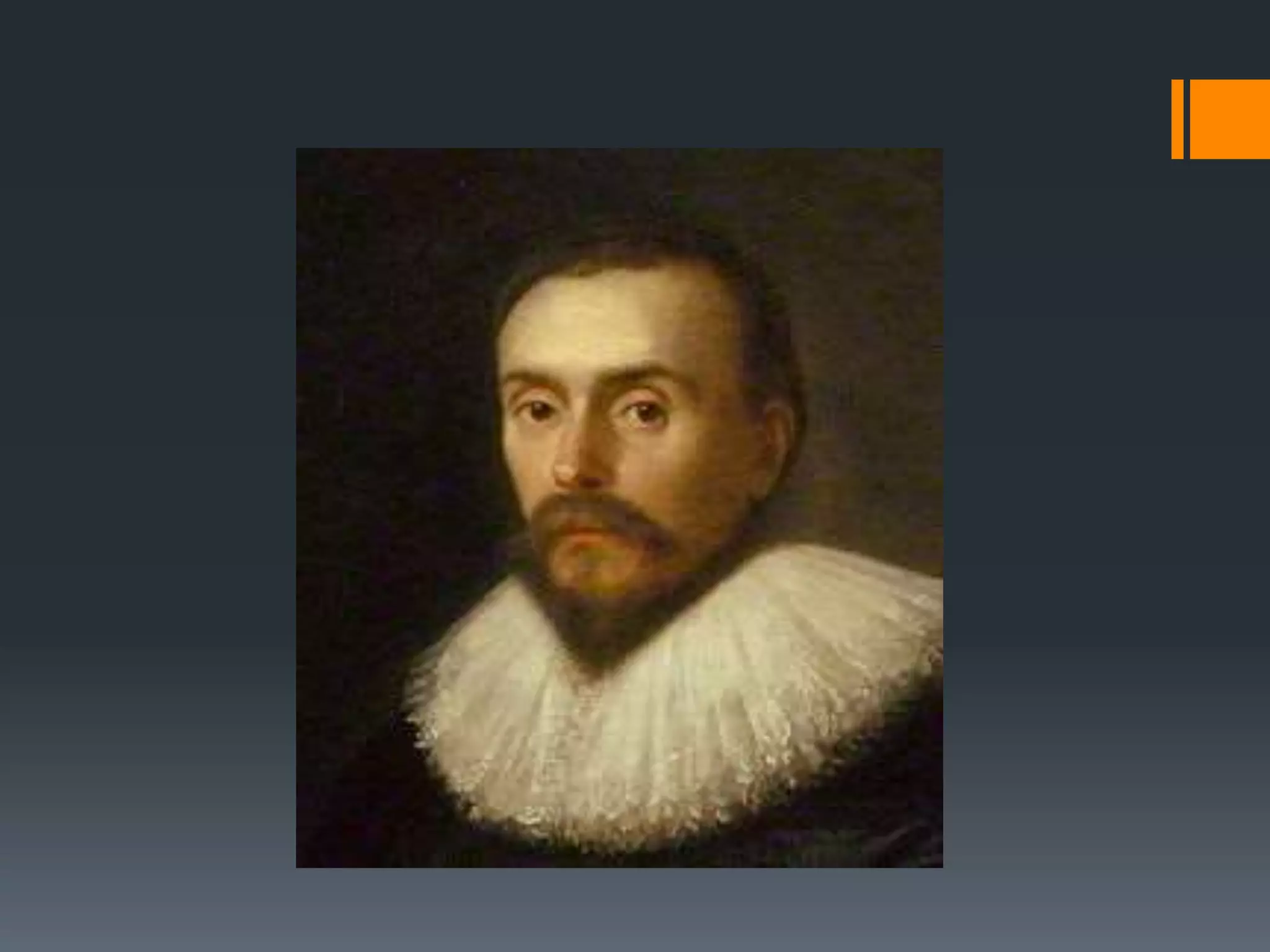
WILLEM EINTHOVEN
WILLIAM HARVEY
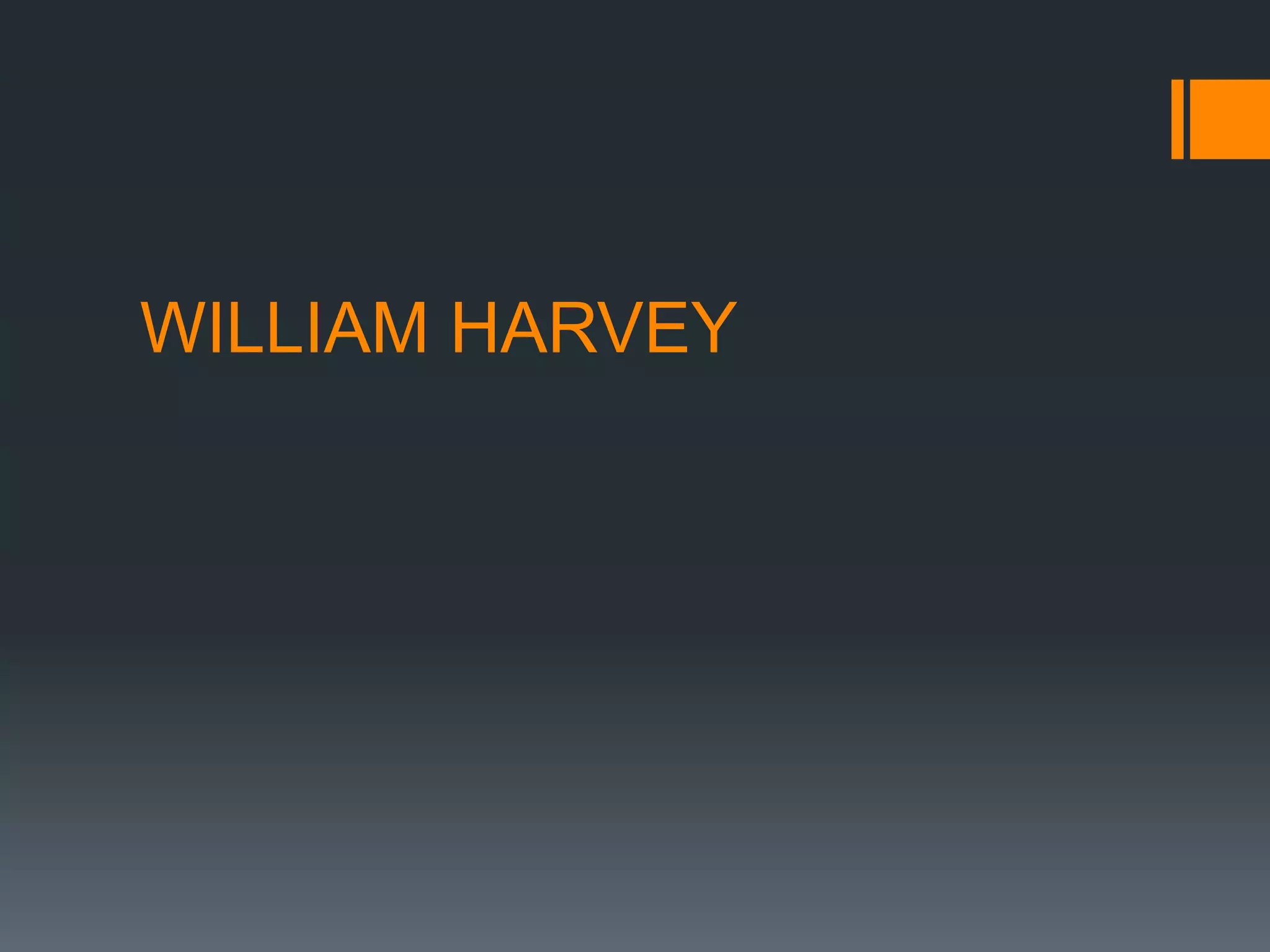
RENE LAENNAC
 Invented monoaural stethoscope
DISCOVERED DIGITALIS FROM
FOXGLOVE PURPUREA
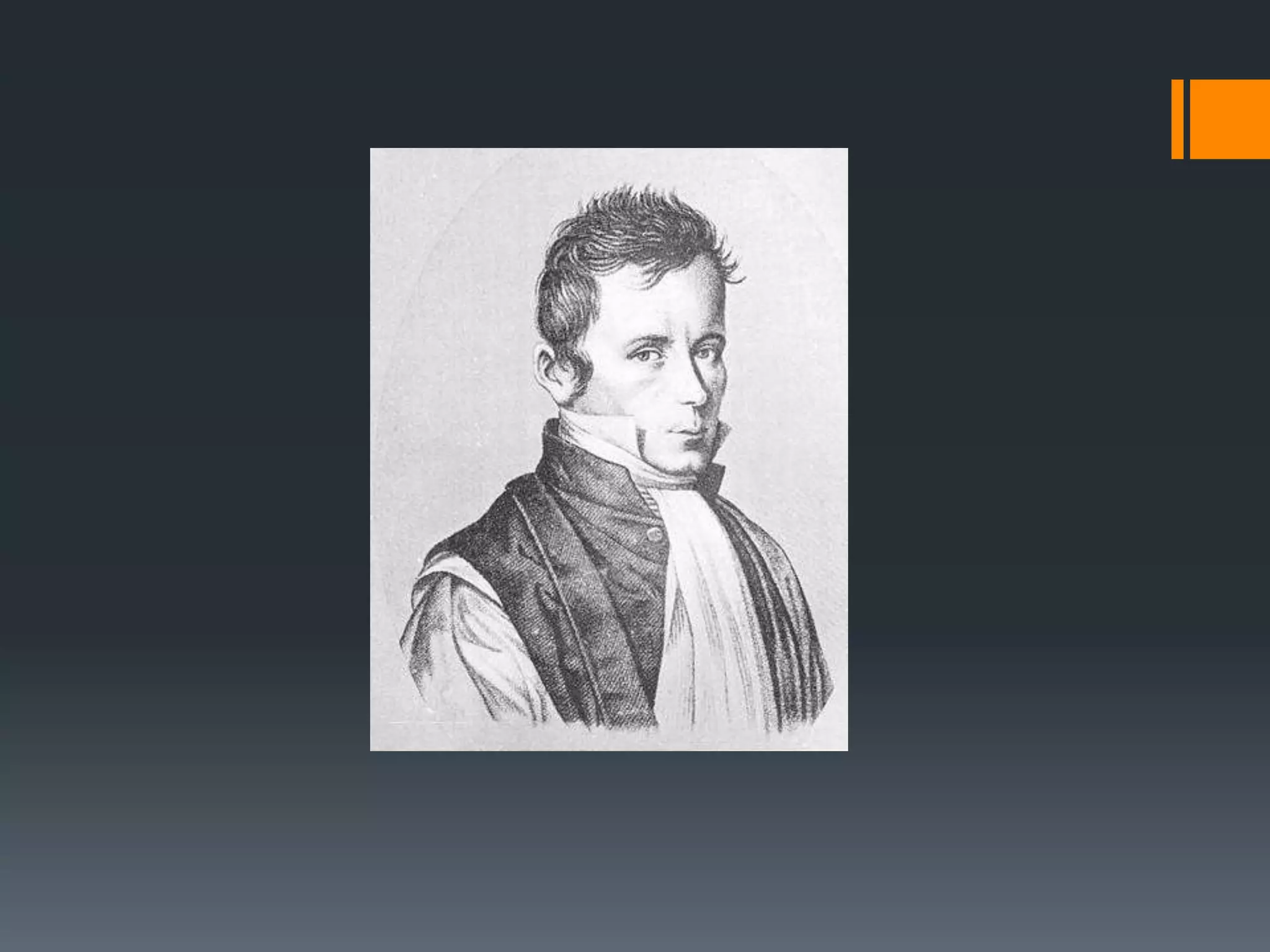
JOSEPH LEOPOLD
AUENBRUGGER
 Invented percussion
SIR RONALD ROSS
SALK – POLIO VACCINE
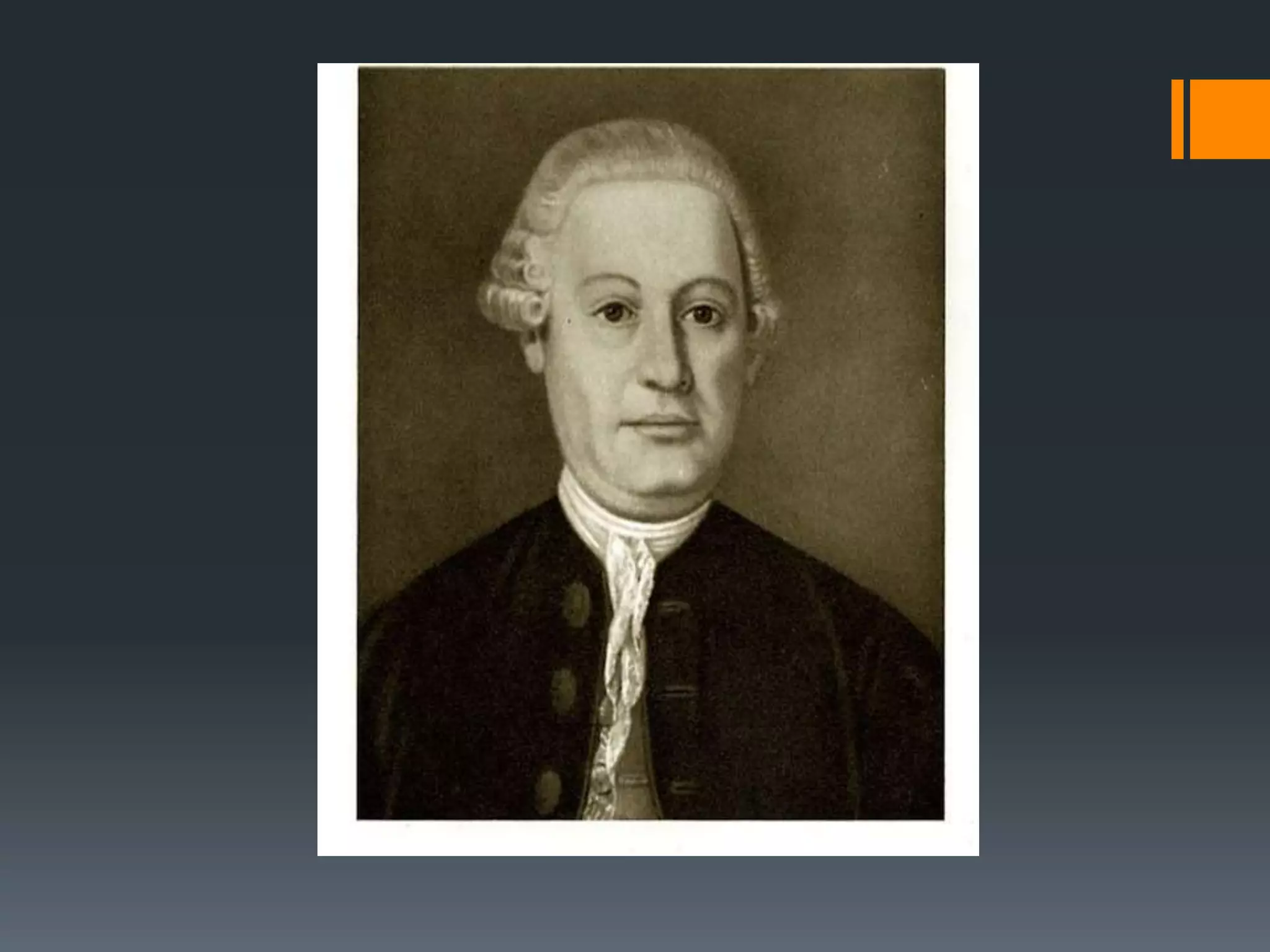
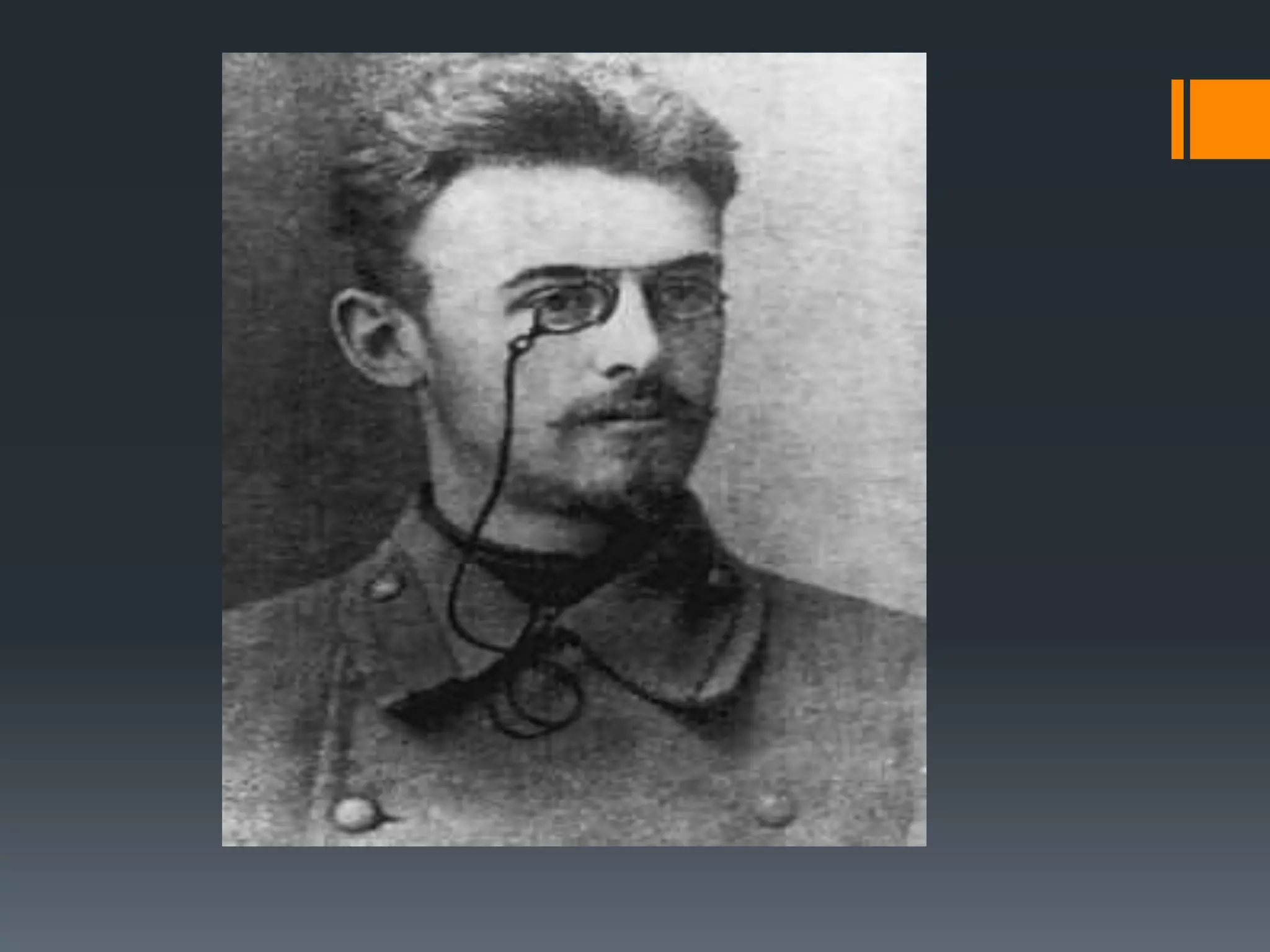
NIKOLAI KOROTKOV
 KOROTKOFF IN english
 Auscultatory technique in blood pressure
Thank you

ECG CHALLENGE