Opioid Analgesics
Strong Morphine Methadone Meperidine Moderate Codeine Oxycodone Weak Propoxyphene Mixed (agonists- antagonists) Buprenorphine, nalbuphine
Antagonists Naloxone Naltrexone
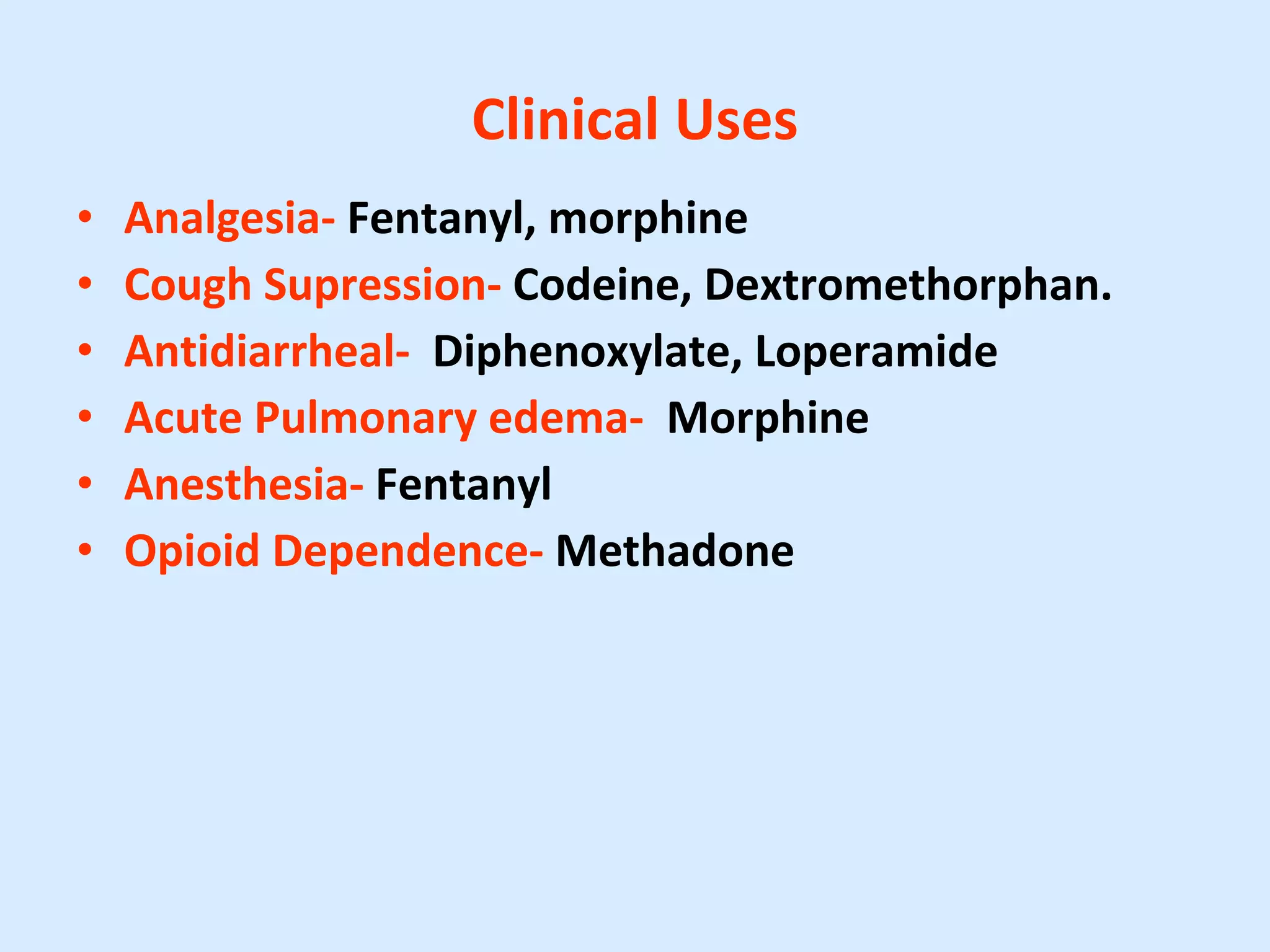
Clinical Uses Analgesia-  Fentanyl, morphine Cough Supression-  Codeine, Dextromethorphan. Antidiarrheal-  Diphenoxylate, Loperamide Acute Pulmonary edema-  Morphine Anesthesia-  Fentanyl Opioid Dependence-  Methadone
Pharmacokinetis Well absorbed orally Morphine, hydromorphone, oxymorpine undergo first-pass metabolism. Cross placental barrier  and effect fetus, cause respiratory  depression, physical dependence in neonates. Metabolism: by hepatic enzymes, inactivated by  glucuronide conjugates  before elimination from kidneys. Morphine -6- glucuronide  (analgesic) Morphine-3- glucuronide  ( neuroexcitatory)
Mechanism of action Opioids produce analgesia by binding to specific G protein coupled receptors in brain & spinal cord
Mechanism of action Receptors μ , δ ,  κ  receptors. All 3 subtypes are involved in antinociceptive and analgesic mechanisms at both spinal and supraspinal levels. μ   receptors -respiratory depressant+ GI δ  receptors-  development of tolerance  κ  receptors-  involved in sedation + GI
 
Opioid peptides β -endorphin, ( μ ,receptors) Enkephalins ( δ  receptors )  Dynorphins (   κ  receptors) Modulate transmission in brain, spinal cord, adrenal medulla and neural plexus of gut.
All 3 receptors are in high concentration in dorsal horn of spinal cord. Direct application of opioid agonists at spinal cord produce regional analgesia. Resp. depression, nausea, vomiting, sedation from supraspinal action.
Ionic Mechanisms Presynaptic level  close  voltage gated Ca+ channels, and reduce transmission.  Post synpatic level  open K+ channels (inhibit post synaptic neurons).
 
EFFECTS Analgesia Most powerful analgesics,  Morphine, methadone, meperidine, fentanyl, heroin Sedation and euphoria Respiratory depression Action at medulla lead to respiratory depression . Antitussive effects Suppression of the cough reflex Nausea & vomiting Activation of chemoreceptor trigger zone
Side Effects GI effects Constipation with decreased intestinal peristalsis. Smoot muscle Cause contraction of billiary billiary tract SM, inc. ureter and bladder tone, red. Uterine tone (prolong labor) Miosis Tolerence Dependence
Toxicity
Treatment of Opioid Poisioning
 

Opioid analgesics

  • 1.
  • 2.
    Strong Morphine MethadoneMeperidine Moderate Codeine Oxycodone Weak Propoxyphene Mixed (agonists- antagonists) Buprenorphine, nalbuphine
  • 3.
  • 4.
    Clinical Uses Analgesia- Fentanyl, morphine Cough Supression- Codeine, Dextromethorphan. Antidiarrheal- Diphenoxylate, Loperamide Acute Pulmonary edema- Morphine Anesthesia- Fentanyl Opioid Dependence- Methadone
  • 5.
    Pharmacokinetis Well absorbedorally Morphine, hydromorphone, oxymorpine undergo first-pass metabolism. Cross placental barrier and effect fetus, cause respiratory depression, physical dependence in neonates. Metabolism: by hepatic enzymes, inactivated by glucuronide conjugates before elimination from kidneys. Morphine -6- glucuronide (analgesic) Morphine-3- glucuronide ( neuroexcitatory)
  • 6.
    Mechanism of actionOpioids produce analgesia by binding to specific G protein coupled receptors in brain & spinal cord
  • 7.
    Mechanism of actionReceptors μ , δ , κ receptors. All 3 subtypes are involved in antinociceptive and analgesic mechanisms at both spinal and supraspinal levels. μ receptors -respiratory depressant+ GI δ receptors- development of tolerance κ receptors- involved in sedation + GI
  • 8.
  • 9.
    Opioid peptides β-endorphin, ( μ ,receptors) Enkephalins ( δ receptors ) Dynorphins ( κ receptors) Modulate transmission in brain, spinal cord, adrenal medulla and neural plexus of gut.
  • 10.
    All 3 receptorsare in high concentration in dorsal horn of spinal cord. Direct application of opioid agonists at spinal cord produce regional analgesia. Resp. depression, nausea, vomiting, sedation from supraspinal action.
  • 11.
    Ionic Mechanisms Presynapticlevel close voltage gated Ca+ channels, and reduce transmission. Post synpatic level open K+ channels (inhibit post synaptic neurons).
  • 12.
  • 13.
    EFFECTS Analgesia Mostpowerful analgesics, Morphine, methadone, meperidine, fentanyl, heroin Sedation and euphoria Respiratory depression Action at medulla lead to respiratory depression . Antitussive effects Suppression of the cough reflex Nausea & vomiting Activation of chemoreceptor trigger zone
  • 14.
    Side Effects GIeffects Constipation with decreased intestinal peristalsis. Smoot muscle Cause contraction of billiary billiary tract SM, inc. ureter and bladder tone, red. Uterine tone (prolong labor) Miosis Tolerence Dependence
  • 15.
  • 16.
  • 17.